The most effective way to prevent waterlogging is to identify where the water comes from, then give it a safe route away from the building. Keep gutters and downspouts clear, discharge roof water away from the foundation, correct ground or paving that sends runoff toward the house, and use infiltration or storage only where the site can safely absorb it. A sump or puddle pump can remove water from a low point, but it cannot correct the cause and must discharge somewhere safe.
Flooding can occur far from a river or coast. No property can be made completely flood-proof, but careful drainage, maintenance and site-specific design can reduce water entry and damage.
As an Amazon Associate I earn from qualifying purchases.
Start by finding the source of the water
Different sources require different remedies. Watch the flow during a storm, inspect the affected area before the rain starts if possible, and note whether the water appears first at a roof outlet, across the ground, through a wall or floor, or from a drain.
What’s actually slowing this PC down?
Pick the symptom - the matching free tool is one click away.
Roof runoff
Water from a roof is concentrated at gutters and downspouts. A blocked gutter, disconnected joint or short downspout can put a large volume beside the foundation even when the surrounding ground is otherwise well drained. Look for overflowing gutters, erosion below outlets, damp foundation walls and water collecting where a downspout ends.
#1 Best Overall

- 【Long Enough to Protect Your Foundation】- The rain gutter downspout extensions can effectively divert damaging rainwater & sewage away from your foundations. The downspout extender can be easily extended from 20 to 66 inches. If you connect 2 pipes to 1 long pipe with the mini connector, the length can be up to 127 inch. It helps to prevent the problems of flooding in your home.
- 【Upgraded Material to Extend Service Time】- Our flexible downspout extension are made of upgraded materials to ensure performance even in harsh outdoor environments. The adapter part is made of upgraded ABS injection molding, which is sturdy and crack-resistant. And the pipe part is made of upgraged high-quality PE material, no creases, no holes and no cracks.
- 【Flesxible & Split Design】- The downspout diverters adopt split design, it allows you to quickly and easily install it into your downspouts. And the retractable hose is easy to stretch, bend and maintain the shape. It also can be buried in the ground, suitable for the complex environments of your yard and garden.
- 【Easy to Install】- No need for professional installation! The extra long downspout extension don’t require cutting or trimming. Just stretch the water pipe, rotate and tighten the adapter and the pipe, adjust the the length and shape you want. The reserved holes on the adapter reduce the difficulty of installing onto the drainage downspout.
- 【Wide Application】- The flexible gutter downspout extension fits most residential downspouts, suitable for 2” x 3”, 3” x 3” and 3”x4” downspouts. Don't worry about your extension being washed away by the rain water. We will provide you with extra screws. You can fix the adapter to the downspout with screws.
Surface runoff and grading
Rain falling on lawns, driveways, patios and neighboring land may travel across the surface toward a low point. A house can become waterlogged even when its roof drainage works correctly. Look for channels, muddy flow lines, ponding beside paving and a slope that falls toward doors, walls or window wells.
Groundwater
A high water table or saturated soil can force water through floors, joints and foundation walls. This problem may continue after rainfall has stopped and may not be solved by redirecting a downspout. Persistent dampness at low levels, seepage through cracks and water rising from a floor are clues.
Drain or sewer backup
If water rises from a floor drain, toilet or inspection chamber, the cause may be a blocked private drain, overloaded public sewer or another drainage failure. Do not treat sewage-contaminated water as ordinary rainwater. Keep people away, avoid contact with electrical equipment and report the problem to the appropriate local authority or utility.
Recommended Free Tools
Rivers, roads and other external sources
Water may arrive from a highway, public drain, stream or neighboring property. In England, GOV.UK reporting guidance distinguishes private drains, public drains and roads, rivers, and groundwater so the report reaches the body responsible. Other countries use different agencies; contact the local drainage, highways, water or environmental authority.
Make a safe plan before the next storm
Walk the site in dry weather and mark every roof outlet, low spot, drain, inspection cover, retaining wall and paved area. During rain, photograph the direction and depth of flow from a safe position. This record helps separate a local roof problem from a wider drainage event and prevents you from moving water into another problem area.
- Check whether gutters, grates and channel drains are blocked by leaves, silt or ice.
- Trace each downspout to its outlet and confirm that the outlet is not buried, crushed or pointing at the foundation.
- Identify doors, basement steps, window wells and vents that sit lower than surrounding ground.
- Look for water entering from above, through a wall, through a floor, or from a plumbing fixture.
- Check whether a proposed outlet would send water toward a neighbor, public path, road, drain or watercourse without approval.
- Mark power outlets, cables, boilers and other electrical equipment that could be reached by rising water.
If water inside or outside is deep, fast-moving, contaminated or close to electrical equipment, leave the area and contact emergency services or the relevant authority. The Environment Agency advises structural-engineer input where water is at least one metre deep.
Rank #2
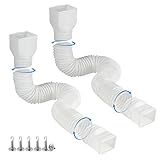
- 【 US Patented Product 】: No.D988482, No.D988483, No.D997309, No.D1009230, No.D1012250, No.D1016252, No.11885441
- 【 Thickened Material 】: This downspout extender is made of PE material, we thicken them to make it more harder and sturdier than others. We've done thousands of load-bearing tests, and it can withstand at least 10 pounds without deformation. It is suitable for the complex environment outside your house. You can even bury it in the ground
- 【 Upgrade Design 】: Each downspout drain extension comes with 2 different sizes of "adapters" to be suitable for 2 X 3 inches,3 x 3 inches and 3 x 4 inches downspout. Its split design allows you to use them more flexibility in different scenes
- 【 Widely Used 】:This downspout extender EACH downspout extension can easily be extended from 21 to 68 Inches. So it will help you protect the foundation of the house from damage, irrigating garden and so on
- 【 Excellent Performances 】: It has excellent performances of flexibility, easy to bend, and easy to restore to its original shape with no creases or cracks. It is antifreeze explosion proof and can be used in bad weather, such as snowing, sun exposure, etc
Control roof water first
Clean and maintain gutters
Remove leaves and sediment, check that gutters have a continuous fall toward their outlets, and replace damaged sections or leaking joints. Confirm that gutter guards, if fitted, are not themselves blocked. Inspect after the first major storm as well as on a regular seasonal schedule; a single blocked outlet can overwhelm a small area beside the house.
Extend or redirect downspouts
Downspouts should discharge onto a stable, permeable or otherwise approved area that does not send water back toward the foundation. U.S. Environmental Protection Agency homeowner guidance recommends depositing water at least five feet from foundations and suggests a downspout extension or splash block: EPA, “Get the most out of rain”. Five feet is guidance for that U.S. context, not a universal legal distance; local rules, lot size, soil and drainage connections may require a different arrangement.
Use a rigid or well-supported extension so the outlet cannot curl back toward the wall. Check the end during a storm: water should leave the outlet without eroding soil, undermining paving or flowing toward a door, neighboring property or another building. Where an extension crosses a path, protect it against a trip hazard and winter damage.
Use a rain barrel or water butt as supplementary storage
A rain barrel can capture part of a roof’s runoff for later garden use and reduce the first surge from a storm. It is limited storage, not a complete answer to prolonged or extreme rain. Fit a secure overflow that leads to a safe drainage or infiltration area, and keep the container stable, covered and maintained. Never allow a full barrel to discharge against the foundation.
Stop surface water reaching the house
Correct local grading
Ground immediately around a building should not form a basin against the wall. Regrade soil, mulch and planting beds so surface water travels toward an approved outlet rather than doors, basement steps or window wells. Keep soil and paving below damp-proof courses, vents and other openings, and avoid covering inspection covers that need access.
The Tool Desk
Outbyte Driver Updater FREEFix the driver behind crashes, sound loss and screen glitchesFind Drivers →Outbyte PC Repair FREERepair Windows errors before they cause bigger problemsFix Now →Grading is site-specific. Adding soil in one place can push water onto a neighbor, road or retaining wall, while removing soil can expose foundations or destabilize a slope. Before changing levels near a boundary, retaining structure or shared drainage route, obtain local construction and drainage advice.
Rank #3
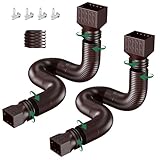
- 【Long Enough to Protect Your Foundation】- The rain gutter downspout extensions can effectively divert damaging rainwater & sewage away from your foundations. The downspout extender can be easily extended from 20 to 66 inches. If you connect 2 pipes to 1 long pipe with the mini connector, the length can be up to 127 inch. It helps to prevent the problems of flooding in your home.
- 【Upgraded Material to Extend Service Time】- Our flexible downspout extension are made of upgraded materials to ensure performance even in harsh outdoor environments. The adapter part is made of upgraded ABS injection molding, which is sturdy and crack-resistant. And the pipe part is made of upgraged high-quality PE material, no creases, no holes and no cracks.
- 【Flesxible & Split Design】- The downspout diverters adopt split design, it allows you to quickly and easily install it into your downspouts. And the retractable hose is easy to stretch, bend and maintain the shape. It also can be buried in the ground, suitable for the complex environments of your yard and garden.
- 【Easy to Install】- No need for professional installation! The extra long downspout extension don’t require cutting or trimming. Just stretch the water pipe, rotate and tighten the adapter and the pipe, adjust the the length and shape you want. The reserved holes on the adapter reduce the difficulty of installing onto the drainage downspout.
- 【Wide Application】- The flexible gutter downspout extension fits most residential downspouts, suitable for 2” x 3”, 3” x 3” and 3”x4” downspouts. Don't worry about your extension being washed away by the rain water. We will provide you with extra screws. You can fix the adapter to the downspout with screws.
Use a swale, channel or drain where flow is predictable
A shallow swale can intercept runoff and guide it around a building. A channel drain at the top of a driveway or outside a basement entrance can collect water before it reaches the opening. Both need a defined, maintainable outlet and enough capacity for the contributing area. Grates, channels and silt traps must be kept clear.
Do not connect a new surface drain to a public sewer, highway drain or watercourse unless the connection is permitted and designed for that system. A drain that appears to solve ponding at one corner can transfer flooding downstream.
Use infiltration and permeable surfaces only when the site can support them
Rain gardens and planted areas
A rain garden is a shallow planted depression that temporarily stores runoff while it infiltrates or is released through an approved overflow. It can work well for roof or paved runoff when the soil drains adequately, the area is away from the building and the overflow route is safe. Plant selection, side slopes and standing-water duration should suit the local climate and mosquito-control requirements.
Do these 3 things before closing this tab:
1Clear out junk files and repair common Windows errors2Fix the driver behind crashes, sound loss and screen glitches3Repair Windows errors before they cause bigger problemsSoakaways
A soakaway stores water underground and releases it into surrounding soil. Before installation, check soil infiltration, seasonal groundwater level, slope stability, contamination history, buried utilities and the distance from buildings and boundaries. A soakaway that fills with groundwater or sits in clay will not provide the expected capacity and can keep nearby foundations wet.
Permeable paving
Permeable paving allows water to pass through joints or a porous surface into a designed sub-base. It is not simply a conventional slab with larger gaps. The sub-base, edge restraints, falls, maintenance and overflow must be designed for the area receiving runoff. GOV.UK guidance on permeable front-garden surfacing explains the England-specific planning context; requirements elsewhere differ.
Conditions that can rule out infiltration
- Heavy clay or compacted fill that drains too slowly.
- A high or seasonally rising water table.
- Steep or unstable slopes.
- Contaminated or historically industrial ground where infiltration could mobilize pollutants.
- Very shallow foundations, basements, retaining walls or underground services nearby.
- No safe overflow when the feature is full.
- Local rules that require approval, an environmental review or a connection to a designated drainage system.
Do not assume that a rain garden, soakaway or permeable surface is suitable because it is labeled sustainable drainage. Site testing and local requirements determine whether it will protect the building or create a new problem.
Rank #4

- 【 US Patented Product 】: No.D988482, No.D988483, No.D997309, No.D1009230, No.D1012250, No.D1016252, No.11885441
- 【 Thickened Material 】: This downspout extender is made of PE material, we thicken them to make it more harder and sturdier than others. We've done thousands of load-bearing tests, and it can withstand at least 10 pounds without deformation. It is suitable for the complex environment outside your house. You can even bury it in the ground
- 【 Upgrade Design 】: Each downspout drain extension comes with 2 different sizes of "adapters" to be suitable for 2 X 3 inches,3 x 3 inches, 3 x 4 inches and 3.5 x 4 inches downspout. Its split design allows you to use them more flexibility in different scenes
- 【 Widely Used 】:This downspout extender EACH downspout extension can easily be extended from 21 to 68 Inches. So it will help you protect the foundation of the house from damage, irrigating garden and so on
- 【 Excellent Performances 】: It has excellent performances of flexibility, easy to bend, and easy to restore to its original shape with no creases or cracks. It is antifreeze explosion proof and can be used in bad weather, such as snowing, sun exposure, etc
Use pumps for collected water, not as a substitute for drainage design
Sump pumps
A sump pump removes water that has collected in a properly formed sump, usually at a basement or crawl-space low point. The sump needs a stable basin, a pump sized for the inflow, a discharge pipe that cannot collapse, and a safe place for the water to go. Test the float or switch and clean the basin so sediment cannot jam the pump.
Free tools Windows power users keep installed
One-click scans. No signup required.
Puddle pumps
A portable puddle pump can remove shallow water from a low spot after a storm. It is useful for recovery or occasional ponding, but it does not stop water entering through a wall, repair a blocked drain or lower a rising water table. Never operate electrical equipment in standing water unless it is specifically designed and installed for that condition.
Power and discharge planning
Plan for a power outage during the same storm that causes flooding. A battery backup, generator connection or secondary pump may be appropriate, but installations must comply with local electrical and fuel-safety rules. Keep the discharge outlet away from foundations and ensure it cannot freeze, clog or return water to the sump.
Do not pump water into a neighboring lot, public road, storm drain or sanitary sewer unless the responsible authority allows it. Pumping contaminated or sewage-laden water requires specialist handling.
Compare the main prevention options
| Option | Best use | Main limits and checks |
|---|---|---|
| Clean gutters, extend or redirect downspouts | Concentrated roof runoff beside the house | The outlet still needs a safe destination; it must not send water back toward the foundation or onto another property. |
| Regrade ground, add a swale or install a channel drain | Surface water crossing a yard, driveway or path toward the home | Requires property-specific levels and an approved outlet; poorly planned work can move flooding elsewhere. |
| Rain garden, soakaway or permeable surface | Runoff where soil and the site can safely accept infiltration | Unsuitable conditions include slow soil, high groundwater, contamination, steep slopes or inadequate separation from buildings. |
| Rain barrel or water butt | Capturing some roof water for later use | Storage is limited during extended or extreme rain; overflow must be routed safely. |
| Sump or puddle pump | Removing water already collected at a low point | Needs a collection point, reliable power and safe discharge; it does not correct the source. |
| Qualified local assessment | Persistent, complex or building-threatening water problems | Choose a competent local drainage, civil-engineering, structural or landscaping professional as appropriate and follow local requirements. |
Choose by considering the water source, contributing area, soil infiltration, slope, distance from the building, available outlet, installation complexity, maintenance burden and local rules. No single product solves roof runoff, groundwater rise, sewer surcharge and river flooding equally.
A practical installation sequence
- Map the site. Record roof areas, outlets, low points, drains, doors, walls, paving and boundaries.
- Observe a storm safely. Trace where water starts, how deep it becomes and how long it remains after rain stops.
- Remove simple restrictions. Clear gutters, downspouts, grates and silt traps before changing the landscape.
- Protect the foundation. Extend or redirect roof outlets and check that discharge does not return along the wall.
- Control surface flow. Correct small grading defects or use a swale or channel where a defined route is needed.
- Check infiltration feasibility. Verify soil, groundwater, contamination, slope, utilities, building separation and overflow before installing a rain garden, soakaway or permeable surface.
- Add storage only as a supplement. Fit a rain barrel or water butt with a secure, safe overflow.
- Address low-point water. Install a sump or use a puddle pump only with suitable power and a lawful, safe discharge route.
- Recheck after heavy rain. Look for erosion, settlement, blocked outlets, standing water against walls and any impact on neighboring land.
Maintenance that prevents a small defect becoming flooding
- Inspect and clear gutters and downspouts before the wet season and after severe wind.
- Remove leaves and sediment from grates, swales, channels, soakaway inlets and rain-garden overflows.
- Keep permeable paving free of fine sediment and avoid sealing its surface with paint or impermeable debris.
- Check rain-barrel screens, lids, outlets and overflow paths.
- Test sump-pump switches, alarms, backup power and discharge pipes; keep a manual pump available if appropriate.
- Inspect foundation-level sealants, window wells, door thresholds and vents for damage or blockage.
- After landscaping work, confirm that levels have not settled toward the building or changed flow onto a boundary.
When to obtain a professional assessment
Arrange a site-specific assessment when ponding recurs despite clear gutters and sound outlets; water enters a basement or crawl space; groundwater remains high; a proposed change affects a slope, retaining wall or boundary; drainage serves several properties; or the only apparent outlet is a public drain, road or watercourse. A drainage or civil professional can survey levels and contributing areas, while a structural engineer is appropriate for foundation movement, structural cracking or deep flooding.
Best Value
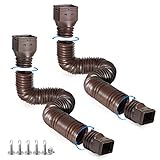
- 【 US Patented Product 】: No.D988482, No.D988483, No.D997309, No.D1009230, No.D1012250, No.D1016252, No.11885441
- 【 Thickened Material 】: This downspout extender is made of PE material, we thicken them to make it more harder and sturdier than others. We've done thousands of load-bearing tests, and it can withstand at least 10 pounds without deformation. It is suitable for the complex environment outside your house. You can even bury it in the ground
- 【 Upgrade Design 】: Each downspout drain extension comes with 2 different sizes of "adapters" to be suitable for 2 X 3 inches,3 x 3 inches, 3 x 4 inches and 3.5 x 4 inches downspout. Its split design allows you to use them more flexibility in different scenes
- 【 Widely Used 】:This downspout extender EACH downspout extension can easily be extended from 21 to 68 Inches. So it will help you protect the foundation of the house from damage, irrigating garden and so on
- 【 Excellent Performances 】: It has excellent performances of flexibility, easy to bend, and easy to restore to its original shape with no creases or cracks. It is antifreeze explosion proof and can be used in bad weather, such as snowing, sun exposure, etc
Use qualified local professionals and verify permits, utility searches, environmental controls and discharge permissions. No particular contractor or product is universally suitable, and a quotation alone is not a drainage design.
Know the wider flood risk
The Environment Agency’s England guidance states: “You cannot completely protect your home or business against flooding, but there is a lot you can do to reduce: the amount of flood water that gets in; the damage from flood water; the cost and time of cleaning up after a flood.” Read the full guidance at GOV.UK: Adapting your home or business to the risk of flooding. Its advice applies to England; other jurisdictions have different standards and agencies.
U.S. EPA material describes green-infrastructure measures such as infiltration and storage as ways to mitigate flooding, while noting that performance depends on design and site conditions: EPA, “Mitigate Flooding”. EPA has also cited a projection of approximately $750 million in increased annual flood damages by 2100; that is a broad projection attributed to cited sources, not a prediction of damage at any particular home.
Crashes, No Sound, or Screen Glitches?
Random freezes, missing sound and display glitches usually trace back to one bad driver. Find and replace yours safely.Free scan · under a minutePC Slower Than It Used to Be?
A free scan shows the junk files, broken settings and background clutter dragging Windows down - then fixes them in one click.Free scan · Windows 10 & 11Troubleshoot by symptom
Water appears directly below a downspout
Clear the gutter and outlet, check for a cracked underground connection, then extend the discharge to a safe location. If the outlet is already remote from the building, inspect the receiving soil and downstream route rather than adding another pump.
Water crosses the driveway or patio toward a door
Check levels at the upper edge of the paving and the threshold. A channel drain or regrading may intercept the flow, but confirm where collected water will go before installing either.
Water rises through a basement floor after rain
Distinguish groundwater from a plumbing or sewer backup by checking drains, inspection chambers and whether the water continues rising after surface ponding ends. A sump may manage collected groundwater, but recurring seepage warrants a site assessment.
The pump runs but the area still floods
Check whether the pump is undersized, the intake is blocked, the discharge is restricted or the outlet returns water to the same low point. A larger pump is not automatically the answer; the inflow and discharge route need to be assessed together.
Water is affecting a neighbor
Stop any outlet or grading change that directs runoff across the boundary. Document the flow and seek local drainage advice so a remedy does not transfer the problem to another property.
Quick Recap
What to do during an active flood
- Keep people and pets away from fast-moving, deep or sewage-contaminated water.
- Do not enter a flooded area containing electrical equipment; have utilities isolated by a qualified person.
- Do not lift manhole covers or enter confined drainage spaces.
- Use temporary barriers only if they can be placed without exposing anyone to moving water, and keep a clear evacuation route.
- Contact emergency services for immediate danger and the relevant drainage, highway, water or environmental authority for the source.
- Once safe, photograph damage and record the time, depth and source indicators for insurers and professionals.
Product prices and availability are accurate as of the date/time indicated and are subject to change. Any price and availability information displayed on Amazon at the time of purchase will apply.

