Free tools Windows power users keep installed
One-click scans. No signup required.
Use plain, brown corrugated cardboard, not waxed or glossy packaging. Flatten the boxes, pull off tape and staples (and labels when practical), cut the sheets to fit, overlap every joint so no soil or light shows through, wet the cardboard as you lay it, and immediately cover it with mulch or compost. Keep the barrier to a modest one or two layers: too much cardboard can restrict air and water movement. The exact cover depth and waiting period depend on the method and site; published extension guidance ranges from about 3 inches of mulch to 4–6 inches, and from roughly four to six months before planting.
What properly prepared cardboard does in a sheet-mulch bed
Sheet mulching creates a temporary, light-blocking barrier over turf or weeds while organic material above it improves the bed. Cardboard is not the finished soil and it is not a permanent liner. It gradually softens, decomposes and becomes part of the organic layer. The installation succeeds only when the barrier is continuous, damp and held down by a substantial cover.
As an Amazon Associate I earn from qualifying purchases.
The preparation work has four practical goals:
- Choose a material that will break down without unwanted coatings.
- Close seams and edges so grass and weeds cannot grow through openings.
- Keep the sheets in contact with the ground by wetting and covering them.
- Use enough cardboard to block light, but not so much that roots, air or irrigation are cut off.
Instructions below are adapted from university extension methods. They are not a guarantee that every lawn, soil type or climate will decompose cardboard on the same schedule.
Do these 3 things before closing this tab:
1Clear out junk files and repair common Windows errors2Fix the driver behind crashes, sound loss and screen glitches3Repair Windows errors before they cause bigger problemsChoose cardboard that can safely decompose
Best default: plain corrugated brown boxes
Start with uncoated, brown corrugated shipping boxes. Corrugated cardboard has a fluted inner layer between flat liners and is usually easy to flatten into broad sheets. Remove all contents, plastic inserts and foam before using it. The Iowa State University Extension and Outreach guide identifies cardboard as a mulch material, while Penn State Extension, Oregon State University Extension Service and Texas A&M AgriLife Extension all describe cardboard as part of sheet-mulching methods.
#1 Best Overall

- Large Corrugated Cardboard Roll: Measuring 17 inches wide and 235 inches long, this generous corrugated cardboard roll provides ample material for all your packaging, moving, and crafting needs, offering value and convenience
- Superior Durability: Made from thick, tear-resistant corrugated paper, this corrugated cardboard sheet delivers reliable protection for shipping and storage, ensuring your items are well-cushioned and secure
- Easy to Cut & Customize: Effortlessly bend, cut, and shape this corrugated cardboard to any size. It wraps neatly around corners and odd-shaped items, making packing simpler and reducing waste
- Versatile Packaging Solution: Suitable for safeguarding a wide range of items, from fragile glassware and electronics to books and clothing, this corrugated cardboard roll works well for moves, shipping, or storage
- DIY & Crafts Applications: An excellent medium for creative projects. Easy to paint, glue, and cut, this cardboard sheet works well for school art, DIY decorations, and family craft activities
Coatings and printing require judgment
Do not use waxed boxes or cardboard with a slick, water-resistant coating. Avoid glossy or shiny paper. Oregon State gives the strictest caution, advising against shiny, glossy or printed cardboard. Texas A&M similarly says to avoid heavily colored or slick printed boxes. Other extension guidance focuses on removing tape, staples and labels and does not treat every small printed mark as disqualifying. Apply the stricter rule when you cannot identify the finish: choose plain brown sheets rather than brightly printed retail packaging.
A small shipping label or manufacturer mark is not the same as a wax coating, but remove labels where possible. If a sheet has a plastic film, metallic sheen, oily feel or obvious water resistance, put it in the recycling stream instead of the garden.
Remove non-cardboard parts
- Packing tape: Peel it off before laying the sheet. Plastic tape can remain as a strip after the paper fibers decay.
- Staples: Pull metal staples with pliers or a staple remover. Iowa State notes that landscape staples can be used later to hold clean cardboard in place; those are different from staples left in the box.
- Labels: Remove adhesive labels when practical, especially large plastic labels or labels with a glossy face.
- Plastic handles, strings and strapping: Cut them away and dispose of them separately.
Wear gloves when handling used boxes. Check for staples hidden in folds and for contamination such as grease, chemicals or spoiled food. A clean box from ordinary shipping is a better starting material than a box that has held oily or hazardous products.
Tools and materials to gather first
You can prepare cardboard with household tools. University of Illinois Extension describes using a utility knife to cut an X for planting through cardboard; the knife is a convenience, not a specialized requirement.
- Plain corrugated cardboard sheets
- Utility knife or box cutter, used on a stable cutting surface
- Gloves and, if needed, pliers for staples
- Garden hose or watering can
- Mulch or compost for the covering layer
- Optional landscape staples to secure sheets on windy or sloped sites
- Tape measure, marking paint or a spade for tracing bed edges
Have the cover material on site before you wet the cardboard. Wet sheets become heavy and awkward to move, and leaving them exposed after watering gives wind time to lift the edges.
Rank #2

- STURDY AND SAFE: RLAVBL cardboard sheets are made of high-quality three-layer E-flute corrugated board. It is extremely strong and sturdy and ensures the safety of the items you are shipping or mailing.
- WIDE USAGE: Brown card board sheets can be used to protect art prints, photos, CDs, books, certificates, documents, etc. It is also very suitable for your DIY crafts.
- DIMENSION: Each cardboard sheets measure 8.5 x 11 inches with a thickness of 2mm, the perfect size for mailing, shipping, mailers, DIY crafts, packing supplies, or art project kits.
- DIY PLEASURE: These cardboard inserts can be practical materials for paper crafting. Providing space for children to use their imagination. Let them paint and decorate cardboard sheets to create artwork and bring lots of crafting fun.
- 10 PACK CARDBOARD: There are 10 pack cardboard sheets on the package, stored flat inside a larger carton.
Prepare each sheet before it goes on the ground
1. Flatten the boxes into large panels
Open the glued or taped seams and fold the box completely flat. Cut away heavily damaged corners so the remaining panels lie against the soil. Large panels reduce the number of seams you must protect. Keep several smaller pieces for filling around curved edges, posts and existing plants.
2. Cut around the bed and obstacles
Mark the intended bed boundary first. Cut cardboard so it reaches the edge of the area being converted, then extend it slightly under adjacent turf or mulch where practical. Around a tree trunk, leave the trunk flare and root collar uncovered; do not pile a wet cardboard-and-mulch cone against bark. For irrigation lines, edging, posts or other fixed features, cut neat openings rather than forcing the sheet to buckle.
When installing plants before the barrier has partly decomposed, Illinois Extension’s practical approach is to cut an X in the cardboard at each planting location. Fold the flaps back, plant through the opening and pull the flaps toward the stem without burying the crown. The X is an installation technique, not a requirement to buy a particular knife.
3. Arrange pieces before wetting
Dry-fit the first course of sheets so you know where seams and edge pieces will fall. Stagger joints in adjacent rows, much as you would stagger bricks. Avoid four corners meeting at one point; that creates a likely opening as the material softens.
Lay sheets with a continuous, overlapping pattern
Penn State’s measured overlap
Penn State Extension recommends an overlap of 8 to 10 inches for its lawn-to-garden-bed method and says there should be no open spaces. Use that as a strong working specification when converting a lawn, while recognizing that other extension guides call for overlap without assigning the same number. The important result is a closed barrier, not a particular measurement applied to every landscape.
Rank #3

- STURDY AND SAFE: RLAVBL cardboard sheets are made of high-quality three-layer E-flute corrugated board. It is extremely strong and sturdy and ensures the safety of the items you are shipping or mailing.
- WIDE USAGE: Brown card board sheets can be used to protect art prints, photos, CDs, books, certificates, documents, etc. It is also very suitable for your DIY crafts.
- DIMENSION: Each cardboard sheets measure 8.5 x 11 inches with a thickness of 2mm, the perfect size for mailing, shipping, mailers, DIY crafts, packing supplies, or art project kits.
- DIY PLEASURE: These cardboard inserts can be practical materials for paper crafting. Providing space for children to use their imagination. Let them paint and decorate cardboard sheets to create artwork and bring lots of crafting fun.
- 50 PACK CARDBOARD: There are 50 pack cardboard sheets on the package, stored flat inside a larger carton.
| Layout issue | Practical treatment | Why it matters |
|---|---|---|
| Seams between sheets | Overlap adjacent panels; Penn State specifies 8–10 inches for its method. | Prevents light and shoots from finding a straight path through a joint. |
| Gaps around edges | Trim and fit narrow pieces, then cover the perimeter with mulch. | Grass commonly survives at an exposed edge. |
| Four-way intersections | Stagger rows and add a patch over any weak crossing. | Reduces a single point where the sheets can separate. |
| Slopes or windy beds | Wet promptly and use optional landscape staples until covered. | Stops panels from sliding or lifting before the cover is placed. |
| Existing plants | Cut a controlled opening and keep the stem or trunk clear. | Avoids burying crowns and bark while maintaining coverage nearby. |
Walk the entire bed after the first row is placed. Look from a low angle for daylight between sheets. Fill every visible opening with a fitted piece rather than assuming mulch will bridge it.
PC Slower Than It Used to Be?
A free scan shows the junk files, broken settings and background clutter dragging Windows down - then fixes them in one click.Free scan · Windows 10 & 11Outdated Drivers Are Slowing You Down
One free scan finds every outdated or missing driver and matches the right update for your exact hardware.Free scan · exact hardware matchWet the cardboard as you work
Penn State says to wet the material as work proceeds. Oregon State recommends well-soaked cardboard, and Texas A&M advises thoroughly soaking it. Water adds weight, helps panels conform to uneven ground and starts softening the fibers so they stay in place.
- Lay a manageable section of dry cardboard.
- Overlap the next sheets and close the seams.
- Soak the section with a hose or watering can until it is uniformly damp and pliable.
- Check that corners and overlaps remain in contact with the soil.
- Spread the planned mulch or compost cover before moving to a large new section.
“Wet” does not mean leave standing water on compacted soil. If the site is already saturated, wait for workable conditions; moving heavy wet material over mud can compact the bed. On a slope, work from the low side upward so each covered course helps hold the next one.
Cover the wet sheets with mulch or compost
Cardboard must be covered to stay down and to create the finished growing surface. Use clean mulch, compost or a planned combination. Spread it evenly over the entire sheeted area, including overlaps and perimeter edges.
| Source and method | Cover guidance | How to interpret it |
|---|---|---|
| Penn State Extension lawn-to-bed method | 4–6 inches total mulch depth | A depth specified for that demonstration, not a universal rule. |
| Texas A&M AgriLife Extension, guidance attributed to Jayla Fry (April 2026) | About 3 inches of cover | A separate recommendation; do not merge it with Penn State’s figure. |
| Oregon State Extension and other guides | Cover the soaked cardboard with organic material; no single depth stated in the cited guidance. | Choose a depth appropriate to the material, drainage and planting plan. |
Use the depth that matches your chosen method and site. A thinner cover may expose edges to wind and drying; an unnecessarily deep cover can bury crowns, trap excessive moisture or create a grade problem against paths and structures. Keep mulch away from woody stems and tree trunks.
Quick wins for a faster PC:
Repair Windows errors before they cause bigger problemsFix Now →Fix the driver behind crashes, sound loss and screen glitchesFind Drivers →Rank #4

- Package Includes: It contains 25 heavy-duty corrugated cardboard sheets. Each sheet is precisely cut to 8.5 x 11 inches. The thickness of each sheet is 1.8mm (approximately 0.07 inches), providing strong and reliable support, suitable for protection and creative work
- Material: Magicheap cardboard sheet is made of high-quality thick 3-layer corrugated cardboard, which is recyclable, lightweight and sturdy
- Ideal for DIY & Creative Projects: No Prep Needed, just take them out and start creating. Easy to cut, score, fold, paint, glue, and draw on. Great for creating seasonal decorations, photo frames, painting boards, 3D models, greeting cards, and more
- Ideal for Shipping & Packaging Protection: The 1.8mm thick rigid corrugated core offers superior cushioning and stiffness. It can be used as a backing board inside bubble mailers to prevent bending, as protective dividers between items, or as box partitions to stop products from shifting during transit
- Versatile Application: Suitable for various places such as classrooms, offices, kindergartens, etc. It's great for kindergarten craft activities, school art classes, photo mailings, document delivery, item sorting, or quick packing at the express counter
Limit cardboard thickness and protect water movement
Iowa State describes using one or two cardboard layers and warns that too many layers can impede water and air. Oregon State also cautions that sheet mulching can limit flow, and Texas A&M notes that cardboard may slow water reaching the soil. Do not keep adding layers to solve a gap or persistent weed problem. Patch openings with single pieces and rely on a complete overlap pattern.
Before installation, identify how irrigation and rainfall reach the bed. If a downspout discharges onto the area, redirect it or provide a safe overflow route rather than expecting water to pass quickly through a thick barrier. On heavy clay or compacted subsoil, monitor puddling after rain. If water remains ponded, reduce future layering, open a planned planting area and address drainage rather than adding more cardboard.
Decide when to plant
Cardboard decomposition is controlled by moisture, temperature, microbial activity, soil contact, precipitation, the type and thickness of the material, and local climate. There is no reliable universal countdown.
- Penn State Extension: Four to six months is usually sufficient for its described northeastern U.S. lawn-to-bed method.
- UC Master Gardener Program of Placer County: Approximately six months is described as optimal in its sheet-mulching process.
- Oregon State Extension: Regional conditions affect how well sheet mulching works, so timing should be observed rather than assumed.
These are planning estimates, not guarantees. To check readiness, lift a small edge of cardboard. It should be soft and breaking apart, with soil contact beneath it. If the sheet is still intact and dry, restore moisture and cover, then delay planting crops that need unrestricted root access. You can plant shallow-rooted or larger established plants through openings earlier if the method and drainage allow, but keep the opening large enough for the root ball and avoid trapping the crown under wet material.
What’s actually slowing this PC down?
Pick the symptom - the matching free tool is one click away.
Site-specific adjustments
Converting turf
Mow the lawn short and remove persistent woody weeds before laying sheets. A continuous overlap is particularly important at the turf perimeter, where runners can exploit a narrow gap. Penn State’s 8–10-inch overlap and 4–6-inch total mulch cover are tied to its lawn-conversion example; use those figures as that method’s specification.
Best Value
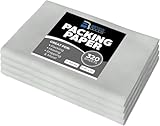
- Essential for your moving process, this packing paper ensures safety of delicate items like dishes, effectively minimizing damage during transit. Perfect for dish packing and as an integral part of your moving supplies
- A home must have, this lightweight packing paper is not just for moving. From wrapping holiday decorations to storing items, its usage is versatile. Proudly made in the USA
- Includes 320 sheets of unbleached, neutral color newsprint packing paper, free of any printing and exudes a natural gray-white hue. Ideal for moving box packing, and can also be used as filling in your moving boxes supplies
- Our brand-specific newsprint packing paper can be used for more than just packing
- Trust in your purchase with Amazon's guarantee and customer service support. This product is made in the USA, ensuring quality and reliability. Perfect for use as moving paper pad, moving paper roll packing, and moving paper sheet
Existing garden soil
When suppressing annual weeds in an established bed, use the minimum effective layer and preserve access to irrigation. One or two layers, as described by Iowa State, may be enough. Avoid covering desirable perennial crowns, and mark the location of dormant plants before placing cardboard.
Slopes and exposed sites
Break the work into short sections, wet each section and cover it immediately. Landscape staples can hold panels temporarily, but the mulch or compost cover remains the primary weight. Inspect after heavy rain and replace any exposed or shifted piece.
Areas beside buildings and paving
Keep the finished mulch grade below siding, vents, door thresholds and paving edges. Cardboard and mulch that bridge a wall or trap water against wood can create a moisture problem unrelated to weed suppression. Where the bed meets a path, trim cleanly and maintain the drainage route.
Recommended Free Tools
Common mistakes and fixes
| Symptom | Likely cause | Fix |
|---|---|---|
| Grass appears in straight lines | Sheets were not overlapped or a seam opened. | Pull back mulch, patch with plain cardboard and re-cover the joint. |
| Cardboard blows away | It was left dry or uncovered. | Soak it, add temporary staples if needed, and apply the planned cover immediately. |
| Water ponds on the surface | Excess layers, compacted soil or an existing drainage issue. | Stop adding cardboard; inspect grade and drainage, and open only deliberate planting or flow paths. |
| Cardboard remains intact for months | Insufficient moisture, thick material, cold conditions or poor soil contact. | Check irrigation and rainfall, keep the cover in place, and extend the waiting period. |
| Plants decline after installation | Openings are too small, crowns are buried or mulch is against stems. | Enlarge openings, expose crowns and pull mulch back from stems and trunks. |
| Plastic fragments remain | Tape, labels or strapping were not removed. | Collect visible plastic during inspections and improve sorting of the next batch. |
A repeatable installation checklist
- Mark the bed boundary and identify trees, irrigation, drains and plants to preserve.
- Collect clean, plain brown corrugated cardboard.
- Remove tape, staples, labels, plastic and contaminated sections.
- Flatten boxes into broad panels and cut edge and obstacle pieces.
- Dry-fit rows, stagger joints and plan an overlap with no openings; use 8–10 inches if following Penn State’s lawn-to-bed method.
- Lay a section, overlap the next panels and inspect for daylight at every seam.
- Soak the installed section thoroughly as recommended by Penn State, Oregon State and Texas A&M guidance.
- Cover immediately with mulch or compost at the depth selected for your method—about 3 inches in the Texas A&M example or 4–6 inches in Penn State’s example.
- Keep cardboard to one or two layers unless a site-specific plan says otherwise.
- Inspect after rain and wind, maintain moisture, and plan for several months of decomposition before broad planting.
Source guidance and regional qualifications
The recommendations differ because they describe different methods and conditions. Iowa State University Extension and Outreach discusses mulch use and cautions against excessive cardboard layers: Using Mulch in the Garden. Penn State Extension provides the measured overlap, wetting sequence, 4–6-inch cover and four-to-six-month rest period for its lawn conversion: Sheet Mulching: Lawn to Garden Bed in 3 Steps. Oregon State University Extension Service addresses material selection, soaking, coverage and regional limits: Sheet mulching and lasagna composting with cardboard.
University of Illinois Extension describes cutting an X for planting in Preparing a New Garden Bed. Texas A&M AgriLife Extension’s April 2026 article, which attributes an approximately 3-inch cover recommendation to Jayla Fry, is available at April Articles 2026. The UC Master Gardener Program of Placer County describes an approximately six-month optimum in How to Kill Your Lawn by Sheet Mulching.
Use the common principles—clean material, closed overlaps, thorough wetting, immediate cover and restrained thickness—then adjust cover depth and planting date to your soil, weather and drainage. That approach prepares cardboard to function as a temporary weed-suppressing layer without treating any one extension method as a guarantee for every site.
Quick Recap
Product prices and availability are accurate as of the date/time indicated and are subject to change. Any price and availability information displayed on Amazon at the time of purchase will apply.

