For the best results, plant Persian buttercup ranunculus (Ranunculus asiaticus) during a cool growing season, in full sun and sharply draining soil. In mild-winter climates, plant dormant corms in fall for late-winter or spring flowers. In colder climates, soak the corms, optionally pre-sprout them indoors, and plant in late winter or early spring as soon as the soil is workable. Place the claw-like fingers downward, cover most home-garden corms with about 2 inches of soil, and protect them from hard freezes and prolonged wetness.
The central balancing act is moisture: ranunculus need evenly moist soil once they are actively growing, but dormant or newly planted corms can rot in saturated soil. With good drainage and the right temperature, expect flowers roughly 90 days after planting, although timing varies by cultivar, corm size, and climate.
As an Amazon Associate I earn from qualifying purchases.
First, identify which ranunculus you have
This guide focuses on the ornamental Persian buttercup types sold for gardens and cut flowers, especially Ranunculus asiaticus hybrids. They produce deeply divided foliage and rose-like flowers that may be single, semi-double, or densely double, in shades including white, yellow, orange, pink, red, burgundy, and related colors. They are useful in containers, borders, bedding displays, cutting gardens, and bouquets.
Windows Errors? Fix Them Before They Spread
Repair common Windows errors and clear accumulated junk for a smoother, more stable PC - no reinstall needed.Free scan · no reinstallOutdated Drivers Are Slowing You Down
One free scan finds every outdated or missing driver and matches the right update for your exact hardware.Free scan · exact hardware matchRanunculus is also the name of a large genus that includes meadow, bog, aquatic, alpine, and weedy species. Those plants can have very different requirements, so do not automatically apply Persian buttercup instructions to every plant labeled ranunculus. The Royal Horticultural Society’s Ranunculus growing guide is helpful for distinguishing the broader genus from Persian buttercup cultivation.
#1 Best Overall

- Efficient Planting Design: Manual bulb planter clears soil smoothly after each use, reducing effort and making bulb planting quicker and comfortable
- Reliable and Built to Last: Crafted with reinforced steel, this bulb planting tool won't bend and makes digging in tough or heavy soil easy
- Premium Construction: Made from high-hardness materials, this grass plugger resists bending and keeps its shape for consistent performance over time
- Consistent Planting Depth: This sod plugger has a clear depth scale, making it easy to dig holes at the right depth for uniform planting every time
- Excellent for Gardeners: Lightweight and easy to carry, ideal for planting tulip, daffodil, lily, and dahlia bulbs in flower beds or gardens
Retailers commonly call the dry planting material corms, although extension and botanical sources may also describe it as a tuber, tuberous root, or bulb-like storage organ. In this article, “corm” means the dry, claw-like structure you purchased.
Which type of planting material do you have?
- Dormant corms: Dry, claw-like structures that need to be rehydrated and rooted. These are the usual home-garden purchase.
- Rooted plugs or nursery plants: Already actively growing. Transplant them promptly according to the supplier’s directions; do not soak or pre-sprout them like dry corms. Farmer Bailey’s growing guide distinguishes rooted plugs from dormant tubers.
- Seed-grown plants: A separate production route. Seed can be economical and interesting, but plants are slower and may not have the same flower form or uniformity as named corm-grown hybrids.
When to plant ranunculus: choose by climate
Ranunculus is a cool-season crop. It grows actively in cool weather, flowers in spring, and commonly becomes dormant when summer heat arrives. The best planting date is therefore determined by how long your area stays cool, whether winter soil remains wet, and whether you can protect the plants from freezing—not by USDA hardiness zone alone.
| Growing situation | Best approach |
|---|---|
| Mild winter and cool spring, approximately zones 8–10 | Plant in fall for late-winter or spring flowers. Protect the crop from hard freezes and prolonged winter rain. |
| Zone 7 or a similar transitional climate | Fall planting can work in very well-drained soil with frost protection. If winter is wet or freezes are severe, choose late-winter or early-spring planting instead. |
| Zones 3–6 without a greenhouse or tunnel | Treat ranunculus as a cool-season annual. Start or pre-sprout corms in late winter and plant out as soon as soil is workable, while retaining a way to protect them from hard freezes. |
| Short spring season or a climate that warms rapidly | Use large corms, start early, pre-sprout them, and consider containers, a low tunnel, or a high tunnel. |
| Hot-summer climate | Schedule flowering before sustained heat. Fall planting is usually more successful than waiting until spring. |
Zone recommendations vary because winter minimum temperature is only one part of the equation. Winter rainfall, drainage, freeze-thaw cycles, duration of cold, and the speed of spring warming all affect results. Some experienced gardeners overwinter ranunculus in zone 7 and above with protection, while more conservative guidance recommends treating them as annuals outside reliably mild conditions. The practical rule is to protect the corms from freezing and keep them out of cold, saturated soil. See the Longfield Gardens timing guidance for additional climate context.
Quick wins for a faster PC:
Fix the driver behind crashes, sound loss and screen glitchesFind Drivers →Repair Windows errors before they cause bigger problemsFix Now →What to buy
Choose fresh, firm, intact corms from a reputable supplier. They should be clearly labeled Ranunculus asiaticus or identified as a named ranunculus series. Do not plant corms with soft spots, a foul smell, extensive mold, or severe physical damage.
Larger corms generally contain more stored energy and tend to produce stronger plants and more flowers, though cultivar and growing conditions also matter. Named series can differ substantially in height, stem length, branching, flower form, spacing, chill requirement, and suitability for cut flowers. For example, the taller, more branching Butterfly types may need more room than compact Romance types; consult the supplier’s listing rather than assuming every ranunculus should be spaced identically. Johnny’s ranunculus production guide gives examples of variety-specific spacing.
How to plant dormant ranunculus corms
1. Store them correctly until planting
Keep unplanted corms dry, cool, ventilated, and protected from moisture and freezing temperatures. Do not seal damp corms in an airtight plastic bag. Plant them promptly once they have been soaked or once pre-sprouting has begun. There is no single universally validated storage temperature for every home-garden situation; commercial shipping, production chilling, and post-season storage are different processes. Johnny’s crop information provides additional handling guidance.
2. Inspect and sort the corms
Before soaking, separate firm, healthy corms from any that are soft, collapsing, foul-smelling, or visibly infected. A little surface dryness is normal. A corm that is mushy or discolored through its crown is unlikely to recover and can introduce rot into a tray or planting bed.
What’s actually slowing this PC down?
Pick the symptom - the matching free tool is one click away.
3. Soak—but follow the correct protocol
Soaking is helpful because it rehydrates a dry corm, but there is no single soaking time that applies to every supplier and production system.
For a conservative home-garden method: Put dry corms in cool or room-temperature water for approximately 3–4 hours. Keep them submerged, then plant or pre-sprout them immediately. If the water is likely to become stagnant, use a mesh bag, gentle aeration, a slow trickle, or change the water periodically. Do not leave them soaking overnight unless the supplier specifically instructs you to do so. This shorter method is consistent with the University of Maryland Extension answer on ranunculus.
Rank #2
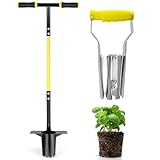
- 【3Pcs Bulb Planter Tools Set】- This bulb planting set comes with long handle bulb planter, small bulb planter with depth mark and dirt-proof gardening gloves. Step and twist to pull out plugs, quickly make rows of consistant holes in 3" dia for your bulbs
- 【Save Your Back in Various Bulb Planting】- This bulb planter tool long handle allows you to plant ALL KINDS OF BULBS and bedding plants from a comfortable standing position, such as tulips, crocus, dahlias, gladiolus, lilies and most bedding plants are easy to plant at the perfect depth
- 【Large Foot Plate for Safety & Extra Down Force】- Long handle bulb planter with wider foot plate easily maximizes force with your body weight, brings optimal digging safety and performance. Avoid digging in dry or overly saturated soil
- 【Saw-Tooth Blade - Easy Plug Bulb Planter】- Tulip bulb planter tool with serrated blade, dig into soils and lawns easier to make plugs (the next plug pushes the previous plug out automatically). Powder coated steel construction of this bulb transplanter is built to last
- 【Warm Tips】 - Long handles bulb planter work well with small ones. It's also a great gift for someone who likes to grow flowers. Get the bulb planter tool set with confidence, we are always available fix any problem for you
Commercial production uses a different protocol: Johnny’s specifies an 8–12-hour soak in water at 77°F (25°C), followed by approximately three weeks of chilling at 40–50°F (5–10°C), then sprouting at 55–60°F (12–16°C). That is a controlled production system for particular crop types, not a requirement that every home gardener must follow. If your supplier provides different directions, use those directions first. The full details are in Johnny’s production PDF.
4. Pre-sprout when it solves a problem
Pre-sprouting is optional. It is most useful when your growing season is short, outdoor soil is still cold or wet, you want to identify viable corms, or you need to control the planting date for earlier flowers.
- Soak the corms using the home or supplier-specific protocol.
- Fill a shallow tray with lightly moistened potting mix. The mix should feel damp, not wet.
- Set each corm with its claw-like fingers pointing downward and its rounded crown upward.
- Cover it lightly with approximately ½–1 inch of mix.
- Keep the tray in a cool, dark or dim location, commonly around 40–60°F, depending on the supplier’s method.
- Check frequently for white roots, shoots, mold, and soft tissue.
- Plant as soon as healthy roots and early shoots appear.
Home growers commonly see roots in about 10–14 days, while a controlled chilling-and-sprouting program may take two to four weeks. Do not leave rooted corms crowded in the tray longer than necessary: roots tangle, transplanting becomes more disruptive, and shoots can become weak or elongated. Floret’s ranunculus guide describes the home cut-flower workflow.
5. Prepare the bed before planting
- Remove weeds and loosen the soil.
- Correct drainage problems before planting. Do not rely on compost alone to fix a site that stays waterlogged.
- Incorporate compost where the soil needs organic matter, without creating a water-retentive pocket.
- Use a soil test before applying substantial fertilizer.
- Plant into soil that is evenly moist but not saturated.
Ranunculus prefers fertile, well-drained soil in a mildly acidic to near-neutral range. Commercial recommendations vary: Johnny’s lists approximately pH 5.8–6.3, while Farmer Bailey lists approximately pH 6.3–6.8. The useful home-garden conclusion is to improve drainage and fertility and let a soil test guide amendments rather than chasing a narrow pH number. See the Johnny’s production recommendations and Farmer Bailey’s guide.
6. Plant with the claws down
For ordinary home-garden dormant corms, plant the claw-like fingers downward and the rounded crown upward. Cover the crown with approximately 2 inches of soil. In very light soil or with unusually large corms, 2–3 inches may be appropriate. Space most home plantings 6–9 inches apart. Use wider spacing for tall, heavily branching cultivars or where humid weather makes airflow especially important.
Published spacing varies from roughly 3–6 inches for dense displays to 9–12 inches for cut-flower production. The difference reflects cultivar architecture, desired density, stem quality, and disease pressure. Follow the named series’ instructions when available. Clemson’s home-garden guidance provides a useful general depth and spacing range.
Why might a commercial guide say to plant much shallower? Johnny’s controlled production protocol places the crown only about ⅛–¼ inch below the surface after its specific soak-and-chill treatment. That is not a contradiction of the common 2-inch home-garden depth; it is a different system involving preconditioned corms and controlled growing conditions. Do not substitute the shallow commercial depth for ordinary direct planting unless your supplier specifically recommends it.
7. Water carefully after planting
Water once to settle the soil around the corms. After roots and shoots begin developing, keep the soil lightly and consistently moist. Avoid repeated heavy irrigation while the corms are still dormant, especially if they were planted dry and the bed drains slowly. “Cool and moist” does not mean “wet.”
Once foliage is growing, drip irrigation or watering at soil level is preferable. If you must use overhead irrigation, water early in the day so the foliage and flowers dry quickly. Never leave a container standing in a saucer of water.
Rank #3

- 🌻【Durable & Ergonomic Design】Ergonomically designed spring loaded handles makes bulb planter easy to use. High hardness of material makes it durable and sturdy. Bulb transplanter won't become deformed even after a long time.
- 🌻【EFFICIENT TRANSPLANTING】The bottom of bulb planter is gear type and it's power-saving diving bulb planter into the earth. Also it's lightweight and easy to carry.
- 🌻【Automatic Soil Release】The Automatic Bulb Transplanter innovative spring-loaded mechanism effortlessly ejects soil with a simple squeeze, reducing hand strain and speeding up your planting process.
- 🌻【Versatile Gardening Tool】Ideal for a variety of bulbs, seedlings, and small plants. Whether you're planting tulips, daffodils, dahlias, garlic, onions, or perennials, this tool makes the job faster and easier.
- 🌻【Lifetime-Warranty & SIZE】Maximum diameter is 3.2 inch and maximum depth is 4 inch. Even after the Amazon return window, we offer a lifetime warranty for the hand bulb planter. because we believe that all gardeners need quality garden tools that will last for many years.
Where ranunculus grow best
- Light: Full sun, generally at least six hours of direct light daily. In hot climates, afternoon shade or shade cloth late in the season can help preserve stem length and flower quality.
- Drainage: Excellent drainage is essential. Use raised beds or containers if native clay stays wet.
- Moisture: Maintain even moisture during active growth, but let the soil surface and upper root zone drain between waterings rather than keeping it saturated.
- Air circulation: Avoid crowding and give foliage room to dry after irrigation or rain.
- Protection: A sheltered position or tunnel can reduce damage from wind, hail, excessive winter rain, and freezing temperatures.
Containers are particularly useful when the garden soil is heavy, winter wetness is severe, or plants need to be moved under cover. Use a container with drainage holes and a high-quality potting mix amended with grit or perlite for additional drainage. As a general retailer guideline, plant approximately one ranunculus in an 8-inch pot, two in a 12-inch pot, or three in an 18-inch container; reduce the number in humid conditions or with vigorous cultivars. The RHS container guidance and Longfield’s ranunculus overview provide additional container information.
Protecting ranunculus from frost
Do not allow dormant, soaked, or unsprouted corms to freeze. Established foliage can tolerate some light frost, but a hard freeze can damage leaves, crowns, and developing flowers. Exact damage depends on temperature, exposure, plant stage, moisture, and how long the freeze lasts.
When a hard freeze is forecast, cover plants with frost cloth supported by hoops. Avoid laying wet fabric directly on the foliage. Remove or vent the cover when temperatures rise so the crop does not overheat or remain trapped in condensation. Containers can be moved into a protected, bright, unheated space.
Floret identifies approximately 25°F (−4°C) as a damaging threshold for corms, while Johnny’s advises that unsprouted corms should never be allowed to freeze. Treat 25°F as a warning point from that production guidance, not as a guaranteed safe-or-dead boundary for every situation. For repeated freezes, a low tunnel, high tunnel, greenhouse, or movable container is more dependable than a single layer of fabric.
Care during active growth
Keep growth cool and evenly watered
Ranunculus performs best while temperatures remain cool. A reasonable home-garden estimate is about 90 days from planting to flowers, but large corms, pre-sprouting, cultivar, light, and temperature can move that schedule substantially. Under favorable conditions, flowering may continue for approximately four to seven weeks.
Free tools Windows power users keep installed
One-click scans. No signup required.
Sustained warmth shortens stems and the harvest window and eventually causes summer dormancy. Johnny’s warns that sustained temperatures above approximately 70°F can shorten the harvest period; a Utah production factsheet reported flower production stopping at approximately 80°F. These are crop-response ranges, not universal on/off thresholds. In hot climates, the goal is to finish flowering before persistent heat rather than force the plant to grow through summer.
Feed moderately
Use a soil test and follow the fertilizer label rather than applying a universal N-P-K program. Avoid excessive nitrogen, which can encourage soft, leafy growth without improving flower quality. Good drainage, sufficient light, cool timing, and healthy corms usually matter more than extra fertilizer.
Control weeds and improve airflow
Keep weeds down so they do not compete for moisture or shade the foliage. Avoid crowding, especially in humid climates. Support netting is optional for compact plants but useful when tall stems are top-heavy or exposed to wind. Remove spent flowers down to the base to encourage the plant to keep producing while conditions remain cool.
When and how to harvest ranunculus flowers
Harvest in the early morning when stems are fully hydrated. Cut deeply at the base with a clean tool rather than pulling the stems.
The Tool Desk
Outbyte PC Repair FREERepair Windows errors before they cause bigger problemsFix Now →Outbyte Driver Updater FREEFix the driver behind crashes, sound loss and screen glitchesFind Drivers →Rank #4

- FOOT‑PEDAL LEVERAGE & LONG‑HANDLE STRUCTURE: Built‑in foot pedal delivers extra downward force, long handle removes constant bending and squatting. Greatly eases back and knee strain during long‑time garden work, perfect for senior gardeners and large‑area planting jobs.
- RUST‑RESISTANT HIGH‑CARBON STEEL BUILD: Heavy‑gauge high‑carbon steel with anti‑rust coating. Sturdy construction resists bending even in hard, rocky or damp soil conditions. Solid build delivers stable year‑after‑year performance for outdoor garden projects.
- ACCURATE DEPTH MARKINGS FOR CONSISTENT PLANTING: Visible depth reference marks help you keep uniform hole depth for tulips, daffodils, tubers and seedlings. Proper planting depth improves germination rate and growing effect, avoid uneven growth caused by random digging.
- SHARP BOTTOM CUTTING EDGE: Precision‑sharpened cutting edge cuts soil neatly and extracts complete soil plugs with minimal effort. Clean hole opening for bulb planting, sod patching, lawn aeration and transplant work without rough torn soil edges.
- MULTI‑FUNCTION LAWN & GARDEN TOOL: Works for bulb & tuber planting, sod plug transplanting, lawn bare‑spot repairing, seedling transplanting and small shrub digging. One‑tool solution for flower bed, vegetable garden and daily lawn‑maintenance tasks for home gardeners.
- Standard ranunculus: Cut when the bud is colored, closed or partly open, and feels springy—often compared with the feel of a marshmallow. This stage generally provides the longest vase life.
- Butterfly types: These are often harvested later, when several buds show color and one flower is open, because their form and opening behavior differ.
Place stems immediately in clean, cool water. With good harvest and vase care, a vase life of roughly 10 days, and often 10–12 days, is a reasonable expectation. For garden display, remove finished flower stems all the way down to the base rather than merely snipping off the petals.
What to do after flowering
Do not cut healthy green ranunculus foliage immediately after flowering. The leaves continue photosynthesis and help replenish the storage organ for the next cycle. Let the foliage yellow and die back naturally.
As heat arrives and dormancy begins, reduce watering—especially if summer soil is hot and wet. Do not keep irrigating heavily to force summer growth. Once the foliage is completely dormant, lift the corms if winter freezing or summer rainfall makes in-ground storage risky. Dry and store firm corms in a dry, ventilated, frost-free place, then discard any that become soft, moldy, or badly damaged.
In mild, dry climates, corms may be left in the ground. Even there, return is not guaranteed. Ranunculus may perennialize in favorable conditions, but many gardeners replant fresh corms each year for more predictable flowering. In colder or wet climates, lifting and storing is the safer experiment.
Recommended Free Tools
For storage and dormancy guidance, compare the University of California Agriculture and Natural Resources ranunculus information with the climate-specific advice above.
Growing ranunculus from seed
Seed-grown Persian buttercups should not be handled like dormant corms. The RHS recommends sowing Persian buttercup seed in plug cells in September in its regional growing context, covering it lightly, and maintaining approximately 59°F (15°C). Keep seedlings moist and frost-free, then pot them up after they develop four true leaves. Some seed-grown plants may flower in their first year.
Because seed lines can be slower and less predictable, dormant corms or a flowering nursery plant are usually the clearer choice for a beginner who wants large, florist-style double flowers. Seed is a worthwhile alternative for gardeners interested in propagation, selection, or landscape-type plants.
Independent reader supportYour contribution helps us test, update, and keep practical guides available for everyone.Common ranunculus problems and fixes
| Symptom | Likely causes | First response |
|---|---|---|
| Soft or collapsing corms | Rot caused by over-soaking, wet pre-sprouting mix, saturated soil, repeated heavy watering, or damaged starting material | Discard affected corms, improve drainage, use lightly moist rather than wet media, and water less often until roots establish. |
| No growth after planting | Cold soil, excessive heat, a damaged corm, wrong orientation, excessive planting depth, or rot | Do not assume failure too soon; visible growth can take about a month. Gently check one corm for roots and firmness before disturbing the whole planting. |
| Plants emerge but produce few flowers | Late planting, insufficient light, small corms, excessive warmth, crowding, irregular moisture, or excess nitrogen | Improve timing and drainage, provide more light and airflow, and avoid trying to solve the problem with more fertilizer. |
| Yellowing after spring flowering | Normal seasonal dormancy or root stress from poor drainage | Check the soil and season. If heat has arrived and foliage is naturally declining, reduce water and allow dormancy; if the plant is collapsing in wet soil, investigate rot. |
| White powder on leaves | Possible powdery mildew | Improve spacing and airflow, keep foliage dry, remove badly affected material, and seek local diagnostic guidance if it spreads. |
| Gray, fuzzy growth | Possible Botrytis gray mold, favored by prolonged humidity and wet foliage | Remove infected tissue, reduce humidity, improve airflow, and sanitize tools and containers. |
| Wilting with dark or discolored vascular tissue | Possible Fusarium wilt or another vascular/root disease | Remove the affected plant and request a diagnosis from a local Extension or plant-diagnostic service rather than relying on a photograph. |
| Frost-burned foliage | Exposure to a hard freeze | Protect future freezes with hoop-supported frost cloth or a tunnel. Assess the crown and avoid saturating damaged plants. |
| Healthy plants stop flowering as summer arrives | Normal heat-related dormancy | Reduce watering as foliage dies back. Do not force continued summer growth in hot, poorly drained soil. |
Ranunculus can be affected by Botrytis, powdery mildew, downy mildew, Ramularia leaf spot, bacterial blight, root and crown rots, southern blight, and viruses. The UC IPM host-pathogen index lists these disease problems. A 2026 Utah State Extension presentation also documents ranunculus-associated Fusarium wilt, including wilting and vascular discoloration in stems and corms; serious or rapidly spreading problems warrant local diagnosis. Do not replant visibly diseased corms.
Do these 3 things before closing this tab:
1Clear out junk files and repair common Windows errors2Scan for outdated or missing drivers - takes under a minute3Repair Windows errors before they cause bigger problemsDo ranunculus need special safety precautions?
Ranunculus sap can cause contact dermatitis, and ingesting plant material can harm people and pets. Wear gloves when handling plants or corms, wash your hands after working with them, and keep plant material away from children and animals. The NC State Extension Plant Toolbox includes toxicity and cultural information.
Best Value

- The planting auger for drill designed with new model upgraded bit and more spirals on the solid shaft, ensures digging holes 10 times working efficiency, extremely increase your planting efficiency and you have more time enjoy the planting season.
- Planting auger for drill made of heavy duty steel with black paint coated for long service time. Extended length 16.5inch will make you stand up digging holes for planting instead bending over, really necessary tool in your planting season. Heavy duty solid shaft will work on any kinds of soils.
- Auger bits size is 1.6nch diameter by 16.5inch length, suitable for planting all kinds of bulbs and flowers of different sizes. 16.5inch length will also prevent you from back strain, don’t need to bend over so much to dig holes like the traditional way using a shovel.
- The pointed triangle bit of the auger drill bit has a small hole on it for easily hanging storage when not in use. Fit any 3/8” hex drive drill, please using drill with adjustable drill chuck to fit any sizes augers, you will never worry about if the auger fit your drill any more. 18V or larger cordless drill recommended.
- Package include 1.6x16.5inch solid shaft intensive blades auger drill bit. Great gift ideas for anyone who loves doing garden work, will help them planting potted plants, vegetables, flowers, bulbs, soils, paint and so on. Also can bring earth drill on vacation to drill a hole in sand to anchor your beach umbrella and outdoor tents.
A reliable beginner schedule
- Confirm the plant: Check that the package says Persian buttercup or Ranunculus asiaticus.
- Choose the season: Plant in fall in a mild climate or protected structure; use late winter or early spring in colder climates.
- Prepare the site: Choose full sun, fertile soil, and rapid drainage.
- Inspect the corms: Keep firm, healthy corms and discard soft or rotten material.
- Soak: If no supplier directions are provided, use a 3–4-hour cool or room-temperature home soak.
- Pre-sprout if useful: Use lightly moist mix, claws down, and a cool location. Check often and transplant promptly when roots appear.
- Plant: Place claws down, approximately 2 inches deep, and 6–9 inches apart unless the cultivar’s instructions say otherwise.
- Water carefully: Settle the soil, then maintain light moisture without saturation.
- Protect: Use hoops and breathable frost cloth during hard freezes and move containers under cover when needed.
- Maintain: Weed, provide airflow, deadhead, and avoid excessive nitrogen.
- Harvest: Cut colored, partly opened buds early in the day for the longest vase life.
- After dormancy: Leave foliage until yellow, then lift and store corms where freezing or wet conditions threaten them.
Frequently Asked Questions
Do ranunculus corms have to be soaked before planting?
No. Soaking is helpful but not mandatory when the supplier allows direct planting. If you soak, a conservative home-garden method is 3–4 hours in cool or room-temperature water, followed immediately by planting or pre-sprouting. Do not treat rooted plugs as dry corms: they should be transplanted without soaking.
Which way up do I plant ranunculus corms?
Place the claw-like fingers downward and the rounded crown upward. For ordinary home-garden corms, cover the crown with approximately 2 inches of soil. A much shallower depth in some commercial guides applies only to specially soaked and chilled corms under controlled conditions.
Can ranunculus be planted in spring?
Yes. Spring planting is often the better choice in cold climates, particularly when done in late winter or early spring as soon as soil is workable and the plants can be protected from hard freezes. Plant early enough to give the crop a cool season before temperatures rise.
How long does it take ranunculus to bloom?
About 90 days from planting is a reasonable home-garden estimate, but corm size, cultivar, pre-sprouting, and temperature can change the schedule. Warm weather can shorten the flowering period or trigger dormancy before the crop reaches its full potential.
Can ranunculus grow in pots?
Yes. Containers are useful for heavy soil, poor drainage, and moving plants under cover. Use a pot with drainage holes and a free-draining potting mix; never let the container sit in water. As a general guideline, use one plant in an 8-inch pot, two in a 12-inch pot, or three in an 18-inch container.
Will ranunculus come back every year?
They may return in mild, relatively dry conditions, but perennial return is not guaranteed. Freezing, wet winters, hot wet summers, and disease can kill the corms. Many gardeners lift and store them or plant fresh corms annually for more predictable flowers.
Should I cut ranunculus foliage after flowering?
No. Leave healthy foliage in place until it naturally yellows and dies back. The leaves replenish the corm. Once the plant is fully dormant, reduce watering and lift the corm if local winter or summer conditions make leaving it in the ground risky.
The Tool Desk
Outbyte PC Repair FREEClear out junk files and repair common Windows errorsFree Scan →Outbyte Driver Updater FREEFix the driver behind crashes, sound loss and screen glitchesFind Drivers →Are ranunculus poisonous to pets?
Ranunculus sap can cause contact dermatitis, and ingestion can harm people and pets. Wear gloves, wash your hands after handling the plants, and keep corms and plant material away from children and animals.
The Bottom Line
Ranunculus succeeds when its cool-season schedule is respected. Plant Ranunculus asiaticus corms in fall where winters are mild and drainage is excellent, or pre-sprout and plant in late winter or early spring in colder areas. Soak briefly unless your supplier specifies another protocol, keep the claws down, plant ordinary home-garden corms about 2 inches deep, and maintain moisture without saturation. Protect the crop from hard freezes, let the foliage die back naturally, and lift the dormant corms wherever winter cold or persistent wetness makes survival uncertain.
Quick Recap
Product prices and availability are accurate as of the date/time indicated and are subject to change. Any price and availability information displayed on Amazon at the time of purchase will apply.

