There is no single “reclaimed-land drainage system.” Reclaimed sites may contain variable fill, a high or fluctuating water table, buried drains, made-up ground, contamination, or altered flood routes. The safe approach is to establish the land’s history and present water pathways first, then choose a drainage destination and system that the evidence and local permissions support.
This guide is grounded in England’s guidance. Authorities, permits and technical standards differ in Scotland, Wales, Northern Ireland and other countries, so confirm the applicable rules where the property is located.
As an Amazon Associate I earn from qualifying purchases.
Why reclaimed land needs a site-specific drainage plan
“Reclaimed land” describes how land was created or altered, not how it will behave under a house. It may have been raised with imported fill, recovered from an industrial or waste use, drained from marsh or floodplain, or formed by infilling a former water body. Two adjoining properties can therefore have completely different soil permeability, groundwater levels and drainage infrastructure.
PC Slower Than It Used to Be?
A free scan shows the junk files, broken settings and background clutter dragging Windows down - then fixes them in one click.Free scan · Windows 10 & 11Outdated Drivers Are Slowing You Down
One free scan finds every outdated or missing driver and matches the right update for your exact hardware.Free scan · exact hardware matchFill can allow water to move quickly in some layers and hold it in others. Buried obstructions may divert flow toward a foundation. Historic industrial or waste uses can leave contaminants that must not be mobilised by infiltration. A raised site may also send runoff toward a lower neighbouring property. These conditions cannot be inferred from the land label alone.
#1 Best Overall

- Efficient Sump Pump: Aquastrong sump pump with 1HP powerful motor. Draining water up to 4500GPH Per Hour( 75 gallons per minute) at 5ft. Lift water up to 30ft of vertical height
- Portable Design: Plug in to play while unplug to stop. Bottom suction design filters debris and removes water down to 1/5 inch from the surface. It can handle up to 1/5″solids , ideal for draining hot tub and flooded basement window wells
- Easy Installation: 1-1/4'' NPT discharge comes with 1-1/2'' elbow adapter and snap coupling adapter of 3/4'', 1'' or 1-1/4'', which makes Submersible pump easy to install. 10ft UL power cord provides safety and convenience
- Safe & Durable: The submersible water pump is made of reinforced engineering thermoplastic casing resists corrosion and abrasion. Quality mechanical seal prevents leakage effectively for long service life. Built-in thermal overload protector will keep the motor from burning out when dry running
- Quality Service: Aquastrong customer service provides professional technical supports, keeps your water system stable and worry-free
Groundwater flooding is a rise in the water table until water reaches the surface or enters a building from below. It commonly affects basements and other below-ground rooms, can appear after prolonged rain rather than immediately after a storm, and may continue for weeks or months. Roof runoff, water flowing across paving and sewer surcharge are different pathways and require different responses.
Investigate the site before selecting a drain, soakaway or pump
Reconstruct how the land was used and formed
Start with evidence rather than a product choice. Ask what occupied the land before the present house, when it was filled or raised, where excavated material came from, and whether a former stream, pond, quarry, tank, landfill or industrial process was present. Review historic maps, planning files, environmental searches, old drainage plans and records held by the local council. Government contamination guidance recommends considering historic land use and engaging planning and environmental-health officers early when contamination may be relevant.
Look for clues on and around the property: changes in ground level, retaining walls, vent pipes, capped wells, inspection chambers, disused culverts, areas of settlement, unusual staining or odours, and vegetation that indicates persistently wet ground. A label in a conveyance or a developer’s brochure is not proof that the site is uncontaminated or suitable for infiltration.
Record when and where water appears
Keep a dated log through wet and dry weather. Note rainfall, the delay before water appears, depth, duration, room or garden location, and whether the water is clear, muddy, oily or foul-smelling. Photograph stains and marks before cleaning them. Record whether water rises through a floor, seeps through a wall, runs down a slope, enters through a door or backs up from a drain.
Inspect roof gutters, downpipes, gullies, channel drains, paving falls and any visible outfalls separately from foul-water pipes. Check whether an existing drain is a combined sewer connection or a dedicated surface-water route; do not assume that a pipe near the house is safe to use for groundwater.
Obtain design information where consequences are serious
Recurring ingress, a basement, steep ground, suspected contamination or movement in a retaining wall warrants a qualified drainage or flood-risk professional. The investigation may need trial pits or boreholes, soil and fill descriptions, permeability or infiltration testing, seasonal groundwater monitoring, a survey of existing pipes and levels, and an assessment of structural and contamination pathways.
Rank #2

- Efficient Design - This small submersible pump uses a top suction design that eliminates air lock and minimizes clogging from debris at the bottom of the sump pit. Install in about 15 minutes with no need to drill a weep hole.
- Tough And Durable - A corrosion-resistant epoxy coated steel motor housing, stainless steel fasteners a cast-iron volute give this small pump long life in tough sump pump applications
- Quality You Deserve - This corded electric water pump is proudly assembled in the USA and warrantied for 3 years. Its dependable, efficient, ultra-quiet performance provides quality you can trust
- Indoor Use Only - This 1/3 HP WAYNE sump pump supports basement water removal during heavy water flow from rain or snow melting. Model CDU790 can pump up to 4,600 GPH to help keep your basement dry
- Tested Vertical Float Switch - Integrated float switch tested to 1 million cycles for dependable automatic operation
National sustainable-drainage standards say a design relying wholly on infiltration must account for wet-winter conditions and use groundwater records to demonstrate likely maximum groundwater levels. A single dry-season test is not enough evidence for a system intended to work year-round.
What’s actually slowing this PC down?
Pick the symptom - the matching free tool is one click away.
- Confirm the seasonal high groundwater level, not just today’s depth.
- Identify each soil or fill layer and its measured permeability.
- Map where surface water, groundwater and foul water can legally go.
- Check whether infiltration could mobilise contaminants.
- Assess effects on foundations, retaining structures, neighbours and public flood risk.
- Leave access for inspection, cleaning and future monitoring.
Distinguish groundwater from runoff and sewer backflow
Correct diagnosis prevents an expensive system from treating the wrong problem.
| Observed symptom | Likely pathway | Useful first checks |
|---|---|---|
| Water pushes up through a basement slab or floor drain, often after a delay following prolonged rain | Rising groundwater or hydrostatic pressure | Monitor the water table or borehole, inspect joints and floor levels, and obtain structural advice before excavation |
| Water arrives immediately during intense rain at doors, walls or paving | Roof or surface runoff | Check gutter capacity, downpipes, paving falls, channel drains and blocked gullies |
| Dirty water rises from a toilet, inspection chamber or low drain when the public network is surcharged | Foul or combined sewer backflow | Inspect non-return protection and contact the sewer owner; do not route groundwater into the foul system |
| Water tracks along a sloping garden or collects at the uphill side of a building | Overland flow or shallow perched water | Survey levels and consider an appropriately located interception feature designed by a professional |
| Water is present continuously in a low point regardless of recent rain | High groundwater, leaking infrastructure or a spring | Test water quality and level over time; investigate buried services and contamination |
These signs can overlap. For example, a high water table can saturate soil so that a later storm also produces rapid surface flooding. Treat the observations as a starting diagnosis, not permission to install a particular drain.
Choose a lawful and workable destination for surface water
England’s national SuDS standards set a preferred order for development runoff:
- Collect water for non-potable use.
- Infiltrate it into the ground.
- Discharge it to an above-ground surface-water body.
- Discharge it to a surface-water sewer or other piped surface-water system.
- Use a combined sewer only as the last option.
The hierarchy guides design; it does not grant permission to connect to a watercourse, sewer, highway drain or neighbouring land. The chosen route must not increase flood risk elsewhere or create groundwater or surface-water pollution.
Recommended Free Tools
Infiltration to ground
A soakaway, infiltration trench or similar feature may be appropriate only where testing shows adequate permeability, the seasonal groundwater level leaves sufficient unsaturated ground, and contamination assessment shows no unacceptable pollutant-mobilisation risk. Waterlogged or poorly draining ground, shallow groundwater, made ground of uncertain composition and contaminated land are reasons to pause rather than enlarge the excavation.
Rank #3
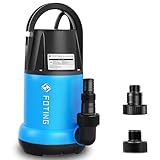
- EFFICIENT DRAINAGE: Utility pump with 1HP power motor for Draining water up to 4600 GPH( 76 GPM) at 5ft. Lift water up to 31ft of vertical height. Removing water to 1/5" of the surface.
- PORTABLE PUMP: Plug in to play while unplug to stop. Sump pump filters debris and removes water down to 1/5 inch from the surface. Handle up to 1/5″solids , ideal for pool pond draining hot tub and flooded basement window wells
- 4 DETAILS: 10FT power cord for greater range of use;Removable bottom easy to clean and maintain pump life; Rounded handle prevents cuts and comfortable to use; Thermoplastic housing for corrosion resistant and durable.
- QUICK TO CONNECT: Comes with a NPT 1-1/2" discharge size, a NPT 3/4" garden hose adapter and a hose adapter fits Ф1-1/2", Ф1" or NPT 1" inch hose. You can use different sizes of hoses depending on the flow
- ENERGY SAVING & SAFETY: 100% manufacturer tested, low noise and energy saving. Built-in automatic thermal overload protects the motor from burning out when dry running
The national SuDS standard specifies a minimum 1 metre of unsaturated ground for systems wholly reliant on infiltration. That is a design requirement in its stated context, not evidence that every garden soakaway will work. The design still needs calculations for runoff volume, exceedance routes, maintenance access and the effect on adjacent structures.
Technical limits in drainage-field guidance
The Environment Agency’s infiltration-system guidance for drainage fields treating effluent includes percolation testing, groundwater separation and siting constraints. In that guidance context, a drainage field should not be within 10 metres of a watercourse or within 50 metres of a drinking-water source, and should not be on steeply sloping or waterlogged land. It also sets a 1.2 metre water-table separation condition alongside its percolation requirements.
Those figures apply to the drainage-field guidance and its specified systems. Do not silently apply them as a universal design rule for a rainwater soakaway, land drain or basement perimeter drain. A designer must identify which standard governs the proposed installation.
Do these 3 things before closing this tab:
1Fix the driver behind crashes, sound loss and screen glitches2Clear out junk files and repair common Windows errors3Scan for outdated or missing drivers - takes under a minuteStorage, reuse and controlled discharge
Where infiltration is unsuitable, a system may store roof water for non-potable uses, attenuate it and release it at an agreed rate, or discharge to a suitable watercourse or surface-water sewer. Storage needs a safe overflow route for storms and a plan for sediment removal. A watercourse connection may require an environmental permit or consent; a sewer connection normally requires the water company’s agreement and may involve capacity or connection conditions.
Never discharge groundwater into a foul sewer, onto a public footway, or across a boundary without the responsible authority’s approval. A route that appears convenient can transfer flooding, undermine a neighbour’s ground or breach pollution controls.
Compare the main measures by site evidence, not product name
| Measure | When it can help | Critical checks and limitations |
|---|---|---|
| Gutter and downpipe improvements | Roof runoff overwhelms gullies or falls against walls | Confirm capacity, secure outlets and provide an authorized destination; it does not solve rising groundwater |
| Surface grading or channel drainage | Rainwater flows toward doors, light wells or foundations | Maintain a safe outfall and an exceedance route; avoid sending water to a neighbour |
| Infiltration feature | Tested permeable ground with adequate unsaturated depth and no pollutant risk | Seasonal groundwater, fill variability, contamination, maintenance and structural effects must be assessed |
| Attenuation tank or storage | Runoff needs temporary holding before an agreed discharge | Size for the design storm, provide overflow and inspection access, and obtain connection approval |
| Uphill interception drain | Shallow flow approaches from higher ground | Location, depth and discharge can affect foundations and neighbours; use professional design |
| Sump and pump | Water collects at a designed low point inside or beside a building | Needs reliable power, backup, correct capacity, safe authorized discharge and structural assessment |
Manage groundwater entering a basement or low room
Make the area safe first
Keep people away from submerged electrical equipment, isolate power only if it can be done safely, and treat visibly polluted or foul-smelling water as hazardous. Do not enter a flooded space if the depth, current, contamination or structural condition is uncertain. Water pressure can destabilize walls and floors even when the surface level looks modest.
Rank #4
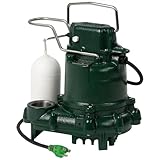
- Automatic with float activated switch
- Non-clogging vortex impeller design
- Durable cast iron switch case, motor, and pump housing
- Cast iron switch case, motor, and pump housing, plastic base
Use a sump and pump only for an appropriate low point
Government guidance describes a water pump for small amounts and says it works best when its inlet sits in a sump: a low point into which water can drain. A pump can remove water from a property, but it does not explain why the water table is rising or make a contaminated discharge acceptable.
A competent installer should confirm the sump location, pump duty, pipe sizing, non-return protection, alarm, access for cleaning and the route’s ability to handle the flow. Provide a dependable power supply and a tested backup, such as a secondary pump on a separate circuit or an emergency arrangement appropriate to the property. Plan for interruptions lasting days, weeks or months, not just a short storm.
If water is at least 1 metre deep, the Environment Agency advises speaking to a structural engineer. Do not excavate around foundations or cut a basement slab to create a sump without checking bearing, buoyancy, waterproofing and buried services.
Confirm where pumped water may go
Before operating a permanent pump, ask the authority responsible for the destination. Discuss a river or ditch with the Environment Agency, a public sewer with the water company, and a street drain or highway ditch with the relevant highway authority. A permit, consent or connection agreement may be required. The discharge must not flood another property, erode a bank, overload a pipe or spread contamination.
Independent reader supportYour contribution helps us test, update, and keep practical guides available for everyone.Protect an existing or historic building without creating a new problem
Historic England’s technical advice for relevant historic buildings emphasises routine repair and maintenance of existing drains. It identifies measures such as a land drain uphill from the building or reducing earth piled against the wall as options to consider before tanking. These suggestions are not a universal specification: modern construction, foundation type, groundwater pressure and conservation requirements may lead to a different solution.
Quick wins for a faster PC:
Fix the driver behind crashes, sound loss and screen glitchesFind Drivers →Repair Windows errors before they cause bigger problemsFix Now →Scan for outdated or missing drivers - takes under a minuteDriver Scan →Before tanking, membrane installation or internal lining, find the water source and check whether trapped moisture could damage masonry, timber or finishes. Waterproofing can redirect water to another part of the structure and may conceal a defect while hydrostatic pressure remains. Basement conversion in a groundwater-prone area needs a coordinated structural, drainage and waterproofing design.
Best Value

- High-Capacity 3/4 HP Motor: Pumps up to 5,490 gallons per hour for reliable basement water removal during heavy storms
- Heavy-Duty Cast Iron & Stainless Steel Construction: Designed for long-lasting durability in tough sump conditions
- Integrated Vertical Float Switch: Provides dependable automatic operation while fitting into narrow sump pits
- Top Suction Anti-Airlock Design: Helps prevent clogging and eliminates the need for a weep hole during installation
- Assembled in the USA with 5-Year Warranty: Built for dependable, ultra-quiet performance
Do not install a deep perimeter drain immediately beside foundations as a DIY project. Lowering or redirecting groundwater can wash fines from soil, alter bearing conditions, undermine retaining walls or shift water toward neighbouring land.
Follow a staged design and approval process
- Define the problem. Map rooms, levels, water marks, drains, gutters, slopes and neighbouring properties. Separate groundwater, runoff and sewer symptoms.
- Check history and records. Review historic land use, fill, flood-risk information, planning files, drainage plans and contamination information.
- Monitor conditions. Record rainfall and ingress; where needed, install temporary or permanent groundwater monitoring to capture wet-season levels.
- Test the ground. Establish soil and fill layers, permeability, infiltration capacity, groundwater separation and possible pollutant pathways.
- Set the destination hierarchy. Consider reuse, infiltration, a surface-water body, a surface-water sewer and only then a combined sewer, subject to technical feasibility and approval.
- Design for exceedance. Show where exceptional runoff or a failed pump will go without entering living space or another property.
- Obtain permissions. Confirm planning, building-control, drainage-owner, environmental-permit, sewer-connection and highway requirements before construction.
- Install with access. Provide inspection chambers, rodding points, pump alarms, isolation points and safe working space for future maintenance.
- Commission and document. Keep as-built levels, pipe routes, pump specifications, electrical arrangements, discharge consents and maintenance instructions.
Maintain the system and prepare for a prolonged event
Drainage is a continuing responsibility. Inspect gutters, downpipes, gullies, channels, inspection chambers and outfalls; remove leaves, silt and roots; and keep access covers visible. Check that an infiltration feature has not become clogged or waterlogged. Keep pump inlets, alarms, non-return valves and backup power maintained according to the equipment manufacturer’s instructions.
Recheck the authorized outfall after building work, landscaping or road changes. A previously adequate route may be blocked, disconnected or receiving more water than it was designed for. Watch for settlement, new damp patches, cracks, soil loss or a change in the time between rainfall and ingress.
The Tool Desk
Outbyte Driver Updater FREEFix the driver behind crashes, sound loss and screen glitchesFind Drivers →Outbyte PC Repair FREERepair Windows errors before they cause bigger problemsFix Now →Prepare a flood plan that identifies the safe location of electrical shut-offs, pump controls, torches, batteries, barriers and important documents. Government resilience guidance includes flood-resistant valves on drains and water pipes, water-resistant or resilient finishes, and raising electrical equipment. These measures reduce damage from some flood pathways; they do not remove groundwater pressure or prove that the source has been fixed.
Common decisions that need professional confirmation
- “The site is reclaimed, so a soakaway will fail.” Not necessarily. Performance depends on measured permeability, seasonal groundwater and contamination risk; the label alone proves neither success nor failure.
- “A pump will solve the basement problem.” It may remove collected water, but capacity, power, structural safety and lawful discharge still have to be demonstrated.
- “A land drain is harmless if it is outside the wall.” Excavation and groundwater changes can affect foundations, retaining structures and neighbouring land.
- “The nearest drain is the obvious outlet.” A street drain, watercourse or sewer has a different owner and approval process; the nearest pipe may be a foul sewer or already overloaded.
- “Tanking is the first step.” For existing or historic buildings, investigate and maintain drainage and reduce external water loading before selecting an internal waterproofing method.
How to judge a drainage proposal
Ask the designer to state the evidence behind every major choice. A useful proposal identifies the seasonal high groundwater level, soil and fill permeability, contamination findings, design rainfall and runoff volume, discharge destination, required permissions, effect on neighbours, pump power and backup, inspection access, and any structural or heritage constraints. It should also explain what happens when infiltration is saturated, storage is full, power fails or the approved outfall is unavailable.
Reject a proposal that relies on a generic “reclaimed land” rule, promises a universal soakaway depth, sends groundwater to a foul sewer without consent, omits wet-season conditions, or cannot show how maintenance and emergency overflow will work.
England-specific responsibilities and wider jurisdiction
The technical and regulatory references above are principally for England: national SuDS standards, Environment Agency guidance, local councils, water companies and highway authorities each have defined roles. In Wales, Scotland, Northern Ireland or another country, the responsible bodies, permit terms, building standards and drainage hierarchy may differ. Identify the local regulator and drainage owner before work begins rather than importing an English approval assumption.
Quick Recap
Product prices and availability are accurate as of the date/time indicated and are subject to change. Any price and availability information displayed on Amazon at the time of purchase will apply.

