Do these 3 things before closing this tab:
1Clear out junk files and repair common Windows errors2Fix the driver behind crashes, sound loss and screen glitches3Repair Windows errors before they cause bigger problemsThe safest flood plan has three stages: prepare the electrical system before water arrives, isolate power without entering water, and have the entire system inspected before it is energized again. Raise vulnerable components, put unavoidable low-level devices on separately marked GFCI-protected circuits, and keep the main disconnect accessible from a dry location. During a flood or return visit, never touch electrical equipment while standing in water. If the disconnect cannot be reached safely, call the utility or a licensed electrician.
Floodwater can leave panels, wiring, receptacles, appliances and tools energized, contaminated or damaged even after the water recedes. A tripped breaker is not proof that a circuit is safe. Treat every wet or submerged electrical component as unsafe until a qualified professional has inspected it and the local authority or utility permits restoration.
As an Amazon Associate I earn from qualifying purchases.
Why floodwater creates an electrical emergency
Water entering a home can provide an unintended path for current through floors, walls, people and tools. Floodwater may also conceal damaged insulation, energized metal parts, fallen service conductors and debris. Contamination from sewage, fuel or chemicals adds hazards that are not visible after the surface appears dry.
The danger does not end when water stops rising. Moisture can remain inside panels, breakers, receptacles, junction boxes, conduit and appliances. Corrosion and insulation damage may cause a fault later, including when power is restored. For that reason, “the water is gone” is not an electrical clearance.
#1 Best Overall

- Homeline 20 amp single-pole plug-on-neutral dual function (cafci and gfci) circuit breaker
- Innovative neutral connection design leads to fewer connections and faster installation, no pigtails which frees up gutter space
- Compatible with homeline series 4 and newer load centers only
- 120 vac circuit breaker
- 10,000 air feature
A breaker that has tripped is only an indication that one protective device operated. It does not establish that the panel, the breaker itself, downstream wiring or connected equipment is dry and serviceable. A qualified electrician or electrical inspector must make that determination.
Prepare the electrical system before a flood
Find and label the main disconnect
Identify the main service disconnect before storm conditions make movement difficult. It should be reachable from a dry, stable and unobstructed location, with a durable label that household members and emergency personnel can understand. Ask a licensed electrician whether the disconnect can be raised or otherwise protected while remaining compliant with local electrical and flood regulations.
Do not wait for an evacuation notice to discover that the disconnect is behind a locked room, in a low utility space or reachable only by crossing a sunken floor. Test the labeling and access during a dry-weather walkthrough, not during an emergency.
Recommended Free Tools
Raise components above the projected flood elevation
The Centers for Disease Control and Prevention advises raising switches, receptacles, circuit breakers, wiring and related electrical components at least 12 inches above the home’s projected flood elevation (CDC, 2024). “Projected flood elevation” is not automatically the height of the last flood; it is the elevation used for the site and applicable flood requirements. Have the electrician and local building official confirm the reference elevation before work is designed.
Rank #2
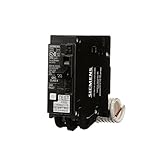
- Single pole, 20 Amp, type QPF2 GFCI Circuit Breaker
- 10,000 AIC interrupting rating
- Includes self-test as required by UL 943 as an added safety feature
- Suitable for a variety of construction applications including spas, hot tubs, kitchens, bathrooms, etc.
- Provides class A GFCI protection
Elevation work may involve moving receptacles and switches, relocating a panel, extending branch-circuit wiring, raising junction boxes or changing the route of conduit. The work must preserve safe clearances, grounding and access. A higher component is not an improvement if the new location is inaccessible for shutoff or service.
Minimize devices below the required elevation
Plan rooms and equipment layouts so that as few electrical devices as possible remain below the required flood elevation. This includes receptacles, switches, lighting controls, panels, junction boxes and permanently connected equipment. Moving a receptacle higher may be simpler and less expensive than designing protection for a device that remains in a low wall.
When a low-level device is unavoidable, ask the electrician to place it on a separate branch circuit protected by a clearly marked GFCI circuit breaker. FEMA recommends this arrangement for unavoidable devices below flood elevation (FEMA, 2017). Separate circuits make it possible to disconnect the vulnerable area without unnecessarily shutting down the rest of the home, while the GFCI provides additional shock protection when correctly selected, installed and maintained.
Make flood-prone wiring recoverable
Ask whether non-metallic conduit is appropriate for the installation. FEMA identifies conduit that can be cleaned after a flood as one way to improve recoverability (FEMA, 2017). The electrician should select materials and routing that meet the local code and the site’s physical conditions; no conduit choice makes wet conductors automatically safe to re-energize.
Rank #3

- Only for use with Siemens load centers rated to accept plug on breakers
- 10,000 AIC
- HACR and SWD rated
- UL Listed
Junction boxes can also be planned so that wiring damaged below the box can be removed and replaced without replacing the entire installation. This is a design question to resolve before construction or remodeling, not a repair technique to improvise after a flood.
Reduce surge and shock exposure before evacuation
When it is safe to do so from a dry location, unplug appliances before an outage or evacuation. Disconnecting equipment can reduce shock and surge risks when utility power returns. Never reach through water, move wet appliances or pull a plug while standing on a wet surface. If conditions are already unsafe, leave the area and let the utility or electrician isolate power.
Compare flood-mitigation choices
Use these questions when planning work with an electrician. A robust design usually addresses all five, rather than relying on a single product or retrofit.
What’s actually slowing this PC down?
Pick the symptom - the matching free tool is one click away.
| Decision factor | What a strong plan provides | Questions to ask |
|---|---|---|
| Elevation | Components are at least 12 inches above the projected flood elevation, where CDC guidance applies. | What elevation is being used, and which devices will still be below it? |
| Isolation | Unavoidable low-level devices are on separate branch circuits with clearly marked GFCI breakers. | Can the vulnerable circuits be disconnected without entering the flooded area? |
| Recoverability | Conduit and junction-box arrangements allow appropriate cleaning or replacement of damaged wiring. | Can flood-damaged conductors be replaced in sections, or would the whole run need removal? |
| Access and compliance | The main disconnect remains reachable from a dry location and work complies with local electrical and flood codes. | Who will confirm permits, elevation requirements and final inspection? |
| Professional verification | A qualified electrician or inspector checks the system before re-energization. | What written clearance or inspection record will document that power may be restored? |
What to do while water is entering the home
- Keep people and pets out of the water. Do not wade through a room to retrieve belongings or reach a switch. Assume water may be energized until professionals establish otherwise.
- Assess the disconnect from a dry position. If you can reach it without entering water and without touching wet equipment, follow the household emergency plan. If the switch requires entering standing water, stop and call the electric utility or a licensed electrician. The CDC states: “If you must enter standing water to access the main power switch, then call an electrician to turn it off.”
- Do not operate electrical equipment while wet. That includes switches, breakers, plugs, tools, appliances, extension cords and portable generators. The American Red Cross warns: “Do not touch electrical equipment if it is wet or if you are standing in water because you could get electrocuted.”
- Use battery lighting. Flashlights or battery lanterns are safer for movement and inspection in a dark home than candles, which can ignite damaged materials or leaking gas.
- Follow evacuation instructions. Leave when local authorities direct you to do so. Do not delay evacuation to unplug equipment or move possessions.
- Report exterior electrical hazards. Never touch a fallen line or anything contacting it. Stay at least 35 feet away and report the line to the utility or emergency services, following current American Red Cross flood and power-outage guidance.
Safe return after the water recedes
Wait for an official all-clear
Return only when authorities say the area is safe. Floodwater can undermine walls, floors, stairs and driveways, and utility crews may still be working. Take a flashlight or battery lantern and inspect from outside before entering.
Rank #4
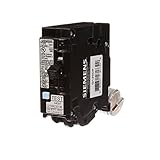
- Faster, more cost effective installation to meet code requirements compared to installing an AFCI breaker and GFI receptacle
- For use on Siemens load centers that accept UL type QFGA2 breakers
- Siemens exclusive LED trip indicator pinpoints cause of trip
- HACR, SWD, 120 Volt AC rated
- The breaker requires power to run the self test / trip functions (will not test / trip when not installed)
Check for lines and structural damage without touching anything
Look for downed service wires, damaged masts, leaning poles, broken exterior equipment and water that has reached the service entrance. Keep at least 35 feet from fallen power lines and anything they contact. Do not move a wire, fence, branch or piece of debris that may be energized.
Do not improvise access to the disconnect
If standing water blocks the panel or main disconnect, call the utility or an electrician. Do not stand on furniture, use a ladder in wet conditions, remove covers or create a path through the water. FEMA’s 2024 guidance is explicit: “NEVER turn the power on or off or use an electrical tool or appliance while standing in water.”
Respond to suspected gas leaks first
If you smell gas, hear hissing or see damage to gas equipment, leave immediately and contact emergency services or the gas utility from a safe location. Do not operate light switches, phones, appliances or other equipment that could create a spark inside the building.
PC Slower Than It Used to Be?
A free scan shows the junk files, broken settings and background clutter dragging Windows down - then fixes them in one click.Free scan · Windows 10 & 11Crashes, No Sound, or Screen Glitches?
Random freezes, missing sound and display glitches usually trace back to one bad driver. Find and replace yours safely.Free scan · under a minuteKeep every wet or submerged device out of service
Do not use a wet or submerged outlet, panel, breaker, receptacle, switch, light, tool, appliance, extension cord or generator. Do not assume that drying in the sun, wiping the exterior or replacing a fuse makes it safe. Tag damaged equipment so nobody reconnects it accidentally, and arrange a qualified inspection.
Best Value

- Double pole, 50 Amp, type QPF2 GFCI Circuit Breaker
- 10,000 AIC interrupting rating
- Includes self-test as required by UL 943 as an added safety feature
- Suitable for a variety of construction applications including spas, hot tubs, kitchens, bathrooms, etc.
- Provides class A GFCI protection
What a professional inspection should cover
Tell the electrician exactly where water reached and whether the system was energized during the flood. The inspection should be broad enough to identify hidden damage, not limited to the component that looks worst.
- The service entrance, meter area and main disconnect, including signs of water intrusion, corrosion or physical movement.
- The panel interior, bus, breakers, grounding and bonding components, and any breaker that tripped.
- Branch-circuit wiring, insulation, splices, junction boxes and conduit in affected areas.
- Receptacles, switches, lighting equipment, GFCI devices and other controls below or near the flood line.
- Permanently connected appliances, heating and cooling equipment, pumps, garage equipment and other devices exposed to water.
- Outdoor equipment, generators, temporary wiring and anything connected to a fallen line or flooded structure.
The professional may recommend cleaning, drying, testing, replacing individual components or replacing larger sections. Follow the electrician’s written scope and the authority having jurisdiction. A homeowner voltage tester is not a substitute for this inspection and is not permission to enter an energized or flooded area; such testers should be used only by people qualified to work under the applicable conditions.
When replacement is more practical than cleaning
Flood exposure is not uniform. A device above the waterline may still have been affected by vapor, wicking or contaminated spray, while a submerged device may show little external damage. The electrician will determine whether a component can be safely cleaned and tested or must be replaced.
Free tools Windows power users keep installed
One-click scans. No signup required.
Recoverable design matters here. Non-metallic conduit may be cleanable when the electrician’s assessment and local requirements permit it. Junction boxes designed for sectional replacement may allow damaged conductors below the box to be removed without dismantling the entire system. These features reduce future disruption, but they do not eliminate the need for inspection or guarantee that any particular conductor can be reused.
Cost, permits and planning expectations
Official guidance does not publish a comparable national dollar figure for flood-electrical upgrades. Cost varies with the home’s size and wiring method, projected flood elevation, number of devices to move, panel location, damage already present, permit requirements, accessibility and the electrician’s scope.
| Cost driver | Why it changes the work |
|---|---|
| Elevation | Moving a panel or many branch circuits can require new routes, longer conductors, wall repairs and permits. |
| Low-level circuit isolation | Separate GFCI-protected branch circuits may require new breakers, wiring and durable circuit identification. |
| Recoverability | Conduit and junction-box changes may cost more initially but can limit future replacement to damaged sections. |
| Existing damage | Corrosion, contamination or tripped breakers can expand an inspection into replacement of equipment and wiring. |
| Jurisdiction and access | Flood-zone rules, inspections, permits, utility coordination and difficult access affect labor and schedule. |
Request a written scope that identifies the reference flood elevation, components to be raised, circuits to be isolated, materials proposed, permits required and the inspection or sign-off needed before re-energization. A low bid that omits the panel, hidden wiring or final inspection is not a complete comparison.
Quick Recap
Common mistakes and the safer alternative
- “The breaker tripped, so the house is safe.” A trip does not clear wet equipment or wiring. Keep power off and arrange a professional inspection.
- “I can reach the switch if I wear rubber boots.” Do not enter standing water to operate a disconnect. Call the utility or electrician.
- “The outlet looks dry.” Internal contamination and moisture may not be visible. Do not use it until inspected.
- “I will use a candle to look around.” Use a flashlight or battery lantern; candles can ignite damaged materials or gas.
- “I can move a fallen line out of the way.” Stay at least 35 feet away and report it.
- “A handheld tester proves everything is de-energized.” Testing is not a substitute for isolation, safe access and professional evaluation.
- “I will restore one circuit to see what works.” Do not re-energize any part of a flood-exposed system before qualified inspection and authorization.
A practical household flood-electricity checklist
Before storm season
- Locate, label and test access to the main disconnect from a dry location.
- Ask a licensed electrician to compare component heights with the projected flood elevation.
- Raise switches, receptacles, breakers, wiring and related equipment at least 12 inches above that elevation where CDC guidance applies.
- Remove unnecessary low-level devices and place unavoidable ones on separate, clearly marked GFCI-protected branch circuits.
- Discuss cleanable conduit and replaceable junction-box arrangements for flood-prone runs.
- Keep flashlights or battery lanterns available and review evacuation routes.
When flooding threatens
- Follow local alerts and evacuate promptly.
- Keep people and pets out of standing water.
- Disconnect appliances only from a dry, safe position.
- Shut off power only when the disconnect is reachable without entering water; otherwise call the utility or electrician.
- Stay at least 35 feet from fallen power lines and report them.
Before power is restored
- Wait for the official return clearance.
- Check for exterior line and structural hazards without touching them.
- Keep wet or submerged equipment disconnected and tagged.
- Have a qualified electrician or electrical inspector examine the complete affected system, including tripped-breaker circuits.
- Restore power only after the qualified professional and applicable authority confirm that it is safe.
Product prices and availability are accurate as of the date/time indicated and are subject to change. Any price and availability information displayed on Amazon at the time of purchase will apply.

