The Tool Desk
Outbyte Driver Updater FREEFix the driver behind crashes, sound loss and screen glitchesFind Drivers →Outbyte PC Repair FREEClear out junk files and repair common Windows errorsFree Scan →The safest home is not the one filled with the most equipment. It is the one whose walking routes, transfers, lighting, surfaces, and emergency systems match the resident’s abilities and daily routines. Start by watching how the person actually moves through the home, then remove trip hazards, improve visibility, add stable support where transfers occur, and arrange professional help when the correct modification or installation is uncertain.
Why a home-safety review matters
Falls can occur in any room and along any route: a dark hallway at night, a loose rug in a living room, an uneven entry step, or a slippery bathroom floor. The National Institute on Aging (NIA) notes, “Many falls happen at home, where we spend much of our time and tend to move around without thinking about our safety.”
As an Amazon Associate I earn from qualifying purchases.
The consequences can be serious. A Centers for Disease Control and Prevention (CDC) page updated January 27, 2026, reports about 300,000 hip-fracture-related hospitalizations each year resulting from falls among older adults. That page cites Moreland, Legha, Thomas, and Burns in the Journal of Aging and Health, a 2023 analysis of U.S. 2019 data. In that study, falls caused 83% of hip-fracture deaths and 88% of hip-fracture emergency-department visits and hospitalizations; women accounted for about 70% of hip fractures treated in emergency departments or hospitals.
What’s actually slowing this PC down?
Pick the symptom - the matching free tool is one click away.
These figures describe U.S. populations, not an individual resident’s risk. The CDC’s practical conclusion is concise: “Falls—and the injuries and deaths they cause—are increasing, but falls can be prevented.” A home review is one part of prevention, alongside health-care review, strength and balance activity, and eye care.
#1 Best Overall

- Matters need Attention: Only suitable for tiles measuring 4×4 inches or larger. For the safety of the seniors and elderly, please pay attention that the suction grab bars for shower ONLY sticks on smooth and non-porous AIRTIGHT walls which are NOT air-permeable like metal, glass, tile, marble, stainless steel and acrylic but does NOT apply on uneven tile, unfinished marble, wallpaper, dry wall, porous wall, painted wall, etc. Please don't put all the body weight on the shower grip
- Easy for Installation: Each suction cup shower handle equips 2 Strong suction cups with locking latches to provide stable protection. The bathtub hand rafully removable, reusable and causing no damage to your wall
- Safety to Users: Each shower bars safety is fabricated with an Anti-Slip Strip on top of the handrail, which creates strong friction to better keep your hands ON the grab bar. On the bottom of the grip covers the curved wave design which is suitable for fingers, giving you double protection to guarantee safety and security. The safety shower bars for elderly is able to support up to 240 LBS heavy duty EACH and also waterproof, staying sturdy and stable
- Multiple Applications: Many people in daily life need help keeping balance when standing up and walking. Yet we couldn't be there help them all the time. But this shower bar for bathroom can easily provide them safe, effective and convenient help! The grab bars for bathtub and shower is suitable to install in Bathroom, Bathtub, Shower, Toilet and Kitchen to offer assistance getting up for elderly & seniors, pregnant women, kids, injured, handicapped and the people who have trouble in mobility
- Warm-hearted Service: If any of the TAILI shower grip product did not meet your requirements, simply contact us and we will help to solve it. If problems when firstly installation, please wash the suction cup, dry it with hair dryer and test it on the smooth glass surface. If suction holds, that means initial wall might not applicable for using suction cup, please change installation location
Do not treat this checklist as a requirement to purchase every item. NIA advises reevaluating safety as behavior and needs change; a person who walks independently today may need different support after an illness, medication change, vision change, or mobility decline.
How to conduct the review
1. Follow real routines
Walk the routes the resident uses from waking to bedtime. Include the bed-to-bathroom route, kitchen work area, favorite chair, telephone, entrances, stairs, laundry area if used, and outdoor approach. Look at the route from the person’s eye level and at the times it is actually used, especially at night.
2. Record hazards before buying equipment
Photograph or list each problem under one of five categories: trip, slip, transfer, visibility, or emergency detection. A loose cord and an uneven threshold are trip hazards; a wet tub is a slip hazard; a low toilet may create a transfer problem; a missing stair light is a visibility problem; an absent or untested alarm is an emergency-detection problem.
Quick wins for a faster PC:
Clear out junk files and repair common Windows errorsFree Scan →Fix the driver behind crashes, sound loss and screen glitchesFind Drivers →Rank #2

- DURABLE & SUPPORTIVE CONSTRUCTION: 24-inch long stainless steel grab bar with 1.25 inch diameter; supports up to 500 lbs when installed in a stud or when using SecureMounts (not included)
- EASY INSTALLATION: SecureMount design for easy, secure installation (sold separately) delivering safety and peace of mind
- STYLISH STAINLESS FINISH: Stainless finish delivers a lightly brushed warm gray metallic look and coordinates with other Moen bathroom accessories and hardware
- ADA COMPLIANT: Complies with Americans with Disabilities Act (ADA) specifications
- BUILT TO LAST: Corrosion-resistant, sturdy handicap grab bar backed by Moen’s Limited Lifetime Warranty
3. Fix high-consequence, easy-to-correct hazards first
- Remove clutter and objects that narrow a route.
- Secure or remove loose rugs and repair uneven flooring.
- Move cords out of walking paths and doorways.
- Clean spills immediately and keep bathing routes dry.
- Improve lighting before adding more complicated equipment.
4. Match changes to the resident
Consider balance, strength, reach, vision, hearing, footwear, transfer technique, and whether the person uses a cane, walker, wheelchair, or other aid. A device that works for one resident may be awkward or unsafe for another. If you cannot decide where support belongs or whether a person can use it safely, ask a health-care provider about an occupational- or physical-therapy home assessment.
Whole-home checklist
Walking surfaces and pathways
- Repair uneven flooring, raised transitions, damaged carpet, and loose thresholds.
- Remove throw rugs that slide or curl. If a rug must remain, it needs to be securely held flat; discard it if it cannot be secured.
- Keep boxes, shoes, pet items, and other objects out of routes.
- Route electrical and telephone cords beside walls rather than across floors. Keep them out of doorways.
- Wipe up water, grease, and other spills as soon as they occur.
- Keep frequently used items between waist and shoulder height. Do not climb on a chair or table; use a reach stick or ask for help instead.
Lighting and switches
- Light frequently used routes, including hallways, entrances, and the path to the bathroom.
- Provide a switch at both the top and bottom of stairs and at both ends of a long hall where feasible.
- Use a night-light or motion-activated plug-in light where a switch is difficult to reach.
- Replace failed bulbs and reduce glare or deep shadows that make a change in floor level hard to see.
Stairs and halls
- Install secure handrails on both sides of every stair flight when the layout permits.
- Keep every step and landing clear. Do not carry loads that block the view of the steps.
- Check that stair coverings are firmly attached and that edges are visible.
- Make switches reachable at both ends of the stairs.
- If stairs are no longer manageable, discuss an appropriate adaptation, such as a ramp or a gate, with a qualified professional. The suitable solution depends on the resident and the building.
Entries, porches, and decks
- Repair broken or uneven steps and approach surfaces.
- Use nonslip material where outdoor surfaces become slippery, while keeping the walking path level and unobstructed.
- Clear leaves, snow, ice, sand, toys, and other debris. In winter, NIA suggests ice melt or sand for slippery walkways.
- Turn on porch lighting before approaching the door at night.
- Check that the door hardware can be operated without standing on one leg or twisting around an obstacle.
Emergency information and alarms
- Keep emergency telephone numbers and the complete home address beside telephones.
- Check that smoke and carbon-monoxide (CO) alarms are installed near the kitchen and in bedrooms, and test their batteries as directed.
- MedlinePlus describes CO detectors on each floor, with an additional detector near major gas-burning appliances; plug-in units should have battery backup. Placement descriptions vary, so follow local requirements and the manufacturer’s instructions.
- Keep medicines in clearly labeled containers and review labels regularly.
- Store firearms safely and separately from ammunition, following applicable law and manufacturer guidance.
Bathroom safety
Bathrooms combine water, hard surfaces, tight turning spaces, and transfers. Focus on the toilet, tub or shower, and the dry route between them.
Place support at the transfer points
NIA and the CDC identify grab bars at the toilet and tub or shower as key supports. Placement should reflect the person’s actual hand position when sitting, standing, stepping in, and stepping out. A bar is useful only when it is firmly attached to structural material or an appropriate reinforcement system and can be reached before balance is lost.
Rank #3

- Enhance Bathroom Safety: Shower grab bars for seniors enhance bathroom safety. For the elderly and those suffering with mobility issues, a grab bar makes bathing a safer experience
- Non-slip Design: Bathroom grab bars have a unique non-slip knurled surface. It provides good traction especially when gripping is difficult, or when hands are wet
- Suitable for All: This shower bar is 1 inches in diameter and fits all hand sizes. It comes in 7 lengths (12", 16", 18", 20", 24", 32" and 36") for all needs
- Sturdy and Long-lasting: Made from stainless steel, this shower bar is incredibly robust and will not rust over time. Its high load-bearing capacity ensures a safe bathroom experience for your family
- Multipurpose: The hand rails wall mounted can not only be used as bathtubs and showers to protect your safety, but also put your towels, clothes, etc
MedlinePlus advises that grab bars be secured vertically or horizontally, not diagonally. A towel rack is not a weight-bearing support and should never be substituted for a grab bar. Because wall construction and the resident’s transfer method differ, have an experienced installer or occupational therapist confirm the location when there is any doubt.
Control water and traction
- Add traction to the tub or shower surface with a suitable nonslip treatment, mat, or grip decals.
- Use a nonskid mat outside the bathing area and keep that route dry.
- Keep soap, shampoo, and towels within reach so the resident does not bend, twist, or step out of the wet area to retrieve them.
- Consider a shower chair or bench for someone who cannot stand safely for the entire shower. It is an option based on need, not a universal requirement.
- A raised toilet seat may help a person who has difficulty lowering to or rising from a standard-height toilet; confirm that the chosen setup remains stable and allows safe transfers.
Prevent burns
MedlinePlus recommends setting the water heater no higher than 120°F (49°C) to reduce scald risk. Test water temperature at the fixtures and follow local plumbing requirements when making adjustments.
Bedroom and nighttime route
Make the bedside area usable in the dark
- Place a working light switch and a night-light where they can be reached before standing.
- Keep a flashlight beside the bed and check its batteries.
- Keep a landline or a well-charged phone within easy reach.
- Place glasses, mobility aids, and other essential items where they can be reached without leaning across the bed or walking in darkness.
Inspect the bed-to-bathroom path
Walk this route at night. Remove loose rugs and cords, clear furniture and stored items, and add low-level lighting that shows the floor without creating glare. Ensure the bathroom door can be opened without a blocked approach.
Rank #4

- SUPERB MATERIAL: The shower grab bars for seniors is made of stainless steel which is waterproof, rustproof and Sturdy. Up to 500 pounds of pulling force, offer a stability and balance for people with trouble standing for long periods of time, and create a safe bathroom experience for your family.
- NON-SLIP AND RELIABLE: The bathroom grab bars considering that the smooth surface of stainless steel is not conducive to power assist, unique non-slip surface with a knurled surface, the anti-slip function works well even with wet hands or in a wet bathroom.
- EASY INSTALLATION: Grab bars for wall allows for easy, secure installation at any angle with our assembly instructions, concealed screw design to allows you to cover any unsightly screw holes to keep your bathtubs and showers clean and beauty.
- WIDE USAGE APPLICATIONS: The hand rails can not only be used for bathtubs and showers to protect your safety, but also can be used along stairways, or in the kitchen, living room, bedroom, laundry room for additional fall prevention. Especially for the handicap, elderly, pregnant women, and children.
- Full CUSTOMER SATISFACTION: If you have any questions about product quality, installation issues or other issues, please contact us as soon as possible. We will reply within 24 hours and provide you with a satisfactory solution or otherwise.
Kitchen safety
Arrange work at comfortable reach
- Store commonly used cookware, dishes, utensils, and food between waist and shoulder height.
- Move rarely used or heavy items to lower-risk storage or ask for help retrieving them.
- Keep a stable work surface and a clear path between the refrigerator, sink, and cooking area.
Control spills and fatigue
- Wipe spills immediately and keep floor mats flat and secure.
- Keep appliance cords against walls and away from walking routes.
- Prepare food while seated if standing causes fatigue or loss of balance.
- Keep handles, towels, and packaging away from burners and other hot surfaces.
Living and family areas
Set furniture for a clear route
- Arrange chairs, tables, lamps, and footstools so the main walking path is continuous and wide enough for the resident’s mobility aid, if used.
- Remove decorative objects from the floor and secure any remaining cords along walls.
- Check that chairs and sofas are high and firm enough for the resident to sit down and stand up without dropping heavily or pushing against an unstable arm.
- Keep frequently used controls, telephones, and reading lights within reach from the usual seat.
Fire, electrical, and appliance precautions
MedlinePlus recommends keeping electrical cords out of doorways and off walking surfaces, maintaining appliances in good working order, and obtaining qualified help for hazards such as warm outlets or gas-appliance concerns. Do not improvise electrical repairs or continue using an appliance that shows overheating, sparking, damaged insulation, or a gas smell.
Keep smoke and CO alarms accessible for testing and battery replacement. If a resident cannot safely reach an alarm, arrange a maintenance plan with family, building management, or a qualified service provider.
Choosing the right intervention
Use the hazard—not a product category—as the starting point. The following framework keeps a portable aid from being mistaken for structural support.
Best Value
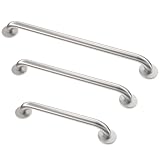
- Complete ADA Compliance Set: This 3-pack includes all essential grab bars for shower and restroom use (18”, 36”, 42”). Crafted from heavy-duty premium stainless steel with a reinforced 2MM flange, it surpasses standards, supports 600 lbs, and guarantees long-term safety for high-traffic commercial environments. ⚠️ CRITICAL: Please measure your wall space BEFORE ordering—42" bar requires approx. 44" of clear wall length.
- Maximum Durability & Lifetime Warranty: Engineered from heavy-duty premium stainless steel (1.5” OD, 18-gauge), these reliable grab bars are built for a lifetime of use. Backed by our limited lifetime warranty, they are a cost-effective investment that drastically reduces replacement needs in any setting
- Superior Support for Accessibility: Our handicap grab bars are engineered to exceed ADA and ANSI standards, offering secure 600-lb support. The versatile 12-hole mounting design ensures compliant and flexible installation on virtually any wall surface for public venues and stalls
- Professional, Hassle-Free Installation: Achieve a clean, modern look with concealed flanges and snap-on covers that hide all screws. The complete hardware kit allows for quick and easy installation of our grab bars for bathroom, making safety upgrades simple and aesthetically pleasing
- Critical Fall Prevention for Seniors: Provide dependable stability with our shower safety bars for seniors. The optimal 1.5” diameter and secure grip inspire confidence, effectively preventing slips and falls in wet bathroom conditions for aging adults and those with mobility needs
| Hazard | Possible intervention | What to verify |
|---|---|---|
| Trip | Remove clutter, secure or remove rugs, reroute cords, repair flooring | The route is clear at the times it is used and remains clear after cleaning or deliveries |
| Slip | Nonslip tub treatment, nonskid mat outside the bath, prompt spill cleanup | The surface stays flat, does not create a new edge, and is kept dry where required |
| Transfer | Properly installed grab bar, shower chair or bench, raised toilet seat | Placement matches the resident’s reach and movement; fixed supports are securely installed |
| Visibility | Night-light, motion-activated pathway light, switches at stair ends | Lighting reaches the floor and does not produce confusing glare or shadows |
| Emergency detection | Smoke and CO alarms with maintained batteries and appropriate backup | Placement follows local rules and manufacturer instructions; alarms are tested |
Portable nonslip aids do not provide the same support as a properly installed grab bar. A device must also fit the room’s surfaces, the person’s balance and reach, and the amount of assistance available.
When to bring in an occupational or physical therapist
- The resident has fallen, nearly fallen, or changed the way they walk.
- You cannot identify the safest grab-bar position or determine whether a shower chair or raised seat is appropriate.
- The person uses a walker, wheelchair, or other aid and turning space is limited.
- Stairs, thresholds, or bathroom transfers remain difficult after simple hazards are removed.
- A neurological, orthopedic, vision, or medication change has altered balance or alertness.
Ask a health-care provider for an occupational- or physical-therapy referral. A professional can observe transfers and routines, distinguish a needed structural modification from a portable aid, and coordinate with a qualified installer. This is especially important in rental housing or buildings where changes require approval.
A practical implementation sequence
- Map the routes. Mark the bedroom-to-bathroom path, kitchen route, stairs, entrances, and outdoor approach.
- Remove immediate hazards. Clear clutter, secure or remove loose rugs, reroute cords, repair spills and obvious flooring problems, and improve dark spots.
- Address transfers. Evaluate the toilet, tub or shower, and stairs. Install structural supports only after confirming location and attachment.
- Set up nighttime and emergency readiness. Add bedside lighting, a flashlight, a reachable phone, emergency information, and maintained smoke and CO alarms.
- Test the changes with the resident. Have the person use each route and transfer in normal clothing and footwear. Watch for reaching, twisting, hesitation, or a new obstruction.
- Schedule a reassessment. Review the home after an illness, fall, medication change, vision change, move, or change in mobility.
Home changes are only one part of fall prevention
The CDC recommends discussing personal fall risk and medications with a health-care provider, participating in strength and balance activity appropriate to the person, and obtaining regular eye checks. These measures address risks that a cleared hallway or grab bar cannot address. A safer home supports those efforts; it does not guarantee that a fall will not occur.
Quick Recap
Final checklist
- Routes are clear, floors are even, and rugs and cords cannot move into walking paths.
- Stairs have secure handrails on both sides where feasible, with usable lighting and switches at both ends.
- Entries, porches, decks, and outdoor paths are repaired, nonslip where needed, clear, and lit at night.
- The bathroom has support at the toilet and bathing transfers, safe traction, a dry route, and water temperature no higher than 120°F (49°C).
- The bedroom has reachable lighting, a night-light, a flashlight, a phone, and a clear path to the bathroom.
- The kitchen and living areas keep frequently used items within reach, spills cleaned, furniture stable, and routes unobstructed.
- Smoke and CO alarms are appropriately placed, tested, and maintained.
- Emergency numbers and the home address are available near telephones.
- A clinician or occupational/physical therapist is involved when the correct modification or installation is unclear.
Product prices and availability are accurate as of the date/time indicated and are subject to change. Any price and availability information displayed on Amazon at the time of purchase will apply.

