A home fire evacuation plan works when every person knows two ways out, can hear or otherwise receive the alarm, has an assigned helper if needed, and has practised the route. Map the home together, install and interconnect smoke alarms, assign adults and backups, adapt exits for children and accessibility needs, practise at least twice a year, and agree on one outdoor meeting place. When an alarm sounds, leave immediately, stay out, and tell firefighters if anyone is missing.
National Fire Protection Association (NFPA) guidance warns that a household may have only one or two minutes to escape after a smoke alarm sounds. A plan made in advance prevents hesitation when smoke, darkness or blocked routes make decisions difficult.
As an Amazon Associate I earn from qualifying purchases.
1. Map every room and choose two ways out
Draw the home with the people who will use it
Use paper or a floor-plan app and include every bedroom, living area, basement, stairway, door and window. Mark the location of every smoke alarm. Draw arrows from each room to the outside, identifying a primary route and a second route whenever possible. The second route is what makes the plan resilient if the first doorway or stairway fills with smoke.
PC Slower Than It Used to Be?
A free scan shows the junk files, broken settings and background clutter dragging Windows down - then fixes them in one click.Free scan · Windows 10 & 11Outdated Drivers Are Slowing You Down
One free scan finds every outdated or missing driver and matches the right update for your exact hardware.Free scan · exact hardware matchChoose one permanent outdoor meeting place, such as a neighbour’s driveway, a clearly identified tree or a lamp post a safe distance from the building. Mark it on the plan and use it for every drill. Everyone should know that the meeting place is for accounting for people, not for waiting near the building or deciding whether to go back inside.
#1 Best Overall

- Easy to use fire ladder - attaches quickly to most common windows (up to 11 inches deep & 16 inches wide) before rungs are released - works on casement windows
- No assembly required
- Flame resistant, durable & sturdy, foldable ladder - tested to 1,000 pounds
- Tangle-free design for fast & easy deployment in an emergency
- High quality, zinc-plated, 1-foot wide, anti-slip rungs for secure footing & a confident descent
Check each route before you rely on it
| Route check | What to verify |
|---|---|
| Smoke and heat | The route avoids the areas most likely to collect smoke or heat. During a fire, choose the path with the least smoke and heat, not automatically the shortest path. |
| Distance and complexity | A person can follow it without searching for keys, moving furniture or navigating confusing turns. |
| Opening the exit | Every person who may use the door or window can open it easily. Confirm that windows and doors are not painted shut, obstructed or too difficult to operate. |
| Night access | The route remains usable in darkness. Keep essential mobility equipment, glasses, a phone and a flashlight within reach of the bed. |
| Assistance | An assigned adult can reach and help the person who needs assistance without crossing an unsafe area. |
| Backup availability | If the primary path is blocked, the second route is still reachable and usable. |
Keep escape paths clear
Remove furniture, boxes, toys, tools and stored materials from hallways, stairs and the area immediately outside doors and windows. Recheck the map after renovations, furniture changes or a change in sleeping arrangements. A route that worked when the plan was drawn may no longer work after a room is repurposed or a window is blocked.
2. Build a warning system everyone can receive
Install alarms in the right places
NFPA guidance calls for smoke alarms inside every sleeping room, outside each separate sleeping area and on every level of the home, including the basement. Follow the alarm manufacturer’s installation instructions and local code for placement, power and replacement. A single alarm in a hallway may not wake someone behind a closed bedroom door.
Interconnect the alarms
Interconnected alarms make one sounding alarm activate all the others. That gives people in distant bedrooms, on another floor or in a basement the same warning instead of relying on a sound that may be muffled by distance and closed doors. When selecting or replacing alarms, confirm that every unit is compatible with the interconnection method and that the system can be tested from each location.
Maintain power and test access
Use the power source specified for the alarm and maintain batteries or other power components as the manufacturer directs. Include a regular household test so everyone recognises the sound and you can verify that the system still works. A useful alarm system is one that every family member can hear or receive, can be tested without special equipment and can be maintained when a battery or unit needs attention.
Do not silence an alarm by removing its battery because of cooking smoke or nuisance alarms. Instead, address the cause, improve ventilation or relocate the alarm only in accordance with the manufacturer’s instructions and local requirements.
Rank #2
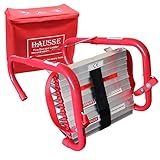
- The hooks secure the ladder to the window frame or to the sill of most windows and won’t slip off. The ladder hook is RETRACTABLE, please extend the ladder hook at both ends to the maximum when using.
- No assembly or tools are required, easy to use and fast to deploy, built for emergencies. Please replace it every three years to ensure its usability.
- Strong and durable escape ladder, slip-resistant rungs provide a steady foothold, can escape quickly and easily.
- Tested for up to 1000 lbs, it extends to 13 feet for use in second-story rooms.
- Comes with a red canvas bag for easily stored under a bed or near a window.
3. Assign people, including backups
Give every assistance task an adult and a backup
Write down who helps each infant, child, older adult, person with a mobility limitation or person who may not awaken to the alarm. Assign a backup who is physically present often enough to perform the task; a person who is away overnight cannot be the only plan. The helper should know the person’s room, preferred route, mobility equipment and the second route.
Do not make one adult responsible for so many people that the assignment is unrealistic. Divide rooms or floors between adults and practise the handoff if one helper is not home. Tell babysitters, overnight guests and other regular visitors who has each assignment.
Plan for children and people who sleep deeply
Children may not wake to a smoke alarm. Test this rather than assuming the alarm will wake them: during a drill, observe whether each child wakes, understands the sound and can follow the route. If not, the assigned adult must include waking, carrying or guiding that child in the plan. Practise the child’s response without frightening them, using simple instructions such as “alarm, door, outside, meeting place.”
Plan for older adults and mobility limitations
Keep a mobility aid, glasses, phone and flashlight within reach of the bed. Place essential equipment where it can be reached without standing or crossing the room. Identify which exit can be used with a walker, wheelchair or other aid and whether a helper needs to open a door, manage a threshold or guide the person down stairs.
Practise the actual assistance technique at a safe pace. If a person cannot use a route independently, document the assistance required and make sure the backup helper knows it. Never leave an assigned person waiting inside while an adult searches for equipment that should have been beside the bed.
Rank #3

- Easy to use fire ladder - attaches quickly to most common windows (up to 11 inches deep & 16 inches wide) before rungs are released - works on casement windows
- No assembly required
- Flame resistant, durable & sturdy, foldable ladder - tested to 1,000 pounds
- Tangle-free design for fast & easy deployment in an emergency
- High quality, zinc-plated, 1-foot wide, anti-slip rungs for secure footing & a confident descent
Provide an alert for deaf or hard-of-hearing family members
A standard audible alarm may not provide enough warning. NFPA advises using bed-shaker and strobe-light alerts that work with the smoke-alarm system. Position the alert where it will be effective during sleep, test it with the alarm system and include it in every drill. A visual or vibrating signal should lead to the same mapped routes and meeting place as an audible alarm.
Include pets without delaying people
Assign one adult to alert or release each pet only when doing so does not delay human evacuation. Keep carriers, leashes and essential pet equipment near an exit if they can be reached immediately. Do not send anyone back inside for a pet after leaving; tell firefighters what animal is missing and where it was last seen.
4. Make upper-floor escape realistic
Provide a usable route from every upper-floor room
Every person sleeping above the ground floor needs a route they can actually use. The primary route may be a protected stairway; the second route may be another stair or an operable window leading to a safe exterior location. Check the height, opening size and approach to each window, and consider whether the person who must use it can climb, be guided or be carried safely.
Use a portable escape ladder only as supplemental equipment
A portable escape ladder can add a window route from an upper floor, but it does not replace a mapped, maintained exit. Follow the ladder manufacturer’s instructions, store it where the intended user can reach it and practise attaching or deploying it with an adult. Children should practise ladders only from a first-story window under close adult supervision; do not conduct high-window practice with children.
Record which room contains the ladder and who is responsible for helping each person use it. If the ladder cannot be reached, attached or used by a household member, choose another route and obtain qualified advice rather than treating the ladder as a complete solution.
Free tools Windows power users keep installed
One-click scans. No signup required.
Rank #4
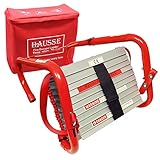
- DESIGNED FOR AN EMERGENCY, MUST HAVE FOR EVERY HOME. The hooks secure the ladder to the window frame or to the sill of most windows and won’t slip off. The ladder hook is RETRACTABLE, please extend the ladder hook at both ends to the maximum when using.
- No assembly or tools are required, easy to use and fast to deploy, built for emergencies. Please replace it every three years to ensure its usability.
- Strong and durable escape ladder, slip-resistant rungs provide a steady foothold, can escape quickly and easily.
- Tested for up to 1000 lbs, it can extends to 25 feet for use in three-story rooms.
- Comes with a red durable canvas bag for easily stored under a bed or near a window.
5. Practise until the response is automatic
Run realistic drills at least twice a year
NFPA recommends practising at least twice a year, including both daytime and nighttime conditions when feasible. A drill should test the complete system, not just whether people can recite the meeting place.
- Tell participants that the exercise is beginning, but do not reveal which alarm or route will be used.
- Activate the alarm test function and observe whether everyone hears or receives the warning.
- Have each person leave by the assigned primary route. Keep low if a simulated smoke condition is discussed; never create real smoke.
- Repeat the drill with the second route, or explain and practise it separately if conditions make a full second run unsafe.
- Close doors while leaving, where this can be done without delaying evacuation.
- Meet at the permanent outdoor location and account for every person and pet.
- Record failures: a child who did not wake, a window that stuck, a helper who was absent, an alarm that could not be heard or equipment that was out of reach.
- Correct the failure and update the written map and assignments.
Measure the parts that commonly fail
- Can every sleeper wake or receive the alarm?
- Can every person reach and open the planned exit?
- Can the assigned adult reach the person needing help without using a route that may be blocked?
- Does the backup helper know the assignment?
- Can everyone identify the outdoor meeting place without returning to the building?
6. Follow the emergency actions when the alarm sounds
Leave immediately
NFPA’s instruction is direct: “When a smoke alarm sounds, get out immediately.” Do not stop to dress, collect valuables, investigate the source or search for a phone. Use the route with the least smoke and heat. If smoke blocks the primary route, use the second route and stay low beneath the smoke layer.
Close doors as you leave
Close doors behind you when possible without slowing evacuation. NFPA notes that “A closed door may slow the spread of smoke, heat and fire.” Do not lock doors in a way that prevents rescuers from reaching people, and do not spend time trying to close a door that is hot or unsafe to touch.
If you cannot get out
Go to a room with the door closed, place a barrier at the bottom of the door if possible, call the fire department using your local emergency number and give the exact location. Signal from a window with a light-coloured cloth or a flashlight and make your location visible to rescuers. Tell the dispatcher who is in the room, the floor and the best window or access point. Do not hide in a cupboard or under a bed.
The Tool Desk
Outbyte Driver Updater FREEFix the driver behind crashes, sound loss and screen glitchesFind Drivers →Outbyte PC Repair FREERepair Windows errors before they cause bigger problemsFix Now →Stay outside and report missing people
Once outside, stay at the meeting place and do not re-enter for any reason. NFPA’s rule is: “Once you’re out, stay out! Under no circumstances should you ever go back into a burning building.” From outside, call emergency services if that has not already happened and tell arriving firefighters immediately if someone or a pet is missing, where they were last seen and which route they may have taken.
Best Value

- Fire safety ladder is 14 feet long, ideal for a two-story home or apartment
- Durable steel and nylon construction, tested to 375 pounds
- Steel stabilizers hold the escape ladder away from the wall for quick exit to safety
- Emergency escape ladder comes fully assembled and folds easily for storage
- Designed for windowsills between 6" and 10" wide
7. Compare routes and alarm options before finalising the plan
Choose the route that remains usable under pressure
When two exits appear possible, compare them against the same practical tests. A route that is technically shorter may be worse if it requires a child to operate a stiff window or a wheelchair user to cross a narrow threshold. A longer route may be preferable if it stays clearer of smoke, works at night and leaves a genuine backup.
| Decision factor | Questions for the household |
|---|---|
| Smoke and heat exposure | Which route is likely to remain clearer, and can the family recognise when to switch routes? |
| Distance and complexity | Can a sleepy child or visitor follow it without stopping to make decisions? |
| Physical access | Can each person open, cross and descend the exit, with the planned assistance? |
| Nighttime accessibility | Are glasses, mobility aids, phones and flashlights within reach, and is the route usable in darkness? |
| Upper-floor height | Does the route require a ladder or a window descent, and has an adult practised the equipment? |
| Backup | What is the immediate alternative if smoke, heat or a blocked door makes the first route unsafe? |
Choose alarms as a system, not isolated devices
| System feature | Why it matters |
|---|---|
| Coverage | Alarms are inside sleeping rooms, outside separate sleeping areas and on every level, including the basement. |
| Interconnection | One alarm activates the others, warning people who are farther away or behind closed doors. |
| Accessible alerting | Bed-shaker and strobe-light alerts support people who are deaf or hard of hearing. |
| Power and testing | The household can maintain the power source and test every unit as directed. |
| Compatibility | Replacement alarms and alerting devices work with the existing system and each other. |
8. Recheck the plan after household or building changes
Review the plan whenever someone moves into or out of the home, a child changes bedrooms, an older adult’s mobility changes, a pet is added, or construction changes a room, stairway or window. During renovation, keep temporary sleeping areas covered by the same alarm placement and give them two usable exits. Do not allow building materials, tools or temporary storage to narrow an escape path.
Confirm local building, smoke-alarm and emergency-number requirements with your fire department or local authority. Requirements can vary by jurisdiction and by the type of dwelling. Fire departments, senior-service agencies and qualified home-safety providers may offer alarm installation or home visits; ask what assistance is available locally. NFPA notes that at age 65, older adults are twice as likely as the population at large to be killed or injured by fires, so an accessibility review is particularly important when an older person lives in or regularly visits the home.
What’s actually slowing this PC down?
Pick the symptom - the matching free tool is one click away.
9. Keep a one-page version where everyone can use it
Post a simple plan near the main entrance and keep a copy where adults can find it quickly. Include the alarm locations, two routes from each sleeping room, the meeting place, assistance assignments and backup assignments. The posted sheet is a reminder; it is not a substitute for practising. Update it whenever the home, household or equipment changes.
Quick Recap
Product prices and availability are accurate as of the date/time indicated and are subject to change. Any price and availability information displayed on Amazon at the time of purchase will apply.

