Free tools Windows power users keep installed
One-click scans. No signup required.
You can reduce energy use and sometimes receive a rebate, bill credit, discounted equipment, or payment for changing when you use power—but there is no single national check for every household. The offer depends on your electric or gas utility, state, territory or Tribe, income, home, equipment, and the program’s remaining funds. Start by identifying local offers before buying equipment or signing a contract, then compare the net project cost after every incentive you actually qualify for.
What “get paid for saving energy” actually means
Energy programs use several different mechanisms. They are not interchangeable, and a lower bill is not automatically a cash payment.
As an Amazon Associate I earn from qualifying purchases.
Efficiency rebates
A utility or state agency may refund part of the cost of an efficient appliance, heat-pump system, insulation, air sealing, water heater, or control device. The benefit may arrive as an instant point-of-sale discount, a contractor discount, a mailed or electronic reimbursement, or a later bill credit. Eligibility can depend on the exact model, installation date, address, contractor, and documentation.
Quick wins for a faster PC:
Clear out junk files and repair common Windows errorsFree Scan →Fix the driver behind crashes, sound loss and screen glitchesFind Drivers →Repair Windows errors before they cause bigger problemsFix Now →Demand response and time-based rates
Demand-side management programs use education, financial incentives, equipment controls, and direct demand response to reduce or shift electricity use. A utility may offer a time-of-use rate that costs more during high-demand hours and less off peak. Moving laundry, water heating, electric-vehicle charging, or cooling to cheaper periods can lower the bill, but it does not create a separate cash payment.
#1 Best Overall
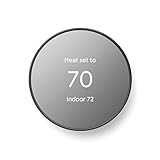
- ENERGY STAR certified smart thermostat for home that helps you save energy and stay comfortable.Connectivity : Wi-Fi - 802.11b/g/n 2.4 GHz, 802.11a/n 5 GHz Wi-Fi., Wireless interconnect : Bluetooth Low Energy Please refer to the product description section below for all applicable legal disclaimers.Product note: You can also check your system’s compatibility before purchasing a Nest thermostat with our online Nest Compatibility Checker on the Google Nest support page
- The Nest Thermostat is designed to work without a C wire in most homes, but for some systems, including heating only, cooling only, zone controlled, and heat pump systems, you’ll need a C wire or other compatible power accessory
- Nest Thermostat turns itself down when you leave, so you don’t waste energy heating or cooling an empty home. Lock feature: No
- Programmable thermostat that lets you create an energy efficient schedule in the Google Home app on your Android or iPhone
- Remote control lets family members change the thermostat temperature from anywhere on a phone, laptop, or tablet[1]
Some demand-response programs let a utility or grid operator temporarily adjust a connected thermostat, water heater, or other load during a high-demand or supply event. Advanced meters are often used. Before enrolling, read the event schedule, expected frequency, remote-control permissions, opt-out rules, comfort protections, and compensation terms. A national overview cannot establish what your own utility will pay.
Wholesale-market compensation is not a retail promise
The Federal Energy Regulatory Commission explains that demand response can compete with generation in organized wholesale markets under Order No. 745 when it is cost-effective and can balance supply and demand. That market rule does not mean an individual residential customer receives the wholesale price. Your retail utility’s tariff and enrollment agreement control your benefit.
First step: find the offers available at your address
Program availability is local. DOE’s Home Energy Rebates information says states, territories, and Tribes administer the programs and decide which products and projects qualify. A national maximum is therefore a ceiling, not an offer you can claim without checking local rules.
What’s actually slowing this PC down?
Pick the symptom - the matching free tool is one click away.
- Identify every service territory. Look at a recent electricity and gas bill for the utility name, account address, rate class, and meter type. Renters should ask the landlord which equipment and upgrades they may authorize.
- Check the utility’s current efficiency and demand-response pages. Search for appliance rebates, HVAC or heat-pump incentives, insulation and air-sealing offers, smart-thermostat programs, water-heater controls, time-of-use rates, and emergency load-reduction events.
- Check your state, territory, or Tribal energy office. DOE’s Energy Savings Hub, dated June 8, 2026, directs households to local administrators because product lists, income thresholds, reservation procedures, and funds differ. DOE also announced revised Home Energy Rebates guidance on June 1, 2026, so confirm that your local implementation reflects the current rules.
- Ask before purchasing. Confirm whether pre-approval, a reservation, an approved contractor, an energy assessment, or a specific model number is required. Many programs reject purchases made before the application or reservation date.
- Save proof. Keep the model and serial number, itemized invoice, permit, contractor license information, proof of address, income documents when required, dated photographs, and commissioning records.
DOE Home Energy Rebates: HOMES and HEEHR
The U.S. Department of Energy describes two separate Home Energy Rebate programs. Availability is currently limited to select states, and local administrators determine the practical terms.
| Program | What it supports | Published federal ceiling or threshold | What to verify locally |
|---|---|---|---|
| Home Owner Managing Energy Savings (HOMES) | Eligible whole-home upgrades such as insulation, air sealing, heating and cooling equipment, water heaters, duct sealing, appliances, and lighting | Up to $8,000; DOE describes a minimum 20% modeled energy-savings threshold | Whether your state has launched the offer, eligible measures, modeling method, income tier, contractor rules, reservation process, and remaining funds |
| High-Efficiency Electric Home Rebate (HEEHR) | Eligible efficient electric appliances and building-envelope work | Up to $14,000 | Qualified equipment, household-income limits, point-of-sale versus reimbursement treatment, electrical or installation requirements, and local caps |
HOMES bases the rebate on modeled whole-home savings rather than simply the price of one product. A model must represent the actual home and proposed work under the local program’s rules. The 20% threshold and $8,000 figure are federal program descriptions, not guaranteed payments. HEEHR’s $14,000 figure is likewise a maximum for eligible work, not an automatic household award. The state or Tribal program can impose lower limits, require income verification, or offer only selected measures.
Rank #2

- An Alexa thermostat - Amazon Smart Thermostat is an easy way to switch from a traditional thermostats for homes and help reduce energy usage.
- Create comfort zones throughout your home by connecting to select Alexa devices to automatically adjust heating and cooling based on temperature readings or presence detection.
- Save money and energy - After purchase, Amazon will send you an email with details about home thermostat rebates that may be available from energy providers in your area.
- Save energy - According to EPA estimates, ENERGY STAR certified thermostats save an average of $90 on yearly energy bills.
- Programmable thermostat and automatic control - Create your own home, away and sleep schedules, or have Alexa automatically control the temperature with Alexa+ advanced features.
How to avoid losing a Home Energy Rebate
- Do not assume a product is eligible because it is efficient or carries a familiar certification; use the local administrator’s qualified-product list.
- Ask whether an energy assessment or modeled baseline must be completed before work begins.
- Confirm whether a contractor must be registered, licensed, or trained by the program.
- Get written confirmation of the incentive amount or formula, including any income tier, before signing a nonrefundable contract.
- Clarify whether rebates can be combined with a utility incentive, and which incentive is applied first.
Weatherization and bill assistance for income-eligible households
The Weatherization Assistance Program (WAP) is delivered through state and local agencies. It helps eligible low-income households reduce energy costs while improving safety and comfort. The U.S. Department of Energy reports that participating households save an average of $372 or more per year; that is a program-wide average, not a promise for an individual home. DOE also reports that more than 7 million families have benefited since 1976.
Local agencies may inspect the home, prioritize health and safety repairs, and install measures such as air sealing, insulation, or heating-system improvements. Ask about owner and renter procedures, landlord approvals, waiting lists, and whether mobile homes or multifamily units are served.
Recommended Free Tools
DOE also points households to the Low Income Home Energy Assistance Program (LIHEAP), administered by the U.S. Department of Health and Human Services. LIHEAP can help with energy bills, an energy crisis, weatherization, and minor energy-related repairs. Eligibility and application routes are set locally, so use your state or local agency’s instructions rather than assuming a utility rebate application will cover LIHEAP.
How to compare two or more offers
Compare the amount you will spend after all confirmed benefits, not the largest advertised rebate. Use this worksheet before choosing a project.
| Question | Why it changes the decision |
|---|---|
| What form is the benefit? | Cash, instant discount, bill credit, lower time-of-use rate, free weatherization, or a contractor-paid allowance have different timing and tax implications. |
| Who is eligible? | Check service territory, state or Tribal jurisdiction, income, owner or renter status, dwelling type, equipment, installation date, and contractor requirements. |
| When must I apply? | A reservation or approval may be required before purchase, delivery, demolition, or installation. A later application may be rejected even when the equipment itself qualifies. |
| How is savings calculated? | A fixed appliance amount is predictable; a modeled whole-home rebate depends on the baseline, climate, proposed measures, and the administrator’s model. |
| What controls do I give up? | Demand response can involve remote thermostat or water-heater adjustments. Compare event frequency, timing, temperature limits, opt-out rules, and customer control. |
| What is the upfront cost? | Point-of-sale assistance reduces cash needed today. Reimbursement programs require you to finance the project until payment arrives. |
| How do incentives interact for tax purposes? | A subsidy may reduce the cost eligible for a federal credit, and state incentives can receive different treatment. Confirm the rule for the relevant tax year. |
Tax coordination: do not count the same dollars twice
IRS guidance updated January 17, 2025, says the treatment of a government or utility subsidy depends on the facts. Public-utility subsidies for energy-conservation measures are generally not included in gross income, but the subsidized amount cannot also be used toward a credit. The IRS treats DOE Home Energy Rebates as rebates for tax purposes.
Rank #3

- Save up to 23% every year on heating and cooling costs, adjusts to your set schedule to save energy when you’re gone and optimize comfort when you’re home. Compared to a hold of 72
- Compatible with 85% of systems, check your system’s compatibility with our online ecobee Compatibility Checker on the ecobee support page
- Change your temperature by easily tapping the color touchscreen or using the ecobee app. Plus, free software upgrades ensure you get the best out of your Smart Thermostat Essential, for years to come
- Automatically adjusts to your set schedule to save energy when you’re gone and optimize comfort when you’re home. Keep track of your energy consumption when you're on the go on the ecobee app
- Easy DIY install. No C Wire, no problem. Get the ecobee Power Extender Kit (PEK) for homes without a C-Wire and keep your walls looking nice with our trim kit – both sold separately
A state incentive labeled “rebate” may or may not meet the federal tax definition of a rebate and may have different treatment. Keep the award letter, utility statement, invoice, and payment date. Before filing, check current IRS guidance for the tax year, the specific property, the taxpayer, and whether the incentive reduced your eligible cost. Do not assume that an older federal credit remains available for a purchase made in 2026; the applicable date and requirements must be confirmed.
Outdated Drivers Are Slowing You Down
One free scan finds every outdated or missing driver and matches the right update for your exact hardware.Free scan · exact hardware matchWindows Errors? Fix Them Before They Spread
Repair common Windows errors and clear accumulated junk for a smoother, more stable PC - no reinstall needed.Free scan · no reinstallProjects that commonly combine lower use with incentives
Air sealing and insulation
Sealing uncontrolled air leaks and adding insulation can improve comfort and reduce heating and cooling demand. DOE lists insulation and air sealing among eligible whole-home upgrade categories. Weatherstripping and caulk are useful task supplies, but buying them at retail does not itself qualify for a rebate or prove meaningful savings. For a program application, ask whether a professional assessment, specified materials, or modeled savings are required.
Heating and cooling equipment
Heating and cooling upgrades can qualify for utility, HOMES, or HEEHR incentives when the exact system and installation meet local requirements. Verify efficiency ratings, compatible electrical service, ductwork rules, permits, commissioning, and approved-contractor status before ordering. A high-efficiency unit that is installed outside the program’s dates or by a nonqualified contractor may receive no incentive.
Water heating and flexible loads
Efficient water heaters may qualify for equipment rebates; a connected unit may also be eligible for a demand-response program. Ask whether the utility can remotely adjust the set point, how long events last, what override options exist, and whether the payment is recurring or a one-time enrollment incentive.
Smart thermostats
A Wi-Fi thermostat can be relevant when a utility supports thermostat-based demand response. Check HVAC compatibility, wiring and power requirements, internet access, data permissions, event notifications, opt-out limits, and the utility’s approved-device list before purchase. The thermostat’s retail price does not establish eligibility, and participation or compensation is utility-specific.
Rank #4

- EASY DIY INSTALLATION: Do it yourself fast with a built-in level and simple step-by-step instructions. Works with the HVAC equipment found in most homes
- COMMON WIRE REQUIREMENTS: Common wire(C-Wire) required for heat pump and heat/cool only systems. C-wire not required on most systems
- SAVE ABOUT 23% ON HVAC ENERGY: ENERGY STAR-certified and packed with features that help you save money, including flexible scheduling, geofencing, remote access and usage reports
- PRIVACY PROTECTION: Sensi won’t sell your personal information to third parties or leverage your thermostat activity data for targeting or advertising purposes
- CONTROL FROM ANYWHERE: The top-rated mobile app for Android and iOS devices makes it easy to control your comfort from a smartphone or tablet
Demand-response enrollment: questions to ask first
- How many events occurred in the last season, and what hours are typical?
- Can the utility change the thermostat or water-heater setting without a separate approval at each event?
- How do I opt out, and are there penalties or reduced payments for opting out?
- Is compensation a one-time enrollment amount, a seasonal payment, a per-event payment, or a bill credit?
- What happens during a medical, extreme-weather, or equipment-protection situation?
- Can I leave the program without buying replacement equipment or paying a termination fee?
Common reasons applications fail
Buying first and asking later
Many offers require preapproval, a reservation, or installation within a defined window. Written confirmation before purchase is safer than relying on a salesperson’s general statement that a product is “rebate eligible.”
Using the wrong model or installer
Eligibility can turn on a model number, capacity, efficiency rating, refrigerant configuration, or contractor credential. Match the invoice to the administrator’s list and keep the serial number.
Confusing a bill reduction with income
A time-of-use rate lowers the price of electricity in selected hours; it is not a cash grant. A demand-response payment may be contingent on events and participation. Record the exact benefit type in your household budget.
Ignoring the project’s total cost
A large rebate can still leave an uneconomic project if the installed price, electrical upgrades, permits, maintenance, financing, or required companion work are high. Compare at least two itemized proposals when the program allows it.
The Tool Desk
Outbyte PC Repair FREERepair Windows errors before they cause bigger problemsFix Now →Outbyte Driver Updater FREEFix the driver behind crashes, sound loss and screen glitchesFind Drivers →Assuming programs stack automatically
One incentive may reduce the cost eligible for another or may be unavailable alongside a particular offer. Ask each administrator how stacking, income tiers, and tax calculations interact, and retain the written answer.
A practical decision path
- Prioritize the building problem. Address safety, moisture, severe air leakage, and failing equipment before chasing a rebate percentage.
- Request an assessment or audit when required. For whole-home programs, the modeled baseline can determine both eligibility and payment.
- Collect local offers in writing. Include utility, state or Tribal rebates, WAP or LIHEAP assistance, financing terms, and any demand-response payment.
- Calculate net cost. Subtract only confirmed incentives from the complete installed price, including permits and required electrical or ductwork changes.
- Check tax treatment for the purchase year. Keep records showing gross price, each subsidy, and the amount actually paid.
- Complete the documentation immediately. Submit invoices, certificates, proof of address, income documents, inspection results, and photographs by the stated deadline.
- Monitor the result. Compare weather-adjusted bills where possible, verify that controls work as promised, and report equipment or comfort problems before the warranty or program window closes.
What a realistic outcome looks like
The best result is often a combination: weatherization lowers the home’s underlying demand; an efficient system reduces the energy needed to provide heat, cooling, or hot water; a time-based rate shifts flexible use; and a demand-response payment rewards limited, agreed-upon adjustments. No single component guarantees a particular dollar saving. The dependable way to evaluate the offer is to document your baseline bills, confirm local eligibility before work starts, and calculate the net cost under the actual terms for your address.
Quick Recap
Product prices and availability are accurate as of the date/time indicated and are subject to change. Any price and availability information displayed on Amazon at the time of purchase will apply.

