Inspect a cured-in-place pipe (CIPP) liner with a documented internal CCTV survey, then compare every observation with the project specifications, installation and curing records, and acceptance criteria. Clean the liner when the contract or inspection plan requires it, use qualified operators, and treat leakage testing as a project-specific engineering decision. Do not assume that one cleaning interval, water-jet pressure, nozzle, or leak-test method is safe for every finished CIPP installation.
This workflow is intended for municipal sewer owners, utility engineers, asset managers, and qualified contractors. It covers acceptance inspection after installation and the ongoing condition and maintenance decisions that follow.
As an Amazon Associate I earn from qualifying purchases.
What a CIPP liner is and why the installation record matters
Cured-in-place pipe creates a new pipe inside an existing host pipe without open-cut replacement. A resin-saturated tube is positioned in the host, pressed against the existing wall, and cured in place. NASSCO describes curing under ambient conditions, with heat, or with ultraviolet/LED exposure. Those alternatives affect the installation record, the expected curing controls, and how an inspector interprets the completed liner.
Windows Errors? Fix Them Before They Spread
Repair common Windows errors and clear accumulated junk for a smoother, more stable PC - no reinstall needed.Free scan · no reinstallCrashes, No Sound, or Screen Glitches?
Random freezes, missing sound and display glitches usually trace back to one bad driver. Find and replace yours safely.Free scan · under a minuteA finished liner should therefore be assessed against the requirements that governed that particular project. Record the liner system, resin and tube information, host-pipe diameter and length, installation date, curing method, cure temperatures or light records where applicable, pressure records, reinstatement details, and any deviations or repairs. ASTM F1743-25 is listed as an active practice for pulled-in-place CIPP installation, but an ASTM listing does not replace the owner’s contract documents or supply every project’s inspection and maintenance requirement.
#1 Best Overall
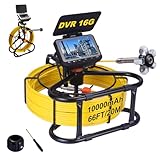
- [4.3IN HD SCREEN&16GB DVR]The SYANSPAN Sewer Camera comes with a 4.3-inch HD screen,providing clear and accurate visuals for inspections.This inspection camera with light is equipped with a digital video recorder (16GB DVR) and includes a 16GB TF card,allowing easy storage of captured images and videos for later review.Perfect for reliable and efficient sewer inspections
- [HIGH LIGHT LED&DETECT 33FT UNDERWATER]The drain camera features 12 powerful,adjustable LED lights,providing excellent illumination for clear observation in any environment.This endoscope camera with light is IP68 waterproof and includes a durable cable with a cable pusher reel,allowing it to easily navigate tight spaces and bends in pipes.The high-flex metal spring ensures smooth passage through curved areas,making your inspection more convenient and efficient
- [8-10H COLD-RESISTANT BATTERY]This borescope camera is equipped with a powerful 10000mAh battery that lasts up to 8-10 hours on a full charge,perfect for extended use.The inspection camera supports power banks and performs reliably in cold winter conditions,making it ideal for outdoor inspections.[8-10H COLD-RESISTANT BATTERY]This borescope camera is equipped with a powerful 8500mAh battery that lasts up to 8-10 hours on a full charge,perfect for extended use.The inspection camera supports power banks and performs reliably in cold winter conditions,making it ideal for outdoor inspections
- [33FT-164FT FIBERGLASS CABLE]:The plumbing camera features a durable,waterproof,and corrosion-resistant fiberglass cable.With a built-in distance counter,this borescope camera with light allows you to easily track the cable length and pinpoint problem areas.The included cable reel ensures convenient storage and smooth deployment,making inspections more efficient and hassle-free
- [APPLICATION&AFTER SALES]Perfect for both home and industrial use,this borescope inspection camera meets the needs of plumbers,contractors,inspectors,engineers,municipal workers,and other professionals.It efficiently inspects hard-to-reach areas such as wastewater systems,stormwater systems,various pipelines,drains,and ducts.If you have any questions,feel free to contact us for one-on-one guidance from our engineers
Inspection workflow from project records to acceptance decision
1. Assemble the complete project file
Before scheduling the camera run, obtain the documents that define what “acceptable” means:
- Contract specifications, approved submittals, drawings, and the liner manufacturer’s installation requirements.
- Host-pipe cleaning records, pre-installation CCTV, measurements, bypass or flow-control records, and known sags, offsets, intrusions, or service connections.
- Liner and resin identification, tube dimensions, design calculations, wet-out information, and installation and curing logs.
- As-built stationing, access-point references, service-lateral locations, and records of each lateral reinstatement.
- The project’s post-installation CCTV, leakage-test, sampling, testing, and acceptance requirements.
Use the pre-installation CCTV as a baseline. It helps distinguish a feature inherited from the host pipe from damage or deformation introduced during installation.
2. Plan access, flow control, and safety
Assign a competent person to plan traffic control, confined-space entry controls, atmospheric monitoring, fall protection, bypass pumping, and communications. A CCTV operator should not enter a manhole or sewer solely to operate a camera unless the entry has been separately authorized and controlled. Keep personnel out of the line whenever a remotely operated inspection can answer the question.
Confirm the camera’s travel direction, access points, expected water level, pipe diameter, liner length, and locations where service laterals were reinstated. Record the equipment identification and video format so the final file can be traced to the inspection.
3. Clean the liner when required before acceptance CCTV
NASSCO’s CIPP specification guidance calls for cleaning the newly installed liner before CCTV inspection. Cleaning removes deposits that can hide defects and allows the operator to see the full circumference. During final inspection, the guidance also describes using water jets to clear standing water in sags and bellies so the camera can view the low point.
Cleaning is not permission to apply an unqualified jetting program. The finished liner, its resin system, cure condition, diameter, and the obstruction being removed all matter. The contract, manufacturer’s directions, and the responsible owner or engineer should establish the method. The available guidance does not establish a universal pressure, nozzle, flow rate, or routine cleaning frequency for every CIPP liner.
4. Run and preserve a detailed internal CCTV inspection
NASSCO identifies detailed internal television inspection as the principal tool for assessing a sewer’s structural, maintenance, and physical condition. Run the camera slowly enough to identify the full defect, pause at significant observations, and maintain a clear view of the invert, crown, springlines, joints or seams where visible, and each reinstated lateral.
Quick wins for a faster PC:
Fix the driver behind crashes, sound loss and screen glitchesFind Drivers →Clear out junk files and repair common Windows errorsFree Scan →Rank #2
![[ChoosePRO®] HD1080P Sewer Camera 7'' w/1s Twist-Unlock System, DVR-32GB, 0.64'' Thicker Reel, 5000mAh 100FT Marked Cable, Plumbing Pipe Inspection Camera for Drain & Sewer Inspection](https://m.media-amazon.com/images/I/51huA5MyryL._SL160_.jpg)
- 【2026 Upgraded Cable Reel Unlock System】:Unlock & lock in just 1s with a simple twist. No more stuck cables or sore hands—coil or release with ease! Unlike market designs sewer camera that leave you struggling with two tiny, hard-to-turn screws—difficult to adjust and tighten properly—one wrong move could lead to cable jams or even permanent damage. Ours comes with all-around upgrades (stability, compatibility, flexibility, security, durability), overcoming many common Weaknesses on the market.
- 【Faster Identify Issues – HD 1080P Camera with 7" IPS Screen】:The sewer camera has a true HD 1080P lens and a bright 7" IPS screen, helping you identify issues faster with a clear view inside pipes. The 16× zoom lets you see small details like cracks, clogs, and rust. Unlike older 1000TVL pipe camera with dark TFT/LCD screen, it shows clear, bright images that make spotting problems easy. Checking your pipes often helps you find leaks early and reduce costly damage to walls, floors, or ceilings.
- 【Record More Videos-DVR with 32GB Card】:This sewer pipe camera lets you view and record in real time with instant playback—no extra devices needed, it helps you quickly identify pipe issues.The 32GB memory card offers more storage than typical 8GB cards. so you can record more videos with your sewer inspection camera, allowing for thorough and accurate analysis.MORE,Easily transfer videos via SD card or USB-C. Save records, share findings, and review footage on your PC with ease.
- 【So Easy, Anyone Can Use It — 8H+ on a Single Charge】:This sewer camera is easy to use—Unlock and lock the cable reel in just 1 second with a simple twist, making it easy to coil or release the cable. Just plug& play the display, and you’re ready to go — no complex setup required.The cable is marked in feet, so you know exactly how deep the issue is—no guesswork. The built-in 5000mAh battery lasts over 8 hours. Need more time? Plug into a power bank (not included) via USB-C, even while in use.
- 【For Most Pipeline Environments—IP68 Waterproof HD Camera】:① The IP68-rated camera head works in wet, dirty, or flooded pipes.② Six adjustable LED lights (3 levels) let you see clearly in dark, deep pipes—so you can spot cracks or blockages fast.③ Comes with 25mm (0.98 in) and 84mm (3.31 in) sleeves to handle small or large pipes.④ A flexible stainless steel spring tip helps navigate bends and corners without getting stuck.
At minimum, the recording should show:
- Inspection date and time, operator or contractor, access points, direction of travel, and pipe identification.
- Continuous distance or stationing tied to the as-built reference.
- Pipe diameter, liner segment limits, water level, and any conditions that limit visibility.
- Every service reconnection, including a location and whether the opening is complete and free of obstruction.
- Debris, deposits, standing water, sags, wrinkles, protrusions, and other maintenance conditions.
- Gouges, cracks, bumps, bulges, visible leakage, or other liner damage.
Keep an unedited master file. If a copy is compressed for a management system, retain the original recording and the operator’s observation log. NASSCO model specification language calls for post-installation documentation within ten working days; treat that as a project provision only when the owner has adopted it, not as a universal deadline.
5. Document observations at the point of occurrence
Use a consistent observation record rather than a general statement such as “liner looks good.” For each finding, record the clock position or circumferential location, distance from the reference access point, estimated dimensions, whether it is continuous or isolated, and whether water is entering, exiting, or simply staining the surface.
Include a still image or video time reference for every significant observation. Note whether visibility was reduced by water, fogging, debris, camera movement, or a service connection. A clear statement of inspection limitations is part of a defensible acceptance record.
6. Apply leakage checks only when the project calls for them
Visual CCTV identifies visible condition; it does not prove that a liner is watertight. NASSCO guidance describes visual inspection and, where specified, water exfiltration or low-pressure air testing for certain smaller pipe installations. It cautions against water exfiltration or air testing above 36 inches in diameter because of worker-safety concerns for larger sewers.
Free tools Windows power users keep installed
One-click scans. No signup required.
The owner’s contract documents and qualified engineering direction govern the actual test. Confirm whether service laterals have already been reinstated: open laterals can change the test boundary, invalidate a result, or require a different sequence. Testing can also delay returning a lateral or segment to service, so coordinate the test plan before reinstatement work is complete.
| Method | What it can establish | Key limits and decision points |
|---|---|---|
| Internal CCTV | Visible debris, reinstatements, deformation, gouges, cracks, bumps, bulges, staining, and visible leakage. | Cannot establish invisible leakage or structural properties by itself; visibility and water level must be recorded. |
| Water exfiltration test | Leakage performance where the project specifies a water-based test and the section can be isolated. | Use only under the project procedure and qualified supervision; the cited NASSCO guidance cautions against use above 36-inch diameter. |
| Low-pressure air test | Leakage performance where the contract specifies an air procedure for an appropriate, isolated section. | Pressure introduces safety hazards and test limitations; the cited guidance cautions against testing above 36-inch diameter. |
7. Compare findings with acceptance criteria
A camera finding is an observation, not automatically a failure diagnosis. Compare it with the contract’s tolerances, the installation and curing records, the pre-installation baseline, and the owner’s engineering judgment. Acceptance language commonly distinguishes a liner defect from a feature that reflects the pre-existing host pipe; preserve that distinction in the report.
If the project identifies unacceptable leakage, NASSCO guidance says it should be repaired as required by the specifications or as agreed with the owner. The guidance does not prescribe one repair for every crack, stain, bulge, or leak. Require the responsible engineer or qualified liner specialist to select and document the repair method.
Rank #3
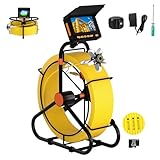
- [ Sewer Camera Snake Inspection Camera With Light ]: Waterproof 1080P HD,stainless steel plumbing camera can capture clear images. With flexible spring for inspecting a 90°or bigger bends. The built-in 12pcs bright LED lights will shine the dark pipe,drain,sewer,duct,wall to be clearly visible. You can adjust the drain camea light on the compact screen.
- [ 0.9‘’ Borescope For 1.5'',2'' or Bigger Pipe Inspection ]: With 110°wide viewing angle ,the 23mm plumbing sewer camera can go into a 25mm straight or bigger pipeline to scope and capture the inner images for plumber. A 1.5'' protective cover and a 3.5'' roller guide wheel come with the sewer inspection camera,and they will protect it from scratches. With the guide wheel, the sewer pipe camera can run into a 90mm or above pipe more easily.
- [ 32GB Video Recording Screen and 8500mA Battery]: The sewer camera screen with a 360° rotatable fix mount and flip sunvisor are for better inspection. A 32GB card comes with this 4.3'' HD screen for recording clear and more sewer drain inspection videos. A 8500mA rechargeable drain camera battery in this screen can provide energy for about 6 hours.
- [ Cable with Meter + Feet Marks,Newly Upgraded Spool with Brake and Buffering] :The plumbing sewer camera and the 5mm semi rigid cable are all snake.We print length marks 'M and FT'on the 200FT cable.So you can see how far the pipe drain camera went into the wall,duct,pipe or sewer.The special cable spool will rotate when the cable is moving.So easy to pull the cable out and push it back.Equipped a brake hook and Buffering clip for controling the yellow cable.
- [ User-friendly and Versatile ] : Everyone can use it,no complex operation.Plumber, homeowner, construction and municipal worker can use the pipe sewer camera to detect blockage/damage in water pipe,sewer or wall;Mechanics can use the sewer drain inspection camera with light to inspect the internal condition of air conditioning/vehicle.You can also use it to retrieve item that fallened into gap or narrow crevice.This sewer drain camera can reach many place that people cannot see or go to.
8. Issue a traceable closeout report
Submit a report that lets another engineer locate and understand every observation without replaying the entire project history. Include:
The Tool Desk
Outbyte Driver Updater FREEScan for outdated or missing drivers - takes under a minuteDriver Scan →Outbyte PC Repair FREERepair Windows errors before they cause bigger problemsFix Now →- Project and segment identifiers, dates, personnel, equipment, and access points.
- Cleaning method and any conditions that prevented a complete view.
- Unedited CCTV file name, format, duration, and storage location.
- Stationed observation log with images or time references.
- Service-lateral reinstatement schedule and photographs where required.
- Leakage-test procedure, section limits, test readings, duration, and result, or a clear statement that testing was not specified or not performed.
- Acceptance disposition: accepted, accepted with documented exceptions, rejected pending correction, or referred for engineering evaluation.
- Repair records and a follow-up CCTV or test result when corrective work is performed.
What to look for during CCTV
Debris, deposits, and standing water
Debris can conceal a crack, obstruct a lateral, or create a false impression of a low spot. Record the material, approximate quantity, and location. If the inspection cannot see the liner wall or invert, clean and reinspect rather than calling the segment acceptable on an incomplete view.
Service-lateral reinstatements
Each lateral should be located against the as-built schedule and checked for a complete opening, a clear flow path, and damage around the cut. A partially opened or obstructed lateral is a separate corrective item from a defect in the liner wall. Record it even when the liner itself appears smooth.
Gouges and scratches
Describe length, width, depth if measurable, clock position, and whether reinforcing fibers or the host pipe are exposed. Do not infer loss of structural capacity from a visual description alone. Compare the observation with the project’s acceptance limits and curing or installation records.
Cracks and visible leakage
Record crack orientation, extent, branching, location, and whether water is actively entering. Surface staining without active flow is still an observation, but it is not by itself proof of a failed liner. The NASSCO Ask the TAC listing gives an example question about leaks with staining in a 30-inch CIPP liner one year after installation; the appropriate response is to document the condition, check the project criteria and records, and obtain qualified evaluation rather than assume that staining alone establishes the cause.
Recommended Free Tools
Bumps, bulges, wrinkles, and protrusions
Measure or estimate the affected length and reduction in flow area, identify whether the feature is isolated or continuous, and check the pre-installation video for a corresponding host-pipe condition. A bulge can be related to installation, curing, groundwater, or the host geometry; CCTV identifies the feature but not its mechanism.
How to respond to findings
| Observation | Immediate action | Next decision |
|---|---|---|
| Camera view blocked by debris or water | Clean or remove standing water as allowed by the project procedure; repeat the view. | Do not issue final acceptance from an obstructed inspection. |
| Incomplete or obstructed lateral reinstatement | Record location and condition; protect service and flow while arranging correction. | Reinstate or repair under the contract, then document the follow-up inspection. |
| Gouge, crack, bump, or bulge | Capture stills, dimensions, clock position, and distance; compare with the baseline. | Apply the project acceptance criteria and obtain engineering disposition if limits are unclear. |
| Visible leakage or unexplained staining | Record active flow versus staining and check whether a specified leakage test is appropriate. | Repair as required by the specification or owner agreement; verify the repair. |
| Feature present before lining | Show the matching pre-installation observation. | Determine whether the contract assigns responsibility to the host condition or the completed liner. |
Maintaining a CIPP-lined sewer after acceptance
Use a risk-based inspection program
The available guidance supports condition assessment, cleaning when necessary for inspection or project requirements, quality documentation, and pre- and post-rehabilitation CCTV. It does not establish one inspection interval for every CIPP liner. Set the interval through the owner’s asset-management program, considering consequence of failure, overflow history, surcharge or infiltration, root or grease loading, access, diameter, age, and the liner’s documented condition.
Rank #4

- 【Real 1080P High Definition Waterproof Lens】 Drain camera Equipped with a 1080P full HD camera and high brightness LED lighting, providing sharp and clear real-time images. IP68 waterproof and dustproof design, can penetrate deep into damp and greasy pipelines, without fear of water stains and dirt, allowing cracks and blockages to be visible
- 【100 FT Ultra Long Cable】The snake camera equipped with a 30 meter (approximately 100 feet) high toughness semi-rigid cable. It can easily penetrate into hard to reach areas such as long pipelines and large tanks, and detect blind spots at deep distances. Cable tape distance scale markings help you accurately locate problem points and improve detection efficiency
- 【5-inch Large Screen Real-time Display】 The 5-inch DVR high-definition display screen supports real-time viewing and synchronous recording.The plumbing camera equipped with a built-in 32GB storage card, it can take photos/videos with just one click, save detection evidence, facilitate subsequent analysis, generate reports, or share with customers
- 【Integrated Portable Tool Box】 The inspection camera system adopts that the host combine together with an orange sturdy tool box innovatively, make it easy to store and ready to use. All accessories (such as lenses, hooks and so on.) can be stored in an orderly manner in the box to avoid loss and facilitate easy carrying to any work site, achieving ready to use upon opening the box
- 【Widely Compatible】 Pipe camera made of sturdy shell design, durable and long-lasting. Widely used in various industrial and household scenarios such as pipeline dredging, house inspection, and automobile maintenance. KCapyn pipe snake is an efficient and economical choice for professionals and DIY enthusiasts
Inspect sooner after an emergency blockage, unexplained surcharge, settlement, odor or infiltration report, nearby construction, or a cleaning event that encounters unusual resistance. Compare each new CCTV record with the previous record so changes can be identified instead of judged from a single image.
Clean for a defined reason
Cleaning may be needed to restore hydraulic capacity, remove a blockage, prepare for CCTV, or satisfy a project requirement. Define the obstruction and the goal before selecting equipment. A qualified operator should confirm that the planned method is compatible with the liner and that the jet, nozzle, hose, and access arrangement will not damage a service reinstatement or drive debris into a downstream restriction.
No universal water-jet pressure, nozzle selection, or cleaning frequency is established for finished CIPP in the cited guidance. Record the equipment settings actually used, the operator, date, access points, obstruction, recovered material, and any damage or visibility limitation. If the operation could have affected the liner, perform a follow-up CCTV rather than assuming the pipe is unchanged.
Manage emergency blockages cautiously
During an emergency, protect public health and prevent overflow first, but do not let urgency erase the condition record. Isolate or control flow as needed, identify the blockage, use a method selected for the specific liner and obstruction, and preserve before-and-after observations. Escalate immediately when the jet encounters a hard stop, repeated obstruction, detached material, a damaged lateral, or a condition that could indicate liner displacement.
Independent reader supportYour contribution helps us test, update, and keep practical guides available for everyone.Common process failures and their corrections
Accepting a polished video with no project comparison
Failure: The video is clear, but no one checks the liner against the pre-installation baseline or curing record.
Correction: Tie every finding to the contract criteria, installation record, and as-built location before issuing acceptance.
Calling a stain a confirmed leak
Failure: Surface discoloration is reported as proof of a failed liner.
Best Value

- ◆5-inch HD display with DVR◆ The Sewer Cameras features a 5-inch HD 1080p display, delivering exquisite clarity inside pipes and effortlessly identifying issues within plumbing and drainage systems. The built-in DVR system supports instant video recording and high-definition photo capture, with a 32GB TF card included for viewing live footage and saving video clips and photos. You can document inspections and review footage through the pipe system.
- ◆17MM HD 1080P Camera◆ The Sewer Pipe Inspection Camera best to fit for pipes at 50 -200mm (2 - 8 inch), camera with super flexible spring can easily go through 90° bend pipes at 200mm (8-inches), in order to get a better viewing, we also provide 25mm protective cover to make the camera can easily enter the middle of bigger pipes.
- ◆IP68 Waterproof&Night Vision◆ This Drain Pipe Cameras has grade IP68 waterproofing and it can work in the 10 meters underwater. Equipped 6pcs high light adjustable white LEDs and 140°viewing angle,the inspection camera can easily view live video at any time and anywhere. This plumbing camera equipped with 5000mAh Rechargeable Li-ion Battery,it support 6-8 hours working time per fully charge.
- ◆Sewer Camera 100 ft◆ Pipe Inspection Camera with 100 feet (30 m) Semi-Rigid Fiberglass Cable, 5mm in diameter, featuring a digital length counter, this sewer inspection camera lets you easily track distances during inspection. Portable reels included make storage and handling of cables convenient.
- ◆Extensive Applications◆ The Industrial Endoscope is suitable to inspect the pipeline, sewer, air duct, tank, underwater and others dark environment, check the internal cracks, corrosion, weld, plugs and other unusual circumstance. Buy a Drain Sewer Industrial Endoscope today to avoid tomorrows plumbing problems.
Correction: Distinguish active inflow, dampness, and staining; then apply the specified leakage procedure or obtain engineering evaluation.
Using a routine jetting setting from another pipe
Failure: Operators transfer pressure and nozzle settings from an unlined or differently lined sewer.
Correction: Confirm the liner system, obstruction, equipment, and manufacturer or contract limits with the responsible owner or qualified operator. The cited guidance does not support a universal setting.
Testing after laterals are opened without revising the test boundary
Failure: Reinstated laterals make the isolated section impossible to test as originally planned.
Correction: Coordinate the sequence in advance and document the actual boundaries and limitations of any test.
Submitting only an edited highlight reel
Failure: A short clip omits the original file, operator notes, or areas with poor visibility.
Correction: Retain the unedited master, a complete observation log, and explicit limitations so the owner can audit the conclusion.
Do these 3 things before closing this tab:
1Fix the driver behind crashes, sound loss and screen glitches2Clear out junk files and repair common Windows errors3Scan for outdated or missing drivers - takes under a minuteCompetence, records, and long-term defensibility
Professional CCTV systems and trained operators are appropriate for municipal infrastructure assessment; a consumer drain camera is not a substitute for a remotely operated survey system, measured stationing, standardized observations, and project documentation. Owners hiring an inspection contractor should verify relevant sewer-CCTV experience, safety procedures, data-delivery capability, and the ability to produce complete, unedited records.
Maintain a segment-level history containing the original host-pipe CCTV, liner design and cure records, acceptance inspection, repairs, cleaning events, leakage tests, and subsequent condition surveys. A consistent record makes deterioration visible, supports maintenance budgeting, and prevents a later operator from treating an old defect as a new one.
Quick Recap
A practical decision sequence
- Define the purpose: acceptance, routine condition assessment, blockage response, post-cleaning verification, or repair verification.
- Check the governing documents: contract criteria, liner and curing records, prior CCTV, as-built stationing, and applicable safety requirements.
- Prepare the pipe: control flow and clean only with a method approved for the specific liner and obstruction.
- Inspect completely: run detailed CCTV, record service reconnections and defects, and preserve the unedited file.
- Test only when justified: use the specified leakage method, respect diameter and safety limits, and account for reinstated laterals.
- Disposition each finding: accept, correct, or refer for engineering evaluation based on documented criteria.
- Close the loop: repair when required, reinspect or retest, and update the permanent asset record.
Product prices and availability are accurate as of the date/time indicated and are subject to change. Any price and availability information displayed on Amazon at the time of purchase will apply.

