Start by cleaning and inspecting the showerhead, then determine whether the weak spray is limited to that fixture or reflects low pressure throughout the home. A clogged head can often be restored without opening a wall. If several fixtures are weak, measure incoming service pressure at a hose bibb before buying parts. A replacement WaterSense-labeled showerhead can improve spray performance at modest pressure, but it cannot repair a leak, remove an upstream restriction, or increase the pressure supplied to your house.
What “low shower pressure” usually means
People use “pressure” to describe several different problems. A shower may feel weak because mineral deposits block its spray outlets, because the head or connection leaks, because a valve or supply line restricts flow, or because the home receives low incoming service pressure. These causes require different remedies.
As an Amazon Associate I earn from qualifying purchases.
The fastest first distinction is whether the shower is the only weak fixture. Run a nearby sink, bathtub filler, and toilet fill valve at different times. If those fixtures behave normally while the shower does not, the showerhead, its threaded connection, or the shower valve is a more plausible location to investigate. That is a useful diagnostic inference, not a definitive fault-isolation test.
If several fixtures have poor flow, treat the issue as a household supply problem until measurement shows otherwise. A new showerhead may change the spray pattern, but it cannot create pressure that is absent at the service connection.
#1 Best Overall

- MAGNETIX DOCKING SYSTEM: Magnetic dock allows the handshower to release easily and securely snap back into place
- 6 SPRAY SETTINGS: Customize your shower experience with multiple spray options for everyday comfort and flexibility
- ADJUSTABLE SPRAY SETTINGS: Hand held shower head with hose includes 6 functions including pause, rinse, downpour, and relaxing massage, allowing you to adjust the showerhead spray to your preference
- HANDHELD SHOWERHEAD: Detachable design provides added reach for rinsing, cleaning, bathing children, and pet care
- WATERSENSE CERTIFIED: Moen Engage Magnetix water-saving handheld shower head with hose Meets EPA WaterSense criteria to conserve water with lower GPM without sacrificing performance
Clean and inspect the existing showerhead first
Look for scale and blocked outlets
Hard-water minerals can narrow or close the small openings in a showerhead. Inspect the face for chalky white or green deposits, uneven spray, drips, or jets that shoot sideways. A head that was once satisfactory and gradually became weak is especially likely to have a buildup problem.
The U.S. Environmental Protection Agency recommends periodic inspection and cleaning. Use a product labeled for showerhead descaling or white vinegar, following the fixture manufacturer’s instructions. Some finishes and plastic components can be damaged by strong acids or prolonged soaking, so do not assume that every head can be treated the same way.
A practical cleaning sequence
- Turn the shower off and remove loose debris from the spray face with a soft brush or cloth.
- Apply a suitable descaling cleaner or white vinegar as directed by the manufacturer. If the head can be removed, soaking it in a container is usually easier than wrapping the fixture in a bag.
- Rinse thoroughly so loosened mineral particles do not remain inside the passages.
- Run the shower briefly and check whether all outlets spray evenly.
- Inspect the threaded joint for drips. If the connection leaks, follow the maker’s instructions; pipe tape and a wrench may be appropriate, but overtightening can crack a fitting or damage the finish.
Cleaning addresses an obstruction in the head. It does not raise the pressure in the water main or correct a restriction farther upstream.
Check whether the problem is isolated to the shower
Compare fixtures without changing settings
Use the same observation method at other fixtures: open one tap at a time and note whether the stream is normal, weak, or intermittent. Also look for symptoms of a leak, such as a toilet that refills without use, damp cabinets, unexplained meter movement, or water sounds when every fixture is closed.
A shower-only problem points toward the head, its connection, or the shower valve. Weak flow at multiple fixtures points toward service pressure, a pressure-regulating valve, a partially closed shutoff, a clogged whole-house filter, or another supply-side restriction. The EPA guidance supports measuring household pressure and investigating suspected leaks; it does not provide a complete fault-isolation procedure for every home.
Rank #2

- 10 Versatile Spray Modes – Enjoy a customized shower experience with 10 distinct patterns: rain, pulse, mist, spray, mixed, and a water-saving mode for pausing water during shampooing, soaping, or grooming.
- High-Pressure Performance with Air-Induction-Induction Tech – Infuses water with air to deliver a strong and consistent water flow even under low water pressure, enhancing your shower. Features 90 anti-clog nozzles and 100 pieces Steel plate water outlets that prevent limescale and hard water buildup, ensuring a consistent, refreshing flow.
- 360° Adjustable Bracket & 59-Inch Flexible Hose – The durable bracket with a brass swivel ball joint allows effortless angle adjustments for both overhead and handheld use. The extra-long 59-inch stainless steel hose is lightweight and flexible, making it easy to reach every spot.
- Premium Materials & Anti-Clog Design – Crafted from high-quality ABS for lightweight, rust-proof, and fade-proof durability.
Measure incoming water pressure at a hose bibb
What you need
- A water-pressure gauge designed to connect to a standard hose-thread outlet.
- An accessible hose bibb, such as the outdoor faucet or a utility-room connection.
- No running fixtures or water-using appliances during the reading.
How to take the reading
- Close faucets, showers, toilets, washing machines, ice makers, irrigation zones, and other water-using equipment.
- Thread the gauge onto the hose bibb by hand. Use the gauge manufacturer’s sealing instructions; do not force a cross-threaded connection.
- Open the hose bibb fully and read the pressure after the needle stabilizes.
- Close the bibb, remove the gauge, and check the connection for drips.
EPA home-maintenance guidance says fixtures operate best when incoming household pressure is between 45 and 60 pounds per square inch (psi). That range describes the home’s incoming service pressure, not a setting to dial into a showerhead.
| Gauge result | What it suggests | Next action |
|---|---|---|
| About 45–60 psi | Within EPA’s preferred range for household fixtures. | Continue investigating the showerhead, connection, valve, or a local restriction if the shower remains weak. |
| Substantially below 45 psi | Possible leak, supply limitation, closed or failing valve, or other service-side problem. | Look for leaks and have a plumbing professional diagnose the supply system. A showerhead swap cannot correct low incoming pressure. |
| Much above 60 psi | Excessive household pressure can stress fixtures and piping. | Ask a qualified plumber to evaluate the pressure-regulating valve and adjust or install one to maintain approximately 60 psi, as appropriate for the home. |
| Pressure changes sharply while fixtures run | Static pressure and flowing pressure differ, or a restriction is affecting demand. | Record readings with and without a fixture running and have the system assessed if the variation is substantial. |
The 45–60 psi recommendation is a whole-home service-pressure consideration. It does not prove that a particular showerhead will deliver a particular spray force, and a single gauge reading cannot identify every hidden restriction.
Free tools Windows power users keep installed
One-click scans. No signup required.
When replacing only the showerhead makes sense
Replace the head when it is cracked, leaking internally, badly scaled after cleaning, or still produces an unsatisfactory spray while household pressure is reasonable. Choose performance information rather than a large advertised flow number.
Why WaterSense certification is useful
EPA WaterSense certification evaluates more than maximum flow. The program tests spray force, spray coverage, and pressure compensation—the characteristics that determine whether a spray feels usable when household pressure varies. Certification is therefore a more meaningful screening criterion than a claim that a head has a high flow rate.
Under the EPA WaterSense Specification for Showerheads, Version 1.1, dated July 26, 2018, a labeled showerhead’s manufacturer-rated maximum flow is no more than 2.0 gallons per minute (gpm), or 7.6 liters per minute. The specification tests flow at 20, 45, and 80 psi. At 20 psi, the head must deliver at least 60 percent of its rated maximum flow; at 45 and 80 psi, it must deliver at least 75 percent.
Rank #3

- Multi-Stage Filtration: This filtered shower head uses KDF, maifanstone, vitamin C media and multiple filtration layers to help reduce chlorine and certain impurities, supporting a more comfortable everyday shower experience
- 9 Spray: 8 Spray Settings + Power Wash,Choose from Rain, Massage, Mist, Pause and other spray settings; flip the showerhead to activate Power Wash for rinsing tubs, tiles, pets and other targeted cleaning tasks
- Replaceable Filter Cartridge: Replace every 3–6 months depending on water quality and usage; replace more often with heavier use or higher chlorine levels, Replace filter ASIN: B0D1TYCDPB
- 3-Minute Tool-Free Install: Universal G1/2" thread fits any standard shower arm. Includes handheld shower head (filter built in), bracket, hose, Teflon tape, and washers. Everything you need in the box.The water flow rate of our product is 2.5 GPM.
- Five Year Limited Warranty: Manufacturer's limited warranty covers eligible product or part defects for 5 years from the purchase date, we'll get back to you within 24 hours. For replacement filter cartridges
| Comparison point | What to look for | Why it matters |
|---|---|---|
| Pressure-range performance | WaterSense pressure-compensation and minimum-flow results at 20, 45, and 80 psi. | Shows whether the design is intended to remain functional as pressure changes; it does not increase the pressure entering the home. |
| Spray force | EPA certification criteria rather than a high-flow slogan. | Spray force is closer to what users mean by a stronger shower. |
| Spray coverage | Certification-tested coverage and a pattern suited to the enclosure. | A concentrated jet may feel forceful but cover less of the body; a broad pattern may feel gentler. |
| Condition of the old head | Clean first; replace if damage, persistent scale, or poor performance remains. | A replacement is unnecessary when cleaning restores the original head. |
| Valve compatibility | Flow-rate marking at 45 psi that matches the automatic-compensating mixing valve where marked. | Matching the components helps preserve temperature control and safety. |
EPA’s product-search listing is the place to confirm that a model is currently certified; listings and local stock can change. Certification is evidence that the design met the program’s tests, not a promise that every home will experience the same improvement.
What’s actually slowing this PC down?
Pick the symptom - the matching free tool is one click away.
Install a replacement without changing the plumbing
Before you buy
- Check whether the existing shower arm uses a standard threaded connection and whether an adapter is already installed.
- Read the valve or trim markings. If an automatic-compensating mixing valve lists a flow rate at 45 psi, select a showerhead marked for the same flow where possible.
- Measure clearance inside the enclosure so a larger fixed head or handheld bracket will not strike a wall or door.
- Confirm that the replacement is certified for the pressure range you measured and that its maximum rated flow meets your water-use requirements.
Removal and installation
- Protect the finish with a cloth and loosen the old head at the connection using an adjustable wrench only where the manufacturer permits. Hold the shower arm so you do not twist it inside the wall.
- Remove old sealing material and wipe the shower-arm threads clean. Do not scrape aggressively enough to damage the threads.
- Apply pipe tape if the fixture instructions call for it, keeping tape off the first thread so fragments do not enter the passage.
- Thread the new head on by hand until snug, then tighten only as directed. Excess force can crack a plastic nut, mar a finish, or damage the arm.
- Open the shower slowly, inspect the joint, and correct any leak. Run the head through its spray settings and check for blocked or misdirected outlets.
The work changes the outlet fixture, not the concealed supply pipes. Stop and call a qualified plumber if the shower arm moves in the wall, the fitting is corroded, threads are damaged, or a leak persists after proper installation.
Protect temperature control and scald safety
A showerhead and its mixing valve operate as a system. EPA’s WaterSense FAQ advises consumers to match a showerhead and an automatic-compensating mixing valve marked with the same flow rate at 45 psi for maximum safety.
EPA technical guidance also calls for verifying that hot and cold supplies run through a valve meeting applicable temperature-control performance requirements when tested at the installed showerhead’s flow rate. Changing the outlet can alter the flow that the valve senses. If the valve marking is missing, the shower temperature changes suddenly when another fixture opens, or you are unsure whether the valve is compatible, have a qualified plumber check it rather than disabling a limiter or bypassing the valve.
- Do not remove a temperature stop merely to make the shower feel hotter.
- Test the shower at its hottest normal setting after installation and make sure temperature remains stable when a toilet is flushed or another tap opens.
- Keep children, older adults, and anyone with reduced temperature sensitivity in mind when setting the maximum temperature.
If cleaning and a new head do not help
Weak spray at every fixture
Return to the hose-bibb measurement. If pressure is substantially below 45 psi, investigate leaks and the incoming service rather than buying progressively more restrictive showerheads. A plumber can check the main shutoff, pressure-regulating equipment, filters, meters, and supply piping. If pressure is far above 60 psi, professional adjustment or installation of a pressure-regulating valve may protect the system.
Rank #4
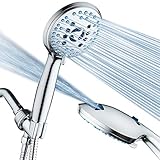
- MORE WATER PRESSURE, LESS CLEANING - Revolutionary AquaCare hand shower features advanced 8-setting 5-zone Powerhead with Self-clean Anti-clog Nozzles that prevent accumulation of grime inside. So while other showerheads clog and lose water pressure over time, AquaCare nozzles remain clean and clog-free for years of flawless performance. Designed in USA by top American shower experts. Removable Flow Regulator.
- PURE-CLEAN PROTECTION - Studies show that ordinary shower heads are often infested with grime that rapidly grows overnight, then gets flushed out in your face with the morning shower. That's why keeping your showerhead clean is essential for good shower hygiene. AquaCare nozzles are made with special revolutionary material that works 24/7 on molecular level to protect from degradation. This protection is 100% safe and effective for the life of the product and can never wear off.
- BUILT-IN 2-MODE TUB & TILE POWER WASH - Tired of that disgusting soap scum and dried hair left behind after each shower? Clean it all in seconds from up to 6 feet away, without setting a foot in your shower. Simply flip the AquaCare handle and turn it into a High-pressure Power Wash! Use Wide Fan to quickly rinse off large areas, or switch to Point Jet and instantly blast away that stubborn grime! Patented.
- IDEAL PET SHOWER - AquaCare was designed to be relentless on the toughest grime, yet gentle on your pet. Simply set your faucet to the best water pressure for your dog's fur length and density, then use our unique Dual-width Fan Spray to thoroughly rinse out shampoo in seconds. It provides the perfect flow pattern for a fast and effortless pet shower, regardless of their size and breed.
- PREMIUM CONVENIENCE PACKAGE - Enjoy added mobility and reach with Extra-long 72-inch Heavy-duty Stainless Steel Hose, Angle-adjustable Overhead Bracket, and an additional Low-reach Wall Bracket that mounts instantly and securely on any surface with power adhesive back. Ideal for Child Care, Senior Care, Pet Care, Bathing and Cleaning applications, AquaCare is your TOTAL SHOWER CARE system that creates a better shower hygiene and cleaner shower environment for your entire family.
Normal gauge reading but weak shower
Normal service pressure does not rule out a local restriction. A partially closed stop, blocked shower valve inlet, failing cartridge, clogged filter screen, or damaged shower arm can limit flow only at the shower. Accessing a valve or cartridge may require shutting off water and opening trim; use the valve manufacturer’s instructions or hire a plumber if the component is concealed or seized.
Flow starts strong and then fades
An outlet screen or head passage may be collecting debris, or a pressure-regulating device may be responding poorly under demand. Remove and clean only components the manufacturer identifies as serviceable. If the decline occurs at several fixtures, record static and flowing gauge readings for a professional.
Only hot or only cold flow is weak
That pattern points more toward a valve cartridge, shutoff, or supply-side restriction on one temperature line than toward the showerhead face. Do not disassemble a pressure-balancing valve without confirming the correct replacement parts and shutoff procedure.
There is water damage or a persistent leak
Turn off the nearest safe shutoff, contain the water, and arrange prompt plumbing service. A showerhead cannot repair a leak behind the wall, at the valve, or in the supply piping.
The Tool Desk
Outbyte Driver Updater FREEFix the driver behind crashes, sound loss and screen glitchesFind Drivers →Outbyte PC Repair FREERepair Windows errors before they cause bigger problemsFix Now →Common mistakes that make a shower feel worse
- Choosing by gpm alone: A larger advertised number does not establish spray force, coverage, or performance at 20 psi.
- Ignoring scale: Replacing a head without cleaning the arm, screen, or inlet can leave debris in the new fixture.
- Assuming a high-pressure head raises house pressure: Outlet design can shape the spray; it cannot fix low service pressure or an upstream restriction.
- Overtightening fittings: Excess torque can damage threads, crack plastic, or twist the shower arm inside the wall.
- Removing flow or temperature controls: Altering safety components can create unstable temperature and scald risk.
- Testing with other fixtures running: A reading taken while a toilet, washer, or irrigation zone is operating does not represent the home’s quiet, static condition.
A no-plumbing-replacement decision path
- Observe: Decide whether the weak spray is limited to the shower or affects several fixtures.
- Clean: Descale and rinse the showerhead, then check its connection for leaks.
- Measure: Use a hose-bibb gauge with water use stopped; compare the result with EPA’s 45–60 psi guidance.
- Choose: If the head is damaged or remains poor, select a WaterSense-labeled model and compare spray force, coverage, pressure-range performance, and valve-flow markings.
- Install carefully: Protect the shower arm, use sealing material only as directed, and inspect for leaks.
- Verify safety: Confirm stable temperature and compatibility with the automatic-compensating valve.
- Escalate: Call a plumber for low whole-home pressure, pressure far above the preferred range, hidden leaks, unstable temperature, damaged fittings, or a restriction that cleaning and a head replacement do not resolve.
What this approach can and cannot accomplish
Cleaning can restore flow lost to mineral scale. A well-designed, certified showerhead can provide a more effective spray at the pressure your home already has. Measuring service pressure can reveal when the real issue lies outside the shower.
None of these steps increases the pressure delivered by the utility or repairs a concealed leak, failed regulator, blocked valve, or undersized supply. Those conditions require diagnosis at the plumbing system, even when the visible symptom is only one weak shower.
Quick Recap
Product prices and availability are accurate as of the date/time indicated and are subject to change. Any price and availability information displayed on Amazon at the time of purchase will apply.

