The safest way to save energy in a heritage hotel is not to apply a standard insulation package. Start with a whole-building assessment of construction, condition, heritage significance, exposure, services, occupancy and comfort. Repair water ingress and service faults, measure how the hotel actually uses energy, then prioritise low-disruption controls and maintenance before designing insulation, window, heating or renewable-energy work.
This approach can cut avoidable demand while protecting historic fabric. It also recognises that a hotel operates 24 hours a day: guest rooms, corridors, public rooms, kitchens, restaurants, laundries, pools and back-of-house spaces have different loads and schedules. The evidence and permissions described below are strongest for England; owners elsewhere should use their own heritage and building-control authorities.
As an Amazon Associate I earn from qualifying purchases.
Why a heritage hotel needs a building-specific energy plan
Historic buildings are not interchangeable. A hotel may combine solid masonry, timber floors, lime-based finishes, later extensions, retained fireplaces, modern plant and concealed service routes. Two buildings of the same age can perform differently because of orientation, wind-driven rain, repairs, occupancy, maintenance and operating hours.
Historic England’s mitigation guidance summarises the principle: “Successful retrofit projects take into account the construction, condition, significance, occupants, use, exposure and vulnerability of the building, via a whole building approach.” The implication is practical: an intervention that performs well in one property can trap moisture, reduce ventilation or damage significant material in another.
#1 Best Overall

- Energy-Saving Brilliance: The EVELOR A19 100 watt LED light bulbs consumes only 13W while delivering the same brightness as a 100W incandescent bulb, achieving up to 90% energy savings. It's the perfect upgrade from outdated, inefficient lighting.
- Vivid, Sunlight-Like Illumination: With 1500LM brightness and a CRI of 80+, this bright white bulb enhances color accuracy, making spaces appear more vibrant. The non-flicker 100 watt lamp light bulbs beads ensure steady brightness, while the 5000K daylight white light is ideal for areas where clarity and visibility matter.
- Reliable Non-Dimmable Lighting: Designed for consistent performance, these light bulbs 100w provide unwavering illumination-perfect for living rooms, bedrooms, garages, meetingroom, office,kitchen, bathroom, readingroom, study, basement and workspaces where stable light is essential.
- Long-Lasting Durability: Rated for 15,000+ hours, these A19 E26 ampoule LED bulbs reduce replacement frequency and maintenance costs, making them suitable for indoor, outdoor, and commercial use.
- Eye Comfort & Easy Installation: The no-flicker design ensures smooth, strain-free lighting, while the standard E26 base allows for quick installation. Enjoy a bright, steady glow that enhances any environment.
Hotel energy demand also follows business activity. A bedroom that is empty between bookings has a different profile from one occupied overnight; a kitchen, laundry or swimming pool may dominate demand at particular times. U.S. ENERGY STAR lodging guidance is useful for these operational examples, but it is not English law and should not be treated as heritage consent or building-regulation advice.
1. Inspect the building and establish an energy baseline
Commission a conservation-aware building survey and energy review before selecting products. The team should include, as appropriate, a building surveyor, conservation professional, services engineer and hotel operations representative. The aim is to understand how the building works before changing it.
Record construction, condition and significance
- Identify wall, roof, floor and ceiling build-ups, including later repairs and additions.
- Map areas of damp, staining, cracked finishes, failed pointing, blocked gutters, leaking roofs and defective drainage.
- Record significant windows, doors, fireplaces, panelling, plasterwork, staircases, historic plant and decorative fittings.
- Assess exposure to sun, wind and rain, and note rooms that overheat or feel cold.
- Trace existing heating, hot-water, ventilation, electrical and data routes. Historic England services guidance recommends desk-based research, site surveys and identification of significant systems and routes.
Photographs, annotated plans and a simple significance schedule make later decisions clearer. A feature need not be listed individually to be important to the building’s character; ask the conservation adviser to explain what must be retained, what can be altered and what could be removed reversibly.
Measure how the hotel operates
Collect at least a year’s utility bills where available, together with meter intervals, tariffs, degree-day information if used by the engineer, occupancy and event calendars. Gather plant run times, maintenance reports, complaints, room-temperature records and any humidity or carbon-dioxide measurements. Check whether meters cover separate uses such as laundry, kitchen, pool and guest accommodation; if not, plan temporary sub-metering or load monitoring.
Build an operating map that links energy to areas and times:
| Area or service | Questions to answer | Useful evidence |
|---|---|---|
| Guest rooms | Which rooms are occupied, heated, cooled or ventilated, and when? Are televisions, towel rails or minibars left on? | Room-management data, thermostat settings, housekeeping schedules, spot temperature checks |
| Corridors, stairs and lobbies | Are lights and air-handling systems running at full output all night? Do controls respond to daylight or occupancy? | Lighting circuits, timer settings, sensor logs, staff observations |
| Restaurants and kitchens | When do extraction, refrigeration, cooking and dishwashing loads peak? Is make-up air balanced? | Opening hours, kitchen equipment list, extraction controls, maintenance records |
| Laundry | How many loads are processed, and are washers, dryers, presses and hot-water systems idle between batches? | Load counts, equipment ratings, run-time logs, linen policy |
| Plant and hot-water rooms | Are boilers, pumps, cylinders and secondary circuits correctly sized, insulated and scheduled? | Controls trend data, flow and return temperatures, service reports |
| Amenities and back-of-house | What are the schedules and ventilation needs for pools, gyms, offices, stores and staff areas? | Building-management-system trends, humidity data, occupancy patterns |
Use the baseline to identify high-demand periods and abnormal consumption. A generic model can misrepresent an older building; actual meter and operational data improve predictions and reveal whether a change delivers the intended result.
2. Repair defects and reduce avoidable demand first
Water ingress is an energy and conservation issue, not just a maintenance item. Wet masonry, timber or insulation can perform poorly, feel cold and deteriorate. Repair roofs, gutters, flashings, downpipes, drainage, pointing and failed seals before adding insulation or airtightness measures. Allow fabric to dry and confirm the cause of damp; covering symptoms can make damage harder to detect.
Do these 3 things before closing this tab:
1Scan for outdated or missing drivers - takes under a minute2Repair Windows errors before they cause bigger problems3Fix the driver behind crashes, sound loss and screen glitchesRank #2

- 【Efficiency Meets Comfort】 Dalattin's A19 engergy saving LED bulbs replace 60W incandescents with just 9W while delivering full 800 lumens brightness, slashing energy usage by up to 85%. This eco-conscious choice not only saves you approximately $1.08 annually per bulb but also ensures a cooler operation,and enhancing safety. With a lifespan of up to 13.7 years (at 3 hours daily use), they provide a lasting, no worry experience.
- 【Enhanced Ambiance】 Boasting a high Color Rendering Index (CRI) of 80+, our bulbs bring out the truest hues in your surroundings, ensuring colors appear as vivid and accurate as in natural light. This makes them ideal for spaces where aesthetics matter, from art galleries to cozy living rooms, ensuring that every detail shines in its most authentic light.
- 【Eyes First, Safety Always】 Designed with eye care in mind, our non-flicker and non-dazzling technology reduces eye strain, promoting a healthier visual environment. No of lead, mercury, these bulbs prioritize user safety and environmental sustainability, making them suitable for households with children and pets, without compromising on the quality of light.
- 【Seamless Integration, Versatile Charm】 Universally fitting into E26 sockets, our bulbs effortlessly blend into any setting—be it residential, commercial, or hospitality. From bedrooms to cafes, they enrich spaces with their energy-efficient glow, adding a touch of sophistication without the need for special fixtures. Embrace the future of lighting with bulbs that seamlessly adapt and excel in every application.
- 【Long Lifespan & Dedicated Service】Last up to 7 years with typical 3-hour daily use, significantly outlasting traditional bulbs.
Use the sufficiency-first hierarchy
Historic England places sufficiency—using less energy in real terms—before efficiency upgrades and generation. In a hotel this means asking whether a service needs to run, at what output and on which schedule.
- Remove redundant equipment and isolate unused circuits where safe.
- Set heating, cooling, ventilation, lighting and hot-water schedules to actual operating hours, with overrides for events and occupied rooms.
- Correct simultaneous heating and cooling, stuck valves, leaking hot-water taps and pumps that run continuously.
- Insulate accessible hot-water pipework and repair damaged plant insulation.
- Train front-of-house, housekeeping, kitchen and maintenance staff on the controls they use; record who can change settings and why.
Do not reduce setpoints or ventilation blindly. Guest comfort, frost protection, water hygiene, fire strategy and adequate fresh air take priority. Make one change at a time where possible, record the date and setting, and compare results with occupancy and weather.
3. Upgrade lighting and controls without altering significant fittings
LED lamps are often a low-disruption candidate in guest rooms, corridors, public rooms and back-of-house areas. The lamp is not automatically compatible with every existing fitting or dimmer, however.
Check each fitting before specifying a lamp
- Confirm the base, voltage, physical dimensions and heat clearance.
- Test compatibility with dimmers, transformers, emergency-lighting gear and control systems.
- Select colour temperature, colour-rendering quality and beam spread that suit the room’s historic appearance.
- Check whether the luminaire, shade or switch is itself significant and must remain untouched.
- Verify that emergency and escape lighting still meets the applicable safety requirements after replacement.
Trial lamps in representative rooms before ordering in volume. Look for glare, flicker, shadows on artwork, changed colour of textiles and an altered appearance of decorative glass. Keep a schedule of lamp types and locations so future replacements do not introduce incompatible products.
Free tools Windows power users keep installed
One-click scans. No signup required.
Make controls understandable and reversible
Review timers, occupancy sensors, daylight controls, room thermostats, thermostatic radiator valves and cylinder thermostats as a coordinated system. Guest-room occupancy controls can reduce heating, cooling and lighting when a room is vacant, while corridor and back-of-house sensors can prevent lights running continuously. Controls should be easy for staff to understand, with a clear manual override for unusual occupancy.
A sensor must not switch off a service whose continuous operation is required for safety, ventilation, water hygiene or conservation. In a listed interior, use surface-mounted or existing-route wiring where possible and avoid cutting historic joinery for a new control plate.
4. Improve windows, doors and draughts while retaining original fabric
Repair and maintain historic windows and doors before considering replacement. Historic England notes that many traditional windows are durable, functional and repairable; sensitive improvement can have lower energy, carbon and heritage costs than wholesale replacement.
Rank #3
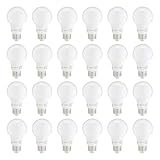
- LONG LASTING PERFORMANCE: These LED bulbs offer a 10,000 hour lifespan, providing lasting illumination for over 9 years (based on 3 hours of use each day), helping minimize replacements
- GREAT ATMOSPHERE: Enjoy daylight white light bulbs that create a bright, crisp atmosphere for any room
- STANDARD FIT: The E26 standard base provides compatibility with most fixtures, making it easy to install these LED bulbs in lamps and overhead lighting
Repair before replacing
- Restore sound timber, repair joints and glazing putty, and redecorate with compatible finishes.
- Correct warped sashes, failed catches and damaged weathering details.
- Maintain shutters, curtains and blinds that provide useful night-time insulation and solar control.
- Check door closers, thresholds and seals without creating a trip hazard or trapping moisture.
Use secondary glazing where it fits the room
Carefully designed secondary glazing can retain an original window while reducing draughts and heat loss. The design must allow for cleaning, access to shutters and hardware, sightlines, condensation and mould risk. Coordinate the air gap and ventilation strategy with the window specialist; do not seal a room so tightly that it lacks controlled fresh air.
Recommended Free Tools
Where a window is significant, document the proposed frame, fixing points and removal method. A reversible internal system may be preferable to altering the external elevation, but the best choice depends on reveals, moisture movement and the room’s appearance.
Treat draughts as an airflow design problem
Reducing uncontrolled leakage can improve comfort, yet it changes the ventilation balance. Test or inspect air paths before sealing suspended timber floors, chimneys, service penetrations or redundant openings. A disused flue may need a ventilated terminal rather than being blocked completely; a floor void may require airflow to protect timber. Coordinate draught reduction with mechanical or passive ventilation and verify indoor-air quality afterward.
5. Treat insulation as a design decision, not a default package
Insulation can reduce heat demand in a suitable assembly, but an inappropriate material or detail can move the dew point, trap moisture, encourage mould, impair drying and damage historic fabric. The same intervention can also reduce summer heat loss at night or increase overheating if ventilation and solar gains are not considered together.
Assess each element and its moisture path
- Roof and lofts: check roof condition, ventilation, eaves details, access and the position of services before adding insulation.
- Solid walls: assess wind-driven rain, pointing, salts, internal finishes, junctions and the ability of the wall to dry. Do not assume a standard cavity-wall product is suitable.
- Suspended timber floors: preserve sub-floor ventilation, inspect joists for decay and avoid covering air bricks.
- Basements and cellars: understand groundwater, drainage, ventilation and the effect of changing surface temperatures.
- Internal linings: detail around cornices, skirtings, shutters and service penetrations so significant finishes are not cut or hidden unnecessarily.
Use hygrothermal assessment and, where appropriate, test panels or monitored trial rooms. Compare predicted performance with moisture, temperature and humidity measurements. The design should address ventilation, overheating, fire performance, accessibility and maintenance at the same time as heat loss.
Quick wins for a faster PC:
Scan for outdated or missing drivers - takes under a minuteDriver Scan →Clear out junk files and repair common Windows errorsFree Scan →Fix the driver behind crashes, sound loss and screen glitchesFind Drivers →Specify materials and workmanship conservatively
Compatibility matters more than a product’s headline thermal conductivity. Specify breathable or vapour-open assemblies where the existing construction depends on drying, and require details for junctions, window reveals, eaves, corners and pipe penetrations. A competent contractor should provide method statements, protection for historic surfaces, inspection hold points and a record of materials actually installed.
6. Review heating and hot water after demand reduction
Once avoidable demand and fabric risks are understood, review heating and hot-water systems for condition, efficiency, sizing, controls, maintenance and suitability for the hotel’s occupancy pattern. Check whether boilers, heat emitters, pumps, cylinders and distribution circuits are oversized or operating at temperatures higher than necessary.
Rank #4

- 【Energy Efficiency】: EVELOR A19 LED light bulb is an energy-saving 9W (60W equivalent) bulb, saving up to 90% energy compared to traditional incandescent light bulbs 60 watt. The led lamp bulb is designed to be highly efficient, making it an ideal replacement for old-fashioned bulbs.Gift options for Christmas and other festivals.
- 【High Brightness & Excellent Light】: With 800LM and a high CRI 80+ (color rendering index), the light it gives out is close to the sun's value, making colors in your room appear richer, true and natural. Also, it has No flicker LED beads for enhanced brightness. This makes the light bulbs 60 watt daylight white 5000K light bulbs a perfect fit for any room where accurate color perception is important.
- 【Non Dimmable Feature】: The A19 E26 LED lightbulbs is Non Dimmable, providing a consistent level of illumination. This is especially useful in areas where a steady light source is required, such as in hallways or stairways. Daylight white light bulb gives a reliable and unchanging light output, different from some dimmable bulbs.
- 【Long Lifespan】: Type a 60w LED light bulbs a long lifespan of 15000+ hours, which means fewer replacements and less hassle. Whether used indoors in living rooms, bedrooms, kitchens, bathrooms, dining rooms, entryways or outdoors in gardens, garages, porches, patios, or in commercial settings like offices, hotels, bars, coffee shops, restaurants, etc., this led light bulb can last for a long time, reducing maintenance costs.
- 【No Flicker & Stable Performance】: NO Flicker design ensures a stable and comfortable light output, providing a better visual experience and protecting your eyes. It operates at 110 - 130VAC and has an E26 Medium base for easy installation. The daylight white light bulbs offer a smooth and steady glow, enhancing the overall lighting effect of any space.
Hot-water priorities
- Repair leaks and failed insulation on cylinders, calorifiers and distribution pipework.
- Check secondary-return temperatures, balancing and time schedules against water-hygiene requirements.
- Use efficient taps, showers and flow controls only where guest experience and hygiene standards remain acceptable.
- Coordinate laundry, kitchen and guest-room demand so plant does not operate at maximum output continuously.
- Trend flow, return and storage temperatures rather than relying solely on a boiler display.
Plan replacement plant around the building
If a heating system is at the end of its life, a more efficient or lower-carbon replacement may be appropriate. Evaluate plant-room access, electrical capacity, noise, vibration, flues, condensate drainage, fire separation, pipe routes and visual impact. A heat pump, for example, cannot be selected on efficiency alone; emitter temperatures, outdoor-unit location, acoustic limits and peak hot-water demand must be demonstrated for this hotel.
Historic England advises reducing demand before low- or zero-carbon generation. A smaller system can reduce capital cost, embodied carbon and the amount of new equipment that must be installed in sensitive areas.
The Tool Desk
Outbyte PC Repair FREEClear out junk files and repair common Windows errorsFree Scan →Outbyte Driver Updater FREEFix the driver behind crashes, sound loss and screen glitchesFind Drivers →7. Add new services with mitigation, minimisation and reversibility
New controls, sensors, cables, pipework and plant should use existing routes where practical. Keep penetrations and fixings to a minimum, choose discreet locations and retain historically significant services where they can remain safely in use. Where removal may be needed in the future, make that possible without taking historic material with it.
- Survey voids and redundant routes before drilling or opening finishes.
- Use existing risers, service cupboards and plant spaces before proposing new chases.
- Keep fixings out of carved stone, decorative plaster, panelling and primary timber unless specifically approved.
- Provide access panels that are visually quiet and maintainable.
- Photograph and draw approved routes, fixing methods, equipment settings and concealed work before closing it up.
Service design should follow mitigation, minimisation and reversibility. Significant components may need to be retained even when a new system is installed. Obtain statutory consent before work that affects protected fabric.
Independent reader supportYour contribution helps us test, update, and keep practical guides available for everyone.8. Check permissions and regulations before work starts
For an English listed hotel, identify the listing and its extent, then ask the local planning authority or conservation officer which consents apply. Work affecting listed fabric can require listed building consent; a hotel in a conservation area may also face controls on external alterations. Historic England Advice Note 18 explains the permissions and decision-making framework, but the local authority makes the project-specific determination.
Building Regulations requirements depend on the work, building and applicable standards. The government’s current information lists 2026 editions of Approved Document L while noting that earlier editions can apply where a project is subject to previous standards. Confirm the applicable edition with the building-control body at the design stage. Also coordinate fire safety, electrical, gas, accessibility, water hygiene and environmental-health requirements.
These processes are England-specific. In Scotland, Wales, Northern Ireland, the United States or elsewhere, contact the relevant heritage authority and building-control authority; do not assume an English listed-building route applies.
Best Value

- Technical Features: 24 Packs, A19 Daylight LED bulbs, 8.5 watts, 800 lumens, daylight 5000k, light bulbs 60 watt equivalent, E26 base, non-dimmable, frosted, AC-120V, CRI 80, beam angle 230°, turn on instantly
- Energy Saving and Long-lasting: Save up to 80 on energy costs by replacing 60W with just 8.5W
- Direct Replacement: Perfect replacement for incandescent light bulbs. No breakable parts and are free of toxic chemicals, they are safe for your family and the environment
- Eye-care and Comfortable: Flicker-free and non-dazzling led bulbs protect your eyes while ensuring a healthy environment. No lead or mercury, no IR radiation
- High Brightness and CRI 80+: Designed with the advance LED source technology, 60w LED light bulbs to emit with a full 800 lumens of brightness. With high CRI 80+, the A19 standard light bulbs 60 watts will provide you natural and brilliant realistic colors
9. Compare measures using the same decision framework
Do not rank options by predicted kilowatt-hours alone. Use a written appraisal so conservation, operations and finance are considered together.
| Decision axis | Questions for the project team |
|---|---|
| Energy and carbon effect | What demand does this measure address in this hotel, and what evidence supports the estimate? |
| Capital, operating cost and maintenance | What is the installed cost, replacement cycle, access requirement and staff workload? |
| Historic significance and reversibility | Which fabric or sightlines change, and can the work be removed without damage? |
| Moisture, ventilation and overheating | Could the detail alter drying, indoor air quality, summer comfort or mould risk? |
| Guest and staff experience | Will noise, glare, drafts, temperature, water pressure or room appearance change? |
| Permissions and disruption | What consents, surveys, shutdowns, room closures and phased works are required? |
| Evidence quality | Is the estimate based on this building’s measured data, a monitored trial or a generic model? |
A low-cost measure with uncertain performance can still be worthwhile if it is reversible and monitored. A major fabric intervention needs stronger design evidence and a clear conservation case.
10. Deliver the work in phases and protect operations
- Prepare the brief: define energy, comfort, heritage, budget, access and documentation requirements. Name a decision-maker for operational changes.
- Survey and baseline: complete condition, significance, services and energy reviews; install temporary meters or sensors where data is missing.
- Repair and tune: resolve water ingress, maintenance defects, control errors and unsafe or unnecessary operation.
- Trial low-disruption measures: test LED lamps, schedules, room controls, hot-water improvements and selected draught or secondary-glazing details in representative areas.
- Review the evidence: compare energy, temperatures, humidity, complaints and maintenance with the baseline, adjusting for occupancy and weather.
- Design major work: develop moisture-aware insulation, window, plant or service proposals with conservation and building-control input.
- Secure approvals and procure: obtain required consents, write protection and inspection requirements into the contract, and select contractors experienced with historic fabric.
- Phase construction: isolate rooms or services safely, protect guests from noise and dust, and keep photographic records of concealed work.
- Commission and train: balance systems, verify controls, provide operating instructions and train the staff who will change settings.
- Monitor after handover: review actual performance at agreed intervals and correct faults before declaring the project successful.
11. Verify performance, comfort and fabric after completion
Set a post-work monitoring plan before construction. Track whole-hotel and, where possible, end-use energy, together with occupancy, outdoor weather, room temperatures, relative humidity, carbon dioxide where relevant, hot-water temperatures, complaints and maintenance call-outs.
What’s actually slowing this PC down?
Pick the symptom - the matching free tool is one click away.
Review data at commissioning, after the first busy operating period and through a full seasonal cycle when practical. Compare like with like: a wedding season, unusual closure or major occupancy change can overwhelm the effect of an otherwise successful measure. Inspect newly insulated or sealed areas for condensation, staining, mould, distorted joinery and blocked ventilation paths.
If energy falls but complaints rise, investigate controls, zoning, drafts, noise, glare and staff override practices rather than assuming the project failed. If predicted savings do not appear, check meter allocation, schedules, setpoints, plant sequencing, occupancy and weather before adding more fabric measures. Historic England warns that predicted performance may differ from actual results; measured operation is the basis for the next decision.
Common mistakes to avoid
- Starting with insulation because it is familiar: repair defects and establish moisture behaviour first.
- Replacing original windows by default: repair and assess secondary glazing before wholesale replacement.
- Sealing every gap: coordinate draught reduction with controlled ventilation and timber-floor or flue requirements.
- Installing generic controls: make interfaces understandable, retain safe continuous services and provide overrides.
- Choosing plant from a brochure rating: size it for measured loads, emitter temperatures, hot-water demand, access and noise constraints.
- Routing services through significant fabric: survey existing routes and document reversible fixing methods.
- Using a generic savings percentage: hotel use varies with climate, equipment, management and business activity; no universal heritage-hotel figure is established here.
- Leaving staff out of commissioning: a well-designed system will underperform if the people operating it do not understand schedules and overrides.
- Measuring only utility bills: energy data must be read alongside comfort, humidity, occupancy and maintenance outcomes.
What a good heritage-hotel retrofit brief should require
Give designers and contractors a concise written brief that includes:
- The building’s designation, significance statement and a schedule of features to retain.
- Survey information on construction, defects, exposure, services and energy use.
- Guest comfort, indoor-air-quality, water-hygiene, fire and accessibility requirements.
- Target operating outcomes expressed as measured energy, temperature, humidity and complaint indicators rather than an unsupported savings promise.
- Required consents, inspection points, protection methods, sample panels and photographic records.
- Existing-route and reversibility requirements for all new services.
- Phasing, room closures, noise limits, cleaning and emergency arrangements.
- Commissioning tests, staff training, handover documents and a post-occupancy review schedule.
Saving energy without harming historic features is therefore a managed process, not a single product choice. Diagnose the building and the hotel’s 24-hour operation, fix avoidable losses, select reversible and moisture-safe measures, obtain the right approvals, and judge success by measured performance and guest comfort in the property that was actually changed.
Quick Recap
Product prices and availability are accurate as of the date/time indicated and are subject to change. Any price and availability information displayed on Amazon at the time of purchase will apply.

