You can make an ordinary home substantially more resilient without constructing a bunker. The practical approach is layered: learn the hazards at your address, plan for the people and animals who depend on the home, maintain the systems that commonly fail, prepare for power loss, and then select building work that addresses a specific flood, wind, wildfire, heat, or cold exposure. No single retrofit makes a house disaster-proof, and the right work depends on location, construction, local code, budget, and household health needs.
What home resilience actually means
Resilience is the ability to keep people safe, limit avoidable damage, and restore essential functions after a disruption. It is broader than structural strength. A home with a sound roof can still become unsafe if nobody knows how to evacuate, a medical device loses power, a basement pump stops, or family members cannot contact one another.
As an Amazon Associate I earn from qualifying purchases.
Think in layers that support one another:
- Knowledge: Identify the hazards that can reach your address and how those risks may change over time. FEMA’s climate guidance notes that local risks are not fixed.
- Household readiness: Make decisions about communication, evacuation, supplies, medications, pets, and assistance before an event.
- Routine reliability: Keep drainage, utilities, heating, cooling, and critical equipment in working order.
- Targeted mitigation: Change the building or site where a known failure path—water entry, wind pressure, embers, extreme heat, or loss of power—can be reduced.
- Recovery capacity: Protect records, know whom to call, and make improvements that allow essential services to resume safely.
This sequence prevents a common mistake: buying specialized hardware before understanding which problem it is meant to solve.
What’s actually slowing this PC down?
Pick the symptom - the matching free tool is one click away.
Start with the hazards and the household
Map the risks at your address
Use your city or county emergency-management office, state hazard maps, flood maps, fire-service guidance, and official weather-alert information. List the hazards that are plausible at the property, such as river or coastal flooding, intense rainfall, hurricanes and other high winds, wildfire, winter cold, extreme heat, drought-related water restrictions, or extended utility outages. Ask whether a risk is seasonal, whether an evacuation zone applies, and which routes remain usable when roads are closed.
#1 Best Overall

- Outstanding Performance: This sump pump battery backup system delivers 2500W pure sine wave output, supporting dual-pump operation (1 HP main + 1/3 HP backup). Includes a USB port and AC outlet, ideal for emergency use and a home prone to heavy rainfall
- Quick Plug-In Setup: Say goodbye to risky wiring. This sump pump battery backup inverter features a standard 3-prong plug for quick and secure installation. It reduces errors and electrical hazards. Just plug in, and you're ready
- Battery-Friendly Charging: Equipped with 3-stage charging (Bulk, Absorption, Float), this basement protection sump pump inverter automatically optimizes battery performance and service life. Compatible with 12V Lead-acid, AGM, Gel, and LiFePO4 batteries
- Real-Time Display: Stay informed with an LCD screen and LED indicators. This pure sine wave power inverter allows you to monitor voltage, battery level, and working status easily. Control with confidence
- Security Comes First: Designed with security in mind, this back up system for emergency includes built-in protection against overcurrent, overvoltage, short circuit, reverse polarity, and high temp. A circuit breaker adds another layer of safeguards
Do not assume a home is safe because it has never flooded or experienced a severe wind event. FEMA’s homeowner guidance states, “Anywhere it rains, it can flood.” Drainage patterns, nearby development, blocked culverts, and changing rainfall can alter exposure. A local map and an on-site inspection are more useful than a generic national ranking of upgrades.
List the people, animals, and equipment that need a plan
Write down everyone who may need help leaving or sheltering: young children, older adults, people with disabilities, anyone who uses oxygen or powered medical equipment, and people who cannot safely drive. Include pets and service animals, with carriers, food, medications, identification, and a destination that accepts them. Record prescription schedules, refrigeration requirements, mobility aids, communication needs, and a backup caregiver or neighbor.
Separate life-safety needs from convenience. A refrigerated medicine, ventilator, powered lift, or well pump may require a different backup strategy from lights or internet access. Ask the equipment supplier and clinician about safe runtime, battery options, and shutdown procedures rather than improvising during an outage.
The Tool Desk
Outbyte Driver Updater FREEScan for outdated or missing drivers - takes under a minuteDriver Scan →Outbyte PC Repair FREEClear out junk files and repair common Windows errorsFree Scan →Build the household plan before changing the building
Make communication and evacuation decisions
Choose two meeting places: one close to home and one outside the immediate area. Select an out-of-area contact whom everyone can reach by text or voice when local networks are congested. Decide who collects children, checks on relatives, transports pets, and turns off utilities if authorities or a qualified professional directs it. Keep a paper copy because phones may be lost or uncharged.
Identify at least two evacuation routes and destinations for each major hazard. A route that works for a wildfire may be unsuitable during flooding; never drive through water. Ready.gov’s warning is concise: “Turn Around. Don’t Drown!” Sign up for local emergency alerts, know the sound or message used for evacuation orders, and agree that an official order overrides a household debate.
Assemble and maintain supplies
Build supplies around the hazards and the number of people, not a one-size-fits-all checklist. Include drinking water, shelf-stable food, medications, first-aid materials, flashlights, spare batteries, a battery or hand-crank radio, phone charging, sanitation items, warm or cool clothing, copies of documents, cash, pet supplies, and tools for safe utility shutoffs. Store items where everyone can reach them and where a likely flood cannot destroy them.
Rank #2

- System comes preassembled and preplumbed so that installation is simple and quick
- Reliable design with durable ½ HP energy efficient copper-wound Permanent Split Capacitor (PSC) motor for long life and savings on your electric bills
- Includes a WiFi-capable battery backup system that provides 24-hour-a-day monitoring of pump, power and battery conditions; backup controller will sound an alarm, illuminate a warning light and describe what to do for easy maintenance
- Allows for connection to a Basement Watchdog CONNECT Module (BW-WiFi2—a SEPARATE PURCHASE), giving you real-time alerts via text, email, push notification or through the Basement Watchdog free app
- Provides days of intermittent pumping power on a single battery charge and is compatible with both maintenance-free AGM and wet-cell batteries. Connect two batteries in parallel for double the runtime.
Protect passports, insurance information, property records, medical lists, and contact numbers in a waterproof container. Keep accessible digital copies on a device or account that household members can use without relying on a single phone. Check expiration dates, battery charge, medication continuity, and seasonal clothing at least twice a year and after every use.
Preparedness is also social. Tell a trusted neighbor how to reach you, offer a reciprocal check-in, and learn what local shelters and transportation services provide for disabilities, pets, or medical equipment. FEMA’s 2025 preparedness campaign organizes the basics as knowing hazards, making a plan, building a kit, and participating in community preparedness.
Reduce ordinary failures and prepare for power loss
Keep water out through maintenance
Clean gutters, downspouts, roof drains, and surface drains before wet seasons. Discharge downspouts where they will not send water toward the foundation. Look for ponding, cracks, damp smells, staining, loose flashing, and blocked culverts. A rain garden or other approved landscape measure can slow runoff, but it must be designed so it does not direct water toward the building or a neighboring property.
Know the locations of the main electrical disconnect, water shutoff, gas or propane shutoff, and any sump-pump controls. Label them and make sure the person expected to operate each one can do so safely. Do not operate a gas valve, electrical equipment, or fuel system if doing so creates a hazard; call the utility or a qualified professional.
Use generators and appliances safely
During an outage, unplug sensitive appliances and electronics to reduce surge damage when power returns. Keep refrigerator and freezer doors closed. FEMA’s 2024 outage guidance gives approximate holding times of about four hours for a refrigerator and about 48 hours for a full freezer; actual times vary with ambient temperature, appliance condition, food load, and how often the door is opened.
Recommended Free Tools
Portable generators belong outdoors, at least 20 feet from building openings, with exhaust directed away from the house. Never run one in a basement, garage, crawlspace, porch, shed, or near a window or door. Carbon monoxide can accumulate without an obvious smell. Use only the fuel and cords specified by the manufacturer, keep the generator dry, and have a qualified electrician install a transfer switch for any connection to household circuits. Never back-feed a receptacle.
Rank #3

- 【CONTINUOUS POWER】The Cantonape 2000 Watt Sump Pump Backup Battery System is a professional backup system in case of a power outage, featuring pure sine wave output, 2000 watts of powerful power output, LED display and 3 AC outputs, which produces a seamless, grid-like power output that is resistant to interference, can drive any type of load (resistive and inductive loads), has the highest conversion efficiency, and the lowest losses, and is therefore safer for all types of loads.
- 【CHARGING MODE】The 2000W sump pump backup battery system has a built-in 20A battery charger, which supports fast charging. In the event of a power outage, this sump pump battery backup system can quickly auto-switch to battery inverter power, ensuring continuous sump pump operation.
- 【LED DISPLAY】The Cantonape sump pump battery backup system is equipped with LED display, you can instantly monitor vital information such as battery voltage and AC voltage. Enjoy confident and informed decision-making every step of the way!
- 【SAFETY IN USE】The Cantonape sump pump battery backup system has a built-in cooling system and overload protector, as well as multiple protection functions such as overheat protection, short circuit protection, low voltage protection, overcharge protection, etc., which not only improves the safety of use, but also extends the service life of the device.
- 【MULTIPLE APPLICATIONS】Our sump pump battery backup system also works as a power inverter for many applications requiring backup power. You can use it to operate various electric devices, including lights, mobile phones, monitors, and other equipment. This inverter doesn't come with battery, a 12V GEL, AGM/SLA, Flooded/Wet battery is required for backup power operation.
Do not use a gas range or oven to heat the home. It can produce carbon monoxide, consume oxygen, and create a fire risk. Plan safe heating or cooling locations, blankets, ventilation, and transportation before an extreme-temperature event. Test carbon-monoxide and smoke alarms on a schedule and replace batteries or units according to the manufacturer’s instructions.
Match physical improvements to the hazard
Flooding and intense rainfall
First determine whether the property is in a mapped flood area, below a known flood elevation, near a drainage channel, or vulnerable to basement seepage. Learn the local evacuation route and keep documents and medications above likely flood levels. Move irreplaceable items and critical electronics to higher floors or elevated storage.
Site and building measures may include:
- Elevating electrical panels, HVAC equipment, water heaters, fuel tanks, and other utilities above the expected flood level where code and engineering permit.
- Using flood-resistant materials below the base flood elevation when regulations allow them.
- Installing flood vents in appropriate foundation enclosures so water pressure can equalize.
- Adding backflow protection where a plumber or authority confirms it is suitable for the drainage system.
- Anchoring fuel tanks against flotation and impact.
- Maintaining a properly sized sump pump and considering a battery-backed sump pump and water alarm for a basement.
- Keeping gutters, downspouts, drains, and site grading functional.
FEMA identifies elevating the lowest floor above the base flood elevation as a mitigation option, but the correct elevation, venting, materials, and permits are site-specific. An elevated utility is less likely to be damaged; it is not automatically safe if the rest of the installation violates electrical, fuel, or floodplain requirements. FloodSmart likewise emphasizes a working sump pump and water alarm for minimizing basement damage. A backup sump system must be compatible with the pit, discharge route, battery, and primary pump, and it needs periodic testing.
Hurricanes and other high winds
Wind damage often follows a weak connection or opening: a failed garage door, broken window, lifted roof covering, or discontinuous path from roof to wall to foundation. Inspect the roof covering, flashing, sheathing, gable ends, soffits, garage door, exterior doors, and window protection. Repair deterioration before adding hardware.
FEMA identifies shutters for windows and glass doors, gable-end bracing, roof-to-wall hurricane straps, and reinforcement of garage and double-entry doors as possible measures. Their suitability depends on the existing framing, fasteners, load path, wind speed, and local code. A strap that cannot transfer forces into the foundation is not a complete retrofit.
FEMA P-804, the 2025 Wind Retrofit Guide for Residential Buildings, provides retrofit packages for existing one- and two-family homes in hurricane-prone U.S. regions and territories and may also be applicable in some non-coastal high-wind areas. It does not cover manufactured housing or townhouse units. For conditions outside its scope, the guide directs owners to a registered design professional. Treat the guide as a design framework, not a casual do-it-yourself checklist.
Rank #4

- Maintenance free - no need to add battery fluid or distilled water
- Up to 40-hour protection (based on a 10% duty cycle) on the Basement Watchdog Big Dog (BWD12-120C+)
- Up to 48-hour protection (based on a 10% duty cycle) on the Basement Watchdog Special + (BWSP+) and Basement Watchdog Big Combination sump pump system (BW4000, CITS-50)
- Up to 80-hour protection (based on a 10% duty cycle) on the Basement Watchdog Emergency (BWE) and Basement Watchdog Combination sump pump system (DFK961, CITE-33)
- Runs various Basement Watchdog sump pump systems intermittently for days
Wildfire and ember exposure
Wildfire protection begins beyond the walls because embers can travel ahead of the flame front. The U.S. Fire Administration describes three defensible-space zones:
| Zone | Distance from the home | Priority actions |
|---|---|---|
| Immediate zone | 0–5 feet | Remove combustible mulch, stored materials, dead vegetation, and debris; keep the area next to walls and under decks clean. |
| Intermediate zone | 5–30 feet | Maintain vegetation, separate shrubs and trees, remove ladder fuels, and keep wood storage away from the structure. |
| Extended zone | 30–100 feet | Manage grasses, dead trees, and accumulated fuels in accordance with local fire guidance and property constraints. |
Trim branches that overhang roofs, eaves, and chimneys. Clean roof valleys and gutters of needles and leaves. Inspect vents, soffits, decks, fences, and attached structures for places where embers could enter or ignite debris. Keep firewood, propane cylinders, vehicles, and combustible outdoor furniture as far from the house as local guidance requires.
Parcel work and building details must be considered together. The Insurance Institute for Business & Home Safety’s Wildfire Prepared Home technical standard combines defensible space, building features, and ember pathways. Its 2025 standard is stated as effective for current designations beginning June 1, 2026, with Essential and Enhanced levels. Meeting a standard is not a guarantee that a home will survive every wildfire; local fire behavior, access, construction, and maintenance still matter.
Heat, cold, and energy interruption
Weatherization can improve comfort and extend the time a home remains tolerable during an outage, but it is not a substitute for flood, wind, or wildfire mitigation. Start with a whole-house energy audit that examines the envelope, heating and cooling, electrical systems, and appliances. The U.S. Department of Energy’s whole-house framework includes measures such as repairing or replacing HVAC equipment and insulating ducts and pipes.
Seal uncontrolled air leaks, improve insulation where appropriate, shade sun-exposed windows, and service heating and cooling equipment. Balance efficiency work with ventilation and indoor-air-quality requirements. For extreme heat, identify an air-conditioned refuge and a way to reach it. For extreme cold, plan safe supplemental heat, water-line protection, and a place to stay if the primary system fails. Never improvise with an oven, grill, charcoal appliance, or indoor combustion device.
Compare projects by the failure they prevent
The following framework helps decide what belongs on your next-work list. “Cost” is not ranked because it varies too widely by location, design, access, code, and existing condition.
Best Value
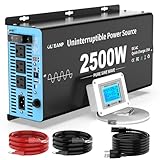
- 【Designed for Basement Flood Protection & Emergency Preparedness】: Protect your home from flooding during hurricanes, heavy rainstorms, and unexpected power outages. This sump pump battery backup system automatically switches from grid power to battery power, ensuring uninterrupted water removal and continuous basement protection. Ideal for homeowners in flood-prone areas and finished basement properties.
- 【Acts as a Reliable Emergency Backup Power Source (Battery Not Included)】: Serves as a dedicated emergency backup solution for primary or secondary sump pump systems. When utility power fails, it instantly transfers to 12V deep cycle battery power (battery required, not included) and automatically recharges when power is restored. Compatible with LiFePO4, AGM, GEL, and Flooded deep-cycle batteries.
- 【Built-in 25A Smart Charger with Multi-Stage Battery Protection】:Features a high-speed 25A charger with selectable charging modes to optimize battery lifespan. Includes overcharge, low voltage, overload, short circuit, and overheat protection. Designed for long-term reliability during storm season and emergency situations.
- 【2500W Pure Sine Wave Output – Safely Powers Sump Pumps & Essential Devices】: Delivers stable pure sine wave power capable of running sump pumps smoothly and efficiently without damaging sensitive equipment. With 3 AC outlets, USB port, and Type-C port, it can also support essential household devices during outages.
- 【LCD Remote Monitoring & Easy Installation】: Includes a remote controller with LCD display to monitor battery voltage, load status, and operating mode in real time. Supports wall mounting or flat placement with simple AC and DC connections — no complicated rewiring required. Trusted by homeowners, property managers, and contractors seeking dependable flood prevention solutions.
| Action | Primary hazard or failure path | Type of work | Key requirements | What it protects |
|---|---|---|---|---|
| Clear gutters, drains, and downspouts | Surface water and roof drainage failure | Maintenance | Seasonal inspection; correct discharge location | Building and contents |
| Communication, evacuation, and supply plan | Delayed decisions or inability to leave | Household preparation | Accessible contacts, routes, medications, pet arrangements | Life safety and continuity |
| Elevate utilities or install flood vents | Floodwater damage and hydrostatic pressure | Professional retrofit | Floodplain rules, engineering, permits, compatible materials | Property and essential services |
| Sump pump, battery backup, and water alarm | Basement seepage or pump failure | Equipment plus maintenance | Correct sizing, discharge, battery, and testing | Basement contents and continuity |
| Shutters, opening reinforcement, gable bracing, or roof-to-wall connections | Wind pressure and wind-driven rain | Design-specific retrofit | Existing framing assessment, rated hardware, local code | Life safety and building envelope |
| Defensible space and ember-pathway work | Wildfire flame and ember ignition | Maintenance plus building mitigation | Local fire guidance, vegetation constraints, clean details | Life safety and property |
| Whole-house weatherization and HVAC service | Heat, cold, and energy loss | Energy improvement | Audit, ventilation review, qualified installation | Comfort and essential services |
Use a practical implementation sequence
- Make a one-page hazard map. Record flood exposure, evacuation zones, wildfire interface, wind exposure, extreme-temperature concerns, utility dependencies, and the official alert channels for your address.
- Write the household plan. Add meeting places, contacts, routes, responsibilities, medications, mobility needs, pets, and destinations. Practice it so children and caregivers know what to do.
- Correct immediate maintenance defects. Clear drainage, repair roof and flashing leaks, secure loose exterior elements, test alarms, service heating and cooling, and label utility shutoffs.
- Prepare for an outage. Assemble supplies, protect refrigerated medicines, decide where a generator can operate safely, and arrange approved backup power for medical equipment. Have an electrician review any connection to fixed circuits.
- Choose one hazard-specific project. Select the failure path with the greatest consequence and the clearest evidence at your property—for example, a sump and water alarm for a flood-prone basement or ember-resistant detailing in a wildfire area.
- Verify design and permits. Ask the building department, floodplain administrator, fire authority, utility, or a registered design professional what rules apply before ordering materials or opening walls.
- Document and maintain the work. Keep permits, drawings, product instructions, inspection records, warranties, and photographs. Add inspections and tests to a calendar.
Know when a professional is essential
Use a licensed or registered professional for structural connections, roof-to-wall load paths, gable bracing, electrical changes, generator transfer equipment, fuel systems, major flood alterations, foundation work, and modifications that affect egress or fire ratings. A professional should also review projects in mapped flood zones, older or previously altered buildings, homes with settlement or structural damage, and any work outside the scope of a published retrofit guide.
Ask for a written scope that identifies the hazard, the failure path being addressed, applicable code editions, assumptions about the existing construction, required inspections, and maintenance. If a contractor proposes a universal solution or promises that a project will make the house “disaster-proof,” seek another opinion. Resilience work is strongest when the recommendation can be traced to a known local exposure and a verifiable installation detail.
Keep resilience working after installation
Set recurring reminders for gutter and roof inspections, sump-pump tests, water-alarm batteries, generator exercise and fuel rotation, smoke and carbon-monoxide alarms, HVAC service, tree and defensible-space maintenance, and replacement of expired supplies. Recheck the plan after a move, renovation, new diagnosis, new pet, birth, death, or change in evacuation routes.
Crashes, No Sound, or Screen Glitches?
Random freezes, missing sound and display glitches usually trace back to one bad driver. Find and replace yours safely.Free scan · under a minutePC Slower Than It Used to Be?
A free scan shows the junk files, broken settings and background clutter dragging Windows down - then fixes them in one click.Free scan · Windows 10 & 11After a near miss or minor event, record what failed: a blocked drain, inaccessible shutoff, dead battery, confusing alert, or unsafe route. Fix that observation while it is fresh. A small correction made between events is usually more useful than an elaborate system nobody has tested.
The sensible alternative to a bunker
A resilient home is not defined by one dramatic structure. It is a maintained building matched to its hazards, a household that can communicate and evacuate, safe plans for power and medical needs, and carefully designed upgrades where local evidence shows a weak point. Start with information and life safety, remove ordinary sources of failure, then invest in professional mitigation that addresses the specific way water, wind, embers, temperature, or utility loss could affect your home.
Quick Recap
Product prices and availability are accurate as of the date/time indicated and are subject to change. Any price and availability information displayed on Amazon at the time of purchase will apply.

