What’s actually slowing this PC down?
Pick the symptom - the matching free tool is one click away.
Gaura—usually Oenothera lindheimeri, still widely sold as Gaura lindheimeri—is easiest to grow when you treat it as a sun-loving, drought-tolerant plant that hates wet feet. Give it at least six hours of direct sun, fast-draining soil, moderate water while it establishes, and little routine fertilizer. The main reasons gaura fails are poor drainage, excess fertility, weak light, and unrealistic expectations about winter survival.
What is gaura?
In garden centers, “gaura” usually means Oenothera lindheimeri, a clump-forming perennial formerly known as Gaura lindheimeri. The older name remains common on nursery labels and seed packets, while Kew currently accepts Oenothera lindheimeri as the botanical name.
As an Amazon Associate I earn from qualifying purchases.
It is also sold as wandflower, Lindheimer’s beeblossom, whirling butterflies, or bee blossom. “Wandflower” is not exclusive to this plant, however; other plants such as Dierama, Ixia, and Sparaxis may share that common name. Care advice for O. lindheimeri should not automatically be applied to every plant labeled gaura, beeblossom, or wandflower.
Gaura produces a basal clump of narrow leaves and long, thin, branching stems that sway in the wind. Its four-petaled flowers may be white, pink-tinged, pink, or rose. Only a few flowers open on each stem at a time, giving the plant a long summer-to-fall flowering season rather than one short flush.
#1 Best Overall

- HARDY AND POLLINATOR FRIENDLY PERENNIAL: Gaura seeds is a resilient perennial plant that grows up to 32 inches tall, offering a graceful, airy texture to your flower garden. Its long bloom season spans from early summer to the first frost, with flowers that transition from white to pink, providing continuous color and attracting pollinators like bees, butterflies, and hummingbirds.
- ADAPTABLE TO VARIOUS CLIMATES UNDER USDA ZONES 5-8: Suitable in weather conditioned areas under USDA Zones 5-8, Gaura flower seeds can grow in full sun to partial shade, offering flexibility in different garden locations. It is also tolerant of various soil types. Making it the suitable seeds for planting flowers outdoors.
- DROUGHT-TOLERANT AND LOW MAINTENANCE: Once established, our Gaura flower bulbs is drought-tolerant due to its deep tap root, making it a suitable choice of seeds to plant for low-water or xeriscape gardens. It requires minimal care, needing only occasional pruning to maintain its shape and ensure effective growth.
- DEER-PROOF AND COLD-HARDY: Our Gaura plant naturally deters deer, making it the suitable plants for outside wildlife-prone areas. In colder climates, mulching around the plant will protect its roots during winter; even if the plant freezes, it will regrow in the spring. Making it a great choice of flower seeds to plant outside winter gardens.
- EASY TO GROW FROM SEED: Our Gaura flower seed packets is simple to propagate. To start, plant a rate of 2-3 seeds using well drained soil with 30 inches spacing while covering thinly under 68F to germinate for 14-21 days and once established, it requires minimal attention to grow. Our plant seeds self-sows, which allows it to naturally expand in your garden over time.
The straight species is loose and airy and may reach roughly 3 to 5 feet tall. Modern cultivars can be much shorter, from about 12 inches to 3 feet or more. That difference matters: the best gaura for a large sunny border may be a poor choice for a container or small bed.
Gaura care at a glance
| Requirement | Best practice |
|---|---|
| Botanical name | Oenothera lindheimeri; often sold as Gaura lindheimeri |
| Light | Full sun, ideally at least 6 hours of direct sunlight |
| Soil | Sandy, loamy, gravelly, or otherwise fast-draining soil |
| Water | Regular moisture while establishing; less frequent watering once established |
| Fertilizer | Little or none in an ordinary in-ground bed |
| Mature size | About 3–5 feet for the species; cultivars vary widely |
| Bloom time | Usually summer through fall, often until frost |
| Hardiness | Often listed around USDA Zones 5–9, but survival depends heavily on cultivar and winter drainage |
| Pruning | Selective deadheading; shear tall plants by up to half in late spring if needed |
| Propagation | Seed or cuttings; mature division is difficult |
The most dependable formula is simple: full sun, excellent drainage, moderate-to-low fertility, careful establishment watering, minimal routine feeding, and selective pruning. Gaura is heat- and drought-tolerant after its deep root system is established, but persistently wet soil—especially in winter—is one of the main reasons it fails. North Carolina State Extension summarizes the plant’s full-sun, drainage, taproot, wildlife, and propagation characteristics.
Choose the site before you plant
Give gaura full sun
Choose a location with roughly six or more hours of direct sun. Gaura can tolerate some partial shade, but too little light commonly produces longer, weaker stems, fewer flowers, and more flopping. Morning sun with bright afternoon light may work in hot climates, but a deeply shaded or north-facing site is unlikely to give the plant its best form.
If you are planning a new bed around a home, patio, or construction project, check how the finished building, fencing, and rooflines will affect sunlight at midsummer. A site that appears sunny before construction may become shaded once walls, screens, or trees are in place.
Prioritize drainage over richness
Gaura performs best in sandy, loamy, gravelly, or otherwise free-draining soil. It does not require highly fertile ground. A slope, berm, raised bed, or well-drained container can be a better solution than adding large amounts of compost to a wet planting area.
Clay soil can work if excess water drains quickly. Heavy clay that stays saturated after rain is a high-risk site. Avoid low spots, downspouts, and locations where automatic irrigation keeps the crown continually wet.
Rich soil is not automatically better for gaura. Heavy manure, excess compost, or high-nitrogen fertilizer may create abundant foliage and weak flower stems. Overly lush growth is more likely to flop and can be more vulnerable to crown and root problems. Missouri Botanical Garden recommends well-drained soil and notes the plant’s tendency to need support in some situations.
Do these 3 things before closing this tab:
1Repair Windows errors before they cause bigger problems2Scan for outdated or missing drivers - takes under a minute3Clear out junk files and repair common Windows errorsDo not adjust soil pH without a reason
Gaura is not narrowly dependent on one soil pH. The Royal Horticultural Society lists it for acidic, neutral, and alkaline soils, provided the soil drains well. Test before applying lime or sulfur; unnecessary pH changes can create new problems without improving the plant.
How to plant gaura
- Check the label. Look for Oenothera lindheimeri or Gaura lindheimeri, then note the cultivar’s mature height, width, and stated hardiness.
- Pick the driest sunny location. Keep the plant away from standing water, downspouts, and constantly wet irrigation zones.
- Improve drainage if necessary. Use a raised bed, slope, berm, or container rather than simply enriching saturated soil.
- Plant in spring in cold-winter climates. Wait until the soil is workable and severe frost has passed. Spring planting gives the deep root system a full season to establish before winter.
- Handle the root ball carefully. Gaura develops a deep taproot and does not transplant or divide easily once mature. Do not tease or break the roots unnecessarily.
- Set the crown at the original depth. The top of the root ball should be level with the surrounding soil. Do not bury the crown.
- Allow for mature width. Compact cultivars may need about 12 to 20 inches, while tall types may need 2 to 3 feet or more. Follow the label where it gives a specific spacing.
- Water thoroughly once. Then keep the soil moderately moist while the plant establishes, allowing excess water to drain away.
- Add support early if required. A discreet support ring or neighboring ornamental grass can help tall cultivars before their stems fall outward.
Do not judge the final spacing by the size of a nursery pot. A small young plant can expand substantially during the growing season, especially in rich soil.
Watering: establish it carefully, then back off
Newly planted gaura needs regular moisture while its root system grows into the surrounding soil. Check the planting area rather than following a fixed calendar: water when the upper soil begins to dry, then water deeply enough to moisten the root zone.
Once established in the ground, gaura tolerates heat and periods of drought because of its deep taproot. Water during prolonged heat, drought, or severe wilting, but allow the soil to drain and dry somewhat between waterings. Occasional dryness is generally less dangerous than persistent wetness.
The Tool Desk
Outbyte Driver Updater FREEScan for outdated or missing drivers - takes under a minuteDriver Scan →Outbyte PC Repair FREEClear out junk files and repair common Windows errorsFree Scan →“Drought tolerant” does not mean “never water.” First-year plants, newly transplanted specimens, and plants in small containers are much less drought tolerant than established plants in the ground.
Winter saturation deserves particular attention. A plant that survives cold temperatures may still die if its crown and roots remain wet for weeks. If a bed drains poorly in winter, solve the drainage problem or treat gaura as a seasonal plant.
Rank #2
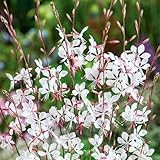
- This perennial likes to live in full sun to partial shade where it grows up to 2 feet tall.
- This perennial attracts birds, bees, and butterflies.
- Best Time to Plant: Outdoors after frost, in the fall, or indoors weeks before the last frost (cold stratify if necessary).
- Easily grows, whether you're a novice gardener or an experienced grower.
Container watering
Containers dry faster than garden soil, so check them more often during hot weather. Water thoroughly when needed, then let excess water escape through the drainage holes. Do not leave the pot standing in a saucer of water, and avoid a decorative cachepot that traps water around the roots.
Does gaura need fertilizer?
Usually, no fertilizer is needed in a reasonably fertile in-ground bed. Gaura often flowers better with restrained fertility than with a heavy feeding program.
Recommended Free Tools
- Avoid routine high-nitrogen fertilizer.
- Do not fill the planting hole with heavy manure or large amounts of rich compost.
- If the soil is genuinely poor, use a modest, balanced, label-directed amendment rather than repeated feeding.
- In containers, feed lightly only when the potting mix is depleted or the cultivar’s label specifically calls for it.
Some commercial production instructions recommend regular fertilizer for particular compact cultivars grown in greenhouse containers. Those instructions are not universal home-landscape rules. For example, monthly feeding cited for a production cultivar should not be treated as a requirement for every gaura planted in ordinary garden soil.
How to prevent gaura from flopping
Flopping is often a site or cultivar issue, not simply a staking problem. The most common causes are insufficient sun, rich soil, excess water, tall genetics, crowded growth, and late-season rain.
For future plantings, choose full sun and lean, well-drained soil. Avoid excess nitrogen and do not keep the bed constantly moist. If the straight species is too large for the location, replace it with a compact, well-branched cultivar.
For an existing plant, shear it by up to half in late spring or early summer after substantial basal growth has begun. This encourages a shorter, more branched framework. You can also place gaura behind or among sturdy perennials and ornamental grasses, or install a support ring early in the season before stems fall outward.
Outdated Drivers Are Slowing You Down
One free scan finds every outdated or missing driver and matches the right update for your exact hardware.Free scan · exact hardware matchWindows Errors? Fix Them Before They Spread
Repair common Windows errors and clear accumulated junk for a smoother, more stable PC - no reinstall needed.Free scan · no reinstallDo not wait until a tall plant is completely sprawled across a path. Late support is less effective and often more visible.
Deadheading and pruning
Selective deadheading
Deadheading is optional. It improves appearance, reduces self-sowing, and can help maintain a succession of flowering stems, but gaura does not require constant trimming to bloom.
Remove an individual spent flower wand by cutting it back to a lower branching point or to the plant’s base, depending on the shape you want. Selective removal keeps some flowers open while encouraging fresh stems.
Midseason shearing
If the plant is too tall or has begun to flop, shear it by up to approximately one-half in late spring or early summer. Cutting every flower stem at once creates a temporary pause; Wisconsin Extension reports that flowering may take roughly two to three weeks to resume after wholesale cutting. Selective cutting avoids a completely flowerless gap.
Free tools Windows power users keep installed
One-click scans. No signup required.
Some named cultivars have different instructions. For example, Monrovia recommends cutting its compact ‘Gaudi’ back by two-thirds after the first flush. That is cultivar-specific advice, not a general rule for all gaura. Check the instructions for the particular selection you bought.
Fall or spring cleanup?
Both approaches can be appropriate. Choose based on climate and priorities:
- Cut back in fall if you want a tidy bed, fewer seeds, or removal of visibly diseased material.
- Leave some stems through winter if you value winter structure or want additional protection around the crown.
- Clean up in spring in cold climates where winter interest and delayed crown disturbance are useful.
Remove dead material before or as new basal growth begins. Do not discard a dormant-looking plant too quickly; gaura can emerge slowly in spring, particularly after a cold winter.
Rank #3

- Premium Seed Count: Contains 310 high-quality mixed Gaura seeds featuring a beautiful blend of soft pink and crisp white blooms for a diverse garden display
- Elegant Garden Presence: Commonly known as Whirling Butterflies, these perennials produce airy blossoms that sway gracefully in the breeze atop slender, wiry stems
- Pollinator Attraction: These nectar-rich flowers serve as a natural magnet for honeybees, butterflies, and hummingbirds throughout the extended blooming season
- Sun-Loving Perennials: These hardy flowering plants thrive in full sun and well-drained soil, offering a long-lasting floral show from late spring through autumn
- Versatile Landscape Use: Ideal for adding delicate texture to mixed borders, cottage gardens, or large patio containers with their wildflower-like appearance
Winter care and realistic hardiness
Gaura is often listed somewhere around USDA Zones 5–9, or approximately Zones 5b–9a depending on the source and selection. That range is not a guarantee. Cultivar genetics, winter moisture, snow cover, wind exposure, freeze-thaw cycles, and local microclimate can matter as much as the official zone.
Quick wins for a faster PC:
Clear out junk files and repair common Windows errorsFree Scan →Fix the driver behind crashes, sound loss and screen glitchesFind Drivers →In cold or wet regions, gaura may behave as a short-lived perennial or seasonal annual. A cultivar marketed as an annual in a northern state may survive in a protected, sharply drained garden elsewhere, while a supposedly hardy plant may fail in wet winter clay.
Mild climates
Gaura may remain evergreen or semi-evergreen. Remove damaged stems as needed, and avoid unnecessary winter irrigation.
Cold but relatively dry climates
Leave some stems standing until spring. A loose layer of winter mulch can help during severe freeze-thaw cycles, but keep it airy and do not pack it against the crown. Remove the old growth when spring growth starts.
Cold, wet, or marginal climates
Drainage is more important than heavy protection. Do not repeatedly replant gaura in a site that stays saturated through winter. Save seed, take cuttings, or plan to purchase replacement plants if survival is unreliable. Chicago Botanic Garden provides useful cold-region context for gaura and its winter limitations.
Container plants
Roots in a container are more exposed to freezing than roots in the ground, so container survival can be less reliable. In marginal climates, move the pot to a sheltered, cool location with good drainage, reduce watering, and treat survival as experimental rather than guaranteed.
How to propagate gaura
Growing from seed
Seed is the best choice for the straight species and open-pollinated seed lines. It is economical and may produce plants that self-sow in favorable conditions.
Seed suppliers commonly recommend sowing on the surface or no deeper than 1/8 inch, starting indoors six to ten weeks before the average last frost. Germination may take approximately 14 to 30 days, although Extension guidance gives a longer range of about 21 to 35 days. A short cool period or approximately 60 days of cold stratification may improve germination for some seed lots, but it is not universally mandatory. Follow the packet instructions first. Botanical Interests gives current seed depth, timing, and germination guidance; Extension guidance discusses light, temperature, and stratification.
- Fill a clean tray with a free-draining seed-starting mix.
- Press the seeds onto the surface or barely cover them.
- Keep the medium lightly moist, never waterlogged.
- Provide bright light after emergence.
- Pot seedlings up carefully as they grow; avoid damaging the developing taproot.
- Harden the plants before moving them outdoors.
- Transplant after severe frost has passed.
Self-sowing
The straight species can self-sow. Leave a few mature flower spikes in place if you want volunteer seedlings; remove spent spikes before seed matures if you want to limit them.
Self-sowing is not the same as being invasive. Invasive status is region-specific, and available evidence is incomplete. Florida’s current assessment places Gaura lindheimeri in a moderate-risk/evaluate category but reports that the information was insufficient for a conclusion. Check local assessments before assuming either that gaura is invasive or that it cannot spread.
Cuttings
Cuttings are the practical method when you want a clone of a named cultivar. The RHS lists basal, softwood, and semi-hardwood cuttings as propagation options.
- Take vigorous basal or softwood shoots in spring, or semi-hardwood material in summer.
- Use a sharp, clean tool.
- Remove leaves that would sit below the propagation medium.
- Insert the cutting into clean, free-draining medium.
- Maintain humidity without saturating the medium.
- Keep it in bright, indirect light until roots form.
A general basal-cutting method uses shoots about 10–12 cm long, removes the lower leaves, and inserts the base roughly 2.5 cm into the medium. That is a general cutting protocol, not a guarantee of success for every gaura cultivar. The RHS provides the relevant propagation categories and cultivation details.
Division
Division is technically possible but usually not the preferred method. Gaura’s deep taproot makes mature plants difficult to split and increases transplant shock. Use seed for species plants, cuttings for named cultivars, and division only when you accept a higher risk of failure.
Rank #4

- Gaura Flower has white and pink flowers that will replenish themselves as long as you remove the dead flowers on this airy plant.
- The blooming period is long, lasting from early summer until the first frost.
- Once mature, myrtle is drought tolerant because it has a deep taproot.
- It blooms and grows best in full sun. No need to remove dead flowers or prune.
- The most abundant blooming season is early summer, but in USDA planting zones 5 to 9, you can expect plenty of flowers throughout the summer and fall.
Seedlings from named cultivars may not look like the parent because of open pollination, hybrid genetics, or sterility. Use cuttings or buy nursery plants when identical color, height, and habit matter.
Choosing a gaura cultivar
Choose by mature size, flower color, branching, sterility, and local winter conditions—not by flower color alone.
| Garden need | Useful direction |
|---|---|
| Large, airy border | Straight species or a tall cultivar |
| Small bed or container | Compact, well-branched cultivar |
| White flowers with reduced reseeding | A documented sterile selection such as ‘Whirling Butterflies’ or a sterile series |
| Pink flowers | ‘Siskiyou Pink’, ‘Passionate Pink’, or a current pink cultivar |
| Variegated foliage | ‘Corrie’s Gold’ or another specifically labeled variegated selection |
| Short pot plant | Belleza, Ballerina, Sparkle White, or a comparable compact cultivar |
| Cold-region trial | A cultivar with a specific local or breeder hardiness claim, planted in very well-drained soil |
Examples of documented selections
- ‘Whirling Butterflies’: commonly about 2–3 feet tall and wide, with white flowers. Missouri Botanical Garden describes it as sterile, which can reduce unwanted seedlings.
- Belleza® White: Ball lists approximately 12–18 inches tall, 16–20 inches wide, 14–16-inch spacing, and Zones 6a–9b. See the current Ball cultivar information.
- Sparkle White: Ball lists approximately 12–24 inches tall, 12–20 inches wide, and Zones 5b–9a, with no pinching required in its production information. Check the current Sparkle White specifications.
- ‘Snowstorm’: developed through University of Minnesota breeding work, but marketed as an annual in Minnesota. It is a useful reminder that a cultivar’s winter performance cannot be separated from local conditions. The University of Minnesota explains this northern-climate limitation.
Hardiness ratings are selection-specific, and even a listed Zone 5 plant may fail in cold, saturated soil. Treat ratings as planning guidance, not a promise.
Independent reader supportYour contribution helps us test, update, and keep practical guides available for everyone.Growing gaura in containers
Compact cultivars are well suited to containers. Use a pot with drainage holes and enough depth for the plant’s taproot, plus a free-draining potting mix.
Recommended Free Tools
- Choose a compact, well-branched selection rather than the straight species.
- Keep the drainage holes open and do not allow water to collect in a saucer.
- Monitor moisture more closely than you would in an in-ground bed.
- Feed lightly only if the potting mix becomes depleted.
- Use a discreet support if the stems spread outward.
- Remember that container roots are more vulnerable to winter freezing.
Containers are especially useful when native soil is heavy clay or winter-wet. They are also a practical way to grow gaura as a seasonal annual in a marginal climate.
Common problems and solutions
| Symptom | Likely cause | What to do |
|---|---|---|
| Plant flops outward | Shade, rich soil, excess water, tall cultivar, or heavy rain | Increase sun, reduce fertility, shear in late spring, add support, or choose a compact cultivar |
| Lush leaves but few flowers | Excess nitrogen, rich soil, or insufficient sun | Stop routine fertilizer and improve light and drainage |
| Soft crown or rotting roots | Poor drainage, overwatering, winter saturation, or buried crown | Move to a raised or free-draining site, reduce irrigation, and keep the crown exposed |
| Plant does not return after winter | Cold exposure, wet soil, poor drainage, or marginal cultivar | Wait until late spring before discarding; improve drainage or grow it as an annual |
| No seedlings appear | Sterile cultivar, immature seed, dry seedbed, or insufficient cool period | Check the cultivar, use fresh species seed, maintain surface moisture, or try fall sowing |
| Seedlings differ from the parent | Open pollination or hybrid genetics | Use cuttings or purchase a new plant for an identical clone |
| Flowering pauses after pruning | All flower stems were removed at once | Allow about 2–3 weeks for regrowth; deadhead selectively next time |
| Leaf spots, rust, or mildew | Humidity, crowding, or poor airflow | Improve spacing, water at soil level, and remove badly affected debris |
| Leaves are being eaten | Possibly white-lined sphinx moth caterpillars or another chewing insect | Identify the insect before treating; tolerate limited feeding if the plant remains healthy |
| Deer browse the plant | Browsing pressure; “deer resistant” is not absolute | Use physical protection when browsing is severe |
Gaura generally has few serious pest problems, but possible issues include root rot, rust, powdery mildew, aphids, whiteflies, flea beetles, and leaf spots. North Carolina State Extension also identifies gaura as a host plant for white-lined sphinx moth caterpillars. Missouri Botanical Garden lists the principal disease and insect problems.
Is gaura right for your garden?
Gaura is a strong choice if you have full sun, well-drained soil, and room for an airy plant that provides movement and a long bloom period. It suits hot, dry, water-wise plantings and supports pollinator-focused gardens, including bees and butterflies; its foliage also serves as a host for white-lined sphinx moth caterpillars.
It is a poor choice for deep shade, low wet ground, heavy winter rainfall in poorly drained soil, or a formal planting that must remain compact and perfectly upright without pruning or support. It is also a poor candidate if you expect to divide or transplant the same mature plant repeatedly.
Frequently asked questions
Is gaura a perennial or an annual?
It is a herbaceous perennial in suitable climates, but it may be short-lived or grown as an annual in cold, wet, or marginal regions. Local drainage and cultivar hardiness matter as much as the USDA zone.
Will gaura grow in shade?
It may tolerate some partial shade, but full sun is the reliable choice. Too little direct light usually means fewer flowers and weaker, floppier stems.
Should gaura be cut back in fall?
Not always. Cut it back in fall for tidiness or seed control, or leave some stems until spring for winter structure and possible crown protection. In cold climates, spring cleanup is often the safer default.
Why is my gaura flopping?
Insufficient sun, rich soil, excess fertilizer, overwatering, heavy rain, and tall cultivar genetics are common causes. Improve the site, shear by up to half in late spring, add early support, or choose a compact cultivar.
Free tools Windows power users keep installed
One-click scans. No signup required.
Can gaura grow in pots?
Yes. Select a compact cultivar, use a deep container with drainage holes, choose a free-draining mix, and monitor water more closely than you would in the ground.
Best Value

- BLOOM TIME: Summer
- HARDINESS ZONE: 6 - 9
- PLANT HEIGHT: 36 - 48" . . . PLANT SPACING: 18 - 24"
- LIGHT REQUIREMENTS: Sun . . . SOIL / WATER: Dry
- The blooms of the Gaura do indeed look just like little butterflies whirling through the air on dangly stems. The plant also attracts real butterflies and bees,
Does gaura come back every year?
It can, especially where winters are moderate and the soil drains sharply. In cold or winter-wet sites, survival is less reliable. Wait until late spring before deciding a dormant plant is dead.
Does gaura spread or become invasive?
The straight species can self-sow, while some named cultivars are sterile. Self-sowing is not automatically invasiveness, and invasive status depends on region. Remove spent flower spikes before seed matures if you want to limit volunteers.
Can gaura be grown from seed?
Yes. Sow seed on the surface or barely cover it, keep it lightly moist, provide bright light, and expect germination to take roughly two to five weeks depending on the seed lot and conditions.
What’s actually slowing this PC down?
Pick the symptom - the matching free tool is one click away.
Can mature gaura be divided?
It is technically possible but difficult because of the deep taproot. Seed or cuttings are usually more practical.
Is gaura deer resistant?
It is generally not favored by deer, but no plant is deer-proof when browsing pressure is high. Use physical protection if deer are regularly feeding in the bed.
Does gaura attract bees and butterflies?
Its flowers can support bees and butterflies, while the plant also has a documented relationship with white-lined sphinx moth caterpillars. Pollinator use can vary by cultivar and local conditions.
Frequently Asked Questions
Is gaura a perennial or an annual?
Gaura is a herbaceous perennial in suitable climates, but it may be short-lived or grown as an annual in cold, wet, or marginal regions. Cultivar, drainage, winter moisture, and local exposure all affect survival.
PC Slower Than It Used to Be?
A free scan shows the junk files, broken settings and background clutter dragging Windows down - then fixes them in one click.Free scan · Windows 10 & 11Crashes, No Sound, or Screen Glitches?
Random freezes, missing sound and display glitches usually trace back to one bad driver. Find and replace yours safely.Free scan · under a minuteWill gaura grow in shade?
Full sun is best. Some partial shade may be tolerated, but low light commonly causes fewer flowers and weaker, floppier stems.
Should gaura be cut back in fall?
Fall pruning is optional. Cut it back for tidiness and seed control, or leave some stems until spring for winter structure and possible crown protection.
Why is my gaura flopping?
Common causes include insufficient sun, rich soil, excess fertilizer, overwatering, heavy rain, and tall cultivar genetics. Improve drainage and light, shear by up to half in late spring, or add early support.
Can gaura grow in pots?
Yes. Use a compact cultivar, a deep pot with drainage holes, and a free-draining potting mix. Containers need more frequent moisture checks and have lower winter survival in cold climates.
Does gaura spread or become invasive?
The straight species can self-sow, but self-sowing is not automatically invasiveness. Some named cultivars are sterile. Check local assessments and remove spent flower spikes if you want fewer volunteers.
The Bottom Line
For dependable gaura, choose a cultivar that fits the space, plant it in full sun and sharply drained soil, water regularly during establishment, avoid excess fertilizer, and prune selectively. In cold or wet regions, plan for gaura to be a short-lived perennial or seasonal annual rather than assuming it will survive every winter.
Quick Recap
Product prices and availability are accurate as of the date/time indicated and are subject to change. Any price and availability information displayed on Amazon at the time of purchase will apply.

