Free tools Windows power users keep installed
One-click scans. No signup required.
How do I grow and care for elephant ear plants? Start by identifying the plant. “Elephant ear” is a common name for several genera—mainly Alocasia, Colocasia and Xanthosoma—and they differ in sun, soil moisture, mature size and winter needs. Give the identified plant warmth, rich soil, reliable moisture and suitable light, then make a frost-season plan before you plant.
Identify your elephant ear before planting
Labels and leaf form can help, but they are not absolute identification tests. Many Alocasia leaves point upward and attach to the petiole toward the leaf interior, while Colocasia leaves often angle downward and attach nearer the basal notch. Cultivars and growing conditions blur those differences, so retain the nursery name whenever possible.
As an Amazon Associate I earn from qualifying purchases.
| Common group | Typical moisture preference | Light and use | Winter consideration |
|---|---|---|---|
| Alocasia | Evenly moist but well drained; dislikes persistently waterlogged media | Bright, indirect light indoors; partial shade outdoors is a dependable starting point | Usually frost-tender; bring indoors or lift before damaging freezes |
| Colocasia | Handles wetter soil and, for suitable cultivars, nearly boggy conditions; do not allow it to dry during active growth | Part shade or filtered sun; some cultivars accept more sun when moisture is adequate | Hardiness varies; treat as seasonal or store a formed corm where freezes occur |
| Xanthosoma | Moist, fertile soil with drainage rather than saturated roots | Warm, sheltered sites and partial shade generally suit it | Protect from frost; storage method depends on the plant and local conditions |
Choose the genus and cultivar before choosing a pond edge, sunny bed or indoor window. A care recipe that suits a moisture-loving Colocasia can rot an Alocasia or Xanthosoma.
Recommended Free Tools
When should you plant elephant ear bulbs?
Plant corms outdoors only after your area’s frost danger has passed and the soil has warmed. These are tropical or frost-tender plants; prolonged cool weather can stop growth even when no frost occurs. In a short-season or cool climate, start a corm in a container indoors and move the growing plant outside after warm weather is established.
#1 Best Overall
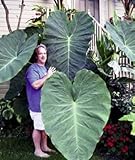
- Hardy Zone 7-10. We are zone 6b, and find if we plant them deep, and mulch them, they tend to come back, but no guarantees!! Plants can get 6-8 ft tall and leaves 3 ft wide and 5 ft long!! Will make a stunning potted plant! Exercise caution and use your best judgment before ordering during unusually hot or cold weather (below 32 degrees F, or in excess of 95F for shipping purposes), as these extremes may leave your plant vulnerable to damage.
Planting an outdoor bed
- Choose a warm location protected from strong winds, which can shred the large leaves.
- Prepare fertile soil that retains moisture. Improve drainage for Alocasia and Xanthosoma; reserve saturated or boggy conditions for an appropriate Colocasia.
- Set the corm according to the supplier’s planting directions, with the growing point oriented upward. If a corm has no clear growing point, avoid burying it deeply until its identity or instructions are confirmed.
- Water thoroughly after planting and keep the medium consistently moist while shoots establish.
Not every elephant ear is sold as a corm. Some newer cultivars are supplied as rooted or tissue-cultured plants, so follow the label for those plants rather than forcing them into a bulb-storage routine.
Starting in a container
Use a substantial pot with drainage and a medium matched to the genus. A container makes it easier to move a tender plant indoors, but it also limits ultimate size compared with open-ground culture. Leave room for the plant’s expected spread and place the pot where wind cannot overturn it.
How much light do elephant ears need?
Outdoors
Partial shade or filtered light is a reliable choice for many elephant ears. Some dark-leaved cultivars develop stronger color in brighter or full sun, but only when their moisture supply is adequate. Increase sun exposure gradually and watch for bleached, scorched or collapsing leaves. Sheltered light is especially useful where hot afternoon sun and drying wind arrive together.
Indoors
For indoor Alocasia and similar tropical plants, provide bright, indirect light, warmth and protection from cold drafts or sudden temperature changes. Turn the pot periodically so growth remains balanced. A dim location can produce weak, stretched growth even when watering is correct.
How often should you water elephant ears?
Water by conditions, not by a fixed weekly calendar. Check the pot or bed, recent weather, temperature, light, soil type and plant genus. During active growth, keep moisture relatively even. Colocasia generally tolerates wetter conditions; Alocasia and Xanthosoma need drainage so roots are not left in stagnant water.
Rank #2

- Giant Elephant Ear Bulbs grow into dramatic Colocasia esculenta plants with enormous green tropical foliage. Large heart shaped to shield shaped leaves rise on tall stems, creating bold summer impact in garden beds, landscaped areas, patios and outdoor living spaces. These impressive foliage plants make excellent focal points without relying on flowers for color and interest.
- Colocasia esculenta thrives in summer warmth and produces increasingly impressive foliage as plants become established. Giant Elephant Ears can reach several feet tall under favorable growing conditions, making them useful for adding height, lush greenery and a tropical appearance around patios, pools, walkways and landscape beds.
- Large container growing makes it easy to add Elephant Ear foliage to patios, porches and other outdoor spaces. Choose a substantial container with adequate drainage and room for vigorous growth. Plants appreciate rich soil and consistent moisture during active growth, especially during hot summer weather when their large leaves require dependable water.
- Plant dormant Elephant Ear bulbs or corms in spring after danger of frost has passed and the soil has warmed. Choose a location with sun to partial shade and rich, moisture retentive soil. Position the corm correctly, cover with soil and water thoroughly, then maintain consistent moisture as new shoots emerge and plants begin active growth.
- Cold hardiness varies by climate, and Giant Elephant Ear is commonly grown as a warm season plant in colder regions. Where plants are not winter hardy, gardeners can lift dormant corms after foliage dies back and protect them from freezing temperatures for winter storage. In sufficiently warm climates, established plants may return as perennials.
- Water thoroughly when the upper medium has begun to dry for a drainage-dependent plant, then let excess water escape.
- Do not allow a moisture-loving Colocasia to become bone dry during active growth.
- Empty standing water from an indoor saucer unless the plant is deliberately being grown in a setup designed for wet conditions.
- Reduce watering as growth slows or the plant enters winter rest; resume gradually when new growth returns.
Diagnosing yellow leaves
Yellowing is not a diagnosis by itself. In Alocasia, overwatering, insufficient water and inadequate light can all cause yellow leaves. Check the recent watering pattern, drainage and light before changing one variable. Remove leaves that are fully yellow or collapsing, but correct the growing conditions first.
Soil, humidity and feeding
Use fertile soil rich in organic matter. Balance water retention with drainage according to the genus: a mix that stays wet for a bog-tolerant Colocasia may be unsuitable for an Alocasia. Indoors, high humidity and warm, stable conditions support tropical foliage, but humidity does not compensate for waterlogged roots.
Elephant ears are vigorous plants and many extension recommendations describe them as heavy feeders or advise regular feeding during active growth. Apply a fertilizer appropriate for foliage plants and follow its label; fertilizer is support, not a substitute for light, moisture and healthy roots. Stop or reduce feeding during dormancy or winter rest.
How to propagate elephant ears
Division and offsets
Colocasia can be propagated by dividing a mature corm or separating offsets. Work when the plant is actively growing, use clean tools, and ensure each division has viable growth tissue and roots where present. Pot divisions into a suitable medium and keep them warm and evenly moist while they establish.
Corm-grown plants
Many elephant ears begin from a corm or tuber, but the common name covers plants sold in other forms. Confirm whether your plant has a storage organ before planning propagation or winter storage.
Rank #3

- Supports Large Leaves & Strong Stems – Helps encourage bold foliage and sturdy plant structure.
- Balanced Nutrition for Tropical Growth – Provides nutrients suited for steady development without overstimulation.
- Ideal for Garden & Container Growing – Suitable for outdoor beds, patio pots, and indoor tropical collections.
- Made in USA
How do I overwinter elephant ear bulbs?
First determine your local freeze risk, the plant’s hardiness and whether it has formed a storable corm. University of Wisconsin–Madison Extension notes: “Although they are often treated as tender annuals, many types can be kept over the winter.” In regions with damaging freezes, choose one of three approaches.
Quick wins for a faster PC:
Clear out junk files and repair common Windows errorsFree Scan →Scan for outdated or missing drivers - takes under a minuteDriver Scan →Repair Windows errors before they cause bigger problemsFix Now →Keep the whole container
Before cold weather, move a container-grown plant to a warm, bright location. Inspect for pests, maintain appropriate moisture and reduce watering as growth slows. This is often the least disruptive option for a plant already established in a pot.
Lift and store a formed corm
- Dig after foliage has naturally declined or a light frost has damaged it, but before a hard freeze reaches the corm.
- Handle the storage organ gently and remove loose soil. Allow the surface to dry in a protected, ventilated place.
- Store it in a cool, dry, ventilated location that is protected from freezing and excessive humidity. Check periodically and discard any corm that is rotting.
- Restart it in a container or plant outdoors only after frost danger has passed and warmth has returned.
Exact timing and storage conditions vary by genus, cultivar and climate. Do not wait for a hard freeze simply because the foliage is still attractive.
Grow it as a seasonal plant
Where storage space, suitable light or a formed corm is unavailable, treat the plant as an annual and replace it in the warm season. This is a practical choice for cultivars that do not reliably produce a storage organ in one short season.
Safety for people, pets and waterways
Keep elephant ears away from children and pets that chew plants. UF/IFAS identifies all Alocasia parts as toxic; calcium oxalate crystals can cause problems if swallowed and may irritate skin. North Carolina State describes raw Colocasia parts as poisonous and reports mouth and throat irritation. Do not eat ornamental plants or assume a nursery plant is a food crop simply because some taro is cultivated as food.
Check your local extension service or invasive-species authority before planting near wetlands, ponds or natural waterways. UF/IFAS identifies Colocasia esculenta (wild taro) as invasive in Florida and advises against planting elephant ears in or near natural waterways; status and restrictions are regional.
Quick Recap
A seasonal care checklist
- Before planting: identify the genus, confirm mature size and decide whether the plant will live indoors, outdoors or in a movable container.
- Spring: wait for frost safety, plant or move outdoors, and begin regular moisture and feeding as growth starts.
- Summer: maintain even moisture, protect large leaves from drying wind and adjust light if foliage scorches.
- Autumn: inspect for pests, stop or reduce fertilizer as growth slows, and bring containers or lift corms before a hard freeze.
- Winter: keep overwintered plants warm and bright, or store dormant corms dry and ventilated; restart only when conditions are warm.
Product prices and availability are accurate as of the date/time indicated and are subject to change. Any price and availability information displayed on Amazon at the time of purchase will apply.

