Do these 3 things before closing this tab:
1Clear out junk files and repair common Windows errors2Scan for outdated or missing drivers - takes under a minute3Repair Windows errors before they cause bigger problemsFor a mildly slow or smelly sink that still drains, remove and clean the stopper, add 1/2 to 1 cup of baking soda, slowly add about 1 cup of distilled white vinegar, cover the opening loosely, wait 30 minutes, and flush with hot tap water. The treatment may loosen accessible residue, but the fizzing reaction is not a guaranteed way to remove a substantial clog.
The quick method
For a mildly slow or smelly sink that still drains, remove and clean the stopper, pour 1/2 to 1 cup of plain baking soda into the drain, add about 1 cup of distilled white vinegar, cover the opening loosely, wait 30 minutes, and flush with hot tap water.
This can loosen accessible residue and reduce an odor near the drain opening. It is not a guaranteed clog remover. The fizz is a reaction between sodium bicarbonate and acetic acid—not pressure powerful enough to clear every blockage. If the sink is holding standing water, the problem keeps returning, or several fixtures are slow, switch to a mechanical method or call a licensed plumber.
What you need
- 1/2 to 1 cup of baking soda
- About 1 cup of distilled white vinegar
- Hot tap water
- Gloves and, preferably, basic eye protection
- A bucket or bowl if you may need to inspect the P-trap
No particular brand is required. Use ordinary baking soda—not a mixture containing other cleaning chemicals.
Recommended Free Tools
As an Amazon Associate I earn from qualifying purchases.
Step-by-step: baking soda and vinegar for a slow or smelly drain
- Remove the stopper or strainer. Pull it out if practical. Rinse away hair, food particles, soap residue, and sludge, then wipe the underside and the drain opening. Odor-producing buildup is often sitting on or immediately below the stopper.
- Remove standing water. Bail out as much water as possible if the basin is full. A sink with persistent standing water may have a substantial obstruction, so this remedy is less likely to help.
- Pour in 1/2 to 1 cup of baking soda. Aim it into the drain rather than scattering it around the basin. If the opening is narrow, use a dry funnel or spoon to guide it in.
- Slowly add about 1 cup of distilled white vinegar. It will fizz immediately as the vinegar reacts with the baking soda. Pour slowly to limit splashing.
- Cover the opening loosely. Use the stopper or place a cover over the drain to keep foam near the opening and reduce splashes. Do not seal the drain as a pressure vessel; the reaction creates carbon dioxide, and the plumbing should not be deliberately pressurized.
- Wait about 30 minutes. This gives the mixture time to contact residue near the drain. Waiting longer is unlikely to compensate for a solid blockage deeper in the pipe.
- Flush with hot tap water. Run hot tap water for several minutes so loosened residue can move through the drain. Do not assume boiling water is safe: very hot water can soften or damage some plastic or PVC drain components, especially when the pipe material and condition are unknown.
- Test the sink. Run water and check both flow and odor. If the sink improves, use the method only as occasional maintenance—not as a replacement for finding a recurring obstruction.
Why it fizzes—and why that does not prove the clog is gone
Baking soda is sodium bicarbonate, a weak base. Vinegar contains acetic acid. When they meet, they react to form carbon dioxide, water, and sodium acetate. The carbon dioxide produces the familiar bubbling and foam.
However, a sink drain is not an airtight reaction chamber. Gas can escape through the drain opening and the plumbing vent, so the reaction normally does not create sustained pressure capable of forcing through a substantial blockage. The mixture is also unlikely to melt a difficult grease or oil plug. Visible fizzing means the ingredients reacted; it does not mean the pipe has been cleaned from end to end.
#1 Best Overall

- All-in-One Drain Brush and Drain Snake Cleaner Tools Kit
- Powerful Clog Removal & Deep Cleaning drain clog remover tool: The drain snake (drain auger pipe cleaners) easily navigates curved pipes to break up tough clogs, while the drain hair remover tool efficiently grabs and removes hair, gunk, and debris; the drain scrubber and drain cleaning brush (drain cleaner brush) deliver deep cleaning for pipes, leaving no residue behind.
- Versatile & Multi-Scene Application: Perfect as a sink cleaner tool, sink drain cleaner tool, sink overflow cleaner, and sink overflow hole cleaner—suitable for kitchen sinks, bathroom sinks, showers, bathtubs, and all types of pipes. The pipe brushes for cleaning and drain brush pipe cleaning design make it easy to clean every corner of your drains.
- Flexible & Durable Design: The flexible drain brush and long cleaning brush can bend freely to fit narrow and curved pipes, reaching deep into drain openings that regular brushes can’t reach; made of high-quality, sturdy materials, these drain cleaning tools are reusable, corrosion-resistant, and built to last for long-term use.
- Easy to Use & Safe for All Pipes: No harsh chemicals needed—our drain cleaning tools are safe for all pipe types, including plastic and metal pipes, and won’t cause corrosion or damage. The ergonomic design ensures easy grip and operation, making drain cleaning a quick and hassle-free task for everyone.
When this method is worth trying
- The sink still drains, but more slowly than usual.
- The odor seems to come from residue around the stopper or drain opening.
- You want a mild, non-caustic first attempt and no commercial drain cleaner has been used in the pipe.
- You are performing occasional maintenance on an otherwise normally draining sink.
When baking soda and vinegar probably will not fix it
Use a different approach when the symptoms point to a real obstruction or a plumbing defect. The mixture is unlikely to resolve:
What’s actually slowing this PC down?
Pick the symptom - the matching free tool is one click away.
- A dense grease plug or large food blockage
- A mass of hair or a foreign object
- A collapsed, damaged, or badly corroded pipe
- Root intrusion or a main-line obstruction
- A recurring sulfur or sewage odor caused by a dry trap, venting problem, damaged pipe, or sewer-gas issue
The reaction should not be described as a whole-pipe disinfectant. It is primarily an acid-base reaction, and it does not reliably sanitize every surface downstream of the drain.
If the drain is still slow: use a mechanical fix
1. Try a sink plunger
A sink plunger is more appropriate than repeating the fizzing treatment when water is moving slowly because of a minor obstruction. Put enough water in the basin to cover the plunger cup. If the sink has a second drain opening, seal it with a wet cloth or stopper. Position the plunger over the drain and use firm, repeated strokes while maintaining a seal. Then test the flow.
Rank #2
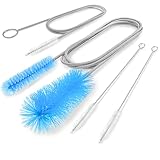
- You will get 1 pcs 66" dual-ended drain brush with 0.6" and 1.2" diameter bristle heads, 1 pcs 58" pipe brush with 0.5" diameter bristle head, 2 pcs 8" straw cleaner brush with 0.4" diameter bristle head.
- These premium drain brushes are made of the strongest material which is food grade. It's durable and will not rust. The bristles are made of nylon which is both resistant and easy to clean. Get around any surface or maneuver any depth.
- Simply insert it into the area to be cleaned, swirl and wash. With the long, soft but durable nylon bristles, it can be used to clean each size of pipe you have and will not damage the inside of tube.
- Flexible drain brush works great at cleaning around the stopper and will reach the u bend with no problems
- Works great at cleaning around the hard-to-reach narrow pipes or tubes. Perfect cleaning tools, ideal for all aquarium filter, fish tank, feeding tube, refrigerator drain, lily pipe, shower sink drain cleaning, hummingbird feeder.
Do not plunge if the pipe may contain recently used commercial drain cleaner, since contaminated water can splash onto skin or into the eyes.
2. Clean the P-trap
The curved P-trap beneath the sink can collect sludge, food, grease, and small objects. Put a bucket under the trap, wear gloves and eye protection, and loosen the slip nuts if the fittings permit. Lower the curved section carefully, empty and rinse it, inspect for damage, and reinstall it with the washers seated correctly. Run water slowly and check every connection for leaks.
Quick wins for a faster PC:
Repair Windows errors before they cause bigger problemsFix Now →Scan for outdated or missing drivers - takes under a minuteDriver Scan →If the fittings are seized, brittle, damaged, or difficult to reassemble, stop rather than forcing them. A leak under the sink can create more damage than the original odor.
Rank #3

- High‑Performance Drain Brush Core Function**:Optimized drain brush & pipe cleaner brush clears debris from sink, shower and drain pipe, solves common household drain clog issues efficiently.
- All‑in‑one Drain Cleaner Tool & Sink Cleaning Brush**:Functions as professional sink cleaning brush and drain cleaner tool to tackle kitchen and bathroom sink daily dirt buildup.
- Flexible & Long‑Reach Bristle Design**:Long flexible brush head bends freely to access hard‑to‑reach deep corners inside pipes and narrow gaps.
- Refrigerator Coil Cleaning Capability**:Works as coil cleaning brush to remove dust and lint from refrigerator condenser coil, improve appliance performance.
- Multi‑Scene Household Application**:Fits sink overflow hole, toilet jet hole and tube cleaning; one brush covers most daily home cleaning scenarios.
3. Use a small hand drain snake
A hand drain snake or small drain auger can reach farther into the branch drain than the baking-soda method. Feed it gently, rotate it when you meet resistance, and withdraw it periodically to remove material. Avoid forcing the tool, particularly in older or fragile piping. If the snake repeatedly meets a solid stop or the drain quickly slows again, the obstruction may be farther downstream.
Safety: what not to mix
- If commercial drain cleaner has already been used, do not add vinegar or baking soda. Follow the product label and seek professional or poison-center guidance if exposure occurs.
- In the United States, Poison Control can be reached at 1-800-222-1222.
- Ventilate the area and wear gloves and eye protection when handling drain sludge or opening the P-trap.
- Keep the vinegar and baking soda away from eyes, children, and pets.
- Use hot tap water rather than automatically pouring boiling water into a drain of unknown material.
When to stop troubleshooting and call a plumber
Contact a qualified professional if:
- Standing water does not clear.
- The drain is repeatedly slow or gets worse soon after cleaning.
- Several sinks, tubs, or other fixtures become slow at the same time.
- You notice sewage backup, a strong persistent sewer-gas smell, or wastewater returning into the sink.
- There is a leak, damaged pipe, unusual gurgling, or suspected main-line obstruction.
- You cannot safely remove the P-trap or a previous chemical treatment may still be present.
At that point, professional drain cleaning or diagnosis is more appropriate than repeatedly adding household ingredients. A service provider can identify whether the problem is local to the stopper or trap, farther down the branch drain, or part of the building’s larger drainage system.
Independent reader supportYour contribution helps us test, update, and keep practical guides available for everyone.Preventing the odor and slowdown from returning
- Remove and rinse the stopper regularly.
- Keep grease, cooking oil, coffee grounds, fibrous food, and large food particles out of the drain.
- Use a removable sink drain strainer to catch food particles before they enter the pipe.
- Run hot tap water after washing dishes, but do not rely on hot water to dissolve a large grease accumulation.
- Investigate an odor that returns quickly instead of masking it with repeated treatments.
Bottom line
Baking soda and vinegar are reasonable for a mildly slow or smelly sink when the drain is still open and the residue is accessible. Clean the stopper first, use 1/2 to 1 cup of baking soda and about 1 cup of vinegar, wait 30 minutes, and flush with hot tap water. If the result is temporary or nonexistent, stop repeating the reaction: plunge the sink, clean the P-trap, use a small drain snake, or arrange professional diagnosis. Never mix the method with commercial drain cleaner or other household chemicals.
Rank #4

- The 23.6-inch long drain cleaner brush is designed to easily reach and unclog common sinks, bathtubs, shower drains, and even sewer pipes
- This sink drain brush effortlessly removes clogs caused by hair, grease, soap scum, and other debris, ensuring your drains flow smoothly in just minutes
- Simply insert the drain brush into the clogged pipe, rotate 2-3 times, and pull up and down to clear blockages. The handle ensures a comfortable grip and easy operation
- Featuring a scratch-free nylon-coated head and an upgraded anti-break metal core, this pipe cleaner protects your pipes and hoses from damage
- 60cm, 2pack pipe brush made with high-quality stainless steel and nylon bristles. Drain cleaning brush is built to last, resistant to rust and reusable
Frequently Asked Questions
Does baking soda and vinegar really unclog a sink drain?
Yes, for a mildly slow or smelly drain that still drains. It may loosen accessible residue near the stopper, but it is unlikely to clear a dense grease plug, hair mass, foreign object, damaged pipe, or main-line obstruction.
Should I flush the drain with boiling water?
Use hot tap water for several minutes after the 30-minute wait. Avoid automatically using boiling water because very hot water may soften or damage some plastic or PVC drain components.
Can I mix baking soda and vinegar with drain cleaner?
No. Never use this mixture after commercial drain opener, bleach, ammonia, toilet-bowl cleaner, or another chemical has entered the drain. Dangerous reactions or irritating gases can result.
Why does my sink still smell after baking soda and vinegar?
A recurring sulfur or sewage smell may come from a dry trap, venting issue, sewer-gas problem, damaged pipe, or contamination beyond the drain opening. Clean the stopper and P-trap, but arrange professional diagnosis if the odor persists.
Outdated Drivers Are Slowing You Down
One free scan finds every outdated or missing driver and matches the right update for your exact hardware.Free scan · exact hardware matchWindows Errors? Fix Them Before They Spread
Repair common Windows errors and clear accumulated junk for a smoother, more stable PC - no reinstall needed.Free scan · no reinstallThe Bottom Line
Baking soda and vinegar can help with minor residue and odor, but they are not a reliable solution for a substantial clog. Clean the stopper, use 1/2–1 cup of baking soda followed by about 1 cup of distilled white vinegar, wait 30 minutes, and flush with hot tap water. Escalate to a plunger, P-trap cleaning, drain snake, or licensed plumber if the drain remains slow, repeatedly blocks, leaks, backs up, or affects multiple fixtures.
Quick Recap
Product prices and availability are accurate as of the date/time indicated and are subject to change. Any price and availability information displayed on Amazon at the time of purchase will apply.

