Recommended Free Tools
For a construction, redevelopment, or business project, begin with the economic development office serving the project’s city and county. Then check state and regional agencies, district boundaries, and applicable federal programs using the exact parcel, proposed use, investment, schedule, and expected jobs or community outcomes. Possible assistance includes tax abatements, tax-increment financing, sales-tax rebates, grants, loans, gap financing, infrastructure work, and planning support. A program listing is only a lead: confirm that it is open, that your project qualifies, that the application precedes construction when required, and that the award’s conditions and tax treatment work for your financing.
Define the project before searching
Agencies evaluate a specific project, not a vague idea such as “a new building downtown.” Prepare a one-page project brief before contacting anyone. Include:
As an Amazon Associate I earn from qualifying purchases.
- The street address, parcel numbers, municipality, county, and any known district designation.
- New construction, rehabilitation, adaptive reuse, tenant improvement, or infrastructure scope.
- Proposed use, building area, site area, estimated hard and soft costs, private investment, and expected construction and permanent jobs.
- Anticipated start and completion dates, major approvals still needed, and whether site work, demolition, or construction has begun.
- Requested public outcomes, such as housing, remediation of a vacant site, downtown occupancy, industrial capacity, energy performance, or job creation.
Those details determine which agency has authority and whether a district or parcel-based rule applies. A project just outside a designated boundary may be treated differently from one across the street.
What’s actually slowing this PC down?
Pick the symptom - the matching free tool is one click away.
Follow a location-first search sequence
1. Contact city and county economic development offices
Use the project’s exact address when you call or submit an inquiry. Search each agency’s website for “incentives,” “real estate development,” “tax abatement,” “tax increment financing,” “redevelopment,” “gap financing,” and “business assistance.” Ask for the staff member who handles real estate or construction projects, not only a general business-licensing contact.
#1 Best Overall
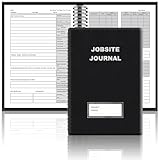
- The Jobsite Journal: this offering features a single black construction planner ensures you have a streamlined tool for organized recording at the jobsite, allowing you to document ideas, create sketches, and monitor progress in one centralized place. Crafted with quality in mind, this journal is a daily essential for jobsite scheduling, serving as a reliable partner for all your documentation needs
- Portable Design: measuring approximately 7 x 10 inches, the construction notebook fits seamlessly into work bags or briefcases, making it a go-to accessory for architects, engineers, and field professionals. Its ample page space ensures notes and sketches remain comprehensive and legible, while its lightweight design supports mobility during site visits and meetings
- Productive Layout: featuring a clear, efficient layout, the construction daily log book eliminates organizational challenges, enabling effortless documentation of critical details-including jobsite activities, task timelines, and milestone dates. It serves as a trustworthy archive for referencing, verifying, and reviewing site information, essential for project accountability and compliance
- Premium Materials: constructed with high-quality PU leather and paper, this project management notebook is built to endure daily use, while offering a smooth writing experience.The sleek, solid-black cover combines modern style with long-lasting durability, preserving its pristine appearance even after frequent use-all while safeguarding your work records. Designed with a spiral binding, it allows for easy, flat-page access, making note-taking effortless in any on-site scenario
- Versatile Utility: engineered to meet the demands of anyone requiring systematic and dependable note-taking, drafting, or sketching, this Record Construction Planner adapts to various roles-from architects and engineers to site supervisors. Its thoughtful size and design make it suitable for individual use or collaborative teams, ensuring it caters to diverse needs in field observations, project planning, and progress tracking
The City of Dallas Office of Economic Development incentives page illustrates the kind of local menu a city may publish: an incentive inquiry route, tax abatements, development grants, community-development loans, and gap-financing options. Dallas is an example, not evidence that another city offers the same programs.
Request written program guidelines, the current application form, a map of eligible areas, and a schedule for review and approval. Ask whether the city, county, or another taxing authority must approve the agreement.
2. Check state and regional agencies
State economic development agencies may administer credits, grants, loans, site-readiness programs, or financing that a city cannot provide. Regional planning and development organizations can identify infrastructure priorities, brownfield or redevelopment initiatives, and multi-jurisdiction programs.
California’s Governor’s Office of Business and Economic Development, for example, directs applicants to regional data and ready-site resources through its Infrastructure Development page. The resource demonstrates why a state search should include site-selection maps and regional contacts, rather than only a statewide list of tax credits.
Ask whether the state requires a local letter of support, a minimum investment, prevailing-wage compliance, job targets, a funding match, or an application before committing capital.
Rank #2

- Jobsite Tool: this offering includes 1 black construction planner, 184 sheets in total, use for 6 months; Record your thoughts, make sketches, keep track of progress in one place; It is of quality and a staple in your daily jobsite schedule
- Versatile Uses: a construction notebook seeks to cater to every individual who requires a systematic and reliable way to note, draft or sketch; Its size and design make it suitable for multiple person use
- Quality Materials: crafted from quality PU leather and paper, the construction site book withstands everyday use and wear and tear, smooth to write; The pure black, sturdy cover provides both style and longevity, maintaining its fresh look
- Efficient for Enhanced Productivity: experience boosted productivity with our construction log book's clear and efficient layout; The layout is designed to help you note important details without hassle, specific to jobsite activities and tasks
- Easy Documentation: the construction journal, which is the tool for efficient onsite documentation; With its convenient size of about 7 x 10 inches, fitting into your work bag or briefcase is easy; It's the accessory for architects
3. Verify districts and parcel boundaries
Many incentives are geographically restricted. Check official maps and parcel-level eligibility for downtown development districts, redevelopment areas, tax-increment-financing districts, Opportunity Zones, enterprise areas, and locally defined target neighborhoods. Do not infer eligibility from a nearby name or ZIP code.
Delaware’s Downtown Development Districts incentives page describes grants for qualifying private construction projects inside designated districts and notes that state and local incentives may sometimes be combined. It is a Delaware-specific example; other states use different boundaries, eligible uses, award formulas, and layering rules.
Save the map, parcel identification, and boundary determination in the project file. Boundaries and program rules can change, so record the date of the agency’s confirmation.
4. Screen federal programs
Federal assistance is usually tied to a defined activity, applicant type, and open funding notice. The U.S. Economic Development Administration’s Economic Adjustment Assistance program describes support for community and regional planning, infrastructure, site acquisition and preparation, construction, rehabilitation, and facility equipment in eligible contexts. EDA calls EAA “EDA’s most flexible program,” but that flexibility does not remove eligibility, competition, or application requirements.
Review the current notice of funding opportunity, eligible applicants, cost-share rules, and required regional strategy before placing a federal grant in the project budget. A local government, nonprofit, or other eligible entity may need to apply instead of the private developer.
Rank #3
- The Jobsite Journal: this offering features a single black construction planner ensures you have a streamlined tool for organized recording at the jobsite, allowing you to document ideas, create sketches, and monitor progress in one centralized place. Crafted with quality in mind, this journal is a daily essential for jobsite scheduling, serving as a reliable partner for all your documentation needs
- Portable Design: measuring approximately 7 x 10 inches, the construction notebook fits seamlessly into work bags or briefcases, making it a go-to accessory for architects, engineers, and field professionals. Its ample page space ensures notes and sketches remain comprehensive and legible, while its lightweight design supports mobility during site visits and meetings
- Productive Layout: featuring a clear, efficient layout, the construction daily log book eliminates organizational challenges, enabling effortless documentation of critical details-including jobsite activities, task timelines, and milestone dates. It serves as a trustworthy archive for referencing, verifying, and reviewing site information, essential for project accountability and compliance
- Premium Materials for Durability: constructed with high-quality PU leather and premium paper, this project management notebook is built to endure daily use, while offering a smooth writing experience.The sleek, solid-black cover combines modern style with long-lasting durability, preserving its pristine appearance even after frequent use-all while safeguarding your work records. Designed with a spiral binding, it allows for easy, flat-page access, making note-taking effortless
- Versatile Utility: engineered to meet the demands of anyone requiring systematic and dependable note-taking, drafting, or sketching, this Record Construction Planner adapts to various roles-from architects and engineers to site supervisors. Its thoughtful size and design make it suitable for individual use or collaborative teams, ensuring it caters to diverse needs in field observations, project planning, and progress tracking
Know what “incentive” can mean
Assistance can reduce taxes, provide cash, improve financing, or pay for public work. Each mechanism changes the project’s economics and obligations differently.
Do these 3 things before closing this tab:
1Fix the driver behind crashes, sound loss and screen glitches2Clear out junk files and repair common Windows errors3Scan for outdated or missing drivers - takes under a minute| Incentive type | How it may support a project | Questions to verify |
|---|---|---|
| Tax-increment financing (TIF) | Uses tax revenues associated with increased property value after a district is established to fund development or infrastructure. | Is the parcel inside an eligible district? Which costs qualify? What financing mechanism and approval path apply? |
| Property-tax abatements or district classifications | Reduces or changes property-tax liability for qualifying property, investment, or periods. | Which taxing authorities participate? What investment, use, duration, reporting, and performance conditions apply? |
| Sales-tax rebates or revenue sharing | Returns an agreed portion of eligible sales-tax revenue to support a project. | Which sales qualify, how is the rebate calculated, and how long does the agreement run? |
| Grants | Provides funds for eligible development, construction, planning, infrastructure, or community activities. | Who may apply, which costs qualify, is matching support required, and is funding currently open? |
| Loans | Offers public or community-development financing that must be repaid under stated terms. | What interest rate, security, maturity, underwriting, and eligible uses apply? |
| Real-estate gap financing | Fills a documented difference between total project cost and available conventional debt and equity. | What gap must be demonstrated, what private financing is expected, and what underwriting is required? |
| District-based construction assistance | Supports qualifying private construction in a designated area, sometimes alongside other state or local incentives. | Is the site inside the district? Are the use and costs eligible? Can awards be layered without violating program rules? |
| Building and business tax credits or deductions | May reduce federal tax for qualifying rehabilitation, energy-efficient commercial buildings, or energy-efficient homes. | Does the taxpayer and project meet current statutory and technical requirements? What records and tax filings are required? |
| Infrastructure and planning assistance | Can support planning, infrastructure, site acquisition or preparation, construction, rehabilitation, and equipment in an eligible program. | Is the applicant eligible, does the project fit an applicable strategy, and is there a current funding notice? |
The categories above reflect descriptions from the Chicago Metropolitan Agency for Planning, Dallas, Delaware, EDA, and the Internal Revenue Service. Their availability and terms are jurisdiction-specific.
Ask about timing, eligibility, and documentation
Before you count an incentive in a pro forma, ask the administrator to answer these questions in writing:
- Must an application, inducement resolution, or approval occur before land acquisition, demolition, site work, construction, or equipment purchase?
- What legal applicant is eligible: property owner, developer, tenant, municipality, nonprofit, or another entity?
- What minimum investment, job creation, wage, occupancy, environmental, design, or community-benefit standards apply?
- Is a financing gap, match, owner equity contribution, appraisal, cost certification, or lender commitment required?
- How is the award calculated, when is it paid, and can it be reduced, clawed back, or terminated?
- What reporting, audits, prevailing-wage rules, procurement standards, insurance, or ongoing performance certifications apply?
- Can the assistance be combined with other public funds, tax credits, or district programs?
The New Jersey Economic Development Authority’s Economic Redevelopment and Growth (ERG) Program page shows why timing requires special care. It describes a financing-gap and underwriting analysis and generally requires that construction not have started before application. The same page contains historical application deadlines and construction-completion dates, so treat the posted terms as a starting point and confirm the current opening, deadlines, and rules directly with the agency.
Build a comparable net-value analysis
Headline award amounts are not comparable when one offer is a delayed tax benefit and another is cash paid after verified costs. Create a schedule for every candidate program with the following fields:
Rank #4

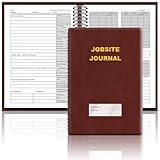
- The Jobsite Journal: this offering features a single light brown jobsite journal that ensures you have a streamlined tool for organized recording at the jobsite. It allows you to document ideas, create sketches, and monitor progress in one centralized place. Crafted as a durable construction notebook, this planner is a daily essential for scheduling, serving as a reliable partner for all your documentation needs
- Portable Design: measuring approximately 7 x 10 inches, the contractor notebook fits seamlessly into work bags or briefcases, making it a go-to accessory for architects, engineers, and field professionals. Its ample page space ensures notes in this daily log book remain comprehensive and legible, while its lightweight design supports mobility during site visits and meetings
- Productive Layout: featuring a clear, efficient layout, the project planner eliminates organizational challenges, enabling effortless documentation of critical details—including jobsite activities, task timelines, and milestone dates. It serves as a trustworthy log book for referencing, verifying, and reviewing site information, essential for project accountability and compliance
- Premium Materials: constructed with high-quality light brown PU leather and durable paper, this project management planner is built to endure daily use while offering a smooth writing experience. The cover combines style with durability, preserving its refined appearance even after frequent use. This leather journal features a spiral binding for easy, flat-page access, making note-taking effortless in any on-site scenario
- Versatile Utility: engineered to meet the demands of anyone requiring systematic and dependable note-taking, this project management notebook adapts to various roles—from architects to site supervisors. Its thoughtful design makes it suitable for individual use or teams, ensuring it caters to diverse needs in field observations, project planning, and maintaining a detailed activity log
- Net value: expected after taxes, fees, financing costs, required matching funds, and compliance expenses.
- Timing and certainty: approval date, construction prerequisites, payment milestones, discretion, and risk of an annual appropriation or competitive award.
- Conditions: investment, jobs, wages, occupancy, use, design, public access, reporting, and clawback requirements.
- Project fit: whether the assistance pays for the cost that is actually constraining the project, such as site preparation, debt service, infrastructure, or a documented funding gap.
- Public and private costs: additional infrastructure, traffic or utility obligations, legal work, application fees, delayed starts, and any obligations imposed on the locality.
Model at least three cases: the project without assistance, the project with the most likely award, and the project if the award is delayed, reduced, or denied. Keep tax benefits separate from grants and loans so the lender and tax adviser can evaluate them correctly.
Account for public costs and limited impact
Incentives can help a marginal project proceed, but they do not automatically create new economic activity. CMAP’s discussion of local incentives cautions that governments may compete with one another, incur infrastructure costs, and support projects that would have happened without assistance. It recommends considering nonfinancial incentives, collaboration, and clear performance targets. These are regional policy observations, not a conclusion that every incentive fails.
CMAP also states that “Over 75 percent of the region’s municipalities use incentives” in northeastern Illinois. The page does not display the underlying report’s publication year, so treat the figure as an undated regional statement rather than a current national statistic. For your project, ask the agency to identify the public benefit, the baseline without assistance, and the measurements used to determine success.
Independent reader supportYour contribution helps us test, update, and keep practical guides available for everyone.Check federal tax treatment separately
Economic-development awards can affect depreciable basis, taxable income, eligible costs, and the ability to claim another credit. The IRS credits and deductions for businesses page lists topics including a rehabilitation credit, an energy-efficient commercial buildings deduction, and a credit for qualifying energy-efficient homes. Eligibility depends on the current statute, property type, taxpayer, placed-in-service date, technical documentation, and filing position.
Free tools Windows power users keep installed
One-click scans. No signup required.
The IRS page notes that the 2025 Working Families Tax Cuts Act may affect listed business credits or deductions. Confirm current law, forms, and instructions before relying on a tax result. For a complex project, have a qualified tax professional review how grants, rebates, TIF proceeds, and credits interact with basis and income; obtain that advice after the administering agencies provide written award terms.
Best Value

- TURN YOUR IDEAS INTO REALITY: Unleash your creativity with this unique planning notebook, consisting of 224 pages divided into 112 Project Planner sheets. Each sheet is designed to step-by-step completion and management of your project.
- EMPOWER YOUR MANAGEMENT: This professional project organizer keeps all project-related information in one place. Stay on top of multiple projects with the convenient project tracker notebook feature, ensuring no detail is missed.
- ARCHIVE YOUR PROJECT GOALS: Stay focused on your projects with dedicated sections for objectives, tasks with deadline, essential supplies and tools notes, space for ideas and sketches illustration, and notes. Experience a simple yet powerful tool to ensure completion and accomplish more with ease.
- EFFICIENT BONUS STATIONARIES: You will receive either set of a ball pen and two cute sticky notes or a set of remind stick pads (randomly). The versatile design can be used for projects at home, work, school, or business to organize, manage a team, and to delegate tasks. This planner is a simple way to make sure you finish what you start and accomplish more.
- HANDLE SINGLE PROJECT IN HAND: Designed with tearable sheets allow you taking any single sheet for more convenient. 7x10 inch sheets are printed on 70 lb premium paper. With advanced printing technology and leather cover, our planner exudes a premium feel and long lasting.
Use searchable public databases, then speak to staff
Online portals are useful for discovering programs but rarely answer every parcel, timing, or underwriting question. Maryland Community Compass’s Find Funding page invites users to “Search by keyword or describe what you’re looking for.” Use plain-language searches such as “downtown mixed-use rehabilitation,” “industrial site preparation,” “affordable housing construction,” or “energy-efficient commercial building,” then verify results with the agency named in each listing.
Keep a contact log recording the program URL, staff name, date checked, geographic eligibility, open or closed status, application deadline, required attachments, and the exact answer to whether work may begin. Program pages can remain online after funding closes; only a current agency confirmation should move a program into the committed column of your budget.
Prepare an application package that can survive review
- Assemble site control and identity documents. Include ownership or purchase contracts, parcel numbers, entity information, and authorization for the applicant.
- Explain the project and public benefit. Provide plans or a scope narrative, schedule, uses, investment, jobs, wages, and community outcomes requested by the program.
- Submit a credible sources-and-uses budget. Separate land, design, permits, construction, equipment, financing, contingencies, and requested assistance. Identify committed debt and equity.
- Document the gap or match. Supply lender letters, appraisals, feasibility analysis, owner equity, or other evidence required by the administrator.
- Confirm prerequisites before spending. Get written direction on inducement, procurement, environmental review, prevailing wage, and whether any construction activity would make costs ineligible.
- Plan compliance from the start. Assign responsibility for invoices, wage records, job counts, tenant certifications, progress reports, and closeout documents.
- Obtain final approvals and preserve the record. Store the executed agreement, board or council approvals, payment schedule, amendments, and all agency correspondence with the project’s financing documents.
Common failure points and practical fixes
Starting work before approval
Demolition, grading, contracts, or other early work can make costs ineligible where a program requires prior application or approval. Ask the agency to define “construction started” and obtain a written determination before issuing a notice to proceed.
The Tool Desk
Outbyte PC Repair FREEClear out junk files and repair common Windows errorsFree Scan →Outbyte Driver Updater FREEScan for outdated or missing drivers - takes under a minuteDriver Scan →Assuming a nearby district qualifies
A mailing address, neighborhood name, or ZIP code is not a boundary decision. Use the official parcel map and request confirmation tied to the parcel identification number.
Counting a listed program as committed money
A web page may describe a program whose deadline has passed, whose funds are exhausted, or whose terms have changed. Classify assistance as “identified,” “eligible pending application,” “approved,” or “executed,” and use only executed awards as committed financing.
Ignoring performance risk
Missed job, investment, occupancy, wage, or completion targets can reduce payments or trigger repayment. Price the cost of compliance and test a downside case before signing.
Layering programs without checking interaction rules
One grant may be allowed to sit beside a tax abatement while another reduces eligible costs or prohibits duplicate reimbursement. Give every administrator a complete list of public assistance and have counsel or a tax adviser review the combined structure.
A decision checklist for the project team
- Have we confirmed the city, county, state, regional, district, and federal agencies with jurisdiction?
- Does each candidate program apply to this parcel, use, applicant, scale, and schedule?
- Is the application deadline current, and may any site work begin before approval?
- What match, equity, financing-gap proof, reporting, and performance commitments are required?
- What is the net value after taxes, fees, financing effects, infrastructure obligations, and compliance costs?
- What happens if the award is delayed, reduced, or denied?
- Do the public benefits and measurable targets justify the assistance requested?
- Have the administering agency, lender, legal counsel, and tax professional reviewed the final structure?
Bottom line: search locally, verify precisely, and budget conservatively
The most reliable path is sequential: define the project and parcel, contact city and county economic development offices, expand to state and regional resources, verify district boundaries, screen applicable federal programs, and request current written terms. Compare incentives by net value, timing, certainty, obligations, and fit with the project’s actual financing gap—not by the largest advertised number. Do not authorize work or rely on tax savings until the administering agency confirms eligibility, application timing, award conditions, and current tax treatment.
Quick Recap
Product prices and availability are accurate as of the date/time indicated and are subject to change. Any price and availability information displayed on Amazon at the time of purchase will apply.

