Do these 3 things before closing this tab:
1Scan for outdated or missing drivers - takes under a minute2Repair Windows errors before they cause bigger problems3Fix the driver behind crashes, sound loss and screen glitchesThe right 3D construction printer is the one that can produce your specified building elements, on your site, with an approval path your authority having jurisdiction (AHJ) will accept and a documented plan for foundations, reinforcement, utilities, finishes and other trades. Evaluate the complete printer–material–mixing–pumping–extrusion–crew system rather than a machine’s advertised reach or print speed.
Before requesting a price, define the building program, structural role of printed work, jurisdiction, site conditions, procurement model and success criteria. Then require the supplier to demonstrate a representative element and provide evidence for the exact configuration you would use. The checklist below is designed to turn those questions into a defensible shortlist.

As an Amazon Associate I earn from qualifying purchases.
1. Define the project before comparing machines
A printer cannot be evaluated in isolation from the building it must deliver. Write a project brief that a supplier, architect, structural engineer and building official can all use.
What’s actually slowing this PC down?
Pick the symptom - the matching free tool is one click away.
Record the printable scope
- Building use and type: single-family residential, multifamily, light commercial or another occupancy.
- Number of stories, wall heights, expected wall thicknesses, geometry, curves, corners and openings.
- Which parts will be printed: exterior walls, interior partitions, foundations, site elements or only selected components.
- Structural role of the printed material, including whether it is load-bearing, non-load-bearing, a stay-in-place form or an enclosure requiring a separate frame.
- Locations for windows, doors, mechanical penetrations, electrical boxes, plumbing sleeves, reinforcement and connection hardware.
- Required finish, dimensional tolerances, insulation strategy, fire and acoustic performance, production volume and handover date.
State measurable acceptance criteria: wall location tolerance, layer appearance, bond or interface performance, allowable voids, curing conditions, inspection records, maximum setup time and the point at which work is accepted by the design team and AHJ.
#1 Best Overall

- Direct Wall Printing: Instantly print full-color murals, logos, or designs on walls—perfect for home, office, shops, or advertising.
- Multi-Surface Compatible: Works on concrete, plaster, wood, tile, glass, and more. Great for both indoor and outdoor walls.
- High-precision Nozzle System: CMYKW 5-color high-precision printing, delicate and realistic images, faster printing.
- Servo Motor Control System: High-performance servo motors achieve accurate movement, uniform image colors and clear image quality, and automatically reset after power outage, ensuring continuous printing stability.
- Laser Positioning System: Accurate laser positioning, ensuring accurate pattern starting point, improving overall printing accuracy, and adapting to a variety of materials and environments.
Choose the responsibility you are buying
| Procurement model | What the supplier may provide | Questions to settle |
|---|---|---|
| Equipment purchase | Printer, controls and possibly pumps, hoses, nozzles and training. | Who supplies mix equipment, operators, maintenance, qualification testing, engineering support and downtime recovery? |
| Rental or lease | Temporary use of a machine, sometimes with an operator or technician. | Minimum term, mobilization, insurance, damage responsibility, calibration, consumables, spare parts and return condition. |
| Printing subcontract | A crew arrives with equipment and prints a defined scope. | Who carries schedule, quality, weather, material, approval and rework risk? What is included in the price? |
| Full or partial construction contract | The provider may coordinate printing with foundations, reinforcement, services and finishes. | Where does the provider’s responsibility stop, and how are interfaces with other trades documented? |
HUD’s checklist for engaging 3D concrete printing (3DCP) companies specifically recommends asking about full or partial construction contracts, equipment rental, financing or purchase, and capability across single-family, multifamily and light-commercial work.
2. Match the printer to the actual jobsite
Compare usable envelope, not catalogue dimensions
Obtain the machine’s printable width, length, height and reach for the proposed configuration, then map those dimensions onto the site plan. Account for wall offsets, scaffolding, exclusion zones, material lines, access routes and the space needed to reposition the equipment. A maximum advertised dimension may be unavailable once the printer is anchored, sheltered or configured with the required hose and nozzle.
Ask for transport dimensions and weights, loading requirements, assembly and calibration time, breakdown procedure, anchoring or support requirements, weather limits and the largest component that must be lifted into position. Confirm whether the machine can work around foundations, columns, existing structures or neighboring property lines.
Recommended Free Tools
Understand gantry and robotic-arm trade-offs
Gantry systems generally cover a defined rectangular work envelope and may require substantial assembly, level support and a clear perimeter. Robotic arms can offer different reach and repositioning options but still need a stable base, safe operating zone, power and carefully controlled work coordinates. Neither format is automatically better; the choice depends on geometry, access, mobility, setup time and the height and reach needed for your building.
Demand a representative demonstration
Require a demonstration of a wall or connection detail that resembles your project. The demonstration should use the proposed printer model, mixing and delivery equipment, material source and mix, pump, hoses, nozzle, layer height, print speed, curing approach and environmental conditions. Record:
- Time to mobilize, assemble, calibrate and begin printing.
- What must be repositioned between walls, stories or pours.
- Material batching, pumping and cleaning procedures.
- Dimensional accuracy, layer consistency, corners, starts and stops, openings and embedded items.
- How the crew handles a blockage, power interruption, rain, temperature change or loss of material workability.
- Data logs and inspection records produced during the run.
Verify site readiness
- Access for delivery vehicles, lifting equipment and material storage.
- A level, stable working surface that can support the printer and crew.
- Electrical capacity, backup arrangements and protected cable routing.
- Water, aggregate, binder and admixture storage appropriate to the proposed mix.
- Space for mixers, pumps, hoses, washout and waste handling.
- Weather protection, drainage, lighting and ventilation.
- Secure storage for controls, nozzles, spare parts and personal protective equipment.
- A barricaded work zone with emergency access and a plan for nearby workers and the public.
3. Establish the approval route before signing a purchase order
Identify the AHJ and design-team path
Ask the AHJ, architect and structural engineer to identify the adopted building-code edition, permit route, required calculations, inspection stages, special inspections, material tests and third-party evaluation reports. Have the supplier state exactly what approval support it provides and which limitations apply to the proposed structural role, occupancy, height, fire rating and location.
An equipment certification is not the same as approval for a building. The accepted path may combine a prescriptive code provision, an approved design, an evaluation report, engineering analysis, testing, a performance-based approval or a project-specific alternative-materials decision. Obtain the AHJ’s position in writing before committing capital.
Use ISO/ASTM 52939:2023 correctly
ISO/ASTM 52939:2023, published in December 2023, specifies process-oriented quality-assurance requirements for additive construction in building and infrastructure projects. Its stated purpose is: “This document specifies quality assurance requirements for additive construction (AC) concerning building and construction projects in which additive manufacturing techniques are used for construction.”
The standard applies to load-bearing and non-load-bearing elements across additive-manufacturing technologies, but it does not provide design approval, material-property characterization or testing, metals requirements, or jobsite environmental, health and safety requirements. Treat it as evidence of a quality-assurance framework, not as a permit, structural design or substitute for local safety rules.
Check the applicable ICC wall standard and reports
ICC lists ICC 1150-2026 as a standard establishing minimum requirements for materials, qualification, inspection and structural design of 3D-printed walls and their connections. Confirm that your jurisdiction has adopted or recognizes the relevant edition and that the scope covers your wall system, occupancy and structural use. Ask whether an applicable ICC-ES report exists for the exact printer, construction method and material system; verify its conditions of use, required inspections and geographic limitations.
A report for a different printer, mix, reinforcement detail or wall geometry may not transfer. The AHJ and licensed design professionals decide what evidence is acceptable for the project.
Free tools Windows power users keep installed
One-click scans. No signup required.
4. Qualify the complete material and process system
Request a configuration-specific qualification package
Require documentation identifying the exact printer model, mixer, pump, hoses, nozzle, material source, mix design, admixtures, reinforcement method, layer dimensions, print parameters, curing regime and environmental limits. Ask which changes trigger requalification. A different pump, nozzle, material batch, layer interval or ambient condition can alter buildability and interlayer performance.
Request batch records, calibration procedures, process windows, hold points, nonconformance procedures and the format of production logs. Clarify who has authority to stop printing and who can approve a restart after an interruption.
Ask for tests that reflect printed construction
NIST notes that conventional concrete test methods may not transfer directly to 3DCP materials and processes. Its measurement work addresses mechanical and durability performance, including layer interfaces and sampling strategies. Therefore, do not accept a single headline compressive-strength value as the whole qualification case. Ask for:
Rank #3
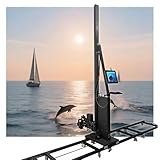
- Direct Wall Printing: Instantly print full-color murals, logos, or designs on walls—perfect for home, office, shops, or advertising.
- Multi-Surface Compatible: Works on concrete, plaster, wood, tile, glass, and more. Great for both indoor and outdoor walls.
- High-precision Nozzle System: CMYKW 5-color high-precision printing, delicate and realistic images, faster printing.
- Servo Motor Control System: High-performance servo motors achieve accurate movement, uniform image colors and clear image quality, and automatically reset after power outage, ensuring continuous printing stability.
- Laser Positioning System: Accurate laser positioning, ensuring accurate pattern starting point, improving overall printing accuracy, and adapting to a variety of materials and environments.
- Specimen orientation and sampling location, including whether samples cross layer interfaces.
- Age, curing condition and environmental history at testing.
- Compressive, tensile, bond, shear, durability, shrinkage and fire-performance evidence relevant to the design.
- Acceptance criteria, statistical basis, laboratory independence and test-method limitations.
- How defects, cold joints, nozzle interruptions, voids and dimensional variation are detected and dispositioned.
An ICC draft circulated in 2024 illustrates the compatibility issue by calling for prequalification of each material mix design with the proposed mixing, delivery and extrusion equipment and by requiring environmental conditions to be considered. Because it was a draft, use it as an example of the questions to ask, not as the final governing requirement.
Control changes during production
Write a change-control plan covering aggregate source, cementitious materials, admixtures, water content, batch temperature, pump pressure, nozzle size, layer height, travel speed, pause duration, curing and weather protection. Define which changes require a new trial, engineer review, AHJ notification or additional testing. Keep traceable records from each batch to the wall location where it was deposited.
5. Design the interfaces a printer does not solve
Foundations, reinforcement and connections
Coordinate the foundation tolerance and elevation with the printer’s datum and anchoring system. Show how vertical and horizontal reinforcement, grouted cores, bond beams, embeds and wall-to-foundation connections are installed without damaging printed layers. Detail wall-to-floor and wall-to-roof connections, diaphragm transfer, lintels and load paths before printing begins.
Openings and utilities
Locate windows, doors, sleeves, electrical boxes, plumbing penetrations and mechanical routes in the print model. Decide which items are placed during printing, which are installed afterward and how tolerance is maintained. Provide access for trades that cannot work through a sealed wall. A change made after printing may require cutting, coring, reinforcement repair or a redesigned route.
Insulation, moisture and finishes
Specify the thermal, vapor, water-resistance, fire and acoustic assembly rather than assuming that a printed wall is a complete enclosure. Document insulation placement, flashing, air and water barriers, coatings, interior finishes and attachment methods. Confirm that the selected surface preparation is compatible with the mix and curing history.
Sequence the other trades
Bring electricians, plumbers, HVAC installers, framers, roofers, window installers and finish trades into coordination meetings while the design is still changeable. Map their access windows around printing, curing, inspection and weather protection. A fast wall-printing operation does not shorten the project if subsequent trades wait for unresolved embeds, finishes or approvals.
6. Plan labor, training and safety
Define roles rather than accepting a single headcount
Ask the supplier for staffing by phase and building scale: printer operator, mixer and batching operator, pump operator, material handlers, survey or layout technician, quality-control inspector, safety lead and maintenance technician. Clarify which roles can be combined, required qualifications, shift coverage and the response plan for absence or breakdown.
Rank #4

- 【99% Pre-Installed and Print right out of the box】Liquid deposition Molding Ceramic 3D Printer,Building Size: 250*250*260mm;Materials: Clay, Ceramics Slurry, Red Porcelain and various liquid flowing materials.Contain 2 packs of clay for you to print happily.
- 【FOLDING STYLE 】Newly Designed Screw Feeding Device,and Replaceable Adjustable Synchronous Feeding System.
- 【NO NEED AIR COMPRESSOR】We developed electric putter instead of compressed air to guarantee outstanding printing quality and stability for prints. More easy to use for beginner.
- Rapid prototyping, high-speed printing-The maximum printing speed can reach 40mm/s, and the layer thickness can be set to 0.3-3mm.
- Dual axis metal guide rail, smooth and stable running, strong and durable
Request the training syllabus, duration, hands-on assessment, refresher requirements and post-training support. Confirm who troubleshoots software, controls, pumps and material delivery, and how quickly a qualified technician can respond. Ask for spare-parts lists, preventive-maintenance intervals, service records and escalation contacts.
Review warranty and support terms
Get the equipment warranty in writing, including duration, covered components, exclusions, travel and labor, software or controls coverage, response time, loaner or replacement arrangements and the effect of using third-party materials or service. For a rental or subcontract, define uptime commitments, weather delays, failed batches, rework and demobilization charges.
Build a site-specific safety plan
Cover robotic motion and exclusion zones, pinch and crush points, lifting and setup, pressurized pumping, electrical distribution, wet materials, washout, slips, noise, dust, lighting, ventilation, PPE, public protection and emergency shutdown. ISO/ASTM 52939 does not cover jobsite environmental, health and safety matters, so apply the supplier’s instructions and all applicable local and regional requirements separately.
7. Compare total project economics
Use an apples-to-apples baseline
HUD’s October 2023 report concluded that available project data were insufficient to determine a general 3DCP construction cost accurately. The built sample was small and diverse, labor and material needs varied, standardized methods were limited and company cost data were often unavailable or confidential. Benchmark the same building size, performance, location, finish level and schedule against a comparable conventional construction method, such as a CMU-built home.
Include every cost that can move between scopes:
- Purchase, lease, rental or subcontract fee.
- Freight, mobilization, assembly, anchoring, calibration and demobilization.
- Mixing, pumping, hoses, nozzles, materials, waste, washout and storage.
- Operators, quality control, supervision, safety, training and travel.
- Maintenance, software, spare parts, insurance, financing and downtime.
- Engineering, qualification testing, independent verification, permits, inspections and special inspections.
- Foundations, reinforcement, embeds, openings, utilities, insulation, floors, roof connections, windows, doors, finishes, cleanup and repairs.
- Schedule effects on other trades, temporary works, weather protection and contingency.
Require the supplier to label assumptions, exclusions, recurring charges and one-time allowances. Treat a claimed labor or schedule saving as a hypothesis until it appears in a comparable project model.
Put headline figures in context
- HUD and Home Innovation Research Labs reported in 2023 that fewer than 20 3DCP buildings had been built and occupied in the United States at that time. This is an October 2023 context figure, not a current national count.
- About 70 percent of surveyed builders preferred hiring a 3DCP subcontractor to deliver a printed exterior wall. The survey included 305 homebuilders; the result should not be generalized to all builders or current practice.
- The same report discussed an $800,000 investment figure as a potential barrier to acquiring 3DCP technology. It is a report-context figure, not a current printer quotation, median equipment price or project budget.
8. Compare shortlisted systems with a weighted scorecard
| Evaluation axis | Evidence to require | Decision question |
|---|---|---|
| Project fit | Building types served, structural role, geometry, envelope, height, reach and throughput for your scope. | Can it produce the required elements without unsafe repositioning or unplanned manual work? |
| Deployment | Transport, setup, breakdown, anchoring, power, storage, weather limits and site-space drawings. | Can the site support the complete operation, not just the printer frame? |
| Approval readiness | Evaluation reports, design examples, code-support package, inspection plan and scope limitations. | Will the AHJ and design team accept the proposed evidence? |
| Qualification and quality control | Exact equipment–material–process match, test methods, sample orientation, interface data, logs and acceptance criteria. | Can every critical property be demonstrated and traced during production? |
| Integration | Foundation, reinforcement, openings, utilities, insulation, floor and roof connections and finish details. | Are non-printing trades and interfaces designed, priced and sequenced? |
| Economics | Comparable total cost, capital or rental terms, labor, maintenance, testing, training and schedule effects. | Is the business case still positive after exclusions and contingency? |
| Operational risk | Crew capability, uptime, support response, warranty, parts, material availability, safety and fallback plan. | What happens when the printer, pump, material or weather stops production? |
Weight the axes according to the project. A remote site may give deployment and support more weight than maximum reach; a load-bearing home may prioritize approval and interface evidence over headline throughput.
PC Slower Than It Used to Be?
A free scan shows the junk files, broken settings and background clutter dragging Windows down - then fixes them in one click.Free scan · Windows 10 & 11Crashes, No Sound, or Screen Glitches?
Random freezes, missing sound and display glitches usually trace back to one bad driver. Find and replace yours safely.Free scan · under a minute9. Use a staged acceptance process
- Concept review: Share the project brief, site plan, jurisdiction and intended structural role. Eliminate systems that cannot meet the basic envelope or approval route.
- Evidence review: Examine reports, test data, process limits, warranty, staffing and comparable project records for the exact configuration.
- Representative trial: Print a wall section with an opening, reinforcement, embed and connection detail under documented conditions. Measure geometry, interfaces, production rate, waste and recovery from interruptions.
- Design and AHJ review: Submit the coordinated design, calculations, specifications, inspection plan and material qualification package before full mobilization.
- Site commissioning: Verify support, power, calibration, material batching, pump performance, exclusion zones, emergency shutdown and data logging.
- First-production hold point: Inspect the first accepted elements, confirm batch and process records, and authorize continued production only when criteria are met.
- Handover: Collect as-built geometry, batch records, inspection results, repairs, maintenance logs, warranty documents and operator sign-offs.
10. Recognize red flags and define recovery
Claims without configuration evidence
Be cautious when a supplier quotes strength, speed, labor reduction or cost savings without naming the printer, material, equipment, geometry, environment, sample orientation and test method. Ask for a project-specific trial or remove the claim from the business case.
Best Value

- 【More Colors for More Projects】 Multiple compact 250g mini spools provide practical amounts of different colors for small prints, multicolor models, accent parts, and test prints. Explore more colors without filling your shelf with full 1kg spools or leaving large amounts of rarely used colors behind
- 【Natural Stone Inspired Finish】 Fine mineral particles create subtle color variation and a textured stone-like appearance that helps soften visible layer lines. Ideal for statues, architectural models, planters, busts, decorative objects, and display pieces inspired by marble, granite, concrete, or brick
- 【Neatly Wound for Reliable Feeding】 Precision winding supports smooth, consistent feeding and helps reduce snags and mid-print interruptions. Keep light tension on the filament end while loading or unloading, and secure it before storage to prevent loose loops
- 【Consistent Diameter and Steady Extrusion】 A consistent 1.75mm ±0.02mm diameter supports stable flow, even layers, and clean detail from the first layer to the final layer. Reliable extrusion means less time troubleshooting and more time printing
- 【Fits Most FDM Printers】 Designed for most 1.75mm FDM printers with external, top-mounted, or open spool holders. Each spool measures 140mm in diameter and 36mm in width, with a 53mm center hole. For Bambu Lab AMS or AMS lite, search MakerWorld for a compatible 250g spool adapter before use
A machine presented as a complete building method
A printer does not automatically provide foundations, reinforcement, insulation, windows, utilities, roofing, finishes, approvals or qualified labor. Require a responsibility matrix showing who designs, supplies, installs, inspects and warrants each interface.
No contingency for stoppages
Require procedures for blocked hoses, failed batches, power loss, rain, temperature excursions, software faults and damaged layers. Establish restart criteria, allowable pause durations, repair methods and who pays for rework.
Unclear ownership of data and maintenance
Clarify access to process logs, software updates, calibration files, spare parts, service tools and as-built records. A low purchase price can become an operational liability if only the supplier can diagnose or repair the system.
Quick wins for a faster PC:
Fix the driver behind crashes, sound loss and screen glitchesFind Drivers →Repair Windows errors before they cause bigger problemsFix Now →Scan for outdated or missing drivers - takes under a minuteDriver Scan →Reference standards and technical background
ISO/ASTM 52939:2023 provides a quality-assurance framework for additive construction but leaves design approval, material testing and jobsite safety to other requirements. ICC 1150-2026 addresses materials, qualification, inspection and structural design for 3D-printed walls and connections where adopted and accepted by the AHJ. ASTM STP1636-EB (2021), Standards Development for Cement and Concrete for Use in Additive Construction, contains technical proceedings on early-age deformation, layer height and tensile behavior, early-age fracture, direct tension, specimen orientation, buildability, interlayer adhesion and a German printed-house approval case.
NIST summarizes the adoption challenge this way: “The availability of reliable test methods for assuring performance, however, is lagging, and becoming a barrier to adoption into building codes, which can slow industry growth.” Use that limitation to demand transparent, system-specific testing rather than to assume that conventional concrete results answer every 3DCP question.
Final decision rule
Proceed only when one system satisfies four tests at once: it fits the project and site; the AHJ and design team have an identified approval path; the complete material and process combination has credible qualification and quality controls; and the total cost, staffing, interfaces and contingency work against a comparable conventional baseline. If any test remains unresolved, keep the printer in evaluation, use a staged pilot or procure printing as a defined subcontract instead of purchasing equipment prematurely.
Quick Recap
Product prices and availability are accurate as of the date/time indicated and are subject to change. Any price and availability information displayed on Amazon at the time of purchase will apply.

