Outdated Drivers Are Slowing You Down
One free scan finds every outdated or missing driver and matches the right update for your exact hardware.Free scan · exact hardware matchPC Slower Than It Used to Be?
A free scan shows the junk files, broken settings and background clutter dragging Windows down - then fixes them in one click.Free scan · Windows 10 & 11The best construction record is contemporaneous, specific, and traceable. Keep the executed contract and incorporated documents with dated daily reports, schedule versions, photographs, inspection and test records, meeting minutes, instructions, change requests, notices, delivery proof, and responses. For every event, record when and where it occurred, the work and people affected, the contract requirement involved, and what happened next. A complete file helps a project team manage work and gives a later reviewer a reliable chronology, but documentation alone does not satisfy every notice deadline or prove entitlement to extra time or money.
Start with the signed agreement and its incorporated drawings, specifications, schedule requirements, notice clauses, change procedures, inspection provisions, warranty language, dispute process, governing law, and required delivery method. Federal Acquisition Regulation (FAR) clauses are controlling only when they are incorporated into the particular federal contract; they do not automatically govern private, state, local, or non-U.S. projects.


As an Amazon Associate I earn from qualifying purchases.
What a defensible construction record must show
A useful file lets someone who was not on site answer five questions without guessing:
- What happened? State observable facts, not conclusions.
- When and where? Use dates, times, exact locations, and identifiable work areas.
- What requirement was affected? Cite the drawing, specification section, approved submittal, schedule activity, instruction, or contract clause.
- Who knew and what did they do? Identify observers, recipients, instructions, responses, and approvals.
- What was the effect and response? Track affected work, safety measures, mitigation, cost or time being monitored, correction, and close-out.
Separate a contemporaneous observation from a later opinion. A daily entry saying “standing water approximately 50 mm deep in the east trench at 10:20 a.m.; excavation stopped” is stronger than “site conditions caused a major delay.” The latter may become an analysis, but it should be labeled as such and tied to the underlying records.
#1 Best Overall
Federal contract-file guidance describes documentation sufficient to provide “a complete history of the transaction” for decisions, reviews, investigations, and litigation-related inquiries. That principle is useful on any project, even when FAR does not apply.
Build the project record before a problem occurs
Collect the controlling documents
Create a read-only or otherwise protected folder for the executed contract and every incorporated document. Include amendments, issued-for-construction drawings, specifications, addenda, approved submittals, the baseline schedule, payment terms, insurance requirements, safety obligations, inspection and testing requirements, warranty clauses, notice provisions, and dispute procedures. Maintain an index showing document title, revision, issue date, and where the current authorized copy is stored.
Do not rely on an unsigned proposal, an outdated drawing, or a verbal understanding when the contract specifies a written process. If an instruction changes the work, confirm it in the contractually required form and identify whether a formal change order, directive, or request for information is required.
Assign identifiers and naming rules
Give each issue a unique number, such as ISS-2026-014, and use it on related photographs, correspondence, schedule analyses, test reports, and notices. A consistent filename can include the issue number, date, location, and document type, for example ISS-2026-014_2026-10-18_EastTrench_Photo-03.jpg. Never overwrite an original file to make a correction; save a new version and retain the earlier one.
Choose a record system that can be audited
A paper notebook can capture observations, but it must be backed by a controlled process for scanning, indexing, storage, and formal notice delivery. A digital system can link notes, photographs, schedules, and correspondence, but only if it preserves originals, records version history, exports readable files, and remains usable when the site has poor connectivity.
| Capability | Paper logbook | Digital record system |
|---|---|---|
| Contemporaneous timestamp | Handwritten date and time; later scanning can introduce uncertainty | System timestamp plus author and edit history, if configured |
| Linking evidence | Requires manual cross-references and attachments | Can connect issue, photo, schedule activity, email, and notice |
| Originals and versions | Original page is visible; copies need control | Requires immutable originals, version history, and export testing |
| Backup and recovery | Depends on secure physical duplicates | Requires verified backup, retention, and recovery procedures |
| Field/offline use | Works without power or network | Needs offline capability or a defined paper fallback |
| Retrieval | Index and page references are essential | Search by issue, date, location, activity, and requirement |
Neither format is automatically compliant. The process must preserve the original, show who created or changed a record, make it retrievable, and deliver formal notices through the method and recipient named in the contract.
Use one event record for each delay, defect, or dispute
Open an event record as soon as an issue is discovered. Keep the first entry factual and time-stamped; add later analysis in a separate section or document.
What’s actually slowing this PC down?
Pick the symptom - the matching free tool is one click away.
| Field | What to record |
|---|---|
| Issue number and status | Unique identifier; open, monitoring, resolved, or closed |
| Discovery | Date, time, author, weather or site conditions, and exact location |
| Activity | Work underway, schedule activity ID, crew, equipment, and planned operation |
| People | People present, inspector, superintendent, owner or designer representative, and witnesses |
| Observation | What was seen, measured, heard, or received; distinguish fact from opinion |
| Requirement | Drawing, specification, approved submittal, instruction, schedule requirement, or clause |
| Evidence | Original photo filenames, test results, samples, delivery records, emails, and meeting minutes |
| Immediate action | Safety protection, shutdown, preservation, temporary work, or instruction requested |
| Notice | Recipient, required method, date and time sent, content, and delivery proof |
| Response | Reply, approval, rejection, directive, proposed correction, or lack of response |
| Effect tracking | Affected activities, observed downtime, resources, cost and time being tracked, and mitigation |
| Close-out | Correction, reinspection, acceptance, remaining reservation, and closure date |
Maintain a linked chronology. A reviewer should be able to move from a daily report to the source photograph, then to the email or formal notice, schedule update, response, and final resolution.
How to document a construction delay
1. Capture the triggering event immediately
Record the date and time the event began, when it was discovered, and when it was reported. Describe the physical or administrative event: an area unavailable, an inspection not completed, a design clarification pending, a late delivery, abnormal weather, a utility conflict, or another condition. Identify the work planned for that period and what actually occurred.
2. Tie the event to schedule activities
Preserve the approved baseline schedule and every relevant update in native and exportable formats. Identify activity IDs, planned start and finish dates, actual progress, remaining duration, predecessors and successors, and the work path affected. Keep contemporaneous daily reports, labor and equipment records, delivery tickets, requests for information, submittal logs, inspection requests, approval dates, access records, and communications.
Do not describe a delay only as “three days lost.” State which activity could not proceed, the workface or resource blocked, the period affected, and whether another activity continued. If work was resequenced, record the original plan, the alternative sequence, who directed or approved it, and the resources used.
Do these 3 things before closing this tab:
1Clear out junk files and repair common Windows errors2Scan for outdated or missing drivers - takes under a minute3Repair Windows errors before they cause bigger problems3. Distinguish event, impact, and entitlement
Use separate fields or documents for:
- Event: the condition or action that occurred.
- Impact: observed effect on activities, productivity, access, resources, or milestones.
- Analysis: schedule logic, concurrency, causation, and any claimed time or cost.
- Entitlement: the contract and applicable law governing excusable, compensable, or otherwise recoverable relief.
A documented event is not automatically an excusable or compensable delay. The signed contract and governing law control, and overlapping events may change the analysis.
4. Record mitigation and recovery
Document reasonable steps considered or taken to reduce the effect: resequencing, additional shifts, substitute materials, temporary access, alternate suppliers, protection of completed work, or a recovery schedule. State who authorized the action, when it began, resources used, and whether it created additional safety, quality, or cost risks. If mitigation was rejected or impossible, record the reason and the decision-maker.
5. Preserve the schedule history
Keep the baseline, updates, narrative reports, calendars, progress data, logic changes, and contemporaneous comments. Do not replace an earlier schedule with a revised file. Mark later forensic or claim analyses as analyses, identify their data sources, and retain the underlying contemporaneous records.
Rank #3

- Made in USA - Proudly produced in Ohio by a Veteran-owned business
- Hardbound book with burgundy imitation leather cover with block artwork and stamped with CONSTRUCTION LOG
- 384 Pages Section sewn-- book lays flat when open, Tamper-evident, archival quality, acid-free paper
- Date, Contractor, Weather, Work Log, Progress Updates, Rentals, Purchases, Supervisor Signatures
- Reorder SKU: LOG-384-7CS-A(ConstructionBlocks)
How to document defective or nonconforming work
Describe the condition before calling it a defect
State exactly what is incomplete, damaged, out of tolerance, or otherwise inconsistent with the requirement. Include dimensions or test values when measured, the location and limits of the affected area, date and time observed, construction status, and whether the condition is visible, concealed, unsafe, or likely to be disturbed.
Free tools Windows power users keep installed
One-click scans. No signup required.
Identify the governing requirement
Reference the drawing detail, specification section and paragraph, approved submittal, manufacturer requirement incorporated into the contract, inspection plan, or written instruction. Record the revision in force when the work was performed. If the requirement is uncertain, state the uncertainty and issue a request for information rather than asserting a conclusion unsupported by the documents.
Document inspection and testing
Record inspector identity, instrument or laboratory where relevant, test method, sample location, date, result, acceptance criterion, and chain of custody for samples. Preserve the complete report, not only a screenshot of a passing or failing value. Photograph both context and close detail, and note scale, orientation, location, and lighting conditions.
Track notice, correction, and reinspection
Record when the contractor, owner, designer, or inspector was notified, by what method, and what response was received. Identify whether work was rejected, conditionally accepted, placed on a punch list, or allowed to continue under an approved disposition. Track the proposed repair, responsible party, materials, start and finish dates, concealed-work inspection, retest, and final acceptance. If no response arrives, document follow-up attempts and the effect on the work.
FAR Part 46 describes quality-assurance records reflecting quality actions, defects, acceptability decisions, and corrective action. That is a useful model for organizing records, but the exact inspection and acceptance duties come from the project contract.
Recommended Free Tools
How to handle disputed work and oral instructions
Confirm oral directions in writing
After a site conversation, send a concise confirmation stating the date, participants, instruction understood, affected location and activity, immediate action, and any requested clarification. Ask the recipient to correct the record promptly if it is inaccurate. Do not imply agreement with a disputed interpretation merely by recording that it was received.
Separate position statements from facts
Maintain three layers: contemporaneous facts, each party’s stated position, and the project team’s later analysis. For example, record that a supervisor directed removal of installed work at 2:15 p.m.; separately record the contractor’s position that the work complied with the approved submittal; then link the drawing, inspection report, and correspondence used to analyze the disagreement.
Rank #4
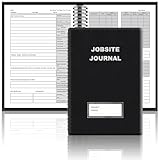
- The Jobsite Journal: this offering features a single black construction planner ensures you have a streamlined tool for organized recording at the jobsite, allowing you to document ideas, create sketches, and monitor progress in one centralized place. Crafted with quality in mind, this journal is a daily essential for jobsite scheduling, serving as a reliable partner for all your documentation needs
- Portable Design: measuring approximately 7 x 10 inches, the construction notebook fits seamlessly into work bags or briefcases, making it a go-to accessory for architects, engineers, and field professionals. Its ample page space ensures notes and sketches remain comprehensive and legible, while its lightweight design supports mobility during site visits and meetings
- Productive Layout: featuring a clear, efficient layout, the construction daily log book eliminates organizational challenges, enabling effortless documentation of critical details-including jobsite activities, task timelines, and milestone dates. It serves as a trustworthy archive for referencing, verifying, and reviewing site information, essential for project accountability and compliance
- Premium Materials: constructed with high-quality PU leather and paper, this project management notebook is built to endure daily use, while offering a smooth writing experience.The sleek, solid-black cover combines modern style with long-lasting durability, preserving its pristine appearance even after frequent use-all while safeguarding your work records. Designed with a spiral binding, it allows for easy, flat-page access, making note-taking effortless in any on-site scenario
- Versatile Utility: engineered to meet the demands of anyone requiring systematic and dependable note-taking, drafting, or sketching, this Record Construction Planner adapts to various roles-from architects and engineers to site supervisors. Its thoughtful size and design make it suitable for individual use or collaborative teams, ensuring it caters to diverse needs in field observations, project planning, and progress tracking
Track access, protection, and reservation of rights
If work is stopped, covered, removed, or altered, document who directed it, why, the condition before disturbance, protection provided, and cost and time being tracked. Use the contract’s required notice and reservation language where applicable. A reservation does not replace a required claim notice, change request, or safety action.
Time-critical notices and differing site conditions
Before sending any notice, check the contract for the required recipient, delivery channel, form, content, and deadline. Keep the sent message, attachments, transmission log, certified-mail receipt, platform confirmation, or other proof of delivery with the issue record. A copied project participant may not be the contractually designated recipient.
When FAR 52.236-2, “Differing Site Conditions,” is incorporated into a federal contract, it states: “The Contractor shall promptly, and before the conditions are disturbed, give a written notice to the Contracting Officer” for the specified conditions. The clause also makes notice a condition associated with an equitable adjustment, subject to its terms. The practical sequence is:
- Stop or protect the affected condition when safety and contract procedures require it.
- Photograph and describe the condition before disturbing it, including location, dimensions, materials, and surrounding work.
- Identify the contract representation, differing condition category, drawing, specification, or site information involved.
- Send written notice to the designated recipient through the required channel before disturbance whenever the clause requires that timing.
- Request direction and track resulting access, schedule, cost, testing, and mitigation decisions.
Do not generalize this federal timing rule to private or state projects. Their contracts and governing law may use different notice periods or procedures.
Independent reader supportYour contribution helps us test, update, and keep practical guides available for everyone.Photographs, files, and evidence preservation
Photograph for context and proof
Take a wide image showing the location, a medium view showing the work area, and close views showing the condition or measurement. Record date, time, location, direction of view, photographer, and issue number. Include a scale or reference point when useful. Preserve the original file and metadata when available; do not edit it. Save crops, annotations, or marked-up copies separately as working files.
Protect native records
Retain original email messages with headers where possible, native schedule files, full-resolution images, laboratory reports, signed forms, delivery tickets, and meeting recordings or minutes. Export a readable copy for routine review, but keep the native source. Record conversion dates and software when an export could affect formatting or embedded data.
Back up and control access
Use at least one separate backup and periodically test restoration. Restrict deletion and editing rights, record who can approve a change, and retain superseded versions. Apply the project’s confidentiality, privacy, and retention requirements. If litigation, a claim, or an investigation is reasonably anticipated, follow the applicable preservation direction and avoid routine deletion of relevant records.
Daily log checklist
- Date, shift, weather, site access, and author.
- Crews, subcontractors, equipment, deliveries, and visitors.
- Work performed by location and schedule activity.
- Inspections, tests, approvals, requests for information, and submittals.
- Instructions, disruptions, safety events, defects, and areas unavailable.
- Photograph and document identifiers.
- Hours lost, resources idle, resequencing, and mitigation observed.
- People notified, method and time, responses, and pending actions.
- Signature or authenticated submission and correction history.
Common documentation failures and fixes
Backdated reconstruction
Failure: Rebuilding weeks of events from memory. Fix: Label the entry as created later, identify its sources, and attach the underlying daily reports, messages, photos, and delivery records.
Vague location or description
Failure: “Issue at building.” Fix: Use gridline, level, room, elevation, station, workface, or another project-specific locator and include a marked plan when needed.
Edited originals
Failure: Cropping or annotating the only photograph. Fix: Preserve the original and save a clearly labeled derivative.
Quick wins for a faster PC:
Clear out junk files and repair common Windows errorsFree Scan →Fix the driver behind crashes, sound loss and screen glitchesFind Drivers →Notice without proof of delivery
Failure: Relying on a sent email view or verbal report. Fix: Retain the transmission record and confirm that the recipient and channel match the contract.
Calling every problem a delay or defect
Failure: Stating legal conclusions before facts and requirements are established. Fix: Record the condition, requirement, effect, response, and later analysis separately.
Ignoring negative evidence
Failure: Saving only records that support one position. Fix: Preserve complete daily logs, schedule updates, inspection results, rejected and accepted work, and communications, including unfavorable entries.
Federal examples and their limits
FAR Part 36 provides construction contract clauses and schedule context, but the obligations that apply depend on the specific contract and incorporated terms. FAR 52.246-21, “Warranty of Construction,” is an optional clause that an agency may include in certain fixed-price construction contracts under agency procedures. When that clause applies, it addresses conforming work, notice, remedies, and a one-year warranty period measured from final acceptance. It is not an industry-wide warranty and does not automatically apply to private construction.
Similarly, a federal contract-file rule requiring a complete history is a strong recordkeeping model, not a universal private-project rule. Use the signed agreement and applicable jurisdiction to determine deadlines, notice language, preservation duties, and remedies.
A practical close-out process
- Confirm every open issue has an identifier, owner, status, and next action.
- Reconcile the issue chronology with daily reports, schedule updates, minutes, and notices.
- Verify that each formal notice has the required recipient, method, date, content, and delivery proof.
- Match defects to inspections, repairs, retests, approvals, and any remaining warranty or punch-list obligation.
- Export an index of records and preserve native files, originals, and superseded versions.
- Document unresolved positions and deadlines instead of marking an issue closed merely because work resumed.
For a project-specific claim, notice decision, or dispute, have counsel or another qualified contract professional review the actual agreement, incorporated documents, timeline, and governing law.
Quick Recap
Product prices and availability are accurate as of the date/time indicated and are subject to change. Any price and availability information displayed on Amazon at the time of purchase will apply.

