Do these 3 things before closing this tab:
1Fix the driver behind crashes, sound loss and screen glitches2Clear out junk files and repair common Windows errors3Scan for outdated or missing drivers - takes under a minuteThe most sustainable building material is not a universal product or label. It is the option that performs the required job for the life of your home while minimizing avoidable extraction, emissions, waste and replacement. Start with the assembly—such as insulation, flooring, roofing or paint—then compare alternatives using the same performance requirements, life-cycle scope, location and service life. Retaining a sound existing component or using a safe, code-accepted reclaimed item can be better than buying a new product marketed as green.
For a defensible choice, verify five things: what the product does, how its environmental impacts were measured, what it emits indoors, how long it should last, and whether it is available and acceptable under your local code. The United States Environmental Protection Agency (EPA) describes green building across siting, design, construction, operation, maintenance, renovation and deconstruction, so a material decision should support the whole building rather than optimize one metric.
As an Amazon Associate I earn from qualifying purchases.
1. Define the job before comparing materials
Write a short performance brief before looking at products. State the assembly and function, exposure, expected service life and constraints. A flooring product and an insulation product cannot be compared as if they provide the same service, and two products with different thicknesses or replacement intervals may have misleadingly different environmental totals.
Free tools Windows power users keep installed
One-click scans. No signup required.
- Function: insulation, structural framing, roof covering, wall finish, flooring, paint, adhesive, sealant or another defined use.
- Performance: required thermal, structural, acoustic, moisture, wear, cleanability and fire performance.
- Exposure: interior or exterior location, humidity, bulk water, sunlight, freeze-thaw cycles and expected traffic.
- Service life: the period you expect the assembly to remain safe and functional before repair or replacement.
- Project constraints: local building and fire codes, dimensions, installation method, contractor capability, schedule and budget.
Local requirements and product suitability are project-specific. Ask the building department, designer or qualified contractor which approvals, testing and installation details apply to your address; a sustainability claim does not override code.
#1 Best Overall

- Use for a variety of indoor and outdoor project surfaces including wood, metal, plaster, masonry or unglazed ceramic
- Water-based acrylic formula is low odor, resist chips and provides long-lasting protection
- Covers up to 120 sq ft and dries to touch in 30 minutes for quick project completion
- Semi-gloss finish minimizes surface imperfections, goes on smoothly and provides excellent hide
- Prior to application sand surfaces with 180/200 grit sandpaper, then wash with a degreaser, allow the surface to dry and apply paint
2. Use a consistent comparison framework
Compare products that perform the same job and record evidence in the same categories. The table below is a screening framework, not a universal ranking. Exact results depend on the product, manufacturer, project location and installation.
| Material or approach | Documentation to request | Performance and service-life questions | Health and emissions questions | Reuse or recovered-content opportunity | Sourcing and availability considerations | Cost evidence |
|---|---|---|---|---|---|---|
| Reused or reclaimed components | Condition report, dimensions, previous use, test data where required, treatment history and code-acceptance information | Can the item meet current structural, moisture, fire and wear requirements? Is repair or sorting needed? | Could prior use introduce contaminants, coatings or residues? Determine whether cleaning or testing is necessary. | Retains an existing product and can avoid virgin extraction and disposal. | Supply is local and irregular; matching sizes and quantities may take planning. | Not stated in available evidence; compare purchase, inspection, preparation and installation quotes. |
| Recovered-content construction products | Manufacturer’s declared recovered-content percentage and the basis of the claim; technical data and applicable certification | Confirm the same code, moisture, fire, thermal or wear performance as the alternative. | Check emissions documentation for interior uses; recovered content alone does not establish indoor-air performance. | EPA identifies insulation, carpet, carpet cushion, cement and concrete, reprocessed latex paint, floor tiles, roofing and structural fiberboard among relevant categories. | Content and availability vary by product and region; verify the exact model being purchased. | Not stated in available evidence; obtain current local pricing. |
| Wood and other bio-based products | Species or feedstock, treatment information, technical data, manufacturing location and any applicable environmental declaration | Assess moisture management, pests, fire, movement, wear and expected maintenance. Treatments may affect suitability. | Check coatings, binders, preservatives and emissions documentation rather than assuming plant-based means emission-free. | Reclaimed wood, cellulose, bamboo, cork, hemp and straw are examples discussed in a 2024 BuildingGreen report hosted by the U.S. Green Building Council. | Bamboo may involve imported supply, quality variation and durability concerns; cork and hemp can have limited availability; straw assemblies may require specific manufacturers and design expertise. | Not stated in available evidence; compare installed cost, preparation and maintenance. |
| Insulation | Thermal and fire data, installation instructions, emissions information and, where available, a product-specific environmental declaration | Check the required thermal performance at the installed thickness, moisture behavior, air-sealing compatibility and durability. | EPA’s July 2024 Indoor AirPlus guide includes insulation in its emission-focused material guidance; verify the exact product and current criteria. | Some insulation products fall within EPA recovered-content guidance; verify the declared content. | Transportation, installer familiarity and availability can determine whether a technically suitable option is practical. | Not stated in available evidence; price the complete assembly, including air sealing and labor. |
| Interior paints, finishes, adhesives, sealants, flooring, carpet, gypsum board and cushions | Exact product name, current emissions certification or standard, technical data, installation limits and maintenance instructions | Match the product to substrate, traffic, moisture, cleaning and expected replacement interval. | EPA’s July 2024 Indoor AirPlus guide covers these interior categories. “Low VOC” is only one piece of an emissions assessment. | Reprocessed latex paint, floor tiles, carpet and carpet cushion may have recovered-content options; verify product-specific claims. | Confirm regional availability, tinting or batch requirements and installer access to the specified product. | Not stated in available evidence; compare material, preparation, installation and future recoating or replacement. |
| Roofing and exterior products | Product data, fire and wind ratings, warranty terms, recycled-content statement where applicable and installation requirements | Evaluate weather exposure, drainage, repairability, expected life and compatibility with the roof or wall assembly. | Interior emissions may be less central, but sealants, coatings and adjacent interior products still warrant documentation. | Roofing is among the construction categories for which EPA provides recovered-content guidance. | Use products that are stocked locally and supported by installers familiar with the required detailing. | Not stated in available evidence; compare installed cost and the consequences of premature replacement. |
3. Prefer retention and safe reuse when they meet the job
Before selecting a new material, ask whether the existing component can remain in service. Repairing a sound floor, retaining usable doors or cabinets, or adapting an existing building can avoid extraction, manufacturing and disposal associated with replacement. EPA describes reuse of construction and demolition materials as a way to avoid virgin-resource extraction and related life-cycle impacts.
Inspect before you reuse
- Confirm dimensions, quantity and compatibility with the new assembly.
- Check for rot, corrosion, cracks, deformation, water damage and hidden fastener or connection problems.
- Identify previous coatings, preservatives, adhesives or other substances that could affect indoor use.
- Obtain required testing or professional inspection for structural, fire-rated or code-regulated applications.
- Budget for cleaning, sorting, repair, storage and modified installation details.
Reuse is not automatically appropriate. A salvaged item that fails moisture, fire, structural or health requirements can create more waste and cost than a compliant new product.
What’s actually slowing this PC down?
Pick the symptom - the matching free tool is one click away.
4. Compare embodied impacts with EPDs and life-cycle information
EPA defines embodied carbon as “the greenhouse gas emissions associated with the production (the extraction, transport and manufacturing) stages of a product’s life.” Those stages are important, but they are not the whole sustainability picture: maintenance, replacement, disposal, indoor emissions, resource use and building operation may also matter.
What an EPD can tell you
An environmental product declaration (EPD) reports quantified environmental impacts for a defined product. It can be especially useful for comparing embodied greenhouse-gas impacts when competing products have compatible documentation. An EPD discloses impacts; it does not certify that a product is best for every health, durability or resource question.
Make the comparison technically fair
- Confirm that the EPD covers the exact product, formulation, thickness or model you will buy.
- Check the product category rules used to calculate it. Different rules can produce results that are not directly comparable.
- Use the same functional unit, such as the quantity of material needed to deliver the specified performance, rather than comparing arbitrary packages or weights.
- Align life-cycle stages. A document covering manufacturing only cannot be compared directly with one that includes transport, installation, use, replacement and end of life unless the scopes are reconciled.
- Check geography and manufacturing source. Electricity, transport distances, fuels and supply chains differ by location.
- Look for independent third-party verification and record the declaration date and validity.
EPA’s embodied-carbon resources point to EPD resources, manufacturer guidance and tools for evaluating impacts. Use those documents as evidence, not as a shortcut around performance, code and indoor-air checks.
Rank #2
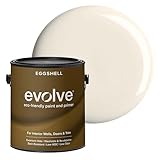
- PAINT + PRIMER IN ONE: Evolve’s paint-and-primer formula helps you get great coverage from the start, sealing your surface and reducing the extra work of multiple coats.
- AVAILABLE IN MULTIPLE SHEENS, COLORS & SIZES: Choose from a curated palette of designer colors in Flat, Eggshell, Satin, and Semi-Gloss sheens to match any style, room, or project. Available in 1-Gallons & 5-Gallons.
- EGGSHELL SHEEN – Soft, Velvety Glow: Offers a gentle sheen that balances elegance with durability. Ideal for moderate-traffic areas like dining rooms, hallways, and family rooms. Easy to clean without compromising the finish.
- STAIN & SCRUB RESISTANT: Built to last in real spaces, Evolve helps resist marks, scuffs, and water spotting, so your home continues to look polished and well-maintained.
- DESIGNED FOR MOISTURE-PRONE AREAS: Formulated to perform well in bathrooms, kitchens, entryways, laundry rooms, and other high-humidity spaces.
5. Treat indoor emissions as a separate question
For interior materials, ask what occupants may breathe after installation and during use. EPA’s July 2024 Indoor AirPlus guide uses an emissions-focused approach for interior paints and finishes, carpets and cushions, adhesives and sealants, hard-surface flooring, gypsum board and insulation. It also describes examples of third-party labels and certifications.
What “low VOC” does—and does not—mean
Low VOC generally describes a limit on specified volatile organic compounds under a particular standard or test method. It does not, by itself, establish that every emitted substance is harmless, that the product has low embodied carbon, or that it is suitable for a particular substrate or occupant need. Request the current standard or certification named for the exact product, not just a marketing statement on a shelf or website.
Interior-emissions checklist
- Record the exact product, color or formulation and intended application.
- Ask for current emissions documentation and the test or certification scope.
- Check adhesives, primers, sealants and underlayments as well as the visible finish.
- Follow ventilation, curing and occupancy instructions during installation.
- Confirm that the low-emission product still meets moisture, wear, fire and cleaning requirements.
Do not treat an EPD as a toxicology declaration, and do not treat a low-emission label as proof of low embodied carbon. They answer different questions.
6. Verify claims instead of trusting broad green language
EPA cautions against vague wording such as “environmentally friendly,” “eco safe” and “green.” A useful claim identifies the attribute, measurement method, product scope and verifying body. Ask for the document behind the claim and check that it applies to the product and use you are considering.
Questions for a manufacturer or supplier
- Which exact model, size, finish or formulation does the claim cover?
- What percentage of recovered or bio-based content is declared, and how was it calculated?
- Which product category rules, life-cycle stages and functional unit apply to an EPD?
- Who verified the declaration, certification or emissions test, and when?
- Where is the product manufactured, and does the stated documentation cover that facility?
- What installation, maintenance and replacement conditions are assumed?
EPA’s purchasing recommendations favor multi-attribute or life-cycle approaches and competent third-party conformity verification. Inclusion of a standard or label in EPA guidance is not an endorsement of a particular product.
7. Evaluate recovered-content and bio-based options in context
Recovered-content products
Recovered content can reduce demand for virgin feedstocks, but the percentage and performance vary. EPA’s construction-product guidance includes building insulation, carpet, carpet cushion, cement and concrete, reprocessed latex paint, floor tiles, roofing and structural fiberboard. Compare the declared content with the product’s fire, moisture, structural, thermal or wear performance, and verify whether the claim applies to the version sold in your region.
Rank #3
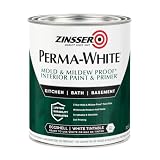
- Self-Priming formula - requires no sanding
- Mold & Mildew-Proof paint film - guaranteed for 5 years
- Resists dirt and moisture on film coating
- Finish is washable and scrubbable with soap and water
- Product contains a mildewcide to prevent the growth of mold and mildew on the paint film only
Bio-based materials
Wood, cellulose, bamboo, cork, hemp and straw can be relevant choices when their properties fit the assembly. The 2024 BuildingGreen report hosted by the U.S. Green Building Council identifies important qualifications rather than a blanket hierarchy:
- Wood: reclaimed wood can avoid new extraction, while new wood products may require treatments that affect handling, emissions, moisture resistance or end use.
- Cellulose: investigate the installed product, fire and moisture details, and the installer’s ability to create a durable assembly.
- Bamboo: imported supply, quality variation and durability concerns may affect the environmental case and service life.
- Cork: supply can be limited, so confirm that the required grade and quantity are available.
- Hemp: availability and manufacturer support may constrain specification.
- Straw: assemblies can require specialized design, detailing and manufacturer support; they are not interchangeable with conventional wall systems without engineering and code review.
For every bio-based option, verify source, transport, treatments, moisture management, pests, fire behavior, durability, maintenance and end-of-life pathway.
8. Choose by application
Insulation and air control
Compare the complete enclosure rather than insulation alone. Confirm the thermal performance required at the installed thickness, continuity around edges and penetrations, moisture behavior, fire requirements and compatibility with air sealing. A material that looks favorable in a product comparison can underperform if gaps, compression or condensation are left unresolved. Check the exact product’s emissions and recovered-content documentation where those attributes matter.
Flooring and carpet
Match flooring to traffic, moisture, cleaning chemicals, slip resistance and the expected replacement interval. For carpet, evaluate the face fiber, backing and cushion together; EPA’s Indoor AirPlus categories include carpet and cushion, while its recovered-content guidance also covers carpet, cushion and floor tiles. Check adhesive and underlayment emissions, not only the surface material. Reclaimed flooring requires inspection for contamination, dimensions and finish compatibility.
Paints, finishes, adhesives and sealants
Select the formulation for the substrate and exposure first, then verify current emissions documentation. Interior paint, finishes, adhesives and sealants are specifically addressed in the July 2024 Indoor AirPlus guide. A low-VOC claim is incomplete unless you know the standard, test scope and exact product. Plan ventilation and curing, and account for future recoating when comparing durability.
Roofing and exterior materials
Weather resistance, drainage, wind and fire ratings, detailing and repairability usually determine whether an exterior product protects the building for its intended life. EPA identifies roofing among recovered-content categories, but recycled content cannot compensate for premature failure. Check the product data, installation requirements and local availability, then compare the whole roof assembly and replacement consequences.
Rank #4

- PAINT + PRIMER IN ONE: Evolve’s paint-and-primer formula helps you get great coverage from the start, sealing your surface and reducing the extra work of multiple coats.
- AVAILABLE IN MULTIPLE SHEENS, COLORS & SIZES: Choose from a curated palette of designer colors in Flat, Eggshell, Satin, and Semi-Gloss sheens to match any style, room, or project. Available in 1-Gallons & 5-Gallons.
- EGGSHELL SHEEN – Soft, Velvety Glow: Offers a gentle sheen that balances elegance with durability. Ideal for moderate-traffic areas like dining rooms, hallways, and family rooms. Easy to clean without compromising the finish.
- STAIN & SCRUB RESISTANT: Built to last in real spaces, Evolve helps resist marks, scuffs, and water spotting, so your home continues to look polished and well-maintained.
- DESIGNED FOR MOISTURE-PRONE AREAS: Formulated to perform well in bathrooms, kitchens, entryways, laundry rooms, and other high-humidity spaces.
Structural and finish wood
Use reclaimed or new wood only after confirming grade, moisture condition, dimensions, connections, treatment and code acceptance. For bamboo or other bio-based finishes, verify manufacturing quality, transport, wear resistance and maintenance. The source material’s biological origin does not remove the need for engineering and product-specific documentation.
The Tool Desk
Outbyte PC Repair FREERepair Windows errors before they cause bigger problemsFix Now →Outbyte Driver Updater FREEScan for outdated or missing drivers - takes under a minuteDriver Scan →9. Account for the whole building and its useful life
A material decision can change energy use, maintenance and replacement. Consider how the product affects air sealing, moisture control, heating and cooling loads, cleaning, repair access and future renovation. EPA’s green-building framework includes operation, maintenance, renovation and deconstruction, not just the initial purchase.
Renovating or adaptively reusing an existing building may avoid the impacts of redevelopment, provided the result is safe, code-compliant and efficient. Retain components where they remain serviceable, design for repair rather than unnecessary replacement, and document assemblies so future owners can maintain or disassemble them responsibly.
10. A practical selection procedure
- Describe the assembly. Write the function, location, exposure, performance target and expected service life.
- List feasible options. Include retention, reclaimed materials, recovered-content products, bio-based products and conventional alternatives that meet the same job.
- Screen for compliance. Eliminate options that cannot satisfy local structural, fire, moisture, health or installation requirements.
- Request documentation. Obtain technical data, installation instructions, exact emissions evidence, recovered-content statements and EPDs or other life-cycle information where available.
- Normalize comparisons. Align functional unit, product category rules, geography, manufacturing source and life-cycle stages for environmental documents.
- Evaluate service life. Include maintenance, repair, replacement frequency and the consequences of failure.
- Check procurement. Confirm regional supply, lead time, quantities, installer capability and storage requirements.
- Price the installed assembly. Include preparation, labor, ventilation, testing, waste, maintenance and likely replacement—not just the material unit price.
- Record the decision. Keep the product identifier, documentation dates, installation conditions and reasons for selection with the project records.
11. Common mistakes and how to correct them
Choosing a label before defining performance
Problem: A product is selected because it carries a green or low-emission label, then proves unsuitable for moisture, wear or code conditions.
Correction: Set the assembly requirements first and use the label as one evidence item.
Comparing unmatched EPDs
Problem: One declaration covers manufacturing only while another includes later life-cycle stages, or the products provide different amounts of service.
Correction: Align functional unit, category rules, geography and life-cycle scope before drawing a conclusion.
Windows Errors? Fix Them Before They Spread
Repair common Windows errors and clear accumulated junk for a smoother, more stable PC - no reinstall needed.Free scan · no reinstallOutdated Drivers Are Slowing You Down
One free scan finds every outdated or missing driver and matches the right update for your exact hardware.Free scan · exact hardware matchAssuming plant-based means harmless or local
Problem: Bio-based feedstocks are treated as automatically low-impact, despite treatments, imports, durability limits or limited supply.
Correction: Verify the finished product, transport, installation, maintenance and service life.
Best Value

- HIGH-TRAFFIC DURABILITY: Engineered to withstand heavy foot traffic, daily use, and repeated cleaning. This heavy-duty formula is ideal for porches, patios, basements, steps, and walkways where long-term wear resistance is required.
- SCUFF & SCRATCH RESISTANT: Our advanced coating creates a hard, resilient finish that resists marks, abrasions, and scuffing from shoes and furniture. Keep your floors looking clean and polished with a surface built to stay well-maintained longer.
- INTERIOR & EXTERIOR VERSATILITY: Provides reliable protection for both indoor and outdoor projects. This multi-surface paint offers excellent adhesion on wood, concrete, masonry, and previously painted surfaces, ensuring a consistent look across your home.
- WEATHER & MOISTURE BARRIER: Formulated to resist rain, humidity, and UV exposure. The moisture-resistant film helps prevent cracking, peeling, and fading, extending the life of your exterior porches and decks through variable weather conditions.
- SMOOTH, HIGH-HIDE COVERAGE: Achieve a professional, uniform finish with ease. Our high-hide formula effectively masks surface imperfections and provides even color distribution, reducing the need for multiple coats on properly prepped surfaces.
Ignoring preparation and labor
Problem: A reclaimed or recovered-content product appears inexpensive until sorting, repair, testing and specialized installation are added.
Correction: Compare installed assemblies and include preparation, storage and future maintenance.
Replacing a serviceable component unnecessarily
Problem: A new product is bought even though the existing one can be safely retained or repaired.
Correction: Inspect first, verify code acceptance and reuse when the existing component still meets the job.
12. What to keep in the project file
Save the exact product identifier and version of every document used for the decision. A useful record contains:
Recommended Free Tools
- Performance and installation data for the specified assembly.
- EPD, if used, including product category rules, functional unit, life-cycle stages, geography, manufacturer and verification status.
- Indoor-emissions standard or third-party certification for interior products.
- Recovered-content or bio-based-content statement and its calculation basis.
- Inspection, testing and code-acceptance records for reclaimed materials.
- Maintenance, cleaning, repair and replacement instructions.
- Supplier availability, lead time and the installed-cost estimate for your location.
Product documents and programs change. Recheck the current edition, certification status, inventory and local requirements when ordering, rather than relying on an old listing or a generic claim.
Frequently Asked Questions
Is an EPD the same as a green certification?
No. An EPD is a quantified environmental declaration for a defined product and scope. It does not by itself establish indoor-air safety, code suitability, durability or overall superiority. Compare EPDs only when the products, functional units, category rules, geography and life-cycle stages align.
Does low-VOC paint guarantee healthy indoor air?
No. Low VOC addresses specified volatile compounds under a particular standard or test method. Check the exact product’s current emissions documentation, and also evaluate primers, adhesives, sealants, ventilation, curing and the finish’s required performance.
Can reclaimed materials always be used in a renovation?
No. Inspect condition, dimensions, contamination, treatments and performance, then confirm structural, fire, moisture and other local code requirements. Reuse is appropriate only when the material is safe and capable of performing its intended job.
Quick wins for a faster PC:
Clear out junk files and repair common Windows errorsFree Scan →Fix the driver behind crashes, sound loss and screen glitchesFind Drivers →Repair Windows errors before they cause bigger problemsFix Now →Quick Recap
Product prices and availability are accurate as of the date/time indicated and are subject to change. Any price and availability information displayed on Amazon at the time of purchase will apply.

