PC Slower Than It Used to Be?
A free scan shows the junk files, broken settings and background clutter dragging Windows down - then fixes them in one click.Free scan · Windows 10 & 11Outdated Drivers Are Slowing You Down
One free scan finds every outdated or missing driver and matches the right update for your exact hardware.Free scan · exact hardware matchThe reliable way to choose plants for a large clay-soil garden is to stop treating “clay” as one condition. Map the property into smaller planting zones, record each zone’s sunlight, wetness, slope, fertility and available space, then select plants whose regional hardiness, mature size and moisture preferences match that zone. Improve the soil only where it will materially help, and use raised beds or berms when a particular root environment cannot be corrected economically.
Clay can stay wet after rain, yet become dense and hard during dry weather. A low pocket may threaten roots with prolonged saturation while a compacted upper slope sheds water and behaves like a drought-prone site. The same plant list cannot solve both problems.
As an Amazon Associate I earn from qualifying purchases.
Start with a site map, not a plant list
A large garden usually contains several growing environments. Draw a rough plan of the property and divide it into manageable areas before visiting a nursery. Useful first labels include:
- Sunny upper slope
- Shaded border beneath trees or beside buildings
- Low pocket that remains wet after rain
- Level ground with moderate drainage
- Compacted route used by vehicles or foot traffic
- Open area with enough room for a tree or large shrub
Give every zone an identifying name or number. Mark existing trees, paving, downspouts, fences, utility lines and places where water flows or collects. The map does not need surveying accuracy; it needs to show where conditions change so a plant bought for one area is not casually installed in another.
#1 Best Overall

- Quick, at home results for Soil pH, Nitrogen, Phosphorous and Potash Innovative and inexpensive soil test kit features an easy-to-use capsule system and patented color comparators
- Contains all components needed for 20 tests. 5 for each of pH, N, P and K
- Contains all components needed to test all variables in several spots in the yard or garden
- Simple, detailed instructions included. Great for beginners and experienced gardeners alike.
- Soil pH preference list for over 450 plants included
Observe the property after rain
Visit during or shortly after a substantial rainfall, then again after the surface has had time to dry. Record where water stands, where it disappears quickly and where runoff cuts channels or leaves sediment. Note whether a low area stays damp for a day, several days or much longer. That observation is more useful than the label “heavy clay” on its own.
Test questionable drainage
Where the pattern is unclear, dig a representative hole, fill it with water and observe how quickly the water level falls. Repeat in more than one location because compaction, fill and buried construction debris can create isolated problem spots. A drainage test indicates the behavior of that point; it does not classify the entire property.
Record the design purpose
Write what each zone must do: provide a screen, frame a view, create shade, support seasonal flowers, hold a path edge or offer habitat. A plant that tolerates a site but cannot reach the required height or spread is still the wrong choice.
Understand what clay means for roots
Clay particles are small and pack closely, leaving less pore space than coarser sandy soil. Water can therefore drain slowly and remain available for a long time. When clay dries, it can become hard and develop cracks; compacted or sloping surfaces may shed new rain instead of allowing it to infiltrate. Roots can face either too little air in a saturated layer or too little usable water in a dry, sealed surface.
Assess the actual moisture class of each zone:
| Observed condition | Likely root challenge | Selection direction |
|---|---|---|
| Water stands or soil remains saturated after rain | Low oxygen and potential root damage | Choose plants documented for wet or persistently moist conditions, after checking their light and regional hardiness. |
| Moist but not continuously saturated | Seasonal excess water | Use plants suited to moist soil and provide enough spacing for air circulation. |
| Drains reasonably on higher ground | Clay may still become hard when dry | Select clay-tolerant plants and maintain an organic-matter program without disturbing wet soil. |
| Runoff, crusting or rapid drying on a slope | Water bypasses roots; erosion and drought stress | Consider deep-rooted, site-suitable plants, contouring and groundcover strategies appropriate to the region. |
Use “wet,” “moist” and “well drained” as observations to verify, not as assumptions based solely on soil texture.
Measure light, climate and space
Map daily sunlight
Track direct light in spring or summer, when leaves are present and the sun’s path is relevant to the growing season. Iowa State University Extension and Outreach defines full sun as six or more hours of direct sun and full shade as two hours or less. Partial categories fall between those endpoints, but local guidance and the plant’s own label should control. A zone can be sunny in winter and shaded in summer, or receive morning light but intense afternoon exposure.
Rank #2

- KNOW BEFORE YOU GROW | Grow the healthiest, sustainable lawn and garden with the most accurate and easy to use professional soil test kit on the market
- FAST & ACCURATE | Unlike at-home pH meters and test strips, our mail-in professional lab analysis accurately measures 13 plant-available nutrient levels, including Nitrogen and pH. Results in 6-8 days
- FOR ANY GROWING SCENARIO | Tests any soil type and growing condition - lawn & turf, vegetable gardening, flowers, compost, trees, vines, ornamental landscape, house plants, soil-less media or hydroponics
- SAVE TIME & MONEY | Stop applying products you don’t need. Learn exactly what products and amounts you need to grow the healthiest plants possible
- CUSTOM RECOMMENDATIONS | What to apply, how much to apply, and when to apply it. Provides both organic and non-organic fertilizer recommendations to effectively amend your soil
Check winter hardiness for your region
Use the hardiness system and local planting guidance applicable to your location. A plant that tolerates clay in one climate may fail because winter temperatures, summer heat or length of the growing season differ. Iowa guidance, for example, covers Zones 4b through 6a; that range describes Iowa conditions and should not be applied to another region without verification.
Measure mature dimensions
Record the height and width available at maturity, not merely the size of the container at purchase. Allow for branches, root development, access for mowing and clearance from buildings, wires and paths. A vigorous plant can tolerate clay yet become a maintenance problem if it outgrows the allotted space or spreads into natural areas.
Assess fertility and existing competition
A soil test can reveal pH and nutrient conditions that are not visible from texture alone. Test separate zones when fill, previous lawn use or drainage differs. Note nearby tree roots and irrigation patterns; a plant may be in “moist clay” but still compete intensely for water with an established tree.
Match every candidate against the same criteria
Create a short list only after you can describe the destination zone. For each plant, verify all of the following from a regional extension service, botanical garden, nursery or authoritative plant reference:
- Winter hardiness for your location
- Required light exposure
- Preference for wet, moist or well-drained soil
- Documented tolerance of clay or compacted soil
- Mature height and width
- Growth rate, suckering, seeding or other spread behavior
- Watering and pruning needs after establishment
- Native status and any local invasive-plant restrictions
- Function in the design, such as screening, structure, flowers, shade or habitat
Miss any one of these checks and the plant may be suitable in theory but unsuitable in your particular bed.
Use regional plant lists as starting points, not universal prescriptions
Regional examples can reveal useful plant types, but they do not transfer automatically across climates. Maine Extension lists the following as examples that perform well in Maine clay:
Rank #3

- Comprehensive Soil Analysis: Liquid soil test kits offer a comprehensive analysis of essential soil parameters, including pH, ammonia, nitrogen, phosphorus, and potassium. Having all these measurements in one kit provides a holistic understanding of the soil's fertility and health.
- Customized Fertilizer Recommendations: With data on pH and nutrient levels, liquid soil test kits help users apply the right type and amount of fertilizers, optimizing plant growth, and preventing over-fertilization, which could harm both plants and the environment. Whether its for lawns, garden, grass, plants, vegetables, turf, flowers, compost trees vines ornamental landscape house plants or hydroponics you will be able to get the results you want.
- Time and Cost-Effective: Liquid soil test kits are relatively quick and easy to use, saving time for gardeners and agricultural professionals. Compared to sending samples to a laboratory, these kits provide rapid results, allowing for prompt action. Additionally, they are cost-effective for routine testing, making it feasible to monitor soil health regularly.
- Optimal Plant Health and Yield: By knowing the soil's pH and nutrient levels, gardeners and farmers can fine-tune their agricultural practices to create an environment conducive to optimal plant growth. Adequate levels of ammonia, nitrogen, phosphorus, and potassium are essential for healthy plant development and higher crop yields.
- Accurate and Precise Results: Liquid test kits are designed to provide accurate and precise measurements when used correctly. They are calibrated to detect specific nutrient levels, ensuring reliable data for informed decision-making in plant nutrition and soil management. You get a total of about 140 test. which is 40 test for each parameter and about 20 or so for nitrogen
| Plant named by Maine Extension | How to use the information |
|---|---|
| Red maple | Consider only after confirming the site’s light, moisture pattern, mature dimensions and local suitability. |
| River birch | Verify that the intended location can support its mature root and canopy space and that its moisture requirements fit the zone. |
| Swamp white oak | Check available long-term space, regional hardiness and whether the site’s seasonal wetness is appropriate. |
| Black chokeberry | Confirm mature spread, light conditions and whether its growth habit fits the border or habitat objective. |
| Red osier dogwood | Check local native status, moisture conditions and its tendency to produce new growth beyond the planned area. |
| Winterberry | Verify hardiness, light, moisture, mature size and any pollination requirements before purchase. |
These names illustrate possibilities for Maine, not a general clay-soil shopping list. Before buying any example, check native status, local restrictions, mature dimensions and the exact conditions of the planting zone.
Design the garden by microhabitat
Sunny, better-drained higher ground
Prioritize plants whose references allow clay and seasonal drying, then plan for runoff rather than assuming frequent irrigation will solve it. Keep soil covered with suitable vegetation or mulch to reduce crusting and erosion. On a slope, place plants with regard to water movement and maintenance access; avoid creating a bed that directs runoff toward a foundation or path.
Low wet pockets
Choose plants documented for wet or persistently moist soils and verify that their light requirements match the pocket. If water remains for long periods because of a blocked outlet or grading defect, correct that cause before selecting plants. Do not raise the soil around an existing tree’s trunk or bury the root flare in an attempt to dry the area.
Quick wins for a faster PC:
Clear out junk files and repair common Windows errorsFree Scan →Fix the driver behind crashes, sound loss and screen glitchesFind Drivers →Shaded borders
Separate dry shade beneath established trees from naturally moist shade near a low area. Measure the available root space and recognize that dense tree roots can make establishment slower. Select plants for the observed moisture pattern, not for shade alone.
Edges, paths and compacted areas
Traffic can compact clay more severely than the surrounding garden. Keep planting beds outside the main travel line where possible. If a path must cross the area, solve the load and drainage problem with appropriate construction rather than expecting roots to repair repeatedly compacted soil.
Improve clay selectively and gradually
Use organic matter for new or limited bed preparation
Compost can improve aggregation and create additional pore space for air and water. For the new-bed application described by Iowa State University Extension and Outreach, spread 2 to 4 inches of compost and incorporate it into the top 6 to 12 inches. Treat those dimensions as guidance for that type of soil preparation, not a blanket prescription for every established bed or every plant.
Rank #4
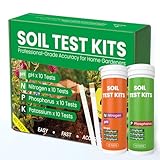
- Complete 4-in-1 Soil Test Kit (pH, N, P, K) – This garden soil test kit measures soil pH, Nitrogen, Phosphorus, and Potassium, giving you a full picture of your soil condition to improve fertilization and plant growth.
- 40 Accurate Tests for Long-Term Use – Includes 10 tests for each element (40 total tests), making this soil testing kit ideal for repeated use across multiple areas of your lawn, vegetable garden, or flower beds.
- Fast & Easy Soil Testing at Home – No calibration or complex tools needed. Simply mix soil with water, add the reagent, and compare the color chart for instant results. Perfect for beginners and experienced gardeners.
- All Tools Included for Convenience – This soil testing kit comes with test tubes, reagents, droppers, and a color comparison chart. Everything you need is included to perform reliable soil tests right at home.
- Improve Plant Growth & Save Fertilizer – By using this soil test kit for lawns and gardens, you can accurately balance soil nutrients, reduce waste, and grow healthier vegetables, flowers, and grass.
Blend amendments across the bed rather than leaving a sharply different layer at the planting hole. Organic matter decomposes, so improvement is an ongoing process supported by appropriate mulch and living roots.
Do these 3 things before closing this tab:
1Clear out junk files and repair common Windows errors2Scan for outdated or missing drivers - takes under a minute3Repair Windows errors before they cause bigger problemsNever cultivate wet clay
Working clay while it is wet can smear and compact the soil, reducing the pore space you are trying to create. Wait until a handful crumbles rather than forming a slick ribbon. Avoid repeated rototilling, which can destroy structure and create a compacted layer below the tilled depth.
Do not rely on sand as a quick fix
University of Maine Extension explains that converting clay to sandy loam would require impractical quantities of sand. Colorado State Extension also cautions that sand or gravel recommendations can produce mixed results and, in some situations, worsen drainage. Do not add a small amount of sand to a broad clay bed expecting it to become porous; choose amendments for the specific soil and project instead.
Independent reader supportYour contribution helps us test, update, and keep practical guides available for everyone.Use raised beds and berms when the root zone needs a different environment
A raised bed or berm can provide a better-drained medium where existing grade or soil structure cannot be changed economically. Iowa State notes that raised beds are best suited to smaller plants such as vegetables, perennials or small shrubs, and must be large enough to contain the plant’s entire root system.
Size the structure for mature roots, not the first season’s foliage. Provide stable edges, safe overflow routes and enough width that the bed does not dry rapidly at the sides. A narrow mound over saturated clay can perch water above the dense layer; drainage design and adequate depth matter more than simply adding height.
Raised construction is not a shortcut for a large tree or major shrub. Such plants need a broad, stable root environment and can outgrow a confined bed or suffer when roots encounter contrasting layers.
Best Value

- 【7-in-1 Features】This is a 7-in-1 multi-function soil tester. Our soil tester quickly measures soil moisture, pH, temperature and light intensity, and its fertility function helps you take better care of your plants. With this device you can measure the soil moisture, pH, temperature and light intensity for your plants and with the EC and TDS functions you will know when it is time to water the soil.
- 【Large Screen & LCD Backlight】The Soil Moisture Meter has a large LCD display with white backlight that clearly shows the numerical parameters in both daylight and darkness. It is powered by 4 x 1.5V AAA batteries (not included) and warns you when the batteries are low. The large screen allows you to read the data more easily and clearly, so you no longer have to struggle with hard to read data!
- 【Fast and accurate measurement】With the latest 2025 probe technology, it can quickly and accurately measure soil pH, moisture, temperature and soil fertility, and measure the TDS and EC function of water quality. Combined with the light intensity analysis of the integrated light sensor, the device can help you determine the optimal watering time, control acidity and temperature, and ensure that your plants receive sufficient light for science-based plant care.
- 【Easy to use】Simply insert the probe about 10 cm deep into the soil, wait 10 seconds and you will receive precise readings. (Note: The soil tester must not be used directly to measure liquids. If the soil is too dry or hard, do not force the probe in. Moisten the test area slightly before measuring and wait 10 minutes to avoid damaging the device).
- 【Optimal readability】The display has an intuitive design with clear numbers and intuitive symbols that make it easy for even beginners to understand the minimum values. The extra-large screen makes reading the data clearer and easier. The displays of the water and soil analyser are backlit in white so that they are also easy to read at night.
Plant woody specimens correctly in clay
For woody plants, Maine Extension advises choosing young specimens, setting the root ball at or slightly above grade, and digging a broad hole that is slightly shallower than the root ball. The goal is to prevent the planting hole from becoming a water-holding basin while allowing roots to expand laterally into the surrounding soil.
- Confirm underground utilities, mature clearance and the zone’s drainage before delivery.
- Water the container or root ball as appropriate so it is evenly moist, not saturated.
- Dig a hole broad enough for lateral root growth and no deeper than necessary to keep the root flare at the correct level.
- Set the root ball at or slightly above surrounding grade according to local planting standards.
- Backfill with the excavated soil unless a local recommendation calls for a specific amendment; avoid creating a sharply contrasting pocket.
- Water slowly to settle soil around roots, then apply a suitable mulch layer without piling it against the trunk.
- Monitor moisture through the establishment period and adjust irrigation to weather and soil behavior.
Local standards should take precedence where climate, root-ball type or soil conditions differ from this regional guidance.
Buy plants with a zone-by-zone checklist
Take the map and a written specification for each planting area when shopping. For every candidate, record:
What’s actually slowing this PC down?
Pick the symptom - the matching free tool is one click away.
- Zone name and observed moisture class
- Hours and timing of direct sun
- Hardiness range and regional suitability
- Clay tolerance or documented soil preference
- Mature height and width
- Expected spread and maintenance
- Native status and any invasive-plant warning
- Design role and number of plants required at mature spacing
Reject a plant when a required field is unknown. “Tolerates clay” is not enough if the plant needs full sun and the destination receives only morning light, or if its mature width exceeds the available bed.
Establish and monitor instead of guessing
Inspect new plantings through at least one complete cycle of wet and dry weather. Keep a simple log of rainfall, irrigation, standing water, wilting, new growth and dieback. The same symptoms can have different causes: yellowing in a saturated pocket may indicate poor root aeration, while wilting on compacted higher ground may indicate runoff and insufficient infiltration.
When water stands
- Check whether a downspout, blocked drain or compacted path is concentrating water.
- Confirm that the plant is rated for the observed duration of saturation.
- Reduce irrigation until the soil moisture pattern is understood.
- Move future plantings to a better-drained zone or redesign the grade rather than repeatedly replacing unsuitable plants.
When plants wilt despite rain
- Inspect the soil below the surface; a crusted clay layer may be dry beneath a brief wetting.
- Look for runoff paths and foot-traffic compaction.
- Water slowly and deeply only when the root zone needs it.
- Use organic matter and surface cover in an appropriate preparation window, never by working wet soil.
When growth exceeds the plan
Pruning is not a substitute for adequate mature space. Remove or relocate young plants before roots and canopies become difficult to handle, and review spread or suckering information before adding replacements.
A practical decision sequence
- Map: Divide the property into zones where light, wetness, slope or soil history changes.
- Observe: Watch each zone after rain and during dry weather; conduct drainage tests where needed.
- Measure: Record direct-sun hours, available root volume, mature clearance and access for maintenance.
- Test: Use soil testing to identify fertility or pH issues that texture alone cannot reveal.
- Specify: Write the required hardiness, light, moisture, clay tolerance, mature size and design function for each zone.
- Shortlist: Compare plants against every requirement and verify native status and spread risk locally.
- Prepare: Improve only the bed that needs it; use compost appropriately, avoid wet cultivation and reject blanket sand applications.
- Plant: Use correct depth, broad holes and adequate root space; consider a properly sized raised bed or berm for smaller plants where necessary.
- Monitor: Track moisture and growth through changing weather and adjust irrigation, mulch or future choices based on observed performance.
The central rule
Choose plants for the conditions that actually exist in each part of the garden, not for the word “clay” on a soil report. A large property succeeds when its microhabitats are mapped, regional suitability is checked, mature dimensions are respected and soil work is done gradually. Where the ground cannot provide the required root environment, redesign that limited area rather than forcing an unsuitable plant to survive.
The Tool Desk
Outbyte PC Repair FREEClear out junk files and repair common Windows errorsFree Scan →Outbyte Driver Updater FREEScan for outdated or missing drivers - takes under a minuteDriver Scan →Quick Recap
Product prices and availability are accurate as of the date/time indicated and are subject to change. Any price and availability information displayed on Amazon at the time of purchase will apply.

