The Tool Desk
Outbyte Driver Updater FREEScan for outdated or missing drivers - takes under a minuteDriver Scan →Outbyte PC Repair FREEClear out junk files and repair common Windows errorsFree Scan →Choose a respirator for the hazard and exposure—not just the dust you can see or a filter label on a package. Identify the materials and task, determine whether airborne contaminants are particles, gases or vapors, or a mixture, then select a NIOSH-certified respirator configuration that is approved for that hazard and fits the wearer. No single mask is a safe choice for every renovation project.
Start by identifying what the work puts into the air
The right respirator depends on the contaminant, its physical and chemical form, how much may be in the air, and the conditions of the task. OSHA’s selection guidance calls for identifying those factors before choosing a respirator; visible dust alone does not establish what the hazard is or how much protection is needed. See OSHA’s respirator-selection guidance and 29 CFR 1910.134.
As an Amazon Associate I earn from qualifying purchases.
- Name the exact job and materials. Sanding painted wood, cutting masonry, spraying a coating, and removing insulation can produce different hazards. Identify the product or material rather than relying on the appearance of the dust or odor.
- Identify the airborne form. Determine whether the concern is particulate matter, gas or vapor, or a combination. For a chemical product, consult its label and safety data sheet to identify its hazards; those documents do not replace an exposure assessment where one is needed.
- Consider exposure and controls. The amount in the air and the way the task is performed affect the protection required. Use appropriate source controls and ventilation; a respirator is not a substitute for evaluating and controlling the hazard.
If you cannot identify the hazard or reasonably estimate exposure, do not guess at a filter or cartridge. OSHA’s selection standard treats an atmosphere that cannot be identified or reasonably estimated as immediately dangerous to life or health (IDLH) for respirator-selection purposes in covered workplaces. That is a reason to stop and obtain competent help, not a signal that an ordinary consumer respirator is adequate.
Match the respirator to the hazard
Particulate filters, gas-and-vapor cartridges, and approved combinations address different hazards. A particulate filter does not, by itself, protect against a gas or vapor. Choose the respirator, filter or cartridge, and required level of protection as a compatible configuration approved for the identified hazard and exposure. OSHA states in its selection standard: “The employer shall select a NIOSH-certified respirator.” Check the standard and the manufacturer’s limitations for the specific components and task.
#1 Best Overall

- PROTECTION : The AirGearPro G-500 Respirator mask and Safety Goggles are CE certified to ensure your protection during painting, woodworking, construction, sanding, renovation, demolition etc.
- DUAL FILTRATION SYSTEM (A1P2): Our respirator is designed with a dual filtration system of class A1P2 to guarantee your protection against vapours and particles. The mask cartridges filter out organic vapour with boiling points above 65°C. The P2 dust filter filters at least 98% of airborne particles.
- REUSABLE MASK: Our dust mask makes it possible to replace the filters when they reach the end of their life and lets you continue to use the mask with optimal filtration, thus reducing the impact on the environment.
- LIGHTWEIGHT & COMFORTABLE: Thanks to a lightweight structure, adjustable straps and the use of high-quality materials that feel soft on the skin, this respirator mask is ideal for long work sessions, as it will not tire you.
- EASY TO ASSEMBLE AND USE: User's manual in English with clear instructions and safety precautions. If you any questions, feel free to contact our customer service.
| What may be airborne | What to look for | Important limit |
|---|---|---|
| Particles such as dust | A NIOSH-approved particulate-filter respirator configuration selected for the hazard and exposure. | A filter class alone does not establish the protection a wearer will receive or whether the filter is suitable for the task. |
| Gas or vapor, such as from a chemical product | A respirator with a cartridge approved for the specific gas or vapor, used in the approved configuration. | There is no universal cartridge for paint, solvent, coating, or stripper fumes. Identify the product and obtain competent, substance-specific guidance. |
| Particles together with gas or vapor | An approved combination of particulate filter and the appropriate gas-or-vapor cartridge, if available for the identified hazard. | Do not assume a particulate-only filter also controls vapors, or that any combination cartridge suits every chemical. |
Understand what N, R, P and 95, 99, 100 mean
OSHA describes particulate filters using an oil-resistance letter class—N, R, or P—and an efficiency class—95, 99, or 100. These are filter classifications, not a guarantee of total wearer protection. OSHA’s particulate-filter selection criteria explain the labels; its compliance guide describes P100 as 99.97% efficient. That figure is a filter-class rating, not the percentage of a renovation hazard prevented from reaching a particular person.
A NIOSH-approved reusable half-mask with compatible P100 filters can be an example to consider for some particulate scenarios, but only after the hazard and required protection are established and the wearer can achieve a proper fit. Verify the respirator’s current NIOSH approval and use only compatible components as instructed by the manufacturer. A P100 particulate filter alone is not a vapor cartridge and is not automatically suitable for every renovation task.
Rank #2

- Full Face Protection for Vapor, Dust & Eye Safety :BEESAFETY RF-610 full face respirator mask provides complete protection for both respiratory system and eyes, helping reduce exposure to organic vapors, paint fumes and airborne particles such as dust and sanding debris. Ideal for painting, sanding, resin work and construction environments where full face protection is required
- Reusable System with Replaceable Filters :Includes 2 A1 organic vapor filter cartridges and 8 P2 replacement filters. This reusable respirator mask allows filters to be replaced when breathing becomes difficult or when odors are detected, supporting long-term and cost-effective use
- A1 Vapor & P2 Particle Dual Filtration :Equipped with A1 organic vapor filters to help reduce exposure to paint fumes, solvent vapors and VOC gases, combined with P2 filters that help capture at least 95% of airborne particles such as dust and fine debris. Suitable as a respirator for painting, resin work, sanding and chemical fumes
- Integrated Eye & Respiratory Protection Design :The full face respirator design eliminates the need for separate safety goggles by combining eye and respiratory protection in one unit. The clear visor helps maintain visibility while protecting against dust, splashes and particles during spray painting, grinding and workshop tasks
- Designed for Professional & Heavy Duty Use :Widely used as a paint respirator mask, sanding respirator, respirator for epoxy resin and respirator for chemical fumes. Suitable for painting, spray painting, grinding, construction, renovation and industrial environments where both dust particles and vapors may be present
Is an N95 enough for sanding or concrete dust?
There is no blanket answer based only on the task name. The relevant material, airborne exposure, work method, and required protection determine the selection. OSHA’s May 12, 1999 interpretation says an N95 may be the minimum respiratory protection for some crystalline-silica work that is not abrasive blasting, but only when exposure has been determined and does not exceed the respirator’s assigned protection factor. Read the OSHA interpretation with those conditions in view; it is not a general recommendation for cutting, grinding, or drilling concrete at home.
What’s actually slowing this PC down?
Pick the symptom - the matching free tool is one click away.
Likewise, an N95 marking does not establish that a respirator is adequate for every kind of sanding dust, nor does it address gases or vapors. If you cannot determine the material or exposure, obtain a competent assessment instead of treating the filter label as a task-specific answer.
Rank #3

- Work areas with chemicals, glass, metal, paint, agriculture, formaldehyde and other irritating vapors. Protective against particles in mechanical work such as welding, sawing, grinding, graffiti etc. (Depending on the type of filter used)
- Made of high quality soft rubber, the face cover is non-toxic, soft, comfortable, durable, safe and healthy. It fits the face very well and the soft texture provides you with a comfortable wearing feeling
- The cover uses a dual filtration system that provides reduced breathes resistance. For your safety, depending on the work environment, you should choose the right filter cartridge
- Except the filter inside the package. Also suitable for filter such as 2091 2078 2076 2071 2097 2291 2297 2296 2096 filter and 6001 6002 6003 6004 6005 6006 6009 6098 60926 60928 7093 etc. filter Cartridge. The connection port is the same as the 6000/7500/7800/FF-400/6000DIN V- series face cover
- We are committed to ensuring that you are 100% satisfied. If you have any questions, please contact us directly
What respirator do you need for paint fumes or other chemicals?
“Paint fumes” is not specific enough to select a cartridge. Paints, strippers, coatings, and solvents can contain different chemicals, and the correct configuration depends on the identified substance and exposure. Read the product label and safety data, then consult qualified guidance. OSHA lists lead and methylene chloride among substances with dedicated standards; its substance-selection resource is a starting point, not a universal cartridge chart.
Do not rely on odor as proof that a respirator is suitable or that exposure is acceptable. If the product or airborne concentration is unknown, or the work may exceed the protection available from a respirator, stop and seek competent assessment. A consumer product label cannot resolve those uncertainties by itself.
Rank #4

- ULTIMATE PROTECTION AND COMFORT WITH A LIGHTWEIGHT AND ERGONOMIC MASK - Keep your eyes and face safe in any environment with a thick lens shield and airtight silicone seal lock that protects you from fumes, debris and particulates so you can focus on the task at hand without worrying about your safety. This respirator mask won’t dig into your skin when worn and allows you to stay cool with an airflow valve designed to reduce the humidity and heat build-up inside the mask.
- BREATHE WITH CONFIDENCE - The perfect mask for working with chemicals and other toxic substances, Including inspection equipment, chemical laboratory and environmental technology With Dual Activated Charcoal filters for easy and natural breathing. Masks charcoal filter used for military gas mask.
- CLEARER COMMUNICATION - Communication is key in any work environment, and with this Full Face Respirator Mask, you can stay connected without compromising your safety. The built-in voice amplification diaphragm ensures clearer sound transmission, eliminating the need to remove your mask when you need to speak. Does not work with glasses. PLEASE NOTE: Date printed on the filter package is the manufactured date and it has 3 years after that date to expire.
- TRUSTED AMERICAN SELLER - you're choosing a trusted American seller committed to delivering quality products backed by responsive customer care and support right here in the USA. Our focus is on providing you with unmatched respirator masks and a customer experience you won't find anywhere else.
- A DEPENDABLE SAFETY SOLUTION FOR MULTIPLE INDUSTRIES - Tesoro Full Face Respirator Mask is your go-to safety solution across a wide range of industries and jobs, including agriculture, construction, mining, welding, painting, and woodworking. Designed with adaptability and reliability in mind, this mask ensures consistent protection and comfort. you can find easily available replacement filters (B08P2TQ387) to ensure your safety and comfort in the long run.
Why asbestos requires a different level of caution
Do not treat a particulate mask as permission to disturb suspected asbestos-containing material. OSHA’s construction asbestos rule prohibits employers from selecting or using filtering facepiece respirators for asbestos fibers and specifies HEPA filters for powered and non-powered air-purifying respirators. The rule is available at 29 CFR 1926.1101.
Outdated Drivers Are Slowing You Down
One free scan finds every outdated or missing driver and matches the right update for your exact hardware.Free scan · exact hardware matchPC Slower Than It Used to Be?
A free scan shows the junk files, broken settings and background clutter dragging Windows down - then fixes them in one click.Free scan · Windows 10 & 11That workplace rule is not a homeowner asbestos-removal procedure. If a material may contain asbestos, avoid disturbing it and seek qualified identification and handling advice under the rules that apply where you live. A respirator choice alone cannot make that work appropriate for DIY.
Best Value
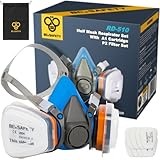
- Dual Protection for Organic Vapors & Dust :BEESAFETY half face respirator mask features a dual filtration system with A1 organic vapor filters and P2 particle filters, designed to help reduce exposure to paint fumes, solvent vapors, resin fumes and airborne particles such as dust and sanding debris. Ideal as a paint respirator mask, sanding respirator mask and dust respirator for multi-environment use
- Reusable Design with Replaceable Filters :Includes 2 A1 organic vapor filters and 8 P2 replacement filters, allowing continued use as a reusable respirator mask. Functions as a respirator mask with filters and replacement system. Replace filters when breathing becomes difficult or when odors are detected to maintain performance
- A1 Vapor & P2 Particle Filtration System :A1 filters help reduce exposure to organic vapors including paint, resin and chemical fumes, while P2 filters help capture at least 95% of airborne particles such as dust, wood particles and construction debris. Suitable as a respirator for painting, respirator for resin, sanding respirator and woodworking dust mask
- Comfortable Half Face Fit for Long Use :This reusable half face respirator mask is designed for extended wear with improved airflow and reduced breathing resistance. Adjustable head straps and a secure sealing structure help provide a stable and comfortable fit during painting, sanding, woodworking and workshop tasks
- Multi-Application for Work & DIY Projects :Works effectively as a paint respirator mask, sanding respirator, respirator for epoxy resin, respirator for chemical fumes and dust respirator mask. Suitable for painting, spray work, sanding, grinding, cleaning, construction and renovation environments where both vapors and dust may be present
Check fit, use conditions, and workplace requirements
Even a correctly selected respirator cannot provide its intended protection if it does not fit or is used outside its approval conditions. A tight-fitting facepiece needs a seal; facial hair or another condition that interferes with the seal can prevent it. Confirm that the configuration is compatible, that the job allows it to function as approved, and that the user can wear it properly.
For covered workplace use, OSHA’s respiratory-protection program requirements include medical evaluation, fit testing for tight-fitting respirators, and training. Those are employer program obligations under the applicable workplace rules, not a substitute for checking local requirements for a particular home project. OSHA’s general-industry standard, construction rules, and substance-specific standards may differ; the U.S. workplace framework summarized here does not establish the legal requirements in every location or for every homeowner.
Quick Recap
A practical selection sequence
- Define the task and materials. Record exactly what will be cut, sanded, sprayed, stripped, or removed, including any product names.
- Identify the contaminant and form. Determine whether airborne material is particulate, gas or vapor, or a mixture. Use product safety information for chemical products.
- Assess exposure and controls. Consider how much may be airborne and how the task is performed. Apply appropriate source controls and ventilation; do not use a respirator to avoid understanding the hazard.
- Select an approved configuration. Match the respirator type and compatible filter or cartridge to the substance, exposure, and required protection. Check NIOSH approval and manufacturer limits.
- Check the wearer and task. Confirm fit and the ability to use the respirator as approved. In covered workplaces, follow the required medical evaluation, fit testing, and training program.
- Stop if key facts remain unknown. Suspected asbestos, lead, unknown vapors, or potentially excessive exposure call for competent assessment rather than selection by guesswork. OSHA describes its respirator advisor as initial guidance; it does not guarantee compliance.
Product prices and availability are accurate as of the date/time indicated and are subject to change. Any price and availability information displayed on Amazon at the time of purchase will apply.
Recommended Free Tools

