The Tool Desk
Outbyte PC Repair FREEClear out junk files and repair common Windows errorsFree Scan →Outbyte Driver Updater FREEScan for outdated or missing drivers - takes under a minuteDriver Scan →Short answer: You usually cannot eliminate minute pirate bugs from an outdoor property, and ordinary insect repellents may not stop them. The most practical way to reduce bites is to cover exposed skin, work during cool or cloudy periods or after dark when it is safe, try darker clothing, and move away from flowering plants, weeds, crop edges, and other areas where the insects gather. These measures reduce encounters; they do not guarantee a bite-free season.
Before spraying a yard, house, or jobsite, confirm the insect. Minute pirate bugs are usually beneficial predators—not human parasites—and broad insecticide applications can kill them, pollinators, and other natural enemies without providing lasting control. University of Minnesota Extension and Iowa State University Extension both recommend exposure reduction rather than trying to eradicate them.
As an Amazon Associate I earn from qualifying purchases.
What are minute pirate bugs?
Minute pirate bug is a common name for several tiny predatory true bugs, especially species in the genus Orius. The insidious flower bug, Orius insidiosus, is a prominent species in the eastern United States, while Orius tristicolor is more common in western regions. A regional species-level identification may require an entomologist or diagnostic service. Cornell Biological Control and University of Florida IFAS provide species and distribution information.
They are predators found around flowers, weeds, crops, shrubs, and plant canopies. Their presence often means the site has a functioning food web, not that the pirate bugs themselves are damaging the plants. They eat many soft-bodied pests and their immature stages, including thrips, aphids, mites, whiteflies, insect eggs, and small caterpillars. When prey is scarce, they can also feed harmlessly on pollen and plant juices. UC Statewide Integrated Pest Management describes their role as natural enemies in gardens and agricultural landscapes.
#1 Best Overall
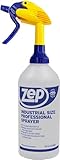
- High-Output Sprayer: Delivers more than three cubic centimeters per pull and streams of up to 30 feet
- Ergonomic Comfortable Trigger: Allows for three-finger spraying, reducing fatigue
- Adjustable Nozzle: Provides a range of sprays, from a fine mist to a direct stream
- Contains Graduated Measurements On Side: Makes accurate refilling simple
- Ready-To-Use: Quick identification with designated area for product labeling
How to identify a minute pirate bug
Minute pirate bugs are easy to confuse with other tiny arthropods, particularly when they are on clothing or skin. Do not identify one from a bite alone. Look for the insect itself, preferably in a clear photograph or an intact specimen.
| Stage | What it looks like | Where you may find it |
|---|---|---|
| Adult | About 2–3 millimeters long; oval and somewhat flattened; black, dark brown, or purplish; pale or white patches near the bases or tips of the wings; wings extend beyond the abdomen. | Flowers, weeds, corn, alfalfa, vegetables, shrubs, crop edges, and plant canopies. |
| Nymph | Wingless, teardrop- or pear-shaped, and yellow, orange, reddish, or brown. Nymphs can resemble aphids or bed bugs but usually move quickly. | On plants, often among thrips, aphids, mites, eggs, and other small prey. |
Adults are only about 2–3 mm long—roughly the size of a small speck—yet their piercing mouthparts can produce a surprisingly sharp sensation. The identification details above are summarized by Virginia Tech Extension, UF/IFAS, and Texas A&M AgriLife Extension.
Where are they most likely to be?
Check flowers, flowering weeds, dense vegetation, corn and alfalfa, vegetable crops, and plants hosting other small insects. A concentration of minute pirate bugs may indicate abundant prey or pollen. It does not necessarily mean the plants are infested by the pirate bugs.
In warm conditions, egg-to-adult development can take about three weeks, allowing several generations during a growing season. Adults overwinter in protected places such as leaf litter, bark, trees, and sometimes buildings. Activity generally declines in cold weather, but overwintering and movement from surrounding habitat are why a property cannot realistically be made permanently pirate-bug-free. UC IPM and North Carolina State Extension describe these life-cycle patterns.
Why do minute pirate bugs bite people?
Minute pirate bugs have piercing-sucking mouthparts designed to pierce small prey and suck out fluids. On people, extension entomologists describe the behavior as incidental probing or defense—not blood-feeding. The most defensible explanation is not that they deliberately hunt humans, but that a bug landing on, being trapped against, or being handled by a person may probe the skin.
Bites often become more noticeable late in the season when flowers dry up, crops are harvested, temperatures change, and normal prey becomes less available. Those conditions may increase encounters, but experts differ slightly in how much they emphasize food searching versus defensive probing. It is better to say that prey scarcity can contribute to the seasonal nuisance than to claim that every bite occurs because the bug is hungry. Minnesota Extension, Iowa State Extension, and South Dakota State University Extension discuss the behavior.
Rank #2

- REPELS MOSQUITOES: Repels mosquitoes, including those that may transmit the Zika, West Nile, Dengue and Chikungunya viruses.
- CONTAINS 98.11% DEET: Formulated for protection in severe insect conditions.
- PROTECTS FOR UP TO 10 HOURS: Provides long-lasting protection, so you don't have to limit your family’s adventure because of mosquitoes.
- ALSO REPELS TICKS, GNATS, BITING FLIES, CHIGGERS & FLEAS: Repel these annoying bugs that can spoil the outdoors.
- PUMP SPRAY: Perfect for outdoor travel – the compact size stores perfectly with whatever adventure gear you're taking that day.
The pain can seem out of proportion to the insect’s size. A typical bite is a localized nuisance and is not considered a disease-transmission concern by the extension sources reviewed here. That does not mean every reaction is identical: any bite can produce substantial swelling, an unusual allergic response, or a secondary skin infection.
Windows Errors? Fix Them Before They Spread
Repair common Windows errors and clear accumulated junk for a smoother, more stable PC - no reinstall needed.Free scan · no reinstallOutdated Drivers Are Slowing You Down
One free scan finds every outdated or missing driver and matches the right update for your exact hardware.Free scan · exact hardware matchWhen are minute pirate bug bites most likely?
In much of the temperate United States, complaints commonly increase in late summer and fall, especially on warm, sunny days. Crop harvest, drying flowers, changing weather, and declining prey can bring the insects into closer contact with people. The timing varies with region, weather, vegetation, crop cycles, and the year, so there is no dependable national date when the problem starts or ends.
Fall is not universal. In Florida, for example, O. insidiosus may be active from March through November in northern Florida and year-round in southern Florida. UF/IFAS provides that regional qualification.
The most effective ways to reduce bites
- Schedule work for cooler conditions. Choose cool, cloudy periods when practical. Avoid the warmest, sunniest part of the day if that is when bugs are landing on you. After-dark work can also reduce encounters, but only where lighting, visibility, heat management, and jobsite safety permit it. Minnesota Extension specifically recommends cool, cloudy conditions because minute pirate bugs are less active in cold conditions.
- Cover exposed skin. Wear long sleeves, long pants, socks, and closed shoes. Tuck clothing into socks or boots when working in dense vegetation, and wear a hat if insects are landing on your scalp or face. Physical barriers are generally more dependable than trying to find a chemical repellent that reliably affects Orius. The American Academy of Dermatology also recommends covering skin to reduce insect bites.
- Try darker clothing as a limited experiment. Iowa State, Kansas State, Rutgers, and Nebraska Extension materials report that light colors may attract minute pirate bugs and that darker clothing may reduce landings. This is a low-cost measure worth trying, but it is not a guarantee and has not been established here as a rigorously quantified field-control method. It is also insect-specific advice: light clothing is recommended in some general guidance for avoiding other pests, so do not treat dark clothing as a universal insect rule.
- Move away from concentrated habitat. Relocate outdoor seating, break areas, painting, harvesting, or gardening away from flowering shrubs and weeds, dense plant canopies, crop edges, and plants heavily populated by aphids, thrips, mites, or other small insects. The extension sources establish where minute pirate bugs feed; moving people away from those areas is a practical inference from that habitat information rather than a formally tested avoidance protocol.
- Remove bugs without crushing them against your skin. If one lands on you, brush it away rather than trapping it under a sleeve or pressing it into the skin. Check cuffs, collars, hats, and gloves after working around flowering vegetation.
A practical plan for construction and outdoor crews
For construction workers, landscapers, inspectors, and maintenance crews, the most useful approach is usually a scheduling and exposure-control change—not a pesticide application:
- Plan vegetation-adjacent work for a cooler or cloudy shift when the project schedule allows.
- Move break areas, portable seating, and staging locations away from flowering weeds, shrubs, and field edges.
- Use long sleeves, work pants, socks, boots, gloves where appropriate, and a hat. These may already be part of the site’s normal personal protective equipment.
- If testing darker clothing, change only the base layer or optional garments where permitted. Never remove or replace required high-visibility clothing, hard hats, protective footwear, or other safety equipment to follow a clothing-color suggestion.
- In hot weather, prioritize heat-illness prevention, hydration, visibility, and required PPE. A cooler shift is useful only if it can be performed safely.
- When activity is extreme, leave the concentrated area temporarily instead of spraying the entire site.
Do DEET, picaridin, citronella, or other repellents work?
Do not make DEET the centerpiece of a minute-pirate-bug plan. Minnesota and Iowa Extension report that commonly available insect repellents often have little or no effect on minute pirate bugs. At the same time, the evidence reviewed here does not establish a strong, modern, peer-reviewed field comparison of DEET, picaridin, oil of lemon eucalyptus, citronella, or permethrin specifically against biting Orius.
What’s actually slowing this PC down?
Pick the symptom - the matching free tool is one click away.
The accurate conclusion is therefore narrower than bug spray never works: extension guidance says ordinary repellents cannot be relied upon for minute pirate bugs, while not every product has been proved useless in every condition. A repellent that is appropriate for mosquitoes or ticks may still be useful for those pests, but it should not be treated as a dependable pirate-bug solution. Follow the product label for application, age restrictions, children, pets, clothing, and reapplication. Use treated clothing or permethrin products only as the label allows.
Rank #3
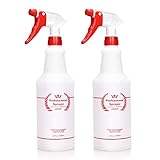
- CHEMICAL RESISTANT - Our 32 ounce (about 950 ml) heavy duty spray bottles are made from HDPE plastic, recycle code # 2, which is chemically resistant, safe for chemical solutions. On the side of each bottle is a checklist to stay organized and remain informed as to what the bottle contains. (Comes with labels to meet your need)
- UPGRADED SPRAY HEAD & LEAK PROOF - Our professional sprayer features a long lasting polypropylene spray head, tight and secure cap closure, internal cap gasket, 302 stainless steel spring and a precision valve and piston for a no clog and no leak experience; A proven and reliable no leak venting system primes quickly and stays primed.
- ADJUSTABLE NOZZLE - From a fine mist to a solid stream, the sprayer can be easily adjusted to suit your needs. Be prepared to tackle any job with a simple twist of the nozzle! Avoid waste with our extra-long tube that'll spray every last drop out!
- HOUSEHOLD-COMMERCIAL-INDUSTRIAL USES - Our plastic spray bottles is for multi purpose uses, each bottle is BPA-free, use them for food spraying, cleaning solutions around the house, pet, cat, lawn and garden, misting and watering plants, succulents, herbs, ironing, laundry, car cleaning, janitorial. Make your own homemade diy cleaner mister or just use with water to cool yourself.
- BETTER TRIGGER DESIGN - The unique design 3-finger trigger makes your fingers rest easily on it and the bottle fit comfortably in your hand, eliminating hand fatigue; The ergonomic neck gives you a comfortable grip; Pull trigger has a short effortless squeeze reducing finger fatigue.
Physical coverage, timing, and moving away from a hotspot are the better-supported first choices. If a worker needs repellent for mosquitoes or ticks as well, use an appropriate labeled product for those established uses rather than increasing applications in the hope of controlling minute pirate bugs.
Should you spray the yard, jobsite, or house?
Usually, no. Outdoor sprays and foggers are impractical for minute pirate bugs because the insects are mobile, arrive from surrounding vegetation, and occupy many habitats. A treatment may kill exposed insects temporarily while leaving the source population and future generations untouched.
Broad-spectrum insecticides also work against the garden’s natural pest-control system. They can kill minute pirate bugs along with pollinators and other beneficial predators that help control thrips, aphids, mites, whiteflies, insect eggs, and other plant pests. If the goal is to protect a garden, leaving the pirate bugs alone is generally the better trade-off.
Use a pesticide only when all of the following apply:
- The insect or separate pest has been positively identified.
- There is a legitimate plant or structural pest problem that warrants treatment.
- The product label specifically permits that use and location.
- The applicator follows the label and applicable local requirements.
Do not spray an unidentified indoor biting problem, and do not repeatedly fog a house because small insects are appearing on screens. The Illinois Department of Public Health advises confirming the pest before using pesticides and warns that indiscriminate indoor pesticide use can be harmful.
What if the bugs are inside the house?
A minute pirate bug may occasionally reach a building, screen, window, or wall, but it is more typically associated with outdoor plants than with a persistent indoor infestation. If people are being bitten indoors, treat the identification as unconfirmed. Do not assume that a tiny dark insect—or a bite with no visible insect—is a minute pirate bug.
Rank #4

- Fragrance-Free Comfort – Experience the benefits of fragrance-free picaridin bug spray – Clean Feel insect repellent feels good on skin, leaving your skin feeling natural and non-sticky, so you can enjoy nature without heavy residue – and won’t stain or discolor your clothing.
- Up to 8 Hours of Protection – Say goodbye to pesky insects! This long-lasting mosquito spray provides up to 8 hours of robust protection against mosquitoes when used as directed. Savor your outdoor adventures without worrying about bugs.
- Camping, Hiking, Fishing? We’ve Got You Covered – Enjoy the great outdoors without the nuisance of mosquitoes, ticks, or biting flies. Our spritz spray is proven effective when used as directed, keeping you protected while you explore. Make this picaridin insect repellent part of your travel essentials and camping essentials.
- Easy Application – Make outdoor protection simple with our spritz spray. It allows for application with a light spritz, so you can spend less time prepping and more time enjoying the outdoors. With this powerful spritz in hand, you’re ready for any outdoor adventure!
- Picaridin Formula – Our innovative formula features 20% picaridin, offering an effective defense against mosquitoes when used as directed. Picaridin is a DEET-free* insect repellent that applies smoothly, dries quickly, and leaves no oily residue. *DEET-free should not be viewed as a statement on the safety of this product relative to any product containing DEET.
Take these steps:
- Capture an intact specimen. Use a small container, clear tape, sticky trap, or an alcohol collection vial. Tape can damage a tiny insect, so do not fold or crush the specimen if possible.
- Photograph it before disposal. Put a ruler or coin beside the insect for scale, and take the clearest image possible without crushing it.
- Record the location. Note whether it was on a window screen, flower, crop, wall, bed linen, furniture, or skin. Habitat is important to identification.
- Submit the evidence. Contact a local Cooperative Extension office, university diagnostic clinic, or qualified pest professional if the issue continues.
- Reduce entry points. Repair window screens, replace damaged door weather-stripping, and seal exterior cracks and gaps.
Other tiny arthropods—including thrips, biting midges, fungus gnats, psocids, mites, and other plant or structural pests—can be mistaken for pirate bugs or can produce a different nuisance. The University of Maryland Extension’s indoor identification guidance and the Illinois Department of Public Health collection guidance both support an identification-first approach.
Do these 3 things before closing this tab:
1Clear out junk files and repair common Windows errors2Fix the driver behind crashes, sound loss and screen glitches3Repair Windows errors before they cause bigger problemsMinute pirate bugs versus no-see-ums, thrips, and bed bugs
Names such as no-see-um are often used loosely, but they do not all describe the same insect. Appearance and habitat are more useful than the bite pattern, because skin reactions overlap and cannot reliably identify the culprit.
| Possibility | Useful clues |
|---|---|
| Minute pirate bug | Usually an outdoor, fast-moving true bug. Adults are dark, oval, winged, and often have pale or white wing markings; nymphs are wingless and yellow-orange to brown. It is a predator and does not feed on blood. |
| No-see-um | Usually refers to a biting midge, a tiny fly in the family Ceratopogonidae—not an Orius pirate bug. See the CDC’s midge overview. |
| Thrips | Small, narrow plant-feeding insects commonly found on flowers and foliage. Pale insects on plants should not automatically be called pirate-bug nymphs. |
| Bed bug | An indoor, wingless blood-feeding insect. A bed, mattress, or bedroom report requires separate confirmation; a minute pirate bug should not be presumed to be a bed bug from bites alone. |
If you see only tiny pale insects, do not automatically identify them as pirate-bug nymphs. A clear specimen or photograph is much more useful than trying to diagnose the insect from an itchy spot.
Independent reader supportYour contribution helps us test, update, and keep practical guides available for everyone.How to treat a minute pirate bug bite
Most suspected minute pirate bug bites need no special treatment beyond ordinary care for a minor insect bite:
- Wash the area with soap and water.
- Apply a wrapped cold pack to reduce discomfort and swelling.
- Use an over-the-counter anti-itch treatment such as hydrocortisone if it is appropriate for you and the product label permits it.
- An oral antihistamine may help itching when appropriate.
- Use an over-the-counter pain reliever according to its label if needed and safe for you.
- Avoid scratching, and monitor the area for worsening redness, warmth, swelling, drainage, or pain.
Get urgent medical help for trouble breathing, throat tightness, difficulty swallowing, faintness, or swelling of the face or mouth. Seek medical advice for a severe, worsening, infected-looking, or persistent reaction. Children, people with significant allergies, and anyone with relevant medical conditions should follow advice from a clinician and the medication label rather than assuming a bite is routine. See American Academy of Dermatology guidance and MedlinePlus first-aid and emergency guidance.
Recommended Free Tools
Should you buy and release minute pirate bugs?
No—not as a bite-control strategy. Minute pirate bugs can be released successfully in some greenhouse biological-control programs, but release programs are generally not practical outdoors. Outdoor populations already move among plants and surrounding habitat, and adding more will not make people less likely to encounter them. UC IPM and Minnesota Extension describe the distinction between controlled greenhouse use and outdoor conditions.
Best Value

- The spray bottles are made from high-quality plastic that is durable and long-lasting. The design is sleek and functional, with a comfortable grip that makes them easy to handle.The BPA-free plastic means bottles are durable.
- The 10oz/300ml capacity is just right for your needs. They hold a good amount of liquid without being too bulky or heavy. The size is perfect for both home and travel use.The bottles are light enough to use comfortably, even when completely filled. This makes them easy to handle without causing any strain, which is important for frequent use.
- They spray beautifully and have several spray settings including mist, stream and completely off. Easy to squeeze.The mist is reasonably fine and the stream is straight and strong.This versatility is perfect for different applications.
- The bottle and sprayer seal is very good and the sprayer action itself is very solid without a lot of slop in the handle. There are gaskets inside the cap to prevent spills.No leaks, the hose goes clear to the bottom which is really nice.They are functional right down to the last ounce of spray.
- if the Product doesn't spray well, Pull out the tube and carefully reinsert it into the innermost part of the nozzle. Then pump the trigger handle for a long time (about 40 pumps) until the nozzle is working again. Use these spray bottles for a variety of purposes around the house. They are great for cleaning solutions, watering plants, grooming pets, and even for culinary uses in the kitchen. Their versatility makes them a valuable addition to your household supplies.
What to do if the problem continues
Use this decision path:
- Bugs are outdoors around plants: Leave them in place if possible. Change work timing, cover skin, try darker clothing, and move activity away from flowering vegetation or crop edges.
- Bugs are outdoors but entering through screens: Repair screens, door seals, and gaps. Do not assume a whole-house spray is warranted.
- People are bitten indoors and no specimen has been confirmed: Capture evidence and contact Extension or a qualified pest professional. Consider other insects—or a non-insect skin cause—before treating.
- A separate plant pest is damaging the garden: Identify that pest and use integrated pest-management steps. Only use a labeled pesticide when justified, and recognize that broad-spectrum treatment may remove beneficial pirate bugs.
- Exposure is extreme at a worksite: Temporarily relocate the task or break area, or change the shift if safe and practical. Do not compromise required construction PPE for a clothing-color experiment.
Frequently asked questions
Frequently Asked Questions
Can minute pirate bugs live in my bed or mattress?
A persistent bed or bedroom biting problem should not be attributed to minute pirate bugs without identifying an insect. Minute pirate bugs are usually outdoor predators associated with plants, although an individual may enter a building. Capture a specimen, repair screens and door seals, and seek diagnostic help before using bed-bug treatment or indoor pesticides.
Will cold weather permanently get rid of minute pirate bugs?
Cold weather usually reduces their activity, but adults can overwinter in protected places such as leaf litter, bark, trees, and buildings. Because they also have multiple generations and can arrive from surrounding habitat, ordinary homeowner treatment cannot make an outdoor property permanently pirate-bug-free.
Are minute pirate bugs dangerous?
Their bites are generally temporary nuisances and extension sources describe them as not being a disease-transmission concern. Individual reactions can still vary. Seek urgent care for breathing difficulty, throat tightness, faintness, or facial or mouth swelling, and obtain medical advice for a severe, worsening, infected-looking, or persistent reaction.
Quick wins for a faster PC:
Repair Windows errors before they cause bigger problemsFix Now →Scan for outdated or missing drivers - takes under a minuteDriver Scan →Should I wear dark clothes for every biting insect?
No. Several Extension sources report that darker clothing may reduce minute pirate bug landings, but this is not guaranteed and is specific to this insect. General advice for other pests may favor light-colored clothing. On construction sites, required high-visibility clothing and other PPE always take priority.
Does finding minute pirate bugs mean my plants are infested?
Not necessarily. They may be present because flowers and pollen are available or because the plants support prey such as thrips, aphids, mites, or whiteflies. They are themselves beneficial predators, so inspect the plants before deciding that any treatment is needed.
The Bottom Line
Bottom line: Avoid contact rather than trying to eradicate minute pirate bugs. Confirm the insect, schedule outdoor work for cooler or cloudy periods when practical, cover exposed skin, try darker clothing without compromising required PPE, and move away from flowering vegetation and crop edges. Do not rely on DEET or broad yard sprays as a guaranteed solution, and preserve these beneficial predators whenever you can.
Quick Recap
Product prices and availability are accurate as of the date/time indicated and are subject to change. Any price and availability information displayed on Amazon at the time of purchase will apply.

