Assess an anganwadi centre by walking the complete child-use journey: the approach and entrance, indoor activity room, toilet and handwashing point, drinking-water station, kitchen and storage, and outdoor play area. Record what you can see, who could be exposed, and what action is needed. Treat a visual walkthrough as a practical risk assessment, not as an engineering certificate or proof of code compliance. Suspected structural, electrical or fire-safety problems require prompt review by the responsible building authority or a competent technical official.
What this walkthrough is—and is not
A useful assessment answers three questions at every part of the centre: Can children reach and use this area safely? Is the facility functioning during operating hours? If something is wrong, who must act and how quickly?
As an Amazon Associate I earn from qualifying purchases.
The walkthrough can identify visible hazards, failures of routine sanitation, access barriers and arrangements that expose children to cooking, traffic or unauthorized entry. It cannot establish structural stability, electrical integrity, fire-code compliance, water potability or legal conformity by appearance alone. The National Building Code of India 2016 is a model code covering areas including structural design, fire and life safety, building services, water supply and sanitation; compliance decisions belong to the applicable authority and qualified professionals.
The Tool Desk
Outbyte Driver Updater FREEFix the driver behind crashes, sound loss and screen glitchesFind Drivers →Outbyte PC Repair FREEClear out junk files and repair common Windows errorsFree Scan →When you see a condition that could affect stability, electrical safety or escape in a fire, keep children away from the affected area as far as practicable, inform the person responsible for the building, and request technical inspection. Do not reassure families that a building is structurally safe simply because no major crack is visible.
#1 Best Overall
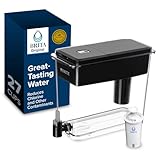
- WATER DISPENSER: One BPA-free, large 27-cup Brita UltraMax Filtered Water Dispenser includes one Standard filter to help remove impurities from your tap water
- CUTS OUT IMPURITIES: Brita water purifier dispenser cuts the taste and odor of chlorine and also reduces copper, mercury and other impurities
- SUSTAINABLE: By switching to a Brita water filter system, you can save money and replace up to 1,800 single-use plastic water bottles a year
- FRIDGE-FRIENDLY: Space-efficient Brita water dispenser is fridge-friendly, and it features an easy-locking lid and precision-pour spigot
- REPLACEMENT INDICATOR: Sticker filter indicator lets you know when it is time to change your Brita filter
Prepare before entering the centre
Bring the right people and records
- Include the Anganwadi worker or supervisor, a caregiver who understands how young children actually use the space, and the person responsible for maintenance. Invite a local engineering or building official when a technical concern is already known.
- Take a dated notebook or digital form, measuring tape if permitted, torch, phone or camera, and a way to mark the location of each finding. Use photographs only when appropriate and avoid identifying children.
- Carry the centre’s opening hours, occupancy information, maintenance contacts, water-supply details and any previous repair requests. These records help distinguish a one-off spill from a recurring failure.
Use a simple urgency scale
| Rating | Typical finding | Immediate response |
|---|---|---|
| Immediate exposure | Loose ceiling material, exposed live-looking wiring, an unstable fixture, accessible hot fuel or a route that opens directly to a dangerous road | Keep children away or stop the affected activity; notify the responsible authority promptly. |
| Technical review | Significant or growing-looking cracks, water entering electrical areas, damaged stairs, blocked escape routes or suspected fire-safety deficiencies | Request inspection by the competent technical or building authority; do not diagnose the cause yourself. |
| Repair or sanitation action | Non-working tap, no soap, leaking roof, broken latch, poor drainage, inadequate cleaning supplies or unsafe storage | Assign an owner and completion date; monitor until the facility is usable. |
| Improvement | Better shade, clearer zoning, additional play or learning space, improved signage or accessibility features | Add to the centre’s improvement plan and check funding and local design requirements. |
Keep “present” separate from “working and child-usable.” A toilet, purifier, ramp or gate should not be marked satisfactory merely because the fixture exists.
Walk the child-use journey in order
1. Approach, boundary, gate and exits
Start outside the property and follow the route a child takes from the public approach to the activity room. Record each condition at its exact location.
- Look for steps, sudden level changes, slippery or broken paving, loose stones, protruding metal, sharp edges and obstructions.
- Check for standing water, waterlogging, open or exposed drains, mud and surfaces that become hazardous during rain.
- Identify nearby roads, vehicle movement, construction or work areas, animals and other hazards that a child could enter from the centre boundary.
- Inspect gates and doors for damage, pinch points, broken hinges and latches that children can defeat. Ask how staff supervise arrival, departure and visitors.
- Check whether an unauthorized person can enter the children’s activity area without being noticed and whether children can leave unnoticed.
- Assess whether a child using a mobility aid can get from the approach to the entrance. A ramp is useful only when it connects a continuous, unobstructed route and can be supervised.
Kerala State Disaster Management Authority guidance for child-friendly spaces calls for accessibility and barricading to restrict unauthorized access. NITI Aayog’s 2025 case study also describes safe entry and exit points as a child-friendly improvement. These references support questions for your walkthrough; they do not prescribe one national gate or ramp design.
Windows Errors? Fix Them Before They Spread
Repair common Windows errors and clear accumulated junk for a smoother, more stable PC - no reinstall needed.Free scan · no reinstallCrashes, No Sound, or Screen Glitches?
Random freezes, missing sound and display glitches usually trace back to one bad driver. Find and replace yours safely.Free scan · under a minute2. Visible building condition and technical escalation
Walk around the outside and inside before children occupy the area if possible. Note visible cracks, damp patches, water ingress, loose plaster, sagging or damaged ceiling material, broken steps, leaning or unstable-looking fixtures, damaged railings and any exposed or damaged wiring. Record the room, wall or element, date and photograph reference.
Do not infer the cause or severity of a crack from a photograph. A technical official must assess whether distress affects load-bearing elements, foundations, connections or the building’s ability to resist local hazards. The 2016 joint guideline for Anganwadi Centre construction assigns estimates and technical sanction to technical officials and refers to design suited to the relevant seismic zone. If a defect appears to threaten stability, isolate the area and seek that review rather than applying cosmetic filler.
Check that electrical points, switches, extension leads and distribution equipment are protected from children, moisture and tampering. A visual check cannot verify earthing, overload protection or live conductors; report suspected faults to a qualified electrician or the responsible authority.
Rank #2

- The BPA-free Everyday water pitcher with filter holds 10 cups of water, enough to fill 3 24-ounce reusable water bottles; Product reservoir and lid may vary
- Get great-tasting water without the waste; by switching to Brita, you can save money and replace 1,800 single-use plastic water bottles* a year; *16.9 oz water;**Based on IRI data;***vs. tap
- This space efficient Brita pitcher fits perfectly on refrigerator shelves, features an easy-fill locking lid and is easy to pour; Height 10.47"; Width 5.59"; Length/Depth 10.94"; Weight 2.29 pounds
- Brita is the #1 water filter** reducing chlorine (taste & odor), Mercury, Copper, Zinc and Cadmium; always get cleaner***
- Compatible with Longlast and Standard water filters; for the freshest tasting water, replace your Longlast filter after 120 gallons or approximately every 6 months or Standard filter after 40 gallons or approximately every 2 months
3. Indoor activity, learning, rest and movement
Stand where children sit and observe how the room works at its busiest. There should be enough uncluttered usable area for the enrolled group and their ages, with room for learning, active play, quieter activity and rest. Furniture should be stable, sized or positioned so children do not need to climb over it, and arranged so staff can see the whole room.
Do these 3 things before closing this tab:
1Clear out junk files and repair common Windows errors2Scan for outdated or missing drivers - takes under a minute3Repair Windows errors before they cause bigger problems- Check daylight and artificial light at floor and work-surface level. Identify dark corners, glare or lamps that children can reach.
- Check ventilation, heat, smoke, dampness, mould-like growth and stale air. Note whether windows can be opened safely and whether outside pollution or cooking smoke enters.
- Keep a clear path between the entrance, activity areas and toilet. Children should not have to cross the kitchen or pass hot equipment to reach basic facilities.
- Look above children’s heads for loose fans, fittings, shelves or stored items. Secure or remove anything that could fall.
- Make sure bags, learning materials and cleaning products are stored so they do not narrow circulation or create a climbing route.
The 2016 joint construction guidance describes a separate sitting space, indoor and outdoor play, kitchen, store, child-friendly toilets and safe drinking water. Use that as a planning reference, while applying the dimensions and requirements in force in your State or Union Territory.
4. Toilet, handwashing and daily hygiene
Test the toilet during normal centre hours, not only during an empty-building inspection. Ask a staff member to demonstrate the sequence a young child would follow, while protecting the child’s privacy.
- Is the toilet unlocked and reachable when children need it? Can a child enter, use it and leave without crossing a hazard?
- Does the pan or seat suit young children, and is there a safe option for a child with a disability or one who needs assistance?
- Is water available at the point of use, with a child-reachable tap or basin that can be operated without climbing?
- Is soap present, and is the floor non-slippery, drained and free of standing wastewater?
- Are privacy, ventilation, lighting and door hardware adequate without creating a lock-in risk?
- Are cleaning tools and supplies available, labelled or stored away from children, with a routine showing who cleans and who checks?
- Is waste placed in a usable bin and removed often enough that it does not attract insects or create odour?
The Palna Anganwadi-cum-Crèche Standard Operating Procedure calls for child-friendly toilets, including provision for children with special needs, water, soap, a low-level basin or sink, low-level tap use, a garbage bin and an exhaust fan. It also calls for regular cleaning materials and supervision. Assess whether children can actually use the facilities, rather than awarding a pass for a toilet structure that is locked, dry, dirty or unreachable.
5. Drinking water and treatment upkeep
Trace water from source to a child’s cup. Ask where it comes from, whether supply is reliable for the entire operating period, how it is stored, how cups are cleaned, and who checks the point each day.
Recommended Free Tools
- Inspect containers for lids, cleanliness, damage and a hygienic serving method. Prevent hands or shared vessels from contaminating stored water.
- Check whether the tap, dispenser or filter is reachable without a stool and whether spills are drained instead of forming a slippery patch.
- Where a purifier or filter is installed, record its type, power or water connection, cleaning schedule, consumables and last maintenance date.
- Ask what happens when the supply fails. A centre needs a safe contingency rather than an empty tank or an unlabelled container.
Palna guidance names a water filter or purifier, and current Saksham Anganwadi information also names water-filtration systems. Those references support providing and maintaining suitable treatment equipment, but a product alone does not prove that water is safe. Source-water quality and treatment needs vary; follow local public-health or water-testing advice when the source is uncertain.
Rank #3

- [Replacement filters] Need filters for PT-07? Search for PF-01A or ASIN B086ZPR3WM on Amazon. Choose genuine Waterdrop filters for a precise fit and reliable performance. Please confirm your model before ordering
- [NSF certified filtration performance] The Waterdrop Lucid filtered water pitcher with lid has passed NSF/ANSI 42 and 372 certifications. Tested by a third-party lab, it helps reduce PFOA/PFOS, odor, iron, mercury, copper, and other metal ions. Note: This system DOES NOT lower TDS value. If you prefer a low TDS value, please choose the Waterdrop TDS Reduction Pitcher by searching PT-13W on Amazon
- [Quality daily water choice] The Waterdrop Lucid water filter pitcher with lid is designed for efficient daily filtration, making it a practical choice for apartments, kitchens, living rooms, dorms, and offices. It helps provide better-tasting drinking water for everyday use
- [Exceptional quality] This pitcher features a hands-free lid for automatic water dispensing without opening the lid, helping prevent dust accumulation for convenient and hygienic use. Its compact body is designed to fit most refrigerators. Product dimensions: 10" x 5" x 10.1"; please verify your fridge dimensions before ordering
- [5x longer lifespan & indicator] The filtered water pitcher has a filter lifespan of up to 200 gallons or 3 months, helping support longer daily use with efficient water flow. The LED indicator lets you check the filter usage status and reminds you when it is time to replace the filter
6. Kitchen, food preparation and storage
Observe the kitchen while it is operating if possible. The Ministry of Women and Child Development’s Palna procedure states: “The cooking area must be located at the place which is away from the activity area of the children to avoid accidents.”
- Confirm that cooking and feeding areas are separated from children’s activity space by distance, a barrier or controlled access. Children should not pass hot pots, burners or fuel to reach the toilet or play area.
- Check that hot surfaces, cylinders, fuel, matches and electrical cooking equipment are inaccessible to children and cannot be knocked over.
- Look for adequate ventilation and whether smoke or heat enters the activity room. Record soot, persistent odour or a damaged flue for correction.
- Inspect shelves and cupboards for stable storage of food, utensils and cleaning chemicals. Chemicals and fuels must not share an open shelf with food or cups.
- Check that cooking and feeding utensils can be washed, dried and stored hygienically. Do not accept visibly dirty equipment because a sink exists.
- Trace waste removal so children do not need to enter the kitchen or pass an uncovered bin.
Fuel, electrical installation and fire arrangements must be checked against applicable local requirements. A walkthrough can identify exposure and poor separation; it cannot certify a gas installation, wiring system or fire escape.
7. Outdoor play, quiet space and transitions
Inspect the entire outdoor area children are expected to use, including the path back inside.
Quick wins for a faster PC:
Fix the driver behind crashes, sound loss and screen glitchesFind Drivers →Repair Windows errors before they cause bigger problemsFix Now →- Check that the surface is reasonably even, free of sharp debris, open drains, stagnant water, glass and animal waste.
- Look at play equipment, posts, fasteners, edges and anchoring for visible damage, looseness, corrosion or entrapment points. Remove access to damaged equipment until it is repaired.
- Confirm that adults can see the whole play area and that children cannot reach a road, water body, construction zone or storage area.
- Provide usable shade or a plan for limiting outdoor activity during excessive heat or rain. Note whether outdoor space is large enough for the expected group and different activities.
- Check the route for children with mobility, sensory or communication needs. A play area is not inclusive if the only route has steps or loose ground.
Kerala’s child-friendly-space guidance calls for enough space for expected children and different activities, including play and quiet areas. The joint construction guidance also mentions play space and a kitchen garden. Apply local site, equipment and supervision requirements rather than treating either reference as a universal playground code.
Child-friendly and inclusive use: test the experience, not the inventory
After checking each facility, follow several realistic scenarios: a child arriving in rain, a child needing the toilet urgently, a child washing hands, a child with limited mobility entering the room, and a group moving outside while food is being prepared. Record where an adult must lift, carry, unlock, redirect or physically block a child. Frequent workarounds indicate a design or management problem even when every listed fixture is present.
- Reach: taps, soap, drinking water, storage and learning materials should be reachable by children or safely assisted without climbing.
- Visibility: staff should be able to supervise entrances, toilets approaches, kitchen boundaries and outdoor play without blind corners.
- Choice: the room should permit energetic play, quiet activity and rest without forcing every child into the same congested zone.
- Dignity: toilet privacy, assistance for children with disabilities and protection from public view must be planned together.
- Predictability: gates, doors and routines should prevent sudden unsupervised exits while allowing quick evacuation by staff.
How to record findings so someone can act
Use one entry for each condition rather than a general comment such as “building unsafe.” A useful record contains:
Rank #4

- Hassle-Free Design: This 30-cup PUR filtered water dispenser has a space-saving design that fits in your refrigerator, a pull-down spout for easy pouring, and a carrying handle for refilling. It is also dishwasher safe for easy cleaning
- Long-Lasting Filter: Includes one Genuine PUR filter certified for up to 40 gallons or 2 months of regular use, with faster filtration than a PUR Plus Pitcher Filter
- Cleaner Water For Less: This PUR water filter dispenser gives you better-tasting filtered water from your tap while helping reduce reliance on bottled water and single-use plastic waste
- Powerful 2-in-1 Drinking Water Filter for Better-Tasting Water: This water filter system is IAPMO certified to reduce chlorine, mercury, copper, and zinc, which can cause bad taste and odor in your drinking water
- Compatible Does Not Mean Comparable: Genuine PUR water dispenser replacement filters are certified to reduce 15 chemical and physical substances from tap water and are the only filters certified for use with the PUR 30-Cup water filtration system
| Field | What to write |
|---|---|
| Location | For example, “north wall beside the toilet door” or “water point outside the activity room.” |
| Observation | Describe what is visible or what failed during the demonstration; avoid guessing the cause. |
| Exposure | Who could be affected, how children reach the area and when the exposure occurs. |
| Evidence | Date, photograph reference, measurement if taken, and the staff member’s operating information. |
| Urgency | Immediate exposure, technical review, repair or sanitation action, or improvement. |
| Responsible person or office | Name the centre supervisor, local body, department or technical authority that can act. |
| Interim control | For example, close a room, move an activity, isolate a fixture or provide supervised alternative access. |
| Due date and follow-up | Record the agreed completion date and check whether the result is actually child-usable. |
Separate urgent hazards from routine maintenance and capital improvements. Photograph conditions when that will help a repair decision, but do not publish children’s faces, names or personal information in a public report.
Dimensions, programme figures and their limits
The figures below come from documents with different purposes and dates. Carry the stated scope with each number; none should be turned into a universal pass-or-fail rule for every anganwadi.
| Reference | Figure or requirement | How to use it |
|---|---|---|
| Palna Anganwadi-cum-Crèche SOP, Ministry of Women and Child Development, undated document reviewed | Preferably 6–8 sq. ft. per child and 150–200 sq. ft. total for a rented crèche | Planning guidance for the crèche or rental context, not a universal Anganwadi Centre minimum. |
| Palna SOP, ideal-centre description | Kitchen 25% and toilet 5% of covered area; windows one-fifth of floor area; combined doors and windows two-fifths of floor area | Context-specific ideal-centre description. Check current State or local requirements before applying it to an existing centre or new design. |
| Government of India joint guideline for AWC construction under MGNREGS in convergence with ICDS, 17 February 2016 | At least 600 sq. ft. built-up area on a 1,500–2,000 sq. ft. site | Older construction-program guidance. Confirm later State or Union Territory instructions and local approvals. |
| National Building Code of India 2016, Bureau of Indian Standards | Model-code coverage includes structural design, fire and life safety, building services, water and sanitation | Use the applicable adopted provisions and obtain qualified technical review; it is not a visual checklist. |
| NITI Aayog, Stories of Change: Aspirational Districts and Blocks, 2025 | More than 60% of AWCs lacked proper child-suitable toilets in the specific block case study described | Do not present this as a current national prevalence estimate. |
| Press Information Bureau and Ministry of Women and Child Development, 4 February 2026 | Programme funding norms of ₹17,000 for drinking-water facilities and ₹36,000 for toilets | These are scheme funding norms, not a cost estimate for repairing or constructing an individual centre. Scheme implementation is by State and Union Territory administrations. |
Programme information released in February 2026 also describes Saksham Anganwadi improvements such as water-filtration systems, early-childhood-care-and-education materials, LED screens, Poshan Vatika and BALA paintings. Such features do not replace the basic checks for safe movement, sanitation, supervision and kitchen separation.
When several centres are being reviewed
Use the same observation prompts and wording at every location so that comparisons are fair. A centre with a newer building should not automatically score better if its toilet is locked or its water point is non-functional.
| Comparison axis | Record consistently |
|---|---|
| Immediate hazard exposure | Visible structural, electrical, fire, traffic, fall, hot-surface and sharp-edge risks; interim control in place. |
| Route and accessibility | Approach condition, level changes, ramp continuity, doorway access and barriers for children with disabilities. |
| Entry and exit supervision | Gate condition, line of sight, visitor control and whether children can leave unnoticed. |
| Toilet and handwashing | Open during hours, water, soap, child usability, privacy, drainage, cleaning routine and assisted access. |
| Water | Source reliability, storage, serving method, treatment equipment, maintenance and contingency supply. |
| Kitchen | Distance or barrier from activity space, hot-equipment control, smoke, storage, utensil cleaning and waste route. |
| Indoor environment | Usable area, light, ventilation, heat, dampness, furniture stability and clear circulation. |
| Outdoor use | Surface, equipment condition, shade, supervision, boundary and safe transition indoors. |
| Follow-through | Named responsible authority, interim measure, repair status and date of recheck. |
Report statutory or technical compliance separately from observational results. “No defect seen during the visit” is not the same as “complies with the building code.”
Free tools Windows power users keep installed
One-click scans. No signup required.
Common findings and the correct response
A toilet exists but children cannot use it
Typical causes include a locked door, no water, no soap, a slippery floor, an adult-height tap or a cleaning routine that leaves the room closed. Record the failed use sequence and assign sanitation and supervision actions. If the fixture itself is unsuitable, request an improvement plan rather than counting the structure as complete.
Best Value

- Removes Bacteria & Parasites: The Microfiltration Membrane Removes 99.999999% of Waterborne Bacteria (Including E. Coli and Salmonella), and 99.999% of Waterborne Parasites (Including Giardia and Cryptosporidium) - Essential for Your Survival Kit
- Removes Microplastics: Removes the Smallest Microplastics Found in the Environment (Down to 1 Micron), and Reduces Turbidity Down to 0.2 Microns - Ideal for Hiking and Camping Essentials
- Rigorous Testing: All Claims Are Verified with Laboratories Using Standard Testing Protocols Set by the US EPA, NSF, ASTM for Water Purifiers
- Long Lifetime: The Microbiological Purification System Will Provide 4,000 Liters (1,000 Gallons) of Clean and Safe Drinking Water - a Must-Have for Your Bug Out Bag
- Make an Impact: For Every LifeStraw Product Purchased, a School Child in Need Receives Safe Drinking Water for an Entire School Year. Essential Camping Accessory Made With BPA Free Materials
A filter or purifier is installed but water service is unreliable
Check supply, storage, power or pressure, cleaning and replacement parts. Mark the treatment point as non-functional if children cannot obtain maintained water during operating hours. Obtain local advice on source-water testing and the treatment method instead of buying equipment solely by name.
The kitchen is in the same room as children
Move children’s activities or cooking temporarily if hot equipment is accessible. Then seek a durable layout, barrier or relocation that keeps preparation away from the activity area, with local fire and electrical review where relevant.
A ramp is present but the route is blocked
Assess the complete route, including the gate, threshold, toilet and outdoor area. Remove storage and obstructions immediately; request design correction if the slope, width, surface or landing prevents safe use.
A crack or damp patch is dismissed as cosmetic
Record its position, extent and date, including whether water is entering. Keep children away if material is loose or the element appears unstable, and request technical inspection. Do not certify or conceal the defect with paint.
A centre has attractive additions but lacks basic supervision
LED screens, paintings, gardens or new learning materials cannot compensate for an uncontrolled gate, inaccessible toilet or unsafe cooking arrangement. Rate immediate exposure and child usability first, then list enhancements.
Escalation and follow-up
- Tell the Anganwadi worker or supervisor what you observed before leaving, using the exact location and exposure rather than a broad label.
- Apply an interim control for immediate hazards: stop the activity, close the affected area, move children or provide direct supervision.
- Notify the building owner, local body, department or other responsible office. For structural, electrical or fire concerns, request competent technical review.
- Enter the action, responsible person and target date in the centre’s maintenance or inspection record. The reviewed guidance supports State and Union Territory implementation, routine hygiene supervision and maintenance, but it does not establish one national inspection form or schedule.
- Revisit or obtain evidence of completion. Test the facility with the child-use sequence again; a repaired tap, toilet or gate is complete only when it works safely during normal hours.
Final decision for the centre
Keep the centre in normal use only when children can enter and leave under supervision, move through stable and unobstructed spaces, access a functioning toilet and handwashing point, obtain maintained drinking water, and remain separated from hot cooking and other immediate hazards. Escalate any suspected structural, electrical or fire-safety problem for technical determination. A disciplined record of visible conditions, exposure, ownership and follow-up gives caregivers and local officials a defensible basis for safer repairs without pretending that a walkthrough is a professional certification.
Quick Recap
Product prices and availability are accurate as of the date/time indicated and are subject to change. Any price and availability information displayed on Amazon at the time of purchase will apply.
What’s actually slowing this PC down?
Pick the symptom - the matching free tool is one click away.

