Crashes, No Sound, or Screen Glitches?
Random freezes, missing sound and display glitches usually trace back to one bad driver. Find and replace yours safely.Free scan · under a minutePC Slower Than It Used to Be?
A free scan shows the junk files, broken settings and background clutter dragging Windows down - then fixes them in one click.Free scan · Windows 10 & 11Most shower valves do not have a simple flow-adjustment screw. The temperature-limit stop controls how far the handle can move toward hot water, not the overall water volume. To restore weak flow, first determine whether the restriction is at the showerhead, the valve, or the home’s supply. Clean the showerhead and its screen or restrictor, verify accessible hot and cold stops are fully open, and test the shower with the head removed if the manufacturer permits it. Only then should you investigate a model-specific cartridge or pressure-balancing unit. Shut off water before removing trim or internal parts; call a licensed plumber if the model, shutoff, pressure problem, leakage, or repair procedure is uncertain.
What a shower valve can—and cannot—adjust
A shower valve mixes hot and cold water and, in many installations, limits sudden temperature changes when pressure on one supply changes. It is not normally a general-purpose flow controller. Turning a temperature-limit stop changes the maximum hot-water position allowed by the handle. Gerber’s temperature-limit instructions describe that adjustment as a way to change permitted hot water and begin the applicable service procedure with the water turned off. It does not remove a clogged screen, open a closed supply stop, or increase the capacity of a restricted pipe.
As an Amazon Associate I earn from qualifying purchases.
Weak flow is therefore a diagnosis problem before it is an adjustment problem. A blockage in the showerhead, a partially closed stop, debris in a filter or cartridge, scale, unflushed pipework, an incorrectly set pressure-reducing valve (PRV), or a system that does not suit the valve can all look like a valve that “needs adjusting.” Water Rating, an Australian Government consumer guidance service, recommends having a licensed plumber investigate those causes when a new shower or tap underperforms.
Free tools Windows power users keep installed
One-click scans. No signup required.
Pressure-balancing valves add another possible explanation. Delta explains that the valve responds to a pressure difference between hot and cold supplies by reducing the higher side to match the lower side. If one supply is substantially weaker, the balancing action can limit the combined flow even though the valve is functioning as designed. Bypassing that safety function is not a safe remedy.
#1 Best Overall

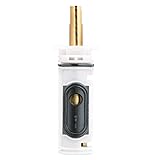
- Compatibility –Our RP46074 cartridge assembly replacement for Monitor rough-in valves (R10000, R1100, R1800, R2200, etc.) and most single-handle 13/14 series tub/shower faucets Kit. (Excludes 1300/1400 series)
- Pressure-Balanced Performance – Maintains water temperature within ±3.6°F (±2°C), preventing sudden hot/cold surges for safer showers.
- Durable Construction – High-quality brass core with reinforced plastic for long-lasting, leak-free operation. Limits max hot water flow to avoid scalding.
- Tool-Free Installation – Direct drop-in replacement—no special tools or full valve removal required. (Clean old valve seat before installing.)
- Stop Leaks & Drips/ Budget-Friendly Solution– Thoroughly tested for superior leak-proof performance.Resolve plumbing issues at half the cost of conventional repairs.
Start by locating the restriction
Use the symptom pattern to decide where to look. Do not remove a cartridge simply because the shower feels weak; the same symptom can originate upstream or at the outlet.
| What you observe | More likely place to investigate | Next step |
|---|---|---|
| Several taps, toilets, or showers are weak | Home supply or pressure conditions | Have a licensed plumber check system pressure, PRV settings, and whether the supply suits the fixtures. |
| Only this shower is weak, and flow improves with the showerhead removed | Showerhead, screen, or flow restrictor | Clean the head and restrictor; replace the head only if inspection shows it is blocked or damaged. |
| Flow remains low with the showerhead removed | Supply stops, filters, cartridge, balancing unit, or pipework feeding the valve | Confirm accessible stops are open, then follow the exact valve instructions or arrange service. |
| Hot flow is low but cold flow is normal | Hot-side supply or a model-specific cartridge passage | Use the valve maker’s hot-side troubleshooting procedure; do not assume a universal cartridge. |
| Cold flow is low but hot flow is normal | Cold-side supply or a model-specific cartridge passage | Check the cold stop and follow the model-specific procedure. |
| Both sides are weak only at the shower | Showerhead, shared valve passage, filter, or balancing assembly | Test without the head, check stops, and identify the valve before internal work. |
Safety and preparation before opening anything
Internal valve work can release pressurized water and can leave a hidden leak behind the wall if a seal is damaged or a part is reassembled incorrectly. Gather the model information and the manufacturer’s instructions before starting.
Prepare these basics
- Locate the bathroom or whole-house shutoff and any accessible hot- and cold-water service stops for the shower.
- Identify the valve brand and model from the trim, installation paperwork, or the valve body. A trim style alone may not identify the cartridge.
- Have a towel, container, soft brush, and the correct screwdriver or hex key for the trim. Use non-scratching tools around finished surfaces.
- Photograph the handle, stop position, retaining clips, and part orientation before disassembly.
- Keep the manufacturer’s cleaning, cartridge, and temperature-limit instructions beside you. Crosswater recommends matching genuine replacement cartridges to the product image or part code; Moen’s troubleshooting distinguishes parts for particular valve systems.
Set a firm stop point
Do not remove a cartridge, balancing spool, filter, or trim that exposes the pressure chamber while water is live. Crosswater directs users to shut off the supply before removing trim and cartridges. Kohler’s K-304 Rite-Temp cleaning sequence starts with water shutoff and pressure relief, calls for care around the O-ring during reassembly, and ends with leak checks. If you cannot positively shut off the water, stop and call a licensed plumber.
Step-by-step diagnostic procedure
1. Check whether the problem is local or widespread
Run a nearby cold tap and hot tap, then compare another shower or bathroom fixture if available. If multiple fixtures are weak, an adjustment at one shower valve is unlikely to solve the cause. System pressure, a PRV setting, a restricted service line, or supply suitability needs to be checked at the property level. Water Rating specifically lists PRV settings and whether the product suits the system pressure among the causes a plumber should investigate.
If every other fixture is normal, concentrate on the shower assembly. This distinction prevents unnecessary valve disassembly and helps a plumber diagnose the system faster if service is needed.
Rank #2

- Complete Replacement Cartridge Kit: Direct fit cartridge replacement; 104421 Cartridge Puller for easy remove; Lubricating grease for smooth installation; Replace 116653 metal adapter, temperature limit stop, retainer clip for a new like look
- Brass Core: Cartridge constructed with brass core, reliable and reduce 50% leaking risk
- 104421 Cartridge Puller Tool: Remove cartridge without risk to damage your plumbing, can also be used for hassle-free DIY installation
- Compatibility: Used for posi temp single-handle shower faucets, allows rotates only, check compability to avoid delaying repairs; Ideal repair solution for many residential and commercial applications
- Pressure Balance Temperature Control: Eliminates the risk of scalding or sudden cold shocks, enjoy a safe, comfortable, and relaxing shower experience every single time
2. Inspect and clean the showerhead
Unscrew the showerhead using a protected wrench or by hand where possible. Look for grit, scale, a blocked inlet screen, or a flow restrictor packed with debris. Delta notes that a clogged showerhead restrictor can greatly reduce flow. Rinse loose debris, clean the screen and spray openings with a soft brush, and follow the head manufacturer’s cleaning directions for any approved descaling method. Do not enlarge or drill out a restrictor; it is part of the product’s designed flow and removing material can create spray, temperature, or compliance problems.
Check the inlet washer and screen for fragments that may have entered during plumbing work. Refit the parts in their original order and hand-tighten the head before using a protected wrench for a small final turn. A damaged or internally blocked head can be replaced, but a new head will not cure a restriction in the valve or supply.
Quick wins for a faster PC:
Fix the driver behind crashes, sound loss and screen glitchesFind Drivers →Repair Windows errors before they cause bigger problemsFix Now →Scan for outdated or missing drivers - takes under a minuteDriver Scan →3. Test briefly with the showerhead removed
Where the valve manufacturer permits this test, direct the open shower arm into a bucket or drain and open the shower at a moderate setting. Moen uses the comparison between flow with the head installed and removed to separate a head blockage from a valve problem. A strong stream with the head removed points back to the head, screen, or restrictor.
After service or any work on the supply, flush carefully. Delta’s tub-and-shower flushing guidance cautions that cold water should flow first. Keep the outlet directed safely, avoid scalding, and restore the showerhead before normal use. If the stream is still weak with the head removed, do not keep increasing the handle temperature or altering the temperature stop; continue with the supply and valve checks.
4. Verify accessible hot and cold stops
Many installations have isolation stops near the valve, in an access panel, or at a nearby service point. Confirm that both are fully open according to their design. A lever is generally open when aligned with the pipe; a multi-turn stop normally opens counterclockwise, but follow the fitting’s instructions and never force a seized control.
Rank #3

- Compatibility –Our RP46074 cartridge assembly replacement for rough-in valves (R10000, R1100, R1800, R2200, etc.) and most single-handle 13/14 series tub/shower faucets Kit. (Excludes 1300/1400 series)
- Pressure-Balanced Performance – Maintains water temperature within ±3.6°F (±2°C), preventing sudden hot/cold surges for safer showers.
- Durable Construction – High-quality brass core with reinforced plastic for long-lasting, leak-free operation. Limits max hot water flow to avoid scalding.
- Tool-Free Installation – Direct drop-in replacement—no special tools or full valve removal required. (Clean old valve seat before installing.)
- Stop Leaks & Drips/ Budget-Friendly Solution– Thoroughly tested for superior leak-proof performance.Resolve plumbing issues at half the cost of conventional repairs.
Kohler lists closed stops as a reason for no output on its Rite-Temp valve, and Moen’s system-specific guidance likewise directs users to confirm both hot and cold supplies are fully open. If a stop drips, will not move, or is hidden behind finished construction, do not dismantle it as a casual adjustment. Have a plumber repair or replace it.
The Tool Desk
Outbyte Driver Updater FREEScan for outdated or missing drivers - takes under a minuteDriver Scan →Outbyte PC Repair FREERepair Windows errors before they cause bigger problemsFix Now →5. Compare hot-only, cold-only, and mixed flow
With the head clean and the stops open, observe whether the weakness occurs on hot, cold, or both sides. A hot-only or cold-only problem directs attention to that supply, its inlet screen, or the corresponding passage in the cartridge. Low flow on both sides can indicate a blocked shared passage, balancing assembly, filter, or supply to the valve.
Temperature behavior is also useful. If the temperature swings when another fixture opens, the pressure-balancing function may be reacting to unequal supplies. That is a reason to investigate supply pressure and the valve’s condition—not a reason to remove the balancing mechanism or defeat a safety stop.
6. Identify the exact valve before internal service
Manufacturers use different cartridges, balancing spools, retaining methods, seals, and flushing procedures. Moen’s low-flow guidance separates Moentrol and Standard valve systems and identifies different checks for the handle position, supply lines, showerhead, cartridge, and balancing spool. Crosswater recommends selecting a genuine cartridge by product image or code. These instructions are not interchangeable.
Use the installation or service manual for the exact valve. If the model is unknown, photograph the trim and valve body and ask the manufacturer or a plumber to identify it. Do not order a cartridge solely because it looks similar or because a generic part is advertised as a fit.
Rank #4
7. Clean or replace an internal cartridge or balancing unit only with the correct procedure
If the manufacturer’s troubleshooting points to an internal restriction, shut off the hot and cold supplies, open the shower to release pressure, and protect the drain and finish. Remove the handle and trim only as described for that model. Keep clips, screws, springs, seals, and orientation in order.
Clean only the parts the manual identifies as serviceable. A cartridge or balancing spool may be damaged by force, incorrect lubricant, or a tool placed on a sealing surface. Replace it with the model-matched part when cleaning does not restore movement or flow. Crosswater’s guidance favors genuine, code-matched cartridges; Moen identifies particular cartridges and balancing spools for particular systems. There is no universal cartridge that safely fits every shower valve.
Before reassembly, inspect O-rings and sealing faces. Kohler’s K-304 cleaning instructions specifically call for attention to the O-ring, followed by careful reassembly and leak checks. Replace a cut, flattened, or hardened seal rather than reusing it. Never substitute a part that changes the valve’s pressure-balancing or temperature-limiting function.
8. Reassemble, flush, and check for leaks
- Reinstall the cartridge, spool, clips, seals, and trim in the manufacturer’s stated orientation.
- Open the supply stops slowly while watching the exposed area and the access side for leaks.
- Run cold water first to flush disturbed debris, using a safe outlet or bucket.
- Check every joint, the trim perimeter, and the wall side if an access panel is available. Keep the water running long enough to reveal a slow seep.
- Refit the showerhead and verify that hot, cold, and mixed positions operate smoothly.
- Set the temperature-limit stop according to the valve instructions; do not remove it to chase higher flow.
If a leak appears, shut the water off again and correct the installation before closing the wall or using the shower. A cosmetic dry surface immediately after assembly does not prove that a concealed connection will remain dry under pressure.
Recommended Free Tools
What the temperature-limit stop actually does
The temperature-limit stop is a safety and comfort setting. It limits how far the handle can rotate toward hot water so the outlet cannot exceed the selected maximum under normal conditions. Moving it can make the shower cooler or hotter at full handle travel, but it does not clear a blocked inlet or create more supply pressure.
Best Value

- Premium Durability: High-density brass core components + engineering plastics, anti-rust and anti-corrosion design, high-pressure and high-temperature resistance, to extend service life
- Compatibility: Replacement for single handle posi temp valve cartridge, Seamless replacement of old cartridge, effective water leakage improvement
- Precise Control: The 1222 valve cartridge adopts a pressure balance design and single function pressure balance temperature control, which can keep the water temperature within a safe range of ± 3.6 ° F (± 2 ° C), helping to protect you from sudden changes in hot or cold water pressure
- Easy Installation: No need to replace the entire unit, just a few steps to complete the replacement. (Recommended - replace the old cartridge need to clean around the valve body of contaminants)
- Package Contains: 1222 cartridge, 104421 removal tool, lubricant and retaining clipa
Adjustment details vary by valve. Gerber’s instructions, published March 11, 2025, describe the limit device and require the water to be turned off for the applicable service procedure. Follow the exact sequence for your model, make small changes, and test the water temperature while standing clear of the spray. Do not bypass, discard, or permanently defeat the stop. The available guidance establishes its temperature-control purpose, not a safe bypass method for increasing flow.
Why a pressure-balancing valve may feel restrictive
A pressure-balancing valve compares the hot and cold inlet pressures. Delta explains that it reduces the higher side until it matches the lower side, helping prevent a sudden scalding change when another fixture uses water. If the hot side is strong but the cold side is restricted—or the reverse—the valve may deliberately reduce the stronger side. The resulting shower can feel weak even though the balancing mechanism is protecting temperature stability.
Investigate the unequal supply rather than disabling the valve. Check accessible stops, look for debris in the affected supply, and have a plumber measure pressure if the imbalance persists. A pressure reading at another fixture may not represent the pressure inside the shower valve, especially in older or remodeled plumbing.
Common failed approaches and the safer alternative
| Approach | Why it fails or creates risk | Safer alternative |
|---|---|---|
| Turning the temperature-limit stop to “increase flow” | It changes the maximum hot position, not the water passage. | Clean the head, verify stops, and diagnose the restriction first. |
| Drilling out or removing the showerhead restrictor | It can damage the head and alter temperature, spray, or water-use performance. | Clean the restrictor and replace the head only when it is the confirmed restriction. |
| Removing a cartridge with water still on | Pressurized water can flood the wall and damage seals or trim. | Shut off both supplies, relieve pressure, and follow the exact service manual. |
| Installing a visually similar universal cartridge | Dimensions, seals, stops, and balancing behavior differ between valve families. | Match the genuine part by model, code, or verified product image. |
| Bypassing the balancing spool or safety stop | It defeats temperature protection, and no cited manufacturer procedure establishes a safe bypass. | Correct the supply imbalance or replace the matched internal part. |
| Assuming a new showerhead fixes every low-flow complaint | A valve, supply, PRV, or pipe restriction can remain unchanged. | Use the removed-head test to prove where the restriction is. |
When to call a licensed plumber
Professional service is the appropriate next step when any of these conditions applies:
- Other fixtures are also weak, or system pressure and PRV settings are unknown.
- You cannot locate or operate a positive shutoff for both hot and cold supplies.
- The valve model is unknown, the trim is seized, or the cartridge does not come out with the model’s prescribed method.
- There is leakage from behind the trim, the wall, an access panel, or a service stop.
- Flow is low with the showerhead removed after the stops have been checked.
- Hot and cold supplies are markedly unequal, or the shower temperature changes dangerously when another fixture runs.
- The repair requires opening concealed pipework, soldered or press-fit connections, or a wall that has no access.
- A replacement cartridge or balancing unit cannot be positively matched to the valve.
A plumber can measure static and flowing pressure, inspect the valve and supply, clean or replace the correct internal assembly, and verify that the temperature protection still operates after the repair. Water Rating recommends licensed-plumber investigation for low pressure caused by system conditions or product suitability, while Kohler’s and Crosswater’s service procedures illustrate why shutoff, pressure relief, sealing, and leak checks matter.
Preventing a repeat low-flow problem
- Clean the showerhead screen and spray face at the interval recommended for your water quality and the product instructions.
- After plumbing work, flush supply lines before installing or reinstalling a precision showerhead or valve trim so construction debris does not enter the passages.
- Keep the valve model and cartridge code with the home’s maintenance records.
- Do not force service stops or handles; a damaged stop can turn a small flow complaint into a concealed leak.
- Have a plumber investigate recurring pressure changes instead of repeatedly adjusting the temperature stop.
- When remodeling, confirm that the valve, showerhead, pipe size, and available system pressure are suitable as a set.
The practical sequence is simple: prove whether the problem is property-wide or isolated, clean and test the outlet, verify both supplies, identify the valve, and only then service matched internal parts with the water off. That approach restores flow when a removable restriction is present without sacrificing the temperature protection the valve was installed to provide.
Quick Recap
Product prices and availability are accurate as of the date/time indicated and are subject to change. Any price and availability information displayed on Amazon at the time of purchase will apply.
What’s actually slowing this PC down?
Pick the symptom - the matching free tool is one click away.

