Quick wins for a faster PC:
Scan for outdated or missing drivers - takes under a minuteDriver Scan →Clear out junk files and repair common Windows errorsFree Scan →Net-zero homes cut energy use by first reducing heating, cooling, hot-water, lighting and appliance demand, then adding enough renewable generation—usually rooftop solar—to balance the home’s annual energy use. They may still draw power from the grid at night or in winter and export power at other times. “Net zero” therefore describes an annual accounting result, not a home that uses no energy every hour or has no life-cycle emissions.
What a net-zero home actually means
The U.S. Department of Energy (DOE) describes zero-energy buildings as using energy efficiency and renewable energy to produce as much energy as they use over a year. In DOE’s common 2015 definition, an energy-efficient building qualifies when, “on a source energy basis, the actual annual delivered energy is less than or equal to the on-site renewable exported energy.”
As an Amazon Associate I earn from qualifying purchases.
That definition has several practical consequences:
Free tools Windows power users keep installed
One-click scans. No signup required.
- The balance is annual. A home can import electricity during cloudy periods, at night or during a cold snap, then export surplus solar generation at other times.
- The home still consumes energy. Net-zero does not mean zero heating, cooling, hot-water or appliance use.
- The accounting boundary matters. Results depend on whether the calculation uses delivered energy, source energy, exported renewable energy and other stated boundary rules.
- Actual performance depends on people and place. Climate, floor area, occupancy, thermostat settings, equipment operation, shading and maintenance all affect annual use and solar output.
A net-zero-energy home is therefore an efficient home whose remaining annual energy demand is matched by qualifying renewable production. It is not automatically a zero-carbon home; carbon accounting requires a separate look at fuel emissions, grid electricity and the materials used to construct and maintain the building.
#1 Best Overall

- Energy-Saving Brilliance: The EVELOR A19 100 watt LED light bulbs consumes only 13W while delivering the same brightness as a 100W incandescent bulb, achieving up to 90% energy savings. It's the perfect upgrade from outdated, inefficient lighting.
- Vivid, Sunlight-Like Illumination: With 1500LM brightness and a CRI of 80+, this bright white bulb enhances color accuracy, making spaces appear more vibrant. The non-flicker 100 watt lamp light bulbs beads ensure steady brightness, while the 5000K daylight white light is ideal for areas where clarity and visibility matter.
- Reliable Non-Dimmable Lighting: Designed for consistent performance, these light bulbs 100w provide unwavering illumination-perfect for living rooms, bedrooms, garages, meetingroom, office,kitchen, bathroom, readingroom, study, basement and workspaces where stable light is essential.
- Long-Lasting Durability: Rated for 15,000+ hours, these A19 E26 ampoule LED bulbs reduce replacement frequency and maintenance costs, making them suitable for indoor, outdoor, and commercial use.
- Eye Comfort & Easy Installation: The no-flicker design ensures smooth, strain-free lighting, while the standard E26 base allows for quick installation. Enjoy a bright, steady glow that enhances any environment.
Why demand reduction comes before renewable generation
The sequence matters. If a poorly insulated house needs 20,000 kilowatt-hours (kWh) a year, a solar array must be large enough to offset that demand. Tightening the envelope, reducing duct losses and installing efficient equipment may lower demand substantially, allowing a smaller and less expensive renewable system to provide the balance.
DOE’s Efficient New Homes requirements embody this approach. Certified homes are designed to be efficient enough that renewable energy can offset most or all annual use. Efficiency also reduces exposure to energy-price changes and lowers the amount of power needed when solar production is unavailable.
| Design area | How it reduces energy demand | What must be checked |
|---|---|---|
| Insulation and windows | Slows unwanted heat flow through ceilings, walls, floors, slabs and glazing, reducing heating and cooling loads. | Insulation levels and window performance must suit the climate zone and applicable code or program revision. |
| Air sealing | Limits uncontrolled outdoor-air leakage, so conditioned air is not continually replaced by hot, cold or humid air. | Blower-door testing and a continuous air barrier identify leakage that insulation alone cannot fix. |
| Ducts and air handlers | Keeps distribution equipment inside the home’s thermal and air-barrier boundary, reducing losses in attics, crawlspaces and garages. | Location, sealing and insulation of ducts must be verified, not assumed from equipment efficiency labels. |
| Heating and cooling equipment | High-efficiency heat pumps and correctly sized systems deliver the required comfort with less input energy. | Capacity, controls, climate suitability, commissioning and backup operation matter as much as the nameplate rating. |
| Hot water | Efficient water heaters, shorter distribution runs and well-designed delivery systems reduce energy used to heat and circulate water. | Fixture flow rates, pipe layout, recirculation controls and water-heater performance should be evaluated together. |
| Lighting and appliances | LED lighting and efficient appliances reduce plug and lighting loads that occur every day. | DOE Version 2 requirements call for ENERGY STAR-qualified builder-supplied refrigerators, dishwashers, clothes washers and dryers, plus LEDs for builder-installed fixtures and lamps. |
| Ventilation | Controlled ventilation supplies fresh air without relying on uncontrolled leakage. | Indoor-air quality requirements still apply; in climate zones 6–8, balanced heat-recovery or energy-recovery ventilation is included in the cited DOE checklist. |
No single item makes a house net zero. A super-insulated shell with inefficient equipment can miss the target, as can an oversized solar array on a leaky home. The result comes from the combined package, verified against modeled annual use and renewable output.
Do these 3 things before closing this tab:
1Repair Windows errors before they cause bigger problems2Scan for outdated or missing drivers - takes under a minute3Clear out junk files and repair common Windows errorsHow the building envelope lowers heating and cooling loads
Continuous insulation
Heat moves through ceilings, walls, floors, slabs and windows whenever indoor and outdoor temperatures differ. Insulation raises resistance to that flow. DOE’s single-family Version 2 baseline requires ceiling, wall, floor and slab insulation to meet or exceed 2021 International Energy Conservation Code (IECC) UA requirements. The exact assembly depends on climate zone and construction method; insulation levels cannot be selected independently of thermal bridges, framing and moisture control.
High-performance windows
Windows are typically weaker thermal points than insulated walls. Climate-specific performance requirements reduce conductive losses and unwanted solar gain. Correct orientation, exterior shading and careful installation can further reduce summer cooling demand while preserving useful winter sun where appropriate.
Rank #2

- 【Efficiency Meets Comfort】 Dalattin's A19 engergy saving LED bulbs replace 60W incandescents with just 9W while delivering full 800 lumens brightness, slashing energy usage by up to 85%. This eco-conscious choice not only saves you approximately $1.08 annually per bulb but also ensures a cooler operation,and enhancing safety. With a lifespan of up to 13.7 years (at 3 hours daily use), they provide a lasting, no worry experience.
- 【Enhanced Ambiance】 Boasting a high Color Rendering Index (CRI) of 80+, our bulbs bring out the truest hues in your surroundings, ensuring colors appear as vivid and accurate as in natural light. This makes them ideal for spaces where aesthetics matter, from art galleries to cozy living rooms, ensuring that every detail shines in its most authentic light.
- 【Eyes First, Safety Always】 Designed with eye care in mind, our non-flicker and non-dazzling technology reduces eye strain, promoting a healthier visual environment. No of lead, mercury, these bulbs prioritize user safety and environmental sustainability, making them suitable for households with children and pets, without compromising on the quality of light.
- 【Seamless Integration, Versatile Charm】 Universally fitting into E26 sockets, our bulbs effortlessly blend into any setting—be it residential, commercial, or hospitality. From bedrooms to cafes, they enrich spaces with their energy-efficient glow, adding a touch of sophistication without the need for special fixtures. Embrace the future of lighting with bulbs that seamlessly adapt and excel in every application.
- 【Long Lifespan & Dedicated Service】Last up to 7 years with typical 3-hour daily use, significantly outlasting traditional bulbs.
Air sealing and moisture control
Air leakage carries heat and moisture through cracks around windows, doors, wiring, plumbing and mechanical penetrations. A continuous air barrier, sealed transitions and a blower-door test make leakage measurable. Tight construction must be paired with designed ventilation; simply sealing a house without providing fresh-air exchange can create indoor-air-quality problems.
Keeping distribution inside the boundary
When ducts and air-handling equipment sit in an unconditioned attic or crawlspace, leakage and conduction waste energy before air reaches the rooms. Locating them inside the home’s thermal and air-barrier boundary reduces those losses and makes delivered capacity more predictable.
Recommended Free Tools
Efficient systems and appliances finish the demand reduction
Space conditioning
Heat pumps move heat rather than creating it by combustion, and modern systems can provide both heating and cooling. Their performance depends on outdoor temperature, defrost cycles, sizing, refrigerant installation and controls. A system that is too large may cycle frequently and dehumidify poorly; one that is too small may require backup heat during design conditions. Commissioning and duct performance are essential.
Domestic hot water
Hot-water energy includes heating the water and delivering it to fixtures. Short, insulated pipe runs reduce waiting and distribution losses. Heat-pump water heaters can use substantially less electricity than resistance units under suitable operating conditions, but installers must account for space, condensate drainage, noise, recovery rate and the home’s electrical capacity.
Lighting and appliances
LED light bulbs are a straightforward efficiency upgrade, but they are only one part of a whole-house strategy. DOE’s cited Version 2 checklist specifies LEDs for builder-installed lighting and ENERGY STAR-qualified major appliances supplied by the builder. Occupant behavior still matters: an efficient appliance used constantly can consume more energy than a less efficient one used sparingly.
Rank #3
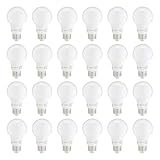
- LONG LASTING PERFORMANCE: These LED bulbs offer a 10,000 hour lifespan, providing lasting illumination for over 9 years (based on 3 hours of use each day), helping minimize replacements
- GREAT ATMOSPHERE: Enjoy daylight white light bulbs that create a bright, crisp atmosphere for any room
- STANDARD FIT: The E26 standard base provides compatibility with most fixtures, making it easy to install these LED bulbs in lamps and overhead lighting
Ventilation and indoor air
Efficient homes need deliberate ventilation because natural leakage is no longer a reliable fresh-air strategy. Balanced heat-recovery or energy-recovery ventilators transfer heat—and in some systems moisture—between outgoing and incoming air. Filters, airflow balancing and regular maintenance determine whether the design performs as intended.
How renewable generation balances the remaining annual use
After loads are reduced, designers model the home’s annual energy consumption and the site’s renewable resource. Rooftop photovoltaic (PV) systems are the usual supply source, but roof orientation, shading, snow, local weather, available area and utility interconnection rules limit output. The array must be sized against the modeled annual balance, not against a generic home-size rule.
During sunny hours, PV may produce more electricity than the home is using. The excess can flow to the grid or charge a battery, depending on the utility tariff and system design. At night and during low-production periods, the home may import electricity. A battery can shift solar energy into evening hours and provide backup during an outage, but storage is not required for every annual net-zero definition and does not by itself reduce the home’s loads.
Net metering, export compensation, demand charges, fixed utility fees and interconnection limits affect economics. A system that balances kWh on paper may not eliminate a monthly bill, and a battery-backed system may cost more than a grid-connected design. Obtain a site-specific production estimate and tariff analysis before choosing array size or storage.
Net-zero energy is not net-zero carbon
Energy and carbon are related but different measurements. Operational carbon comes from energy used while the home is occupied: fuel burned on site and emissions associated with purchased electricity. The carbon intensity of electricity varies by region, time of day and generation mix. Electrifying a home can reduce emissions on a relatively clean grid and become more valuable as the grid adds lower-carbon generation, but the result is not identical everywhere.
Rank #4

- 【Energy Efficiency】: EVELOR A19 LED light bulb is an energy-saving 9W (60W equivalent) bulb, saving up to 90% energy compared to traditional incandescent light bulbs 60 watt. The led lamp bulb is designed to be highly efficient, making it an ideal replacement for old-fashioned bulbs.Gift options for Christmas and other festivals.
- 【High Brightness & Excellent Light】: With 800LM and a high CRI 80+ (color rendering index), the light it gives out is close to the sun's value, making colors in your room appear richer, true and natural. Also, it has No flicker LED beads for enhanced brightness. This makes the light bulbs 60 watt daylight white 5000K light bulbs a perfect fit for any room where accurate color perception is important.
- 【Non Dimmable Feature】: The A19 E26 LED lightbulbs is Non Dimmable, providing a consistent level of illumination. This is especially useful in areas where a steady light source is required, such as in hallways or stairways. Daylight white light bulb gives a reliable and unchanging light output, different from some dimmable bulbs.
- 【Long Lifespan】: Type a 60w LED light bulbs a long lifespan of 15000+ hours, which means fewer replacements and less hassle. Whether used indoors in living rooms, bedrooms, kitchens, bathrooms, dining rooms, entryways or outdoors in gardens, garages, porches, patios, or in commercial settings like offices, hotels, bars, coffee shops, restaurants, etc., this led light bulb can last for a long time, reducing maintenance costs.
- 【No Flicker & Stable Performance】: NO Flicker design ensures a stable and comfortable light output, providing a better visual experience and protecting your eyes. It operates at 110 - 130VAC and has an E26 Medium base for easy installation. The daylight white light bulbs offer a smooth and steady glow, enhancing the overall lighting effect of any space.
Embodied carbon arises before and after occupancy. It includes raw-material extraction, product manufacturing, transport, construction, maintenance, repair and eventual disposal. Concrete, steel, insulation, windows, finishes and replacement equipment all contribute within the life-cycle boundary selected for an assessment.
| Question | Energy-balance answer | Carbon-balance question |
|---|---|---|
| What is counted? | Delivered energy compared with qualifying on-site renewable exports over a stated period, commonly one year. | Operational and embodied greenhouse-gas emissions over a stated life-cycle boundary. |
| What reduces it? | Lower loads, efficient equipment and renewable generation. | Those measures plus cleaner fuels and electricity, low-carbon materials, durable construction and thoughtful replacement or disposal. |
| Does annual solar balance prove zero? | It can satisfy an annual net-zero-energy definition if the applicable accounting rules are met. | No. Solar does not erase construction emissions, and grid and fuel emissions still require separate accounting. |
DOE/NREL residential carbon guidance treats operational and embodied emissions as distinct parts of a net-zero-carbon assessment. A builder can therefore pursue both goals: reduce operational demand and select materials and construction methods with lower upfront embodied emissions.
Independent reader supportYour contribution helps us test, update, and keep practical guides available for everyone.What published projects and program figures do—and do not—show
DOE announced more than 12,000 zero-energy certified homes in January 2023. That was the program count at the time, not a current 2026 total. The same announcement characterized zero-energy-ready homes as often 40% to 50% more efficient than a typical new home. “Often” and “typical new home” are important qualifications; the figure is not a guaranteed saving percentage for every project and should not be applied casually to existing houses.
A 2024 DOE Housing Innovation Awards example in Bellingham, Washington, reported a Material Carbon Index 23% lower than that builder’s standard home. The project used structural insulated-panel walls, triple-pane windows, 0.45 air changes per hour at 50 pascals (ACH50), sensor-controlled heat-recovery ventilators, a 17.01-kilowatt PV array and battery backup. Those results describe that particular home and comparison baseline, not a typical net-zero outcome.
Outdated Drivers Are Slowing You Down
One free scan finds every outdated or missing driver and matches the right update for your exact hardware.Free scan · exact hardware matchWindows Errors? Fix Them Before They Spread
Repair common Windows errors and clear accumulated junk for a smoother, more stable PC - no reinstall needed.Free scan · no reinstallNeither statistic establishes a universal utility-bill saving, payback period or carbon reduction. Those results vary with climate, design, household use, rates, grid emissions, incentives, maintenance, system costs and accounting boundaries.
Best Value

- Technical Features: 24 Packs, A19 Daylight LED bulbs, 8.5 watts, 800 lumens, daylight 5000k, light bulbs 60 watt equivalent, E26 base, non-dimmable, frosted, AC-120V, CRI 80, beam angle 230°, turn on instantly
- Energy Saving and Long-lasting: Save up to 80 on energy costs by replacing 60W with just 8.5W
- Direct Replacement: Perfect replacement for incandescent light bulbs. No breakable parts and are free of toxic chemicals, they are safe for your family and the environment
- Eye-care and Comfortable: Flicker-free and non-dazzling led bulbs protect your eyes while ensuring a healthy environment. No lead or mercury, no IR radiation
- High Brightness and CRI 80+: Designed with the advance LED source technology, 60w LED light bulbs to emit with a full 800 lumens of brightness. With high CRI 80+, the A19 standard light bulbs 60 watts will provide you natural and brilliant realistic colors
A practical design and verification sequence
- Set the boundary and target. Decide whether the project is pursuing an annual net-zero-energy definition, a broader net-zero-carbon goal or both. Document the source-energy method, renewable-export treatment and life-cycle boundary.
- Analyze the site and climate. Record orientation, shading, roof area, weather, utility rules, flood or wildfire constraints and future electrical loads such as an electric vehicle.
- Model the envelope before equipment. Calculate insulation, window, air-sealing and thermal-bridge performance. Resolve condensation and moisture risks before selecting heating or cooling capacity.
- Design distribution and ventilation. Keep ducts and air handlers within the conditioned boundary where practical, specify balanced ventilation when required, and plan access for filters and service.
- Select and commission efficient equipment. Size heat pumps, water heaters and appliances from the modeled loads. Verify airflow, refrigerant charge, controls, hot-water delivery and ventilation rates.
- Reduce plug and lighting loads. Use LEDs and efficient appliances, then account for realistic occupant schedules rather than assuming ideal behavior.
- Size renewable generation. Match PV production to the modeled annual demand under local weather and shading conditions. Evaluate export rules, tariffs and whether storage adds resilience worth its cost.
- Test and verify. Use blower-door and duct tests, equipment commissioning, ventilation balancing and an independent review. DOE’s program requires qualified third-party verification.
- Monitor after occupancy. Compare measured monthly use and PV production with the model, investigate persistent gaps and maintain filters, heat pumps, water heaters and the solar system.
DOE’s current U.S. program context
The voluntary DOE Zero Energy Ready Home program is now called DOE Efficient New Homes; DOE says the programs remain substantively the same. It is third-party verified and is not intended to serve as a minimum building-energy code. A project still has to comply with applicable state and local requirements.
The DOE single-family requirements index lists national Version 2, Revision 3, released in September 2025. California has a separate single-family track, Version 2, Revision 2, also released in September 2025. The detailed checklist published in December 2022 explains the feature categories, but builders must use the current revision that applies to the project’s location.
The program requirements also address readiness for electric vehicles, future heat-pump water heating and heat-pump space heating. “Ready” means the wiring, space or infrastructure supports a future installation; it does not mean every certified home already contains all of those systems.
DOE’s program page states a federal 45L tax credit of up to $5,000 per home for homes acquired before July 1, 2026, and warns that tax-credit law changed in 2025. Because that acquisition cutoff has passed as of October 2026, do not treat the figure as currently available without confirmation from the Internal Revenue Service or U.S. Treasury and a review of the project’s eligibility date.
How to compare a net-zero home or upgrade package
There is no universal “best” system. Compare proposals on the same assumptions and ask for evidence in each category:
- Demand reduction: modeled heating, cooling, hot-water, lighting and plug loads; envelope specifications; window values; air-leakage target; duct location and test results.
- Supply and balance: PV capacity, modeled annual production, shading assumptions, degradation, export rules and whether storage is included.
- Operational carbon: fuels used on site and the electricity-emissions factor and time basis used in the calculation.
- Embodied carbon: materials included, life-cycle stages covered and the comparison baseline.
- Verification: model version, inspection checklist, blower-door and duct results, commissioning records and third-party certification.
- Economics and resilience: installed cost, maintenance, utility rates, incentives, outage capability, battery replacement assumptions and any fixed utility charges that remain after annual balancing.
Ask the designer to distinguish modeled performance from measured post-occupancy results. A credible proposal states assumptions clearly instead of promising a universal percentage reduction or a guaranteed bill.
The Bottom Line
Net-zero homes reduce energy and carbon in a sequence: make the envelope and systems use less energy, generate renewable power to balance the remaining annual demand, and address operational and embodied carbon as separate life-cycle issues. Annual net-zero energy is achievable only within a defined accounting boundary; it does not mean zero hourly consumption, zero utility bills or zero construction emissions.
Quick Recap
Product prices and availability are accurate as of the date/time indicated and are subject to change. Any price and availability information displayed on Amazon at the time of purchase will apply.

