Do these 3 things before closing this tab:
1Scan for outdated or missing drivers - takes under a minute2Repair Windows errors before they cause bigger problems3Fix the driver behind crashes, sound loss and screen glitchesIn the United States, a typical installed home battery costs about $15,000 to $16,000 before local incentives in 2026. That generally buys approximately 13.5 kWh of usable storage for essential-load backup. A larger whole-home system commonly costs $30,000 to $45,000 or more.
These are gross installed prices, not equipment-only prices. The final quote depends on battery capacity, power output, electrical-panel work, solar compatibility, permitting, labor, and your local utility. Also, under current IRS guidance, the federal Residential Clean Energy Credit does not apply to qualifying property placed in service after December 31, 2025.
As an Amazon Associate I earn from qualifying purchases.
Average home battery cost in 2026
EnergySage reported an average installed price of $15,647 for a residential battery system of approximately 13.5 kWh during the first half of 2026. Its separate estimate for standalone battery systems was approximately $15,228 for 13.5 kWh.
EnergySage also reports a broader average of about $1,128 per kWh. These figures are quoted-project data, not a guaranteed national retail price or government average. Your installation may be substantially cheaper or more expensive.
#1 Best Overall
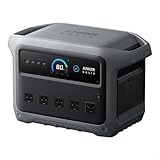
- 49 Min UltraFast Recharging: With upgraded HyperFlash tech, fully recharge at 1,600W—for outage prepping, camping trips, or tailgating events. Enable it in the Anker app.
- 2,000W Output via 10 Ports: Delivers 2,000W (3,000W peak) and 1,024Wh capacity. Power up to 10 devices—ideal for emergency backup, remote work setups, tiny homes, and off‑grid living.
- Compact and Portable: Easily carry, store, and move from room to room, your RV, or even on beach and park outings. C1000 Gen 2 is 14% smaller and 11% lighter than similar models.
- 10 Years of InfiniPower: Built to last through years of daily backup and RV and van life. After 4,000 cycles, the battery still has at least 80% capacity.
- 1.8 Hr Solar Recharging: Go fully off‑grid with sustainable power for tiny homes, camping RV off‑grid setups, and remote locations. Plug in 600W (60V max) of solar and recharge in just 1.8 hours.
Home battery cost by system size
| System size | Typical 2026 installed planning range | Typical use |
|---|---|---|
| 5–10 kWh | About $8,000–$15,000 | Limited essential loads during shorter outages |
| 10–15 kWh | About $12,000–$18,000 | Refrigerator, internet, lighting, selected circuits and appliances |
| 20–30 kWh | About $25,000–$40,000 | Longer backup or more simultaneous loads |
| 30 kWh or more | Often $30,000–$45,000+ | Whole-home or extended backup, depending on output and load management |
These ranges are planning figures rather than fixed national prices. EnergySage’s whole-home examples include approximately $27,095 for 30.72 kWh and $49,893 for 42.9 kWh; its representative 10-kWh partial-backup example was about $11,280. See its whole-home battery comparison for the assumptions behind those examples.
Partial-home versus whole-home backup
A partial-backup system powers selected circuits, such as the refrigerator, freezer, internet equipment, lights, security system, garage door, medical equipment, sump pump, or furnace controls. It usually costs less because the installer can separate essential circuits rather than support the entire service panel.
Whole-home backup attempts to keep the full panel energized. It may require multiple batteries, higher continuous output, load-management equipment, a panel or service upgrade, more complex permitting, and additional solar capacity. “Whole-home” does not necessarily mean every appliance can run simultaneously; high-load devices may still be automatically managed or disconnected.
What’s actually slowing this PC down?
Pick the symptom - the matching free tool is one click away.
What is included in an installed battery price?
A credible all-in quote may include:
- Battery modules and an inverter or integrated power electronics
- A backup gateway, transfer equipment, or automatic switching controls
- A critical-loads panel or whole-home backup equipment
- Mounting hardware, wiring, conduit, disconnects, and protection equipment
- Electrical-panel modifications or load-management devices
- Engineering, system design, permits, inspections, and utility interconnection
- Installation labor, commissioning, monitoring, and warranty administration
Tesla describes installed cost as including the battery pack, inverter, installation labor, permitting, interconnection, and other soft costs. Do not compare an equipment-only price with an all-in contractor quote.
Capacity is not the same as power
The most important sizing distinction is:
- kWh: the amount of energy stored.
- kW: the amount of power delivered at one time.
- Continuous power: sustained output while appliances are running.
- Peak or surge power: short-duration output for starting motors and compressors.
- Usable capacity: energy available after reserve limits and operating constraints.
- Round-trip efficiency: the energy retained after charging and discharging losses.
A 13.5-kWh battery may have enough energy for a refrigerator and lights but still lack the output to start a central air conditioner, well pump, heat pump, or other large motor. Ask for a formal load calculation that identifies continuous loads, 240-volt equipment, motor-starting requirements, and whether load shedding is needed.
For reference, Tesla lists Powerwall 3 at 13.5 kWh of usable storage and 11.5 kW of continuous power. EnergySage lists the FranklinWH aPower 2 at 15 kWh, 10 kW continuous power, and 15 kW peak power. These published specifications do not guarantee that either system will operate every appliance in a particular home.
Battery cost by brand and model
Brand comparisons are useful only when capacity, output, included equipment, installation conditions, and warranty terms are comparable.
Crashes, No Sound, or Screen Glitches?
Random freezes, missing sound and display glitches usually trace back to one bad driver. Find and replace yours safely.Free scan · under a minutePC Slower Than It Used to Be?
A free scan shows the junk files, broken settings and background clutter dragging Windows down - then fixes them in one click.Free scan · Windows 10 & 11| Product | 2026 pricing signal | Typical positioning |
|---|---|---|
| Tesla Powerwall 3 | EnergySage average of about $998/kWh | Integrated system with 13.5 kWh usable capacity and high output; final pricing varies by site and package. |
| FranklinWH aPower 2 | Approximately $17,655 typical all-in installed cost in EnergySage data | 15-kWh system with strong output and retrofit or whole-home positioning. |
| Enphase IQ Battery 10C | EnergySage average of about $1,404/kWh | Often a natural fit for homes already using Enphase microinverters and monitoring. |
| Generac PWRcell 2 | EnergySage describes it as higher-cost than the average 13.5-kWh system | Substantial backup capability, but existing-solar compatibility must be checked. |
| MidNite Solar Powerflo 16 | EnergySage average of about $338/kWh | Lower quoted cost per kWh in that dataset; balance-of-system and installation conditions may differ. |
See the EnergySage battery comparison, its FranklinWH review, and its Generac review for the cited comparison data. Product prices are not universal retail prices.
Existing solar, new solar, or battery-only?
Adding storage to existing solar
A retrofit may use AC-coupled storage, a compatible hybrid inverter, a new gateway, revised backup circuits, or changes to how the solar array shuts down and restarts during an outage. The existing inverter and rapid-shutdown equipment can matter as much as the battery itself.
Rank #2
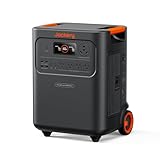
- Essential Home Backup: The Jackery HomePower 3600 Plus delivers 3600W output (7200W in parallel) to run pumps, heaters, and dryers with ease. With dual voltage (120V & 240V in parallel) and 3584Wh capacity expandable to 21kWh per unit or 43kWh with multiple units, it can power a 3-person household for over 2 weeks.
- Safe Power That Lasts: Built with high-temp resistant ceramic membrane battery cells tested at 302 °F, the Jackery HomePower 3600 Plus Portable Power Station prevents thermal runaway from heat or overcharge. Offering 6,000 cycles and a 10-year lifespan, it delivers safe, reliable even in -4 °F blizzards.
- Plug-and-Play: With its easy plug-and-play design, the Jackery HomePower 3600 Plus, paired with MTS, powers your home effortlessly—no complex installation required. Whether at work, in the kitchen, or with family, simply plug in, press "Power-On" and keep life running smoothly through any outage.
- 4 Charging Options: With 4 convenient ways to charge, the Jackery HomePower 3600 Plus solar generator can be fully recharged from 0–100% in just 2 hours via hybrid AC+DC. It also supports charging via AC in 2.5 hours, solar in 4 hours, or a gas generator in 2.5 hours —delivering a full day of quiet, clean energy.
- Ultra-Portable & Lightweight: The Jackery HomePower 3600 Plus, the lightest 3.6kWh LFP power station, boasts automotive-grade CTB tech and is 34% smaller and 29.3% lighter than other models. Its luggage-style design with wheels and a telescopic handle allows effortless rolling from kitchen to garage or beyond.
Installing new solar and storage together
A new solar-plus-storage design can avoid duplicative equipment and provide more design flexibility. However, a combined quote can make it difficult to identify the battery’s true marginal cost. Request separate line items for solar, storage, electrical work, permits, and incentives.
Installing a battery without solar
A battery-only system can provide outage protection and time-of-use bill management. Its economics are often weaker because its value depends heavily on outage protection and rate arbitrage. Without solar, it may also lack a reliable charging source during a prolonged outage. EnergySage discusses this distinction in its analysis of battery backup without solar.
What makes a battery installation more expensive?
- More batteries, larger usable capacity, or higher continuous and surge output
- Central air conditioning, heat pumps, electric heating, electric ranges, water heaters, well pumps, or other large loads
- A service upgrade, panel replacement, subpanel, or load-management equipment
- Incompatible existing solar equipment or a complex AC- versus DC-coupled design
- Long cable runs, difficult access, indoor placement, or additional fire-code clearances
- Local permit, inspection, engineering, and utility-interconnection requirements
- High-voltage or three-phase service and unusual electrical configurations
- Regional labor rates, installer availability, and warranty or monitoring provisions
Regional differences can be significant. EnergySage reported approximately $13,958 gross for a 13-kWh California installation in July 2026 and approximately $17,550 in Pennsylvania. These are state-specific figures, not universal prices.
Incentives available in 2026
Federal credit
Under the current IRS guidance, the Residential Clean Energy Credit does not apply to qualifying residential clean-energy property placed in service after December 31, 2025. Therefore, a 2026 quote should not automatically be reduced by 30%.
Under the prior rules, standalone battery storage generally needed at least 3 kWh, and eligible expenses could include installation labor and necessary wiring. Tax rules are time-sensitive and fact-specific; confirm eligibility with the IRS guidance and a qualified tax professional.
State, local, and utility incentives
Depending on location, programs may include state tax credits, rebates, utility rebates, demand-response payments, virtual power plant compensation, resilience grants, or low-income assistance. Funding, income limits, approved equipment, application deadlines, and geographic eligibility vary.
Some utilities pay customers to enroll batteries in virtual power plants. Tesla’s incentive examples include a possible PSEG Long Island/NYSERDA battery reward of up to $6,250 and recurring VPP payments in certain territories. These examples are location-specific and may require utility dispatch, minimum reserve settings, or enrollment terms. Confirm current rules directly with the program administrator.
How long will a home battery run?
A useful planning formula is:
Runtime in hours ≈ usable battery capacity in kWh × battery efficiency ÷ average load in kW.
For example, a 13.5-kWh battery supporting a 1-kW average load could theoretically provide roughly 13.5 hours before efficiency losses and reserve limits. At a 2-kW average load, runtime could be roughly half that. Air conditioning, electric resistance heat, water heating, ovens, and well pumps can reduce runtime sharply or exceed the battery’s power rating.
Rank #3

- 1500VA/1000W PFC Sinewave Uninterruptible Power Supply (UPS): Uses sine wave output to provide battery backup power for Active PFC & conventional power supplies; Safeguards computers, workstations, network devices, and telecom equipment
- 12 NEMA 5-15R OUTLETS: 6 battery backup & surge protected outlets, 6 surge protected outlets; INPUT: NEMA 5-15P right angle, 45 degree offset plug with 5 foot power cord; 2 USB charge ports (1 Type-A, 1 Type-C) quickly charge phones and tablets
- MULTIFUNCTION, COLOR LCD PANEL: Displays immediate, detailed information on battery and power conditions; Color display alerts users to potential issues before they can affect critical equipment and cause downtime; Screen tilts up to 22 degrees
- AUTOMATIC VOLTAGE REGULATION (AVR): Corrects minor power fluctuations without switching to battery power; UL SAFETY CERTIFIED: Product has been tested in a UL certified lab and listed with UL as meeting or exceeding safety standards
- 3-YEAR WARRANTY – INCLUDING THE BATTERY; $500,000 Connected Equipment Guarantee; FREE PowerPanel Management Software (Download)
“One day of backup” is not a fixed battery specification. A battery can run a small group of essential loads for a long period or a large load for a short period. Ask the installer to model your actual hourly load profile.
Is a home battery worth the cost?
There is no universal yes-or-no answer. A battery provides several different kinds of value, and each should be evaluated separately:
- Backup value: protection during outages, especially where power loss creates medical, safety, or property risks.
- Solar self-consumption: storing surplus solar instead of exporting it at a low credit.
- Time-of-use savings: charging during cheaper periods and discharging during expensive periods.
- Virtual power plant income: payments for allowing a utility to dispatch the battery.
- Generator replacement: quiet, automatic backup without routine fuel storage.
A battery is more likely to make sense when outages are frequent or costly, export compensation is low, time-of-use price differences are substantial, a meaningful local incentive is available, or a VPP offers credible payments.
It is less likely to make financial sense when outages are rare and short, net-metering compensation is strong, incentives are unavailable, expensive panel upgrades are required, or the battery is being purchased solely to improve solar payback. Do not assume guaranteed payback: model utility rates, cycling, degradation, financing, incentives, and eventual replacement.
Battery versus generator
| Home battery | Standby generator |
|---|---|
| Quiet and produces no on-site combustion emissions | Usually louder and dependent on fuel |
| Can reduce time-of-use bills and participate in some VPP programs | Usually has little value for routine bill savings |
| Limited duration unless solar or grid charging is available | Can run through longer outages if fuel remains available |
| Requires eventual battery replacement | Requires fuel, maintenance, and periodic testing |
| Can provide automatic backup with the proper controls | Automatic operation depends on generator and transfer equipment |
A generator may be preferable for multi-day outages or homes with very high sustained loads. A battery may be preferable for short outages, noise-sensitive locations, solar self-consumption, or daily rate management. The correct comparison is the complete installed cost and operating requirements of both systems.
How to compare battery quotes
Get at least three itemized quotes and require each installer to state:
- Battery model, quantity, usable kWh, continuous kW, and peak or surge kW
- Whether the design is partial-home or whole-home backup
- Which circuits and 240-volt loads are supported
- Whether central air conditioning, heat pumps, well pumps, and electric appliances can start and run
- AC- or DC-coupling method and compatibility with existing solar
- Inverter, gateway, transfer switch, backup panel, load-management equipment, and monitoring
- Permits, inspections, engineering, utility fees, and expected installation timeline
- Any panel replacement, service upgrade, conduit, trenching, or other electrical work
- Warranty duration, end-of-warranty capacity, throughput or cycle limits, labor coverage, and transferability
- Cash price, loan principal, interest rate, term, dealer fees, total repayment, and prepayment terms
- Every incentive assumed, including whether it is a rebate, tax credit, VPP payment, or estimated future benefit
Compare usable kWh and complete installed cost—not battery-module price alone. A lower cost per kWh may conceal a separate inverter, gateway, transfer switch, rack, additional labor, or weaker warranty.
Common problems to catch before signing
- The quote excludes panel work: An overloaded or outdated panel may require replacement, a subpanel, load management, or a service upgrade.
- The battery cannot run the desired appliance: Capacity and output are different; a refrigerator-sized energy need does not prove that a well pump or compressor can start.
- Solar stops during an outage: Most grid-tied solar systems shut down unless the battery and controls create a safe microgrid. Confirm whether solar can recharge the battery during an outage.
- Existing solar is incompatible: Verify the inverter, coupling method, rapid-shutdown equipment, and backup controls.
- Whole-home backup is overstated: A whole-panel connection may still shed high-load appliances automatically.
- VPP terms are overlooked: Ask about minimum reserve, dispatch frequency, override rights, compensation, and warranty effects.
- Incentive funding runs out: Rebates may have limited budgets, application windows, approved-equipment lists, or income requirements.
Bottom line
Budget approximately $15,000–$16,000 before local incentives for a typical 13.5-kWh installed home battery in 2026. A larger whole-home system often reaches $30,000–$45,000 or more. The right price depends on the loads you need to run, not just the number of kilowatt-hours advertised.
Because the federal residential credit generally does not apply to systems placed in service after December 31, 2025, verify current state and utility incentives before relying on a reduced net price. Compare at least three itemized quotes and have each installer document usable capacity, output, backup scope, solar compatibility, electrical upgrades, warranty coverage, and total financing cost.
Recommended Free Tools
Quick Recap
Product prices and availability are accurate as of the date/time indicated and are subject to change. Any price and availability information displayed on Amazon at the time of purchase will apply.

