What’s actually slowing this PC down?
Pick the symptom - the matching free tool is one click away.
Industrial plants reduce energy use and emissions most reliably by working in sequence: measure energy by process and production level, optimize interacting systems, cut heat and motor-system losses, then select electrification, lower-carbon energy, or carbon-management projects that fit the process. Efficiency comes first because it lowers demand regardless of which energy source a plant ultimately uses.
The right package depends on temperature, product quality, operating schedule, utilities, geography, capital, and the source of emissions. U.S. Department of Energy (DOE) figures provide useful priorities, not a guaranteed savings forecast for any individual facility.
As an Amazon Associate I earn from qualifying purchases.
Start with a plant-wide energy and emissions baseline
A plant cannot choose a sound retrofit sequence from monthly utility bills alone. First build a measured view of where energy enters, where it is converted, and which production steps consume it. Separate electricity, natural gas and other fuels, steam, compressed air, cooling, and exported energy. Meter major process lines and shared utilities where practical, then relate consumption to production volume, product mix, weather, shift pattern, and downtime.
Do these 3 things before closing this tab:
1Scan for outdated or missing drivers - takes under a minute2Repair Windows errors before they cause bigger problems3Fix the driver behind crashes, sound loss and screen glitchesMap energy to processes and operating conditions
Establish a baseline using consistent boundaries and a defined period. Record production output and quality results alongside energy data so that a lower bill is not mistaken for efficiency when the plant simply produced less. Compare comparable operating conditions, and document start-up, cleaning, changeover, and idle loads that may be hidden in averages.
#1 Best Overall
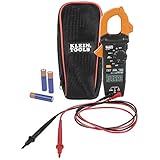
- VERSITILE CLAMP METER: Measures AC current and NCVT via clamp; AC/DC voltage, resistance, and continuity via test-leads
- NON-CONTACT VOLTAGE TESTING: Integrated into the clamp jaw for convenient electrical testing
- BACKLIT DISPLAY: LCD shows clear readings in low-light conditions for enhanced visibility
- ACCURATE MEASUREMENTS: Auto-ranging technology selects the appropriate measurement range for accurate results
- CONVENIENT FEATURES: Test lead holder on the side of the clamp and optional magnetic hanger (Cat. Nos. 69445 or 69417) for hands-free operation
- Identify the largest energy users by process, temperature band, and utility.
- Track peak electrical demand, fuel peaks, steam losses, and compressed-air pressure.
- Log equipment status, control settings, maintenance events, and production constraints.
- Calculate energy intensity, such as energy per tonne, batch, square metre, or finished unit.
- Keep projected savings separate from savings verified after implementation.
Use integrated sensing and controls
DOE identifies integrated sensors, controls, data platforms, and efficient process equipment as tools for plant-level optimization. A useful system shows relationships: a pressure change in a compressed-air header can alter compressor loading; a furnace schedule can change peak demand; and a cooling-water temperature can affect both product quality and refrigeration energy. Alarms, historian data, and dashboards should help operators act, not merely display more numbers.
Set a measurement plan before buying equipment. Define the meter location, sampling interval, data owner, calibration method, and decision the measurement must support. A temporary meter can screen an opportunity, but it does not replace a full industrial audit or validate savings by itself.
Prioritize process heating and recoverable heat
Process heating deserves early attention because it is often the largest energy category in manufacturing. DOE reports that process heating represented 51% of onsite energy use at U.S. manufacturing facilities in 2018. The same DOE material says about one-third of energy consumed in process heating is ultimately lost as waste heat. These are U.S. sector-level figures, not a prediction for a particular plant.
Find where heat is generated, transferred, and lost
Build a heat map for furnaces, ovens, dryers, kilns, reactors, boilers, heat exchangers, hot-water loops, and exhaust. Record required process temperature, material temperature, residence time, atmosphere, ramp rate, humidity, and product-quality limits. Then inspect insulation, doors and seals, refractory condition, burner tuning, electric heating elements, flue-gas temperature, purge rates, and heat-exchanger performance.
Waste heat may be recoverable for combustion air, feed preheating, hot water, drying, space heating, or another process. Recovery is not automatically beneficial: contamination, corrosive constituents, intermittent operation, temperature mismatch, and pressure drop can make a technically attractive source uneconomic. Evaluate the complete heat balance and the effect on reliability and maintenance.
Rank #2

- 【TRUE-RMS AC DC CLAMP METER】This multimeter can accurately measure AC/DC current, AC/DC voltage, temperature (thermocouple included), NCV, capacitance, frequency, resistance, continuity and diode. Good help for troubleshooting the household solar system, automotive and industrial electrical issues, perfect for electricians, DIY, professionals, etc.
- 【D-SHAPED JAW】Different from other amp meters on the market, the clamp multimeter features a distinctive D-shaped design, and the amp clamp can be opened up to 1.1 inches, providing a convenient and secure way to clamp on various cables
- 【NCV DETECTION】Non-contact voltage testing function helps detect AC voltage without direct circuit contact. By simply pressing the button on the right side of the multimeter tester, it is quick and safe to detect electrical status. Also, it is equipped with audible and visual alarms. The stronger the voltage signal, the faster the buzzer
- 【USER FRIENDLY】With test lead storage, meter leads can be protected and stored when not in use. The LCD backlight screen and flashlight ensure clear readings, even in dimly lit areas. Additionally, the low battery indicator shows the battery status and reminds you to replace it promptly. To save power, the ammeter automatically shuts off after 15 minutes of inactivity
- 【CUSTOMER SERVICE & SAFETY】Passed IEC61010-1 and CAT III 600V certification. The screen turns orange to warn when the voltage >80V, the current >1A. Comes with a nice carry case, manual and two sets of leads for electrical and temp. KAIWEETS provides 36 months of high-quality service and lifetime technical support
Match the technology to the temperature and process
There is no universal replacement for process heat. DOE describes a portfolio that includes electrified heating such as electromagnetic systems, industrial heat pumps, low- or no-heat processes, low-carbon thermal sources including hydrogen or biofuels, waste-heat management, and flexible combined heat and power (CHP). Selection depends on the application, economics, geography, and other site conditions.
| Option | Where it may fit | Questions to resolve |
|---|---|---|
| Electrified process heat | Processes where electric equipment can meet temperature, atmosphere, ramp-rate, and quality requirements | Can the site provide capacity? What is the hourly electricity carbon intensity and tariff? Will transformers, substations, or controls need upgrades? |
| Industrial heat pumps | Low- to moderate-temperature heating and heat upgrading where a suitable heat source exists | What source temperature and flow are available? Is the temperature lift sufficient, and how does seasonal operation affect performance? |
| Low- or no-heat processing | Products or formulations that can be redesigned to avoid a heating step | Will product performance, regulations, safety, or customer specifications change? |
| Hydrogen or biofuels | Some high-temperature or fuel-dependent applications where combustion or thermal chemistry must remain | Is supply dependable and certified? What are delivered cost, storage, safety, emissions, and burner-conversion requirements? |
| Waste-heat recovery | Sites with a steady, usable heat source and a nearby demand | Do timing, temperature, contamination, and heat-exchanger losses support a reliable load match? |
| Flexible CHP | Facilities with simultaneous heat and power needs and a suitable operating profile | How will dispatch, fuel emissions, grid rules, maintenance, and future decarbonization affect the business case? |
Do not assume an electric option is automatically lower-emission. Its result depends partly on the electricity supply, including grid mix and any verified onsite generation. Likewise, a lower-carbon fuel must be evaluated for upstream production, transport, combustion, availability, and process compatibility.
Optimize complete motor-driven systems
Motors are another high-value target because the motor is only one part of a system. DOE’s 2022 Industrial Decarbonization Roadmap reports that applications such as pumps, fans, compressed air, and materials handling accounted for 91% of manufacturing electrical energy consumption. The denominator is manufacturing electricity in the United States; it is not a guaranteed share for every facility.
Assess demand before replacing equipment
For pumps and fans, measure flow, pressure, operating hours, throttling, bypasses, and control response. A right-sized impeller, variable-speed drive, reset control, or improved sequence can outperform a premium-efficiency motor installed on an oversized system. Check parallel equipment staging and whether leaks or fouling are forcing excess flow.
For compressed air, measure compressor loading, header pressure, pressure drop, leakage, inappropriate uses, dryer performance, and shift-by-shift demand. Lowering pressure can save energy when end-use requirements permit; removing leaks and eliminating open blowing often costs less than adding compressor capacity. Confirm that controls do not cause unstable cycling or loss of production pressure.
Rank #3

- Important Tips - This CM2K0R clamp meter can not test DC Current. To measure the AC Current you need to clamp the meter around one of the wires and not the whole power cord. Ensure the conductor to betested is in the center of the clamp head. The clamp Jaw is only used to measure current. Do not measure voltage by clamping the conductor being measured.
- Versatile Digital Clamp Meter - Accurately measures AC/DC Voltage, AC Current, Capacitance, Resistance, Diode Continuity and Live Wire Tests. This clamp meter is a really useful tool for solving industrial and household electrical issues.
- Thoughtful Design - Support Data Hold, Max/Min, Auto Shut-off, low battery indicator and continuity buzzer. Includes Convenient features like Audial and Visual Alarm, LCD Backlit Screen and Flashlight make it easy to use. Two 1.5V AAA batteries are included in the package.
- Non-contact Voltage Testing - This Clamp Meter features non-contact voltage testing with sound and light alarm. When the Meter senses a weak AC signal, the green indicator light will come on and the buzzer will emit a slow, audible beep. when the Meter senses a strong AC signal, the red indicator light will come on and the buzzer will emit a quick beep.
- Enhanced Safety - The clamp meter has passed the environmental pollution degree 2 and overvoltage category III 600V safety standards. If you have any questions about the product, feel free to contact us! Our California-based support team will respond within 24 hours.
For conveyors, hoists, mixers, and other materials-handling equipment, examine starts, stops, speed, payload, idle time, mechanical alignment, lubrication, and regenerative opportunities. A system-level review should include distribution losses, controls, equipment sizing, and operating schedules rather than treating each motor as an isolated project.
Protect production while tuning controls
Test control changes during a controlled window and define product-quality and safety limits in advance. Trend energy, throughput, pressure, temperature, and fault events together. Retain a rollback setting and train operators so that manual overrides do not permanently defeat the optimized sequence.
Choose electrification and lower-carbon energy after reducing demand
Once avoidable demand is removed, compare the remaining energy supply options. DOE’s four broad industrial decarbonization pillars are energy efficiency; industrial electrification; low-carbon fuels, feedstocks, and energy sources; and carbon capture, utilization, and storage (CCUS). Efficiency is foundational because it reduces the amount of energy that every later supply option must provide.
Evaluate electrification on an hourly, site-specific basis
List each candidate load and test whether electric equipment can deliver the required temperature, atmosphere, power quality, response time, and production rate. Obtain interval electricity data and utility tariffs, not just an annual average price. Check transformer, switchgear, substation, backup-power, and interconnection requirements. A project may need staged implementation if grid capacity or construction outages limit the available window.
Estimate emissions using the electricity source serving the load and the time of use. Grid carbon intensity can vary by hour and region; onsite renewable generation may reduce emissions for some hours but may not cover a continuous process. Storage, demand management, or a hybrid thermal system may be needed to preserve reliability.
Windows Errors? Fix Them Before They Spread
Repair common Windows errors and clear accumulated junk for a smoother, more stable PC - no reinstall needed.Free scan · no reinstallCrashes, No Sound, or Screen Glitches?
Random freezes, missing sound and display glitches usually trace back to one bad driver. Find and replace yours safely.Free scan · under a minuteRank #4
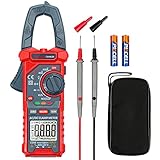
- Versatile Digital Clamp Meter: Accurately measures AC/DC Current, AC/DC Voltage, Capacitance, Frequency, Duty Cycle, Resistance, Diode, Continuity and Live Wire Tests. This clamp meter is a really useful tool for solving industrial and household electrical issues.
- Non-contact Voltage Testing: This Clamp Meter features non-contact voltage testing with sound and light alarms. When the Meter senses a weak AC signal, the green indicator light will come on and the buzzer will emit a slow, audible beep. when the Meter senses a strong AC signal, the red indicator light will come on and the buzzer will emit a brief beep.
- Multifunctional & Easy to read: Support Data Hold, Max/Min, Auto power off after 15 minutes inactivity, low battery indicator and continuity buzzer. The LCD Backlit Screen and Flashlight make it easy to use in a dark working area. ZERO function decreases the data error influenced by the Earth’s magnetic field, and helps you to obtain a more accurate measurement.
- Large Jaw Opening: The jaw opening measures current in a conductor without touching or interrupting the circuit. Its slim and compact size makes it easy to operate in narrow spaces. This clamp meter has passed the environmental pollution test degree 2 and overvoltage category III 600V safety standards.
- Additional Tips: To measure the current you need to clamp the meter around one of the wires and not the whole power cord. Ensure the conductor to betested is in the center of the clamp head. The clamp Jaw is only used to measure current. Do not measure voltage by clamping the conductor being measured.
Assess lower-carbon fuels and energy sources
For fuels, document the specification that the process actually needs: flame characteristics, heat-transfer mode, purity, pressure, storage, and safety systems. Confirm delivered supply, seasonal availability, contracts, and emergency backup. A fuel marketed as low carbon should be evaluated on a defined lifecycle and accounting boundary, while combustion emissions and any process emissions remain part of the plant inventory.
Separate energy-related emissions from process emissions
Not all industrial emissions come from purchased energy. Some arise from chemical reactions, calcination, reduction, feedstock use, or material transformation. A plant can reduce fuel and electricity consumption yet retain substantial process emissions if the underlying chemistry is unchanged.
Consider process and material innovation
Review alternative formulations, feedstocks, catalysts, recycling routes, production temperatures, and product designs. These changes can alter quality, permits, supply chains, and customer specifications, so they require joint engineering, production, procurement, and commercial review.
Use CCUS for appropriate residual sources
DOE includes CCUS as a decarbonization pillar. Capture is most relevant when a concentrated stream remains difficult to eliminate through efficiency, electrification, fuel switching, or process redesign. Analyze gas composition, concentration, contaminants, capture energy penalty, compression, transport, storage or utilization route, monitoring, liability, permitting, and contract arrangements. A capture project can increase electricity or heat demand, so account for that additional load in the plant-wide balance.
Compare projects with the same decision criteria
Use a common scorecard so that a low-cost efficiency project is not compared with a supply project on price alone. DOE specifically highlights application, economics, and geography for process-heat choices. Add the operational factors that determine whether a project will perform after commissioning.
Best Value

- Important Tips - This CM2K0R clamp meter can not test DC Current. If you have any questions about the product, feel free to contact us! Our California-based support team will respond within 24 hours.
- Versatile Digital Clamp Meter - Accurately measures AC/DC Voltage, AC Current, Capacitance, Resistance, Diode Continuity and Live Wire Tests. This clamp meter is a really useful tool for solving industrial and household electrical issues.
- Thoughtful Design: Support Data Hold, Max/Min, Auto Shut-off, low battery indicator and continuity buzzer. Includes Convenient features like Audial and Visual Alarm, LCD Backlit Screen and Flashlight make it easy to use. Two 1.5V AAA batteries are included in the package.
- Non-contact Voltage Testing: This Clamp Meter features non-contact voltage testing with sound and light alarm. When the Meter senses a weak AC signal, the green indicator light will come on and the buzzer will emit a slow, audible beep. when the Meter senses a strong AC signal, the red indicator light will come on and the buzzer will emit a quick beep.
- Enhanced Safety - The clamp meter has passed the environmental pollution degree 2 and overvoltage category III 600V safety standards.
| Decision axis | What to document |
|---|---|
| Process fit | Temperature, atmosphere, ramp rate, residence time, throughput, tolerances, and product-quality evidence |
| Emissions source | Fuel-related, electricity-related, process-related, or a combination; accounting boundary and emissions factor |
| Energy effect | Measured baseline, modeled demand, peak load, expected operating hours, and interaction with other systems |
| Utilities and geography | Electric capacity, fuel and water availability, grid carbon intensity, climate, logistics, and permitting |
| Financial case | Capital, operating cost, maintenance, incentives if confirmed, outage cost, residual value, and sensitivity to prices |
| Reliability and people | Redundancy, downtime, spare parts, controls, cybersecurity, operator training, and workforce capability |
| Evidence and maturity | Demonstrated performance under comparable conditions, commissioning plan, measurement and verification method, and unresolved risks |
Rank projects by more than simple payback. A project that reduces peak demand, avoids a planned replacement, improves quality, or removes a production constraint may have value not captured by energy savings alone. Conversely, a project with an attractive modeled return may fail if it requires an unavailable outage or an unreliable fuel supply.
Implement in stages and verify the result
- Define the boundary. Set the production, utility, emissions, and financial boundaries, and identify the accountable plant sponsor.
- Measure and normalize. Install or validate meters, collect operating data, and calculate energy intensity under comparable production conditions.
- Fix low-risk losses. Address leaks, insulation defects, controls, sequencing, inappropriate compressed-air uses, and maintenance issues that do not require major redesign.
- Engineer system projects. Model heat recovery, motor-system changes, process redesign, electrification, fuels, and CCUS together where they interact.
- Pilot or phase the work. Use a production-representative trial when quality, reliability, or fuel behavior is uncertain. Schedule construction around planned outages.
- Commission and train. Test controls, alarms, safeguards, operating procedures, and emergency modes with the people who will run the equipment.
- Verify performance. Compare post-project energy, production, quality, peak demand, and emissions with the normalized baseline. Report measured results separately from forecasts and investigate deviations.
Common mistakes that undermine savings
- Replacing components without studying the system: an efficient motor cannot correct oversized pumps, poor control logic, leaks, or excessive pressure.
- Using annual averages for dynamic loads: hourly tariffs, grid emissions, batch schedules, and peak demand can change the outcome.
- Counting reduced production as efficiency: normalize for output, product mix, weather, and operating hours.
- Ignoring waste-heat timing: a hot exhaust stream has little value if no compatible demand exists when it is available.
- Assuming electrification solves every emissions problem: process emissions and the carbon intensity of supplied electricity still matter.
- Underestimating integration work: transformers, piping, controls, ventilation, safety systems, permits, and operator training can determine cost and schedule.
- Skipping verification: without a defined baseline and measurement plan, projected savings cannot be distinguished from actual performance.
What a sound plant strategy looks like
A practical strategy begins with measured demand and system interactions, then targets process heat and motor-driven systems before committing to new energy supplies. After efficiency work, the plant can compare electric technologies, lower-carbon fuels, onsite or grid energy, process redesign, and CCUS against the same production, reliability, cost, and emissions requirements.
DOE describes energy efficiency as “a foundational, crosscutting decarbonization strategy” and “the most cost-effective option for GHG emission reductions in the near term” in its 2022 Industrial Decarbonization publication. That principle does not prescribe one retrofit. It establishes the order of decisions: know the system, reduce unnecessary demand, and then match deeper emissions measures to the process and site.
Quick wins for a faster PC:
Clear out junk files and repair common Windows errorsFree Scan →Scan for outdated or missing drivers - takes under a minuteDriver Scan →Repair Windows errors before they cause bigger problemsFix Now →Sources and scope
This overview uses U.S. DOE guidance: the Office of Energy Efficiency & Renewable Energy’s Industrial Decarbonization (2022), the Industrial Technologies Office’s “Finding Efficiencies in Process Heat,” the FY24 Cross-Sector Technologies Funding Opportunity Announcement, and the Industrial Decarbonization Roadmap (September 2022). The figures cited are U.S. sector-level observations. An individual plant still needs current utility data, process measurements, engineering studies, and local emissions factors before selecting equipment or claiming savings.
Quick Recap
Product prices and availability are accurate as of the date/time indicated and are subject to change. Any price and availability information displayed on Amazon at the time of purchase will apply.

