Construction can increase biodiversity when it treats habitat as connected infrastructure rather than decorative planting. The practical sequence is to map what already exists, protect the best ecological assets, connect them to surrounding green and blue networks, add habitat that suits the site and target species, and fund its management and measurement for the long term.
No single feature—whether a green roof, native planting, pond or nest box—works everywhere. Climate, soils, hydrology, topography, exposure, biosecurity, safety, access and future maintenance determine whether an intervention helps. The design should therefore begin with an ecological baseline and finish with a stewardship plan.
As an Amazon Associate I earn from qualifying purchases.
Start with the site, not a feature list
The European Commission defines green infrastructure as a strategically planned network of natural and semi-natural areas and other environmental features that delivers ecosystem services while enhancing biodiversity. That network idea is the foundation for a construction project: a habitat patch is more valuable when it connects to other suitable patches than when it is isolated.
CBD Global Biodiversity Framework Target 12 calls for increasing the area, quality and connectivity of green and blue spaces and integrating biodiversity into urban planning. For a development team, this means the landscape plan, drainage strategy, street layout and building envelope should be coordinated from the concept stage.
#1 Best Overall

- PREMIUM WILDFLOWER SEED MIX: Contains 24 prairie wildflower varieties; High germination rate with non-GMO USA-sourced seeds; Perfect for midwest regions including Indiana, Missouri, Michigan, and Pennsylvania; Creates stunning flower mix for all gardens
- THROW AND GROW SIMPLICITY: Easy planting for beginners and experts; Simply scatter seeds in prepared soil and watch your wildflower mix flourish; Includes perennial wildflowers that return year after year; Ideal for bulk coverage of large or small areas
- POLLINATOR PARADISE: Attracts bees, butterflies, and birds with nectar-rich blooms; Features Black Eyed Susan, Purple Coneflower, Cornflower, and more favorites; Creates a biodiverse habitat that supports local ecosystem; Vibrant colors throughout seasons
- CALIFORNIA POPPY, CHINESE FORGET ME NOT, CLARKIA. California Poppy, the state flower, glows in vivid orange with lacey foliage and reseeds naturally. Chinese Forget Me Not fills gardens with tender blue blooms and abundant clusters. Clarkia adds vertical color with tall spikes of coral-pink ruffled petals resembling delicate garden rosettes.
- CONTINUOUS BLOOMS ALL SEASON: Experience waves of color from spring through fall; Mix includes early bloomers like California Poppy and Blue Flax; Summer standouts include Cosmos and Coreopsis; Fall favorites like New England Aster extend the display
Build an ecological baseline
Before fixing the layout, map the assets and constraints that can change the design. The baseline should be proportionate to the project, but typically records:
- Existing habitat patches, mature and veteran trees, hedges, scrub, grassland, wetlands, ponds, streams and other water features.
- Soils, geology, topography, drainage pathways, groundwater, flood risk and areas that become seasonally wet or dry.
- Protected sites, local nature-reserves, priority habitats, protected or priority species and known ecological corridors.
- Connections beyond the red line: tree lines, waterways, verges, parks, allotments, farmland, woodland and other stepping stones.
- Construction constraints such as contaminated ground, compacted soil, utilities, access routes, lighting, salt exposure, wind and likely disturbance.
- Biosecurity risks, invasive species and plant-health restrictions that could affect soil movement or imported plants.
England’s guidance for on-site biodiversity gains identifies climate, geology and topography, soils, hydrology, flood risk, biosecurity and invasive species as relevant planning factors. Those are useful prompts elsewhere, but legal duties and assessment methods vary by jurisdiction. Bring in a qualified ecologist and landscape professional where work could affect protected or priority habitats or species.
Protect before replacing
Retaining an established habitat is usually a more reliable starting point than recreating one after clearance. The England National Design Guide and National Model Design Code both support retaining and enhancing natural features. Translate that principle into the site plan: set tree and root-protection zones, keep wet areas wet where feasible, avoid unnecessary hedge removal, and sequence earthworks so valuable habitats are not exposed to preventable damage.
Do these 3 things before closing this tab:
1Clear out junk files and repair common Windows errors2Scan for outdated or missing drivers - takes under a minute3Repair Windows errors before they cause bigger problemsConnect habitats across the project and beyond
Design at three scales. Within a plot, use continuous or stepping-stone features such as hedges, tree lines, planted swales, ponds and rough-grass margins. Across a neighbourhood, align those features with parks, waterways, verges and local nature-recovery priorities. At the landscape scale, avoid severing established movement routes with impermeable fencing, lighting or roads.
Natural England’s Green Infrastructure Planning and Design Guide describes individual features as building blocks of larger connected networks. The Building for a Healthy Life 2026 edition similarly recommends strengthening connections beyond site boundaries and integrating green and blue infrastructure with movement corridors. Although these publications are English guidance, the network logic is broadly applicable.
Rank #2

- PREMIUM CALIFORNIA WILDFLOWER MIXTURE. Elevate your garden with Sweet Yards California Wildflower Mixture, a bulk 1-ounce packet bursting with over 7,000 native seeds. This open-pollinated and non-GMO mix is thoughtfully curated for maximum beauty and biodiversity.
- ADAPTABLE ACROSS THE US. Designed to thrive in all US regions, this wildflower seed mix has been embraced by successful gardeners nationwide. Whether you're in the East, West, North, or South, experience vibrant blooms within 2 to 3 months of planting, making it the ideal choice for versatile and stunning landscapes.
- GENETICALLY DIVERSE & POLLINATOR FRIENDLY. Sweet Yards Wildflower Mixture is open-pollinated, ensuring genetic diversity that attracts and supports various pollinators. Be it insects, birds, or natural elements like wind, our mix promotes a flourishing ecosystem in your garden.
- COLORFUL SPRING PLANTING. Immerse your outdoor space in a riot of colors with our wildflower seed mix. Perfect for spring planting, the annual species in this mix create a kaleidoscope of hues, turning your garden into a visual masterpiece. Bring the essence of California's wild beauty to your home.
- BULK BEAUTY, EASY PLANTING. With bulk seeds, easily sow the seeds of a vibrant garden. Whether you're a seasoned gardener or just starting, Sweet Yards California Wildflower Mixture is the best choice for a hassle-free, stunning floral display. Create a haven for bees, butterflies, and hummingbirds while enjoying the effortless beauty of native wildflowers.
Make movement possible
- Keep hedge and woodland edges continuous where they are functioning as cover or movement routes.
- Use wildlife-permeable boundaries where security allows, including appropriately sized gaps for small mammals and amphibians.
- Align swales, rain gardens, ponds and wet grassland so water and wetland habitat are not isolated islands.
- Reduce unnecessary night lighting near habitat edges; where lighting is required, specify the lowest useful level, controlled hours and fittings that limit spill.
- Design road crossings, culverts and retaining structures with safe passage in mind, using ecological advice for the species present.
Connectivity is not a reason to create a continuous corridor at any cost. A dry, shaded route may be unsuitable for a sun-loving insect, while a pond connected to a polluted inflow can spread harm. Confirm the target species and ecological process before selecting the link.
Choose habitat variety that fits the ecology
A varied site can offer nesting, feeding, refuge and breeding conditions, but variety should be purposeful. The National Model Design Code lists trees, wildflowers, ponds, bat and bird boxes, bee bricks, hedgehog routes and management of feeding and foraging grounds as examples. Treat these as options to test against local needs, not a checklist to install on every project.
Compare interventions by decision criteria
| Intervention | Best question to ask | Key feasibility checks | Typical trade-offs |
|---|---|---|---|
| Trees and woodland edges | Can the canopy and edge connect existing habitat and provide the structure required by target species? | Rooting volume, soil quality, underground services, drought, wind, future canopy space and establishment watering. | Shade, leaf litter, views, utilities, pavement uplift and long-term pruning or replacement. |
| Hedges and scrub | Will a continuous, layered edge provide cover, flowers, fruit or nesting sites? | Plant provenance, soil, browsing pressure, boundary ownership, access for cutting and invasive-species control. | Width, sightlines, security, litter accumulation and management frequency. |
| Meadow or wildflower areas | Does the soil, moisture and disturbance regime suit the intended plant community? | Seed provenance, nutrient levels, preparation, mowing or grazing regime and weed control. | Seasonal appearance, public expectations, paths, fire risk and persistence if management stops. |
| Ponds, wetlands and SuDS | Can water quality, depth and hydroperiod support the intended aquatic or wetland community? | Catchment pollution, flood levels, liners or soils, safe access, mosquito concerns, maintenance and overflow routes. | Safety, land take, sediment removal, drought resilience and conflicts with formal recreation. |
| Habitat boxes, bricks and refuges | Is there a documented local need and a suitable host location? | Orientation, height, thermal conditions, predator access, cleaning or replacement and species-specific design. | Low space requirement but limited value if surrounding habitat and food resources are absent. |
The comparison should be evidence-led. Natural England, the European Commission’s strategic green infrastructure report and US EPA guidance all emphasise connected, multifunctional planning rather than a universal ranking of features.
Select plants for local conditions, not labels
The US EPA’s green infrastructure design guidance recommends native plants where possible and stresses that vegetation must match both the feature and the geographic climate. England’s design code says native species are generally, but not always, better for wildlife. The practical conclusion is to specify a regionally appropriate ecological palette, not to assume every plant sold as “native” or every seed mixture will perform on every site.
Specify a planting palette
- Define the habitat objective first: for example, wet meadow, dry grassland, woodland edge, hedgerow, rain garden or shade planting.
- Match species to soil texture and fertility, pH, moisture regime, exposure, salinity, expected shade and climate resilience.
- Check provenance, plant health, invasive-species risk and whether seed or stock is suitable for the region.
- Design layers—canopy, shrub, herbaceous and ground cover—only where the target habitat needs them.
- Write establishment requirements into the specification: watering, protection from browsing, weed control, replacement thresholds and the point at which maintenance changes.
A regional native wildflower seed mix can be useful, but the specification should state the intended habitat, species composition, provenance and soil preparation. An arbitrary “wildflower” mix may fail on fertile ground, dry roofs, saline verges or shaded sites.
Rank #3
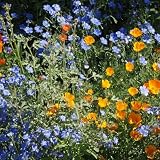
- 16 Western Native Wildflower Seeds - This premium wildflower seed mix features California Poppy, Arroyo Lupine, Palmer Penstemon, Blazing Star, Blue Flax, Tidy Tips, and more drought-tolerant native flower seeds built for sunny Western landscapes.
- Bold Color Wildflower Seeds Mix - Vivid poppies, penstemons, and lupines create a striking blend of bold brights and soft pastels with varied heights for texture and movement. This wild flower seeds mix delivers a windswept Western meadow aesthetic.
- Water-Wise Wild Flower Seeds - These native wildflower seeds thrive in full sun with well-drained soil and minimal water. Drought-tolerant flower seeds for planting outdoors that cut irrigation and fertilizer needs once established in your garden.
- Attracts Bees, Butterflies & Hummingbirds - Nectar-rich native flower seeds attract pollinators while building habitat and biodiversity. Create a vibrant outdoor pollinator garden with diverse Western wild flower seed varieties that thrive in heat.
- 100% Pure Seed No Fillers - This blend of annual, perennial, and biennial wildflower seeds contains zero inert filler. Open-pollinated native plant seeds are adapted to Western heat and seasonal rainfall patterns for reliable, long-term results.
Combine biodiversity with water, streets and public space
Green infrastructure can also manage runoff, provide shade and cooling, improve visual character and support recreation. The National Design Guide presents natural features as a multifunctional network and gives examples including street trees, sustainable drainage systems and ponds within drainage strategies.
The Tool Desk
Outbyte PC Repair FREERepair Windows errors before they cause bigger problemsFix Now →Outbyte Driver Updater FREEScan for outdated or missing drivers - takes under a minuteDriver Scan →Integration must not turn habitat into a decorative afterthought. A rain garden designed only for rapid conveyance may be too frequently disturbed for wildlife; a heavily used lawn may not function as meadow; a pond placed for visual effect may receive polluted runoff. Set the ecological performance requirements alongside drainage, access, safety and maintenance requirements, then resolve conflicts explicitly.
Design public access around sensitive areas
- Concentrate paths and seating where they can absorb use without fragmenting breeding or refuge areas.
- Use boardwalks, seasonal closures or viewing points when access through wetland or ground-nesting habitat would cause damage.
- Keep sightlines and passive surveillance where safety requires them, while retaining habitat depth and dark edges elsewhere.
- Explain seasonal changes with signs or interpretation so reduced mowing or standing water is understood as intentional management.
UK sustainable drainage standards surfaced in the design guidance call for vegetation, including trees, where reasonably practicable and for designs that support connectivity; those standards are jurisdiction-specific, so confirm the requirements for the project’s location.
Design buildings as part of the habitat network
Buildings can provide supplementary nesting and roosting opportunities through appropriately designed bird or bat boxes, bee bricks and other integrated features. Their value depends on location, construction detail and the surrounding habitat. A box on an exposed façade with no nearby food, cover or safe flight path is unlikely to compensate for lost habitat.
Coordinate ecological features with fire strategy, ventilation, waterproofing, maintenance access, structural details and future refurbishment. Record each feature in the handover information so it is not accidentally sealed, painted, removed or blocked during later works. Species-specific advice is essential where protected species may be involved.
Quick wins for a faster PC:
Scan for outdated or missing drivers - takes under a minuteDriver Scan →Repair Windows errors before they cause bigger problemsFix Now →Fix the driver behind crashes, sound loss and screen glitchesFind Drivers →Rank #4

- 16,000 PREMIUM SEEDS: A rich blend of 16,000 true Northeastern native wildflower seeds, curated for strong germination and long-season bloom across regional climates.
- AUTHENTIC NATIVE BLEND: Includes favorites such as Black-Eyed Susan, New England Aster & more — all region-adapted for naturalized meadows and woodland borders.
- FRESH FOR 2026 SEASON: Specially packed for the 2026 growing year, ensuring vigorous establishment, cold tolerance, and reliable flowering from spring through fall.
- 1-OUNCE FRESHNESS POUCH: Seeds are sealed within a 1-ounce moisture-protected pouch for extended viability, complete with planting instructions for broad-area coverage.
- FAMILY SOWN PROMISE: Each packet includes simple planting instructions and freshness-sealed packaging. If your seeds don’t grow, we’ll refund your purchase—no questions asked!
Make stewardship part of the construction brief
Habitat is an asset with operating costs. EPA guidance says the design should account for access and recurring maintenance, while Building for a Healthy Life 2026 highlights long-term stewardship for integrated blue and green infrastructure.
Assign responsibilities before handover
- Name the owner or management body for every habitat parcel, tree, water feature and building-integrated feature.
- List establishment tasks, routine work, seasonal operations, inspections, replacement rules and emergency responses.
- Provide safe access, equipment storage, water points and isolation controls where maintenance requires them.
- Set out how contractors will avoid nesting seasons, wet-soil damage, compaction, chemical drift and the spread of invasive species.
- Secure funding and a realistic management term; a habitat that cannot be maintained is a design risk, not a biodiversity gain.
Monitor establishment and adapt
Record the baseline, as-built condition, target habitats, management actions and monitoring dates. Inspect after the first growing season and again after major establishment milestones, then adjust mowing, watering, grazing, weed control or planting where results diverge from the design objective. Monitoring should measure the habitat and ecological function that matter locally, not simply the number of installed features.
For developments in England, Defra’s guidance on making on-site biodiversity gains, updated 14 July 2026, recommends a habitat baseline and the relevant biodiversity metric for on-site planning. The metric and legal process do not automatically apply elsewhere, and they should not replace ecological judgement.
A practical design-and-delivery workflow
- Set the objective. Identify priority habitats, species, ecological processes and any planning or client commitments. Define what “better” means before choosing features.
- Survey and map. Combine ecological survey with soils, hydrology, trees, topography, flood risk, utilities, access, lighting and surrounding green infrastructure.
- Protect and connect. Fix retention zones and movement routes in the concept plan. Test roads, boundaries, drainage and lighting against those routes.
- Select interventions. Use the comparison criteria—ecological fit, connectivity, feasibility, persistence, other functions and measurability—to choose a small number of mutually supporting habitats.
- Detail construction requirements. Specify soil handling, protection fencing, planting stock, water regimes, habitat-box details, seasonal constraints, biosecurity controls and inspection points.
- Cost the whole life. Include establishment, access, maintenance, replacement, monitoring and management funding, not only installation.
- Build without degrading the baseline. Brief every trade on tree protection, soil storage, water pollution prevention, lighting controls and invasive-species hygiene.
- Commission and hand over. Verify as-built habitats, update drawings and asset registers, and transfer the management plan, responsibilities and monitoring schedule.
- Review and adapt. Use monitoring results and site observations to refine management while retaining the original ecological objective.
Common failure modes and corrections
“Install a green roof and the job is done”
A roof can add habitat, retain water and cool a building, but its value depends on depth, substrate, moisture, exposure, plant palette, maintenance and connection to other habitat. Treat it as one component of a network and check structural, fire, access and water requirements.
Recommended Free Tools
“Native means suitable everywhere”
Native status does not override soil, hydrology, climate, provenance or intended habitat. Use locally appropriate species and document why each palette was selected.
Best Value

- 🌼 “American Meadow Magic” Wildflower Seed Mix: Our signature PlantMe blend features 25 diverse wildflower varieties, specially curated to create a stunning, natural meadow right in your own backyard. Experience the magic of a flourishing, colorful ecosystem.
- 🌱Extra-Large, High-Yield Packet | 10,000+ Pure Seeds: This oversized packet contains 30 grams (over 1 oz) of premium seeds with no fillers. With 10,000+ live seeds, you have ample coverage for approximately 100 sq. ft., ensuring a thick, vibrant display.
- 🦋Pollinator Paradise & Easy “Throw & Grow”: Attract bees, butterflies, and hummingbirds with nectar-rich blooms. This easy-to-grow mix is perfect for all skill levels—simply scatter on prepared soil for a successful, low-maintenance wildflower meadow.
- ✅Guaranteed Freshness & High Germination Rate: We deliver the freshest with rigorously tested high germination rates. Packaged in a resealable, moisture-proof pouch to lock in freshness and viability for seasons to come.
- 🎁Complete Growing Kit in One Bag: Includes clear planting instructions and is beautifully designed for gifting. Perfect for birthdays, holidays, or to inspire a new gardener. Grow a piece of American meadow magic anywhere!
“More features automatically mean more biodiversity”
Disconnected boxes, isolated ponds or frequently mown “wildflower” areas can add little. Prioritise quality, connectivity and persistence, then measure the intended outcome.
“Maintenance can be decided after completion”
Late maintenance decisions often remove the access, water supply or funding that habitats need to establish. Put responsibilities, tasks and costs into the brief and handover documents.
“A metric is a substitute for design”
Metrics help establish a baseline and compare planned change, but they cannot identify every local ecological risk or guarantee that a habitat will function. Use the appropriate local metric alongside survey, professional judgement and adaptive management.
What a strong biodiversity design delivers
The strongest construction schemes do not chase a fashionable feature or promise a universal percentage increase. They retain existing ecological value, repair connections, create a deliberate mix of suitable habitats, integrate those habitats with water and public-space functions, and provide the people, access and funding needed to manage them. That approach is consistent with international policy, English design guidance and US green-infrastructure practice while remaining adaptable to the actual site and jurisdiction.
Quick Recap
Product prices and availability are accurate as of the date/time indicated and are subject to change. Any price and availability information displayed on Amazon at the time of purchase will apply.

