Heat pumps made MIT Technology Review’s 2024 Breakthrough Technologies list not because the underlying technology is new, but because it is reaching a consequential new phase. Better cold-weather performance, electrification, cleaner power, improved controls, and industrial applications are expanding a system that can heat and cool buildings—and, in some configurations, heat water—by moving heat instead of generating it through combustion.
That makes heat pumps an important construction and retrofit technology, but not a universal plug-and-play solution. Real results depend on the building envelope, system sizing, local climate, electricity and fuel prices, backup heat, refrigerant rules, installation quality, and the capacity of the local grid.


As an Amazon Associate I earn from qualifying purchases.
Why a mature technology was called a breakthrough
Heat pumps have been used in buildings since roughly the middle of the 20th century. Their basic physical principle is established: use electricity to move heat from a cooler source to a warmer destination. In heating mode, an air-source heat pump extracts heat from outdoor air and releases it indoors. In cooling mode, it reverses the cycle and removes heat from the building.
MIT Technology Review’s case for including heat pumps among its 10 Breakthrough Technologies 2024 was therefore mainly about scale, timing, performance, and application. Several trends are arriving together:
#1 Best Overall
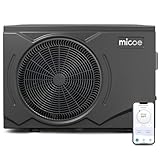
- Extend Your Swim Season with 35,000 BTU Heating - Advanced Inverter technology delivers robust heating for pools up to 24ft (12,000 gallons). Operates in temperatures down to 32°F, giving you a comfortable 104°F swim from early spring to late fall—more swimming days, more family fun
- Slash Heating Bills by 69% vs Gas & Electric - Our air-source technology captures heat from the surrounding air and transfers it to your pool water—delivering 35,000 BTU while cutting costs by 69% compared to both gas and electric heaters. Enjoy a warm pool with significantly lower monthly bills
- Dual Control: TFT Touch Panel & Smart App - Control your pool heater two ways: the built-in TFT touch panel for direct access, or the smart App for remote control from anywhere. Easily adjust temperature, set schedules, and program heating times—all at your fingertips
- Whisper-Quiet Operation at 50dB(A) - Enjoy a peaceful backyard with no noisy disturbance. Our technology ensures quiet operation as low as 50dB—softer than a normal conversation—so you and your family can relax day or night
- Titanium Heat Exchanger & Fade-Resistant ABS Housing - Built to last season after season. The corrosion-proof titanium heat exchanger withstands saltwater for long-term reliability. The durable ABS housing features a sleek black finish that stays looking new—no fading or yellowing after years in sun, rain, or snow
- Building electrification: Heat pumps can replace or reduce combustion-based heating, particularly as electricity generation becomes less carbon-intensive.
- Cold-climate development: New equipment is designed to retain useful capacity and efficiency at temperatures that historically made air-source systems less attractive.
- Replacement demand: Homes that already have air-conditioning equipment may be able to replace it with reversible heat-pump equipment rather than installing separate heating and cooling systems.
- New applications: heat-pump water heaters, district-energy systems, and industrial process-heat systems are broadening the market beyond ordinary residential HVAC.
- System-level value: Thermal storage, demand response, and digital controls may allow some heat-pump load to be shifted away from the most stressful hours on the electricity grid.
The breakthrough is best understood as the expansion of a proven platform—not the invention of a wholly new machine.
How a heat pump works
A heat pump uses a closed refrigerant cycle involving an evaporator, compressor, condenser, and expansion device. The refrigerant changes pressure and phase as it circulates, allowing it to absorb heat at one point and release it at another.
In a typical residential air-source system:
- The outdoor coil absorbs heat from the surrounding air, even when the air feels cold.
- The compressor raises the refrigerant’s pressure and temperature.
- The indoor coil releases that heat into the building.
- A reversing valve changes the direction of the cycle for cooling.
Because the equipment moves heat rather than converting electricity directly into heat, its useful heat output can exceed the electricity consumed by the compressor, fan, and controls. This is why a heat pump can have a coefficient of performance, or COP, greater than 1. A COP of 3, for example, means the system delivered roughly three units of heat for each unit of electricity during the measured operating condition.
Quick wins for a faster PC:
Clear out junk files and repair common Windows errorsFree Scan →Scan for outdated or missing drivers - takes under a minuteDriver Scan →Repair Windows errors before they cause bigger problemsFix Now →That number is not a permanent property of every heat pump. COP changes with outdoor temperature, indoor or supply-water temperature, defrost operation, fan speed, controls, installation, and system condition. A rating from a test condition should not be treated as a promise about an entire winter’s energy bill.
The main heat-pump categories
| Application | What it does | Important design question |
|---|---|---|
| Central air-source heat pump | Uses ducts to provide both heating and cooling. | Are the ducts correctly sized, sealed, insulated, and capable of delivering the required airflow? |
| Ductless mini-split | Uses one or more indoor units connected to an outdoor unit where ducts are absent or unsuitable. | Can the indoor heads cover the rooms and loads without creating cold or overheated zones? |
| Cold-climate air-source heat pump | Uses equipment and controls designed to maintain more capacity at low outdoor temperatures. | What capacity remains at the local winter design temperature, and what supplies heat below the system’s balance point? |
| Heat-pump water heater | Extracts heat from surrounding air and transfers it into a storage tank. | Is there adequate space, airflow, condensate drainage, electrical service, and hot-water capacity? |
| Industrial or district heat pump | Upgrades waste heat or low-temperature heat for processes, buildings, or district networks. | Can the heat source, required temperature, operating schedule, and electricity cost support the project? |
Cold climates: capable does not mean identical at every temperature
The old criticism that air-source heat pumps simply stop working in cold weather is too broad for modern cold-climate equipment. The more accurate statement is that output and efficiency vary with temperature, and the system must be designed around the building’s actual heat loss and local weather.
ENERGY STAR’s cold-climate criteria include a COP of at least 1.75 at 5°F and retention of at least 70% of the applicable heating capacity measured at 47°F. These are demanding rating conditions, not a guarantee that every system on the market meets them. ENERGY STAR also notes that qualifying systems can continue operating below 5°F, while backup heat may be the more efficient way to meet demand at still lower temperatures in some installations.
For a cold-climate project, ask for more than a headline minimum operating temperature. The design should identify:
- the local outdoor design temperature;
- the building’s heat loss at that temperature;
- the heat pump’s delivered capacity at the design temperature, not only its nominal capacity;
- the balance point at which the heat pump no longer meets the full load;
- the type, size, and operating cost of backup heat;
- the control logic for switching or supplementing the system; and
- the electricity tariff and demand implications of using resistance backup.
A backup furnace, boiler, or electric resistance element is not automatically evidence of a failed heat-pump design. It can be a sensible part of a system in a severe climate. The problem is an installation that relies on expensive resistance heat unexpectedly because the unit was oversized, undersized, poorly commissioned, or connected to a building with excessive heat loss.
Why the building envelope comes before the equipment
A heat pump is only one part of a heating system. Insulation, air leakage, windows, ducts, distribution, controls, and occupant behavior all affect the load that the equipment must serve.
The International Energy Agency reports that improving a home’s efficiency rating by two grades can halve heating energy demand and reduce the growth in winter peak demand by one-third. In a U.S. Department of Energy analysis of older homes in cold climates, insulation and air-sealing improvements reduced the cost of purchasing and installing a heat pump by up to $3,700 in the studied category, partly because the improved homes required smaller systems.
Rank #2
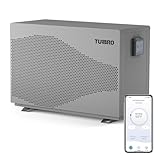
- Swim Any Season: Beluga series heats or cools your pool to maintain comfort all year long; set your desired water temp from 46-104°F in ambient outdoor temps from 5-109°F; programmable timer functions and smart WiFi control
- Cost-Effective Performance: Delivers 33,000 or 58,000 BTU output with a COP rating up to 15.8 (AHRI Standard 1160(I-P); air source technology utilizes ambient heat for outstanding efficiency and saves up to 70% on energy costs compared to natural gas heaters
- Inverter Technology: The Beluga series features a renowned brand’s full DC inverter compressor; intelligently adjusts working power to ensure a stable water temperature; saves up to 40% energy compared to traditional on-and-off models
- Built to Perform: Advanced titanium heat exchanger improves heat transfer efficiency while resisting corrosion to be compatible with saltwater pools; includes a four-way valve for seamless switching between heating and cooling modes
- For Variable Pools: B33V is suitable for pools up to 10,000 gallons (maximum size of 20’ round or 12’x24’ rectangular); B58V is suitable for pools up to 18,000 gallons (maximum size of 26’ round or 14’x42’ rectangular); not recommended for inflatable pools due to low water pressure. Enjoy peace of mind with a 2-year warranty on the full machine and a 5-year warranty on the compressor
Those figures are not universal rebates or guaranteed savings. They illustrate why envelope work can change the equipment calculation. A smaller, steadier heat pump may cost less to install, cycle less, operate more efficiently, and place less stress on the electrical system.
The Tool Desk
Outbyte PC Repair FREEClear out junk files and repair common Windows errorsFree Scan →Outbyte Driver Updater FREEFix the driver behind crashes, sound loss and screen glitchesFind Drivers →For a retrofit, inspect the building before choosing equipment. Look for attic and roof insulation gaps, bypasses around recessed lights and plumbing, leaky rim joists, uninsulated foundation walls, poorly sealed windows and doors, and duct losses in unconditioned areas. In a new build, it is usually easier to coordinate the envelope, windows, duct routes, electrical service, condensate drainage, and equipment locations before finishes are installed.
Sizing and installation determine field performance
ENERGY STAR recommends proper sizing using a Manual J load calculation. The calculation should be based on the building’s construction, orientation, windows, insulation, air leakage, design temperatures, and room-by-room loads—not simply the size of the old furnace or the square footage of the house.
Oversizing can be just as problematic as undersizing. An oversized unit may satisfy the thermostat quickly, cycle frequently, provide less consistent comfort, and fail to dehumidify effectively in cooling season. An undersized unit may rely heavily on backup heat or leave distant rooms uncomfortable. Variable-capacity equipment can modulate over a range, but it still needs a sound load calculation and correct commissioning.
Central air-source heat pumps can often use existing ductwork, but “the house already has ducts” does not mean the ducts are automatically suitable. A contractor should check duct sizing, leakage, insulation, static pressure, supply and return balance, and whether the air handler can provide the required airflow at the chosen operating temperature.
PC Slower Than It Used to Be?
A free scan shows the junk files, broken settings and background clutter dragging Windows down - then fixes them in one click.Free scan · Windows 10 & 11Crashes, No Sound, or Screen Glitches?
Random freezes, missing sound and display glitches usually trace back to one bad driver. Find and replace yours safely.Free scan · under a minuteWhere ducts are absent, damaged, or impractical to modify, a ductless mini-split heat pump may be appropriate. That choice still requires room-by-room load analysis, indoor-unit placement, condensate planning, electrical review, line-set installation, local-code compliance, and professional refrigerant work. A low purchase price does not compensate for poor distribution or an indoor head mounted in a location that cannot sense or serve the occupied space.
A practical heat-pump project checklist
- Start with energy use. Gather at least a year of fuel and electricity bills, note heating and cooling complaints, and identify whether the existing system also supplies domestic hot water.
- Assess the envelope. Find air leaks and insulation deficiencies before finalizing the load or equipment size.
- Request a Manual J calculation. Ask to see the design temperature, total heat loss, room-by-room loads, and assumptions.
- Verify capacity at cold conditions. Compare the heat pump’s output at the local design temperature with the calculated load.
- Inspect distribution. For ducted systems, check airflow, static pressure, leakage, insulation, and return-air paths. For ductless systems, plan indoor-unit coverage and door-open or door-closed operating conditions.
- Review electrical requirements. Confirm panel capacity, circuit requirements, disconnect location, wiring, controls, and whether backup resistance heat creates a large additional load.
- Plan drainage and placement. Outdoor units need clearance, airflow, service access, and a strategy for snow, ice, defrost water, and noise. Indoor equipment and heat-pump water heaters may need condensate drainage.
- Specify commissioning. The closeout should include refrigerant and airflow checks, control settings, temperature readings, defrost and backup-heat operation, and homeowner instructions.
The homeowner can maintain filters and keep equipment accessible, but refrigerant charging, circuit work, evacuation, leak testing, and sealed-system repairs should be left to appropriately qualified professionals. In the United States, refrigerant rules and technician requirements apply to covered work.
Heat-pump water heaters are a separate opportunity
A heat-pump water heater is not simply a smaller space-heating heat pump. It uses surrounding air as its heat source and transfers that heat into a storage tank. Many models also include conventional electric-resistance elements for recovery or high-demand periods.
The U.S. Department of Energy describes heat-pump water heaters as often two to three times more energy efficient than conventional electric-resistance or gas-fired water heaters. Actual performance depends on ambient temperature, operating mode, tank size, incoming-water temperature, hot-water demand, and installation conditions.
Free tools Windows power users keep installed
One-click scans. No signup required.
For a replacement project, a heat-pump water heater can be a practical way to electrify one major energy use without redesigning the home’s entire space-heating system. Before selecting one, check:
- Location and air volume: The unit extracts heat from surrounding air and may cool the room. A small, poorly ventilated closet can reduce performance or require ducting.
- Condensate: Cooling the air produces water that must drain safely, especially during humid weather.
- Noise and vibration: Compressor and fan noise may matter when the tank is near bedrooms or living areas.
- Capacity: Tank volume and recovery rate must match the household’s peak hot-water demand.
- Electrical service: The selected unit may have specific circuit and wiring requirements; these must be checked rather than assumed.
- Operating modes: Efficiency, hybrid, electric, vacation, and demand modes can have different comfort and energy consequences.
These appliances are not suitable for every mechanical room. Space, drainage, noise, electrical readiness, and local installation requirements should be resolved before purchase.
Rank #3
The industrial and district-heating frontier
The most strategically important heat-pump applications may eventually be outside the average home. Industrial systems can recover waste heat or upgrade low-temperature heat for food production, paper manufacturing, district heating, and other processes. MIT Technology Review highlighted the possibility of producing industrial steam electrically for applications such as food processing and paper.
The IEA estimates that commercially available industrial heat pumps could technically serve up to roughly 20% of global industrial heat demand. That is a technical potential, not a forecast of installations. Industrial projects involve process integration, long asset lifetimes, heat-source availability, high-temperature requirements, plant downtime, electricity contracts, and complicated financial decisions.
Recommended Free Tools
Heat pumps are most immediately useful where a facility has a dependable low-temperature heat source, recoverable waste heat, a steady operating schedule, and a process that does not require extreme temperatures. A project that must create very high-temperature heat from expensive electricity may have a very different business case from one that upgrades waste heat already present in the plant.
District heating can similarly benefit when a network can combine wastewater, industrial waste heat, ambient water, geothermal resources, or other low-temperature sources. The challenge is coordinating the central plant, distribution temperatures, building substations, storage, controls, and customer demand over many years.
Climate benefits depend on the whole system
Heat pumps are not carbon-free. Their climate performance depends on the electricity mix, refrigerant leakage, equipment manufacturing, transport, installation, maintenance, and the combustion system being replaced.
The IEA estimates that, with contemporary refrigerants, heat pumps reduce greenhouse-gas emissions by at least 20% compared with a gas boiler even when the electricity is emissions-intensive. In countries with cleaner electricity, the reduction can reach 80%. The comparison changes by region, equipment, fuel, grid mix, and operating conditions.
Do these 3 things before closing this tab:
1Scan for outdated or missing drivers - takes under a minute2Repair Windows errors before they cause bigger problems3Fix the driver behind crashes, sound loss and screen glitchesFor a building owner, the relevant question is not simply whether the heat pump has a high rated efficiency. It is whether the proposed system will deliver the required heat with reasonable electricity use, avoid unnecessary backup operation, and remain effective as the grid becomes cleaner or more constrained.
Refrigerants and the U.S. regulatory transition
Refrigerant selection is central to the climate story. A refrigerant with a high global-warming potential can undermine part of the benefit if it leaks during manufacture, installation, service, or disposal. Regulations are moving equipment toward lower-global-warming-potential alternatives.
In the United States, EPA Technology Transitions rules restrict the installation of new residential and light-commercial air-conditioning and heat-pump systems using refrigerants above the applicable GWP threshold. EPA identifies a GWP threshold of 700 for new residential heat-pump and air-conditioning installations, with a January 1, 2025 compliance date and a limited inventory transition through January 1, 2026. Variable-refrigerant-flow systems have separate transition provisions and dates.
These rules do not mean that every existing system must be immediately removed. They do mean that contractors, builders, distributors, and owners need to verify the exact equipment category, refrigerant, installation date, inventory status, and applicable rule before a replacement is specified.
What’s actually slowing this PC down?
Pick the symptom - the matching free tool is one click away.
R-290, or propane, is one lower-GWP option in some equipment categories. It is also flammable. Whether it is acceptable depends on the end use, refrigerant charge, equipment design, safety controls, building location, codes, and EPA’s listing for that specific application. It is inaccurate to describe propane refrigerant as universally approved for residential heat pumps. Refrigerant handling is not a DIY charging task.
Grid demand, manufacturing, and workforce limits
Electrifying heating shifts energy demand from delivered fuels to electricity. That can reduce emissions and improve efficiency, but it also increases winter electricity demand, especially during cold snaps. The IEA’s 2026 monitoring reports that heat pumps represented approximately 2% to 16% of annual peak electricity demand across major markets in 2024, depending on climate and adoption levels.
The answer is not to pretend that heat pumps have no grid effect. Better building envelopes reduce the size and duration of the load. Thermal storage can preheat water or buildings before a peak period. Smart controls and utility demand-response programs can shift some operation, although compatibility, customer comfort, control authority, and local program rules must be checked. A smart thermostat for heat pump is not automatically interchangeable with a conventional furnace thermostat; the system’s staging, auxiliary heat, reversing valve, and communicating controls all matter.
Manufacturing and labor are additional constraints. The IEA estimates global heat-pump manufacturing capacity at roughly 145 gigawatts per year in 2024, with China, the United States, and the European Union leading regional capacity. Shortages of qualified installation and maintenance technicians remain a bottleneck. A technically excellent product cannot deliver its rated performance if it is poorly sized, improperly installed, or never commissioned.
What the market says after the 2024 breakthrough label
The market has not followed a simple straight-line growth curve. The IEA’s 2026 reporting says global heat-pump sales fell by about 2% in 2025. Europe returned to growth, while U.S. sales declined by approximately 13%. Even so, heat pumps outsold gas boilers in the United States for the fourth consecutive year in 2025.
The IEA’s 2026 Heat Pump Monitor describes building heat-pump sales as stabilizing during 2025 and early 2026, with strong regional differences driven by policy, construction activity, energy prices, and replacement cycles. The same monitoring reports that heat pumps supplied about 5% of global heating needs in 2024 and around 12% of global building space-heating needs. Those percentages use different denominators, so they should not be combined into a single market-share claim.
The larger direction remains significant. The IEA identifies end-of-life cooling equipment as a major replacement opportunity because many buildings already have electrical service, distribution, and contractor familiarity associated with air conditioning. But high upfront costs, policy changes, refrigerant transitions, installer shortages, and local electricity prices can all slow adoption.
Common field problems and what they usually indicate
| Observed problem | Possible causes | Appropriate response |
|---|---|---|
| High winter electricity bills | Heat loss, high supply temperature, resistance backup, poor controls, duct leakage, unfavorable tariffs, or incorrect commissioning. | Review operating data and backup-heat use; have the contractor check airflow, controls, envelope, and system performance before assuming the equipment itself is defective. |
| Frequent short cycling | Oversizing, thermostat placement, control settings, or very low load during mild weather. | Have sizing and controls reviewed. Do not solve the problem by randomly changing refrigerant or thermostat wiring. |
| Ice on the outdoor unit | A temporary frost layer can occur before a normal defrost cycle; persistent ice may indicate drainage, airflow, sensor, refrigerant, or mechanical problems. | Keep clearances open and observe whether defrost occurs. If ice remains or airflow is blocked, call for service. |
| Cold rooms in a ductless home | Indoor heads may not cover the actual load, doors may restrict circulation, or the layout may require additional distribution. | Review room-by-room loads and air distribution rather than simply increasing the setpoint. |
| Water around a heat-pump water heater | Condensate drainage, a plumbing leak, relief discharge, or tank failure. | Shut down the appliance if necessary and identify the source promptly; do not assume every puddle is normal condensate. |
Routine maintenance is comparatively simple but still matters. Follow the manufacturer’s filter schedule, keep outdoor coils and airflow paths clear, inspect condensate lines, and maintain access for service. Compatible heat-pump air filters and HVAC condensate pumps can be useful maintenance or installation supplies, but compatibility and sizing must be verified. They are not substitutes for refrigerant, electrical, or sealed-system service.
How to evaluate a heat-pump proposal
Before signing a contract, ask the installer or builder for written answers to these questions:
- What is the Manual J design heat loss, and what outdoor design temperature was used?
- What is the heat pump’s heating capacity at the design temperature and at 5°F, if relevant to the climate?
- At what temperature or condition will backup heat operate?
- How much of the existing ductwork can be reused, and what leakage or static-pressure corrections are required?
- What electrical circuit, panel, disconnect, and backup-heating requirements apply?
- Where will condensate, defrost water, and snow be managed?
- Which refrigerant is used, what GWP rules apply to the installation, and who is qualified to service it?
- What commissioning measurements and documentation will be provided?
- What is covered by the equipment warranty, and who handles labor and refrigerant-related service?
- What are the expected seasonal operating costs under local electricity and fuel prices?
A professional Manual J load calculation and commissioning process are more valuable than choosing equipment from a brochure’s largest nominal capacity. An energy audit can identify envelope problems that would otherwise be blamed on the heat pump. If insulation and leakage are major issues, an air sealing before heat-pump installation assessment may improve both comfort and equipment economics.
The measured conclusion
Heat pumps deserve the breakthrough label because a familiar technology is becoming relevant to far more buildings and industrial processes. They can provide heating and cooling in one platform, deliver more useful heat than the electricity they consume, reduce fossil-fuel use, and make productive use of low-temperature or waste heat.
But the technology does not erase construction fundamentals. A poorly insulated building, incorrect load calculation, inadequate ducts, unsuitable controls, weak commissioning, or inappropriate refrigerant choice can turn a theoretically efficient system into an expensive disappointment.
The Tool Desk
Outbyte PC Repair FREEClear out junk files and repair common Windows errorsFree Scan →Outbyte Driver Updater FREEFix the driver behind crashes, sound loss and screen glitchesFind Drivers →For builders and homeowners, the sound approach is to treat a heat pump as part of a designed energy system. Improve the envelope where practical, calculate the load, select capacity for real weather, plan backup and electrical service, comply with refrigerant and safety rules, and verify performance after installation. Under those conditions, heat pumps are not a miracle appliance—but they are a consequential platform for lower-carbon buildings and electrified industry.
The market and technical figures in this article reflect reporting from MIT Technology Review, the International Energy Agency, the U.S. Department of Energy, ENERGY STAR, and the U.S. Environmental Protection Agency, with the dates and geographic qualifications stated in the text.
Frequently Asked Questions
Can a heat pump work in a cold climate?
Yes. Modern cold-climate air-source heat pumps are designed to operate at low outdoor temperatures, but capacity and efficiency decline as conditions become more severe. ENERGY STAR cold-climate criteria include a COP of at least 1.75 at 5°F and retention of at least 70% of heating capacity relative to the applicable 47°F rating condition. Local design temperature, building heat loss, backup heat, and installation quality still determine results.
Are heat pumps always cheaper than gas heating?
No. Operating cost depends on local electricity and fuel prices, seasonal efficiency, the building envelope, equipment sizing, and how often backup heat operates. A heat pump can be particularly attractive when replacing heating oil, propane, or older electric equipment, but a project-specific comparison is necessary.
Can an existing home keep its ductwork when switching to a heat pump?
Often, yes, but the ducts must be inspected for sizing, leakage, insulation, static pressure, airflow, and supply-return balance. A Manual J load calculation and duct assessment should precede equipment selection. If ductwork is absent or unsuitable, a ductless system may be an alternative.
Is a heat-pump water heater the same as a home heating heat pump?
They use the same broad heat-transfer principle but serve different loads. A heat-pump water heater extracts heat from surrounding air and transfers it into a storage tank. It needs adequate space, airflow, condensate drainage, electrical service, and sufficient tank capacity.
Can homeowners recharge a heat-pump refrigerant system themselves?
No. Refrigerant charging, recovery, evacuation, leak testing, and sealed-system repairs should be performed by appropriately qualified professionals. U.S. refrigerant rules and technician requirements apply to covered work, and refrigerant safety depends on the specific equipment and refrigerant.
The Bottom Line
Bottom line: Heat pumps are a breakthrough in deployment and application, not a brand-new invention. Their success depends on the whole project: an efficient envelope, accurate sizing, suitable distribution, cold-weather capacity, compliant refrigerants, reliable controls, and professional commissioning.
Quick wins for a faster PC:
Clear out junk files and repair common Windows errorsFree Scan →Scan for outdated or missing drivers - takes under a minuteDriver Scan →Repair Windows errors before they cause bigger problemsFix Now →Quick Recap
Product prices and availability are accurate as of the date/time indicated and are subject to change. Any price and availability information displayed on Amazon at the time of purchase will apply.

