Green technology in real estate has moved beyond isolated solar panels and efficient lighting. The strongest projects now combine electrification, controls, flexible loads, onsite generation, storage, low-carbon materials, water systems and continuous measurement.
The opportunity is substantial: the U.S. Department of Energy says buildings account for approximately 75% of U.S. electricity use and 40% of total energy use. DOE FY 2026 Building Technologies justification. The best investment depends on building type, climate, tariffs, existing equipment, electrical capacity, tenant needs, incentives and the owner’s priorities.
As an Amazon Associate I earn from qualifying purchases.
What counts as green technology in real estate?
For this guide, green tech means physical systems and digital tools that materially improve a property’s environmental or operating performance. That includes technologies that:
Do these 3 things before closing this tab:
1Repair Windows errors before they cause bigger problems2Fix the driver behind crashes, sound loss and screen glitches3Clear out junk files and repair common Windows errors- Reduce operational energy use or emissions.
- Reduce embodied carbon from construction, renovation and replacement.
- Improve water efficiency, recovery or reuse.
- Shift loads and help buildings interact with the electric grid.
- Improve resilience, maintenance, measurement and long-term asset performance.
Certifications, carbon offsets and reporting software can support these projects, but they are not substitutes for equipment, envelope, water or material improvements.
#1 Best Overall
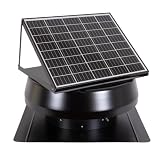
- Comes with Smart Thermostat control 50°F-122°F with Enable/Disable feature
- IP68 water proof brushless motor, 15-Year Warranty
- Adjustable solar panel (0°/15°/30°/45°), 40W, 1150 CFM, Up to 2900 cool sq. ft. cool off capacity
- 14 inches Nylon-Fiber-Aluminum fan blade with 1150 CFM
- Non-stop Day/Night running AC/DC adapter kit is sold separately, model # ILG8SF304
How the 10 innovations were selected
The list weighs carbon impact, total-cost-of-ownership potential, commercial readiness, retrofit compatibility, portfolio scalability, resilience, measurement quality and implementation complexity. Readiness is classified as follows:
| Status | Meaning |
|---|---|
| Deploy now | Commercially available with established installers and operating history. |
| Deploy selectively | Available, but economics or feasibility depend strongly on site conditions. |
| Pilot or watch | Promising, but evidence or cost competitiveness is narrower. |
| Emerging | Useful for understanding direction, not routine procurement. |
1. AI-assisted building controls and HVAC optimization
What it does
These systems use building-management data, occupancy, weather forecasts, equipment status, utility prices and sometimes grid-carbon signals to optimize HVAC, ventilation, lighting and other loads. Products range from fault detection and predictive maintenance to model-predictive and autonomous control.
Why owners care
HVAC is often a building’s largest controllable load. Software can improve schedules and set points without immediately replacing major equipment, making it attractive for existing portfolios. Schneider Electric’s EcoStruxure Building Advisor describes fault detection, equipment-health monitoring, dynamic set-point optimization and weather and tariff inputs. BrainBox AI markets autonomous HVAC control and publishes claims of up to 25% lower HVAC energy costs and up to 40% lower building carbon emissions; those are vendor claims, not universal guarantees. BrainBox AI optimization.
The Tool Desk
Outbyte Driver Updater FREEFix the driver behind crashes, sound loss and screen glitchesFind Drivers →Outbyte PC Repair FREERepair Windows errors before they cause bigger problemsFix Now →Best fit and risks
- Best fit: Offices, hotels, retail portfolios, campuses and buildings with an accessible BMS.
- Prerequisites: Calibrated sensors, functioning actuators, interoperable controls and staff who respond to alerts.
- Risks: Poor data, proprietary protocols, cybersecurity exposure, comfort complaints and savings that disappear when operators override schedules.
AI cannot repair an undersized HVAC system, poor envelope or missing sensor. Require measured savings, clear override rights, data ownership and a plan for connectivity loss.
2. Heat pumps and heat-pump water heating
What they are
Heat pumps move heat rather than creating it through combustion. Real-estate applications include air-source, variable-refrigerant-flow, rooftop, water-source and ground-source systems, plus heat-pump water heaters and cold-climate equipment.
Where they work
They are strongest in new all-electric construction, end-of-life equipment replacement, moderate climates and properties with increasingly clean electricity. DOE identifies heat-pump performance, low-global-warming-potential refrigerants, controls and electrical integration as major priorities. DOE FY 2025 Building Technologies budget.
Rank #2

- EFFICIENT VENTILATION TO REMOVE HEAT & HUMIDITY: Solar attic exhaust fan delivers up to 2000 CFM of airflow, cooling spaces up to 2500 sq ft. It removes indoor heat and moisture, protects your attic from damage, keeps home air fresh, and eases the load on your air conditioning system.
- MULTI-ANGLE ADJUSTMENT & 24/7 OPERATION: Solar panel can be adjusted 0-70° both horizontally and vertically for optimal solar exposure. Comes with an AC/DC adapter for continuous day-and-night operation. No Battery Backup.
- TWO MODES & THERMOSTAT: Mode Ⅰ (Energy Saving): Solar roof fan's airflow varies with sunlight. The adapter also is used as an energy supplement for steady airflow. Mode Ⅱ (Performance): Adjust solar roof ventilation fan speed (1–4) via the control knob (4 = max). (AC/DC adapter required for Mode 2. ) In both modes, you can enable/disable the roof vent fan's auto-start at a set temperature (68–113°F).
- AC/SOLAR AUTO-SWITCHING & REDUCE ENERGY BILL: With the adapter connected, the system prioritizes solar power on sunny days, with mains power as supplementary support to reduce reliance on home electricity. On cloudy days or at night, it automatically switches to household electricity as the primary source for continuous, stable fan operation. Solar exhaust fan is ideal for attics, workshops, garages, and more.
- DURABLE & WEATHERPROOF: Weatherproof brushless copper motor. High strength metal housing is hail and weather resistant. Solar vent fan is your reliable and ideal ventilation solution.
Trade-offs
- Electrical-panel, transformer or service upgrades may be required.
- Outdoor-unit space, noise and extreme-temperature performance can constrain retrofits.
- High electricity prices can undermine operating economics versus gas.
- Refrigerant leakage and future refrigerant rules affect whole-life emissions.
- Multifamily buildings may lack suitable locations for outdoor equipment.
The IEA identifies high upfront prices and limited adaptability in some building types as continuing barriers. IEA Buildings Innovation Gaps. “Electric” also does not automatically mean zero carbon: evaluate grid emissions, efficiency, refrigerants and embodied impacts.
3. Smart electrical systems and flexible loads
What they do
Grid-interactive buildings coordinate HVAC, water heating, batteries, EV charging, solar, refrigeration, thermal storage and backup systems. Smart panels and demand-response controls reduce peaks and move consumption to more valuable hours instead of merely lowering annual usage.
Best opportunities
- Time-of-use tariffs and demand charges.
- Campuses with solar, batteries or EV fleets.
- Sites facing grid congestion or limited service capacity.
- Portfolios able to aggregate flexible loads.
DOE lists demand flexibility, smart panels, electrical optimization and support for EV charging and heat pumps among its building priorities. DOE FY 2025 budget. Model comfort limits, response speed, utility-program changes and the value of any backup generation before committing to projected demand-response revenue.
4. Solar PV, building-integrated PV and solar thermal
Beyond rooftop panels
Options include rooftop and carport PV, facade-integrated systems, solar glass, solar thermal for hot water and solar-plus-storage. Roof area, shading, structural capacity, historic restrictions, interconnection, tenant metering and load shape determine the business case.
DOE documents commercialized envelope concepts that combine daylighting, generation and heat transfer. DOE commercialized building innovations.
Quick wins for a faster PC:
Repair Windows errors before they cause bigger problemsFix Now →Fix the driver behind crashes, sound loss and screen glitchesFind Drivers →Clear out junk files and repair common Windows errorsFree Scan →Key qualifications
- Replace or assess the roof before mounting an array.
- Conventional rooftop PV is often cheaper and easier to maintain than BIPV.
- Solar offsets purchased electricity but does not make an inefficient building efficient.
- Annual net-zero claims can hide heavy grid use during high-carbon hours.
5. Batteries, thermal storage and microgrids
Technology range
Storage includes lithium-ion and emerging batteries, hot- or chilled-water tanks, ice, phase-change materials, building thermal mass and microgrids combining generation, storage, controls and islandable critical loads.
Rank #3

- 【Solar Air Conditioner with Battery】Equipped with a double-sided solar panel and a 4400mAh rechargeable battery, works for up to 8 hours after full charged in sunlight, our exhaust fans supports the extra ventilation during night time or cloudy day. The intelligent system switches the power supply mode according to the sunlight conditions.
- 【Adjustable Temperature Control】The battery box has a built-in intelligent temperature control system that allows you to adjust the ambient temperature for the fan to switch on and off automatically according to personal needs.
- 【Bifacial Solar Panel】With the 16W transparent rear panel, the panel panel generate power from both sides (up to 41W), increases the efficiency of power generation by up to 130%. The panel supports well working of the solar exhaust fans and also the charging of the battery. The efficiency of the fan and the battery charging is affected by sunlight conditions, it will be reduced when the weather is cloudy.
- 【Waterproof Solar Fans for Outside】This solar fan is equipped with IP44 waterproof fan blades and 11.8in+43.4in long cable with a waterproof plug. High quality weatherproof greenhouse fan design prevents short circuit or damage and works well in harsh outside environment.
- 【Higher Airflow】Enhanced blade and engineered motor maximise airflow at high speed. The airflow of the Dual 5.5-inch fans is 169CFM, suitable for places up to 850ft³. This exhaust fan is easy to install and can be mounted in a window or wall, suitable for greenhouses, garden sheds, shed vent, garage, chicken coop fan, animal houses, camping, caravans and much more.
NREL reports that, in one modeled scenario with 80% renewable-grid electricity, building thermal storage could provide more than 70% of grid-storage needs; this is a model result, not a universal forecast. NREL circular-economy research. NREL also studies reservoir thermal storage for data-center cooling. NREL Buildings research.
Best fit and limits
Data centers, hospitals, campuses and demand-charge sites can gain peak shaving, solar self-consumption and outage resilience. Economics weaken with low demand charges, little load variability, poor solar production, no resilience requirement or expensive fire-code and interconnection work. A battery’s climate value depends on charging behavior, manufacturing, replacement and the grid electricity it shifts.
6. High-performance envelopes and dynamic glazing
What to deploy
Continuous insulation, airtightness, high-performance windows, exterior shading, cool roofs, automated blinds, solar-control films, vacuum insulation, aerogels and electrochromic or thermochromic glazing all reduce heating and cooling loads.
Envelope work can shrink HVAC capacity and make heat-pump electrification feasible. The IEA identifies dynamic glazing and advanced retrofit materials as innovation priorities and gives a target solar-heat-gain coefficient range of approximately 0.08 to 0.65. IEA Buildings Innovation Gaps.
Start with moisture-safe air sealing, insulation and exterior shading before assuming expensive smart glass is the best cost-per-ton investment. Poorly designed airtightness work can create condensation or indoor-air-quality problems.
7. Low-embodied-carbon materials and circular construction
What it includes
Options include lower-carbon concrete, supplementary cementitious materials, reduced-carbon steel, mass timber, reused components, material passports, design for disassembly, adaptive reuse, environmental product declarations and whole-building life-cycle assessment.
Rank #4

- 【Solar Exhaust Fan for Greenhouse】Equipped with a 6600mAh rechargeable battery and 2 20W Bifacial Solar Panels, works for up to 10 hours after full charged in sunlight, our exhaust fans supports the extra ventilation during night time or cloudy day. The intelligent system switches the power supply mode according to the sunlight conditions.
- 【Adjustable Temperature Control】The battery box has a built-in intelligent temperature control system that allows you to adjust the ambient temperature for the fan to switch on and off automatically according to personal needs.
- 【Opposite Mounting Boosts Airflow】By installing high-airflow fans on two opposite sides: one draws in air, the others exhaust. Cross ventilation forms to accelerate airflow and improve overall ventilation efficiency.
- 【Waterproof Solar Fans for Outside】This solar fan is equipped with IP44 waterproof fan blades and waterproof plugs. High quality weatherproof greenhouse fan design prevents short circuit or damage and works well in harsh outside environment.
- 【Flexible Installation】Equipped with cables of different lengths, it allows flexible installation options to adapt to various actual scenarios. The airflow of the Triple 5.5-inch fan is 254CFM, suitable for places up to 1900ft³.
DOE analysis found that approximately 70% of a typical new home’s embodied emissions can come from concrete, insulation and cladding. In a DOE analysis of U.S. office buildings from 2013–2018, material embodied emissions were approximately 37% steel and 29% concrete; these ratios are dataset- and building-specific. DOE Technology Innovation Opportunities. NREL highlights concrete, steel, cross-laminated timber, reuse, remanufacturing and recycling. NREL Circular Economy for Building Materials.
PC Slower Than It Used to Be?
A free scan shows the junk files, broken settings and background clutter dragging Windows down - then fixes them in one click.Free scan · Windows 10 & 11Outdated Drivers Are Slowing You Down
One free scan finds every outdated or missing driver and matches the right update for your exact hardware.Free scan · exact hardware matchHow to avoid greenwashing
Compare functionally equivalent materials using consistent boundaries, service life, transport, maintenance and end-of-life assumptions. Mass timber is not automatically carbon-negative; sourcing, adhesives, fire protection, moisture, substitution and disposal all matter. Reusing an existing structure may outperform demolition and replacement even when the new building would operate more efficiently.
8. Digital twins, energy modeling and continuous commissioning
What they do
These tools combine BIM, energy models, sensors, utility data, weather, occupancy and maintenance records to test retrofit options, detect faults and verify performance. EnergyPlus is DOE’s open-source whole-building simulation program for energy, HVAC, lighting, plug-load and water analysis. DOE Better Buildings.
Value and failure modes
They improve capital planning, scenario testing and savings verification for complex buildings and portfolios. A “digital twin” is not automatically useful: demand calibrated models, reliable sensors, clear data ownership and operational workflows are essential. Require measured utility comparison rather than accepting modeled savings as actual performance.
Independent reader supportYour contribution helps us test, update, and keep practical guides available for everyone.9. EV charging integrated with buildings
What it means
Load-managed charging, fleet scheduling, vehicle-to-building or vehicle-to-grid capability, solar charging, battery-buffered fast charging and smart parking treat chargers as part of the building’s electrical system.
Free tools Windows power users keep installed
One-click scans. No signup required.
DOE field validation has examined systems using vehicle telematics, utility signals, vehicle-use patterns, demand charges and grid-carbon data. DOE next-generation building technologies. Schneider Electric describes coordination of EV loads, microgrids and building resources. Schneider Electric energy management.
Best Value

- Enhanced Ventilation: Powered by a 50W solar panel, this fan delivers up to 2850 CFM of airflow, effectively cooling and dehumidifying rooms up to 4,000 square feet. It’s ideal for attics, factory building, garages, warehouses, barns, sheds, grain storage facilities, greenhouses, chicken coops, and other spaces that need reliable ventilation and cooling.
- Superior Efficiency: The newly upgraded design features a more efficient rare earth permanent magnet brushless DC motor, allowing the fan to operate even on cloudy days with as little as 1W of solar power. The fan blades designed using advanced fluid dynamics software, along with the high-efficiency flow channel design, boost solar power output by 20% and increase CFM by over 50% compared to the previous generation.
- Flexible Positioning: The fan offers continuous angle adjustment from -45° to +45° horizontally and 0° to 60° vertically, ensuring optimal power generation efficiency no matter where it’s installed. Advanced Temperature Features: The fan can be set to automatically turn on/ off at any temperature between 50-104℉. You can also turn off the temperature control and keep the fan running continuously.
- Built to Last: Made entirely from rust-proof aluminum alloy, this fan is built for 10+ years of rooftop durability. Even if the protective coating gets scratched during installation, it won’t leave unsightly rust marks on your roof. The brushless DC motor, made from rare earth magnets, ensures a long lifespan without the wear and tear like traditional motors.
- Reliable Installation: The 1mm thick aluminum alloy mounting plate can be easily bent to fit the shape of roof tiles, especially for wavy or square metal roofs, ensuring a reliable seal. The package includes eight M8*50MM screws to securely fix the mounting plate to the roof, as well as two 6.5ft long stainless steel cables. These cables are used to fasten the fan body to the roof beams or columns, greatly enhancing the fan’s ability to withstand strong winds.
Multifamily sites, offices, logistics depots and garages should evaluate chargers, billing, networking, transformer capacity, demand charges and utility programs as one project. Installing chargers without load management can create a new peak-demand problem.
10. Geothermal and site-specific water systems
Geothermal heating and cooling
Ground-source heat pumps, geothermal exchange loops, well systems, district loops and reservoir thermal storage can deliver high seasonal efficiency and reduce exposure to outdoor temperature swings. They suit campuses and large developments but depend on geology, drilling, land, permitting and upfront capital. NREL tracks geothermal building applications and reservoir thermal storage. NREL Buildings research.
Water reuse and efficiency
Greywater, rainwater, blackwater treatment, condensate recovery, leak detection, efficient fixtures and cooling-tower optimization are most compelling in water-stressed regions, hotels, hospitals, data centers and large campuses.
A full reuse plant is not always the right first step. Leak detection, cooling-tower controls, fixture upgrades and condensate recovery may deliver simpler savings. Treatment, monitoring, separate piping, health rules and maintenance obligations must be included in the business case.
Which technologies work best together?
Lower-cost existing-building package
- Submetering and fault detection.
- HVAC scheduling and recommissioning.
- Lighting controls.
- Envelope maintenance and air sealing.
- Continuous measurement and operator training.
Electrification package
- Envelope improvements.
- Heat pumps and heat-pump water heating.
- Smart panels and load management.
- Thermal storage.
- Electrical-capacity planning.
Resilient campus package
- Solar generation.
- Batteries and microgrid controls.
- Managed EV charging.
- Islandable critical loads.
- Backup generation where clean alternatives cannot meet duration requirements.
Low-carbon new-construction package
- Adaptive-reuse analysis before demolition.
- Whole-building LCA.
- Lower-carbon concrete and steel, with mass timber where appropriate.
- High-performance envelope.
- Heat pumps, solar and storage.
- Digital-model handover to operations.
Choosing by building type and climate
| Property | First priorities |
|---|---|
| Office | Occupancy controls, HVAC optimization, envelope, heat pumps and demand flexibility. |
| Multifamily | Heat-pump water heating, air sealing, smart panels, managed EV charging and split-incentive solutions. |
| Retail | Refrigeration controls, HVAC optimization, rooftop solar, lighting controls and demand management. |
| Industrial/logistics | Solar, fleet charging, batteries, high-bay controls and roof improvements. |
| Hotel | Heat-pump water heating, guest-room controls, laundry and kitchen efficiency, water systems and solar. |
| Data center | Cooling optimization, thermal storage, efficient power systems, microgrids, water management and continuous commissioning. |
Cold climates generally favor envelope upgrades and cold-climate heat pumps; hot climates favor shading, reflective roofs, controls and storage. Humid buildings need careful latent-load and ventilation management. Wildfire- or outage-prone sites should evaluate filtration, storage, passive survivability and resilient controls. Water-stressed sites should prioritize reuse, leak detection and cooling-tower efficiency.
Quick Recap
Procurement checklist
- Ask which BMS platforms, protocols and equipment the solution supports.
- Confirm who owns operational data and whether raw data can be exported.
- Review cybersecurity controls, offline behavior and facility-manager override rights.
- Separate modeled, measured, case-study and “up to” savings claims.
- Price integration, commissioning, subscriptions, maintenance, replacements and electrical work.
- Request references for comparable buildings, climates and operating schedules.
- Define measurement and verification before installation.
- Model comfort, indoor-air-quality, resilience and tenant impacts alongside energy savings.
A practical sequence for owners
- Benchmark energy, demand, water, carbon and equipment condition.
- Fix operational waste and recommission controls.
- Improve the envelope where it changes equipment sizing or load.
- Electrify efficiently at equipment replacement or during planned renovation.
- Add controls, flexible loads and storage.
- Size solar and other generation around actual loads and tariffs.
- Address embodied carbon, reuse and water systems in capital planning.
- Verify performance continuously and correct drift.
Product prices and availability are accurate as of the date/time indicated and are subject to change. Any price and availability information displayed on Amazon at the time of purchase will apply.

