Detail a glulam connection by making the entire force path explicit—from the supported beam, through bearing surfaces and fasteners, into plates, anchors and the supporting member—then check every wood, steel and interface limit state. Geometry is part of the structure: dowel locations, reduced sections, eccentricity, shrinkage movement and erection sequence can govern the detail as much as fastener strength.
The workflow below is guidance for building-design professionals. Final capacities, dimensions and reinforcement require project-specific engineering using the code and standard editions adopted where the project is built.
As an Amazon Associate I earn from qualifying purchases.
What a complete glulam connection detail has to show
A connection drawing should let another engineer trace load without guessing. Start at the supported glulam beam and identify the force direction, then show each transfer step until the load reaches the wall, girder, column, foundation or other support. WoodWorks describes the usual scope as checking the parallel- and perpendicular-to-grain capacity of the wood members, selecting the type, size and quantity of fasteners, and designing any steel, concrete or masonry components in the path (Mass Timber Connections Index).
What’s actually slowing this PC down?
Pick the symptom - the matching free tool is one click away.
| Load-path location | Questions to resolve |
|---|---|
| Supported glulam | Where does shear, axial force or moment enter the member? Is the available section reduced by a plate slot, holes, notches or bearing? |
| Bearing surface | Is load transferred by direct wood-to-steel or wood-to-wood bearing? Check compression perpendicular to grain and the effective bearing area. |
| Fasteners | What fastener family, diameter, length, steel grade and quantity are specified? Check shear, withdrawal where applicable, group effects and spacing. |
| Steel hardware | Are plates, side plates, welds, bolts, anchors and edge distances adequate for the factored forces and any eccentricity? |
| Supporting construction | How do forces enter a girder, wall, column, concrete embed or masonry element? Design that component and its anchors rather than stopping the calculation at the plate. |
| Movement and durability | Can the beam shrink, rotate, deflect and be erected without locking in unintended tension perpendicular to grain or damaging finishes? |
Do not treat a connection schedule as a hardware shopping list. A fastener that is adequate in isolated shear can still fail to deliver the required capacity if bearing, spacing, eccentricity, steel yielding or the supporting member governs.
#1 Best Overall

- DIMENSIONS & SUPERIOR STRENGTH: Thread Diameter 0.25" - Head Diameter 0.55" - Length 3" - Use with T30 Star Bit. Crafted from heat treated steel, LIONMAX heavy duty lag screws offer unmatched strength and reliability for long-lasting woodworking projects
- ANTI-CORROSION COATINGS: The lag screws passed the 1000 Hour Salt Spray Test without coating failures. They come with double coatings that feature excellent protection against corrosion and rust, making them long-lasting even in harsh conditions
- KNURL THREAD & SELF-TAPPING: The knurled shank significantly reduce drill torque requirements, and the deep, sharp threads allow easy drilling into the wood without damage. The type 17 notched extra sharp point makes screwing a breeze, reducing the need for pre-drilling and saving you time and effort
- MODIFIED TRUSS WASHER HEAD & STAR DRIVE: The modified truss washer head design of structural lag screw provides a flush and neat finish, enhancing the overall appearance of your woodworking creations. Featuring a T30 star drive style, these wood screws enable safe and efficient fastening without slipping
- WIDE APPLICATIONS: LIONMAX lag screw bolts are ideal for outdoor, home and industrial applications such as deck building, log construction, timber framing, laminated beams and pole barns
A step-by-step detailing workflow
1. Establish design actions and movements
Document the reactions and combinations that reach the connection, including gravity, lateral, uplift, diaphragm or collector forces where they apply. Separate permanent loads from transient erection forces. Record expected beam shrinkage, support settlement, beam rotation and construction tolerances so the detail can accommodate movement rather than restrain it accidentally.
2. Select a connection concept that matches the force path
Choose a knife plate, a steel bearing seat with side plates, or another engineered arrangement only after deciding how vertical and horizontal forces will travel. The concept must also fit fire protection, exposed-timber appearance, inspection access, fabrication capability and the planned erection sequence. Manufacturer-specific systems need their own design data; a generic sketch is not a capacity approval.
3. Check the glulam around the hardware
Check shear, tension and compression parallel to grain, compression perpendicular to grain at bearing, splitting or tear-out, and any net-section or reduced-section shear created by slots and holes. For a slotted knife plate, the section below the top of the member and above the bottom dowel or bearing point may control; WoodWorks calls this the reduced cross-section and directs designers to verify it under the applicable NDS provisions (knife-plate detail).
Windows Errors? Fix Them Before They Spread
Repair common Windows errors and clear accumulated junk for a smoother, more stable PC - no reinstall needed.Free scan · no reinstallCrashes, No Sound, or Screen Glitches?
Random freezes, missing sound and display glitches usually trace back to one bad driver. Find and replace yours safely.Free scan · under a minute4. Design fasteners and steel as one assembly
Specify fastener type, diameter, length, material and installation orientation. Check fastener shear and withdrawal where relevant, then check wood bearing, row and group behavior, edge and end distances, plate thickness, hole tolerances, welds and anchors. The weakest component sets the connection resistance; increasing dowel count does not solve a perpendicular-to-grain or steel-limit-state problem automatically.
Rank #2

- INDUSTRIAL-GRADE DURABILITY: Crafted from carbon steel, LIONMAX wood screws withstand heavy loads and resist bending or shearing, providing rock-solid stability in wood structures like decks, sheds, or outdoor furniture
- ANTI-CORROSION COATINGS: Construction lag wood screws passed the 1000 Hour Salt Spray Test. The black coating offers excellent protection against corrosion and rust, allowing them to be used even in humid climates, rainy environments, or salt-air coastal areas
- STAR DRIVE FLAT HEAD DESIGN: The T30 star drive design provides a secure grip, preventing unwanted slippage and stripping. Flat Countersunk Head sits flush with surfaces for safety and aesthetics, ideal for applications like flooring and trim work
- EASY TO INSTALL: The knurled shank and sharp threads of the structural screws greatly reduce drill torque requirements, allowing for easy drilling into wood without causing any damage. The type 17 notched extra sharp point makes pre-drilling unnecessary
- PACKAGE: #14 x 2-7/8 Inch Structural Wood Screws 50 Pieces, T30 Star Drive Bit Included. LIONMAX timber screws are neatly arranged in a container for easy storage, with a clear label for quick identification
5. Resolve shrinkage, rotation and eccentricity
Locate dowels and connecting fasteners so the beam can move as intended. WoodWorks advises spacing them in accordance with NDS Chapter 12 to reduce checking from constrained shrinkage and placing them outside the neutral axis, opposite the load path, to limit tension perpendicular to grain (WoodWorks knife-plate guidance). Include eccentric beam loading in the analysis; a reaction offset from the plate or seat creates additional forces that a centered-shear calculation misses.
6. Freeze penetrations and member modifications before fabrication
Coordinate holes, slots, notches, hangers and MEPF routes during design and preconstruction. WoodWorks recommends that glulam holes be drilled by the mass-timber manufacturer with CNC equipment at its facility, not improvised in the field (horizontal penetration guidance). This article addresses horizontal penetrations; it is not a blanket permission or prohibition for every field modification. Any proposed change needs the engineer of record and the manufacturer’s review.
7. Put the erection sequence on the drawings
Show temporary supports, rigging constraints, access for tightening or inspection and the point at which the connection becomes stable. In the WoodWorks knife-plate example, the beam cannot be released from rigging until it is connected to the knife plate (example detail). Treat that note as a sequencing requirement for that configuration, not as a complete erection procedure for every project.
Knife-plate connections: detail the reduced section and movement
A typical knife-plate support places a steel plate in a slot in the glulam beam. Dowel-type fasteners connect the beam to the plate, and the plate connects to an embed plate or other support. The intended path is vertical reaction from the beam into the dowels, through the knife plate and its welds or bolts, and into the wall or supporting frame.
Rank #3

- DIMENSIONS & SUPERIOR STRENGTH: Thread Diameter 0.25" - Head Diameter 0.55" - Length 6" - Use with T30 Star Bit. Crafted from heat treated steel, LIONMAX heavy duty lag screws offer unmatched strength and reliability for long-lasting woodworking projects
- ANTI-COROSSION COAT: The lag screws passed the 1000 Hour Salt Spray Test without coating failures. They come with double coatings that feature excellent protection against corrosion and rust, making them long-lasting even in harsh conditions
- KNURL THREAD & SELF-TAPPING: The knurled shank significantly reduce drill torque requirements, and the deep, sharp threads allow easy drilling into the wood without damage. The type 17 notched extra sharp point makes screwing a breeze, reducing the need for pre-drilling and saving you time and effort
- MODIFIED TRUSS WASHER HEAD & STAR DRIVE: The modified truss washer head design of structural lag screw provides a flush and neat finish, enhancing the overall appearance of your woodworking creations. Featuring a T30 star drive style, these wood screws enable safe and efficient fastening without slipping
- WIDE APPLICATIONS: LIONMAX lag screw bolts are ideal for outdoor, home and industrial applications such as deck building, log construction, timber framing, laminated beams and pole barns
- Fastener shear: determine the resistance of each dowel and the group for the governing load combination.
- Reduced-section shear: check the glulam section remaining around the slot and dowel line; WoodWorks describes the critical depth generally as the top of the member to the bottom dowel or bearing point.
- Eccentricity: include torsion or secondary forces when the reaction line does not pass through the plate’s shear center.
- Shrinkage: use NDS Chapter 12 spacing rules and a layout that does not clamp cross-grain movement.
- Tension perpendicular to grain: keep dowels and connecting fasteners outside the neutral axis, opposite the load path, where that arrangement reduces the risk identified by WoodWorks.
- Steel and support: design the plate, welds, embed plate, anchors and wall region for the resulting shear, tension and moment.
Show the slot dimensions, plate thickness, dowel material and diameter, hole tolerances, edge distances and any required washers or shims on the fabrication detail. If a fire-resistance or architectural enclosure is required, coordinate the cover without reducing the designed net section or blocking inspection.
Steel bearing-seat or “bucket” connections
In a bucket arrangement, the beam bears vertically on a custom steel seat attached to a wood girder; side plates and dowel-type fasteners restrain the beam and transfer horizontal or uplift forces. WoodWorks identifies screws, lag screws and/or bolts in shear and perpendicular-to-grain bearing at the seat as key limit states (bucket connection detail).
Checks that commonly govern
- Verify the beam’s bearing area and compression perpendicular to grain at the seat.
- Design side-plate fasteners for shear, withdrawal or combined actions required by the load path.
- Check the girder for fastener group effects, splitting, edge distances and the concentrated reaction.
- Design the seat plate, side plates, welds and attachments for bending, shear and prying.
- Account for shrinkage and provide the spacing and tolerance needed for installation.
Face-mount and top-mount arrangements are possible. Inclined screws into the girder may increase capacity in some configurations, but their angle, installation tolerances and combined axial-shear behavior must be designed rather than assumed. The WoodWorks page is a design aid, not a universal ranking of cost, safety or constructability.
The Tool Desk
Outbyte Driver Updater FREEFix the driver behind crashes, sound loss and screen glitchesFind Drivers →Outbyte PC Repair FREEClear out junk files and repair common Windows errorsFree Scan →Knife plate versus bearing seat: a design comparison
Neither concept is universally superior. Select against the project’s governing force direction, movement, appearance, fire strategy and fabrication constraints, then verify the complete assembly.
Rank #4
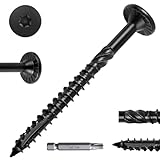
- Quality Material: These Heavy-Duty wood screws are made of high-quality alloy steel and are compatible with ACQ-treated lumber. They are built to last and can withstand harsh outdoor conditions.
- Rust-Resistant: These screws are coated with a rust-resistant finish that prevents corrosion and increases their lifespan, making them an excellent choice for outdoor use.
- Superior Grip: The serrated thread design of these Heavy-Duty wood screws provides a secure and stable connection, which is essential for decking projects.
- Easy Installation: The star-drive design maximizes torque and reduces cam-out, protecting the fastener and bit. The sharp, pointed tip and self-drilling feature make it easy to install these Heavy-Duty wood screws into decking and other wooden surfaces quickly and efficiently.
- Versatile: These screws are designed for use in multiple materials, including thin sheet metal, PVCu, MDF, chipboard, softwood, and hardwood. They are suitable for a variety of woodworking projects, such as decking, framing, fencing, and other outdoor applications.
| Design issue | Knife plate | Steel bearing seat/bucket |
|---|---|---|
| Primary vertical path | Beam reaction enters dowels and an embedded or attached plate. | Beam bears directly on a steel seat; side plates and fasteners stabilize and transfer additional forces. |
| Wood limit states | Fastener shear and shear over the reduced slotted section; shrinkage-related checking. | Perpendicular-to-grain bearing at the seat plus fastener-group effects in the beam and girder. |
| Movement sensitivity | Dowel location and spacing must avoid constraining shrinkage and tension perpendicular to grain. | Seat tolerances, side-plate spacing and fastener layout must accommodate beam shrinkage. |
| Steel/support design | Knife plate, welds or bolts, embed plate, anchors and wall region. | Seat, side plates, welds or bolts and the girder attachment. |
| Architectural implications | Can keep much of the hardware concealed, subject to the slot and fire-protection design. | Steel may remain visible unless boxed or protected; verify clearances and finish requirements. |
| Published project-independent capacity | Not established; calculate for the actual member, fasteners, plate and support. | Not established; calculate for the actual seat, fasteners, beam and girder. |
Standards, design references and calculation tools
The American Wood Council’s National Design Specification for Wood Construction (NDS) provides general requirements, design provisions, formulas and connection data for nails, bolts, lag screws, wood screws, split rings, shear plates and timber rivets. Its commentary explains the background to those provisions (AWC connection reference FAQ).
Edition and adoption dates matter. WoodWorks’ penetration guidance references the 2024 NDS, while the project must use the edition and modifications adopted by its governing code. On April 18, 2025, AWC announced an updated Connection Calculator that calculates capacities for single bolts, nails, lag screws and wood screws using the 2024 NDS (AWC announcement). The calculator can support fastener calculations; the announcement does not establish that it designs a complete glulam connection or its steel and support components.
WoodWorks’ June 2024 index lists the 2023 APA EWS T300 Glulam Connection Details Construction Guide, AWC’s NDS, AITC Technical Note 19 on holes and notches, and the AISC Steel Construction Manual among useful references (Mass Timber Connections Index). Obtain the applicable editions, confirm local code adoption and use manufacturer design data for proprietary hardware.
Do these 3 things before closing this tab:
1Clear out junk files and repair common Windows errors2Fix the driver behind crashes, sound loss and screen glitches3Repair Windows errors before they cause bigger problemsWhat to put in the connection package
Calculation deliverables
- Reaction forces and combinations, including erection or temporary conditions that govern.
- A labeled load-path sketch from beam to final support.
- Wood checks for bearing, shear, tension, splitting, reduced sections and fastener-group effects.
- Fastener, plate, weld, anchor and supporting-member checks with the governing standard identified.
- Movement assumptions for shrinkage, rotation, tolerances and any required slip or oversized-hole detail.
Drawing and schedule information
- Member grades, dimensions, moisture or fabrication assumptions and orientation.
- Plate thicknesses, slot and hole geometry, fastener type, diameter, length, quantity, spacing and edge distances.
- Weld sizes, bolt pretension or installation requirements, anchors, shims and corrosion or fire protection.
- Interface dimensions that the steel fabricator, glulam manufacturer and erector must coordinate.
- Inspection points, prohibited field drilling or cutting, and the engineer’s approval path for changes.
Fabrication and erection notes
Issue approved connection geometry before CNC cutting. Require the manufacturer to confirm that penetrations and slots are compatible with its production process. Show the rigging-release condition, temporary bracing, access for fastener installation and the sequence for installing plates, dowels and side hardware. Resolve clashes before delivery; correcting a mislocated hole in exposed glulam on site is rarely an acceptable first option.
Best Value

- Quality Material: These Heavy-Duty wood screws are made of high-quality alloy steel and are compatible with ACQ-treated lumber. They are built to last and can withstand harsh outdoor conditions.
- Rust-Resistant: These screws are coated with a rust-resistant finish that prevents corrosion and increases their lifespan, making them an excellent choice for outdoor use.
- Superior Grip: The serrated thread design of these Heavy-Duty wood screws provides a secure and stable connection, which is essential for decking projects.
- Easy Installation: The star-drive design maximizes torque and reduces cam-out, protecting the fastener and bit. The sharp, pointed tip and self-drilling feature make it easy to install these Heavy-Duty wood screws into decking and other wooden surfaces quickly and efficiently.
- Versatile: These screws are designed for use in multiple materials, including thin sheet metal, PVCu, MDF, chipboard, softwood, and hardwood. They are suitable for a variety of woodworking projects, such as decking, framing, fencing, and other outdoor applications.
Common detailing failures and how to prevent them
The calculation stops at the fastener
Symptom: a schedule lists dowels or screws but omits bearing, plate, weld, anchor or support checks. Correction: redraw the load path and assign a resistance check to every interface, including the wall, girder, concrete or masonry component.
Shrinkage is treated as an afterthought
Symptom: tightly constrained dowels, inadequate spacing or a layout that places cross-grain tension directly in the load path. Correction: apply the applicable NDS Chapter 12 spacing provisions, locate fasteners with movement in mind and coordinate tolerances with the fabricator.
A slot or hole creates an unverified weak section
Symptom: the detail shows a knife plate or penetration but no net-section or reduced-section check. Correction: calculate the remaining glulam section and revise plate depth, dowel layout or member size before fabrication.
Quick wins for a faster PC:
Clear out junk files and repair common Windows errorsFree Scan →Scan for outdated or missing drivers - takes under a minuteDriver Scan →Field modifications bypass engineering
Symptom: an installer drills a new hole, enlarges a slot or cuts around an MEP route. Correction: stop work in the affected area, document the proposed change and obtain review by the engineer and mass-timber manufacturer. CNC fabrication does not eliminate the need for approval; it makes early coordination possible.
Erection notes do not match the real sequence
Symptom: rigging is released before the connection provides stability, or access for tightening disappears after adjacent members are installed. Correction: add a sequence diagram and a release criterion to the drawings and review it with the erector before mobilization.
Quick Recap
Product prices and availability are accurate as of the date/time indicated and are subject to change. Any price and availability information displayed on Amazon at the time of purchase will apply.

