What’s actually slowing this PC down?
Pick the symptom - the matching free tool is one click away.
White powder on a basement wall, brick, or concrete is often efflorescence: soluble mineral salts carried to the surface by moving water and left behind as the water evaporates. Mold is living growth that develops on damp material. Both point to a moisture story, but a white color alone cannot identify either one.
Use the material, texture, moisture history, recurrence, and condition of the surface as clues—not as a substitute for inspection. Remove the visible deposit using the method appropriate to the material, then correct the water or humidity problem. The U.S. Environmental Protection Agency’s central rule is simple: “The key to mold control is moisture control.”
As an Amazon Associate I earn from qualifying purchases.
What efflorescence is—and what white mold is
Efflorescence is a masonry deposit. Water enters or moves through brick, mortar, concrete, stone, or the soil beside it, dissolves soluble salts, and carries them toward a surface. When the water evaporates, the salts remain as a white powder, crust, or crystal-like growth. It is usually an appearance problem, not biological growth.
Do these 3 things before closing this tab:
1Clear out junk files and repair common Windows errors2Fix the driver behind crashes, sound loss and screen glitches3Repair Windows errors before they cause bigger problemsMold is biological. Spores are present in ordinary indoor and outdoor air; they can begin growing when they land on a damp surface and remain wet enough for long enough. Mold may be white, green, brown, gray, orange, or black. Color does not identify a species, establish a health risk, or prove that a deposit is mold.
#1 Best Overall
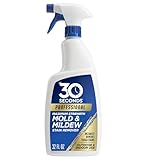
- BRIGHTER RESULTS INSTANTLY: Noticeably brightens indoor and outdoor surfaces, removing black mold and mildew stains as you watch, with no scrubbing or pressure washing required for fast, visible results
- NO SCRUBBING REQUIRED: Avoid the hassle and backbreaking work of scrubbing tough stains; the PRO formula lifts mold and mildew stains on contact so you simply apply, watch and rinse where needed
- 2X STRONGER FORMULA: The PRO formula is 2X stronger than the standard 30 SECONDS Outdoor Cleaner, made for your toughest black mold and mildew stains and messes on both indoor and outdoor surfaces
- OUTDOOR AND INDOOR USE: Use on siding, fences, decks, concrete floors, brick walls, drywall, wood, kitchen surfaces, bathroom tile and grout, bathtub soap scum and showers where mold and mildew can grow
- REMOVES BLACK MOLD STAINS & MORE: Targets stubborn black mold and mildew stains on a wide range of surfaces, giving a brighter, cleaner result indoors and outdoors without scrubbing or pressure washing
Efflorescence does not prove that mold is present. It does show that water has moved through or along the masonry. That same dampness can support mold on nearby drywall, wood, paper, insulation, carpet, dust, or stored belongings. Treat the deposit as a moisture-investigation clue rather than a diagnosis.
Comparison: clues that help, and what they cannot prove
| Clue | More consistent with efflorescence | More consistent with mold | Limit |
|---|---|---|---|
| Typical location | Brick, concrete, mortar, stone, foundation walls, or soil beside masonry | Damp drywall, wood, paper, carpet, insulation, dust, or other organic and porous materials | Mold can grow on masonry dust or painted surfaces, and salts can appear in crawl spaces or on adjacent finishes. |
| Appearance and texture | Loose white powder, crust, or crystals that look salt-like | Fuzzy, smeared, patchy, or film-like growth; color may vary widely | Some mold is powdery, and some salt deposits are fibrous. Appearance alone is not definitive. |
| Moisture history | Water migration, damp foundation, leaks, condensation, or repeated wetting and drying | Persistent dampness, a leak, flooding, condensation, or high indoor humidity | Both conditions can follow the same leak or drainage problem. |
| Odor | Usually little or no characteristic odor | A musty odor may accompany growth | Odor is subjective and cannot confirm or rule out mold. |
| Effect on the substrate | May be cosmetic, but trapped salts can contribute to spalling or exfoliation | Can stain, weaken, or conceal damage to porous materials | Serious deterioration requires a building-material assessment, not a wipe test. |
| Recurrence | Returns when moisture continues to transport salts | Returns when damp materials are not dried or the water source remains | Recurrence strengthens the case for finding the moisture source; it does not identify the deposit by itself. |
In crawl spaces, the EPA Mold Web Course gives a specific caution: “A white, soluble fibrous material on the soil of the crawl space may be alkaline salts, not mold.” The observation is useful because it prevents a common misidentification, but it is not a universal field test for every white deposit.
Why efflorescence forms
Three conditions are needed: soluble salts, water capable of moving through the material, and evaporation at or near a surface. Rain, groundwater, plumbing leaks, poor drainage, capillary rise, or condensation can supply the water. As masonry becomes saturated, salts dissolve. As the water travels toward a drier face and evaporates, the dissolved material crystallizes.
Rank #2

- GET RID OF STUBBORN MOLD AND MILDEW STAINS: Our instant spray cleaner removes the stains left behind from black mold and mildew. They tend to leave behind ugly staining that can go deep below the surface; Our professional-strength spray is specifically formulated to eliminate discoloration caused by mold and mildew
- USING RMR-86: To safely and conveniently eliminate indoor mold and mildew stains and odors using RMR-86, proper ventilation and PPE should be used for each application
- SAFE TO USE ON MULTIPLE SURFACES: Easily remove stubborn stains from decks, wood, vinyl siding, drywall, concrete floors, brick walls, kitchen surfaces, and other areas where mold and mildew tend to grow
- FAST-ACTING SPRAY: Our powerful, fast-acting mold stain remover spray begins working instantly to target deeply embedded stains that linger on surfaces and hard-to-reach areas
- NO SCRUBBING NEEDED: Simply spray our ready-to-use formula on the affected area and watch the stains disappear right before your eyes!
A light surface bloom may be temporary after new masonry or a wet season. Repeated or heavy deposits mean moisture is still entering, being held, or drying through that area. Look for grading that directs water toward the foundation, blocked gutters or downspouts, cracks, leaking pipes, condensation, unsealed penetrations, or interior humidity. Cleaning without addressing the movement of water normally produces another cycle of deposits.
Surface salts are not always harmless to the building. If an impermeable coating, dense paint, or incompatible repair traps moisture and salts behind the face, crystals can form inside brick or stone. The pressure can push off the outer layer, a process described as spalling or exfoliation. Historic or soft masonry is especially vulnerable and should not be treated as ordinary concrete.
How mold develops in the same building
Mold needs a spore, a suitable damp surface, and time. EPA guidance emphasizes that wet materials should be dried within 24–48 hours where possible to help prevent growth. Leaks that are repaired but leave wall cavities, insulation, carpet, or framing damp can therefore create a hidden problem even after the visible water disappears.
Rank #3

- Eliminates & Helps Prevent Mold: Targets existing mold at the source and leaves behind an invisible barrier that helps prevent future growth.
- EPA-Registered Solution: Registered with the U.S. Environmental Protection Agency for mold control when used as directed.
- Bleach-Free, Odorless, VOC-Free: Contains no bleach, ammonia, or volatile organic compounds, helping maintain healthy indoor air quality.
- Safe on Most Surfaces: Works on drywall, wood, tile, grout, concrete, fabric, and other common building materials.
- Versatile Use: Ideal for bathrooms, kitchens, basements, attics, laundry rooms, vehicles, and outdoor surfaces such as decks and patios.
Indoor relative humidity is another control point. EPA recommends keeping it below 60 percent, ideally between 30 and 50 percent. Ventilation, air conditioning, and dehumidification can help, but they do not replace repairs to leaks or groundwater entry. A basement that smells musty, has recurring condensation, or shows repeated wetting needs a moisture plan, not only a surface cleaner.
A careful way to investigate an unknown white deposit
- Document the setting. Photograph the deposit before disturbing it. Record whether it is on masonry, painted drywall, wood, stored goods, or crawl-space soil, and note recent rain, flooding, leaks, or condensation.
- Check for active moisture. Inspect plumbing, the wall-floor joint, windows, penetrations, gutters, downspouts, grading, and ventilation. An inexpensive moisture meter can locate wetter areas in carpet, wallboard, wood, brick, or concrete, but it cannot tell salt from mold.
- Observe without spreading it. Do not rely on touching, smelling, brushing, or a household chemical as a definitive identification test. Avoid dry sweeping that could distribute dust or spores.
- Assess recurrence and damage. Mark the edge or photograph the area, then watch whether it returns after cleaning or after wet weather. Look for bubbling paint, crumbling mortar, flaking brick faces, staining, or damp adjacent materials.
- Decide whether the consequences justify an inspection. If the area is extensive, hidden, recurring, associated with contaminated water or HVAC equipment, damaging historic masonry, or important to a health decision, use a qualified building-moisture or mold professional.
Visible mold usually does not require routine sampling. EPA says sampling may be considered when the result could change a decision and should be designed and interpreted by experienced professionals. There is no federal indoor-air standard that sets an acceptable level for mold or mold spores, so a laboratory number is not a universal pass/fail answer.
Cleaning efflorescence safely
Loose efflorescence can often be removed with a soft brush, a vacuum suitable for the material, or washing, as Historic England describes. Start with the least aggressive method that works and protect nearby finishes from runoff. Allow the surface to dry so you can see whether the deposit is returning.
Rank #4

- KILLS MOLD: EPA-registered formula kills mold and helps control mold and mildew on hard, nonporous surfaces when used as directed
- CLEANS AND DISINFECTS: Ready-to-use disinfectant cleaner provides non-acid cleaning performance while disinfecting treated hard, nonporous surfaces
- INHIBITS MILDEW GROWTH: Helps inhibit the growth of mold and mildew and the odors they cause when applied according to label directions.
- BLEACH-FREE FORMULA: Bleach-free cleaner deodorizes treated surfaces and leaves behind a fresh scent
- READY-TO-USE SPRAY: 32 fl oz trigger bottle is designed for household, commercial and industrial cleaning applications
- For sound, uncoated masonry, gently brush or vacuum loose crystals. If washing is appropriate, use a small test area first and prevent water from being driven deeper into the wall.
- For historic, soft, painted, cracked, or already flaking masonry, stop before scrubbing or pressure washing. A conservation or building professional can select a method that will not remove the face of the material.
- Do not assume an acid cleaner or a waterproof sealer is the answer. An unsuitable chemical can damage mortar or stone, and an impermeable coating can trap salts and worsen internal crystallization.
- After removal, investigate drainage, leaks, condensation, and drying conditions. A clean surface with an unchanged moisture source is likely to bloom again.
Cleaning mold and mold-contaminated materials
For mold on a hard, non-porous surface, EPA homeowner guidance recommends scrubbing with detergent and water and then drying the surface completely. Wear appropriate protective equipment for the task, isolate the work area as practical, and avoid practices that spread contaminated dust into clean rooms.
Porous materials are different. Mold can penetrate the pores and crevices of ceiling tiles, carpet, insulation, upholstered items, and some wallboard, making complete removal impractical. Such materials may need to be discarded, especially after sewage or other contaminated-water exposure. Do not paint or caulk over visible mold; clean and dry the surface first, and repair the source of moisture.
Recommended Free Tools
If the same wall has both a salt deposit and moldy adjacent material, handle them as two related but distinct problems: remove the salt with a masonry-appropriate method, clean hard-surface mold with detergent and water, and replace porous items that cannot be reliably cleaned. Drying and source control are required for both.
Moisture-control targets that prevent recurrence
- Drying time: EPA recommends drying wet materials within 24–48 hours where possible. This is a practical prevention timeframe, not a guarantee that growth cannot occur outside it.
- Relative humidity: Keep indoor humidity below 60 percent, ideally 30–50 percent, using ventilation or dehumidification where appropriate.
- Water entry: Repair plumbing leaks, roof or window leaks, foundation seepage, and drainage defects promptly. Confirm that downspouts discharge away from the building and that surface grading does not funnel water toward the wall.
- Air movement: Improve circulation in damp rooms, but do not use fans to blow across visibly moldy material in occupied areas before containment and cleaning.
- Measurement: A humidity meter shows room conditions; a building-material moisture meter helps locate wet areas. Neither instrument identifies mold or proves that a white deposit is efflorescence.
When to call a professional
EPA says a homeowner can in most cases handle a mold area smaller than about 10 square feet, subject to exceptions. Consult experienced help when the affected area is larger, there has been extensive water damage, or the work involves conditions outside ordinary household cleanup.
- Hidden growth is suspected inside walls, ceilings, floors, or insulation.
- HVAC equipment or ductwork may be contaminated.
- The water came from sewage, flooding, or another contaminated source.
- Someone in the building has health concerns that make exposure decisions consequential.
- Efflorescence is recurring, widespread, or accompanied by spalling, exfoliation, cracking, or crumbling masonry.
- The building is historic, uses soft or decorative masonry, or has coatings that may be trapping moisture.
Choose a contractor or inspector with relevant mold-cleanup or building-moisture experience and check references. For conservation-sensitive masonry, use a qualified building or conservation professional rather than a generic pressure-washing service.
Quick Recap
Common mistakes to avoid
- Calling every white patch mold: Salt crystals are common on damp masonry, and white color is not a biological test.
- Calling every powder efflorescence: Mold can be powdery, and the material beneath the deposit matters.
- Cleaning but not repairing: EPA warns that mold is likely to return if the water problem is not fixed; recurring salt likewise signals continuing moisture movement.
- Using aggressive chemicals first: Universal acid treatments and sealers can damage masonry or trap salts.
- Relying on a home test kit: A sample cannot replace an inspection of the moisture source, building assembly, and extent of damage.
- Sealing over a problem: Paint, caulk, or an impermeable coating should not cover mold or damp masonry before cleaning, drying, and resolving the cause.
Practical decision guide
- If the deposit is loose, white, and crystalline on brick, concrete, mortar, or stone, treat efflorescence as the leading possibility and investigate water movement.
- If there is fuzzy or smeared growth on damp drywall, wood, carpet, paper, or insulation, follow mold-cleanup precautions and assess whether the porous material must be removed.
- If the location, texture, or moisture history is mixed, do not force a visual diagnosis. Measure dampness, document recurrence, and obtain qualified advice when the decision affects health, major cleanup, historic fabric, or structural condition.
- Whatever the label, stop the water, dry the area, and monitor it. The durable fix is moisture control, not a more powerful surface treatment.
Product prices and availability are accurate as of the date/time indicated and are subject to change. Any price and availability information displayed on Amazon at the time of purchase will apply.

