Free tools Windows power users keep installed
One-click scans. No signup required.
For most planted vegetable beds, rows, containers and disease-sensitive crops, drip irrigation is the better starting point. It places water at the soil near roots, leaves paths and foliage drier, and can use less water when it is laid out and maintained correctly. Sprinklers remain useful when you need broad, fast coverage or the simplest hose-end installation. Neither method is universally best: garden size and shape, crop spacing, soil, slope, wind, water supply and your willingness to maintain equipment determine the practical choice.
This comparison explains where each system works, how to install and check it, how much water to apply, and which trade-offs matter before you buy components.
As an Amazon Associate I earn from qualifying purchases.
What is the difference between drip irrigation and sprinklers?
Drip irrigation uses a supply line, smaller distribution tubing and emitters to release water slowly beside individual plants or along a row. The water infiltrates where roots are concentrated instead of being sprayed over the entire bed. A correctly planned layout can leave walkways, exposed soil between rows and nearby structures relatively dry.
Sprinklers discharge water through a nozzle or rotating head and distribute it over a larger pattern. That pattern can be useful for a densely planted area, newly seeded ground or an irregular bed that is difficult to trace with tubing. It also means water may land on leaves, paths, bare soil and weeds. Wind can move the spray outside the intended pattern, and evaporation is greater when droplets are exposed above the soil.
#1 Best Overall

- Be a Gardening Master with the help of our superior and complete Drip Irrigation Kit: 50ft flexible & durable PVC 5/16" Irrigation Tubing + 50ft 1/4" Drip Distribution Tubing + 2 x Female Thread Water Connectors for 5/16" Mainline + 20 Barbed Drip Emitters Stream + 10 Barbed Drip Emitters Vortex + 4 x 1-Way, 6 x 2-Way and 2 x 4-Way Barbed Splitters from 5/16" to 1/4" + 5 x 1/4" Tubing Tee Splitters + 2 x 5/16" Mainline End Plugs + 5 x 1/4" Distribution Tubing End Plugs
- Make your own garden irrigation system kit easier than ever: run a 3/4 connection from your water source to the watering area. Use the 5/16 irrigation tubing as the mainline. Branch off with the 1/4 drip irrigation tubing and connect a maximum of 30 drip irrigation emitters. Stick the dripper stake into the soil, adjust the desired irrigation spray, and feed your plants with your own drip irrigation system. Designed to work with between 20 - 45 PSI and a maximum output of 60 gallons/hour/emitter
- Enjoy taking care of your garden with high quality adjustable spray emitters and forget about broken irrigation sprayer stakes and clogged drip heads. With a length of 7.5 inch and a sharp bottom, the irrigation bubbler stake can be easily fixed into the ground and stays still even in loose soil. Perfect for long time application, the drip irrigation emitter heads are detachable and easy to clean so you don’t worry about clogging. Make gardening less of a chore!
- Spend less, get more - UV resistant and designed for underground or above-ground installation, the Carpathen 1/4 inch drip irrigation tubing will last year-round in any weather. Use the 4 ways/2 ways/1 way couplers to create the perfect branch for your plants. Season after season the distribution tubing part of the irrigation drip system will keep your plants hydrated with minimal waste from evaporation. Choose to cut down your water bills!
- Save Your Time with Carpathen Garden Irrigation System. Our automatic drip watering system minimizes water loss by directly hydrating the roots of your plants. Easily adjust the drip emitters by rotating the cap for precise hydration. Designed for up to 3 raised garden beds, this irrigation system for the garden is ideal as a garden starter kit for healthy vegetables, an automatic watering system for potted plants, a raised garden bed watering system, or a reliable garden grid watering system
Both systems can be connected to a hose bib, pump or permanent supply. Both can be automated with a timer, although a timer is optional rather than required. The important distinction is placement: drip concentrates water at the root zone, while sprinklers prioritize area coverage.
Quick comparison
| Decision factor | Drip irrigation | Sprinklers |
|---|---|---|
| Where water goes | Near plant roots through tubing and emitters. | Across a broad pattern that may include foliage, paths and weeds. |
| Wind and evaporation | Usually less exposed to wind drift and surface evaporation; results depend on layout, pressure, soil and operating time. | More exposed to wind drift and evaporation because water travels through the air. |
| Plant health | Keeps most foliage dry, which can reduce leaf-wetness conditions that favor some diseases. | Wets foliage and can splash soil onto leaves, conditions that may encourage some diseases. |
| Water use | Can use less water than traditional overhead watering when correctly designed and operated; no percentage is guaranteed for an individual garden. | May apply water outside the root zone and lose more to wind or evaporation. |
| Installation | Requires tubing layout, compatible fittings, filtration or pressure control where needed, and emitter checks. | A hose-end unit can be quick to start, but movable sprinklers need repositioning and permanent heads require careful spacing. |
| Maintenance | Small emitters can clog; inspect lines, flush them and repair leaks. | Check nozzles, coverage, hose connections and movement; clean blocked heads. |
| Best fit | Vegetable rows, raised beds, containers and landscape plants with defined root zones. | Large or irregular areas where broad coverage matters more than precise placement. |
Why drip is often the better choice for vegetable gardens
It targets the root zone
Plants do not need every square foot of a bed wetted equally. Drip tubing and emitters place a controlled flow beside the plants, so water can move downward and outward through the soil. This is especially useful in rows, raised beds and containers where you know where roots are concentrated. Iowa State University Extension describes drip as a way to direct water to planted areas while avoiding unnecessary wetting between them.
It keeps leaves drier
Many vegetable diseases spread or develop more readily when leaves remain wet. Drip does not prevent disease, but it avoids routine overhead wetting and reduces splash from soil onto foliage. University of Florida IFAS Extension identifies foliage wetting and splash as concerns with overhead watering. You still need sound spacing, sanitation and crop-specific disease management.
It can reduce losses from wind and evaporation
Water released at the soil surface is less exposed than a spray traveling through the air. That can improve efficiency in windy sites or during hot, dry weather. The benefit depends on emitter placement, pressure, mulch, soil texture, run time and leaks. A poorly installed system can waste water just as a sprinkler can.
It leaves working areas drier
Drier paths make harvesting and maintenance easier after irrigation. Keeping water off paths also reduces the amount available to weeds. Drip will not eliminate weeds because rain and seepage still occur, but it avoids deliberately watering every uncovered area.
When sprinklers are the more practical option
You need broad coverage
A sprinkler is useful when plants are spread across a large patch, when the planting pattern changes frequently, or when you are establishing a uniformly seeded area. One properly selected head can cover ground that would require many branches of drip tubing. For tall crops, however, foliage and supports can interrupt the spray pattern; inspect the ground rather than assuming the pattern is even.
You want a simple temporary setup
A hose-end sprinkler requires little planning compared with a multi-row drip layout. Connect it, place it so the pattern reaches the intended area, and move it when the next section needs water. The trade-off is supervision: a movable unit can miss a corner, overwater one section or spray a path if its position changes.
Rank #2
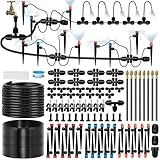
- 【Upgraded Tube Design & Water Saving】 Our garden watering system is upgraded to 1/2” diameter to support high water pressure. The 1/2” tee connector allows seamless splitting into 2 independent zones for customized watering schedules. By delivering moisture directly to root zones, this drip Irrigation system significantly reduces evaporation and runoff—saving more water compared to conventional sprinklers while eliminating the need for manual watering.
- 【Quick Connect & Tool-Free Set Up】 Designed for simplicity with push-to-connect fittings that secure instantly without heating, gluing, or specialized tools. The intuitive 1/2" to 1/4" 4-way connector link 1/2" main lines to 1/4" drip lines in quickly, allowing you to build a custom layout exactly where needed. Connections stay firmly sealed under pressure, preventing leaks and making installation a breeze. This drip irrigation kit saving you time and effort!
- 【Durability & Nozzle Variety】 This drip system features adjustable sprinklers, adjust each sprinkler head by rotating the cap for precise watering. The stake at the bottom of the sprinkler secures firmly into the soil. 3 nozzle types—vortex, stream, and misting—for tailored watering across different plants, plus 8 copper nozzles can be bent and fixed 360 ° to adjust the place where the spray is needed and the spraying direction. This makes gardening less tedious!
- 【Versatility & Wide Application】 Ideal for a wide range of applications, including raised garden beds, greenhouses, vegetable patches, flower borders, patios, and lawns. Flexible tubes, a variety of nozzles, and connection components allow you to easily customize different irrigation methods. Suitable for both above-ground and elevated installations, this quick-connect garden watering system is your all-in-one solution for a thriving and well-maintained garden.
- 【Complete Kit & All You Need】 The irrigation system for garden comes with a variety of components to meet your needs: 10 drip vortex emitters, 10 drip stream emitters, 10 misting nozzles, 8 360° bendable metal spray nozzles, 33 FT 1/2" main line, 197 FT 1/4" drip line, 15 1/4" tee splitter, 8 1/2" to 1/4" 4-way connector and more. Precise and efficient watering is no longer a tedious process, but an easily achievable reality.
Your soil or bed shape favors coverage
Some irregular beds are difficult to trace with straight drip runs. Sprinklers can cover a curved or mixed planting area without custom tubing branches. On sloped ground, though, water may run downhill before infiltrating. Colorado State University Extension notes that slope and site conditions must be considered when planning micro-irrigation; the same physical constraint applies to any method.
How much water does a garden need?
Use plant and soil conditions rather than a fixed timer schedule. Iowa State University Extension’s Watering the Home Vegetable Garden, reviewed July 2026, gives about one inch of total water per week, including rainfall, as a general benchmark for a home vegetable garden. It is not a universal prescription. Sandy and compacted soils, shallow-rooted crops, heat, wind, rainfall, mulch and plant growth stage can all change the requirement.
Check the soil before adding irrigation. Dig below the surface in several places; a damp surface does not prove that the root zone is wet. Iowa State’s drip guidance recommends initially wetting soil to about 10–12 inches, then irrigating as needed. The target depth is a starting check, not a command to keep every soil type saturated.
Measure a sprinkler
- Place several straight-sided containers, such as identical cans, across the full sprinkler pattern, including edges and the center.
- Run the sprinkler for a known period while observing for wind or runoff.
- Measure the collected water. Iowa State advises that when the containers collect one inch, the garden has received approximately one inch of irrigation.
- Move the sprinkler and repeat if different containers show large differences. Adjust placement or run time only after coverage is reasonably even.
Check a drip system
- Run the system long enough to see the wetting pattern around representative emitters.
- Dig beside plants, not directly on top of an emitter, and check how far moisture has moved downward and sideways.
- Compare the wetting depth at the beginning and end of each line. A dry final section can indicate excessive line length, low pressure, a kink or clogged emitters.
- Record the run time that reaches the desired root-zone depth, then recheck after weather, crop size or mulch changes.
Choosing drip: a planning and installation sequence
1. Map the planting
Draw beds, rows, containers, paths, slopes and the water connection. Mark plants with different watering needs. Grouping crops with similar requirements into separate zones prevents a thirsty crop from dictating the schedule for drought-tolerant plants.
2. Match the kit to the layout
For a small garden, a ready-to-assemble drip irrigation kit from a garden center or online retailer can provide tubing, connectors and emitters. Select emitter spacing and line lengths that match the actual row spacing; a kit designed for continuous rows may not suit widely spaced tomatoes or individual containers. No particular brand or model is required for the method to work.
3. Protect the system at the water source
Use the components specified for your supply pressure and water quality. Filtration helps keep small emitters from clogging, and pressure regulation may be necessary when household pressure exceeds the tubing or emitter rating. Install a shutoff so you can isolate the garden and a flush point at line ends where the system design calls for one.
4. Lay and secure tubing
Place tubing so each emitter is close to the plant’s root zone, not against a stem where constant moisture could cause problems. Keep runs straight enough to inspect, secure them against movement, and avoid sharp bends or crushing beneath mulch. Leave access to connections so a leak can be found without dismantling the bed.
Rank #3
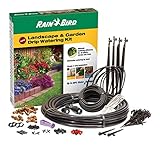
- Comprehensive 108-piece kit for flower beds, gardens and landscaped areas; eliminates hand watering, saves time and money
- Ultimate watering efficiency for all plants, shrubs and trees; up to 80% water savings
- Simple 3-step installation: connect to faucet, insert fittings into tubing, attach watering devices
- Includes 3 differnet types of watering devices: drippers, micro-bubblers and micro sprays
- Pressure-compensating technology ensures all plants receive same amount of water
5. Test before covering
Open the supply slowly and inspect every joint. Confirm that emitters discharge, that end sections receive water and that no fitting sprays or leaks. Flush lines if the instructions for the tubing call for it, then cover lightly with mulch only after the pattern is correct. Do not bury components so deeply that seasonal inspection becomes impractical.
The Tool Desk
Outbyte PC Repair FREERepair Windows errors before they cause bigger problemsFix Now →Outbyte Driver Updater FREEScan for outdated or missing drivers - takes under a minuteDriver Scan →6. Divide into zones when needed
Long runs, elevation changes and different crops can produce uneven flow. Separate beds into zones when one source cannot supply all emitters consistently. Run one zone at a time and verify the last emitter in each zone, not only the connection nearest the hose bib.
Drip maintenance and common failures
Clogged emitters
Symptoms include a plant wilting while neighbors look healthy, a dry patch at the end of a line or little or no discharge from one emitter. Turn off the water, inspect the filter, flush the line and replace damaged or blocked emitters. If clogging returns, examine the water source and filtration rather than repeatedly replacing outlets.
Leaks and disconnected fittings
Wet spots, spurting connections or a pressure drop can indicate a split tube or loose connector. Isolate the zone, cut out damaged tubing cleanly and use a compatible coupler. Re-test before replacing mulch.
Uneven pressure
Emitters near the source may flow while distant plants remain dry. Excessive line length, elevation, undersized supply tubing, a kink or a partially closed valve can cause this. Shorten runs, add zones, remove restrictions or use pressure-compensating components appropriate to the system design.
Rodent, tool and weather damage
Inspect at the start of the season and after digging, staking or cultivating. Keep tubing visible enough to avoid cutting it with a hoe or spade. Drain or protect exposed components where freezing conditions could split them.
Installing and using sprinklers well
Select a pattern for the area
Choose a head whose throw and pattern fit the bed. A circular pattern may waste water beyond a rectangular garden; an adjustable or oscillating pattern can better match straight edges. Place the sprinkler so the water reaches the boundary without spraying buildings, paths or neighboring property.
Rank #4

- NO MORE HARD INSTALLATION - SET UP IN MINUTES. Tired of struggling with stiff barbed fittings? This drip irrigation system features quick-connect fittings that let you push, lock, and secure tubing effortlessly. No tools, no leaks, just a smooth setup experience. Enjoy a frustration-free installation and get your garden watering system running in minutes.
- LEAK-FREE & SECURE CONNECTIONS. Traditional connectors often loosen or leak over time. Our upgraded quick-connect design creates a tight seal, keeping water flowing exactly where you need it without waste or mess. Save water, avoid puddles, and keep your garden neat and efficient.
- COMPLETE 230FT KIT - READY TO BUILD YOUR SYSTEM. Includes 230FT tubing (197FT 1/4” + 33FT 5/16”), adjustable emitters, connectors, and stakes. Everything you need to customize your irrigation layout for raised beds, potted plants, or greenhouse setups. No extra trips, no missing parts—build your system right out of the box.
- ADJUSTABLE WATER FLOW FOR EVERY PLANT. Different plants need different care. With 3 types of adjustable stake sprayers, you can control water flow from gentle drip to full spray, ensuring each plant gets exactly what it needs. Promote healthier growth while avoiding overwatering or underwatering.
- AUTOMATIC WATERING WITH TIMER COMPATIBILITY. Connect easily to a hose timer and automate your watering schedule. Perfect for vacations or busy days when manual watering isn’t possible. Keep your plants thriving—even when you’re away.
Use overlap for uniformity
Permanent systems generally need planned overlap because precipitation is not identical across a head’s radius. Set out containers and measure rather than judging by appearance. Tall plants, trellises and dense foliage can block spray; move or raise the head only if the resulting pattern remains appropriate.
Reposition temporary units deliberately
Mark positions or use a simple garden map so each section receives comparable coverage. Check the hose for kinks and make sure connectors do not leak. Avoid leaving a sprinkler running unattended when runoff begins or when wind pushes spray outside the bed.
What’s actually slowing this PC down?
Pick the symptom - the matching free tool is one click away.
Limit foliage wetness when timing
Water early enough for leaves to dry before evening where local conditions and plant needs allow. This does not remove disease risk, and it should not override a freeze, heat or water-conservation requirement. Drip is the more direct solution when keeping foliage dry is a priority.
Independent reader supportYour contribution helps us test, update, and keep practical guides available for everyone.Water efficiency: what the numbers do and do not mean
Iowa State University Extension’s drip guide gives a possible comparison of 30% to 50% less water than traditional methods. That is a general estimate, not a promise for every garden. Actual savings depend on emitter spacing, pressure, leaks, soil infiltration, mulch, wind, run time and whether a sprinkler was already adjusted for uniform coverage.
A Colorado State University Extension publication listing dated 1998 reports more than 90% efficiency for drip versus 50% to 70% for sprinklers. Because those figures are source-specific and old, they are useful as historical context rather than a current guarantee. Compare your own systems by measuring delivered water and checking root-zone moisture.
Efficiency is not simply the smallest volume shown on a meter. Underwatering a plant is not a successful saving, and overwatering a container can leach nutrients. A targeted system operated too long can still waste water; a carefully adjusted sprinkler can perform better than a neglected drip line.
Quick wins for a faster PC:
Fix the driver behind crashes, sound loss and screen glitchesFind Drivers →Repair Windows errors before they cause bigger problemsFix Now →Scan for outdated or missing drivers - takes under a minuteDriver Scan →Soil, slope, weather and crop factors
Soil texture
Fast-draining sandy soil may need shorter, more frequent applications so water does not move below roots. Clay or compacted soil may need slower application and pauses to prevent runoff. Observe infiltration rather than copying a run time from another garden.
Best Value

- Quick Connect Design: Newly Upgraded Quick Connect Irrigation System Say Goodbye to Complicated Settings! Our upgraded 4-way connectors, tees, and nozzles can now be easily connected directly to 1/4 "irrigation pipes. No more trouble with heating or softening - just plug and play!
- A brand new drip irrigation kit: ABAKUKU drip irrigation system, equipped with multiple components to meet all your garden watering needs. Including basic components such as 197 foot 1/4 inch irrigation pipe, 33 foot 1/2 inch irrigation pipe, 1/2 inch locking barbed tee connector, drip emitter flow, vortex emitter, blue mist nozzle, quick connect tee, faucet connector, etc.
- Multifunctional Applicability: Whether it is a small home garden or a large plantation, this drip irrigation system can provide even moisture distribution and is suitable for a variety of plants such as vegetables, flowers, fruit trees, etc., ensuring the healthy growth of plants.
- Four kinds of irrigation systems: the irrigation device includes four kinds of drip emitters, which can adjust different irrigation modes, such as micro drop, spray, watering, etc. A precise watering system can solve the watering problem of plants in different locations, and the amount of water sprayed can be adjusted separately according to the settings and needs.
- Easy to install and use: The set contains all the necessary components, and is easy to install without professional tools. Users can freely adjust the location of the drip irrigation tubes according to the garden layout to meet the irrigation needs of different plants.
Slope
Water moves downhill. On a slope, use shorter drip runs, pressure management and separate zones where necessary. With sprinklers, watch for runoff at the lower edge and reduce application intensity or divide the watering period.
Wind and heat
Wind increases sprinkler drift and evaporation. Hot, dry weather increases demand for either method. Recheck soil and plant condition after a weather change instead of letting a timer continue unchanged.
Crop and growth stage
Seedlings have shallow roots and may require a different pattern from established plants. Fruiting crops can demand more water during development, while dormant or harvested areas need less. Group plants with similar needs and adjust zones as roots expand.
Recommended Free Tools
Cost, effort and accessories
Initial drip costs can be higher than attaching a basic overhead sprinkler because drip needs tubing, emitters, connectors and often filtration or pressure control. A small kit can reduce the design work, but its value depends on matching the included components to your layout. Sprinklers can be inexpensive to start, yet repeated repositioning, runoff and replacement nozzles add effort over time. There is no single cost winner without the garden dimensions, water source and equipment quality.
A hose-bib timer is an optional convenience for either method. It can automate a zone after you have measured coverage and established an appropriate run time; it cannot compensate for clogged emitters, poor placement, rain or a leaking connection. Keep a manual shutoff and inspect the system even when a timer is installed.
A decision guide for common garden situations
| Your situation | Leading option | Reason and caution |
|---|---|---|
| Raised beds with distinct vegetable rows | Drip | Lines can follow rows and keep paths drier; confirm emitter spacing and flush lines. |
| Several containers on a patio | Drip or micro-drip | Individual emitters target each pot; check containers often because they dry faster than ground beds. |
| Large patch of closely spaced plants | Sprinkler | Broad coverage may be simpler; measure edge-to-center uniformity and account for foliage wetting. |
| Newly seeded, evenly distributed area | Sprinkler | Uniform surface coverage can help germination; avoid runoff and reduce overhead watering after plants establish if disease or evaporation becomes a concern. |
| Windy, water-limited site | Drip | Less water travels through the air; inspect for leaks and verify that distant emitters receive enough flow. |
| Irregular bed that changes often | Sprinkler | Moving one unit may be easier than rebuilding tubing; reposition consistently and keep spray off structures. |
| Disease-sensitive foliage | Drip | Dryer leaves can reduce favorable wetness conditions, but drip does not prevent disease by itself. |
A practical choice for most home vegetable gardens
Choose drip when your plants are arranged in rows, beds or containers and you can spend time planning and checking the system. Start with a small zone, measure the wetting depth, then expand only after the layout works. Choose sprinklers when broad coverage or a temporary hose-end setup is more important than precise placement, and be prepared to reposition and measure them.
Whichever method you use, let rainfall, soil moisture, weather and crop stage determine the next irrigation. The best system is the one that delivers water evenly to the active roots without creating persistent runoff, unnecessary foliage wetness or maintenance problems you will not address.
Outdated Drivers Are Slowing You Down
One free scan finds every outdated or missing driver and matches the right update for your exact hardware.Free scan · exact hardware matchWindows Errors? Fix Them Before They Spread
Repair common Windows errors and clear accumulated junk for a smoother, more stable PC - no reinstall needed.Free scan · no reinstallQuick Recap
Product prices and availability are accurate as of the date/time indicated and are subject to change. Any price and availability information displayed on Amazon at the time of purchase will apply.

