Sometimes—but only under the right conditions. A well-designed AirCrete dome can be lightweight, potentially more insulating than ordinary concrete, and less dependent on conventional wood framing. Its curved shell may also distribute loads favorably. But “affordable,” “resilient,” and “eco-friendly” are not automatic properties of every DIY dome. They depend on the exact mix, engineering, site, climate, water-management details, construction quality, finished budget, and approval by the local building authority.
What “AirCrete” means
“AirCrete” is not a single standardized building product. In DIY construction discussions, the term usually describes a cementitious slurry containing stable air bubbles, producing a lightweight cellular or foamed concrete. It should not automatically be treated as the same material as factory-produced autoclaved aerated concrete (AAC).
As an Amazon Associate I earn from qualifying purchases.
That distinction matters because density, compressive strength, shrinkage, moisture behavior, and thermal performance depend on the mix and manufacturing process. The Federal Highway Administration’s guidance on cellular lightweight concrete describes broad wet-cast ranges of roughly 20 to 80 pounds per cubic foot and approximately 10 to 300 psi in compressive strength. Those ranges are intentionally wide: a recipe name cannot establish whether a particular batch is suitable for a wall, arch, roof, partition, or structural shell.
For a permanent home, the relevant question is not simply “Is this AirCrete?” It is: What properties does this documented mix have, how are those properties maintained during construction, and has the complete building system been engineered for the site?
#1 Best Overall

- POWERFUL MOTOR - The cement mixer is equipped with a 550W 120V 5A motor, speeds up to 1750RPM, handles stucco, mortar, or concrete at 26.7RPM, not only is ideal for commercial use, but also for agricultural use, like inoculating seeds and mixing feeds.
- DRUM CAPACITY - Features a 4 cu ft. (roughly 113L) max capacity, the multi-functional concrete mixer can finish the mixing work efficiently and quickly. 15” Drum Diameter is wide enough to make adding dry mix easy.
- DURABLE AND STURDY - The cement mixer machine is constructed with a mix of metal cast and steel components, drum and frame have a durable powder-coat finish for ultimate strength and durability. Besides, the triangular bracket ensures extra stability.
- PORTABLE & USER-FRIENDLY DESIGN - The steel handle uses an iron ring and safety lock for easy adjustments and locking in place safely and easily. 2PCS of 9" wheels featuring portable, stable load-bearing and shockproof.
- EASY TO OPERATE - Comes with all hardware parts and a step-by-step manual, the electric cement mixer is easy to assembly. Please feel free to contact us when you encounter problems during installation.
Four different dome systems that are often confused
| System | How it is built | Why the distinction matters |
|---|---|---|
| DIY AirCrete block or panel dome | AirCrete is cast into forms, cured, and assembled into a curved structure, commonly with reinforcement and a separate weatherproof exterior finish. | Block joints, reinforcement continuity, tolerances, openings, shell connections, and the exterior coating all become part of the structural and water-management design. |
| Airform-and-shotcrete monolithic dome | An inflatable airform supports insulation, reinforcement, and sprayed concrete, creating a different type of shell. | Its engineering, construction sequence, materials, and load path are not automatically transferable to a block-built AirCrete dome. |
| Geodesic dome kit | A triangulated frame or prefabricated panel system is assembled on site. | The geometry may look similar from a distance, but its structural assumptions and materials can be completely different. |
| Autoclaved aerated concrete (AAC) | Factory-produced cellular concrete is manufactured under controlled conditions and sold with product documentation. | Published AAC properties and installation details should not be used as proof of the performance of a site-mixed DIY foam-concrete batch. |
Commercial DIY ecosystems do exist. For example, Domegaia publishes AirCrete designs and construction plans and sells related equipment, manuals, and training. Those pages demonstrate that a method and supply ecosystem are available; they do not independently establish that every recipe, plan, or finished dome is code-compliant in every jurisdiction.
What AirCrete can contribute
Lower weight and easier handling
Entrained air reduces the density of the cementitious material. That can make blocks or panels easier to lift than ordinary concrete and may reduce the amount of framing or heavy equipment needed for some designs. It does not make the material weightless, and the reduction in weight does not eliminate foundation, wind, seismic, or connection design.
Lightweight material can also be useful on sites where moving conventional masonry would be difficult. But a home still requires mixing, forming, curing, lifting, cutting, reinforcing, coating, and fitting around doors, windows, utilities, and services. Owner labor is a real resource even when it does not appear as a cash expense.
Recommended Free Tools
Potential thermal resistance
Air-filled cellular concrete generally conducts less heat than ordinary dense concrete. The American Cement Association’s guide to lightweight cellular concrete notes that thermal conductivity generally rises as density rises and recommends testing locally available material for the properties required by the application.
That supports a cautious claim: a properly made, sufficiently thick AirCrete component may offer useful thermal resistance. It does not support a universal R-value for “AirCrete.” Actual performance depends on density, moisture content, thickness, mix consistency, cracking, finish layers, and thermal bridges at the foundation, openings, ribs, fasteners, and service penetrations.
Less conventional wood framing
A curved shell can reduce the amount of conventional stick framing in the main enclosure. That may be attractive where lumber is expensive or where the owner wants a masonry-based structure. However, reduced wood framing does not mean reduced material use overall. The project may still require substantial reinforcement, concrete or grout, exterior render, waterproofing, windows, doors, floors, partitions, roofing details, and mechanical and electrical systems.
Why a dome may be resilient—and why the shape is not enough
A continuous curved shell can distribute loads differently from a rectangular wall-and-roof assembly. A dome also presents less broad, flat surface to wind than many conventional building forms. Those are legitimate geometric advantages worth investigating.
Quick wins for a faster PC:
Scan for outdated or missing drivers - takes under a minuteDriver Scan →Repair Windows errors before they cause bigger problemsFix Now →But a dome is not automatically tornado-proof, hurricane-proof, earthquake-proof, fireproof, or maintenance-free. Resilience comes from a complete, continuous load path:
Rank #2

- POWERFUL MOTOR - This cement mixer features a 500W 120V 4.3A motor that achieves speeds up to 1680RPM and handles stucco, mortar, or concrete at a rate of 24.0 RPM. It is not only perfect for commercial applications but also suitable for agricultural tasks such as seed inoculation and feed mixing.
- LARGE POLY DRUM - The mixer boasts a drum capacity of 4.0 cubic feet and a mixing capacity of 2.3 cubic feet, enabling efficient and rapid completion of mixing tasks. The drum diameter of 15 inches simplifies the process of adding dry mix.
- DURABLE & LONG LASTING - Constructed with a heavy-duty poly drum that resists dents, cracks, and rust, and is also easy to clean. Its steel frame is coated with a durable powder finish to enhance strength and longevity.
- PORTABLE DESIGN - Equipped with large 10-inch flat-free tires that require no inflation, this electric mixer is easily transportable. Its robust all-steel stand facilitates simple operation and handling.
- EASY TO OPERATE - The power cement mixer comes with all necessary hardware parts and an easy-to-follow manual, making assembly straightforward. For any issues encountered during installation or use, please feel free to contact us.
- soil bearing capacity and foundation geometry;
- anchorage between the shell and foundation;
- shell thickness, curvature, reinforcement, and joints;
- resistance to compression, tension, bending, lateral loads, and uneven settlement;
- reinforced openings and properly connected doors and windows;
- wind, snow, seismic, and site-specific environmental loads;
- waterproofing, drainage, crack control, and protection from impact; and
- secure connections for utilities, interior floors, partitions, and equipment.
Concrete-and-steel dome suppliers make strong claims about resistance to extreme weather, fire, rot, and termites. Those claims relate to particular engineered monolithic-dome systems and should not be transferred to a generic DIY AirCrete shell. The word “dome” describes geometry, not a tested performance rating.
Is building an AirCrete dome affordable?
It can be affordable for an experienced owner-builder under favorable conditions, but there is no reliable universal price for an AirCrete home. Savings may come from owner labor, reduced conventional framing, locally available cementitious materials, and a small or simple floor plan. Those savings can disappear when the project requires difficult site work, long-distance delivery, specialized engineering, extensive reinforcement, complex openings, or a weatherproof finish that was not included in the original estimate.
Domegaia publicly gives rough figures of up to approximately $6,500 for materials and up to approximately $7,000 for a required tool kit under its own method when the builder does not already have the equipment. These are company estimates for a particular system, not an independent construction-cost benchmark and not the cost of a finished, permitted home. Verify what each estimate includes, the date and location to which it applies, and whether labor, shipping, tax, foundation work, and finishes are excluded.
The Tool Desk
Outbyte PC Repair FREEClear out junk files and repair common Windows errorsFree Scan →Outbyte Driver Updater FREEScan for outdated or missing drivers - takes under a minuteDriver Scan →Budget the complete dwelling, not just the shell
| Cost category | Questions to answer before committing |
|---|---|
| Land and site work | Will the site require clearing, grading, excavation, retaining walls, a driveway, or special access for deliveries? |
| Foundation and floor | What does the soil require, and how will the dome be anchored and separated from ground moisture? |
| Shell materials | What quantities of cementitious material, foaming agent, reinforcement, forms, fasteners, and waste are included? |
| Exterior weatherproofing | What render, membrane, flashing, drainage, crack-control, and repair system will protect the shell? |
| Openings | What will windows, exterior doors, skylights, lintels, frames, and custom curved interfaces cost? |
| Services | Include electrical, plumbing, septic or sewer, water supply, heating, cooling, ventilation, and utility connections. |
| Interior completion | Include floors, ceilings, partitions, cabinets, bathrooms, finishes, stairs, lighting, and accessibility work. |
| Professional and administrative costs | Allow for surveying, geotechnical advice, structural engineering, energy calculations, permits, inspections, insurance, and revisions. |
| Owner labor and contingency | Price the hours, training, weather delays, rework, equipment maintenance, and a meaningful contingency—not only the cash materials. |
A shell quote is not comparable with the finished cost of a legal, occupied dwelling. Before comparing AirCrete with conventional construction, produce two complete budgets using the same floor area, performance standards, fixtures, site assumptions, and labor valuation.
Are AirCrete domes eco-friendly?
The environmental case is mixed rather than automatic.
Potential advantages include lower material-handling weight, reduced conventional wood framing in some designs, locally sourced inputs, long service life, and lower operational energy if the completed envelope is genuinely well insulated, airtight, dry, and properly ventilated.
Countervailing impacts include Portland-cement production, foaming-agent and equipment inputs, transport, construction waste, repairs, replacement coatings, and the embodied energy of all the materials needed to finish the building. A small shell made with low-carbon intentions can still perform poorly if it leaks air, absorbs moisture, develops thermal bridges, or requires extensive corrective work.
Windows Errors? Fix Them Before They Spread
Repair common Windows errors and clear accumulated junk for a smoother, more stable PC - no reinstall needed.Free scan · no reinstallOutdated Drivers Are Slowing You Down
One free scan finds every outdated or missing driver and matches the right update for your exact hardware.Free scan · exact hardware matchThe most defensible description is “potentially resource-efficient in some designs and locations.” To make a credible comparison, assess the entire life cycle: material quantities, local transport, expected service life, maintenance, operational energy, water management, and eventual repair or disposal.
Rank #3
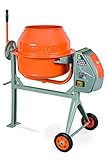
- Cleans easy with solid steel drums, and IP45 wash down certified motor and gear box
- Motor drive box is factory-assembled for easy and mess-free installation
- Quick 1-person assembly can be done in under thirty minutes
- Steel handle uses an iron ring and safety lock for easy adjustments and locking in place safely and easily
- Low-profile height makes it simple to pour into forms, wheelbarrows, and maneuver around
Energy performance: thermal mass is not insulation
A dome’s shape does not establish energy efficiency. The U.S. Department of Energy’s building-envelope guidance emphasizes continuous insulation, air sealing, moisture control, and the reduction of thermal bridging. DOE also explains that thermal mass can moderate temperature swings under suitable climate and operating conditions, but thermal mass does not replace insulation or a properly designed envelope. See the DOE building-envelope guidance for the interaction between these measures.
For a dome, examine details that are easy to overlook:
- the junction between the shell and foundation;
- the floor slab, perimeter insulation, and below-grade edge;
- window and door frames, especially where the shell is thick or curved;
- reinforcement, structural ribs, fasteners, and embedded utilities that bridge the envelope;
- the exterior finish and whether it remains continuous after cracking or repair;
- air leakage at doors, windows, service penetrations, and the base of the dome; and
- humidity, condensation, drying potential, and fresh-air ventilation.
DOE material on high-R foundations also highlights how uninsulated slabs and foundations can cause significant heat loss and thermal bridging. The foundation guidance is relevant even if the above-grade shell receives most of the attention.
Do not publish or rely on a generic AirCrete R-value unless it applies to the exact tested assembly, thickness, density, moisture condition, and installation detail. A useful project specification should instead identify the target assembly performance and explain how it will be verified.
What equipment does a DIY builder need?
The exact equipment list depends on whether the builder is casting blocks, panels, or a different shell system. A typical AirCrete workflow may require a foam generator, mixer, compressor, forms, measuring and batching equipment, reinforcement tools, curing space, lifting aids, and tools for the exterior finish.
Domegaia’s published starter-pack specifications describe a 42-gallon batch capacity and an external compressor requirement of approximately 3 to 5 CFM at 90 PSI. These are manufacturer specifications for that system, not independent performance testing. If you are sourcing an air compressor rated for 5 CFM at 90 PSI, verify the compressor’s delivered CFM at the stated pressure—not just horsepower, tank size, or a free-air rating—and confirm compatibility with the selected foam generator.
For small-batch preparation and supplemental mixing, a variable-speed concrete mixing paddle may be useful. It should not be represented as equivalent to a dedicated foam-injection mixer. Poor mixing, unstable foam, inaccurate water measurement, or inconsistent batching can change density and strength from one batch to the next.
Do these 3 things before closing this tab:
1Fix the driver behind crashes, sound loss and screen glitches2Clear out junk files and repair common Windows errors3Scan for outdated or missing drivers - takes under a minuteBefore purchasing equipment, document:
- the batch size and expected production rate;
- the compressor’s actual output at operating pressure;
- power requirements and whether the site can support them;
- form dimensions and the number of forms needed to maintain the schedule;
- material storage, weather protection, and curing space;
- safe lifting and handling procedures; and
- how test samples will be labeled, cured, and retained.
Dedicated AirCrete starter pack equipment may simplify sourcing for someone following that manufacturer’s process, but buying a kit does not make a design structurally adequate or code-approved.
Building-code and engineering reality
A permanent dwelling must satisfy the locally adopted building, residential, energy, fire, plumbing, electrical, zoning, and land-use requirements. The applicable rules vary by country, state, province, municipality, edition, site, and building classification.
In the United States, the 2024 International Building Code includes provisions for certain membrane and air-supported structures. Those provisions do not create a blanket approval path for a solid, site-mixed AirCrete residential dome. The relevant code edition in your jurisdiction may also be different from the 2024 IBC. Consult the building department before construction—not after the shell is already on the site. The 2024 IBC Chapter 31 provisions are a reference point, not a universal permit.
Rank #4

- 【Powerful Motor】This Cement mixer equiped 2100 Watt motor with 270-900 RPM, Suitable for mixing oil paint, cement, fodder, mud, printing ink, thin-set mortar, plaster, cementitious adhesives and more.
- 【Adjustable 6 Speed】This Concrete mixer design a 6 speeds with self-locking switch and screw-shaped dual-paddle for effective and thorough mixing, saving time and preventing splashing.
- 【Overheating Protection】This Mud mixer carry with Porous heat dissipation design and automatic power-off when overheated for longer-lasting use.
- 【Easy Operation and maintenance】Dual ergonomic handle and Operation Locking Switch reduce finger fatigue while mixing; All-copper carbon brush holder for easy and quick maintenance.
- 【What you get】Concrete Mixer Kit x1 ; Spare Carbon Brush (7*11*15mm) x 2 ; Installation wrench x 2 ;
Because a DIY AirCrete shell may not fit a simple prescriptive wall assembly, the official may request structural calculations, material test data, a recognized evaluation report, an approved testing procedure, or other evidence that the alternative method meets the intent of the code. The ICC’s alternative-material and method guidance explains why approval generally depends on evidence rather than on a product name or an attractive concept.
Hire an alternative building structural engineer—ideally one experienced with thin shells, masonry, concrete, or unconventional materials—before selecting shell thickness, reinforcement, openings, or foundation geometry. The engineer should be working from documented material properties and the actual site loads, not from a generic internet recipe.
Questions the engineer and building official should resolve
- What are the verified density, compressive strength, tensile or flexural assumptions, shrinkage characteristics, and moisture behavior of the proposed mix?
- How is the shell reinforced, and how does reinforcement continue through the foundation, joints, openings, and service penetrations?
- What are the design wind, snow, seismic, flood, soil, and temperature conditions at the site?
- How are uneven settlement and foundation movement addressed?
- How are doors, windows, skylights, vents, and other openings framed and connected?
- What fire-resistance, fire-separation, egress, smoke-alarm, and emergency-access requirements apply?
- How will the exterior system shed water and tolerate cracking, UV exposure, freeze-thaw cycles, and repairs where relevant?
- How will the building meet energy-code requirements for insulation, air leakage, ventilation, and mechanical systems?
- How will inspections occur while reinforcement, joints, and concealed services remain visible?
A responsible project workflow
- Check the site and jurisdiction first. Confirm zoning, setbacks, minimum dwelling size, height and appearance rules, accessory-building restrictions, septic or sewer requirements, utility access, fire access, and whether alternative construction is accepted.
- Ask the building department what evidence it expects. Find out whether the jurisdiction requires a licensed designer, stamped calculations, material testing, an evaluation report, special inspections, or a formal alternative-material approval.
- Investigate the ground. Obtain a geotechnical or foundation recommendation when soil, slope, groundwater, expansive clay, frost, flood exposure, or settlement risk warrants it.
- Engage the structural engineer before choosing the recipe. The engineer needs the intended geometry, site loads, openings, foundation concept, and documented material properties. Do not reverse the order by selecting a recipe and asking for approval afterward.
- Choose and document the construction system. Decide whether the project is a block or panel dome, an engineered shotcrete airform dome, a geodesic system, or another approach. Do not combine details from different systems without design review.
- Characterize the mix. Establish batching procedures and test relevant properties, including density and compressive strength. Where appropriate, investigate shrinkage, moisture behavior, fire performance, and durability. Keep records for each batch and do not assume a demonstration sample represents production material.
- Design the foundation and water-management system together. Include capillary breaks, drainage, flashing, foundation insulation where required, shell anchorage, crack control, and a durable exterior render or membrane. The base of the dome is a common place for structural, thermal, and moisture details to converge.
- Resolve openings and services on paper. Windows, doors, vents, pipes, conduits, electrical boxes, and mechanical penetrations can interrupt the shell’s load path and weather barrier. Detail them before casting or laying blocks.
- Model the complete thermal envelope. Use the local climate, foundation, shell, openings, finishes, thermal bridges, air leakage, and mechanical systems. A home energy model can help test design assumptions, while a blower-door test after enclosure can identify air-sealing defects. Neither replaces structural approval.
- Build a representative mock-up. Test the actual forms, reinforcement, joints, finish, window interface, and waterproofing detail before committing to the full structure.
- Schedule inspections and maintain records. Photograph concealed work, record batch data, retain test results, and obtain required approvals at each stage. Unrecorded work can be difficult or impossible to verify later.
- Commission the finished home. Check drainage, water tightness, ventilation, humidity, heating and cooling, electrical safety, and the performance of doors and windows before treating the building as complete.
Common failure modes to prevent
Inconsistent material
Foam stability, water content, cement proportion, mixing time, temperature, curing, and handling can all affect the finished material. If one batch is materially different from another, assumptions used in engineering calculations may no longer apply. Written batching procedures and retained test samples are more valuable than a recipe copied without its conditions.
Water entering through the base or finish
Cellular concrete should not be treated as a complete roof membrane simply because it is cementitious. The building needs positive drainage, a capillary break, a compatible exterior coating, properly detailed penetrations, and a repair strategy. A finish that looks sound at completion may still fail if movement, cracking, or poor window interfaces are ignored.
Thermal bridges at the foundation and openings
The shell may receive most of the insulation discussion while the slab edge, foundation, windows, doors, and structural connections are left untreated. These locations can dominate comfort, condensation risk, and energy use. Review them as part of the envelope rather than adding them after construction.
Confusing material fire resistance with a rated assembly
A cement-based material may resist ignition better than many combustible materials, but that fact alone does not establish a tested fire-resistance rating, fire separation, safe egress, or compliance with local fire rules. Ask for the rating and assembly evidence required by the authority having jurisdiction.
Assuming a plan or workshop is an approval
Plans, manuals, online courses, and workshops can help an owner understand a construction method. They are not automatically stamped local construction documents, and they do not transfer responsibility for site-specific design. Use them as education and process references, then obtain the approvals required for the actual property.
Who should—and should not—choose this approach?
An AirCrete dome may be worth investigating when the owner has substantial project-management time, access to materials and equipment, a straightforward site, a jurisdiction willing to review alternative construction, and a realistic budget for engineering and professional work. It may also appeal to someone who values a masonry-based enclosure, reduced conventional framing, and hands-on construction.
Best Value

- POWERFUL PERFORMANCE: Processes 45+ bags (80lbs each) per hour with an adjustable water input system for perfect consistency every time.
- ENHANCED CAPACITY: Included Hopper Extension triples material capacity to 300lbs, compatible with all MudMixer models for versatile use.
- EXTENDED REACH: Adjustable Chute Extension adds 18 inches of pouring reach, enabling targeted placement and precision material application.
- COMPLETE BUNDLE: Ideal for contractors and DIY enthusiasts, this comprehensive setup reduces material waste and maximizes mixing efficiency.
It is a poor fit when the owner needs a fast, predictable, financeable, easily insurable conventional home; has limited construction experience; cannot obtain local approval; is relying on a shell-only price; or expects the dome shape to solve wind, water, energy, and structural problems automatically.
Free tools Windows power users keep installed
One-click scans. No signup required.
Before buying equipment, compare three designs on a complete-life-cycle basis:
- a conventional framed or masonry home meeting the same performance requirements;
- a professionally engineered dome system with documented materials and details; and
- the proposed DIY AirCrete system, including engineering, testing, permitting, equipment, labor, finishes, and contingency.
If the AirCrete option still meets the budget, schedule, code, insurance, durability, and comfort requirements after that comparison, it may be a reasonable owner-builder project. If the savings exist only in the shell estimate, they are not yet proven savings.
Frequently Asked Questions
Is AirCrete the same as AAC?
No. In DIY usage, AirCrete usually means site-mixed foamed or cellular concrete. AAC is a factory-produced autoclaved aerated concrete product with different manufacturing controls and documentation. Properties of AAC should not be assumed for a DIY AirCrete batch.
Can an AirCrete dome withstand hurricanes, tornadoes, or earthquakes?
Not necessarily. A dome’s geometry may distribute loads efficiently, but resistance to wind, snow, earthquakes, fire, and settlement depends on the foundation, reinforcement, shell, openings, connections, and weatherproofing. A generic DIY AirCrete dome does not inherit the ratings of an engineered monolithic dome system.
What’s actually slowing this PC down?
Pick the symptom - the matching free tool is one click away.
How much does an AirCrete dome home cost?
There is no dependable universal price. Some projects may save on conventional framing and owner-provided labor, but the full budget must include site work, foundation, reinforcement, equipment, engineering, permits, finishes, utilities, windows, doors, labor, and contingency. Vendor estimates for a shell or equipment package are not finished-home costs.
Does AirCrete automatically provide good insulation?
No generic R-value should be assumed. Thermal performance varies with density, thickness, moisture, mix consistency, cracking, finishes, thermal bridges, air leakage, and the foundation. The complete assembly should be modeled or tested for the project’s climate and code requirements.
Do I need a structural engineer and building permit for an AirCrete dome?
For a permanent dwelling, consult the local building department before construction and hire a structural engineer familiar with shells or alternative materials. The jurisdiction may require stamped calculations, material testing, evaluation documentation, special inspections, or an alternative-material approval.
The Bottom Line
DIY AirCrete dome homes are best understood as a promising but highly conditional construction option. The material can be lightweight and potentially insulating, while the curved form may offer useful structural geometry. Neither advantage guarantees affordability, resilience, energy efficiency, or environmental benefit. Those outcomes must be demonstrated through site-specific engineering, documented material testing, continuous water and thermal detailing, a complete budget, and approval from the local authority.
Quick Recap
Product prices and availability are accurate as of the date/time indicated and are subject to change. Any price and availability information displayed on Amazon at the time of purchase will apply.

