Use ventilation when outdoor air is genuinely drier than the air inside; use dehumidification when outdoor air is warm and humid or outdoor pollution makes opening the building undesirable. In either case, first stop leaks and other water sources, then measure relative humidity (RH). The U.S. Environmental Protection Agency (EPA) recommends keeping indoor RH below 60%, ideally 30%–50%. That range is a prevention target, not proof that a building has no hidden moisture problem.
The practical choice is therefore conditional, not a permanent “windows open” or “windows closed” rule. A dry winter day may be improved by controlled outdoor-air exchange. A muggy summer day usually calls for source control and a dehumidifier, air-conditioning adjustments, or both.
As an Amazon Associate I earn from qualifying purchases.
What indoor humidity should you target?
Relative humidity is the percentage of moisture the air holds compared with the maximum it could hold at that temperature. Warm air can contain more water vapor than cold air, so RH can change when a room is heated or cooled even if no water is added.
EPA guidance says to keep indoor RH below 60% and ideally between 30% and 50%. See EPA’s biological-contaminants guidance. EPA repeats the same prevention range in its mold-remediation guide. Treat those values as operating goals: a reading below 60% does not rule out a plumbing leak, wet insulation, a damp crawlspace, or condensation inside a wall.
#1 Best Overall

- Semiconductor dehumidifiers use thermoelectric cooling to remove moisture from the air. They create a drier, more comfortable environment by reducing humidity and improving air quality.
- Our home dehumidifier features intelligent auto-shutoff, automatically powering down when the water tank is full. Set it and forget it, knowing your dehumidifier is working efficiently and safely, giving you true peace of mind.
- Our dehumidifier features a captivating 7-color ambient light, allowing you to bathe your room in a spectrum of soothing hues. Choose from a calming blue, energizing green, romantic red, and more – easily select the perfect color to create your desired atmosphere and enhance your living space. Dehumidify in style and set the perfect mood, every time.
- Sleep Mode creates the perfect sleep sanctuary. The dehumidifier's atmosphere lights automatically turn off, and noise fades to a whisper. Experience truly undisturbed dehumidification for a night of perfect rest.
- Elevate your home's comfort and style with our sleek and compact dehumidifier. Designed to seamlessly blend into any space, from the living room and bedroom to the bathroom, basement, and even your RV. Its modern aesthetics and space-saving footprint make it the perfect dehumidification solution for every corner of your home.
| Measured indoor RH | Practical response |
|---|---|
| Below 30% | Often too dry for comfort; avoid adding moisture blindly if the building has cold-surface condensation or other problems. Confirm the reading and consider a qualified assessment. |
| 30%–50% | EPA’s ideal general range. Continue checking rooms that smell musty or show staining. |
| 50%–60% | Watch the trend, inspect moisture sources, and improve localized exhaust or drying if readings persist. |
| Above 60% | Act: find water sources, avoid adding humid outdoor air, and use appropriate dehumidification or HVAC controls. |
Measure before buying equipment. EPA’s household mold guide describes a small humidity meter (digital hygrometer) and gives a historical price range of $10–$50; that figure comes from a guide published approximately in 2014 and is not a current retail quote. Place meters in representative living areas and in problem locations such as a basement, bathroom, or room with condensation. Compare readings at different times rather than relying on one number.
Why moisture source control comes first
Equipment can lower RH while a leak continues to wet the building. EPA summarizes the priority plainly: “The key to mold control is moisture control.” Use the EPA moisture-control guidance to check the building envelope and plumbing before selecting a machine.
Check common water sources
- Repair roof, flashing, gutter, foundation, plumbing, and appliance leaks.
- Look for condensation on cold pipes, ducts, windows, exterior walls, and uninsulated surfaces.
- Inspect crawlspaces, basements, and areas behind stored materials for dampness or musty odors.
- Use kitchen and bathroom exhaust fans during moisture-generating activities, and vent those fans outdoors rather than into an attic or wall cavity.
- Vent clothes dryers and other moisture-generating appliances outdoors where the appliance and local code allow it.
Dry wet materials promptly. EPA’s household mold guide says that drying wet or damp materials within 24–48 hours can, in most cases, prevent mold growth. This is a response window, not permission to leave materials wet for two days: stop the source, extract standing water, and start drying immediately.
Quick wins for a faster PC:
Fix the driver behind crashes, sound loss and screen glitchesFind Drivers →Repair Windows errors before they cause bigger problemsFix Now →How ventilation changes indoor moisture
Ventilation replaces indoor air with outdoor air. It can remove moisture generated by people, showers, cooking, and drying clothes only when the incoming air contains less moisture than the air it replaces. Outdoor temperature alone is not enough; compare moisture content or dew-point conditions as well as RH.
When ventilation helps
Cold outdoor air is often dry in absolute terms. After that air enters and warms indoors, its RH falls, allowing it to absorb indoor moisture. EPA advises increasing ventilation when outdoor air is cold and dry. Window airing, outdoor-vented bathroom and kitchen fans, and a properly designed mechanical ventilation system can all help in those conditions. See EPA’s indoor-environment guidance.
Rank #2

- 🍀 1657ML Larger Capacity: The water tank of this dehumidifier can hold of water at most 1657ml(58 OZ), you don’t need to pour water frequently and don’t worry about the water overflow or water leaking. Please read the instruction manual before using the product!
- 🍀 Defrosting and Safety Protection: Our dehumidifier is equipped with a defrost technology. It automatically removes frost from the semiconductor to make sure it works well. And with auto shut off protection, if water tank is full or separated, or the dehumidifier tilt or fall down, it will flash a red light to remind you and stop operation timely.
- 🍀 3 Setting Modes with Quiet Operation: There are three setting mode of this dehumidifier: sleep mode, normal mode and performance mode. It won’t produce noise over 40dB in sleep mode, so you can enjoy a peaceful sleeping at night. The normal mode and performance mode are more powerful for daily use.
- 🍀 10 Colors of Night Light and 5 Flexible Timer Options: There are 10 colors atmospheric lighting with clear water tank add unique touch to your life. Choose a timer from 24 hours, 48 hours, 72 hours, 96 hours or continuous operation to free your hands and save energy if necessary.
- 🍀 Stable and Compact Design: With stable and compact unique design, it’s not only suitable for adults, but also practical for the elderly and the children. It can be placed at your bathroom, living room, bedroom and other closed space. The dehumidifier is approved by FCC, CE and RoHS. Don't need to worry about accidents.
When ventilation adds moisture
In warm, humid weather, outdoor air can have a higher moisture content than indoor air. Bringing it inside then increases the latent moisture load. Building Science Corporation’s DOE-hosted supplemental humidity sheet explains why dilution ventilation can add moisture in humid climates. EPA’s mold guidance likewise recommends dehumidifying rather than ventilating when outdoor air is warm and humid.
Air quality and weather limits
Do not increase outdoor-air ventilation automatically. EPA advises avoiding outdoor-air ventilation when pollution or pollen is high and during extreme temperature or humidity conditions; see the agency’s biological-contaminants guidance. Check local air-quality alerts, smoke, pollen, rain, and outdoor dew-point conditions before opening windows or running a high outdoor-air setting.
What’s actually slowing this PC down?
Pick the symptom - the matching free tool is one click away.
How dehumidification works
A dehumidifier removes water from indoor air without intentionally replacing that air with outdoor air. A portable unit typically draws room air over a cold coil, condenses water into a tank or drain, and returns drier air to the room. The exact technology, capacity, energy use, noise, and operating temperature vary by model; the cited guidance does not establish a particular model, room-size rating, performance result, or current price.
When a portable dehumidifier is appropriate
- Outdoor air is warm and humid, so ventilation would increase the moisture load.
- A basement, laundry area, or other zone remains above the target RH after leaks and condensation sources are corrected.
- You need room-level control rather than a whole-building equipment change.
Use a unit with a reliable humidistat, place it where air can circulate, and provide a safe continuous drain when possible. Emptying a tank prevents shutdown but does not solve the underlying source. A portable dehumidifier cannot repair a leak, dry concealed wet insulation, or substitute for outdoor exhaust at a shower.
Whole-home dehumidification
Persistent, building-wide humidity may require equipment connected to the HVAC system or a dedicated whole-home dehumidifier with suitable duct distribution and drainage. Sizing and installation depend on the home’s envelope, climate, ventilation rate, occupancy, and existing HVAC system. Have an HVAC professional evaluate those factors rather than choosing capacity from floor area alone.
Rank #3

- ✔ EASY TO USE: This mini dehumidifier is spill and mess free. Just hang and go! Non-toxic, child and pet safe! Your small rooms will be dry and odor free. Works for areas up to 333 cubic feet.
- ✔ MINI DEHUMIDIFIER GOES A LONG WAY: Super dry dehumidifier unit lasts 20-30 days before recharging the silica gel beads. Absorbing capacity up to 6oz.
- ✔ SMALL, SLEEK DESIGN: This portable small design lets you hang or conveniently place the dehumidifier anywhere to fight pesky humidity! Cars, closets, boats, cabinets, gun safes, and even gym bags! A very convenient cool gift for everyone!
- ✔ 100% CORDLESS DEHUMIDIFIER: Moisture out: Cords out! No cables or batteries required. Just charge your device and say bye-bye humidity! Renewable and rechargeable moisture absorber. Lasts up to 4 weeks before recharge.
- ✔ SATISFACTION : SUPER DRY ODOR-FREE LIFE! Our dehumidifiers are top quality! Super durable and reliable. Comes with an industry-leading 5 year so you can get rid of moisture and not worry about mold or leaks!
Dehumidifier vs. ventilation: the decision framework
| Decision axis | Ventilation | Dehumidification |
|---|---|---|
| Outdoor moisture | Helps when incoming air is colder and drier; can add moisture when outdoor air is warm and humid. | Useful when outdoor air is warm and humid and indoor RH must be reduced. |
| Outdoor air quality | Account for pollution, smoke, pollen, and extreme conditions before increasing outdoor-air exchange. | Reduces humidity without bringing in more outdoor air, but does not remove pollutants or fix leaks. |
| Moisture source | Outdoor-vented exhaust is effective for localized shower and cooking moisture; appliances should discharge outdoors where possible. | Handles residual or broad humidity after water sources are addressed. |
| Scope | Can be a window, exhaust fan, balanced system, or whole-building outdoor-air system. | Portable units serve a room or zone; whole-home systems require appropriate equipment and distribution. |
| Maintenance and cost | Depends on existing equipment and weather; over-ventilating humid air raises moisture and conditioning loads. | Requires purchase, electricity, drainage, filter/coil care, and space; no universal cost or capacity is established here. |
A simple operating rule
- Read indoor RH with a hygrometer.
- Check outdoor conditions, especially dew point, humidity, rain, smoke, and pollen.
- If outdoor air is drier and clean, ventilate in controlled periods and exhaust moisture at its source.
- If outdoor air is humid or polluted, keep windows closed, use outdoor-vented local exhaust, and dehumidify the indoor air.
- If RH stays high, investigate leaks, condensation, crawlspaces, and HVAC operation before increasing equipment run time.
Step-by-step plan for a house or small building
1. Map the problem
Record RH and temperature in occupied rooms, bathrooms, kitchens, basements, crawlspaces, and rooms with visible condensation. Note when readings rise: after showers, during cooking, overnight, after rain, or whenever the air conditioner cycles.
2. Find and stop moisture entry
Inspect plumbing, roof and wall penetrations, gutters, grading, foundations, windows, and HVAC condensate lines. Correct the source before relying on a dehumidifier. If materials are wet, remove standing water and begin drying immediately; use the EPA’s 24–48-hour guidance as a maximum response window, not a target delay.
3. Improve point-source exhaust
Run a bathroom exhaust fan during showers and afterward long enough to clear steam. Use a kitchen hood or exhaust fan for cooking. Confirm that each fan discharges outdoors, not into an attic, ceiling void, or crawlspace. These controls remove moisture close to where it is generated and are not a universal replacement for whole-room dehumidification.
4. Choose weather-appropriate ventilation
On clean, dry outdoor-air days, use windows or mechanical ventilation to dilute indoor pollutants and remove moisture. On humid, rainy, smoky, or high-pollen days, reduce uncontrolled outdoor-air entry. A controlled system should be operated according to its design and the building’s climate rather than by a fixed “always on” rule.
5. Add dehumidification when needed
For a single damp room, place a portable dehumidifier with unobstructed airflow and a drainage plan. Set its humidistat near the desired range and verify the result with a separate hygrometer. For recurring whole-home humidity, ask an HVAC professional to assess system controls, ventilation, condensate drainage, and supplemental dehumidification.
Rank #4
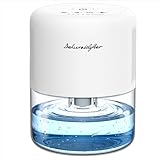
- [Gentle Control, Low Energy] Unlike high-power dehumidifiers that focus on rapid moisture reduction, this unit features a gradual dehumidification approach. With its relatively gentle humidity adjustment rate, it helps reduce potential discomfort caused by significant humidity changes in a short period, making it ideal for those who prioritize stable indoor humidity. Compared with some high-power devices, it consumes less energy and produces less noise from frequent start-stops, making it a practical solution for home humidity management.
- [Compact & Portable for Small Spaces] This compact and portable home dehumidifier is designed for use in a variety of small indoor spaces. Weighing only 2.56 lbs and measuring just 5.91" (D) × 8.46" (H), it fits easily into small areas where humidity control is needed. Ideal for maintaining a comfortable and dry environment in confined or humid spaces.
- [Auto Defrost & Auto Shut-off] Enjoy worry-free operation with built-in safety and convenience features. The auto defrost function prevents frost buildup, ensuring continuous and efficient performance even in cooler temperatures—perfect for basements or winter use. The auto shut-off prevents overflow when the tank is full, detached, tilted or fallen, preventing spills and protecting the device. Keep your space comfortably dry without the need for constant monitoring.
- [4 Time Setting & 3 Modes] Customize your comfort with 4 timer settings (Continuous/24H/48H/72H) to meet your requirements and reduce energy waste. Choose from 3 smart modes(Sleep, Auto and Performance) to adapt to changing humidity and room conditions. Whether you're relaxing, sleeping, or dealing with extra moisture, there’s a mode that fits your needs.
- [10 Colorful Lights & 3 Brightness Levels] Create the perfect ambiance with 10 soothing light colors and 3 adjustable brightness levels. Whether you prefer a soft nightlight for sleep, a warm glow for relaxation, or vibrant colors to liven up your space, this feature helps you set a cozy, personalized atmosphere.
6. Verify the trend
Recheck RH over several days and through different weather. A lower reading in one room does not prove that wall cavities, closets, or a basement are dry. Continue looking for odors, staining, bubbling finishes, rust, and recurring condensation.
Why air conditioning may not solve humidity
Cooling and dehumidification are related but not identical. The U.S. Department of Energy explains that modern air-conditioning systems can cool effectively while removing less moisture than a building needs, particularly in hot-humid climates. Read DOE’s advanced HVAC humidity-control guidance.
Short cooling cycles, oversized equipment, low airflow, incorrect controls, or a system selected mainly for sensible cooling can leave indoor RH high. Possible responses include correcting HVAC controls, adjusting airflow or operating strategy where appropriate, improving ventilation control, and adding supplemental dehumidification. An HVAC professional should diagnose the system; lowering the thermostat alone may waste energy without resolving the moisture load.
Independent reader supportYour contribution helps us test, update, and keep practical guides available for everyone.Construction and building-envelope considerations
Humidity control is partly an enclosure problem. Air leaks, vapor movement, thermal bridges, poor drainage, and unconditioned damp spaces can overwhelm room equipment. During construction or renovation, coordinate water management, insulation, air sealing, duct design, condensate disposal, and ventilation so that the building does not depend on a portable machine to hide a defect.
Do these 3 things before closing this tab:
1Clear out junk files and repair common Windows errors2Fix the driver behind crashes, sound loss and screen glitches3Repair Windows errors before they cause bigger problemsBasements and crawlspaces
Below-grade spaces often receive moisture from soil, foundation walls, plumbing, and cool surfaces. A dehumidifier may control the air temporarily, but persistent readings require inspection of drainage, waterproofing, sump systems, insulation, and air communication with the living space. Keep stored materials off damp floors and maintain access for inspection.
Best Value
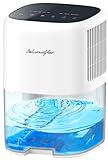
- 🍃Advanced Small Dehumidifier for Home: Designed for lasting home use, our bathroom dehumidifier works gently and steadily to maintain a balanced humidity level. The large 44 OZ (1.3L) water tank minimizes emptying frequency. Suitable for dorm room, camper, apartment, room, office and living room. No more dampness-just fresh, comfortable air everywhere
- 🍃Auto Shut-off and Auto-Defrost: Our small room dehumidifier automatically stops and alerts you with a flashing red light when the tank is full, giving you peace of mind when you're not home. In lower temperatures, the auto-defrosting system activates to prevent frost buildup, ensuring longer product life and efficient operation
- 🍃5 Timer Settings and 3 Working Modes: Choose from 24H/48H/72H/96H automatic shut-off timers or continuous operation. Select between 3 modes (Sleep, Normal, or Performance) to match your needs. In sleep mode, our quiet dehumidifiers operate below 28dB, ensuring peaceful rest while maintaining fresh air all night
- 🍃10 Colorful Night Lights and 3 Brightness Levels: Set the mood with soft RGB lighting! Featuring 10 calming colors and 3 adjustable brightness levels, this dehumidifier for small rooms also serves as a soothing night light. Suitable for nurseries, meditation spaces, or creating a relaxing ambiance in any room. It's not just practical-it's a beautiful addition to your home
- 🍃Compact Design and Certified Safety: Featuring a compact size of 6.56" x 4.94" x 9.29", it fits easily in any room. With FCC, CE, UKCA, and RoHS approvals, our safe dehumidifier meets rigorous international standards, giving you peace of mind for your home and family
Condensation on cold surfaces
Condensation means a surface is colder than the air’s dew point. Lowering indoor RH can reduce it, but insulating the surface, repairing air leaks, or correcting HVAC distribution may be the durable fix. Do not assume that wiping a window or pipe addresses moisture inside the assembly.
Operating and maintenance pitfalls
- Opening windows on muggy days: this can raise indoor moisture even when the room feels stuffy. Check outdoor conditions first.
- Running a dehumidifier while a leak continues: the machine treats the symptom and may run continuously. Repair the source.
- Exhausting fans into concealed spaces: moisture can accumulate in attics, walls, or crawlspaces. Discharge outdoors.
- Ignoring drainage: a full tank stops many portable units. Use a stable, code-appropriate drain route and protect against overflow.
- Blocking airflow: furniture, curtains, or storage against the intake and outlet reduces performance.
- Neglecting cleaning: follow the manufacturer’s instructions for filters, coils, tanks, and drain lines; dirty components reduce airflow and can add odors.
- Trusting one meter: inexpensive sensors can disagree. Compare locations and trends, and investigate when readings conflict with visible moisture.
- Assuming “below 60%” means risk-free: localized cold surfaces and concealed leaks can still support mold.
When to call a professional
Seek qualified building or HVAC help when RH remains above 60% despite source control, when there is recurring water intrusion, when mold covers extensive or hidden areas, when materials remain wet, or when a whole-home system needs redesign. A professional can trace moisture pathways, test HVAC operation, assess ventilation rates, and determine whether supplemental dehumidification is appropriate. Do not use a dehumidifier as a substitute for repairing the building envelope or plumbing.
Practical checklist
- Measure RH and temperature in several locations.
- Target below 60% RH, ideally 30%–50%, using EPA guidance.
- Repair leaks and condensation sources.
- Dry wet materials immediately; aim to complete drying within 24–48 hours, consistent with EPA household guidance.
- Use bathroom and kitchen exhaust fans that discharge outdoors.
- Ventilate when outdoor air is cleaner and drier than indoor air.
- Avoid bringing in outdoor air during humid, polluted, smoky, high-pollen, or extreme conditions.
- Use a portable dehumidifier for suitable room-level control and plan drainage.
- Have persistent or whole-home problems evaluated by an HVAC or building professional.
Frequently Asked Questions
Should I ventilate or use a dehumidifier in summer?
If outdoor air is warm and humid, dehumidification is generally the better humidity-control route. Use outdoor-vented bathroom and kitchen exhaust for local moisture, and ventilate only when outdoor air is sufficiently drier and clean.
Recommended Free Tools
Can ventilation remove mold?
Ventilation can lower moisture under suitable outdoor conditions, but it does not remove established mold or repair the water source. Stop leaks, dry materials, and obtain appropriate remediation advice when mold is present.
Is a dehumidifier enough for a damp basement?
It may control basement air, but recurring dampness requires investigation of foundation, drainage, plumbing, condensation, and crawlspace conditions. Treat the dehumidifier as supplemental control, not proof that the building is dry.
Why is my air conditioner running but RH still high?
Cooling may be effective while moisture removal is inadequate. Short cycles, oversized equipment, airflow or control issues, and high latent loads are possible causes; an HVAC professional can assess settings and supplemental dehumidification.
Quick Recap
Product prices and availability are accurate as of the date/time indicated and are subject to change. Any price and availability information displayed on Amazon at the time of purchase will apply.

