Construction sites rarely need one “best” machine. They need a coordinated fleet matched to the work phase, material, access, output target and safety requirements. Excavators dig, loaders move bulk material, dozers spread it, trucks haul it, graders shape it and compactors densify it. Project efficiency comes from balancing those roles so each machine can work without creating a bottleneck for the next.
What heavy equipment is used on a construction site?
The essential equipment list changes with the project. A utility trench, highway embankment, building foundation and finish-grading job have different excavation depths, haul distances, ground conditions and tolerances. Federal Highway Administration (FHWA) earthwork guidance shows several valid combinations rather than one universal fleet.
As an Amazon Associate I earn from qualifying purchases.
Use the following categories as a starting point, then confirm machine size, attachments, production targets and operating rules against the site plan.
| Equipment | Typical role | How it helps—and where it is limited |
|---|---|---|
| Hydraulic excavator | Digging, trenching, loading excavated soil and selected lifting | Choose bucket and machine size for depth, reach, material and truck arrangement. Lifting is permitted only within the actual machine’s lift chart and operating guidance. |
| Backhoe loader | Rear-arm digging plus front-bucket loading, backfill and utility work | One machine handles varied small-site tasks. Its versatility does not make it the fastest or most maneuverable choice for high-volume loading. |
| Wheel loader | Loading trucks, moving stockpiles and handling bulk material | Large bucket capacity supports high-volume handling when the machine, bucket and trucks fit the site. |
| Bulldozer (dozer) | Pushing, rough spreading and short-distance soil movement | Effective for bulk shaping and spreading dumped material; ordinary tracked travel is not a substitute for engineered compaction. |
| Dump truck or scraper | Hauling material between cuts, stockpiles and fills | Capacity and cycle time determine whether loaders, spreaders and compactors wait. |
| Motor grader | Fine shaping, profile work and grade control | Useful when final slopes, drainage lines and surface tolerances matter. |
| Roller or other compactor | Densifying soil, aggregate or pavement layers | Select the compaction mechanism for the material and required result; pressure, vibration and kneading act differently. |
| Crane | Hoisting, lowering and horizontally moving suspended loads | Configuration must suit the load, radius, ground or support conditions and lift plan. |
| Water truck | Moisture conditioning and dust control where the method calls for it | Useful only when water addition, material characteristics and project specifications support its use. |
What does each machine do?
Hydraulic excavators: digging and loading
An excavator’s boom, arm and bucket provide controlled digging for foundations, trenches, basements, drainage and mass excavation. Operators can load soil directly into trucks or place it beside a trench for later backfill. Selection should account for required digging depth and reach, bucket capacity, material hardness, available swing room and the haul arrangement.
#1 Best Overall

- 25-In-1 Construction Truck Toy Set With Carrier: Includes 12 mini construction trucks and 12 worker figures stored in a large carrier truck. A complete construction toys set featuring excavator, dump truck, bulldozer and more, ideal for kids who love toy trucks and building play
- Enhances Creativity And Hands-On Learning: Made with Alloy metal and durable ABS plastic. Kids can enjoy construction play by using excavators to dig and trucks to move sand. These toy trucks support fine motor skills and interactive indoor and outdoor play, including sandbox fun
- Realistic Sound And Light Effects For Interactive Play: Press the roof buttons to activate sound effects, and flashing lights. Some toy cars feature movable parts for a more lifelike experience, making this a fun and engaging car toys set for kids
- Boosts Imagination And Creative Role Play: Kids can create their own construction site, using excavator toys to dig or trucks to transport sand. This construction toy set helps develop creativity, fine motor skills, and storytelling during pretend role play activities
- Great Gift For Kids Age 3+: A fun choice for birthdays or everyday surprises, ideal for boys and girls who enjoy construction toys and truck play. Suitable for kids toys boys 3-5, toys for 4 year old boys, and children ages 3 and up
An excavator may perform a limited lift, such as positioning a pipe, when the manufacturer allows that operation. The operator must use the machine’s lift chart for the actual configuration, radius and attachment, inspect suitable lifting gear and follow the equipment manual. An excavator is not automatically a crane simply because it can raise a load.
Backhoe loaders: versatile digging and loading
A backhoe loader combines a rear digging arm with a front loader bucket. That combination suits utility repairs, drainage, small foundations, backfilling and jobs that move between digging and loading several times a day. It reduces the need to mobilize separate machines on constrained sites.
The trade-off is output. For continuous bulk loading, a dedicated wheel loader generally moves more material per cycle and maneuvers more efficiently. Choose a backhoe for task variety and mobility, not on the assumption that versatility equals maximum production in every operation.
Wheel loaders: high-volume material handling
Wheel loaders scoop, carry and load loose material such as soil, aggregate and demolition debris. Their bucket capacity and travel speed make them effective at stockpiles and truck-loading points. Match bucket size to truck body capacity, material density, turning space and the distance between pile and truck. An oversized loader can be difficult to maneuver and may spend time waiting for trucks; an undersized one can lengthen every loading cycle.
Rank #2

- 41-PIECE JOBSITE IN A BOX: Set includes two exclusive 6" XL construction toy machines (crane + excavator), ten 3" Little Machines vehicles, and 29 construction accessories for an instant worksite.
- ARTICULATED XL CONSTRUCTION VEHICLES: Working booms, buckets and hooks let kids dig, lift and haul boulders just like real Cat equipment, no batteries required.
- AUTHENTIC SITE DETAILS: Road signs, cones, barrels and barricades turn carpets, sandboxes or kinetic-sand bins into realistic construction zones that fuel imaginative play.
- BUILT CAT TOUGH: High-quality plastics withstand rough indoor or outdoor play; small size fits diaper bags, makes perfect cake-topper decor and packs easily for travel.
- STEM-FRIENDLY FUN: Sorting pieces, moving cranes and planning roads boost fine-motor skills, spatial reasoning and cooperative play for boys and girls ages 3 +.
Dozers: pushing and spreading
Dozers push soil, spread dumped loads and establish rough grades over relatively short distances. In a fill operation, a dozer commonly distributes material in controlled lifts before a separate compactor densifies each layer. Blade size, traction, slope capability and ground conditions affect production.
Dozer tracks provide useful traction and surface working, but repeated tracking alone does not deliver the specified density of engineered fill. Compaction requires equipment and procedures selected for the material and project specification.
Trucks and scrapers: hauling between work zones
Dump trucks carry excavated or imported material from a cut, borrow area or stockpile to the fill. Scrapers can cut, load, haul and spread compatible soils over suitable distances. Haul capacity, road condition, grades, loading time and dump time determine the cycle. A fleet is productive only when loading, hauling and placement rates are balanced.
Free tools Windows power users keep installed
One-click scans. No signup required.
Graders: final shape and drainage
A motor grader performs the precise shaping that a dozer is not designed to finish. It trims crowns, shoulders, slopes and drainage channels and can work to grade-control information where available. Grader output depends on operator skill, material moisture, pass pattern and the required tolerance.
Rank #3

- Dynamic 2-Piece Set: This construction engineering games toys set comes with an excavator and a air pressure rise and fall dump truck, providing double the construction play fun. Both vehicles feature lights and sounds, enhancing the immersive play experience for kids.(The image interface has functional videos)
- Interactive Features: The excavator has a 360° rotating cab and a manipulable digging arm via the side lever, enabling realistic scooping. the dump truck allows kids to lift and lower the rear bed by Continuously press the up button on the top of the car and the down button on the fuel tank position, and it comes with 20 plastic stones for loading and unloading action.
- Inertia-Powered Action: Both the excavator and dump truck utilize inertia power. Simply give them a push, and they'll roll smoothly.
- Generous Size: The perfect size is suitable for children aged 3-8 to play, with a realistic appearance and realistic operating functions. It is made of ABS material and is durable and resistant to drops.
- Versatile & Gift-Worthy: Suitable for various play scenarios, from solo adventures to group play, it helps with kids cognitive development. It’s an ideal gifts choice for birthdays, holidays, Christmas, and promotes quality parent - child bonding time.
Compactors: achieving specified density
Compaction equipment must match both material and intended action. FHWA describes three broad mechanisms: pressure, vibration and kneading. Smooth-drum rollers can suit some granular materials; vibratory rollers add dynamic energy; padfoot or similar kneading equipment may be appropriate for cohesive soils. The project method may specify lift thickness, number of passes, rolling pattern and field density checks.
Cranes: dedicated lifting
Cranes are designed to hoist, lower and move suspended loads horizontally. Selection considers load weight and dimensions, lift radius, boom or configuration, access, ground bearing, overhead conflicts and the planned communication system. A dedicated crane is the appropriate starting point for repeated or critical lifts; an excavator or backhoe should not be treated as a general replacement.
How an earthwork fleet works as one system
Consider a representative fill operation. Dump trucks deliver suitable material. A dozer spreads it in lifts. A water truck adds moisture when the specification or soil condition requires conditioning and can control dust in appropriate operations. A roller selected for the material compacts each lift. A grader establishes the final profile. FHWA examples describe establishing a rolling pattern or control strip to reach target density; that documented sequence is an example, not a mandatory recipe for every soil or site.
- Excavate or obtain material: An excavator, scraper or other approved source produces the material, while operators check that it is suitable for the intended layer.
- Load and haul: Wheel loaders or excavators load trucks, and trucks or scrapers move material from cut or stockpile to fill.
- Place and spread: The dozer distributes material in the specified lift thickness. Excessive lift thickness can prevent the compactor from reaching the lower portion.
- Condition: A water truck adds or manages moisture only when the material and project method call for it. Operators avoid creating unstable, saturated working surfaces.
- Compact: The selected roller follows the documented pass pattern. Field checks confirm whether the target density or performance has been achieved.
- Trim and finish: A grader brings the surface to the required line, grade and drainage profile.
The same logic applies to haul-and-fill work using scrapers or trucks: material must arrive at a rate the spreader and compactor can process. If trucks arrive faster than placement, they queue and congest the site. If loading outpaces hauling, the loader waits. If compaction falls behind, placed material accumulates and may require rehandling. These are planning consequences of the documented equipment chain, not a universal production percentage.
Rank #4

- What You’ll Receive: A complete 4-Pack Construction Truck Sand Toys inc. 1 excavator, 1 crane, 1 bulldozer, and 1 road roller. All truck toys are push-along, manual toys (no batteries needed) with movable parts for interactive play. Everything comes neatly packaged, ready for immediate fun – no extra tools or accessories required. This truck toys set Inc.4-Pack durable construction trucks, making it the perfect sand toy trucks bulk for sandbox, encouraging teamwork and non‑stop outdoor laughter.
- Product Material: Crafted from high-quality, non-toxic ABS plastic that’s durable and safe for boys kids toddlers aged 1-3 2-4 3-5. The thick, sturdy material withstands rough play and sand box use, while the non-toxic construction truck sand toys meets all U.S. toy safety regulations. Smooth, rounded edges protect tiny hands, ensuring safe play for toddlers and young kids.
- Product Craft & Design: Features realistic construction vehicle details (movable excavator arm, swiveling crane cab, bulldozer blade, textured road roller wheels) that mimic real equipment. Each toy truck is sized perfectly for little hands to grasp and push easily. Bright, kid-friendly colors are fade-resistant, and the precision craftsmanship ensures movable parts work smoothly without getting stuck!
- Product Users, Scenarios, & Functions: Perfect for kids, toddlers, boys and girls ages 1 2 3 4 5 6 7 8 who love construction vehicles toys and imaginative play. Ideal for indoor play or outdoor group fun that functions featuring interactive play with movable parts to build fine motor skills, pretend construction games to foster creativity, and push-along play to enhance hand-eye coordination. Designed for independent play or sharing with siblings and friends, this 4-Pack sandbox toys & toy trucks set keeps kids ages 1-3 2-4 3-5 engaged for hours.
- Thank You & Friendly Support: Thank you for choosing our 4PK Construction Truck Sand Toys Bulk Set & Sand Trucks for Sandbox ! We’re thrilled to fuel your little one’s construction adventures. ① If you need fun play ideas (like setting up a mini construction site), we’re happy to share tips. ② If you have questions about the toy’s movable parts or care, our team is here to help. ③ If you want to show off your kid’s construction masterpieces, we’d love to hear about it! Let the building fun begin!
How to choose equipment for a project
1. Define the task and required output
Write down the excavation depth and reach, volume to move, lift or grade tolerance, finish requirement and deadline. A machine sized for a short utility trench may be uneconomical for mass excavation, while a large machine may not fit between buildings or utilities.
2. Characterize material and ground
Identify soil type, moisture, rock or debris, traction, slope, ground-bearing capacity and contamination controls. Compaction choice is especially material-dependent: the mechanism that works for clean granular fill may not suit cohesive clay. Ground conditions also affect whether wheeled or tracked equipment can travel without rutting or losing stability.
3. Balance capacities and cycles
Compare bucket volume, truck body capacity, haul distance, loading time, travel speed, dump time and placement rate. Then check whether spreading and compaction can keep up. The objective is a balanced system, not the largest individual machine.
Outdated Drivers Are Slowing You Down
One free scan finds every outdated or missing driver and matches the right update for your exact hardware.Free scan · exact hardware matchWindows Errors? Fix Them Before They Spread
Repair common Windows errors and clear accumulated junk for a smoother, more stable PC - no reinstall needed.Free scan · no reinstall4. Check access and maneuverability
Measure entry points, turning room, slopes, overhead lines, underground utilities, proximity to structures and separation from workers. A backhoe’s compact footprint may be valuable on a small site; a wheel loader’s higher bulk-handling output may matter more in an open aggregate yard.
Best Value
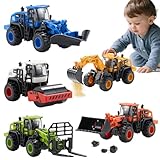
- Construction Truck Toys: 5 realistic construction vehicles Toy for toddlers. Yellow Excavator: 8.27 x 3.15 x 3.15 in; White Road Roller: 5.51 x 3.15 x 3.15 in; Blue Snow Plow Truck: 7.48 x 3.15 x 3.15 in; Green Forklift Truck: 8.66 x 3.15 x 3.15 in; Orange Bulldozer: 7.87 x 3.15 x 3.15 in; Each toy construction vehicles features movable arms, flexible joints for more realistic play
- Simply push and watch these toy trucks zoom ahead! No batteries required — the powerful friction mechanism ensures hours of fun, as kids activate the trucks with a simple push. The large anti-slip real rubber wheels ensure smooth, controlled movement on carpets, hardwood floors, and outdoor surfaces, promoting active play and motor skill development
- Safety in Mind: Made from sturdy, BPA-free ABS plastic with smooth edges to keep little hands safe. Dimoarch toddler boy toy trucks meet strict ASTM and CPSIA safety standards, giving parents peace of mind while kids enjoy hours of indoor and outdoor imaginative play
- Perfect Sandbox & Outdoor Toys: Dimoarch construction truck toys for toddlers and kids are ideal for sandbox digging, beach play, snow fun, and backyard construction zones. Children love loading, transporting, and creating their own construction site. Easy to clean—just tap the bottom to remove sand
- Great Gift Idea for Boys: Dimoarch construction toy trucks set makes an ideal birthday gift or Christmas stocking stuffers for 3 4 5 6 7 8 year old. Also great as back-to-school gifts, construction birthday party favors, and even cake topper decorations
5. Decide whether to own or rent
Compare expected utilization, delivery and pickup, availability, attachments, maintenance responsibility, operating terms and the duration of the work. FHWA’s May 2024 Federal Lands estimating manual includes equipment-rental pay items, but those estimating references are not current private rental prices or a guarantee of local availability. Obtain project- and region-specific terms before committing.
6. Include operator and technology factors
Operator technique, idle time, machine size and available technology influence fuel use and jobsite performance. A trained operator who avoids unnecessary idling and uses the correct work mode can reduce wasted operating hours. Automated machine guidance can transfer design-model data to bulldozers, excavators, pavers and milling equipment; FHWA described this capability in a 2014 article as significantly improving productivity. Treat that as an established technology example, not a guaranteed percentage improvement on every site.
Fuel, emissions and newer machine technology
Reducing idle time is one of the most direct operating practices for cutting unnecessary fuel consumption. Correctly sizing the machine also matters: a machine that is too large may burn fuel while waiting, while one that is too small may require extra cycles. Telematics, payload information, grade control and work-mode settings can help supervisors identify avoidable idle and rehandling.
What’s actually slowing this PC down?
Pick the symptom - the matching free tool is one click away.
Battery-electric equipment is another option for jobs where duty cycle, charging, climate and available power make it practical. A manufacturer’s June 20, 2025 examples include the Cat 301.9 mini excavator, 906 compact wheel loader, 320 excavator and 950 GC wheel loader. Those are manufacturer-specific examples; availability, configuration, charging requirements and suitability must be checked for the intended region and project rather than assumed from the model name.
Safety and regulatory boundaries
Heavy equipment creates struck-by, caught-between and crush hazards. OSHA guidance recommends inspecting vehicles before each shift, providing safe reversing when the rear view is obstructed, using safe roadways and grades, keeping workers clear of lifting and dumping devices and never exceeding rated load or lift capacity.
OSHA 29 CFR 1926.1400(a) states: “This standard applies to power-operated equipment, when used in construction, that can hoist, lower and horizontally move a suspended load.” The rule covers specified crane types and equipment, but the exact requirements depend on the machine, operation and jurisdiction. Consult the current regulation, manufacturer manual, site procedures and a qualified person for an actual lift.
- Establish exclusion zones around swing radii, dump points and suspended loads.
- Use a communication method understood by operators and workers on foot.
- Control access to haul roads, reversing areas and blind corners.
- Verify rated capacities, attachments, rigging and ground support before lifting.
- Keep inspection, maintenance and operator-qualification records required by the applicable rules.
For excavator or backhoe lifting, use the machine-specific lift chart, approved lifting gear and the operating limits in the manual. This general overview cannot replace a lift plan, competent supervision or local legal requirements.
Quick wins for a faster PC:
Scan for outdated or missing drivers - takes under a minuteDriver Scan →Clear out junk files and repair common Windows errorsFree Scan →Quick Recap
A practical fleet-planning checklist
- List every work phase and the machine role required for it.
- Record material type, moisture range, haul distance and ground limitations.
- Calculate compatible bucket, truck and compactor capacities.
- Confirm that access, turning space and utility clearances fit the selected equipment.
- Define lift, grade, density and finish tolerances before choosing attachments.
- Schedule loading, hauling, spreading, conditioning, compaction and grading as one production system.
- Plan inspections, traffic separation, reversing controls and emergency access.
- Check rental or ownership terms, delivery timing, fuel or charging needs and maintenance support.
- Review actual cycle times and queues during the job, then adjust dispatching or fleet balance.
Product prices and availability are accurate as of the date/time indicated and are subject to change. Any price and availability information displayed on Amazon at the time of purchase will apply.

