Quick wins for a faster PC:
Scan for outdated or missing drivers - takes under a minuteDriver Scan →Clear out junk files and repair common Windows errorsFree Scan →For most U.S. home gardens, the best fall vegetables are cool-season crops that can mature as temperatures drop: lettuce, spinach, kale, mustard greens, radishes, turnips, carrots, beets, and—when started early enough—broccoli, cabbage, cauliflower, Brussels sprouts, peas, chard, collards, and bunching onions. The right choice is not a universal ranking. It depends on your local first-killing-frost date, the variety’s days to maturity, whether you are sowing seed or setting out transplants, and how much daylight remains.
Use your local frost date and the maturity information on the exact seed packet or plant label to decide what can still produce a crop. The calendar below is U.S.-oriented; exact planting dates vary by elevation, latitude, weather and microclimate.
As an Amazon Associate I earn from qualifying purchases.
Start with your local fall deadline
A fall garden runs on a countdown to cold weather. Find the average date of your first killing frost through your state or county extension service, then watch the actual forecast as that date approaches. Average dates are planning tools, not guarantees. UNH Extension notes: “The date of the first freeze varies from year to year, and even between relatively close locations, based on factors such as elevation.”
For a crop to succeed, it must have enough time to establish, grow and reach the harvest stage you want before damaging cold or very short days stop growth. A frost-tolerant plant can survive a freeze and still fail to provide a mature root or head if it was planted too late.
#1 Best Overall

- ABUNDANT AUTUMN & WINTER HARVEST: Unlock a generous bounty of the finest autumn and winter vegetables from our carefully curated collection. Designed for fast results, effortless care, and high yields, this premium assortment allows you to plant new crops multiple times per season. Experience the joy of growing robust, cold-hardy varieties that thrive in shorter daylight hours and cooler temperatures.
- TOP-TIER AMERICAN SELECTION: Featuring 12 top-performing, non-GMO American seed varieties known for exceptional germination, strong adaptability, and robust resilience. These elite varieties grow quickly, require minimal complex agricultural effort, and show greater natural resistance to pests, making them ideal for both beginner and experienced gardeners seeking reliable, high-quality homegrown produce.
- NATURAL STRATIFICATION ADVANTAGE: Autumn planting offers the ultimate benefit of natural seed stratification. Crops develop far more actively by choosing optimal germination windows, successfully avoiding peak pest activity cycles. This ensures vigorous early growth and reliable yields even in unpredictable climates, making cold-season gardening remarkably productive and rewarding.
- COLD-HARDY SEASONAL CHAMPIONS: Naturally resilient against low temperatures and well-adapted to partial shade, these cool-season vegetables resist early bolting and feature shorter vegetation periods. Autumn and winter crops grow larger, sturdier, juicier, and tastier, providing an incredible supply of fresh nutrition just when your kitchen needs it most.
- FAVORITE FRESH & CRISPY VEGETABLES: Delight in a delicious array of crisp, tender favorites that appeal to both adults and children alike. This collection includes award-winning Copenhagen Market cabbage, delightful miniature Brussels sprouts, perfect Detroit beets, sweet sugar peas, powerhouse Siberian kale, and nutrient-dense Romaine lettuce.
Use the maturity number on the packet correctly
Read the variety-specific “days to maturity” statement before choosing a crop. Determine whether the number starts when seed is sown or when a transplant is set in the garden. A broccoli label that counts from transplanting requires a different calculation from a lettuce label that counts from direct seeding. If a label gives a range, plan with the longer end when your fall weather is uncertain.
Count backward from frost
- Write down the average date of your first killing frost.
- Subtract the listed days to maturity for the variety and planting method you will use.
- Add time for germination, transplant recovery and the harvest size you prefer.
- Compare that final date with today’s date. If the schedule is tight, choose a faster crop, a smaller harvest stage or a transplant rather than a seed.
- Recheck the forecast. An early freeze, prolonged heat or a stretch of cloudy weather can shorten the practical window.
Nebraska Extension recommends adding a 14-day “fall factor” to the listed maturity time when planning backward from average frost. Treat that as a planning rule from its fall vegetable guide, not as a universal biological constant for every crop or location.
Account for shortening days
Temperature is only part of the deadline. University of Maryland Extension states that vegetable growth is very limited when total sunlight falls below 10 hours per day. A crop may tolerate cool air yet grow slowly once day length drops below that threshold. This is why a packet’s spring maturity estimate can be optimistic for a late-fall planting.
Recommended Free Tools
A regional date is not a national calendar
For example, UF/IFAS Extension Hillsborough County’s guidance dated September 19, 2026 recommends October 15 for planting cool-season vegetables in central Florida. That date reflects central Florida conditions and should not be applied to the Midwest, Northeast, Mountain West or other regions. Use your own extension calendar for the actual date.
Which vegetables fit a fall garden?
The table compares the main options by frost response and establishment method. “Light frost” means a crop may tolerate a brief, mild freeze; “hard frost” means it may survive colder conditions once established, but severity, duration, plant maturity and local exposure still matter.
| Crop | Frost response reported by extension sources | Best establishment method late in the season | Timing decision |
|---|---|---|---|
| Lettuce | Handles light frost | Direct sowing or transplanting | Choose a variety whose packet maturity fits the remaining window; harvest young leaves if time is limited. |
| Spinach | Handles light frost | Direct sowing or transplanting | Use the packet’s maturity count and allow for slower growth as days shorten. |
| Kale | May withstand hard frost | Transplants give a head start; direct sowing is possible earlier in the window | Plant early enough for leaves to develop; cold tolerance does not remove the maturity requirement. |
| Mustard greens | Handles light frost; named by Virginia Tech as a cool-fall crop | Usually direct sown, or transplanted | Useful when you want a leafy harvest before severe cold; check the variety’s maturity. |
| Radishes | May withstand hard frost | Direct sowing | A practical choice for a short remaining window; select a quick variety on the packet. |
| Turnips | Frost-tolerant in Texas A&M guidance | Direct sowing | Can provide roots or greens, but roots still need enough time to size up. |
| Carrots | Handles light frost | Direct sowing | Plant early enough for the selected root size; cold tolerance does not speed root development. |
| Beets | May withstand hard frost; classified as semi-hardy by Illinois Extension | Direct sowing or transplanting young starts carefully | Allow the variety’s full root-development period; beet greens can be harvested earlier. |
| Broccoli | Handles light frost; listed among frost-tolerant crops by Texas A&M | Transplants are usually preferable when the season is short | Set out plants early enough to form heads before the frost deadline; heat can delay establishment. |
| Cauliflower | Handles light frost | Transplants | Needs a reliable maturity window; late planting can leave heads unfinished even if plants survive frost. |
| Cabbage | Frost-tolerant in Texas A&M guidance | Transplants or early direct sowing | Use a variety with enough time to make a head; harvest timing can be flexible for some types. |
| Brussels sprouts | Cool-season option, but frost survival does not guarantee mature sprouts | Transplants | Usually requires the longest lead time among the listed brassicas; plant only when the packet schedule fits. |
| Peas | Cool-season, location-dependent option | Direct sowing | Check local recommendations and the variety’s maturity; warm soil at planting can affect establishment. |
| Chard | Cool-season, location-dependent option | Direct sowing or transplanting | Harvest leaves progressively if a full mature plant is unlikely before cold weather. |
| Collards | May withstand hard frost | Transplants or direct sowing early enough | Allow time for a useful leaf harvest; mature plants generally handle cold better than seedlings. |
| Bunching onions | May withstand hard frost | Transplants or direct sowing | Can be harvested at a smaller size when the remaining season is short. |
UNH Extension’s fall vegetable guidance places lettuce, mustard greens and spinach in the light-frost group; carrots, broccoli and cauliflower are also listed as able to handle light frost. It identifies beets, kale, collards, radishes and bunching onions as crops that may withstand hard frost. Texas A&M AgriLife’s Texas fall guide lists a broader frost-tolerant group including broccoli, cabbage, carrots, kale, lettuce, spinach and turnips. Illinois Extension classifies carrots and beets as semi-hardy. These categories describe tendencies, not guarantees.
Rank #2
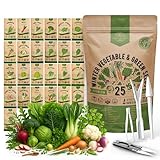
- Gardening Kit: 25 Winter Vegetable & Greens Garden Seeds Variety Pack NON GMO Heirloom Seeds LESS THAN $1.00 PER SEED VARIETY PACK 27,675+ seeds including: Arugula, Beet Detroit Dark Red, Bok Choy, Broccoli, Brussel Sprouts, Cabbage, Carrot Imperator 58, Cauliflower, Celery, Collards, Curled Mustard, Kale, Kohlrabi, Buttercrunch, Oakleaf Green, Romaine, Leek, Tokyo Long White Scallion, Walla Walla, Parsnip, Pea, Radish Cherry Belle, Spinach, Swiss Chard, Turnip
- Enhanced Gardening Experience: Our seeds for planting outdoor and indoor garden come in a waterproof resealable bag with 25 individual craft seed packets inside. Enjoy planting home garden with mini gardening supplies including leaf clipper, tweezers, seed dibber tool, weeding fork, and widger tool. Scan the QR codes on the seed packets to access online gardener basic growing guide and culinary book. Learn about vegetable gardening, discover everyday recipes to make the most of your harvest
- Garden Success Assured: Whether you have an indoor hydroponic garden or an outdoor vegetable patch, our seeds are perfect for any setting. With a superior germination rate proven through various tests, enjoy fresh vegetables growing food all year round. Enjoy the satisfaction of growing seeds in your own garden, knowing that our high-quality seeds for planting vegetables guarantee an abundant harvest and delicious meals for you and your family
- Perfect Survival Seeds Garden Gift: Our garden starter kit makes an ideal gift for couples, vegetarians, vegans, gardeners, and anyone looking for a new hobby. Whether it's a housewarming, party, birthday, anniversary, or any occasion, surprise your loved ones with the joy of gardening and the promise of fresh, homegrown plant food
- Quality You Can Trust: Proudly made in the USA by a Small Family-Owned Business, our seeds for planting vegetables undergo rigorous testing with a 90%+ germination rate. Sealed to last for up to 2 years, you can trust the freshness and viability of our garden seeds
Best leafy greens for a fall harvest
Lettuce
Lettuce is a flexible choice when the calendar still allows a full crop or when you are willing to harvest leaves young. Direct-sow in a prepared bed or set out transplants for an immediate start. Protect new plants from a late hot spell, because heat can make establishment difficult even when the intended harvest is in cool weather. Select a packet with a maturity period that fits your frost calculation, and plan to harvest outer leaves if a full head may not develop.
The Tool Desk
Outbyte Driver Updater FREEScan for outdated or missing drivers - takes under a minuteDriver Scan →Outbyte PC Repair FREERepair Windows errors before they cause bigger problemsFix Now →Spinach
Spinach is well suited to cool conditions and can handle light frost. Sow it directly where it will grow or transplant carefully while plants are small. Fall spinach may grow more slowly as daylight declines, so use the actual packet maturity information rather than assuming a spring schedule. If severe cold is forecast after plants are established, a temporary row cover can reduce exposure.
Kale
Kale is one of the more cold-resilient leafy choices and may withstand hard frost. It is especially useful when you want leaves over an extended period rather than a single harvest date. Transplants are valuable late in the season because they remove much of the germination and early-seedling delay. Even so, plants need time to produce harvestable leaves; do not treat frost tolerance as permission to plant after the maturity window has closed.
Mustard greens, collards and chard
Mustard greens are a cool-fall crop named by Virginia Cooperative Extension and can tolerate light frost. Collards may withstand hard frost and are useful where a longer leaf harvest is desired. Chard is another location-dependent option; it can provide usable leaves before the whole plant reaches its maximum size. For all three, direct sowing works when enough time remains, while transplants provide a faster start. Follow local extension dates because heat, humidity and winter severity vary widely.
Fast roots and greens when the window is short
Radishes
Radishes are often the most practical choice when only a short period remains. Direct-sow them in loose soil so roots can expand evenly. Choose a variety described on the packet as quick, then count its stated maturity from sowing. Radishes may withstand hard frost, but the quality of roots can decline if plants are left through severe weather or alternating freezes and thaws.
Turnips
Turnips can supply both roots and greens. Texas A&M includes them among frost-tolerant vegetables. Direct-sow in a prepared bed and decide whether your priority is small, quick roots or a larger root crop; the latter requires more calendar time. If frost arrives before roots reach the desired size, greens may still provide a useful harvest, subject to local food-safety and plant-condition considerations.
Rank #3

- Set includes 43 lightly assorted Vegetable and Herb seeds!
- All Seeds are Heirloom, 100% Non-GMO!
- High Germination Rate within 7-14 days
- Great way to stock up for the next planting season! Includes Freedom Farms Vegetable Set Mylar Bag for Optimal Seed Packet Storage!
- Wonderfully producing plants - Current stock will last for years when stored in a dry - cool place!
Carrots and beets
Carrots handle light frost, while beets may withstand hard frost. Both are good fall candidates only when planted early enough for the chosen variety to develop the root size you want. Direct sowing is generally preferable because root crops can fork or deform when their young roots are disturbed. Thin seedlings as directed on the packet, keep the seedbed evenly moist during germination, and use the longer maturity estimate when the season is cooling quickly. Beet greens offer an earlier harvest while roots continue developing.
Brassicas: excellent in cool weather, demanding about timing
Broccoli, cauliflower, cabbage and Brussels sprouts can perform well in fall, but they need a real establishment period. Their ability to tolerate frost does not mean a plant can be set out immediately before a freeze and still make a market-sized head or sprouts.
Broccoli
Broccoli is a strong transplant candidate when direct seeding would leave too little time. Set out healthy plants according to the packet’s transplant-to-maturity count. A brief light frost is usually less concerning than planting so late that the crown never develops. Keep moisture consistent while plants establish, particularly if late-summer soil is still warm and dry.
Free tools Windows power users keep installed
One-click scans. No signup required.
Cauliflower
Cauliflower is less forgiving of a compressed schedule because the harvestable head must form within a narrow window. Use transplants when possible and choose a variety whose maturity period fits your calculated dates. If the schedule is marginal, broccoli or leafy greens generally offer a more flexible harvest than waiting for an unfinished cauliflower head.
Cabbage
Cabbage is a cool-season option that Texas A&M lists as frost-tolerant. Transplants can make fall planting practical, while direct sowing works only when started early enough. Decide whether you will harvest a firm head or use outer leaves; that choice changes how much maturity time you need.
Brussels sprouts
Brussels sprouts require the most caution among these brassicas. They may tolerate cool weather, but the sprouts must develop along the stem before harvest. Plant transplants only when your local schedule and the packet’s maturity count leave a comfortable margin. In a short late-season window, choose a faster leafy crop instead of assuming a frost-hardy plant will finish.
Rank #4

- ☘ 12 MOST POPULAR WINTER VEGETABLES: Radish, Pea, Broccoli, Beet, Carrot, Cauliflower, Green Bean, Kale, Arugula, Cabbage, Asparagus, Brussel Sprout.
- ☘ 100% NON-GMO AND UNTREATED SEEDS with Guaranteed 92% High Germination Rate.
- ☘ PREMIUM WINTER VEGETABLES SEEDS COLLECTION of 12 Assorted Different Varieties! 12 Packs of organic vegetable seeds.
- ☘ DELICIOUS FLAVORFUL VEGETABLES chosen by gardeners and chefs who want GUARANTEED healthy good food they grow themselves.
- ☘ EXCELLENT GIFT for you, your family and friends to Create a Deluxe Vegetable Garden or grow in the yard, raised beds, planer boxes. Plant early spring through late fall, harvest in summer, fall and into winter months.
Peas, onions and other location-dependent choices
Peas
Peas prefer cool conditions but are strongly schedule-dependent. Check your county extension calendar and the variety’s maturity information before sowing. In regions with hot late summers, wait for conditions recommended locally rather than planting into soil that is still too warm for reliable emergence. In colder areas, an early fall sowing may be feasible, but the crop must establish before growth slows sharply.
Bunching onions
Bunching onions may withstand hard frost and can be harvested at a smaller size if winter arrives early. Direct sowing is possible, while transplants shorten the time to a usable plant. Use local guidance for overwintering expectations; a plant that survives in one region may not provide the same harvest in another.
Additional cool-season crops
Local calendars may include other greens or roots suited to your climate. Virginia Tech’s fall vegetable guidance connects planting to local killing-frost timing and variety maturity. Maryland Extension’s fall gardening resource separates hardy and half-hardy crops and explains the effect of shortening day length. Use those regional recommendations to narrow the list instead of treating a national crop list as a planting prescription.
Independent reader supportYour contribution helps us test, update, and keep practical guides available for everyone.How to plant for the remaining season
Prepare the bed before sowing
Remove spent summer plants and weeds, then loosen the surface so seed can contact moist soil. Add only amendments recommended by a soil test or your local extension service. A clean, well-drained seedbed matters more late in the year because cool, wet soil can slow emergence and leave seedlings vulnerable.
Choose seed or transplants deliberately
- Use direct-sown seed for radishes, turnips, carrots, beets, peas and many greens when the maturity calculation leaves enough time.
- Use transplants for broccoli, cauliflower, cabbage, Brussels sprouts, kale and other crops when germination and early growth would consume too much of the remaining window.
- Do not transplant a crop whose label maturity still exceeds the time available; a head start cannot erase the crop’s biological development period.
Manage late-summer heat
Fall planting often begins while soil and air are still warm. UC Agriculture and Natural Resources’ September 2025 guidance recommends cool-season crops such as broccoli, kale, peas, carrots, lettuce and spinach, and suggests setting transplants out later in the afternoon if September remains hot. Water plants after setting them out and monitor them closely until roots recover.
Use row cover only when weather calls for it
UC ANR suggests using row cover for a week or two when September heat persists after transplanting. Later, a floating row cover can provide temporary protection from a light freeze. It is an accessory, not a guarantee: secure it so wind cannot expose plants, remove or vent it when temperatures rise, and follow the crop’s light requirements. A cover cannot make an immature Brussels sprout or cauliflower plant finish instantly.
Best Value
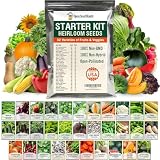
- COMPLETE VEGETABLE GARDEN VARIETY PACK – Grow a thriving home garden with 32 popular vegetable seeds including Bean, Beet, Bell Pepper, Broccoli, Brussels Sprout, Cabbage, Cantaloupe, Carrot, Cauliflower, Celery, Corn, Cucumber, Eggplant, Kale, Lettuce (3 types), Lima Bean, Okra, Onion, Pea, Parsnip, Pumpkin, Radish, Spinach, Sunflower, Swiss Chard, Tomato, Turnip, Watermelon, Zucchini. A diverse mix perfect for fresh meals, backyard gardens, and sustainable growing.
- PREMIUM HEIRLOOM SEEDS – Our carefully selected heirloom seeds are chosen for reliability, strong germination, and adaptability, making them ideal for beginner gardeners, experienced growers, homesteads, and small farms.
- GROW A SELF-SUFFICIENT GARDEN – Enjoy a wide range of vegetables from crisp greens and root crops to flavorful fruits and hearty garden staples. Perfect for fresh ingredients for salads, soups, and home-cooked meals straight from your garden. Each pack includes an easy-to-follow growing guide to ensure success for every gardener.
- INDIVIDUALLY PACKED FOR FRESHNESS – Each seed variety comes in its own resealable, waterproof packet designed for long-term storage, easy organization, and protection from moisture to keep seeds fresh until planting time.
- GIFTABLE GARDENING SET – Thoughtfully packaged and ready to share, this vegetable seed collection makes a perfect gift for gardeners, homesteaders, beginners, or anyone who loves growing their own food.
Water consistently, then adjust for cool weather
Seeds need steady moisture through germination, and transplants need enough water to establish. As temperatures fall, evaporation may decline, but wet soil can remain cold and poorly drained. Check the bed rather than following a fixed summer watering routine, and avoid letting plants alternate between severe drought and saturation.
What to plant when the calendar is already late
If you have a generous window before frost
Plant the crop that best matches your intended harvest, including larger roots and full brassica heads. You can combine a longer crop such as cabbage or broccoli with quick radishes or baby greens to spread risk and provide an earlier harvest.
If the maturity date is close to the frost date
Choose a transplant instead of seed where appropriate, select the shorter-maturity variety available, and plan to harvest at a smaller size. Leaf crops are generally more adaptable than crops that must form a single large root or head. Add the Nebraska Extension 14-day fall factor to your calculation and reconsider any crop that no longer fits.
If frost is imminent
Prioritize direct-sown crops that are already near harvest, young leaves, radishes, turnip greens and established hardy greens. Do not expect a newly sown carrot, beet or Brussels sprout to mature before a freeze simply because the species is cold-tolerant. Protect established plants with temporary cover when conditions warrant, and check them after the event for freeze injury.
If your first frost date has already passed
Planting may still be possible in mild regions or protected microclimates, but use your county’s recommendations rather than a generic national list. In colder regions, focus on harvesting what is established, protecting viable plants and planning the next season. A local extension office can account for elevation, winter lows and the length of your remaining daylight.
Frost tolerance: what the labels really mean
“Frost-tolerant” describes a crop’s relative ability to survive a particular freeze; it does not specify the temperature, duration or wind exposure your garden will experience. Seedling size, plant maturity, soil moisture and whether the plant has been hardened to outdoor conditions all affect the result. A light frost may damage an exposed young transplant while leaving a mature kale plant untouched.
UNH Extension groups lettuce, mustard greens, spinach, carrots, broccoli and cauliflower as able to handle light frost, while beets, kale, collards, radishes and bunching onions may withstand hard frost. Texas A&M’s list includes broccoli, cabbage, carrots, kale, lettuce, spinach and turnips among frost-tolerant vegetables. These sources describe broad crop behavior; your local forecast and extension advice remain the deciding factors.
What’s actually slowing this PC down?
Pick the symptom - the matching free tool is one click away.
Quick Recap
Reliable sources for your exact planting date
- UNH Extension: Fall Vegetable Gardening — frost groupings and the reason first-freeze dates vary by year and nearby location.
- Iowa State University Extension and Outreach: Fall Planting of Vegetables — working backward from average frost using total crop production time.
- University of Maryland Extension: Fall Vegetable Gardening — hardy and half-hardy crops plus the day-length limitation.
- Virginia Cooperative Extension: Fall Vegetable Gardening — local killing-frost timing and variety maturity.
- Texas A&M AgriLife Extension: Fall Vegetable Gardening Guide for Texas — a regional frost-tolerant crop list.
- Illinois Extension: Planting a Fall Vegetable Garden — counting backward from frost and semi-hardy classifications.
- UF/IFAS Extension Hillsborough County — the October 15, 2026 central Florida example.
- Nebraska Extension: Fall Vegetable Gardening — the 14-day fall planning factor.
- UC Agriculture and Natural Resources: September in the Garden — cool-season crops, afternoon transplanting and temporary row cover.
Fall-garden planning checklist
- Confirm your local average first-killing-frost date and current forecast.
- Check whether the packet’s maturity count starts at sowing or transplanting.
- Add establishment time and, where appropriate, Nebraska Extension’s 14-day fall factor.
- Consider whether daylight will fall below 10 hours during the crop’s development.
- Choose direct seed or transplant according to the time remaining.
- Favor radishes, turnips and leafy greens when the window is short.
- Plant broccoli, cauliflower, cabbage and Brussels sprouts only when their maturity schedule fits.
- Use local extension calendars for peas, chard, collards, onions and other regional options.
- Protect established plants temporarily when a freeze is forecast, without treating row cover as a season-extension guarantee.
Product prices and availability are accurate as of the date/time indicated and are subject to change. Any price and availability information displayed on Amazon at the time of purchase will apply.

