Direct answer: The Wahoo KICKR RUN is the standout if you want the most dynamic, road-oriented indoor experience. Choose the Peloton Tread for instructor-led classes, the NordicTrack Commercial 2450 for iFIT incline and decline workouts, the SOLE F80 for substantial running capability without a required monthly subscription, and the Horizon 7.4 AT or 7.8 AT for fast manual controls.
No treadmill completely reproduces outdoor running: it cannot duplicate wind, changing pavement, corners, or every pace adjustment of a road. The best home treadmill for road fitness is therefore the one with enough belt space, speed, incline, stability, control responsiveness, and room in your home for the workouts you actually plan to do.
This guide focuses on current U.S. models and manufacturer-published specifications available during research. Prices, stock, warranties, subscription terms, and model revisions can change, so verify the exact product page before ordering. If retailer links are added to this guide, they may be affiliate links; that does not change the editorial selection.
Quick picks
| Best for | Pick | Why it stands out | Main trade-off |
|---|---|---|---|
| Most road-like indoor experience | Wahoo KICKR RUN | RunFree pace sensing, automatic grade control, lateral tilt, decline, and a large 60 × 22-inch surface. | Extremely expensive, heavy, space-demanding, and electrically demanding. |
| Coached classes and motivation | Peloton Tread | Swiveling 21.5-inch screen, instructor-led training, and a compact connected ecosystem. | Full content and applicable features require Peloton All-Access Membership; no decline range. |
| iFIT incline and decline training | NordicTrack Commercial 2450 | 22 × 60-inch belt, up to 14 mph, 12% incline to −3% decline, and a 24-inch pivoting screen. | Subscription-oriented platform and a large footprint. |
| Lower-cost iFIT alternative | NordicTrack Commercial 1750 | 22 × 60-inch belt, 12 mph maximum speed, 12% incline to −3% decline, and a 16-inch pivoting screen. | Less speed and a smaller display than the 2450; verify live price and membership terms. |
| Best conventional value | SOLE F80 | 20 × 60-inch deck, 12 mph top speed, 15 incline levels, folding storage, and no required monthly subscription. | Less immersive and less dynamically automated than the connected premium models. |
| Quick manual adjustments | Horizon 7.4 AT or 7.8 AT | Conventional high-contrast displays, quick speed and incline controls, Bluetooth, speakers, and USB charging. | Exact belt, motor, pricing, and warranty details need to be matched to the specific current version. |
| Very steep incline and hiking | NordicTrack X16 | 40% incline, −6% decline, 22 × 60-inch belt, 400-pound capacity, and a pivoting 16-inch screen. | Its strength is steep climbing, not faithful flat-road simulation; maximum speed is 12 mph. |
At a glance: The KICKR RUN is the most technically differentiated choice, but the SOLE F80 is the more sensible ownership choice for many runners. A treadmill is only a good purchase if it fits your room, electrical supply, budget, and training habits.
As an Amazon Associate I earn from qualifying purchases.
What road fit at home really means
A treadmill can support the core sessions used to prepare for road running: easy mileage, tempo work, intervals, hill repeats, and long steady runs. It gives you a predictable surface and precise pace control, but it does not create outdoor wind resistance, uneven pavement, corners, weather, or the small balance adjustments required on a road.
That distinction matters when comparing products. A conventional treadmill can be excellent for road-running workouts without claiming to feel exactly like a road. A specialized machine such as the KICKR RUN goes further by responding to changes in your position and pace, but even that is an attempt to reproduce selected outdoor characteristics rather than a measured equivalent to running outside.
#1 Best Overall

- 【Folding Treadmill with Handle Bar】This foldable walking pads functions as a traditional treadmill with handle bar, a foldable walking pad, and an under bed treadmill. It offers three speed modes: walking (0.6–1.2 MPH), jogging (1.9–2.5 MPH), and running (3.1–4 MPH). The walking pad treadmill features a compact design and includes a detachable phone holder for convenience.
- 【Powerful and Quiet Motor】This portable treadmills for home and office runs smoothly and quietly, suitable for home and office use. The folding walking mat can bear a maximum weight of 264lb, with a power of 440 watts and a frequency of 50-60 Hz. Walking pad with handle bar is suitable for exercising at home or in the office.
- 【LED Display & Remote Control】This folding walking pad features a clear LED screen showing time, speed, calories, and distance in real time, helping you track your fitness progress. The foldable walking pad with bar includes a remote control for quick speed and mode adjustments. A pause button lets you temporarily stop your workout while retaining data (pause time up to 10 minutes).
- 【Compact & Portable with Shock Absorption】This folding treadmills small offers a spacious 90 x 38 cm running area and features a 5-layer non-slip belt for added comfort and joint protection. Fully assembled, walking pad treadmill folds down to just 104 x 48.7 x 10.5 cm – suitable for small spaces. Walking pad with a desk features built-in wheels, making it effortless to move and convenient to store.
- 【Multiple Modes with Foldable Treadmill for Home】 Folding treadmill includes a handle bar and a phone holder.The handrails can be easily removed by unscrewing the fixed bolts, allowing the walking pad treadmill to be used flat as an under-desk running pad treadmill. Note: The treadmill folds easily by unscrewing the bolts.
The practical buying criteria
- Belt size: Runner’s World describes 20 inches of width as a bare minimum for runners and walkers with a consistent gait and few distractions. A 20 × 60-inch belt is workable for many runners; a 22 × 60-inch belt gives taller users and faster runners more lateral and front-to-back margin.
- Top speed: Match the machine to your fastest planned interval pace, not merely your everyday jog. To convert pace to speed, divide 60 by minutes per mile: a 8:00-mile pace is 7.5 mph, while a 6:00-mile pace is 10 mph. Leave operating headroom rather than training permanently at the treadmill’s maximum.
- Deck behavior: A belt can be large on paper and still feel unstable or cramped at speed. Compare independent testing where available, but do not treat motor horsepower alone as a durability score.
- Incline and decline: Incline supports hill sessions and hiking-style workouts. Decline can add downhill-specific practice, but a high incline rating does not make a treadmill more road-like on flat terrain.
- Controls: Runners doing intervals need speed and incline changes that are easy to make while moving. Physical controls or responsive shortcut buttons can be more useful than a large touchscreen.
- Capacity and clearance: Respect the manufacturer’s user-weight limit, and check ceiling height, rear escape space, side clearance, delivery access, and the operating footprint before purchase.
- Ownership model: Separate the price of the machine from recurring content. A subscription can be worthwhile if you use coached classes or automated routes, but it should not be mistaken for a hidden part of the hardware specification.
Consumer Reports says its treadmill testing considers durability, ergonomics, and safety, while OutdoorGearLab describes lab testing and evaluates models including the NordicTrack X16 and SOLE F80. Those sources can add useful comparison signals, but their test methods, model availability, and review dates differ. The specifications below are manufacturer claims and are not, by themselves, proof of long-term durability or superiority.
The Tool Desk
Outbyte Driver Updater FREEFix the driver behind crashes, sound loss and screen glitchesFind Drivers →Outbyte PC Repair FREERepair Windows errors before they cause bigger problemsFix Now →Detailed picks
1. Wahoo KICKR RUN: best for the most road-like indoor experience
The Wahoo KICKR RUN is the strongest choice for runners who dislike reaching for manual controls every time their pace changes. Its feature set includes a 60 × 22-inch running surface, speed equivalent to a 4:00-mile pace, 15% incline, −3% decline, lateral tilt, automatic grade control, Wi-Fi, Bluetooth, Direct Connect, and compatibility with apps including Zwift Run and Peloton.
Its defining feature is RunFree mode. Wahoo says position sensing adjusts belt speed as the runner moves forward or backward, allowing the user to speed up or slow down without repeatedly pressing buttons. Terrain mode can adjust lateral tilt and, in some configurations, vertical grade in small increments. These capabilities make it the most differentiated option for road-focused training, especially for runners who want a more reactive session. “Most road-like” is an editorial interpretation of those features, not a laboratory measurement showing equivalence to outdoor running.
Important home constraints: Wahoo’s U.S. purchase information lists a price of $6,999.99, a 429-pound machine weight, and a 250-pound user limit. It requires a dedicated 15- or 20-amp circuit and a non-GFCI outlet. Wahoo recommends approximately 80 inches of clearance behind the treadmill and 24 inches on each of the other three sides. At maximum incline, the deck reaches 18 inches, so measure ceiling height as well as floor area. Wahoo says in-home delivery and setup are included, and the treadmill cannot ship outside the contiguous United States. Confirm all of those details on the KICKR RUN power and space requirements page before ordering.
Choose it if: You have the budget, electrical capacity, ceiling height, and floor space, and you value pace-reactive or terrain-style training more than a low purchase price.
Skip it if: You want a straightforward folding treadmill, have a 250-pound-plus user, or cannot provide the dedicated circuit and large safety area.
2. Peloton Tread: best for connected classes
The current Peloton Cross Training Tread is aimed at people who want a treadmill and a coached workout platform in one product. Peloton’s current specifications page lists a 21.5-inch swivel screen, a 150 × 50-centimeter belt, speeds from 1 to 12.5 mph, incline from 0 to 12.5%, a 3 HP AC motor, and Bluetooth 5.2. The listed footprint is 173 × 84 × 165 centimeters, although buyers should confirm the dimensions and availability for their purchase country.
The screen rotates horizontally and tilts vertically, which is useful when moving from running to floor-based strength, yoga, mobility, or other cross-training content. The attraction is not a decline feature or road-simulation mechanism; it is the combination of structured classes, instructor motivation, metrics, and a compact connected ecosystem.
Full access to Peloton content and applicable hardware features requires Peloton All-Access Membership. Calculate the total cost over the period you expect to own the treadmill rather than comparing the hardware price alone. The Tread is less compelling for a buyer who wants a conventional machine with no recurring content commitment, and its 0–12.5% range does not provide downhill simulation.
Outdated Drivers Are Slowing You Down
One free scan finds every outdated or missing driver and matches the right update for your exact hardware.Free scan · exact hardware matchPC Slower Than It Used to Be?
A free scan shows the junk files, broken settings and background clutter dragging Windows down - then fixes them in one click.Free scan · Windows 10 & 11Do not confuse the current Tread with recalled U.S. units
In May 2021, the U.S. Consumer Product Safety Commission announced recalls of the Peloton Tread and Tread+ after injury incidents, including a child death associated with the Tread+. The CPSC directed owners of affected products to stop using them and contact Peloton for a refund or other remedy. A used Peloton should not be purchased merely because the seller says it is a Tread: verify the exact model, serial information, recall status, and completed remedy through the CPSC recall notice and Peloton.
3. NordicTrack Commercial 2450: best for iFIT incline and decline training
The Commercial 2450 is the better NordicTrack choice for faster runners and people who want a larger display. NordicTrack’s current Commercial Series information lists a 24-inch pivoting touchscreen and speeds up to 14 mph. Its comparison material lists a 22 × 60-inch belt, 4.25 CHP motor, 12% incline to −3% decline, and 400-pound user capacity.
Rank #2
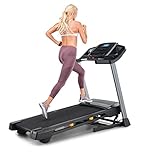
- THE T6.5S TREADMILL - See your live workout stats on the clear LCD display or use your own device to follow iFIT trainers and automatically control your treadmill, all from your phone or tablet (iFIT Train Membership Required).
- 0-10 MPH - Run, jog, or walk at speeds of up to 10 MPH. Perfect for home workouts, cardio training, and endurance building.
- 0-10% INCLINE - Boost calorie burn and target more muscle groups with a 0–10% incline range.
- KEYFLEX CUSHIONING - Reduce joint impact while walking or running. This treadmill supports smoother strides and improved comfort for daily use.
- FOLDABLE & COMPACT - The folding frame makes this treadmill ideal for small spaces. When you're done, fold it and roll it away. Press the foot bar for smooth, assisted lowering.
It is built around iFIT-guided workouts, immersive training, and automatic trainer-controlled changes. That makes it particularly suitable for runners who want a coach or route to adjust speed and grade rather than managing every change manually. It is less suitable for someone who wants to buy a treadmill once and ignore a connected training platform.
The NordicTrack Commercial 1750 follows the same general platform with a 16-inch pivoting touchscreen and a 12 mph maximum speed. NordicTrack’s comparison material lists the same 22 × 60-inch belt, 12% incline to −3% decline range, 400-pound capacity, and iFIT integration. It is the lower-cost and more space-conscious alternative within this pair, but the live price, promotion, inventory, and membership terms should be checked immediately before publication or purchase.
Recommended Free Tools
Choose the 2450 if: You run faster intervals, want the larger screen, and expect to use iFIT regularly.
Choose the 1750 if: 12 mph is sufficient and you prefer the smaller display and typically lower purchase price of the platform.
Neither model should be selected solely because of its CHP rating. Belt dimensions, deck stability, warranty terms, controls, service availability, and the recurring cost of iFIT matter at least as much to a long-term buyer.
4. SOLE F80: best conventional value without a required subscription
The current SOLE F80 is the most balanced recommendation for a runner who wants a substantial deck and practical training controls without being required to pay for a monthly content service. SOLE’s current U.S. product page lists a $1,599.99 price, 3.25 HP brushless motor, 20 × 60-inch deck, 0.5–12 mph speed range, 15 incline levels, 350-pound user capacity, folding storage, a 10.1-inch touchscreen, Wi-Fi, and Bluetooth.
Do these 3 things before closing this tab:
1Scan for outdated or missing drivers - takes under a minute2Clear out junk files and repair common Windows errors3Fix the driver behind crashes, sound loss and screen glitchesSOLE describes the deck as using its CushionFlex 2.0 system and includes access to the SOLE+ app at no monthly subscription cost. That does not make the F80 a bare-bones treadmill: it can handle steady running and interval work, while still giving you the freedom to use your own training content or a separate device.
The product page lists a lifetime frame warranty, three years for the motor, deck, electronics, and wear items, one year of labor, and a 90-day satisfaction period. Read the warranty for the exact purchase channel and current U.S. version before relying on those terms.
Do not assume every F80 review describes this model. SOLE’s support area separates manuals by purchase year, and older F80 revisions have different motor, deck-width, console, and warranty details. Match the model name, specifications, and manual to the exact listing you are buying.
Choose it if: You want a 20 × 60-inch running deck, useful incline, folding storage, conventional ownership, and no mandatory content subscription.
Rank #3

- THE T5 TREADMILL - See your live workout stats on the clear LCD display or use your own device to follow iFIT trainers and automatically adjust your treadmill, all from your phone or tablet (iFIT Train Membership Required).
- 0-10 MPH - Run, jog, or walk at speeds of up to 10 MPH. Perfect for home workouts, cardio training, and endurance building.
- 0-10% INCLINE - Increase calorie burn and target more muscle groups with a 0–10% incline range.
- KEYFLEX CUSHIONING - Diminish joint impact while walking or running. This treadmill supports smoother strides and improves comfort for daily use.
- POWERED BY IFIT - With the iFIT Train Membership*, access over 10,000 workouts. Just press start, and your machine auto-adjusts to match the trainer’s pace and terrain. SmartAdjust will scale any workout up or down based on your fitness level.
Look elsewhere if: You need a 22-inch belt, decline training, automatic terrain changes, or a deeply integrated instructor ecosystem.
5. Horizon 7.4 AT or 7.8 AT: best for quick manual controls
Horizon’s 7.4 AT and 7.8 AT are aimed at runners who would rather control their own workout than navigate a large integrated touchscreen. The current product comparison identifies conventional high-contrast displays, Bluetooth, speakers, USB charging, and manual, hill, Sprint 8, heart-rate, and distance-oriented programs.
The page lists a 350-pound maximum user weight for the 7.4 AT and 375 pounds for the 7.8 AT. It also lists lifetime frame and motor coverage, five years of parts coverage, and two years of labor for these higher models. Confirm whether those terms apply to the exact model, retailer, and purchase geography.
Horizon is the right direction for a runner who wants rapid speed and incline changes, a visible display, and the option to bring a phone or tablet rather than pay for a built-in content platform. However, Horizon’s current comparison page presents multiple models and product generations. Verify the exact belt dimensions, motor description, sale price, retailer availability, and warranty version before selecting between the 7.4 AT and 7.8 AT. Horizon’s product and support documentation is the appropriate place to begin that check.
What’s actually slowing this PC down?
Pick the symptom - the matching free tool is one click away.
6. NordicTrack X16: best for steep incline and hiking-focused training
The NordicTrack X16 is a specialist rather than the default road-running recommendation. NordicTrack lists a 40% incline, −6% decline, 12 mph maximum speed, 22 × 60-inch belt, 400-pound user capacity, and a pivoting 16-inch touchscreen.
That 40% incline makes the X16 interesting for steep hiking, climbing workouts, and strength-oriented incline sessions. It is not automatically a better road treadmill: flat-road runners may value speed, responsive controls, belt feel, and a moderate incline range more than an extreme climbing angle. Choose it when steep terrain is a central part of your training, not simply because the incline number is larger.
Which treadmill should you buy?
- Want the most dynamic pace and terrain response? Choose the Wahoo KICKR RUN, provided your room and electrical supply can accommodate it.
- Want instructor-led motivation above all else? Choose the Peloton Tread and budget for All-Access Membership.
- Want virtual routes and automated incline or decline? Choose the NordicTrack Commercial 2450, or the 1750 if 12 mph and a 16-inch display are enough.
- Want to own the machine without a required subscription? Start with the SOLE F80.
- Want to press buttons and run your own plan? Compare the Horizon 7.4 AT and 7.8 AT, checking the exact current version.
- Want the steepest climbing workouts? Choose the NordicTrack X16, understanding that it is specialized for incline work rather than flat-road realism.
For most runners, the most important distinction is not premium versus budget. It is connected versus self-directed. A connected treadmill may make consistency easier through coaching and automatic changes. A conventional treadmill may cost less over time and give you more freedom to use your own plan, watch your own content, or train without an active membership.
Measure the installation before you order
A treadmill needs more room than the rectangle shown in a product listing. Measure the machine in its operating position, the space needed to step off safely, the ceiling at the highest deck position, and the route from the delivery entrance to the final room. A folded footprint is not the same as a safe running footprint.
Quick wins for a faster PC:
Fix the driver behind crashes, sound loss and screen glitchesFind Drivers →Clear out junk files and repair common Windows errorsFree Scan →Scan for outdated or missing drivers - takes under a minuteDriver Scan →- Measure width and length: Include handrails, the front motor housing, and the rear clearance specified by the manufacturer.
- Check ceiling height: Add your own height, the deck height, and the lift created by incline. The KICKR RUN deck reaches 18 inches at maximum incline.
- Plan the rear and side safety area: Wahoo recommends about 80 inches behind the machine and 24 inches on the other three sides. Use the exact clearance instructions for other models rather than copying those numbers.
- Plan delivery: The KICKR RUN weighs 429 pounds. Check doors, turns, stairs, elevators, and the final location before scheduling delivery. For any unusually heavy installation or questionable floor location, ask the manufacturer, delivery team, or a qualified building professional for site-specific guidance rather than guessing.
- Confirm power: The KICKR RUN requires a dedicated U.S. 15- or 20-amp circuit and a non-GFCI outlet. Some Horizon documentation also says its treadmill models are not compatible with GFCI outlets. If you are uncertain about the circuit or outlet, consult a qualified electrician.
- Check the purchase geography: Wahoo says the KICKR RUN cannot ship outside the contiguous United States. Peloton, NordicTrack, SOLE, and Horizon specifications, warranty terms, and inventory can also vary by country.
Wahoo publishes separate power, space, and connectivity requirements. Use the equivalent official installation information for whichever treadmill you choose.
Independent reader supportYour contribution helps us test, update, and keep practical guides available for everyone.How to use a treadmill for road-oriented training
The machine does not make you road-ready by itself; the workout choices do. A simple self-directed week might include the following sessions, adjusted for your experience and training plan:
Rank #4

- Multi-layer Shock Absorption Design: The fold down treadmill is made of Q235 steel and high-quality ABS material, which is both sturdy and durable. The running belt is 39'' x 15 '', holds up to 220 lbs for safe use. It is equipped with 6 built-in shock absorbers and 5- layer silicone pads. The dual buffering design effectively reduces the impact force upon landing, providing meticulous care for the knees and joints.
- Powerful Performance, Quiet Operation: The threadmills machine features a DC motor (peak power: 2.5 HP, continuous power: 0.75 HP), delivering high-performance support for intense, extended workouts. With a speed range of 0.6 to 6.2 mph, it is suitable for walking, jogging, and running, meeting a variety of fitness needs. Running smoothly, Noise ≤70 dB.
- 3.5-inch LED Display: The 3.5-inch LED controlled folding treadmill running machine clearly displays time, distance, calories burned and speed, allowing you to easily monitor your progress during exercise. The walking pad includes 12 preset automatic programs and three countdown modes: time, distance and calories, making your exercise more diverse and motivating.
- Compact Design Saves Space: The treadmill with handles can be quickly assembled, disassembled, and folded by adjusting four screws. When folded, it measures 45.08'' × 21.85'' × 5.2'' and weighs 55 lbs.It’s thin and easy to store. You can put it under beds, sofas or in small corners. Perfect for workouts in apartments, dorms and small homes. The bottom is equipped with mobile wheels, making it effortless to move and transport.
- Low-Maintenance and Durable: The electric treadmill is equipped with sturdy, non-slip handrails that help users maintain balance, significantly enhancing comfort during workouts. Additionally, the equipment is easy to maintain. After prolonged use, simply apply silicone oil to the running belt periodically as per the manual to reduce friction and noise, minimize motor wear, and extend the running machine’s overall lifespan.
- Easy run: Use a conversational, controlled pace for steady aerobic mileage. Keep the session easy enough that the treadmill is supporting consistency rather than turning every run into a test.
- Tempo session: After warming up, run one or more sustained blocks at a comfortably hard pace, with easy recovery between them. Manual-control models such as the SOLE and Horizon can handle this without a subscription.
- Hill repeats: Alternate a moderate or steep incline with recovery at a lower grade. The NordicTrack X16 is especially suited to steep climbing; the 2450 and 1750 add automated incline and decline options.
- Intervals: Use short faster repetitions with easy recoveries. Choose a treadmill whose top speed leaves room above your target pace and whose controls can be changed without disrupting your stride.
- Long run: Prioritize belt comfort, width, cooling, hydration access, and a stable deck. A large screen is optional; a reliable surface and enough space are not.
Because an indoor treadmill does not provide outdoor wind or changing terrain, include some outdoor running if your goal is a road race or a specific road route. That is not a criticism of treadmill training; it is a reminder that indoor and outdoor sessions place different demands on pacing and movement. A Fan can make indoor running more comfortable, and a heart-rate monitor can provide an additional training signal, but neither accessory turns a treadmill into a road.
Useful extras, only when they solve a real problem
- treadmill mat: Useful for separating the machine from the floor and making cleanup easier. It is not a substitute for the manufacturer’s required clearances or a solution to every noise problem.
- Heart-rate chest strap: Consider one if you train by heart rate and your treadmill or chosen app supports the relevant connection standard. Confirm compatibility before buying.
- Foot pod: Potentially useful for pace or cadence data in compatible running apps, but compatibility and accuracy depend on the treadmill, pod, and software.
- Tablet holder: Helpful on a conventional treadmill if you want to watch training content without paying for an integrated screen.
- Fan: Indoor running can feel warmer because there is no natural airflow. Position it without blocking the treadmill’s safety area.
- Treadmill lubricant and maintenance supplies: Use only what the manufacturer recommends and follow the model-specific maintenance schedule. Do not assume an older manual applies to a current revision.
Accessories are optional. Buy them after deciding which treadmill fits your training and installation requirements, and check for interference with handrails, screens, ventilation, and safety controls.
Free tools Windows power users keep installed
One-click scans. No signup required.
Subscription, warranty, and model-year checks
Before comparing two treadmills, write down the total ownership questions:
- Is a membership required for the content or for important machine features?
- Can the treadmill still operate for manual workouts if the membership ends?
- What are the current delivery, assembly, service, return, and warranty terms?
- Does the warranty cover labor as well as the frame, motor, deck, electronics, and wear items?
- Is the listing for the current model or an older revision with a similar name?
- Are the stated dimensions and capacity for the exact model being sold in your country?
Peloton explicitly requires All-Access Membership for full content and applicable features. NordicTrack emphasizes iFIT-guided workouts and automated training, so its live membership terms should be checked before purchase. SOLE advertises SOLE+ without a required monthly subscription, but the current F80 should not be confused with older F80 revisions. Horizon’s comparison page can show multiple models or generations in one place. These are reasons to verify—not reasons to assume that one brand’s ownership model is always better.
Safety checklist
- Keep children and pets away from the treadmill, especially when the belt is moving.
- Use the safety key or emergency-stop system where supplied, and understand how it works before running.
- Keep the specified rear, side, and front clearances open.
- Do not use an extension arrangement or outlet configuration that conflicts with the manufacturer’s electrical instructions.
- Inspect the belt, power cord, deck, and controls periodically and stop using the machine if something behaves unexpectedly.
- For a used Peloton, verify the precise model and recall remedy before use; do not rely on a seller’s generic description.
Specifications can support statements such as hill training, intervals, mileage, or structured workouts. They do not justify promises of weight loss, injury prevention, or guaranteed race performance. Objective advertising and health or safety claims require appropriate substantiation; the FTC’s advertising-substantiation guidance explains why those claims should be treated carefully.
How current is this comparison?
Prices, promotions, inventory, subscription pricing, app compatibility, warranty language, and product revisions are volatile. Recheck the exact U.S. product page immediately before publication or purchase. SOLE provides manuals separated by purchase year through its service and manuals page, which is particularly useful when comparing an older listing with the current F80.
External roundups from Consumer Reports, Men’s Health, Live Science, Good Housekeeping, Forbes Vetted, OutdoorGearLab, and Runner’s World can provide useful additional perspectives, but they do not necessarily test the same model year or use the same methodology. The rankings here reflect the stated use cases and the researched feature sets, not a claim that every publication reaches the same conclusion.
Frequently Asked Questions
Can any treadmill truly replicate running on the road?
No. Every treadmill removes wind, changing pavement, corners, and outdoor terrain variation. The Wahoo KICKR RUN comes closest among these choices in terms of pace response, lateral tilt, and terrain-style features, but that is an interpretation of its feature set rather than proof of outdoor equivalence.
Is a 20-inch treadmill belt wide enough for running?
Runner’s World describes 20 inches as a bare minimum for runners and walkers with a consistent gait and few distractions. A 20 × 60-inch deck can work for many runners, while a 22 × 60-inch belt offers more room for taller users, long runs, and faster intervals.
Do I need a treadmill subscription?
No. The SOLE F80 is designed to provide treadmill training without a required monthly content subscription, and Horizon’s conventional models are aimed at self-directed workouts. Peloton requires All-Access Membership for full content and applicable features, while NordicTrack models are built around iFIT, so calculate recurring costs before choosing a connected treadmill.
Do these 3 things before closing this tab:
1Fix the driver behind crashes, sound loss and screen glitches2Repair Windows errors before they cause bigger problems3Scan for outdated or missing drivers - takes under a minuteIs the used Peloton Tread safe to buy?
Only after verifying the exact model, serial information, recall status, and completed remedy. The CPSC announced recalls of the U.S. Peloton Tread and Tread+ in 2021. Do not assume a used unit is safe simply because it is described as a newer or lightly used Tread.
What should I measure before installing a treadmill?
Measure the operating length and width, rear and side clearances, ceiling height at maximum incline, delivery route, outlet and circuit, and the final floor location. Do not plan around the folded footprint alone. The Wahoo KICKR RUN, for example, has unusually specific requirements including about 80 inches behind it, 24 inches on the other sides, a dedicated non-GFCI circuit, and 18 inches of additional deck height at maximum incline.
The Bottom Line
For the closest attempt at a dynamic outdoor-style session, buy the Wahoo KICKR RUN only if its price, 429-pound weight, 250-pound capacity, electrical requirements, and clearance needs fit your home. For most buyers, the decision is simpler: choose Peloton for classes, NordicTrack for iFIT routes and incline/decline, SOLE F80 for no-required-subscription value, Horizon for quick manual control, or NordicTrack X16 for steep climbing. Start with your belt, speed, space, power, and ownership requirements—not the largest screen or highest horsepower number.
Quick Recap
Product prices and availability are accurate as of the date/time indicated and are subject to change. Any price and availability information displayed on Amazon at the time of purchase will apply.

