The Tool Desk
Outbyte Driver Updater FREEScan for outdated or missing drivers - takes under a minuteDriver Scan →Outbyte PC Repair FREERepair Windows errors before they cause bigger problemsFix Now →There is no single, safe one-for-one replacement for cement in every household repair. The right choice depends on what you are making: mortar that joins brick or stone, plaster or render that finishes a wall, a non-structural patch, or concrete that carries load. For compatible traditional masonry, lime mortar is often the leading alternative. Lime or clay plaster can suit selected wall finishes, while gypsum works only where the background and moisture conditions allow it. Supplementary binders such as PFA or GGBFS can reduce the amount of cement in a cement-based mix, but they do not eliminate cement and are not a universal do-it-yourself recipe.
Before buying a bag, identify the existing substrate, the repair’s structural role, exposure to rain or damp, required strength, curing conditions, and any local building or conservation requirements. A material that performs well on an old brick wall may be wrong for a cement-rendered façade or a load-bearing repair.
As an Amazon Associate I earn from qualifying purchases.
Start with the job, not the word “alternative”
“Cement” is used loosely in everyday conversation, but small home projects normally involve different products:
Free tools Windows power users keep installed
One-click scans. No signup required.
- Mortar beds and bonds masonry units and fills joints.
- Plaster or render forms a protective or decorative coating on a wall or ceiling.
- Concrete combines a binder with aggregate for slabs, bases, beams, posts and other structural or semi-structural work.
- Repair compounds may be formulated for a particular crack, edge, tile bed or patch and should be judged by their intended use rather than by their binder name.
These roles are not interchangeable. The Food and Agriculture Organization’s building guidance states, “Mortar need not be stronger than the units it joins.” A mortar that is harder than the brick or stone can concentrate stresses and increase cracking or spalling. Conversely, a soft decorative plaster is not a substitute for a structural concrete repair.
#1 Best Overall

- DESIGNED TO BLEND — Sikaflex mortar fix sealant is specially textured to better blend with rough, stucco-like surfaces, while the limestone color makes the blend seamless
- RETAINS EXCELLENT ELASTICITY — The one-component polyurethane-based elastomeric sealant cures to a flexible consistency, improving resistance to tears and cracking
- READY YOUR BRUSHES — Once cured, the sealant is paintable, stainable, and sandable, so it's easy to match the style of the surrounding features. Just be sure to use oil, water, or rubber-based paints
- SEAL OF APPROVAL — Sikaflex concrete sealant meets federal and industry standards for quality and performance, and is urethane-based to reduce production of radon for a cleaner environment
- DEAL FOR BOTH VERTICAL AND HORIZONTAL — Insert cartridge into any standard caulk gun to apply. Begins to cure on contact with atmospheric moisture. Allow up to 7 days for final cure
Use the following sequence to narrow the choice:
- Describe the work in one phrase: repointing, plaster patching, external render, earthen-wall finish, non-structural fill, or structural concrete.
- Identify the substrate and existing finish. Record whether it is fired brick, natural stone, adobe or another earthen wall, cement render, lime plaster, gypsum board, concrete, timber or a mixed assembly.
- Check moisture and weather exposure. Interior dry rooms, sheltered exteriors and walls exposed to driving rain have different requirements.
- Decide whether the repair is cosmetic, protective or load-bearing. If failure could affect a foundation, beam, retaining wall, lintel or other safety-critical element, stop looking for a generic household substitute and obtain project-specific engineering advice.
- Check local regulations, conservation controls and the product manufacturer’s instructions before mixing.
Comparison of practical alternatives
| Material or path | Where it may fit | Important limitations |
|---|---|---|
| Lime mortar | Repointing or repairing compatible brick and stone, especially traditional or historic masonry | Must match the original mortar and units. It mixes, sets and cures differently from cement and may require testing and experienced judgment. |
| Lime plaster or render | Selected interior and exterior wall finishes where the background and exposure are compatible | Product type, substrate, weathering and finish all matter; “lime” on the label does not make every product suitable for every wall. |
| Clay or earthen plaster | Appropriate earthen or adobe walls and selected compatible finish systems | Performance depends strongly on the wall, moisture regime and detailing. A recipe for an adobe wall is not a general patch formula. |
| Gypsum plaster | Some interior plaster jobs with a compatible, dry background | Rapid setting and moisture sensitivity can create failures. It may be incompatible with lime plaster and can produce rigid, visibly different patches. |
| PFA or GGBFS as supplementary binders | Partial cement replacement where a cement-based mix is still required | Not cement-free. Mix design, strength development and curing must be specified; the available guidance does not provide a universal homeowner ratio. |
No comparable current retail prices, product-by-product test results or universal strength rankings are established for these categories. The cheapest material on a shelf can become the most expensive choice if incompatibility causes cracking, trapped moisture or repeated repairs.
Lime mortar for brick and stone repointing
Why lime is often considered for historic masonry
The U.S. General Services Administration’s technical procedure says, “Lime mortars are preferable to Portland cement mortars for repointing historic masonry.” That preference is specific to compatible historic work, not a blanket instruction to remove cement from every wall. Traditional lime mortar can accommodate movement and vapor transfer differently from a hard cement mortar, allowing older brick or stone to perform as intended when the formulation is properly matched.
Compatibility has several parts: the hardness and porosity of the masonry units, the original joint profile, the sand color and grading, the weather exposure, and the condition of the existing joints. A soft, porous brick can be damaged when a very strong joint forces movement into the brick faces. Stone types also vary; a mortar suitable for one stone may be unsuitable for another.
How to approach a small repointing job
- Inspect the wall. Look for loose units, open or powdering joints, dampness, salts, movement cracks and areas where the masonry itself is failing. Repointing does not correct settlement, leaking gutters or structural movement.
- Establish the existing mortar. Examine sheltered areas and undisturbed joints. Note its color, texture, aggregate and apparent hardness. If the building is historic or significant, involve a qualified preservation professional rather than relying on a visual guess.
- Make small test panels. The GSA procedure recommends establishing sand color and mix through small tests before preparing the job-size batch. Let the samples weather and compare their color, texture, tooling and hardness with the original.
- Remove only defective joint material. Avoid widening sound joints or cutting into brick and stone edges. Use methods appropriate to the masonry and keep dust under control.
- Dampen appropriately and place the mortar. Follow the selected lime product’s instructions for moisture condition, lift thickness, tooling and protection. Lime does not behave like a fast-setting cement mix.
- Protect the curing joint. Lime needs controlled moisture and protection from rapid drying, frost, strong sun and driving rain. The exact protection period depends on the product, weather and wall.
The GSA procedure is a reference that requires project-specific editing and qualified judgment. Treat a small test as a compatibility check, not as proof that the same mix is suitable throughout a building.
Working and curing differences
The Centre for Alternative Technology cautions, “The properties of lime must be well understood – it cannot be used in exactly the same way as cement.” Lime generally sets more slowly and demands more careful moisture management. Plan for longer access to the work area, protect fresh joints, and do not judge an unfinished lime repair by the timetable of a cement repair.
CAT also explains that pure lime products reabsorb manufacturing carbon dioxide over years. That is an explanation of lime’s carbon cycle, not a universal, quantified life-cycle result for every product or project; transport, quarrying, firing, mix design, maintenance and service life still affect the overall impact.
Lime plaster and render
When lime can be a good fit
Lime is used for both interior and exterior plaster or render, including work on older masonry where vapor movement, flexibility and a traditional appearance matter. Suitability still depends on the background, the number and thickness of coats, exposure to weather, detailing at openings, and the finish required. A breathable material cannot compensate for rising damp, leaking plumbing or a defective roof.
Windows Errors? Fix Them Before They Spread
Repair common Windows errors and clear accumulated junk for a smoother, more stable PC - no reinstall needed.Free scan · no reinstallCrashes, No Sound, or Screen Glitches?
Random freezes, missing sound and display glitches usually trace back to one bad driver. Find and replace yours safely.Free scan · under a minuteFor an interior patch, identify whether the existing surface is lime plaster, gypsum plaster, cement render, masonry or a painted multi-layer system. For an exterior wall, establish whether the existing coat is lime or cement, whether the wall is exposed to driving rain, and whether the proposed product is intended for that exposure. Follow the manufacturer’s preparation, mixing, coat-thickness and curing instructions; lime products are not interchangeable simply because they share a name.
Rank #2

- Hydraulic Lime Mortar Medium, Color Standard - 3.5 Gallon (Standard Color)
Repairing a damaged cement render
New Forest National Park Authority guidance gives a useful caution: in the specific case of damaged cement render, it recommends repairing with cement of similar density and strength. It warns that using lime there can introduce different expansion and flexibility and lead to further cracking. This is contextual guidance, not a rule for every rendered wall, but it illustrates why “more breathable” is not automatically “more compatible.”
Before patching, find out why the render failed. Movement, poor bonding, an incorrectly prepared background, water entry, salts or damp-related timber problems can make a new patch fail again. Remove unsound material, correct the cause where possible, and feather or detail the repair according to the existing system. If the wall is moving or water is entering, a binder change alone will not solve it.
Clay or earthen plaster
Clay and earthen plasters can be appropriate for earthen or adobe walls and for selected interior finish systems. FAO guidance describes earthen plaster in the context of moistened earthen/adobe walls, while CAT reports the use of clay plasters in natural-building work. Those references do not establish one universal recipe for brick, block, concrete or a modern painted wall.
Recommended Free Tools
Check the substrate’s ability to hold the plaster, its moisture content, the presence of a compatible key, and the protection provided by roof overhangs, plinths and splash zones. Earthen finishes generally need careful detailing to keep bulk water out. They may be a poor choice on an exposed façade or a persistently damp wall unless a system has been specifically designed for those conditions.
For a small interior project, make a sample on the actual background. Assess adhesion after drying, cracking, texture, color and how the finish responds to normal humidity. Do not copy a clay-to-fiber or clay-to-sand proportion from an adobe manual onto a different wall and assume the result is equivalent.
Gypsum plaster: useful in the right room, risky on the wrong wall
Gypsum sets rapidly and can be convenient for certain dry interior repairs. It is not automatically compatible with lime plaster. New Forest guidance identifies several possible problems when modern bagged gypsum is used against lime plaster: moisture-related breakdown, sealing of the wall, excessive rigidity, rapid setting, cracking at the joint, and differences in surface texture and appearance.
Before choosing gypsum, confirm that the background and adjacent finish are gypsum-compatible, dry and stable. Avoid using it as a casual spot repair on a lime-plastered wall merely because the damaged area is small. A tiny rigid island can still concentrate movement at its edge and remain visibly different after painting.
Quick wins for a faster PC:
Scan for outdated or missing drivers - takes under a minuteDriver Scan →Repair Windows errors before they cause bigger problemsFix Now →Fix the driver behind crashes, sound loss and screen glitchesFind Drivers →If a lime-plastered area is failing, diagnose the cause first. Check for leaks, condensation, salts, movement, loose keys, damp timber or a previous impermeable coating. Remove unstable material carefully and select a repair system that is compatible with the surviving plaster and the moisture behavior of the wall.
Rank #3

- HIGH-YIELD POLYMER: Revolutionize your projects with our potent synthetic polymer, an instant adhesive that delivers up to 20 times the yield of traditional cement mix. Ideal for a broad range of applications, including concrete repair and cement crack repair, this bauer-endorsed product ensures efficiency and effectiveness, surpassing conventional solutions and saving time and resources.
- VERSATILITY IN APPLICATION: From driveway crack filler to tile repair, our polymer serves as a universal solution. Whether fixing chips in concrete or laying down tiles, this crack concrete repair adhesive is your go-to. It's great for cementing blocks or repairing steps, walls, and walkways, making every project simpler with its all-encompassing application.
- READY-TO-USE CONVENIENCE: Eliminate the guesswork and errors of traditional cement mix with our ready-to-use polymer. This instant adhesive simplifies concrete and cement crack repair, allowing for immediate application without the hassle of mixing. Ideal for quick and efficient repairs, it ensures the great consistency for both small fixes and major renovations.
- EFFICIENT AND WASTE-REDUCING PACKAGING: Our polymer, a superior repair solution, comes in resealable packaging, ensuring no waste for your next job. This durable, easy-to-transport package means unused concrete crack repair remains viable, promoting sustainability and reducing environmental impact. Choose efficiency with our thoughtfully designed product.
- COMMITMENT TO DIVERSITY: By selecting our Certified Minority Business Enterprise (MBE) product, you choose more than just a high-quality instant adhesive for concrete repair. You support diversity within the industry, contributing to the empowerment of minority businesses. Our polymer, ideal for concrete crack repair and tile repair, exemplifies our dedication to quality and diversity.
Partial cement replacement with PFA or GGBFS
Some projects still need a cement-based binder for strength, availability or specification reasons. In that case, supplementary binders such as pulverized-fuel ash (PFA) or ground-granulated blast-furnace slag (GGBFS) can replace a proportion of the cement in a designed mix. CAT identifies these materials as alternatives for reducing the cement fraction where greater cement-based strength is needed.
This is a different path from eliminating cement. PFA and GGBFS affect setting time, early and later strength, durability, color, temperature rise and curing requirements. The appropriate proportion depends on the cement, aggregate, exposure class, required strength, placement conditions and applicable standard. The available guidance does not establish a ready-made ratio for a homeowner’s patch, footing or slab.
For a non-structural repair, use a proprietary product whose datasheet states the permitted application and mixing method. For structural concrete, have the mix specified or approved by a qualified engineer and comply with local requirements. Do not improvise a supplementary-binder percentage in a load-bearing element.
What’s actually slowing this PC down?
Pick the symptom - the matching free tool is one click away.
Structural concrete and foundations need a different decision
There is no general safe, cement-free DIY recipe in the available guidance for foundations, beams, retaining walls, structural slabs or other load-bearing repairs. A Hong Kong government-hosted technical presentation discusses lime and gypsum in selected non-structural applications and identifies further research needs for alternative-binder concrete. That scope matters: a material that works for a finish coat does not become structural concrete by adding aggregate.
Seek project-specific engineering and local code guidance when the repair carries load, resists soil or water pressure, forms part of a foundation, or could endanger occupants if it fails. The engineer needs the existing drawings or dimensions, loads, substrate condition, exposure, reinforcement details and the required performance. If those facts are unknown, the responsible choice is investigation, not a guessed substitute.
Independent reader supportYour contribution helps us test, update, and keep practical guides available for everyone.A practical selection checklist
- Substrate: What exactly will the new material touch, and what remains in place?
- Strength: What is the minimum required performance, and could a harder material damage weaker units?
- Movement: Does the wall or joint experience seasonal, thermal or structural movement?
- Moisture: Is the area dry, intermittently damp, rain-exposed, below grade or subject to salts?
- Vapor behavior: Could the proposed finish trap moisture behind a traditional or porous wall?
- Setting and curing: Can the area remain protected for the time the product requires?
- Appearance: Must the patch match an existing color, texture, joint profile or sheen?
- Skill and preparation: Can you prepare the background, mix consistently and protect the work?
- Regulation: Are there building-code, heritage or conservation requirements?
- Evidence: Is the product supported for this application, or are you extrapolating from another type of work?
Common mistakes and how to avoid them
Choosing by environmental label alone
A lower-cement or natural product can still be unsuitable if it does not bond to the background, withstands the exposure poorly or causes damage to the existing fabric. Evaluate the whole assembly and the repair’s service conditions.
Making the repair stronger than the wall
Excessive mortar strength can crack bricks or blocks. A hard patch can also force movement into softer surrounding plaster. Match the repair to the units and the surviving finish instead of treating maximum hardness as quality.
Copying a mix from another building system
An earthen-wall plaster example, a lime repointing mix and a cement-render repair have different assumptions. A recipe is meaningful only with its substrate, exposure and preparation conditions.
Rank #4
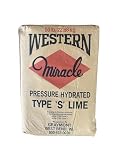
- Package Dimensions: 24 L x 4 H x 12.5 W (inches)
- Package Weight : 40 pounds
- Country of Origin : United States
- Part number: 7094-0-0
Covering a recurring defect
If movement, damp, poor adhesion or defective detailing is not corrected, a new surface layer may fail in the same place. Diagnose first, then repair.
Ignoring curing conditions
Rapid drying, frost, direct sun, wind or driving rain can damage fresh lime and other binders. Arrange weather protection and follow the product’s stated curing procedure.
Assuming a small area is automatically low risk
A small patch can still intersect a structural crack, a damp path or an incompatible historic finish. Size affects quantity, not necessarily consequence.
Do these 3 things before closing this tab:
1Repair Windows errors before they cause bigger problems2Scan for outdated or missing drivers - takes under a minute3Clear out junk files and repair common Windows errorsSafe handling and preparation
YourHome advises following manufacturer safety procedures for cement handling and masonry cutting because of skin irritation and lung-damage risks. Apply the relevant product’s own instructions to lime, gypsum, clay powders, supplementary binders and dry aggregates as well. Wear the specified respiratory, eye, hand and skin protection; control dust; use ventilation; and keep wash water and residues out of drains where local rules prohibit it.
Read the technical and safety data before opening the bag. Check shelf life, storage, batch consistency, water quality, mixing equipment, temperature limits and minimum application thickness. Keep dry powders away from children and pets. If the product calls for a mechanical mixer, measured water or staged coats, do not replace those controls with an improvised method.
What can and cannot be generalized about cost and availability
Building lime, lime plaster or render, clay plaster and supplementary-binder products may be available through specialist merchants, conservation suppliers or ordinary building outlets, depending on location. A product category’s presence does not confirm current stock, formula, suitability or price. No reliable, like-for-like retail price comparison is established across these materials.
Total cost includes investigation, substrate preparation, protection, skilled labor, curing time, access equipment, waste disposal and the risk of rework. A slower material can require more site time; a readily available product can cost more if it damages the existing wall. Obtain a current local quotation that identifies the exact product, coverage, preparation and warranty assumptions.
How to make the final choice
For compatible historic brick or stone repointing, begin by investigating a lime mortar and validating it with test panels. For a lime-plastered wall, use a compatible lime repair system and address the moisture or movement cause. For an earthen wall, consider a clay or earthen plaster designed for that substrate and exposure. For a sound, dry, gypsum-compatible interior background, gypsum may be practical. For a cement-render patch, first determine whether a similar cementitious repair is the compatible solution. For any load-bearing concrete or foundation work, obtain engineering and local-code advice rather than substituting a binder by guesswork.
The best cement alternative is therefore not the material with the most appealing label. It is the material whose strength, flexibility, moisture behavior, curing process and appearance are compatible with the existing construction and the job’s actual risk.
Quick Recap
Product prices and availability are accurate as of the date/time indicated and are subject to change. Any price and availability information displayed on Amazon at the time of purchase will apply.

