Recommended Free Tools
For a one-person household, the best washing machine is usually not the biggest washer on the sales floor. Most single adults are better served by a compact front-load washer around 2.0 to 2.5 cubic feet, a quality portable washer around 0.9 to 1.7 cubic feet when there are no dedicated hookups, or a ventless all-in-one washer-dryer when space and dryer venting are the real constraints.
On our job sites, the washer itself is rarely the first problem. The first problem is the space: a closet that is 3 inches too shallow, a drain that is not sized or placed correctly, an outlet that lacks required protection, a hallway turn that will not accept the appliance, or a second-floor laundry area with no serious leak plan. A highly rated machine becomes the wrong machine fast if the house cannot support it.
The practical order is simple: measure the space and delivery path first, verify plumbing and electrical second, choose the washer third. For most one-person homes, the sweet spot is a machine that handles clothes, towels, sheets, and small bedding without forcing you into oversized loads or expensive utility work.
Quick Answer: The Best Washer Type for One Person
If you have standard hookups and a small laundry closet, choose a 24-inch compact front-load washer in the 2.4 to 2.5 cubic foot range. It fits many condo, ADU, apartment, and small-home laundry spaces, uses water efficiently, spins clothes well, and can usually handle sheets and normal towels for one person.
#1 Best Overall

- Compact & Space-Saving Design – 24-inch wide, 2.4 cu. ft. capacity fits small laundry spaces, apartments, and stackable setups.
- Advanced AI Fabric Sensor – Automatically detects fabric type and load size to optimize wash cycles for superior care.
- Steam Cleaning Technology – Removes stubborn stains and allergens while keeping clothes fresh and hygienic.
- Smart Pairing Compatible – Connects with compatible LG dryers for automatic cycle syncing and enhanced laundry efficiency.
- User-Friendly Front-Load Washer – Intuitive controls, multiple wash cycles, and energy-efficient operation for everyday convenience.
If you rent and do not have washer hookups, a portable washer may be the best fit, but only if your lease, building rules, faucet connection, drainage setup, and floor surface allow it. A portable machine is less expensive up front, commonly about $100 to $700 in 2026 depending on whether it is a simple semi-automatic model or a better automatic unit, but it is not a substitute for a code-compliant laundry hookup.
If you have no dryer vent and want one appliance instead of a pair, consider a ventless all-in-one washer-dryer. These are often useful in condos, small houses, additions, and converted closets. The tradeoff is dry time. For best results, wash smaller loads than the rated wash capacity, because drying capacity is usually the bottleneck.
If you own the home, have a proper laundry room, and want fewer loads, a full-size high-efficiency front-load washer can make sense. A 4.5 cubic foot machine is more than one person strictly needs, but it can improve resale appeal, handle bulky bedding, and reduce load count if you wash weekly instead of several times per week.
Best Washing Machine Categories for a One-Person Household
1. Compact Front-Load Washer: Best Overall for Most Singles
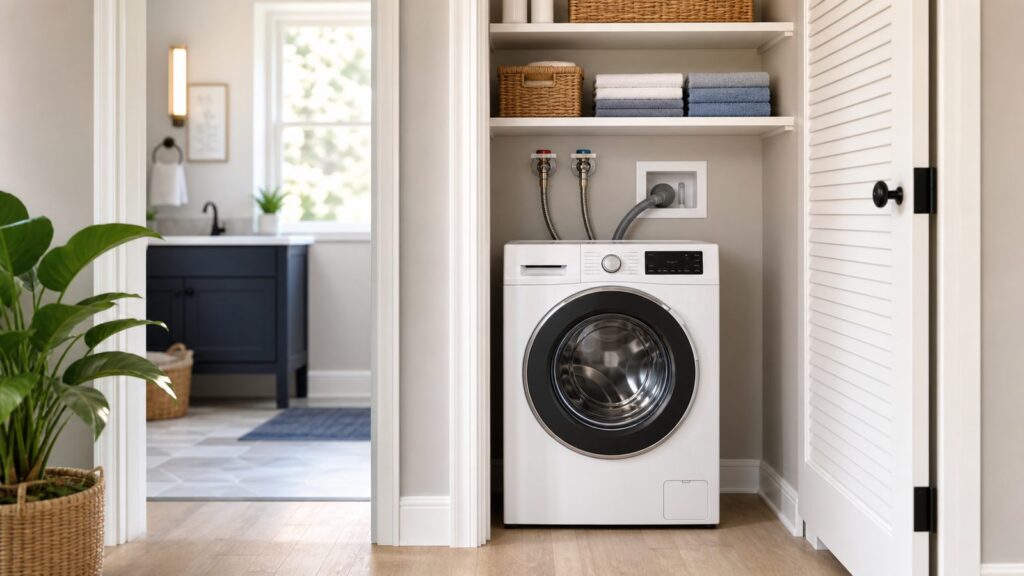
A compact front-load washer is the most balanced choice for one person with real hookups. Look for a 24-inch-wide machine, commonly around 2.4 to 2.5 cubic feet. That size is large enough for routine clothes, towels, and sheets if you wash two to four smaller loads per week. It is also small enough to fit many laundry closets where a full-size washer simply will not work.
The Tool Desk
Outbyte Driver Updater FREEScan for outdated or missing drivers - takes under a minuteDriver Scan →Outbyte PC Repair FREERepair Windows errors before they cause bigger problemsFix Now →In 2026, mainstream compact 24-inch front-load washers commonly run about $900 to $1,300. Premium compact laundry pairs can reach roughly $2,500 to $4,000 or more for the washer and matching dryer. For a single person, that premium only makes sense if the machines fit the space well, local service is available, and the laundry area is built to handle stacked equipment.
Prioritize high spin speed, good load balancing, quiet operation, accessible filter service, and a fast small-load cycle. Smart features are secondary. A washer that finishes a small weeknight load reliably is more valuable than one with a complicated app you rarely use.
2. Portable Washer: Best for Renters Without Hookups
Portable washers can work well for renters, studios, basement apartments, and temporary living situations. Smaller manual or semi-automatic units can cost roughly $100 to $350. Better portable automatic units often land around $300 to $700.
The catch is installation reality. A portable washer still needs water, drainage, power, and a stable floor. Many connect to a sink faucet and drain into a sink or tub. That setup can fail if the faucet adapter does not seal, the drain hose jumps loose, the sink drains slowly, or the building does not allow portable washing machines. Before buying one, confirm the lease or HOA rules in writing.
Do these 3 things before closing this tab:
1Scan for outdated or missing drivers - takes under a minute2Repair Windows errors before they cause bigger problems3Fix the driver behind crashes, sound loss and screen glitchesFor one person, a portable washer is best for shirts, workout clothes, undergarments, and light towels. Heavy blankets, large loads of denim, and comforters are better handled by a full-size machine or laundromat.
3. Ventless All-in-One Washer-Dryer: Best Where Dryer Venting Is Impossible
All-in-one washer-dryers are useful when a home has room for only one appliance or cannot support a dryer vent. In 2026, compact all-in-one units commonly cost about $1,000 to $2,200, with many better models falling around $1,500 to $2,200.
Rank #2
![KoolMore 24' Front Load Washing Machine, 2.7 Cu. Ft., Space Saving Unit with 20-Minute Quick Wash, 12 Washing Cycles, Quiet Inverter Motor [White] [120V] (FLW-3CWH)](https://m.media-amazon.com/images/I/418kZXTzr5L._SL160_.jpg)
- Compact Front Load Washer – Utilizing a quiet inverter motor, This energy-saving front load washer boasts 16 washing cycles for improved efficiency and versatility in cleaning towels, delicates, sports and fitness wear, jeans, and more.
- Steam and Water Plus Functions – The steam function is great for removing wrinkles quickly or deep-cleaning dirt, The Water Plus Function Adds water to the cycle to enhance wash performance on large, bulky items. this front-loading washing machine gives you multiple options for washing and preparing clothes for improved cleanliness.
- Stackable, Space-Saving Size – The KoolMore 2.7 Cu. Ft. washing machine can be stacked with our heat pump dryer [MODEL: FLD-5CWHP] using our stacking kit [MODEL: SKI-SML24]. This will allow the placement of the unit in more compact areas in small homes, apartments, college dorms, etc.
- Energy Efficiency Wash Cycles – This KoolMore washer machine designed with a High Energy Efficiency (HE) technology to help reduce operating costs without sacrificing washing effectiveness. Important for helping you save money and get clothes clean quickly.
- Stainless Steel Drum – This unit is fitted with a rust and corrosion resistant stainless-steel drum that offers long-term resilience and durability. Important for providing maximum value and better protecting clothes and fabrics.
The main advantage is convenience: clothes wash and dry in the same drum. The main disadvantage is time. A wash-and-dry cycle can take several hours, and drying performance depends heavily on load size. For one person, this can still be practical. Run smaller loads, avoid stuffing the drum, and plan laundry around the machine’s pace.
We usually recommend these for homeowners or condo owners who have realistic expectations. They are not ideal for someone who wants to wash towels, jeans, bedding, and a week of clothes in one quick evening.
4. Full-Size High-Efficiency Front-Load Washer: Best When Space Is Not Tight
A full-size high-efficiency front-loader is not necessary for most one-person households, but it can be the right long-term choice in a house with a proper laundry room. It handles bulky bedding better, reduces the number of loads, and may be more attractive to future buyers.
The risk is buying too much machine and then running many tiny loads. Oversized washers work best when loads are appropriately sized. If you wash three shirts and a towel at a time, a compact machine may be more sensible.
Washer Size: How Many Cubic Feet Does One Person Need?
For routine one-person laundry, 1.6 to 2.5 cubic feet is enough. A washer around 1.6 to 1.7 cubic feet can handle small regular loads, especially if you wash frequently. A 2.4 to 2.5 cubic foot compact front-loader is the practical upgrade because it can usually handle sheets, towels, and mixed clothing loads without feeling cramped.
Bulky comforters are the exception. Many compact washers can handle light bedding, but large comforters may need a full-size washer or a commercial laundromat machine. Do not buy a full-size washer only for the two times per year you wash bulky bedding unless you already have the space and hookups.
Free tools Windows power users keep installed
One-click scans. No signup required.
| Living situation | Best washer type | Typical capacity | 2026 purchase range | Main caution |
|---|---|---|---|---|
| Renter with no hookups | Portable washer | 0.9 to 1.7 cu. ft. | $100 to $700 | Lease rules, sink drainage, hose security |
| Condo, ADU, or small home closet | 24-inch compact front-loader | 2.0 to 2.5 cu. ft. | $900 to $1,300 | Depth, door swing, drain height, service access |
| No dryer vent | Ventless all-in-one washer-dryer | Often 2.4 to 5.0 cu. ft. | $1,000 to $2,200 | Long dry times and smaller drying loads |
| Homeowner with full laundry room | Full-size HE front-loader | 4.0 to 5.0+ cu. ft. | Varies widely by brand and features | Oversized for small frequent loads |
Measure the Laundry Space Before You Choose the Washer
We measure the space before talking brands. That means the appliance opening, the path from the delivery truck, and the utility locations. A common compact washer may be about 24 inches wide, but the installed space needs more than appliance width. You need room for hoses, the power cord, vibration clearance, door swing, and hands to reach shutoff valves.
For a closet, check the finished width, finished depth, height, baseboard interference, trim, bifold or swing door clearance, and whether the washer door can fully open. Also measure stairs, landings, tight hallway turns, elevator openings, and the final doorway. Delivery problems are expensive because they happen after you have already bought the machine.
A practical pre-purchase checklist looks like this: appliance dimensions, rear hose space, side clearance, door swing, shutoff access, standpipe or drain location, outlet location, floor levelness, pan or drain plan, and delivery path. For stacked units, also verify ceiling height and whether the stacking kit is made for that exact washer and dryer.
Depth is where many small laundry projects fail. A 24-inch-wide compact washer may still need roughly 25 to 27 inches of cabinet depth before hoses, and more once the door and rear connections are considered. If your closet has a shallow shelf, a thick door casing, or rear-mounted plumbing, measure carefully before ordering.
Outdated Drivers Are Slowing You Down
One free scan finds every outdated or missing driver and matches the right update for your exact hardware.Free scan · exact hardware matchWindows Errors? Fix Them Before They Spread
Repair common Windows errors and clear accumulated junk for a smoother, more stable PC - no reinstall needed.Free scan · no reinstallRank #3

- CHOOSE YOUR CYCLE—Our phenomenal BLACK+DECKER washing machine has 16 cycles you can choose: My Cycle, Quick Wash, Delicates, Wool, Baby Wear, Sanitary, Cold Wash, Tub Clean, Normal/Cotton, Permanent Press, Heavy Duty, Bulky/Large, Sports Wear, Spin Only, Drain Only and Rinse & Spin.
- IMPRESSIVE CAPACITY—With an interior stainless steel tub that is 2.7 cu. ft., this front loader washing machine (23.4” x 23.1” x 33.5”) is your solution to fresh laundry week after week. Simply load clothing, select your cycle and let this compact washer (160.9 lbs.) do all the work for you.
- ADDITIONAL CYCLE FEATURES—Additional highlights of this fantastic clothes washer is auto unbalance detection, a 1300 RPM max spin speed, easy-to-read LED control panel along with Add a Garment & Extra Rinse selections.
- SAFETY FIRST—With a Child Lock and Door Lock safety features, you can rest assured you are using a washing machine that values the well-being of others. The transparent front loading lid allows you to see your laundry cleaned in real time, spin by spin.
- QUALITY GUARANTEED—This phenomenal front load washer offers the highest quality.
Plumbing and Electrical Requirements Homeowners Miss
A washing machine is not just an appliance. It is a water-using, motor-driven appliance that can flood a room quickly if the setup is careless. In a proper laundry area, we want accessible hot and cold shutoff valves, quality hoses, a correctly trapped standpipe, a drain that can accept discharge volume, and an electrical outlet that meets current local requirements.
Modern laundry installations commonly use a 2-inch drain and standpipe arrangement, though exact requirements depend on the adopted code and local amendments. Standpipe height and trap placement matter. If the drain is too low, too high, improperly trapped, or undersized, the machine can siphon, overflow, smell, or discharge poorly.
Electrical requirements also deserve attention. Many laundry areas require a dedicated 20-amp branch circuit, and GFCI protection is now a standard safety expectation in laundry areas under modern electrical rules. Local code and the year of construction matter, so this is not the place to guess. If the outlet is old, ungrounded, loose, shared with other loads, or located behind an inaccessible stacked unit, have an electrician evaluate it before installation.
For upstairs laundry, leak prevention belongs in the base budget. We like to see a washer pan where appropriate, accessible shutoffs, braided stainless supply hoses, a leak sensor, and a known-good drain. A $30 hose failure can become a ceiling, flooring, and drywall claim if the laundry area was treated casually.
What It Costs to Buy and Install a Washer in 2026
For a one-person household, the appliance cost is only one part of the budget. If hookups already exist and are in good condition, installation is relatively modest. If you are creating a laundry area in a closet, bathroom corner, pantry, or upstairs hall, construction costs can exceed the cost of the washer.
| Project scope | Typical 2026 cost | What is usually included |
|---|---|---|
| Basic washer replacement with existing hookups | About $100 to $263 | Set in place, connect hoses, level machine, test operation |
| Simple washer install by appliance pro | About $100 to $200 | Connection to ready plumbing and electrical |
| New washer/dryer hookups | About $650 to $2,500, average near $1,200 | Water supply, drain work, outlet work, basic wall access depending on site |
| Broader washer/dryer installation | About $850 to $2,500 | More involved appliance setup, utility coordination, possible finish repair |
| Complex relocation or new laundry buildout | $1,500 to $2,500+ | Long utility runs, new circuit, wall or floor opening, patching, venting, cabinets, upstairs protection |
Labor varies by region, wall access, distance to existing water and drain lines, concrete slab versus framed floor, local permit fees, cabinet changes, drywall and paint repair, stairs, elevator access, and whether the equipment is stacked. In older houses, we also look for cast iron drain condition, galvanized water lines, weak floors, and outdated electrical panels.
If you are converting a closet into a laundry area, budget beyond the washer. A realistic scope may include framing or cabinet modification, plumbing rough-in, drain and vent work, electrical circuit work, drywall patching, paint, flooring protection, trim, and inspection. That is why a $1,100 compact washer can turn into a $3,000 to $6,000 project when the house is not already prepared.
Efficiency: Read IMEF and IWF, Not Just the Sticker
For ongoing use, pay attention to efficiency ratings. ENERGY STAR uses IMEF and IWF for residential clothes washers. IMEF is an energy efficiency measure; higher is better. IWF measures gallons of water consumed per cubic foot of washer capacity; lower is better.
Current ENERGY STAR criteria set different thresholds by washer type and size. Front-load washers over 2.5 cubic feet need an IMEF of at least 2.76 and an IWF no higher than 3.2. Top-loaders over 2.5 cubic feet need an IMEF of at least 2.06 and an IWF no higher than 4.3. Residential washers at or below 2.5 cubic feet need an IMEF of at least 2.07 and an IWF no higher than 4.2.
For a 2.4 cubic foot compact washer at the IWF threshold of 4.2, the rough threshold water use is about 10 gallons per cycle. Real use varies by model, cycle, soil level, load sensing, and selected options. Still, IWF gives you a better comparison than vague sales language about being eco-friendly.
Rank #4

- Space-Saving & Generous Capacity: 24-inch front load integrated design (25.6"D x 23.4"W x 33.5"H) allows built-in installation. It holds 26.5 lbs for washing and 13 lbs for drying, ideal for apartments, RVs, dorms, houses and camping.
- Time & Energy Efficient: Max 1400 RPM spin speed removes excess moisture to cut drying time. Optimized agitation and shortened soaking cycles slash laundry runtime by around 30% for higher efficiency.
- User-Friendly Smart Control: Clear LED screen lets you pick wash/dry cycles and track real-time progress. 16 preset programs fit different fabrics for thorough cleaning and gentle fabric care, plus a secure child lock function.
- Ventless Design & Stainless Steel Tub: No external vent pipe required for flexible placement. Durable stainless steel inner drum supports 90℃ hot water self-cleaning to sanitize drums and keep hygienic laundry conditions.
- Quiet Low-Noise Operation: Operates under 63 dB with noise reduction structure. Perfect for night-shift households, families with infants and noise-sensitive seniors for peaceful laundry cycles.
One practical warning: a compact washer can save space but may increase the number of loads. A larger high-efficiency front-loader can be efficient per pound of laundry when used correctly. The best efficiency choice is the smallest machine that comfortably handles your real weekly laundry without pushing you into constant tiny loads.
Features That Matter More Than Capacity
For one person, capacity gets overvalued. These features matter more in daily use:
What’s actually slowing this PC down?
Pick the symptom - the matching free tool is one click away.
- Fast small-load cycle: Useful for work clothes, gym clothes, and midweek laundry.
- High spin speed: Removes more water before drying, which is especially valuable with ventless dryers and drying racks.
- Reliable balancing: Critical in closets, wood-framed floors, condos, and upstairs laundry rooms.
- Low noise: Look for quiet operation if the washer sits near a bedroom, office, or living room.
- Accessible filter: Front-load machines need periodic service. If the filter is hard to reach, it will be neglected.
- Local service support: The best machine on paper is weaker if parts and technicians are scarce in your area.
Brand matters, but not in a vacuum. LG, GE, Samsung, Whirlpool, Bosch, Miele, Electrolux, and Speed Queen all have different strengths, model lines, parts availability, and local service coverage. Before buying, call one or two local appliance service companies and ask what they can actually repair in your ZIP code.
Independent reader supportYour contribution helps us test, update, and keep practical guides available for everyone.When to DIY and When to Hire a Pro
Reasonable DIY Work
If existing hookups are in good condition, many homeowners can handle a basic washer swap. That means moving the old machine carefully, inspecting the hoses and valves, connecting new supply hoses, placing the drain hose correctly, leveling the washer, and running a test cycle while watching for leaks.
DIY is also reasonable for adding a simple leak sensor, replacing old rubber hoses with quality braided hoses, cleaning the area behind the washer, and confirming the machine is level after the first few loads. Keep the shutoff valves accessible. If you cannot reach them without moving a stacked appliance, the setup needs rethinking.
Hire a Pro
Hire a plumber, electrician, or contractor when you are adding hookups, relocating laundry, opening walls, changing drains, adding a circuit, working in a condo building, installing upstairs laundry, modifying cabinets, or stacking heavy equipment in a tight closet. Also hire help if shutoff valves are corroded, the drain backs up, the outlet is ungrounded, or the floor is soft or out of level.
Permits may be required when adding plumbing, changing drainage, installing new electrical circuits, or altering walls. Rules vary by city and county. In multi-family buildings, HOA approval and building management coordination may be required even when the work seems minor. Do not assume a bathroom, kitchen, or closet can become a laundry area just because a machine physically fits.
Contractor Checklist Before You Buy
Use this checklist before ordering the washer, not after delivery:
- Measure finished width, depth, and height of the laundry space.
- Confirm rear clearance for hoses, drain line, and power cord.
- Check washer door swing and room to load clothes comfortably.
- Verify the delivery path from truck to final location.
- Confirm hot and cold shutoff valves work and remain accessible.
- Confirm drain size, standpipe height, trap condition, and drain performance.
- Verify outlet type, grounding, circuit capacity, and GFCI protection where required.
- Plan leak protection, especially above finished living space.
- Check floor levelness, framing stiffness, and vibration risk.
- Confirm lease, HOA, condo, or permit requirements before purchasing.
If every item checks out, then compare models. If two or three items are uncertain, solve those first. Construction conditions decide what appliance will work.
Our Practical Recommendation
For most one-person homes with existing laundry hookups, buy a 24-inch compact front-load washer around 2.4 to 2.5 cubic feet. Expect to spend about $900 to $1,300 for the washer, plus roughly $100 to $263 for a straightforward professional installation if the hookups are ready.
Quick wins for a faster PC:
Fix the driver behind crashes, sound loss and screen glitchesFind Drivers →Clear out junk files and repair common Windows errorsFree Scan →Scan for outdated or missing drivers - takes under a minuteDriver Scan →Best Value

- 【Wash and Dry in One】Say goodbye to transferring loads and do your laundry in one machine. Midea's all-in-1 Ventless Washer and Dryer Combo has multi modes to meet different washing and drying demands - steam care, overnight wash and dry, reload function, quick wash, washer clean, air fluff.
- 【Energy & Space Saving】Compact size with large compacity. Perfect for families of 3-4 looking to maximize their laundry space in apartments, RVs, and more. BLDC inverter quattro motor comes with a 10-year warranty and has passed the DOE energy efficiency test, ensuring great performance with less energy consumption.
- 【Overnight Wash & Dry】Convenient overnight wash and dry cycle. Do your laundry at night and wake up to clean and fresh clothes in the morning. To prevent moving and shaking, REMOVE transport bolts before using. Defult time for Dryer program is 4-hour and Wash&Dry Program is 6-hour
- 【Concise Control Panel 】Sleek design with 16 optional programs and 6 extra features for any laundry needs. Easy installation with a 120V standard outlet, and no venting is needed.
- 【Keep Clothes Fresh and Clean】Our Steam Care function keeps clothing soft and eliminates stains, germs, and bacteria for a thorough clean. Air Fluff feature keeps clothes fresh for up to 8 hours after the dry cycle has ended, preventing odors and keep clothes scent fresh.
For renters without hookups, choose a portable washer only after confirming the rules and drainage setup. Expect about $100 to $700 for the machine, and understand that it is best for small, frequent loads.
For homes without dryer venting, choose a ventless all-in-one if convenience matters more than speed. Expect about $1,000 to $2,200, and plan to wash smaller loads than the drum rating suggests.
For homeowners with a full laundry room, a full-size high-efficiency front-loader can be a good long-term choice, especially if you want to wash bulky bedding at home. Just do not buy capacity you will never use.
The best washer for one person is the one that fits the home, drains correctly, runs on a proper circuit, can be serviced locally, and matches your real laundry habits. Measure first, verify the utilities, and then choose the machine.
Frequently Asked Questions
What size washing machine is best for one person?
Most one-person households do well with 1.6 to 2.5 cubic feet. A 2.4 to 2.5 cubic foot compact front-load washer is the best all-around size if you have proper hookups.
Is a 2.4 cubic foot washer big enough for a single person?
Yes. A 2.4 cubic foot washer can handle routine clothes, towels, and sheets for one person. Large comforters may still need a full-size washer or laundromat.
How much does it cost to install a washing machine in 2026?
A basic replacement with existing hookups commonly costs about $100 to $263. New washer/dryer hookups often run $650 to $2,500, with complex relocations sometimes exceeding $2,500.
Do I need a permit to add washer hookups?
Often, yes. Adding plumbing, drains, vents, or a new electrical circuit can trigger permit requirements. Local rules vary, and condos or HOAs may require separate approval.
Free tools Windows power users keep installed
One-click scans. No signup required.
Can I put a washing machine in a closet?
Yes, if the closet has enough depth, door clearance, service access, proper plumbing, a suitable drain, required electrical protection, ventilation where needed, and leak protection.
Are ventless washer-dryer combos good for one person?
They can be a good fit when space is tight or dryer venting is impossible. The tradeoff is longer dry time, so smaller loads work better than full drum loads.
Quick Recap
Product prices and availability are accurate as of the date/time indicated and are subject to change. Any price and availability information displayed on Amazon at the time of purchase will apply.