What’s actually slowing this PC down?
Pick the symptom - the matching free tool is one click away.
High-linearity analog optocouplers are not a typical homeowner purchase, but they matter more than most owners realize. These small electronic components help pass analog control or sensor signals across an electrical isolation barrier while keeping high voltage, ground faults, and electrical noise away from low-voltage controls. In practical construction terms, they show up inside the equipment we install, specify, commission, and maintain: building automation panels, HVAC controllers, variable frequency drives, heat-pump electronics, monitoring boards, elevator and motor controls, solar and storage interfaces, EV charging support gear, and industrial control panels.
The headline number is the working insulation voltage. Certain high-linearity analog optocouplers, including Broadcom’s HCNR200 and HCNR201 family, are published with a maximum working insulation voltage around 1,414 V peak, transient overvoltage around 8,000 V peak, and multi-kilovolt withstand testing under recognized safety standards and package conditions. That does not mean a contractor can field-build anything they want and call it code compliant. It means the component can support a properly engineered, listed, documented assembly where analog accuracy and isolation both matter.
For an owner, architect, facility manager, or general contractor, the useful question is not whether to buy one optocoupler. The useful question is whether the control equipment on the project is designed, specified, installed, and commissioned so that low-voltage controls stay accurate and safe when they pass near high-voltage equipment. On our job sites, that conversation usually comes up when a building has VFD-driven mechanical equipment, long analog sensor runs, electrical rooms with noisy gear, packaged rooftop units, heat pumps, metering, or a building automation system that must trend reliable data after turnover.
| # | Preview | Product | Price | |
|---|---|---|---|---|
| 1 |

|
HCNR200-000E DIP-8 HigH Linear Analog OptOcOupler Chip 10PCS/LOT | Buy on Amazon |
What a High-Linearity Analog Optocoupler Actually Does
An optocoupler transfers information across an isolation barrier using light. On one side, an LED turns an electrical signal into light. On the other side, a light-sensitive device turns that light back into an electrical signal. Because the two sides are not directly connected by copper, the circuit can pass information while maintaining galvanic isolation.
Free tools Windows power users keep installed
One-click scans. No signup required.
A basic optocoupler is often good enough for on/off signals: relay status, fault indication, door position, alarm contacts, or simple logic. Analog signals are harder. A 0-10 V control signal, a 4-20 mA measurement, a temperature feedback value, or a proportional pressure reading needs accuracy across the range. If the isolation device distorts the signal, drifts with temperature, or changes behavior as parts age, the controller may see the wrong value.
#1 Best Overall
- 🍀 HIGH-QUALITY ELECTRONICS COMPONENTS: Our products are made with top-of-the-line electronics components, ensuring reliable and long-lasting performance
- 🍀 EASY TO INSTALL AND USE: Our electronics products are designed to be user-friendly, with clear instructions and simple installation processes
- 🍀 VERSATILE APPLICATIONS: Our electronics products can be used in a variety of applications, including industrial, automotive, and household electronics
- 🍀 MONEY-BACK GUARANTEE: Confidence comes from high quality and our continuous pursuit for perfectness
- 🍀 EXCEPTIONAL CUSTOMER SUPPORT: We pride ourselves on providing exceptional customer support, with a knowledgeable team available to answer any questions or concerns
That is where a high-linearity analog optocoupler is different. The HCNR200 and HCNR201 architecture uses an LED and two closely matched photodiodes. One photodiode is commonly used in a feedback loop to stabilize the LED output, while the other transfers the signal across the barrier. That feedback arrangement reduces nonlinearity and drift compared with a simpler optocoupler arrangement.
For construction readers, translate that into field language: the component helps a control board keep an analog value believable while separating sensitive controls from dangerous or noisy electrical conditions. It is not a conduit, breaker, transformer, or listed panel by itself. It is one part of the engineered electronics inside that equipment.
What 1.4 kV Working Insulation Voltage Means
The 1.4 kV figure refers to maximum working insulation voltage, often shown as VIORM in component documentation. A value around 1,414 V peak means the insulation barrier is rated for continuous working stress up to that peak voltage under the component’s safety standard conditions. This is different from a one-time surge number or a factory proof test.
That distinction matters. A component may have several voltage ratings, and they do not all mean the same thing:
| Rating or Test | Typical Published Figure for This Class | What It Means in Plain English |
|---|---|---|
| Working insulation voltage | About 1,414 V peak | The maximum voltage the insulation barrier is intended to withstand continuously under rated conditions. |
| Transient overvoltage | About 8,000 V peak | A short-duration surge rating, not a normal operating voltage. |
| UL 1577 proof test | Up to 6,000 Vrms for at least 1 second under specified package and safety conditions | A production or qualification withstand test; it does not authorize unsafe field wiring. |
| System approval | Depends on the full product and installation | The complete panel, enclosure, wiring method, listing, grounding, overcurrent protection, and inspection still control code compliance. |
The peak-to-RMS relationship is one reason the number looks unusual. A 1,000 Vrms sine wave has a peak value of about 1,414 V. Component documentation often uses peak values for insulation ratings, while electricians and building owners usually think in volts AC RMS at the service or equipment level.
On a building project, do not treat that rating as permission to mix any low-voltage and high-voltage conductors in the same box. The National Electrical Code, local amendments, listing instructions, cable ratings, separation rules, raceway fill, firestopping, grounding, bonding, and the authority having jurisdiction still apply. A high-performing part inside a factory-built controller does not turn a field-made assembly into listed equipment.
Where This Shows Up in Real Buildings
Most owners will never see the optocoupler itself. It is soldered to a printed circuit board inside a drive, controller, sensor module, power supply, monitoring device, or control panel. But the performance shows up in everyday building systems.
Quick wins for a faster PC:
Fix the driver behind crashes, sound loss and screen glitchesFind Drivers →Clear out junk files and repair common Windows errorsFree Scan →Scan for outdated or missing drivers - takes under a minuteDriver Scan →Building Automation and Energy Management
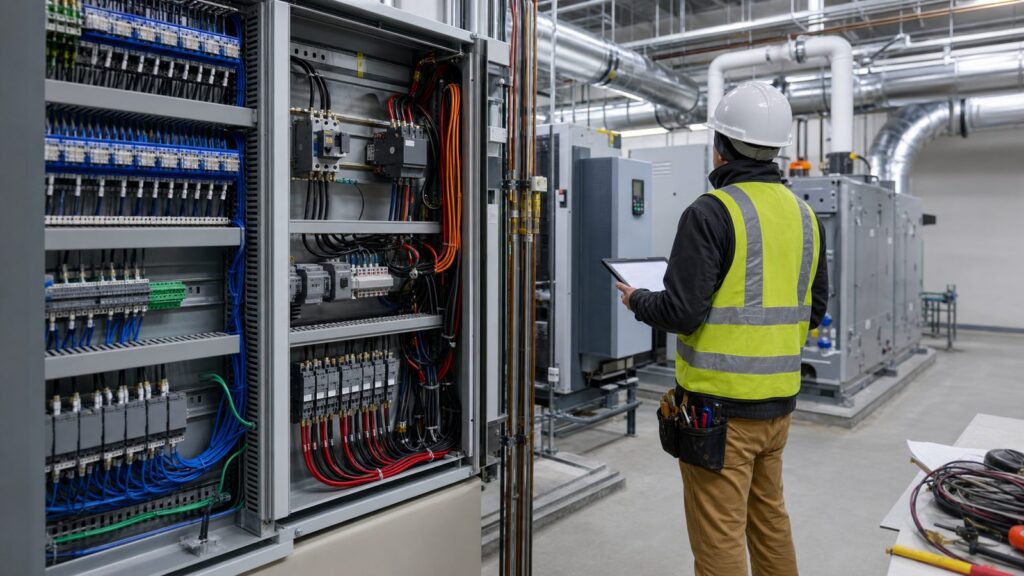
Building automation systems use analog values constantly: duct static pressure, chilled-water temperature, outside-air temperature, CO2 level, valve position, damper feedback, supply-air temperature, humidity, current sensing, and equipment status. Many of those signals are low voltage, but they often terminate in panels that live near 120 V, 208 V, 240 V, 277 V, or 480 V equipment.
Good isolation helps reduce the chance that a fault, ground loop, or electrical noise problem damages the controller or corrupts readings. In a large building, one bad analog value can make an air handler hunt, a VAV box misbehave, or an energy dashboard report nonsense. We have seen commissioning time disappear into problems that were not mechanical at all; they were grounding, shielding, scaling, or signal-integrity issues.
Variable Frequency Drives and Motor Controls
VFDs are one of the most common sources of electrical noise in commercial buildings. They switch power rapidly to control motor speed. That is excellent for energy performance, but it creates an environment where analog feedback and command signals need careful treatment.
Isolation is useful around speed references, current feedback, voltage monitoring, torque-related signals, and control interfaces. A high-linearity analog optocoupler can be part of the board-level design that keeps those measurements accurate while the power electronics do their job.
Recommended Free Tools
Heat Pumps, HVAC Electronics, and Packaged Equipment
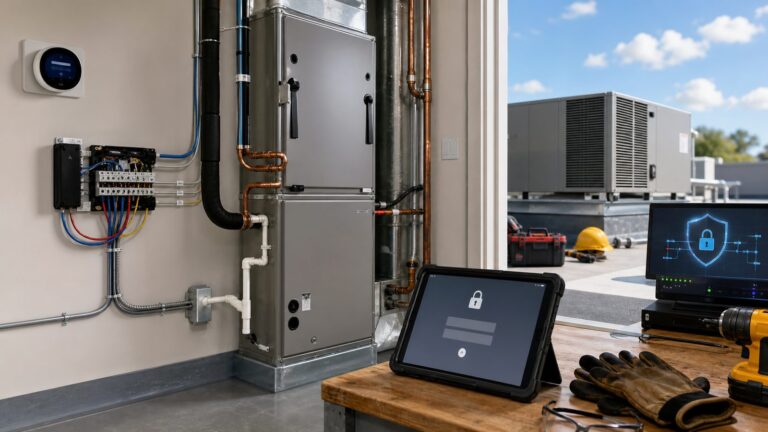
Modern heat pumps and rooftop units are no longer simple contactor-and-thermostat machines. They may include inverter drives, pressure transducers, temperature sensors, electronic expansion valves, communicating controls, and monitoring circuits. The more electronics inside the cabinet, the more attention must be paid to isolation, surge protection, grounding, and signal accuracy.
For a construction team, the takeaway is simple: the equipment submittal matters. Controls are not just low-voltage wire pulled after the hard work is done. They are part of the building’s operating system.
PV, Battery Storage, EV Charging, and Metering
Solar arrays, battery systems, EV charging infrastructure, and metering equipment often require voltage, current, and status information to cross from a high-energy side to a control side. Isolation becomes central to both safety and measurement reliability. A 1.4 kV working insulation rating at the component level can help product designers build interfaces that tolerate the voltage environment found in these systems, provided the rest of the product design is also correct.
Why Linearity Matters More Than Owners Expect
Linearity is the difference between a signal that stays proportional and a signal that bends as it moves through the circuit. If a 0-10 V pressure sensor is halfway through its range, the controller should see a value that corresponds to halfway through the range. If the isolation circuit distorts that value, the control sequence is working from a bad assumption.
Do these 3 things before closing this tab:
1Scan for outdated or missing drivers - takes under a minute2Clear out junk files and repair common Windows errors3Fix the driver behind crashes, sound loss and screen glitchesSmall errors can become expensive. A supply fan that runs 8 percent faster than necessary can waste energy every occupied hour. A valve that never fully modulates can cause comfort complaints. A heat pump that receives noisy temperature or pressure information may short-cycle or throw nuisance faults. A monitoring system that trends unreliable values may cause the maintenance team to chase the wrong issue.
During commissioning, we do not just look for a green light on the controller. We compare commanded values, measured field values, and trended values under real operation. That means VFD start and stop, minimum and maximum flow, heating and cooling calls, occupied and unoccupied modes, and load changes. Isolation is only valuable if the installed system still produces numbers that match reality.
Component Ratings Are Not Building-Code Approval
This point is worth making plainly: a component insulation rating does not satisfy the NEC by itself. The NEC governs the installed electrical system. It cares about listed equipment, conductor insulation, wiring methods, box fill, separation between Class 2/Class 3 and power circuits, plenum and riser cable ratings, supports, firestopping, grounding, bonding, overcurrent protection, working clearances, labeling, and local inspection requirements.
Low-voltage control wiring in buildings is often handled under power-limited circuit rules, especially Class 2 and Class 3 concepts. A Class 2 control circuit may be easier to route than power wiring, but only when the power source is listed for that purpose and the wiring is installed within the allowed limitations. Mixing low-voltage and power conductors in the same enclosure or raceway without proper barriers, insulation ratings, or listing instructions can create both inspection and safety problems.
For custom panels, the question becomes more formal. Who designed the circuit? Who built the panel? Is the assembly listed or field evaluated? Are the creepage and clearance distances correct on the printed circuit board? Are terminal blocks rated correctly? Are the enclosure, wire labels, ferrules, fusing, surge protection, disconnects, and documentation complete? A 6,000 Vrms proof-tested component can be part of a good answer, but it is not the whole answer.
What to Ask for in Submittals and Specifications
Owners and general contractors do not need to specify a board-level part number on most projects. In fact, that can be the wrong level of control. The better approach is to specify performance outcomes and documentation requirements.
For building automation and controls, ask for isolated analog inputs where signals cross high-voltage or electrically noisy environments. Require point-to-point documentation, calibration records, controller input type, sensor range, scaling, shielding method, grounding approach, and commissioning trend logs. If a panel is custom-built, require documentation of its listing, field evaluation, or recognized panel shop process.
For HVAC and electrical equipment, review whether analog signals are isolated where needed. Look at VFD interfaces, metering boards, heat-pump control modules, energy monitoring gateways, and any interface between a BAS and high-energy equipment. The goal is not to micromanage the engineer. The goal is to avoid the common gap where the mechanical drawings, electrical drawings, and controls submittals each assume someone else handled signal integrity.
The Tool Desk
Outbyte Driver Updater FREEFix the driver behind crashes, sound loss and screen glitchesFind Drivers →Outbyte PC Repair FREEClear out junk files and repair common Windows errorsFree Scan →On our projects, the most useful submittal questions are direct:
- Which analog points are isolated from equipment power?
- Which sensors use 0-10 V, 2-10 V, 4-20 mA, resistance, pulse, or digital communication?
- Where are shields grounded, and are they grounded at one end or both?
- Are low-voltage and power conductors separated as required by the listing and the NEC?
- Are VFD cable, motor leads, and control wiring routed to reduce noise?
- How will the commissioning agent verify analog accuracy under operating load?
Cost Impact in 2026: The Part Is Cheap, the System Is Not
The optocoupler itself is usually not the expensive item. Distributor pricing observed for HCNR201-type parts commonly falls around $3.00 to $6.05 each depending on quantity and packaging, with some quantity pricing near $2.70 each at large lot sizes. That is real money to a manufacturer building thousands of boards, but it is tiny compared with field labor, commissioning, panel documentation, and downtime.
On a construction budget, the bigger costs are the complete isolated input module, control panel, enclosure, terminal blocks, precision resistors, op-amps, surge and EMI protection, PCB spacing, conformal coating where specified, labels, ferrules, cable, raceway, programming, testing, and commissioning. If a project team focuses only on the component price, they will miss the actual cost drivers.
| Item or Scope | Common 2026 US Planning Range | What Drives the Price |
|---|---|---|
| High-linearity analog optocoupler component | About $3.00-$6.05 each at typical distributor quantities; lower at larger volumes | Quantity, package, traceability, authorized distributor, shipping, availability |
| Residential or small commercial electrician service | About $50-$130 per hour, often with minimum service charges | Market, access, service minimums, troubleshooting time, permit needs |
| Commercial controls or electrical labor | About $75-$150+ per hour | Licensing, insurance, after-hours work, commissioning skill, downtime risk |
| Traditional BAS or BMS installation | Often about $2.50-$7.50 per square foot | Point count, controllers, wiring access, integration, graphics, programming |
| 50,000 sq ft office BAS example | Roughly $60,000-$200,000 depending on scope | System depth, number of air handlers, VAV boxes, meters, sensors, and sequences |
| Single-subsystem smart-home controls | Often about $500-$2,500 | Device count, wiring access, brand ecosystem, finish disruption |
| Multi-subsystem home automation | Roughly $5,000-$30,000 | Lighting, shades, HVAC, security, audio, networking, programming |
For estimating, budget controls by point count and commissioning hours, not just cable length. A binary dry contact may be quick. An analog point that needs shielding, isolation, scaling, calibration, trending, and verification under equipment load can take more time. Retrofits add another variable: finished ceilings, occupied spaces, fire-rated assemblies, working hours, and unknown existing wiring can make the labor larger than the hardware cost.
New Construction vs Retrofit Considerations
New construction gives the project team a better chance to get pathways right. Sleeves, conduit stubs, accessible junction boxes, spare conductors, labeled terminal strips, and dedicated low-voltage routes are inexpensive before finishes. They are expensive after the ceiling grid is full, walls are painted, tenants are moved in, and access requires night work.
In a retrofit, the first question is usually not which component is inside the controller. It is whether the existing building gives us a clean path for the control wiring, whether low-voltage wiring is separated from power wiring, whether old panels have space and documentation, and whether the BAS contractor can get reliable trend data from the equipment.
If analog readings are unstable after a retrofit, the fix may involve shield grounding, rerouting conductors, replacing a sensor, changing an input module, adding isolation, correcting scaling, or cleaning up panel grounding. The answer is not always a new controller. Good troubleshooting starts with measuring the actual field signal at the sensor, at the panel terminals, and in the software trend.
Independent reader supportYour contribution helps us test, update, and keep practical guides available for everyone.When to DIY vs When to Hire a Pro
There is a narrow DIY lane here, and it is mostly educational or owner-side review. A technically capable owner can read submittals, ask whether analog inputs are isolated, confirm that sensors and controller ranges match, review BAS trend logs, and keep a point list organized. Homeowners can also handle some plug-in smart-home devices that do not involve opening electrical equipment or modifying listed assemblies.
Hire a qualified electrician, controls contractor, BAS technician, engineer, or listed panel shop when the work involves line voltage, equipment cabinets, VFDs, motor controls, electrical rooms, rooftop equipment, control panels, fire-rated assemblies, Class 2/Class 3 routing questions, or anything that requires a permit or inspection. Also hire a pro when the system affects life safety, freeze protection, ventilation, commercial refrigeration, production equipment, elevators, EV charging, PV, battery storage, or tenant operations.
Component-level work belongs to qualified electronics designers and panel builders. Replacing a board-level optocoupler in the field is not normal building maintenance unless the manufacturer authorizes that repair procedure. Most building teams replace the module, controller, board, or listed assembly instead of doing component repair on site.
Commissioning: Where the Value Gets Proven
Isolation and linearity are only useful if the installed system performs. Commissioning is where the paper design meets the operating building. For analog controls, we want to see the field value, controller value, BAS graphic, and trend history agree within the required tolerance.
A practical commissioning process should include sensor range checks, input type verification, scaling confirmation, shield and grounding review, VFD operation tests, startup and shutdown trends, alarm verification, and load-change observation. If a pressure sensor reads correctly with equipment off but jumps when a drive starts, the problem is not solved. If a temperature value looks stable on the screen but is scaled to the wrong range, the control loop is still wrong.
For commercial projects, ask for trend logs before turnover. A few days of trended data can reveal hunting loops, noisy inputs, stuck dampers, bad scaling, and values that only fail at certain times of day. This is especially valuable for schools, offices, multifamily buildings, healthcare support spaces, light industrial facilities, and retail spaces where comfort complaints become expensive after occupancy.
How Bettesworth Construction Thinks About This in the Field
We do not expect an owner to become a circuit designer. We do expect the construction team to respect controls as a real trade with real risk. The lowest bid controls package can become expensive if the building cannot hold temperature, if VFDs create nuisance faults, if the BAS cannot trend reliable values, or if inspectors reject field wiring that should have been coordinated earlier.
Our practical approach is to bring the conversation forward. During design and submittals, we look at where controls cross electrical boundaries. During rough-in, we protect pathways and separation. During trim and startup, we check labels, terminations, and access. During commissioning, we look at actual operating data, not only device counts.
High-linearity analog optocouplers are a good example of a small technical detail with a large system-level lesson. The part may cost less than lunch. The failure it helps prevent can cost days of troubleshooting, comfort complaints, damaged boards, callbacks, or unreliable automation. The right target is not expensive electronics for their own sake. The target is a building that operates correctly, safely, and predictably after the crew leaves.
Crashes, No Sound, or Screen Glitches?
Random freezes, missing sound and display glitches usually trace back to one bad driver. Find and replace yours safely.Free scan · under a minutePC Slower Than It Used to Be?
A free scan shows the junk files, broken settings and background clutter dragging Windows down - then fixes them in one click.Free scan · Windows 10 & 11Owner Checklist for BAS and Control-Panel Review
Use this checklist when reviewing a BAS, HVAC controls, electrical monitoring, or custom panel package:
- Confirm every analog point has a listed sensor range, signal type, controller input type, and scaling value.
- Ask which analog points are isolated and why.
- Verify that control wiring pathways are coordinated before walls and ceilings close.
- Require separation details where low-voltage controls pass near power wiring.
- Ask whether panels are listed, field evaluated, or built by a qualified panel shop.
- Require terminal labels, wire labels, updated as-builts, and controller backup files.
- Confirm plenum, riser, wet-location, outdoor, and firestopping requirements before cable is pulled.
- Trend important analog values during real equipment operation before final acceptance.
- Budget commissioning time for VFD start/stop, load changes, and occupied-mode testing.
- Keep spare pathways or spare conductors for future sensors, meters, and tenant changes.
If the project is small, this may be a one-page control-point review. If the project is a 50,000 sq ft office, warehouse, clinic, school, or mixed-use building, it should be part of a coordinated electrical, mechanical, and controls review.
The Bottom Line
High-linearity analog optocouplers with working insulation voltage around 1.4 kV are not a job-site commodity like conduit or cable. They are board-level components that help manufacturers build safer, more accurate interfaces between hazardous electrical environments and low-voltage controls. In the right equipment, they support better signal integrity, better isolation, and more reliable commissioning.
For owners and builders, the lesson is practical: specify the performance, require the documentation, protect the wiring pathways, and commission the analog values under real operating conditions. A component rating is useful evidence inside a properly engineered product. It is not a shortcut around listed equipment, NEC-compliant wiring, permits, inspections, or qualified trades.
Do these 3 things before closing this tab:
1Clear out junk files and repair common Windows errors2Scan for outdated or missing drivers - takes under a minute3Repair Windows errors before they cause bigger problemsFrequently Asked Questions
What does 1.4 kV working insulation voltage mean in an optocoupler?
It means the component’s insulation barrier is rated for continuous working voltage around 1,414 V peak under specified safety conditions. It is different from a surge rating or proof test, and it does not by itself approve a field-built electrical assembly.
Can an analog optocoupler make low-voltage building controls safer?
It can help when used inside properly engineered equipment. The optocoupler provides galvanic isolation between circuits, which can protect low-voltage controls from hazardous voltage differences, ground loops, and electrical noise. The full installation still must meet NEC, listing, grounding, and inspection requirements.
Where are high-linearity analog optocouplers used in building systems?
They may be used inside BAS controllers, isolated analog input modules, VFD feedback circuits, heat-pump electronics, metering boards, industrial control panels, PV and storage monitoring equipment, and other systems where analog accuracy is needed across an isolation barrier.
Does a component insulation rating satisfy NEC requirements?
No. NEC compliance depends on the complete installed system: listed equipment, wiring methods, cable type, separation from power conductors, overcurrent protection, grounding and bonding, enclosure ratings, firestopping, and local inspection. Component ratings support product design but do not replace code compliance.
Recommended Free Tools
How much does building automation or low-voltage control wiring cost in 2026?
Broad BAS installations commonly plan around $2.50-$7.50 per square foot, with a 50,000 sq ft office example often landing around $60,000-$200,000 depending on scope. Commercial controls and electrical labor commonly runs about $75-$150+ per hour, while residential or small commercial service rates often fall around $50-$130 per hour.
When should I hire a pro for isolated controls work?
Hire a qualified electrician, controls contractor, engineer, BAS technician, or panel shop when the work involves line voltage, VFDs, electrical rooms, HVAC equipment cabinets, custom panels, permits, inspections, or Class 2/Class 3 wiring decisions. DIY should be limited to owner-side review, documentation, and plug-in smart devices that do not modify listed electrical equipment.
Quick Recap
Product prices and availability are accurate as of the date/time indicated and are subject to change. Any price and availability information displayed on Amazon at the time of purchase will apply.