For most kitchen remodels, the best countertop is not simply the prettiest slab in the showroom. It is the material that fits the way you cook, the budget you actually have, the maintenance you will tolerate, and the construction details already locked into your cabinet, sink, appliance, and electrical plan.
In 2026, a typical U.S. countertop replacement commonly lands around $3,145 total, with many projects falling between about $1,852 and $4,464. Small laminate replacements can be far less, while large kitchens with premium stone, waterfall ends, slab backsplashes, multiple cutouts, and electrical coordination can move into the $8,000 to $12,000-plus range quickly. A practical installed planning range for many materials is about $40 to $150 per square foot, but the final quote depends heavily on fabrication, field conditions, and scope.
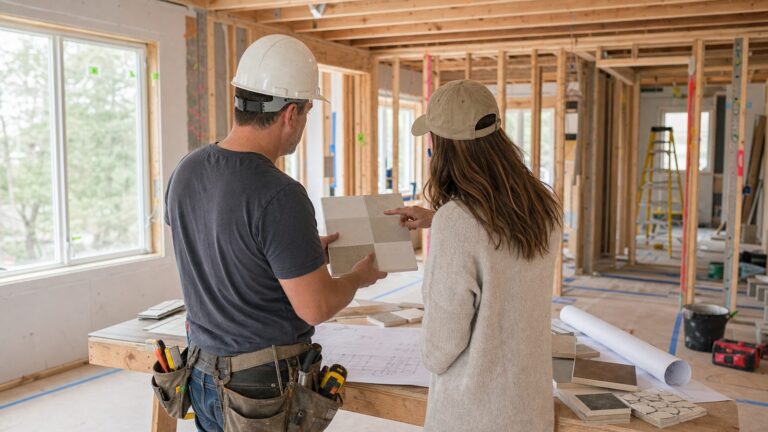
On our job sites, we try to settle countertop decisions after the cabinet layout, sink, faucet, range or cooktop, overhangs, backsplash height, and outlet strategy are known. Countertops are measured to finished field conditions. If the cabinets are not level, the island power plan changes, or the homeowner switches from a drop-in sink to an apron-front sink after templating, the counter package can become expensive fast.
This guide compares 12 practical kitchen countertop types: laminate, solid surface, engineered quartz, granite, quartzite, marble, butcher block, porcelain, ceramic tile, concrete, stainless steel, and recycled glass or paper composite. The goal is not to crown one universal winner. It is to help you choose the right surface for your remodel before money is tied up in slabs, templates, and change orders.
Free tools Windows power users keep installed
One-click scans. No signup required.
#1 Best Overall

- NON-SLIP AND HIGH HEAT RESISTANT: These trivets for hot dishes are heat-resistant from -104℉ to 446℉, Protect your countertop or table from hot pots, hot pans coming out from the microwave or stove. Silicone trivet is non-slip to make nothing slide off
- HIGH-QUALITY SILICONE AND FOOD SAFETY: Walfos trivets for hot pots and pans are made of food grade silicone, BPA free, flexible and long-lasting. Premium silicone material ensure that they won't rust, crack or chip and it is not as heavy as metal ones
- MULTI FUNCTION: Hot Pot Holder are long-lasting and versatile also perfect for silicone mats, hot pot holders, drying mat, jar opener, spoon holder garlic peeler and coaster (Sizes: Square Trivets: 7.1" x 7.1", Round Trivets: 7" x 7". Thickness: 0.24")
- EASY TO DRY AND CLEAN: The trivets for hot pots and pans can catch water vapor and condensate, and silicone trivets are easy to dry by squeesing out or shaking. Simply hand-wash our trivet or put it into the dishwasher
- EASY TO USE AND STORE: Light weight and convenient to use. Also it is easy to store the silicone trivet on your table or hang it on a hook, keeping your house clean and tidy all the time
Kitchen Countertop Cost and Performance Comparison
Use this table as a first-pass filter. Prices are 2026 U.S. planning ranges and should be confirmed with a local fabricator or remodel contractor. Material-only pricing can look much lower than an installed proposal because installation often includes templating, fabrication, edge work, sink and cooktop cutouts, seams, delivery, removal, disposal, plumbing disconnects, and field labor.
| Countertop Type | 2026 Cost Range | Best Use | Maintenance | Heat Resistance | Scratch Resistance | Contractor Warning |
|---|---|---|---|---|---|---|
| Laminate | $41.94-$63.77 installed per sq. ft. for basic work; material often $8-$27 | Budget remodels, rentals, quick replacements | Low | Low to moderate | Moderate | Seams, edge detail, substrate, and wall scribing affect the finished look. |
| Solid surface/acrylic | Material about $20-$75 per sq. ft.; acrylic often $13-$30 | Low-maintenance family kitchens, integrated sinks | Low | Moderate | Moderate | Can scratch, but many marks can be sanded or repaired. |
| Engineered quartz | Material about $15-$70 per sq. ft.; installed jobs often higher | Busy kitchens wanting low maintenance | Very low | Moderate | High | Hot pans can scorch resin; fabrication should control silica dust. |
| Granite | Material about $15-$140 per sq. ft. | Natural stone durability and resale appeal | Moderate | High | High | needs sealing; slab layout approval matters. |
| Quartzite | Premium natural stone; often above common granite and quartz | High-end kitchens wanting natural veining and hardness | Moderate | High | High | Hard to fabricate; confirm true quartzite, not mislabeled marble. |
| Marble | Material about $15-$190 per sq. ft.; common options often $25-$60 | Design-forward kitchens, baking zones | High | Moderate to high | Low to moderate | Etching and staining are normal risks, not defects. |
| Butcher block/wood | Material about $10-$38 per sq. ft. | Warm accent areas, islands, low-impact zones | Moderate to high | Low | Low to moderate | Water protection at sinks and dishwashers is critical. |
| Porcelain slab or tile | Tile material about $3-$28 per sq. ft.; slab-like surfaces about $17-$70 | Heat-resistant modern kitchens | Low | Very high | High | Large slabs are fabrication-sensitive and can chip at edges. |
| Ceramic tile | Material about $1-$15 per sq. ft. | Budget or period-style kitchens | Moderate | High | Moderate | Grout maintenance and uneven work surfaces are common complaints. |
| Concrete | About $50-$100 per sq. ft. material or more for custom work | Custom modern or industrial kitchens | High | High surface heat, sealant varies | Moderate | Cracks, chips, staining, and curing time must be discussed upfront. |
| Stainless steel | Material about $60-$100 per sq. ft. | Serious cooks, commercial-style kitchens | Low | Very high | Shows scratches | Fingerprints and patina are part of the look. |
| Recycled glass or paper composite | Glass about $10-$135 per sq. ft.; paper composite about $45-$70 | Eco-focused remodels and statement surfaces | Varies | Varies | Varies | Installer availability and manufacturer rules matter. |
1. Laminate Countertops
Laminate is still the most practical low-cost countertop for many kitchens. The material has improved significantly from older builder-grade patterns. Modern laminate can imitate stone, wood, concrete, and matte solid colors at a fraction of slab pricing.
For 2026 budgeting, laminate material often runs about $8 to $27 per square foot. A basic installed laminate estimate can land around $41.94 to $63.77 per square foot, depending on the edge style, substrate, backsplash, tear-out, and how cleanly the old countertop comes off. A small rental kitchen might be a straightforward job. A kitchen with out-of-square walls, a long peninsula, an undermount sink request, and a custom edge is a different conversation.
Laminate is easy to clean and works well for rentals, starter homes, laundry rooms, and budget-conscious remodels. It is not a premium heat surface. Hot pans can blister it, knives can cut it, and water intrusion at seams can swell the substrate. The quality of the installation matters more than many homeowners expect. On our projects, we look closely at wall scribing, seam placement, exposed ends, backsplash returns, and the edge profile because those details determine whether laminate looks intentional or temporary.
2. Solid Surface and Acrylic Countertops
Solid surface, often known by brand names such as Corian, is a manufactured acrylic or polyester-based surface. It is not as hard as quartz or granite, but it is repairable, low maintenance, and useful in kitchens where seamless-looking transitions matter.
Material pricing commonly falls around $20 to $75 per square foot, while acrylic products can be about $13 to $30 per square foot before full installation variables. Cost rises with custom shapes, integral sinks, coved backsplashes, premium colors, and thermoformed details.
The big advantage is repairability. Scratches, small burns, and scuffs can often be sanded or refinished by a trained pro. Seams are less visible than many other countertop systems, and integrated sinks can make cleanup simple. That makes solid surface a practical choice for families, aging-in-place remodels, and clients who want a forgiving material without annual sealing.
The tradeoff is heat and scratch performance. A hot skillet can damage it, and it will not resist knife marks like granite or quartz. Use cutting boards and trivets. If a homeowner wants a perfect showroom surface forever, solid surface is not magic. If they want a serviceable, repairable, low-drama kitchen, it belongs on the shortlist.
Recommended Free Tools
3. Engineered Quartz Countertops
Engineered quartz is one of the most common choices we see in full kitchen remodels because it offers a strong balance of durability, color control, and low maintenance. It is made with mineral content bound with resin, so it does not need sealing like many natural stones.
Quartz material can run about $15 to $70 per square foot, but installed quartz projects often price much higher once fabrication, slab thickness, edge profile, seams, sink cutouts, cooktop cutouts, delivery, and labor are included. Brand, color series, veining pattern, and slab waste can swing the quote substantially. Large islands may require more slab material than the visible square footage suggests.
Quartz is highly stain resistant and scratch resistant for normal kitchen use. It is a strong fit for families, frequent entertainers, and homeowners who do not want to think about sealing. The main caution is heat. Quartz resin can scorch or discolor under hot pans, electric griddles, slow cookers, air fryers, and other heat-producing appliances. We tell clients to treat quartz as durable, not indestructible.
There is also a fabrication safety issue homeowners should care about. Engineered stone cutting can expose workers to respirable crystalline silica if it is handled improperly. A competent fabricator should be able to explain wet cutting, ventilation, housekeeping, PPE, and OSHA-compliant dust controls. That is not just a shop concern. It is part of hiring responsibly.
4. Granite Countertops
Granite remains a strong natural-stone option because it handles heat well, resists scratches, and offers real geological variation. It can fit traditional, transitional, and modern kitchens depending on the slab and finish.
Granite material can range from about $15 to $140 per square foot. Common stones often land in mid-market territory, while exotic colors and rare patterns cost much more. Quarry origin, color rarity, thickness, finish, edge profile, and local fabrication rates all affect the number.
Granite usually needs sealing. The frequency depends on the stone, finish, sealer, and use, but homeowners should expect to discuss sealing at purchase instead of treating it as an afterthought. Some granites are dense and forgiving. Others are more porous and need more attention around oils, wine, coffee, and acidic foods.
Before fabrication, approve the slab layout. This is especially important at islands, L-shaped corners, long runs, and waterfall edges. Natural stone has movement, directional veining, and color variation. A good installer will discuss seam placement, overhang support, sink rail strength, and whether the selected slab can deliver the look shown in the showroom sample.
Quick wins for a faster PC:
Repair Windows errors before they cause bigger problemsFix Now →Scan for outdated or missing drivers - takes under a minuteDriver Scan →Rank #2

- 【1022℉ Fireproof & Heat Resistant】Different from other felt material mats, our air fryer mat is made of fiberglass, heat resistant silicone resin coated on both sides, which can provide heat resistance up to 550℃/1022℉. Our heat resistant mats have finely stitched edges. It won't stick, tear, curl or crack from heat
- 【Protect Your Countertop】The silicone mats for kitchen counter can effectively protect your countertop from the damage of heat dissipation, to avoid the air fryer or hot pot break your wood or marble countertop
- 【Appliance Slider Mat for Small Appliance】The heat resistant mat is coated with smooth silicone to help you easily move heavy appliances on the countertop without lifting it, and the weight of the machine is pressed against the mat to provide a certain amount of friction, ensure the stability and anti-skid of the machine
- 【Oilproof & Easy to Clean】Our countertop protector mats are not only waterproof and oil-proof, but also easy to clean. After use, you only need to wipe with a wet towel or clean with dish soap. After drying, you can fold and store it, which is very convenient and space-saving
- 【Wide Application for Your Small Kitchen Appliances】Perfect fit for most of your hot cookware & high temperature appliances including air fryer, coffee maker, oven, microwave, stand mixer, toaster, juicer, instant pot, crockpots, and more
5. Quartzite Countertops
Quartzite is a premium natural stone, not the same thing as engineered quartz. It is often chosen by homeowners who want marble-like movement with better hardness and heat resistance. True quartzite can be an excellent kitchen surface, but it needs honest sourcing and skilled fabrication.
Pricing is often above common granite and many quartz options because quartzite is natural, hard, slab-dependent, and more difficult to fabricate. Cost is driven by slab rarity, availability, thickness, edge details, sealing needs, and cutout complexity.
The biggest caution is mislabeling. Some stones sold casually as quartzite perform more like marble or dolomitic stone, which means they may etch or stain more easily than expected. Before buying, ask the supplier and fabricator direct questions about the specific slab, not just the category name. If the kitchen will see heavy cooking, kids, red wine, citrus, and coffee, performance matters more than the label.
Quartzite usually needs sealing, and it deserves layout approval just like granite or marble. Because the material is hard, fabrication quality is critical at sink cutouts, inside corners, mitered edges, and waterfall panels. This is not the surface to hand to the cheapest available installer.
6. Marble Countertops
Marble is a design-first material. It can be beautiful, cool to the touch, and excellent for baking zones, but it is not the easiest countertop to live with. The right client loves the way marble ages. The wrong client sees every etch mark as a problem.
Marble material can range from about $15 to $190 per square foot, with many common options around $25 to $60 per square foot before installation variables. Type, veining, slab grade, finish, thickness, and fabrication details drive the final quote.
Marble is vulnerable to etching from acidic foods such as lemon juice, vinegar, wine, tomato, and some cleaners. Sealing helps with staining, but it does not prevent etching. Honed marble can make wear less visually jarring than polished marble, but it still develops patina.
On our job sites, we are direct about this before the slab is purchased. Marble can be a great choice for a homeowner who wants character and accepts maintenance. It is a poor fit for someone who wants a flawless white surface after five years of daily cooking. If the household is hard on kitchens but wants a marble look, quartz, porcelain, or quartzite may be better candidates.
The Tool Desk
Outbyte PC Repair FREEClear out junk files and repair common Windows errorsFree Scan →Outbyte Driver Updater FREEFix the driver behind crashes, sound loss and screen glitchesFind Drivers →7. Butcher Block and Wood Countertops
Wood countertops bring warmth that stone and quartz cannot duplicate. They work especially well on islands, baking stations, coffee bars, pantry counters, or accent areas. Full-kitchen wood countertops can also work, but they demand more maintenance discipline.
Butcher block material typically runs about $10 to $38 per square foot. Cost varies by species, plank construction, thickness, finish, edge treatment, and whether the surface is site-finished or factory-finished. Maple, oak, walnut, birch, and teak-style options can all price differently.
The maintenance depends on the finish. Oiled butcher block needs regular oiling and careful water management. Film finishes may resist moisture better at first but can be harder to repair invisibly. Around sinks, dishwashers, and wet prep zones, detailing matters. Standing water, failed caulk, and unsealed edges can create swelling, staining, and joint movement.
Wood is not the best choice for homeowners who leave wet dishes on the counter overnight or want to put hot pans down without thinking. It is a strong choice for homeowners who like a surface that can be renewed, sanded, and allowed to age naturally.
8. Porcelain Slab or Porcelain Tile Countertops
Porcelain is becoming more common in higher-end remodels because it is heat resistant, stain resistant, UV stable, and available in large-format designs that can imitate marble, concrete, metal, and stone. It can be used as slab-like panels or as tile, depending on the product and budget.
Porcelain tile material can be about $3 to $28 per square foot. Compact or large-format porcelain-like surfaces can run about $17 to $70 per square foot before installation complexity. Large-format slab fabrication can raise the installed price sharply because handling, breakage risk, edge buildup, mitering, and cutouts require specialized skill.
For serious cooks, porcelain has a major advantage: heat does not bother it the way it can bother quartz resin. It also resists staining from common kitchen liquids. The weak point is usually the edge. Thin porcelain panels may chip if edge details and handling are poor. Sink cutouts, cooktop openings, and mitered waterfall ends need a fabricator who has real experience with the product.
If you like porcelain, ask to see installed examples, not just showroom samples. Also confirm the edge build-up method, sink support, seam plan, and whether the fabricator is comfortable with the exact slab size and brand selected.
What’s actually slowing this PC down?
Pick the symptom - the matching free tool is one click away.
Rank #3

- FOOD GRADE SILICONE AND NON SLIP: Walfos trivets for hot dishes are made of food grade silicone, BPA-Free, won't absorb odor, stain, rust, crack or chip. Non-slip design of these silicone trivets make nothing slide off
- HEAT RESISTANT UP TO 446°F: Walfos trivets for hot pots and pans are heat resistant up to 446°F, Raised wide ridges of the silicone trivet will separate the hot pot from the table, protect your kitchen surfaces from burning or scalding
- MULTI FUNCTIONAL: Our silicone trivets for quartz countertops is flexible and soft to grab a hot dish or pan, also can open the can, as drying mat... Folding up is perfect for use in an oven, microwave, or freezer, protect your hands from hot and cold
- EASY TO CLEAN UP: Walfos heat resistant mats for countertop can hand-wash or toss it in the dishwasher. Virtually everything washes off the nonstick surface with ease, dry the silicone hot pads quickly. Size: 12'' x 9'' x 0.22''
- EASY TO USE AND STORE: Light weight and convenient to use. Also it is easy to store the hot pads for kitchen on your table or hang it on a hook, or roll up to save space, keeping your house clean and tidy all the time
9. Ceramic Tile Countertops
Ceramic tile is one of the lowest material-cost countertop options, often about $1 to $15 per square foot for the tile itself. It can work well in budget kitchens, historic homes, cabins, workshops, and DIY-friendly spaces.
The advantages are cost, heat resistance, and design flexibility. A tile counter can be repaired one tile at a time if matching material is available. It can also create a period-correct look that slab materials may not provide.
The drawbacks are grout and surface flatness. Grout lines can stain, crack, and collect debris. Small-format tile creates an uneven work surface for rolling dough, setting cutting boards, and cleaning spills. Larger tile can reduce grout lines, but it still depends on the substrate, backer board, waterproofing, layout, and grout type.
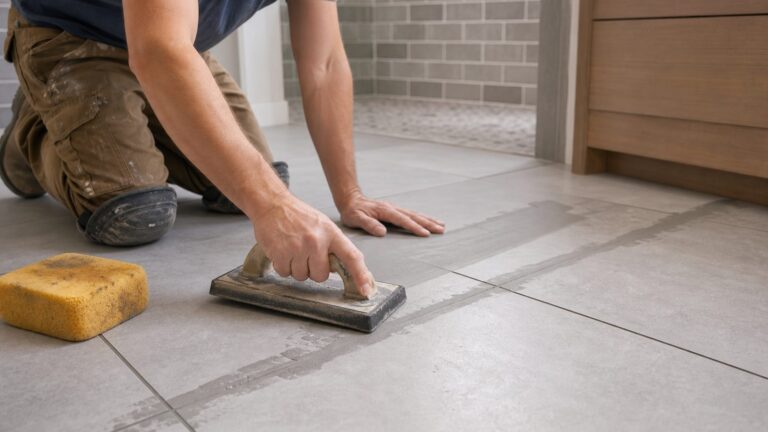
For a DIY countertop, tile is one of the more realistic options, but the prep work must be solid. A weak substrate, poor waterproofing, or sloppy edge detail will make the counter feel homemade in the worst way. For a main kitchen in a higher-value home, many homeowners eventually prefer slab or solid surface because of cleaning and resale expectations.
Do these 3 things before closing this tab:
1Fix the driver behind crashes, sound loss and screen glitches2Repair Windows errors before they cause bigger problems3Scan for outdated or missing drivers - takes under a minute10. Concrete Countertops
Concrete countertops are custom, heavy, and highly dependent on the craft of the installer. They can be cast in place or precast, colored with pigment, seeded with aggregate, shaped with drainboards, and finished in ways that feel very different from stone or quartz.
Concrete material can run about $50 to $100 per square foot or more for custom work. The final cost depends on thickness, reinforcement, formwork, pigments, aggregate, polishing, integral sinks, drainboards, sealers, installation logistics, and repair planning.
The main discussion should happen before the contract is signed: concrete can crack, chip, stain, and show variation. Some of that is part of the appeal. Some of it is a failure if expectations were not set correctly. The sealing system is critical because raw concrete is porous. Ask what sealer is used, how it handles heat, acids, oils, and abrasion, and how often it needs maintenance.
Concrete can also create support concerns. Thick slabs, long overhangs, and heavy islands need cabinet and bracket review before installation. We do not assume existing cabinets are ready for heavy counters until they are checked for level, fastening, support, and racking.
Windows Errors? Fix Them Before They Spread
Repair common Windows errors and clear accumulated junk for a smoother, more stable PC - no reinstall needed.Free scan · no reinstallCrashes, No Sound, or Screen Glitches?
Random freezes, missing sound and display glitches usually trace back to one bad driver. Find and replace yours safely.Free scan · under a minute11. Stainless Steel Countertops
Stainless steel is common in commercial kitchens for a reason. It handles heat, cleans easily, pairs well with integrated sinks and backsplashes, and gives serious cooks a tough work surface. In residential kitchens, it creates a professional look but not a pristine one.
Stainless steel material often runs about $60 to $100 per square foot. Cost varies by gauge, substrate, welded seams, integrated sinks, backsplash, edge profile, and custom fabrication. Long seamless runs and welded sink assemblies cost more than simple sections.
The performance is excellent, but the appearance changes quickly. Stainless shows fingerprints, water spots, and scratches. Over time, those scratches blend into a working patina. If the homeowner expects a refrigerator-door shine forever, stainless will disappoint. If they cook hard and care more about sanitation and heat than a perfect finish, it can be a smart choice.
We like stainless for prep zones, sculleries, outdoor-adjacent spaces, and kitchens where utility is the design language. It can also pair well with wood, quartz, or stone as a mixed-material counter strategy.
What’s actually slowing this PC down?
Pick the symptom - the matching free tool is one click away.
12. Recycled Glass and Paper Composite Countertops
Eco-focused countertop materials vary widely, so this category needs more homework than most. Recycled glass can be made as slabs or tile-like products, often with visible glass chips in a binder. Paper composite is typically made from paper fibers and resin, producing a dense, warm, matte surface.
Recycled glass can range about $10 to $135 per square foot depending on product type, recycled content, color, binder system, and installation method. Paper composite often runs about $45 to $70 per square foot. Specialty installer availability can affect price and lead time.
These materials can be good choices for homeowners who value recycled content, distinctive appearance, or a less conventional kitchen surface. But performance depends on the exact product. Some recycled glass products can chip. Some binders are more stain resistant than others. Paper composite can darken, patina, and require manufacturer-specific care.
Rank #4

- 【Diverse Design Options】Available in 6 different trivets for hot dishes, our trivets for hot dishes effortlessly complement any kitchen aesthetic while providing functional heat protection
- 【Effective Heat Resistance】Each hot pad for kitchen measures 7 inches in diameter, making them ideal hot pads for kitchen use, effectively blocking heat from pots, pans, bowls, and plates
- 【Durable Cotton Material】Crafted from pure cotton, these hot pads are designed to withstand everyday use, protecting your counters and tables from scratches, stains, and heat damage
- 【Easy Care & Store】Our trivets for hot pots and pans are hand washable or machine washable, ensuring a hassle-free cleanup so you can focus on cooking without worrying about messes. Meanwhile, the hanging hole design makes it easy to store
- 【Versatile Uses】Perfect for serving trivet, holding vases, or even as decorative pieces, these versatile hot pads enhance both functionality and style in your kitchen and dining area
Before choosing an eco-focused surface, read the warranty and care guide. Confirm whether the installer has worked with the product before, what edge profiles are allowed, how sink cutouts are reinforced, and whether hot cookware requires protection. Green material choices still need practical construction detailing.
How to Choose the Right Countertop for Your Kitchen
Start with how the kitchen will be used. A household that cooks twice a day, packs lunches, uses cast iron, and has kids doing homework at the island needs a different surface than a design-focused kitchen used mainly for entertaining.
For low maintenance, engineered quartz, solid surface, porcelain, and stainless steel are strong candidates. For heat resistance, granite, quartzite, porcelain, ceramic tile, concrete, and stainless steel perform better than quartz, laminate, wood, and solid surface. For scratch resistance, granite, quartzite, porcelain, and quartz are usually ahead of wood, laminate, marble, and solid surface. For repairability, solid surface and wood are forgiving because they can often be sanded or renewed.
Budget also filters the list quickly. Laminate and ceramic tile are the clearest budget choices. Solid surface and some quartz or granite selections often sit in the middle. Quartzite, marble, custom concrete, stainless steel, porcelain slabs, and recycled glass can move into premium territory depending on the project.
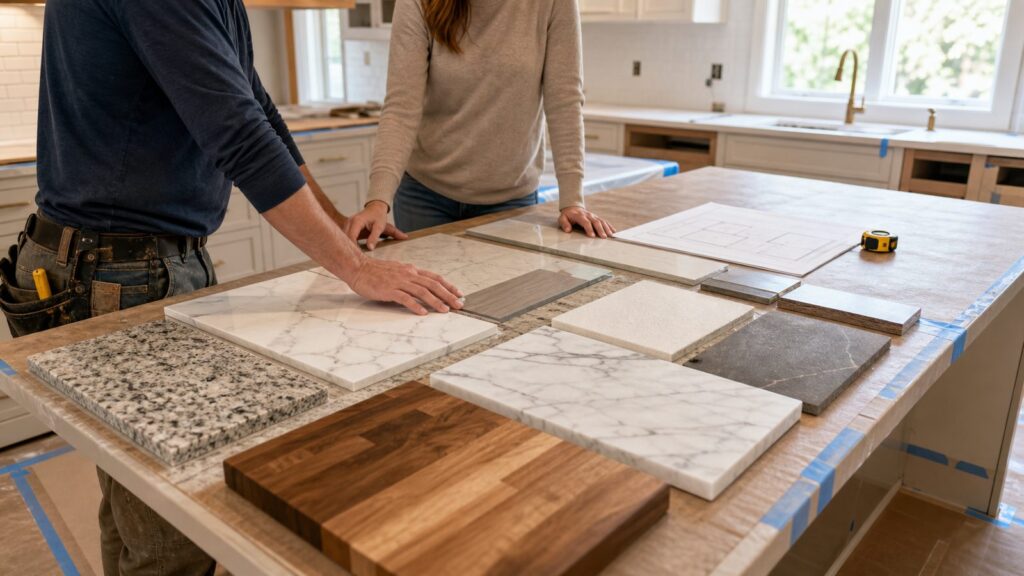
Visual expectations matter just as much. Some homeowners want a uniform surface with predictable color. Quartz, solid surface, laminate, and stainless can deliver that. Others want natural movement and one-of-a-kind slabs. Granite, quartzite, and marble are better for that, but they require slab approval and acceptance of variation.
Quick wins for a faster PC:
Repair Windows errors before they cause bigger problemsFix Now →Fix the driver behind crashes, sound loss and screen glitchesFind Drivers →Clear out junk files and repair common Windows errorsFree Scan →Installation Details That Affect Cost, Schedule, and Quality
Countertops are one of the last visible finishes installed, but the planning starts much earlier. A standard countertop sequence often includes cabinet installation, cabinet leveling, field templating, fabrication, delivery, setting, seam work, sink mounting, plumbing reconnection, appliance coordination, and backsplash work. Templating to installation commonly takes about 1 to 3 weeks, depending on material availability, fabricator workload, slab approval, and project complexity.
Cabinet Readiness and Support
Cabinets must be level, secure, and ready before templating. Stone, quartz, concrete, and large islands can reveal cabinet problems that were easy to miss earlier. Overhangs may need steel brackets or concealed supports, especially at seating areas. Heavy materials, thicker slabs, laminated edges, and waterfall panels should be reviewed before cabinets are ordered, not after.
Seams, Slab Yield, and Layout Approval
Seams are both a structural and visual issue. Long runs, large islands, L-shaped counters, and dramatic veining can require careful seam placement. Natural stone, quartzite, marble, and bold quartz patterns should go through slab-layout approval so the homeowner understands veining, bookmatching, waterfall-edge alignment, and where seams will fall.
Sink, Cooktop, Faucet, and Backsplash Coordination
Undermount sinks, apron-front sinks, cooktops, downdraft vents, pot fillers, soap dispensers, filtered-water faucets, and air switches all affect cutouts. Appliance and plumbing specifications should be final before templating. A change from a range to a cooktop, or from one sink model to another, can change fabrication details.
Crashes, No Sound, or Screen Glitches?
Random freezes, missing sound and display glitches usually trace back to one bad driver. Find and replace yours safely.Free scan · under a minutePC Slower Than It Used to Be?
A free scan shows the junk files, broken settings and background clutter dragging Windows down - then fixes them in one click.Free scan · Windows 10 & 11Electrical and Island Receptacles
Countertop planning should include electrical planning, especially at islands and peninsulas. Recent electrical code changes have affected how kitchen island receptacles are handled, including future power provisions and the use of pop-up or countertop-rated receptacles in some designs. The exact requirement depends on the adopted code in your jurisdiction and the local inspector’s interpretation.
Do not select island outlets after the slab is templated. Pop-up receptacles, grommet-style devices, and countertop-rated units may require precise cutouts. If the island will have a waterfall end, seating overhang, or slab backsplash, outlet location becomes even more important. We coordinate countertop, backsplash, and receptacle planning together so the finished kitchen is functional and code-conscious.
When to DIY and When to Hire a Pro
Some countertop work is reasonable for a skilled DIY homeowner. Other work belongs with a fabricator and remodel contractor because the risk of a bad measurement, cracked slab, unsafe dust, or failed support is too high.
DIY is most realistic for small laminate sections, butcher block in simple layouts, and ceramic tile counters where the homeowner has the tools and patience for substrate prep, waterproofing, layout, and edge work. Even then, sinks and plumbing reconnections may require licensed help depending on local rules and the homeowner’s skill.
Hire a pro for quartz, granite, quartzite, marble, porcelain slabs, concrete, stainless steel, recycled glass slabs, large islands, undermount sinks, cooktop cutouts, waterfall edges, slab backsplashes, and any project involving electrical changes. These jobs require accurate templating, controlled fabrication, proper handling, seam work, support planning, and safe dust management.
Permits are not always required for a simple countertop replacement, but they may be required when the remodel includes electrical, plumbing, structural changes, new circuits, island receptacles, appliance relocation, or changes to gas lines. In practice, many countertop projects are part of a larger kitchen remodel, so permit planning should happen before demolition.
Common Countertop Mistakes to Avoid
The first mistake is shopping by square-foot price alone. A material quote that excludes tear-out, disposal, cutouts, edge profiles, seams, plumbing, electrical, backsplash coordination, and support work is not the project cost. Ask for a written scope that separates material, fabrication, installation, removal, reconnections, and allowances.
The second mistake is choosing the slab before the layout is final. Countertop dimensions depend on finished cabinets, appliance specs, sink model, faucet holes, overhangs, and wall conditions. Early inspiration is fine. Final purchase decisions should be coordinated with the actual remodel plan.
Best Value
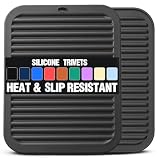
- 【HIGH QUALTIY】100% Made of Food Grade Silicone, BPA Free, Low Carbon and Environmentally Friendly Non-toxic, lead free Odourless. Silicone trivets flexible as well, that allows the trivets to act as potholders, among other uses.
- 【SUITABLE DIMENSIONS】Silicone pot holders size: 12*9 inches,very flexible,great to grab,tensile property is good and the service life is long. Honeycomb designed silicone hot pads takes over the water and with great texture prevent water droplets from counter and anti-slip and also easy to dry by squeezing out or shaking.
- 【MULTI FUNCTIONAL】Our big size trivet is Non-slip, flexible and soft enough to comfortably grab a hot dish or pan, open the can, drying mat or placemat. Fold up the trivet is perfect for use in an oven, microwave, or freezer, protect your hands from hot and cold.
- 【EASY TO CLEAN UP AND EASY TO STORE】The pot mat can hand-wash or toss it in the dishwasher. Virtually everything washes off the nonstick surface with ease, dry quickly. Roll up or hang on hook, save space.
- 【Multi-Purpose Trivets】Our silicone tripod is non-slip and flexible, making it an indispensable cooking accessory in the kitchen.It can be used as silicone mats, potholders, drying mat, jar opener, spoon holder, coaster, microwave Mat…one pad can help you solve many tasks.
The third mistake is ignoring maintenance. Marble, concrete, wood, granite, quartzite, recycled glass, and paper composite all need different care conversations. The estimate should include sealing, oiling, refinishing, repair expectations, and what the surface may look like after 5 to 10 years of use.
The fourth mistake is skipping slab layout approval. This is especially risky with natural stone, quartzite, marble, and dramatic quartz patterns. Once the slab is cut, a vein running through the sink rail or a poorly aligned waterfall edge is not easy to fix.
The fifth mistake is treating outlets and backsplashes as separate decisions. Receptacles, slab backsplashes, tile layout, under-cabinet lighting, and countertop cutouts interact. Coordinate them before templating.
Best Countertop Picks by Homeowner Priority
For the lowest budget, start with laminate or ceramic tile. For a budget-conscious but more polished kitchen, compare laminate with solid surface and entry-level granite or quartz.
Recommended Free Tools
For families and heavy daily use, engineered quartz, granite, porcelain, and solid surface are usually the most practical short list. Quartz is low maintenance, granite handles heat well, porcelain is heat and stain resistant, and solid surface is repairable.
For serious cooks, consider stainless steel, granite, quartzite, or porcelain. If cast iron pans, hot sheet trays, and heavy prep are part of the routine, be cautious with laminate, quartz, wood, and solid surface unless everyone will use trivets consistently.
For high-design kitchens, marble, quartzite, dramatic quartz, porcelain slabs, and custom concrete can all work. The deciding factor is tolerance for maintenance and patina. Marble and concrete are not for homeowners who expect every mark to disappear.
For eco-focused remodels, recycled glass and paper composite deserve a look, but they should be evaluated by exact product, not category. Ask for maintenance documents, warranty terms, installer experience, and sample performance under real kitchen use.
Bottom Line
The best kitchen countertop material in 2026 is the one that fits your use, budget, maintenance tolerance, and remodel details. Most homeowners should begin with four practical questions: How hard do we cook? How much maintenance will we actually do? Do we want a perfect-looking surface or a living patina? Are our cabinets, appliances, sink, backsplash, and electrical plan ready for templating?
For many remodels, quartz, granite, solid surface, and porcelain provide the strongest balance of performance and practicality. Laminate and ceramic tile still solve real budget problems. Marble, quartzite, concrete, stainless steel, wood, and recycled materials can be excellent when the homeowner understands the tradeoffs.
A good countertop decision is not made from a showroom sample alone. It is made by matching the material to the construction plan, approving the layout before fabrication, and hiring installers who understand support, cutouts, seams, safety, and code coordination.
Frequently Asked Questions
What is the best countertop material for a kitchen remodel in 2026?
For most busy households, engineered quartz, granite, porcelain, and solid surface are the safest short list. Quartz is low maintenance, granite handles heat well, porcelain resists heat and stains, and solid surface is repairable. The best choice depends on cooking habits, budget, visual preference, and maintenance tolerance.
How much do new kitchen countertops cost in 2026?
Many U.S. countertop projects average around $3,145 total, with a common range of about $1,852 to $4,464. Installed pricing often falls around $40 to $150 per square foot, but premium slabs, waterfall edges, slab backsplashes, multiple cutouts, and complex islands can push costs much higher.
Which countertop material is lowest maintenance?
Engineered quartz is one of the lowest-maintenance options because it does not need sealing and resists stains well. Solid surface and porcelain are also low-maintenance choices. Natural stone, concrete, wood, marble, and some recycled materials require more care.
What countertop is best for heat resistance?
Stainless steel, porcelain, granite, quartzite, ceramic tile, and concrete generally handle heat better than laminate, wood, solid surface, and engineered quartz. Even with heat-resistant materials, using trivets is still a good habit because sealers, finishes, adhesives, and edge details can be affected by heat.
Can I install kitchen countertops myself?
DIY installation is most realistic for small laminate sections, simple butcher block, and ceramic tile if the substrate and layout are straightforward. Hire a pro for quartz, granite, quartzite, marble, porcelain slabs, stainless steel, concrete, undermount sinks, cooktop cutouts, waterfall edges, and any electrical or plumbing coordination.
The Tool Desk
Outbyte Driver Updater FREEScan for outdated or missing drivers - takes under a minuteDriver Scan →Outbyte PC Repair FREERepair Windows errors before they cause bigger problemsFix Now →When should countertops be selected during a kitchen remodel?
Choose the general material early for budgeting, but finalize the countertop after cabinet layout, appliances, sink, faucet, backsplash plan, overhangs, and island electrical strategy are known. Final templating should happen only after cabinets are installed, level, and ready.
Quick Recap
Product prices and availability are accurate as of the date/time indicated and are subject to change. Any price and availability information displayed on Amazon at the time of purchase will apply.