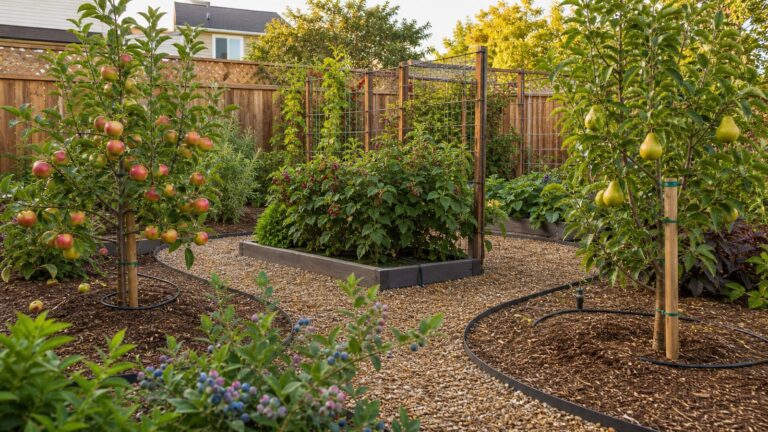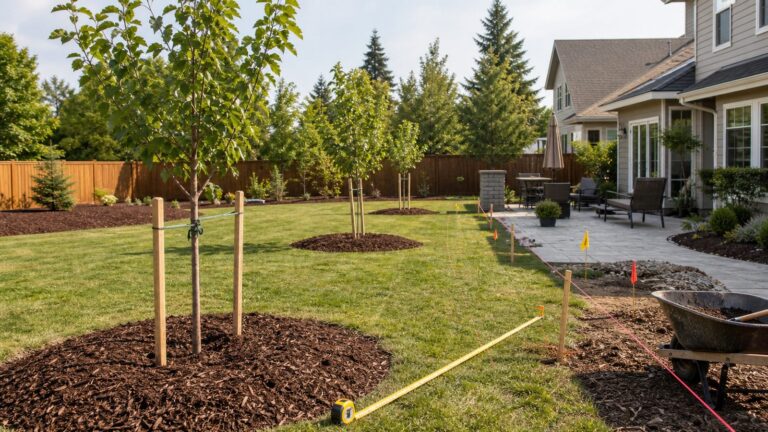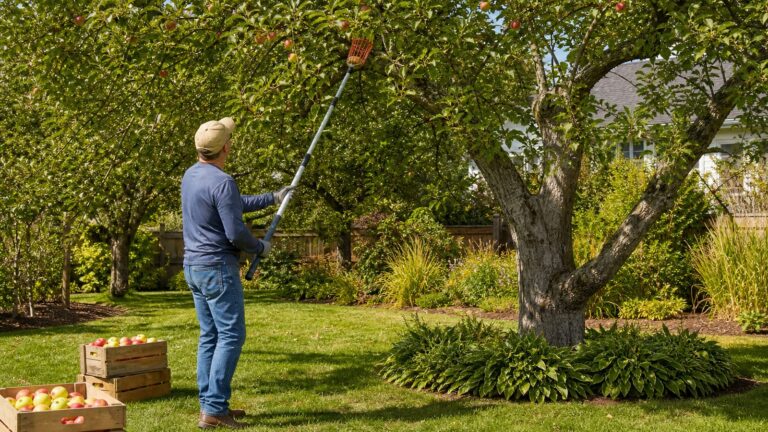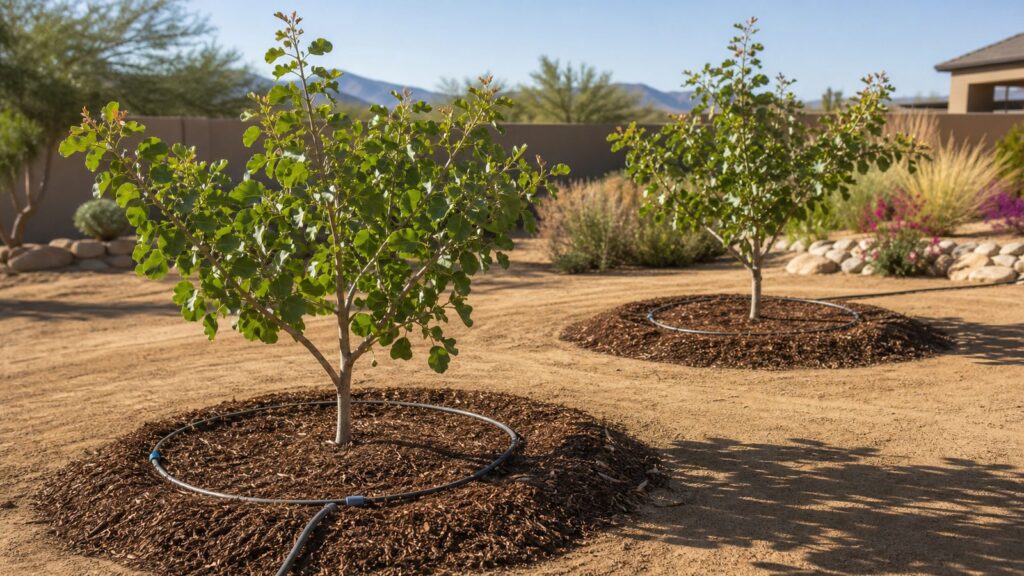
Pistachio trees are not a casual backyard fruit tree. They can be excellent in the right site, especially in hot, dry parts of the western and southwestern United States, but they are frustrating in the wrong yard. Before you buy a tree, the real question is not just how to plant a pistachio tree. It is whether your property can support one long enough to make the planting worth it.
The short answer: pistachios need full sun, hot dry summers, cool winters, excellent drainage, low humidity, steady irrigation, and both male and female trees for nut production. A single female tree usually will not produce pistachios unless a compatible male pollenizer is close enough and well placed for wind pollination. In practical homeowner terms, plan for at least two trees, 20 to 30 feet of mature canopy space per tree, and several years before meaningful harvests.
| # | Preview | Product | Price | |
|---|---|---|---|---|
| 1 |

|
10 Pistachio Nut Tree Seeds for Planting - Pistacia Vera | $10.49 | Buy on Amazon |
| 2 |

|
Pistachios Tree 5 Pcs Seeds for Home Garden | $4.00 | Buy on Amazon |
| 3 |

|
5 Pistachio Nut Tree Seeds for Planting - Pistacia Vera | $10.49 | Buy on Amazon |
| 4 |

|
6 Pistachio Nut Tree Seeds for Planting - Pistacia Vera | $10.49 | Buy on Amazon |
On construction and landscape preparation jobs, we see the same pattern with specialty trees: planting technique matters, but site conditions matter more. A perfectly planted pistachio in wet clay, a humid Southeast yard, or a shaded side yard is still a poor bet. A properly matched site in inland California, Arizona, New Mexico, parts of west Texas, or a similar arid Zone 7 to 10 microclimate has a much better chance.
First, Decide Whether a Pistachio Tree Belongs in Your Yard
Use this climate and site checklist before shopping for trees. If your yard fails more than one of these points, treat pistachio as an experiment, not a dependable food crop.
What’s actually slowing this PC down?
Pick the symptom - the matching free tool is one click away.
#1 Best Overall
- Sun: Minimum 6 to 8 hours of direct sun daily. Full, all-day sun is better.
- Summer heat: Pistachios need long, hot summers for nut fill. Mild coastal summers often underperform.
- Winter chill: Many pistachio types need substantial winter dormancy. New Mexico State University guidance cites about 1,000 hours at 45 degrees F or below for normal spring growth, while some male pollenizers are listed around 800 chill hours.
- Humidity: Low humidity is strongly preferred. Persistently humid regions increase disease pressure and reduce reliability.
- Drainage: Deep loam or sandy loam is ideal. Wet clay and poorly drained lawn areas are bad sites.
- Space: A mature pistachio can commonly reach 20 to 30 feet tall and wide, depending on cultivar and pruning.
- Pollination: You need a female tree and a compatible male tree, or a reliable grafted pollination arrangement.
- Water: Pistachios survive drought better than many fruit trees, but productive trees are not low-water crops.
Do not rely on USDA hardiness zone alone. The USDA map tells you the average annual extreme minimum temperature. It does not tell you whether your summers are hot enough, your winters provide enough chill, your spring is dry enough for pollination, or your soil drains well. A Zone 8 yard in dry inland New Mexico is a different proposition from a Zone 8 yard in the humid Southeast.
Best U.S. Regions for Backyard Pistachios
The strongest backyard candidates are hot, dry-summer regions with cool winters. That includes California’s Central Valley, parts of Arizona, New Mexico, far west Texas, and similar arid or semi-arid microclimates. These are the same broad conditions that explain why U.S. pistachio production is so concentrated in California.
Marginal areas can still grow a pistachio tree as a landscape specimen. The issue is nut production. In cooler summer areas, the tree may live but fail to fill nuts well. In warm winter areas, it may not receive enough chill to leaf out and bloom normally. In wet regions, fungal disease, poor pollination weather, and harvest quality problems become much more likely.
When Not to Plant Pistachios
Skip pistachios, or at least lower your expectations, if your planting site has any of these conditions:
Crashes, No Sound, or Screen Glitches?
Random freezes, missing sound and display glitches usually trace back to one bad driver. Find and replace yours safely.Free scan · under a minutePC Slower Than It Used to Be?
A free scan shows the junk files, broken settings and background clutter dragging Windows down - then fixes them in one click.Free scan · Windows 10 & 11- Heavy clay that stays wet after irrigation or rain
- A low spot where cold air settles during spring bloom
- High humidity through spring and summer
- Frequent rain near bloom or harvest
- Less than 6 hours of direct sun
- No room for both a male and female tree
- A small patio where the tree must stay in a container permanently
- Severe winter lows beyond the tolerance of the selected variety
- High-elevation sites with cool summers
From a builder’s perspective, the drainage problem is the one homeowners underestimate most. New construction lots often have compacted subsoil, buried construction debris, and grade changes that move water in unexpected ways. If water collects in the proposed planting zone, fix the drainage before planting the tree.
Male and Female Pistachio Trees: You Usually Need Both
Pistachios are dioecious, meaning male and female flowers grow on separate trees. Female trees produce the nuts, but they need pollen from a male tree. A lone female pistachio tree may look healthy for years and still produce little or nothing.
A common backyard pairing is a female ‘Kerman‘ with a male ‘Peters‘ or another compatible male such as ‘Famosa.’ In larger plantings, commercial-style guidance commonly uses about 1 male tree for every 8 to 10 female trees. For a homeowner with room for only two trees, plant one female and one male.
Placement matters because pistachios are wind pollinated. If you know your prevailing spring wind direction, place the male upwind of the female where possible. Do not tuck the male behind a solid fence, garage, dense hedge, or courtyard wall and expect ideal pollen movement.
Also be careful with seed-grown pistachios. Seedlings may be male or female, may take years to reveal their sex, and may not produce the nut quality you expect. For a backyard orchard, buy named, grafted trees from a reputable nursery and confirm which tree is male and which is female before planting.
How Much It Costs to Plant a Pistachio Tree in 2026
For a serious backyard nut setup, budget for two trees, not one. The lowest DIY cost is usually the tree itself plus mulch and basic irrigation parts. The higher cost comes from correcting the site: drainage, soil compaction, gopher protection, deer fencing, drip irrigation, or working around hardscape.
| Project Type | Typical 2026 Cost | What It Usually Includes |
|---|---|---|
| One young pistachio tree, DIY | $90 to $250 | Tree, mulch, basic amendments, stakes or trunk guard if needed |
| Minimum fruiting setup, DIY male/female pair | $200 to $600 | Two trees, shipping, mulch, compost if used, stakes, trunk protection, simple drip parts |
| Professionally planted young trees with irrigation | $600 to $1,500+ | Tree handling, planting labor, basic irrigation setup, site prep, hauling, warranty depending on contractor |
| Semi-mature tree professionally planted | $540 to $680 per tree typical national range | Larger nursery stock, delivery, labor, equipment depending on access |
| Large specimen or difficult site | $1,500 to $5,000+ | Large tree, equipment access, hard soil, grading, drainage, hardscape conflicts, crane or loader work |
Mail-order and specialty nursery pistachio trees commonly range from roughly $30 to $100+ each depending on size, cultivar, grafting, and availability. A male ‘Peters’ pistachio may be listed around $29.95 to $79.95, while grafted Kerman/Peters-type trees often land closer to $60 to $100+ before shipping.
Do not spend the whole budget on the biggest tree you can buy. A smaller, healthy, grafted tree planted correctly into prepared soil with reliable drip irrigation often establishes better than an expensive tree dropped into a compacted, poorly drained lawn corner.
Do these 3 things before closing this tab:
1Fix the driver behind crashes, sound loss and screen glitches2Clear out junk files and repair common Windows errors3Scan for outdated or missing drivers - takes under a minutePermits, Utilities, and Site Safety Before You Dig
Before digging, call 811 or submit a locate request through your state 811 system. This is not just for major construction. Tree planting holes, auger work, trenching for drip irrigation, and fence-post-style staking can all conflict with buried utilities. In many areas, the locate request must be made several business days before excavation.
Public utility locating typically marks utility-owned lines, but it may not locate private lines. Private gas lines to outdoor kitchens, electrical runs to sheds, irrigation mains, low-voltage lighting, pool lines, and drainage pipe may be the homeowner’s responsibility. On job sites, we do not assume a clear yard is clear underground just because turf looks undisturbed.
Also check HOA rules, easements, and local setback requirements. A pistachio tree that reaches 20 to 30 feet wide should not be planted tight to a house foundation, driveway, sewer lateral, retaining wall, property line, or overhead service line. Give the canopy and root zone room to mature without becoming a conflict.
Rank #2
- The Pistachio Tree is the source of the incredibly popular edible Pistachio Nut.
- Pistacia Vera is native to parts of Asia & the Middle East, but is now grown commercially in many parts of the world
- The trees are slow growing, & typically only reach 20' at most in cultivation
Choosing the Right Planting Site
A good pistachio site is sunny, open, well drained, and easy to irrigate. Look for the warmest full-sun part of the property that still has practical water access. Avoid frost pockets at the bottom of slopes and areas where downspouts or surface drainage collect.
Free tools Windows power users keep installed
One-click scans. No signup required.
For soil, aim for deep, uniform loam or sandy loam. Pistachios can tolerate some difficult soil conditions, but standing water around the root zone is a major problem. If you are dealing with heavy clay, do a drainage check before planting. Dig a test hole about 12 inches wide and 12 inches deep, fill it with water, let it drain once, then fill it again. If the second fill still has standing water many hours later or the next day, that location needs drainage correction or a different tree.
Spacing depends on your goal and pruning plan, but a practical backyard spacing is often 20 feet or more between pistachio trees and away from structures. Commercial orchards may use designed spacing systems, but homeowners need clearance for access, pruning, harvest, and airflow.
When to Plant a Pistachio Tree
Plant while the tree is dormant or under the least heat stress your local climate allows. In colder-winter regions, early spring is usually the safest window after the ground is workable and before active growth is far along. In mild desert or Mediterranean climates, follow local extension or nursery guidance for the best planting window, avoiding the hottest part of summer and hard freeze risk.
Bare-root trees should be planted promptly during dormancy. Container trees offer more flexibility, but they still establish best when planted before intense summer heat. If you buy a container pistachio in late spring, be prepared to water carefully through the first hot season.
How to Plant a Pistachio Tree Step by Step
1. Lay Out the Male and Female Trees
Mark the planting locations before digging. For a two-tree setup, place the male where spring wind can move pollen toward the female. Keep both trees in full sun. Confirm mature clearances from buildings, fences, utility lines, patios, and neighboring trees.
2. Dig a Wide, Shallow Hole
Dig the planting hole two to three times as wide as the root ball, but no deeper than the root ball height. The goal is loosened side soil for root expansion, not a deep sump that settles and buries the trunk. The root flare should end up at or slightly above surrounding grade.
3. Inspect the Roots
For container trees, slide the tree out and check for circling roots. Loosen or correct circling roots before planting. For bare-root trees, keep roots damp before planting and trim only broken or damaged roots. Do not leave roots exposed to sun and wind while you work.
4. Set the Tree at the Correct Height
Place the tree so the root flare is visible at grade or slightly above grade. This is one of the most common planting mistakes we see across all tree types. If the trunk enters the soil like a telephone pole, it is probably planted too deep.
5. Backfill Mostly With Native Soil
Backfill with the soil you removed, breaking up large clods. A small amount of compost can be blended into poor soil, but do not create a soft amended bathtub surrounded by hard native soil. The tree needs to root into the actual site soil.
6. Water In Thoroughly
Water slowly to settle soil around the roots and remove air pockets. Add soil where settling creates low spots, but keep the root flare exposed. Do not compact the backfill aggressively with your boot.
7. Mulch the Root Zone
Apply a broad mulch ring 2 to 4 inches deep, ideally extending several feet from the trunk. Keep mulch 3 to 6 inches away from the trunk itself. Mulch helps moderate soil temperature and reduce weed competition, but mulch piled against bark invites rot and pest problems.
8. Stake Only If Needed
Stake if the tree is unstable, exposed to strong wind, or has a small root ball compared with its canopy. Use two flexible ties and remove or adjust them as the tree establishes. A tree that can move slightly develops better trunk strength than one strapped rigidly for years.
The Tool Desk
Outbyte Driver Updater FREEFix the driver behind crashes, sound loss and screen glitchesFind Drivers →Outbyte PC Repair FREERepair Windows errors before they cause bigger problemsFix Now →Watering Pistachio Trees Without Drowning Them
Use drip irrigation rather than overhead lawn sprinklers. Pistachios prefer dry air and controlled root-zone watering. Overhead watering can increase humidity around the canopy, waste water, and encourage disease.
Young trees need consistent moisture while roots expand. That does not mean daily shallow watering in all soils. Sandy soil dries quickly and may need more frequent irrigation. Loam holds water longer. Clay may stay wet too long and needs longer intervals. Water deeply, then let the upper soil begin to dry before watering again.
For mature productive pistachios, the water requirement can be substantial. University orchard guidance reports mature pistachios may use about 30 to 50 inches of water per season depending on soil, salinity, irrigation system, and management. In the southern San Joaquin Valley, seasonal use around 46 inches is commonly cited. A backyard tree may not be managed like a commercial orchard, but this gives homeowners the right expectation: pistachios are drought-tolerant for survival, not low-water for heavy nut production.
Keep turf irrigation separate from the pistachio zone if possible. Lawn sprinklers often water too shallowly and too frequently for trees, while also wetting the trunk. A dedicated drip ring or multiple emitters that expand outward as the canopy grows is a better setup.
Fertilizing and Soil Management
Do not fertilize aggressively at planting. A newly planted pistachio needs root establishment more than a heavy nitrogen push. If growth is weak after establishment, base fertilizer decisions on soil conditions, tree vigor, and local extension guidance.
For productive trees, soil testing and plant tissue testing are more reliable than guessing. Potassium management, in particular, is best guided by both soil and tissue information because nut trees can remove significant nutrients over time. If you are trying to grow pistachios for actual harvest, plan on testing rather than relying on generic fruit-tree fertilizer once a year.
Keep weeds and turf from competing directly at the trunk. A weed-free mulched area under the canopy helps young trees establish. Avoid piling fresh compost, manure, or high-salt amendments in the planting hole. Pistachios can handle some tough conditions, but young roots are still vulnerable to salt, poor drainage, and fertilizer burn.
Pruning and Training a Young Pistachio
Train pistachio structure over time. At planting, remove broken, dead, or badly crossing branches, but avoid severe heading cuts unless directed by the nursery or a local orchard specialist for that specific tree form. The goal is a strong framework that can carry future crops and remain accessible for pruning and harvest.
Recommended Free Tools
As the tree grows, maintain good airflow and a manageable canopy. Remove dead wood, damaged limbs, inward-growing branches, and suckers from below the graft. Make clean cuts with sharp tools. Avoid stripping the interior so aggressively that limbs are exposed to sunburn in hot climates.
For backyard trees, height control matters. A 25-foot tree may sound fine at planting, but harvesting and pruning become harder as the canopy climbs. Start shaping early so the tree remains serviceable from the ground or a short orchard ladder.
How Long Until You Harvest Pistachios?
Patience is part of the crop. Grafted nursery trees may produce earlier than seedlings, but meaningful harvests often take several years. Full commercial-style production can take more than a decade. A tree that looks healthy at year three may still be young from a pistachio production standpoint.
Backyard harvest generally comes in late summer to fall when hulls loosen or split and shells are filled. Harvest promptly when nuts are ready. Pistachios should be hulled and dried quickly to protect quality and reduce mold risk. Do not leave harvested nuts sitting wet in buckets or bags.
Quick wins for a faster PC:
Fix the driver behind crashes, sound loss and screen glitchesFind Drivers →Repair Windows errors before they cause bigger problemsFix Now →Scan for outdated or missing drivers - takes under a minuteDriver Scan →Also plan for alternate bearing. Pistachios naturally tend to have heavier and lighter crop years. A lighter year after a heavy crop does not automatically mean the tree is failing. Pollination weather, winter chill, irrigation, nutrition, pruning, and tree age all affect production.
Independent reader supportYour contribution helps us test, update, and keep practical guides available for everyone.Why a Pistachio Tree Fails to Produce Nuts
The most common reason is simple: no compatible male pollenizer. A healthy female pistachio without male pollen is not a productive nut tree. If you planted a seedling and do not know its sex, that uncertainty may not be resolved until the tree matures enough to flower.
Other common causes include insufficient winter chill, cool summers, humid weather, poor bloom timing between male and female varieties, frost damage, drought stress during nut fill, too much water in heavy soil, or a tree that is still too young. Over-pruning can also reduce fruiting wood, while neglected pruning can create a dense canopy with poor light and airflow.
If the tree grows poorly, look below ground first. Compacted soil, buried root flare, girdling roots, damaged irrigation, gopher activity, and poor drainage can all show up as weak canopy growth. On many residential sites, the visible tree problem starts with the invisible site preparation problem.
Free tools Windows power users keep installed
One-click scans. No signup required.
Can You Grow Pistachios in Pots?
You can grow a young pistachio in a large container for a while, but a pot is not a good long-term plan for serious nut production. Pistachios are trees with substantial root systems and mature canopy size. Container culture makes moisture swings, heat stress, root restriction, and long-term nutrition harder to manage.
If you want to experiment, use a large container with excellent drainage, a gritty well-drained mix, full sun, and careful irrigation. You still need a male pollen source for nuts. For most homeowners, a potted pistachio is better treated as a temporary nursery stage or ornamental experiment, not a dependable patio crop.
When to DIY vs. When to Hire a Pro
DIY planting makes sense when you are using young trees, the site is easy to access, the soil drains well, utilities are marked, and you can install a simple drip line. A capable homeowner can plant a two-tree pistachio setup over a weekend with basic tools: shovel, hose, mulch, stakes if needed, emitters or drip tubing, and trunk protection.
Hire a professional when the tree is large, access is tight, soil is compacted, drainage is questionable, irrigation needs trenching, or the planting location is near hardscape or utilities. Professional help is also worth considering when you are trying to integrate trees into a larger landscape renovation, retaining wall project, patio build, or drainage correction plan.
The cost difference is real. A DIY male/female start may run $200 to $600. Professionally planted young trees with irrigation often land around $600 to $1,500 or more. Large specimen trees, grading work, hardscape conflicts, or equipment needs can push the project into several thousand dollars. The value of hiring is not just digging the hole. It is getting grade, drainage, access, irrigation, and long-term clearance right before the tree becomes expensive to move.
Common Mistakes to Avoid
- Planting one tree and expecting nuts: You generally need both a male and female pistachio.
- Buying unknown seedlings: You may wait years to learn the sex, bloom timing, and nut quality are wrong for your goal.
- Trusting USDA zone alone: Zone does not measure summer heat, winter chill, humidity, rainfall timing, or drainage.
- Using lawn sprinklers as the main irrigation: Pistachios need deep, controlled watering, not frequent shallow turf watering.
- Planting too deep: Keep the root flare at or slightly above grade.
- Ignoring drainage: Wet roots can ruin an otherwise good planting.
- Placing the male tree poorly: Wind pollination works best when the male has clear exposure to spring winds.
- Expecting quick harvests: Pistachios are a long-term tree crop, not a two-year payoff.
Bottom Line
A pistachio tree is worth planting only when the site is right. If you have hot dry summers, cool winters, full sun, excellent drainage, enough room for a male and female tree, and a way to irrigate deeply, pistachios can be a rewarding long-term backyard orchard project. If you have wet clay, humid summers, limited space, or no pollenizer, choose a different tree.
Approach the project like a small construction job: verify the site, locate utilities, solve drainage first, choose the right materials, and install irrigation that matches the plant. The tree is only one line item. The real investment is building the conditions that let it live long enough to produce.
Frequently Asked Questions
Can you grow a pistachio tree in your backyard?
Yes, if your backyard has hot dry summers, cool winters, full sun, excellent drainage, and room for both male and female trees. Pistachios are best suited to arid and semi-arid regions such as California’s Central Valley, Arizona, New Mexico, and parts of west Texas.
The Tool Desk
Outbyte Driver Updater FREEScan for outdated or missing drivers - takes under a minuteDriver Scan →Outbyte PC Repair FREEClear out junk files and repair common Windows errorsFree Scan →Do you need male and female pistachio trees to get nuts?
Usually, yes. Pistachios are dioecious, so male and female flowers grow on separate trees. A female tree generally needs pollen from a compatible male tree, such as a ‘Peters’ male paired with a ‘Kerman’ female.
How long does it take a pistachio tree to produce nuts?
Grafted nursery trees may begin producing earlier than seedlings, but meaningful harvests often take several years. Full commercial-style production can take more than a decade, and crop size may alternate between heavier and lighter years.
How much does it cost to plant a pistachio tree in 2026?
A single young tree planted DIY often costs about $90 to $250. Because nut production usually requires a male and female pair, a realistic DIY backyard start is about $200 to $600. Professionally planted young trees with irrigation commonly run $600 to $1,500 or more.
How much water does a pistachio tree need?
Young trees need consistent deep watering while they establish. Mature productive pistachios can use about 30 to 50 inches of water per season depending on soil, climate, salinity, irrigation system, and management. They tolerate drought for survival better than they tolerate drought for heavy nut production.
Why is my pistachio tree not producing nuts?
The most common reasons are no compatible male pollenizer, insufficient winter chill, cool summers, humid or rainy bloom weather, frost damage, drought stress, poor drainage, or simple tree immaturity. A healthy-looking young pistachio may still need years before reliable production.
Quick Recap
Product prices and availability are accurate as of the date/time indicated and are subject to change. Any price and availability information displayed on Amazon at the time of purchase will apply.