Choose plants by the light they will actually receive where they grow—not by how sunny the yard looks at a glance. Track direct-sun hours at the planting spot, note when trees or buildings filter or block the light, and match that pattern to the plant’s needs. Terms such as “full sun” and “partial shade” are useful planning guides, not guarantees that mean exactly the same thing for every plant, region, and season.
What do full sun, partial shade, direct light, and diffused light mean?
These terms describe different aspects of a site’s exposure. “Direct” and “diffused” describe how light reaches a plant; “full sun,” “partial shade,” and “shade” are broader horticultural labels used to match plants with growing conditions.
- Direct sunlight reaches a plant without being filtered by a canopy or another obstruction. When a recommendation specifies hours of direct sun, count only the time the plant receives this unobstructed exposure.
- Diffused, filtered, or dappled light has been scattered or partly blocked before reaching the plant—for example, light passing through tree leaves. A partially shaded site may still receive direct sun for part of the day.
- Full sun, partial shade, and shade are practical labels, but their precise meaning depends on the plant and the guidance being used. University of Minnesota Extension, for example, describes light or partial shade as 3–6 hours of sunlight and full shade as less than three hours in its regional shade guidance. Those ranges should not be treated as universal definitions.
Exposure duration is only part of the picture. The time of day, season, climate, nearby structures, and the plant’s own requirements all affect whether a location is suitable.
How many hours of sun does my plant need?
Start with the plant’s specific recommendation, then compare it with the direct-sun hours at its intended location. University of Minnesota Extension recommends 6–8 hours of sunlight each day for raised beds growing full-sun crops such as tomatoes, peppers, and eggplants. It also says most culinary herbs need at least six hours of direct sunlight daily for best growth. These are regional extension recommendations, not a promise that every variety will perform identically in every climate.
Recommended Free Tools
#1 Best Overall
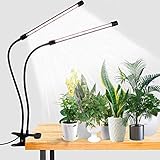
- 6000K White Light - equipped with 10 Red + 74 White LEDs, this growing Lamp is similar to the full-spectrum sunlight at noon,that is professionally designed for indoor garden plants.Moreover, its color rendering index is as high as 95, the light is soft and flicker-free, which is very suitable for reading lamp
- Timer Function & Multiple Settings - this plant spotlight offer the timer function with 3 options that is 4Hrs or 8Hrs or 12Hrs, it is based on a 24 hour cycle from the time you set the timer.For example,when keeping power ON, if you select 8 Hrs,it will turns ON for 8 hours per 24 hours.The other two timer settings are the same.
- Easy to Install - with flexible Gooseneck & strong clamp,it allows you to place the growth light in any direction to provide the best lighting angle for your plants,meet the cover around the plant.Powered by USB or AC Power Plug
- High Efficiency LED Lamp - as for LED power draw this seedling lights just comsume about 10 w and is equivalent to a 50 watts Halogen Bulb.Estimately monthly cost roughly $2 in electricity (12 hours a day). It is a great gift if you growing some small house plants.
- 【365 Days Warrantty】GooingTop service team offer 365 days warrantty and 24h friendly customer service. If there are ever any issues about the product, please feel fre e to contac t us and we will send you a new replacement.
For a shadier raised bed, options may still be available. University of Minnesota Extension lists lettuce, baby kale, scallions, microgreens, radishes, and beet greens for beds that receive less than a few hours of sunlight or are in part to full shade. Check the needs of the particular crop or variety before planting.
How to assess sunlight at a planting site
- Observe the exact spot. Track light where the leaves will be, not several feet away or in another part of the yard. A nearby wall, fence, roof overhang, tree, or building can alter exposure.
- Check at several times of day. Note when direct sun reaches the location and when the light is filtered or blocked. A single midday check may miss morning or afternoon shade.
- Revisit the site as seasons change. Trees leaf out, sun angles shift, and shadows move over the growing season. A location’s spring exposure may not match its summer pattern.
- Compare candidate spots over time. A garden sunlight meter can be an optional aid when comparing locations, but it is not a substitute for observing the quality and duration of light through the day and season.
- Match the pattern to the plant. Compare direct-sun hours, filtered light, time of day, seasonal stability, and the plant’s stated needs. Brightness alone does not tell you how long the site receives sun or how much heat accompanies it.
Indoor light is not the same as outdoor sun hours
For houseplants and seedlings, usable light depends on window direction, distance from the window, obstructions, and any supplemental lighting. University of Minnesota Extension groups indoor conditions into low, medium, and high ranges; its guidance also gives supplemental-light recommendations. These indoor categories and lighting measurements should not be converted directly into outdoor labels such as “six hours of sun.”
Rank #2

- 【Grow Lights for Indoor Plants】LBW grow light is tailored to meet the unique needs of plant lovers, this light offers 6/8/12/16H auto timer settings and 5 adjustable brightness levels for optimal growth. Its unique design, easy assembly, and space-saving base make it a perfect fit for any home decor, is perfect for various indoor plants, including succulents, herbs, and orchids etc. NOTE: The product stand needs to be pressed down by the flower pot to be stable
- 【Full Spectrum & 3 Light Colors】With three light color options "white light, warm light and full spectrum", this grow lights for indoor plants full spectrum emits wavelengths ranging from 380nm to 800nm to cater to all plants,can adapt to different growth stages of plants while ensuring comfortable viewing for your eyes
- 【4 Timer Modes & 5 Brightness Levels】Our grow light is equipped with a timer function, set it to run for 6/8/12/16 hours , ensuring hassle-free care for your plants even when you're away. In addtion, the plant light offers 5 adjustable brightness levels (20%-40%-60%-80%-100%). Even the lowest brightness level can replenish enough light energy for plants, meets each plant's lighting requirements at different stages, without worrying about burning your plant.
- 【Adjustable Height & Easy to Use】The pole of our grow lights can telescope up and down from 7.8" to 26" to accommodate different plants, providing optimal lighting for your plants. With a 78 inch long cord, you’ll have the flexibility to place it anywhere near a power outlet with ease.There are 2 installation methods: specially designed for indoor plants, it can be inserted in the soil or used with the stand for flexible lighting. Unique, easy to assemble and disassemble.
- 【Widely Used & Perfect Customer Service】This plant halo grow light also stylish decoration for any home space, especially perfect for small indoor plants. In addition to the multiple use of our product, we take pride in providing exceptional customer service: 12 months servicing plus 30 days satisfaction or return policy. Please tell us firstly, if you encounter any issue and we will try our best to give you a satisfactory answer.
The Extension page, reviewed in 2026, recommends supplemental light for 16–18 hours per day for seedlings, 12–14 hours for hydroponic lettuce and herbs, 12–14 hours for foliage houseplants, and 14–16 hours for flowering houseplants. These are page recommendations rather than universal prescriptions; use the needs of the plant and the conditions in your setup to guide decisions. See University of Minnesota Extension’s indoor lighting guidance.
What happens when a plant gets too little or too much light?
Insufficient light can lead to pale foliage, stretched stems, leaf loss, or poor flowering. Too much light can scorch or bleach leaves. These signs are useful clues, but they do not by themselves establish the cause; check the plant’s recent exposure and growing conditions before making changes.
Rank #3

- 214 Full-Spectrum LEDs: Featuring one light head with 214 high-performance LEDs, this grow light delivers a broad 380–780 nm full spectrum that closely mimics natural sunlight. It provides bright, uniform illumination to support efficient photosynthesis and healthy plant growth. Especially suitable for seed starting and seedling development, it is an ideal supplemental light source for indoor plants.
- 3 Timing Settings & 6 Dimmable Levels: Utilize the convenient 3/6/12 Hours automatic timer function and 6 adjustable dimming levels effortlessly. This enables you to tailor the lighting schedule to your preferences and customize the brightness according to the specific needs of your plants. It provides flexibility for optimal plant growth throughout various stages, ensuring they receive the ideal illumination during each phase of the day.
- Upgraded Light Panel:The upgraded light panel boasts dimensions of 11*4.7 inches, providing an expanded coverage area for your plants. Equipped with heat-dissipating holes and a unique pattern design on the back, it ensures efficient heat dissipation and extends the lifespan of the lighting system.
- Flexible Height Adjustment and Stability: With a height range of 10-26 inches, our grow light can be easily adjusted to accommodate plants of various sizes. The sturdy metal base ensures stability, while the anti-slip sponge pad at the bottom provides convenient installation and prevents slipping.
When moving a houseplant outdoors, increase its exposure gradually rather than placing it straight into strong direct sun. University of Minnesota Extension warns that a plant accustomed to a bright window may scorch within hours in direct outdoor sun. Begin in protected, filtered light—such as morning sun or shade from trees, a pergola, or a covered porch—and increase exposure over time. Details are in University of Minnesota Extension’s guidance on moving houseplants outside.
Independent reader supportYour contribution helps us test, update, and keep practical guides available for everyone.Choosing plants for partial shade
Partial shade does not mean a growing site is unusable. First establish how much direct sunlight it receives and whether the remaining light is dappled or heavily blocked; then choose plants suited to that pattern. University of Minnesota Extension’s regional shade guidance identifies 3–6 hours of sunlight as light or partial shade and less than three hours as full shade. Its raised-bed guidance lists lettuce, baby kale, scallions, microgreens, radishes, and beet greens among possible crops for sites with limited sun or part to full shade. Plant needs vary, so treat these examples as a starting point rather than a universal guarantee.
Quick Recap
Best Value

- 72 LED Full Spectrum, 380nm-800nm – Built with 72 super bright LEDs covering the full 380nm-800nm spectrum: 36 white 5000K, 28 warm white 3000K, 6 red and 2 blue. This grow light for indoor plants delivers the wavelengths your plants need year-round, supporting every stage from seedling to bloom — even in rooms with little natural sunlight.
- Height Adjustable 13.7"-61.1" – The telescopic pole extends from 13.7" to 61.1", so you can raise the halo as your plant grows and keep it at the right distance. Fully extended, the wide light disc covers a larger area and reaches several plants grouped together. The pointed stake pushes straight into the soil of your planter — no tools, no mounting.
- 10-Level Dimmable 10%-100% – Ten brightness settings let you dial in the right intensity for each plant, from a soft 10% glow for low-light species to full 100% for sun-hungry plants. Use the +/- buttons on the inline controller to switch levels in seconds, so you can adjust as your plant's needs change through the season.
- 8/12/16H Auto Timer, Long Cord – Set the built-in timer to 8, 12 or 16 hours and the light turns on and off on the same schedule every day — hands-free, no need to unplug or re-plug. The long cord reaches outlets across the room, so you can place this plant light for indoor plants in a dark corner, hallway or windowless office. Note: if power is cut, reset the timer.
- 5V Low Voltage & Safe for Long-Hour Use – Runs on 5V low voltage via USB, so it won’t get hot to the touch and is safe to leave on for long hours. UL-listed and CE-compliant for added safety and reliability. The inline controller gives you one-touch dimming, timer and on/off — plug and play, no tools needed. Confirm before ordering: this is a plug-in light, not battery or wireless.
Rank #4
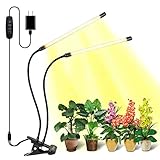
- Full Spectrum LED with Yellow and White Combination: Bseah led grow light can promote photosynthesis, germination, growth, flowering and fruiting of plants.
- Auto Turn on/off Timer Function: The plant growth lamp has an automatic cycle memory timer function, which can set a timer for 3/9/12 hours. With continuous power supply,Set up once, the plant grow light will turn on and turn off automatically at the same time every day for 3/9/12 hours.
- 10 Dimmable Modes & 3 Switch Modes: 3 Switch modes and 10 dimmable modes meet photosynthesis needs of plant germination, bloom, and fruit-bearing at different stages and seasons.
- Strong and Stable: The metal gooseneck is strong enough, with a non-slip mat design, which can fix the lamp well and make the grow light stand.
- Widely Used and Visible Quality: Our grow light is suitable for indoor potted plants or an indoor garden. The lamp have a USB connector and tested for a lifetime of up to 50,000 hours.
Product prices and availability are accurate as of the date/time indicated and are subject to change. Any price and availability information displayed on Amazon at the time of purchase will apply.




