An agitator washer uses a tall center post to push clothes through the wash water. An impeller washer uses a low-profile disc or cone at the bottom of the basket to create water movement and garment-to-garment friction. That one design difference affects almost everything homeowners care about: cleaning strength, fabric wear, usable capacity, water use, cycle behavior, price, and how forgiving the machine is when it is overloaded.
For most homes, the practical rule is simple: choose an agitator washer if you regularly wash muddy clothes, uniforms, towels, pet bedding, sports gear, or workwear. Choose an impeller washer if you want more basket space, better efficiency, gentler fabric handling, and easier bulky loads like comforters. If your household does both, a removable-agitator model can be a good middle ground.
On our job sites, we see the same mistake with appliance replacements that we see with water heaters, dishwashers, and laundry-room remodels: the homeowner buys the machine first and checks the room second. A washer is not just a box that plugs in. It needs the right clearances, level floor, working shutoff valves, adequate drain standpipe, safe electrical protection, and sometimes a drain pan or permit. A $700 washer can turn into a $1,500 project if the laundry room is not ready.
Impeller vs. Agitator Washer: The Core Difference
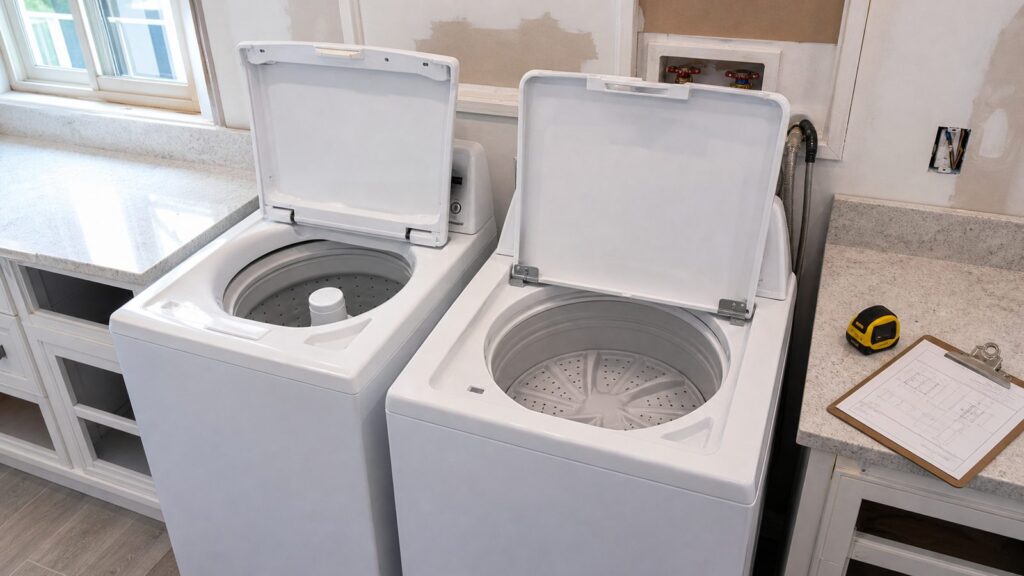
Both machines are top-load washers. The difference is the wash mechanism inside the basket.
The Tool Desk
Outbyte PC Repair FREEClear out junk files and repair common Windows errorsFree Scan →Outbyte Driver Updater FREEScan for outdated or missing drivers - takes under a minuteDriver Scan →#1 Best Overall

- Tough Action for Tough Stains: Our top load clothes washer features a Triple Action Impeller to tackle your toughest loads in three powerful ways: Spraying Action to attack dirt from every angle with a concentrated detergent mix, Wash Basket Action to move the wash basket back and forth, and Impeller Action to move clothes in a circular pattern
- More Laundry, Less Time: Our high-efficiency top load washer features Express Wash to clean small loads in just 30 minutes (based on a 3-lb load, default cycle setting), and Accela Wash to clean full-size loads up to 51% faster (compared to a standard 8-lb load, normal cycle, warm wash temp, extra heavy soil setting) - so you spend less time doing laundry
- Wash Your Way: Features 10 wash cycles to custom wash your loads including Heavy Duty, Whites, Towels, Delicates, and Express Cycles. Select from 4 temperature options and rinse with Extra Rinse to help protect sensitive skin. Soft Close lid has tempered glass and won’t slam shut
- Easy to Operate: Use the intuitive light-touch controls to select the load and cycle options that match the fabric types in each load. Plus, the convenient LED lights provide time remaining and cycle status information
- Reduce and Save: Energy savings includes Cold Clean which cleans gently & completely while using up to 90% less energy (when compared to the normal cycle, default settings, 8-lb load)
An agitator washer has a vertical spindle in the center of the tub, usually with fins, vanes, or spiral sections. During the wash cycle, that post twists or strokes back and forth. It moves clothing through water and detergent with direct mechanical action. Traditional agitator washers are familiar, straightforward, and usually more aggressive.
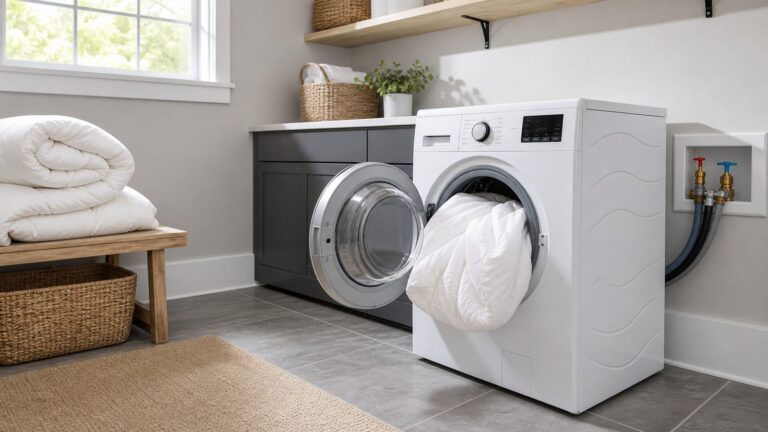
An impeller washer has a low-profile plate, disc, cone, or finned surface at the bottom of the basket. Instead of a center post grabbing clothes, the washer relies on water currents, basket motion, and clothes rubbing against each other. Most modern impeller machines are high-efficiency top-loaders, so they often use less water and depend more heavily on correct loading and measured HE detergent.
| Feature | Agitator Washer | Impeller Washer |
|---|---|---|
| Wash mechanism | Tall center post moves clothes directly | Low-profile plate creates water movement |
| Best fit | Muddy, sweaty, heavy, or work-related laundry | Bulky bedding, larger mixed loads, everyday clothes |
| Usable basket space | Reduced by center agitator | More open basket space |
| Fabric wear | Can be harder on clothes | Usually gentler when loaded correctly |
| Water and energy use | Traditional models often use more | Typically more efficient, especially HE models |
| User learning curve | More familiar deep-fill behavior | Requires better loading and detergent habits |
Which One Cleans Better?
The honest answer is that it depends on what you are washing. “Cleans better” is not one thing. Removing red clay from work pants is different from freshening sheets. Pulling sweat and grease out of uniforms is different from washing fleece blankets without matting them.
Agitator washers usually have the advantage when the laundry is heavily soiled. The center post gives the machine more direct mechanical action. That matters for construction crews, landscaping households, mechanics, restaurant workers, healthcare uniforms, farm clothes, athletic gear, and towels that hold body oil and detergent residue. If a basket often includes jeans with mud at the cuffs, socks with grit, or shirts with job-site dust, an agitator washer is the safer bet.
Impeller washers can clean very well, but they are less forgiving. They need enough room for clothes to move. If the basket is packed tight, the wash plate cannot create the rolling movement the machine depends on. Poor results with impeller washers are often caused by loading habits: clothes compressed into the tub, too much detergent, bulky items bunched on one side, or the wrong cycle selected.
For Dirty Work Clothes
If your laundry regularly includes construction pants, shop rags, muddy uniforms, sports clothes, or pet bedding, start with an agitator model or a removable-agitator model. Use the heavy-duty cycle, warm water when the garment label allows it, and pre-treat oil, clay, and grease. No washer mechanism can fully overcome dried mud or petroleum stains without some stain treatment.
For Everyday Family Laundry
For shirts, pajamas, school clothes, sheets, and mixed household loads, an impeller washer is often the better everyday machine. It gives you more usable basket space and less direct rubbing against a center post. That matters if you wash large loads several times a week and want to reduce water use.
Capacity and Bulky Loads
Capacity labels can be misleading because advertised cubic feet are not the same as useful loading space. A 4.7 cubic foot washer with a full-height agitator can feel tighter than an impeller washer with a similar listed capacity because the agitator occupies the center of the basket. The open basket in an impeller washer is one of its biggest practical advantages.
Recommended Free Tools
For bulky bedding, the impeller design usually wins. Comforters, blankets, mattress pads, sleeping bags, and large towel loads need room to fold, roll, and move. A tall center post can trap bulky items or force them into a tight ring. That can lead to poor rinsing, unbalanced spin cycles, and damp spots that never received much wash action.
As a contractor, we also look at what the floor and room can tolerate. A large-capacity washer full of wet bedding is heavy. If the machine is on a second floor, over a crawlspace, or in a converted closet, vibration and leveling matter. An impeller washer with a big basket can invite overloading, and overloading increases out-of-balance spin problems. The machine should sit level, all feet should contact the floor, and the structure should not bounce noticeably during spin.
Water and Energy Use
Efficiency is where impeller washers usually have the clearest advantage over traditional agitator models. ENERGY STAR reports that certified clothes washers use about 20% less energy and 30% less water than regular washers. For full-size certified washers, ENERGY STAR cites about 14 gallons per load versus about 20 gallons per load for a standard machine.
That difference becomes real over a year. A typical family doing about 300 loads per year would use roughly 4,200 gallons with a 14-gallon washer and 6,000 gallons with a 20-gallon washer. That is about 1,800 gallons of water saved per year, before counting reduced hot-water energy.
ENERGY STAR also notes that top-load impeller washers became popular as a more energy- and water-efficient alternative to traditional top-load agitator washers. Certified front-loaders are still typically more efficient than top-load impeller machines, but many homeowners prefer top-loaders because they are easier to load, do not require bending as much, and avoid some of the door-gasket maintenance associated with front-load units.
If your water and sewer rates are high, or if the washer is used daily, efficiency should weigh heavily. If you wash filthy clothes a few times per week and often rewash loads because they did not come clean, the savings can disappear. The efficient machine only saves money when it gets the job done in one cycle.
Cost to Buy and Install in 2026
For 2026, national retailer pricing puts common top-load washers across a wide range. Lowe’s top-load washer listings show a typical price around $758, with listed models roughly from $276 to $1,099. Best Buy listings show many common top-load agitator and impeller machines in the $400 to $1,200 range, with premium smart and high-capacity models higher.
Rank #2
- Tough Action for Tough Stains: Our top load clothes washer features a Triple Action Agitator to tackle your toughest loads in three powerful ways: Spraying Action to attack dirt from every angle with a concentrated detergent mix, Wash Basket Action to move the wash basket back and forth, and Agitator Action to move clothes in a circular pattern
- More Laundry, Less Time: Our high-efficiency top load washer features Express Wash to clean small loads in just 28 minutes (based on a 3-lb load, default cycle setting), and Accela Wash to clean full-size loads up to 51% faster (compared to a standard 8-lb load, normal cycle, warm wash temp, extra heavy soil setting) - so you spend less time doing laundry
- Wash Your Way: Features 10 wash cycles to custom wash your loads including Heavy Duty, Whites, Towels, Delicates, and Express Cycles. Select from 4 temperature options and rinse with Extra Rinse to help protect sensitive skin. Soft Close lid has tempered glass and won’t slam shut
- Easy to Operate: Use the intuitive light-touch controls to select the load and cycle options that match the fabric types in each load. Plus, the convenient LED lights provides time remaining and cycle status information
- Reduce and Save: Energy savings includes Cold Clean which cleans gently & completely while using up to 90% less energy (when compared to the normal cycle, default settings, 8-lb load). Remove shipping bolts from unit prior to install.
Budget and midrange agitator washers commonly land around $450 to $750. Larger agitator models, smart controls, stainless baskets, pet cycles, sanitize settings, and removable agitator designs often push pricing into the $650 to $1,200+ range.
Impeller washers commonly run about $600 to $1,200+. High-capacity smart models can reach $900 to $1,600, depending on brand, finish, capacity, steam or sanitize features, and sale pricing.
| Project Item | Typical 2026 Cost | What It Usually Includes |
|---|---|---|
| Budget agitator washer | $450-$750 | Basic top-load machine, fewer smart features |
| Premium agitator or removable-agitator washer | $650-$1,200+ | Larger capacity, stainless basket, more cycles, smart options |
| Common impeller washer | $600-$1,200+ | HE top-load design, open basket, efficiency features |
| Premium impeller washer | $900-$1,600 | High capacity, smart controls, pet, steam, or sanitize cycles |
| Simple replacement labor | $100-$350 | Existing compliant valves, drain, outlet, and clearances |
| New hookups or laundry relocation | $650-$2,500 | Plumbing, drain, electrical, access, and site work vary widely |
| Washer repair context | $235-$444 | Useful comparison when an older washer fails |
Retail “free installation” is not the same as a construction-ready scope. It usually assumes accessible working valves, short hose runs, a compliant drain, proper outlet, enough clearance, no flooring issues, and no plumbing or electrical corrections. If a delivery crew finds frozen shutoffs, a corroded valve, a drain that backs up, or a noncompliant outlet, they may leave the machine uninstalled.
Homewyse’s May 2026 estimating is higher for broader scopes: about $1,039 to $2,137 to install a washing machine and $995 to $2,122 to replace one. Those figures reflect wider project assumptions, labor, materials, and site conditions, not just a basic retail hookup.
Installation Checks Before Delivery
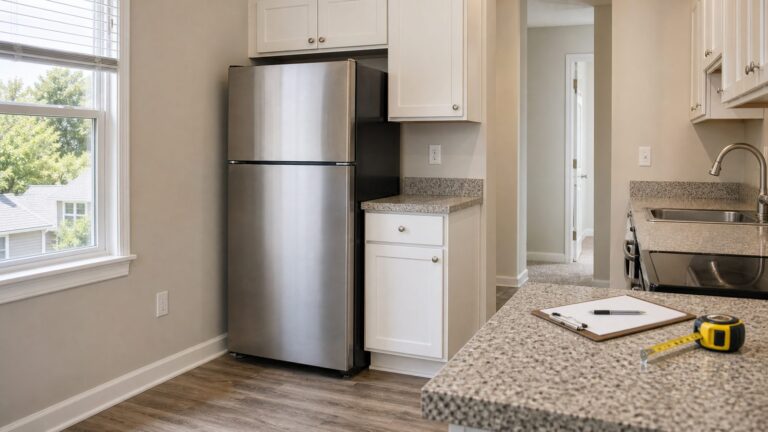
Before buying an agitator or impeller washer, measure the space and inspect the utilities. This takes 20 minutes and can prevent a failed delivery.
Quick wins for a faster PC:
Scan for outdated or missing drivers - takes under a minuteDriver Scan →Clear out junk files and repair common Windows errorsFree Scan →Fix the driver behind crashes, sound loss and screen glitchesFind Drivers →Measure the Space
Measure width, depth, and height. Include the machine body, hose clearance behind it, lid clearance above it, and the path into the room. Many top-load washers need at least 1 inch of side clearance and several inches behind the unit for hoses and the drain line. If the washer sits under cabinets, confirm the lid can open fully. If it must pass through a hallway, stair turn, or laundry closet door, measure those too.
Check Water Supply Valves
Hot and cold shutoff valves should turn by hand without leaking. If they are stiff, corroded, painted over, or dripping, replace them before delivery. We prefer accessible quarter-turn valves and braided stainless steel washer hoses. Hoses should not be kinked, stretched tight, or reused indefinitely. In an upper-floor laundry room, this is cheap insurance.
Test the Drain
A washer discharges water fast. A slow standpipe can overflow even if the old washer seemed fine, especially when a new high-speed machine pumps out aggressively. Run water into the standpipe and watch for backup. The International Plumbing Code includes requirements for clothes washer fixture connections, and local amendments can be stricter. Standpipe height, trap configuration, venting, and drain size are not details to guess at.
Verify Electrical Safety
Most residential washers use a standard 120V receptacle, but the condition and protection of that outlet matter. Current code requirements commonly involve GFCI protection for laundry areas, and AFCI requirements may also apply depending on jurisdiction and circuit type. Codes change, and local enforcement varies, so treat electrical corrections as a licensed-electrician item when the outlet is old, damaged, ungrounded, loose, or not properly protected.
Code, Safety, and Permit Notes
A like-for-like washer replacement usually does not require a building permit when existing hookups are compliant and no plumbing, electrical, framing, or drain changes are made. That changes when you add a laundry room, relocate hookups, replace drain piping, add a new receptacle or circuit, open walls, install a floor drain, or alter venting.
Code references also vary by city. The International Plumbing Code, Uniform Plumbing Code, National Electrical Code, and local municipal amendments can all affect laundry work. Chicago, for example, has its own plumbing code provisions. That is why we do not recommend copying a generic standpipe diagram from the internet and assuming it is legal in your city.
For second-floor laundry rooms, we recommend treating leak protection as part of the project, not an accessory. A good setup includes a washer pan where appropriate, a pan drain if required or feasible, braided hoses, accessible shutoffs, a leak sensor, and a floor that can handle spin vibration. If the room sits above finished ceilings, one failed hose can cause drywall, flooring, insulation, trim, and electrical damage below.
Independent reader supportYour contribution helps us test, update, and keep practical guides available for everyone.When to DIY vs. When to Hire a Pro
A straightforward washer swap can be a reasonable DIY job for a careful homeowner. If the old washer is already connected to working hot and cold valves, the drain standpipe is sound, the outlet is safe, the floor is level, and the new machine fits through the path, the work is mostly disconnecting, moving, leveling, connecting hoses, and running a test cycle.
Free tools Windows power users keep installed
One-click scans. No signup required.
Plan on 1 to 2 hours for a simple replacement if the room is ready. Have a bucket, towels, adjustable pliers, a level, new hoses, and enough help to move the appliance safely. Do not drag the washer across finished flooring without protection. After connection, run a fill, agitate, drain, and spin test while watching every valve, hose, and drain point.
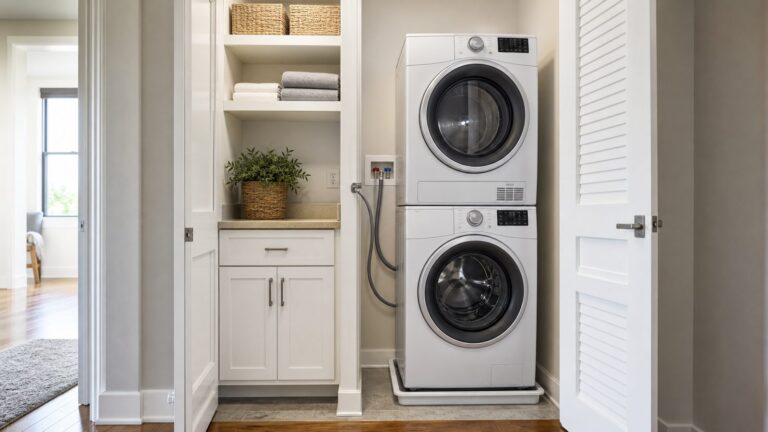
Hire a plumber, electrician, or general contractor when valves leak, the drain backs up, the outlet is questionable, the machine is moving to a new location, the laundry is on an upper floor, flooring needs repair, or walls must be opened. New hookups or laundry relocation commonly runs $650 to $2,500, with national estimates around $1,200. Costs rise when the washer is far from a plumbing stack, a new 120V laundry circuit is needed, the floor needs reinforcement, or the project includes a dryer vent or stacked compact configuration.
Rank #3

- Spacious Capacity: The 4.1 cu. ft. capacity of this washer machine provides ample space for large laundry loads, making it ideal for daily use in homes and for large families
- Agitator Clothes Washer: Top load washing machine with agitator helps provide fast, effective cleaning for tough, heavy duty stains and heavily soiled laundry needs
- Stainless Steel Wash Tub: Durable stainless steel wash tub in this washing machine resists rust and wear. Designed for longevity, providing reliable performance for all your top load washer needs
- Multiple Wash Cycles: Wash your laundry at home with this Black and Decker washing machine. Our clothes washer has 10 cycle selections to choose from for a variety of clothes, washes and needs
- Timed Delay Feature: With a 24-hour delay function, this full size washing machine offers flexibility in scheduling. Perfect for busy lifestyles, simply plan wash cycles at your convenience
How to Load Each Type Correctly
Many washer complaints are really loading complaints. The machine can only clean if water, detergent, and fabric can move.
For an agitator washer, load clothes loosely around the center post. Do not wrap sheets around the agitator like a rope. Mix large and small items so the basket stays balanced. If the machine has a deep-fill option, use it when the load genuinely needs more water, not as a default for every small load.
What’s actually slowing this PC down?
Pick the symptom - the matching free tool is one click away.
For an impeller washer, do not pile clothes into a compressed mound. Place items loosely around the outside of the basket and leave the center area open enough for movement. Bulky items should be arranged evenly, not dropped in as one lump. Use HE detergent and measure it. Too much detergent leaves residue, traps soil, and can make clothes feel stiff or look dull.
With either type, separate truly dirty work clothes from regular laundry. Mud, concrete dust, grease, grass, and metal shavings do not belong in the same cycle as towels and children’s clothes. Shake out debris before washing. For job-site clothing, pre-rinse heavy dirt outdoors when practical so the washer and drain are not doing the work of a utility sink.
Serviceability and Long-Term Ownership
Agitator washers are often simpler and less expensive upfront, especially basic models without smart controls. They also have a familiar repair path for many appliance technicians. That does not mean every agitator washer is cheap to repair, but simple machines with common parts are usually easier to diagnose than highly featured models.
Impeller washers can cost more because they often include larger capacities, electronic controls, load sensing, smart features, specialty cycles, and more complex balancing systems. Those features can be useful, but they are also parts that may affect repair cost later. Homewyse’s January 2026 washer repair estimate of about $235 to $444 is a helpful checkpoint. If an older washer needs a major repair and a new machine costs $650 to $900, replacement may be the better investment.
Do these 3 things before closing this tab:
1Clear out junk files and repair common Windows errors2Scan for outdated or missing drivers - takes under a minute3Repair Windows errors before they cause bigger problemsAlso consider how long you plan to stay in the home. If you are renovating a laundry room before selling, a clean, efficient, properly installed top-load washer setup can be attractive. If you are building a long-term laundry room for a family, spend more attention on valves, drain, pan, floor, and access than on touchscreens.
Best Choice by Household Type
| Household | Best Choice | Why |
|---|---|---|
| Construction, landscaping, mechanic, farm, or sports household | Agitator or removable agitator | More direct action for mud, sweat, grit, and heavy fabrics |
| Family washing large mixed loads | Impeller | More usable basket space and better efficiency |
| Frequent comforters and bulky bedding | Impeller | Open basket handles large items more evenly |
| Delicates and everyday clothing | Impeller | Less direct fabric rubbing when loaded correctly |
| Rental property or simple budget replacement | Basic agitator | Lower upfront cost and familiar operation |
| Mixed household with dirty workwear and bedding | Removable agitator | Switches between soil-heavy and bulky-load needs |
If you want the most practical answer, do not start with the appliance aisle. Start with the laundry basket. If the basket is full of mud, towels, uniforms, denim, and pet hair, buy for cleaning force. If it is full of sheets, blankets, school clothes, and large family loads, buy for usable space and efficiency.
Bottom Line
An agitator washer is the tougher, more familiar choice for dirty laundry and budget-focused replacements. An impeller washer is the better fit for larger loads, bulky bedding, gentler washing, and lower water use. Both can be good machines when matched to the household and installed correctly.
From a builder’s standpoint, the best washer is the one your laundry room can support. Before delivery, confirm clearances, working valves, drain performance, outlet condition, floor level, and any upper-floor leak protection. The right machine with poor hookups is still a problem. The right machine in a properly prepared laundry room should wash well, drain safely, spin smoothly, and stay out of your way for years.
Crashes, No Sound, or Screen Glitches?
Random freezes, missing sound and display glitches usually trace back to one bad driver. Find and replace yours safely.Free scan · under a minutePC Slower Than It Used to Be?
A free scan shows the junk files, broken settings and background clutter dragging Windows down - then fixes them in one click.Free scan · Windows 10 & 11Frequently Asked Questions
Is an impeller washer better than an agitator washer?
An impeller washer is better for bulky loads, larger mixed loads, efficiency, and gentler fabric care. An agitator washer is usually better for heavily soiled clothing, towels, uniforms, mud, and workwear. The better choice depends on what your household actually washes.
Do impeller washers clean clothes as well as agitator washers?
Impeller washers can clean everyday laundry very well, but they are less forgiving when overloaded. They need loose loading, HE detergent, and enough room for clothes to move. For frequent mud, sweat, grease, and heavy fabrics, an agitator washer usually has the cleaning advantage.
Which washer is better for construction uniforms or muddy work clothes?
For construction uniforms, muddy pants, landscaping clothes, shop towels, and sports gear, choose an agitator washer or a removable-agitator model. The direct mechanical action is better suited to heavy soil than a low-profile impeller.
Which washer uses less water: impeller or agitator?
Modern HE impeller washers typically use less water than traditional agitator washers. ENERGY STAR says certified full-size clothes washers use about 14 gallons per load compared with about 20 gallons for a standard machine.
Free tools Windows power users keep installed
One-click scans. No signup required.
How much does it cost to install or replace a washing machine in 2026?
A simple replacement with existing compliant hookups commonly runs about $100 to $350 for labor. New hookups or laundry relocation commonly costs $650 to $2,500, with higher totals when plumbing, electrical, flooring, permits, or upper-floor leak protection are involved.
Do I need a permit to install a new washing machine?
A like-for-like washer replacement usually does not need a permit if no plumbing or electrical work changes. You may need permits when adding hookups, relocating laundry, opening walls, changing drain piping, adding a new circuit, or altering venting. Local code controls the final answer.
Quick Recap
Product prices and availability are accurate as of the date/time indicated and are subject to change. Any price and availability information displayed on Amazon at the time of purchase will apply.