Soil structure can be damaged by repeated or badly timed tillage, traffic on wet ground, erosion, declining organic matter and plant diversity, and salt or sodium buildup. Structure is the arrangement of soil aggregates and the pores between them. Those pores help water and air move through soil, while aggregates provide a stable environment for roots and soil organisms. The risks overlap, but each weakens soil in a different way.
Why soil structure matters
Well-formed aggregates create a network of pores that stores and moves water and air. Roots and soil organisms help form aggregates, while organic inputs contribute materials that bind them. When aggregates break down or pores are compressed, water may infiltrate and drain less effectively, and roots can face poorer growing conditions. The severity depends on soil type, climate, land use, and local conditions.
1. Excessive or poorly timed tillage
Tillage can loosen soil in the short term, but repeated disturbance can break aggregates and speed the loss of organic matter. Working soil when it is too wet can smear or puddle it rather than create a stable seedbed. Over time, disturbance may contribute to weaker aggregates, surface crusting, reduced infiltration, and greater susceptibility to erosion. Not every tillage pass has the same effect; frequency, timing, and soil moisture matter. NRCS soil-health principles and practices describe the trade-offs of disturbance.
2. Traffic on wet soil
Equipment, livestock, and other traffic can press soil particles together and reduce pore space. The risk is especially relevant when soil is moist or wet, because it is more vulnerable to compression. Compaction can restrict root growth and impair aeration, drainage, and infiltration. Where practical, keep heavy equipment and livestock off wet ground; avoid treating every pass over dry soil as equally damaging. The NRCS soil compaction overview explains how compaction affects soil function.
The Tool Desk
Outbyte PC Repair FREERepair Windows errors before they cause bigger problemsFix Now →Outbyte Driver Updater FREEFix the driver behind crashes, sound loss and screen glitchesFind Drivers →#1 Best Overall

- Quick, at home results for Soil pH, Nitrogen, Phosphorous and Potash Innovative and inexpensive soil test kit features an easy-to-use capsule system and patented color comparators
- Contains all components needed for 20 tests. 5 for each of pH, N, P and K
- Contains all components needed to test all variables in several spots in the yard or garden
- Simple, detailed instructions included. Great for beginners and experienced gardeners alike.
- Soil pH preference list for over 450 plants included
3. Erosion and loss of protective cover
Bare or disturbed soil is exposed to raindrop impact, runoff, and wind. Erosion can carry away topsoil and organic matter, while removing crop residue takes away a protective barrier that helps limit exposure. Repeated loss of cover and soil can weaken structure and make it harder for water to enter and remain in the ground. Keeping soil covered with retained residue or living plants helps protect the surface. NRCS discusses the links among cover, erosion, and soil quality in its soil-health guidance.
4. Declining organic matter and limited plant diversity
Organic matter and biological activity contribute to the materials and processes that bind aggregates. When residue inputs are low or residue is removed, those contributions can decline. Simplified rotations and low plant diversity can also reduce the variety of living roots and habitat supporting soil biology. NRCS links higher organic matter with more stable surface structure and less crusting and erosion, while noting that the pace and degree of change vary with soil and climate. Its soil-health guidance and Illinois technical note address organic matter and diversity.
Rank #2

- Comprehensive Soil Analysis: Liquid soil test kits offer a comprehensive analysis of essential soil parameters, including pH, ammonia, nitrogen, phosphorus, and potassium. Having all these measurements in one kit provides a holistic understanding of the soil's fertility and health.
- Customized Fertilizer Recommendations: With data on pH and nutrient levels, liquid soil test kits help users apply the right type and amount of fertilizers, optimizing plant growth, and preventing over-fertilization, which could harm both plants and the environment. Whether its for lawns, garden, grass, plants, vegetables, turf, flowers, compost trees vines ornamental landscape house plants or hydroponics you will be able to get the results you want.
- Time and Cost-Effective: Liquid soil test kits are relatively quick and easy to use, saving time for gardeners and agricultural professionals. Compared to sending samples to a laboratory, these kits provide rapid results, allowing for prompt action. Additionally, they are cost-effective for routine testing, making it feasible to monitor soil health regularly.
- Optimal Plant Health and Yield: By knowing the soil's pH and nutrient levels, gardeners and farmers can fine-tune their agricultural practices to create an environment conducive to optimal plant growth. Adequate levels of ammonia, nitrogen, phosphorus, and potassium are essential for healthy plant development and higher crop yields.
- Accurate and Precise Results: Liquid test kits are designed to provide accurate and precise measurements when used correctly. They are calibrated to detect specific nutrient levels, ensuring reliable data for informed decision-making in plant nutrition and soil management. You get a total of about 140 test. which is 40 test for each parameter and about 20 or so for nitrogen
5. Salt or sodium accumulation
Salt or sodium buildup in surface soil is another condition associated with poor structure. It is a chemical rather than a physical disturbance: accumulation can alter soil conditions in ways that undermine stable aggregates and water movement. The appropriate response depends on local soil and irrigation-water conditions, so a generic amendment or treatment is not a safe universal prescription. Arrange a soil and, where relevant, water assessment, then follow local guidance. NRCS identifies salinity and sodicity management as a practice area.
Independent reader supportYour contribution helps us test, update, and keep practical guides available for everyone.How to protect soil structure
These causes can compound one another: weaker aggregates and fewer effective pores can make water movement and root conditions worse. Broad protective practices include reducing unnecessary disturbance, keeping soil covered, maintaining living roots as often as practical, retaining residue, and increasing plant diversity through cover crops or diverse rotations. Avoid traffic and tillage when soil is too wet. The best combination depends on the site, and improvement is gradual; NRCS notes that its rate and degree vary by soil and climate. See its soil-health principles and cover-crop guidance.
Rank #3

- KNOW BEFORE YOU GROW | Grow the healthiest, sustainable lawn and garden with the most accurate and easy to use professional soil test kit on the market
- FAST & ACCURATE | Unlike at-home pH meters and test strips, our mail-in professional lab analysis accurately measures 13 plant-available nutrient levels, including Nitrogen and pH. Results in 6-8 days
- FOR ANY GROWING SCENARIO | Tests any soil type and growing condition - lawn & turf, vegetable gardening, flowers, compost, trees, vines, ornamental landscape, house plants, soil-less media or hydroponics
- SAVE TIME & MONEY | Stop applying products you don’t need. Learn exactly what products and amounts you need to grow the healthiest plants possible
- CUSTOM RECOMMENDATIONS | What to apply, how much to apply, and when to apply it. Provides both organic and non-organic fertilizer recommendations to effectively amend your soil
If you need to assess structure rather than infer it from appearance alone, the NRCS soil structure and macropores indicator sheet, dated June 2008, points to the Soil Quality Test Kit Guide as an assessment resource. An assessment tool can help observe soil; it does not by itself diagnose every cause or prescribe a remedy.
Quick Recap
Best Value

- Professional Soil Test Kit: All soil test kits on the market can not accurately detect soil chemical elements, the soil must be sent to the laboratory to test in order to obtain accurate data; NewTest Labs to solve this pain point, after a long period of in-depth research, the development of this professional soil testing kit; beginners can also accurately detect the chemical elements in the soil
- A Total of 40 Tests for 4 Parameters Consisting of 10 Tests each for pH, Nitrogen, Phosphorus & Potassium: NewTest soil test kit for lawns can independently test pH, nitrogen, phosphorus and potassium levels in garden soil up to 10 separate times, and help us grow the healthiest vegetable
- Detailed & Easy to Understand Step-by-Step Instructions for Use: NewTest soil testing kit for gardening come with a quick guide and detailed instructions, so even beginners can follow the steps to detect accurately the desired elemental levels; With NewTest soil tester for garden nutrients you can become an expert gardener
- Easy to Read Colorimetric Results: NewTest Labs have designed specific reading methods for each soil nutrient element in order to obtain the most accurate results; just follow the steps and compare the tested test strips or liquids to the colorimetric card, you can quickly read the level range of the nutrient element and get accurate results
- Tests any Soil Type & Gardening Condition: NewTest soil nutrient test kit is suitable for all soil types of lawn & turf, vegetable gardening, flowers, compost, trees, vines, ornamental landscape, house plants, soil-less media or hydroponics; If you have any questions, please contact NewTest Labs for the perfect solution
Rank #4
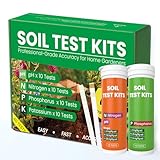
- Complete 4-in-1 Soil Test Kit (pH, N, P, K) – This garden soil test kit measures soil pH, Nitrogen, Phosphorus, and Potassium, giving you a full picture of your soil condition to improve fertilization and plant growth.
- 40 Accurate Tests for Long-Term Use – Includes 10 tests for each element (40 total tests), making this soil testing kit ideal for repeated use across multiple areas of your lawn, vegetable garden, or flower beds.
- Fast & Easy Soil Testing at Home – No calibration or complex tools needed. Simply mix soil with water, add the reagent, and compare the color chart for instant results. Perfect for beginners and experienced gardeners.
- All Tools Included for Convenience – This soil testing kit comes with test tubes, reagents, droppers, and a color comparison chart. Everything you need is included to perform reliable soil tests right at home.
- Improve Plant Growth & Save Fertilizer – By using this soil test kit for lawns and gardens, you can accurately balance soil nutrients, reduce waste, and grow healthier vegetables, flowers, and grass.
Product prices and availability are accurate as of the date/time indicated and are subject to change. Any price and availability information displayed on Amazon at the time of purchase will apply.