Lime can help a lawn when a soil test shows that its soil is too acidic for the grass growing there. It raises soil pH; it is not a general-purpose lawn tonic, fertilizer, or reliable moss killer. Before applying it, get a laboratory soil test and follow the recommendation for your turf and region.
What lime does—and whether your lawn needs it
Lawn lime is usually agricultural limestone, a material that raises soil pH. Soil acidity affects how available nutrients are to grass and the conditions around its roots. If pH is already suitable—or too high—adding lime can make some nutrients less available and harm growth.
There is no single ideal pH for every lawn. Iowa State University Extension and Outreach gives 6.0–7.5 as an optimum range in its 2022 guidance, while University of Maryland Extension gives 6.0–6.8 for turf growth in its maintained guidance accessed October 7, 2026. These are regional recommendations, not universal targets; grass species and local conditions matter. Florida Extension, for example, describes centipedegrass and bahiagrass as better adapted to acidic conditions than St. Augustinegrass and zoysiagrass.
A laboratory soil test should tell you whether lime is needed and, in many cases, how much to apply. Do not calculate a rate from pH alone: the amount required also depends on soil properties, the target pH, the grass, and the lime’s neutralizing value. Iowa State’s advice is direct: “In Iowa, home gardeners should apply lime to lawns only when recommended by a soil test.” Iowa State University Extension and Outreach
What’s actually slowing this PC down?
Pick the symptom - the matching free tool is one click away.
#1 Best Overall

- OPERATION: Adjustable arm support on this seed, salt and fertilizer spreader helps provide maximum comfort
- HAND-HELD SPREADER: Perfect hand-held fertilizer, salt and seed spreader for small yards
- CAPACITY: A seed, fertilizer and salt spreader that holds up to 1,500 sq. ft. of Scotts lawn products for year-round lawn care
- USAGE: These hand spreaders for lawns are great for year-round use to seed, fertilize, salt and ice melt
- COVERAGE: These salt, fertilizer and seed spreaders for lawns are engineered for smooth, even coverage
8 conditional reasons to use lime
These are possible reasons to lime, not guaranteed benefits. They apply only when a soil test and local turf guidance support treatment.
-
Correct soil that is too acidic
Lime raises pH, making it a potential remedy when soil acidity is outside the suitable range for the lawn’s grass species.
-
Move pH toward the range suited to your grass
Turf species differ in their tolerance of acidic soil. A suitable target for one grass may be inappropriate for another, so use a local recommendation rather than a universal number.
Rank #2
Sale Scotts Turf Builder EdgeGuard DLX Broadcast Spreader for Seed, Fertilizer, Salt, Ice Melt, Holds up to 15,000 sq.ft. Product, Green
- NO ASSEMBLY REQUIRED: Scotts spreader comes pre-calibrated and ready-to-use; use it year-round including as an ice melt spreader or salt spreader for snow
- CAPACITY: Broadcast spreader holds up to 15,000 sq. ft. of Scotts lawn products, and can be used as a lawn food, salt, ice melt or grass seed spreader
- OPERATION: These fertilizer spreaders for lawns feature a hopper and agitator designed for smooth product funneling and consistent coverage
- SIDE SHIELD: Scotts exclusive EdgeGuard Technology on these broadcast spreaders for lawns keeps lawn product off landscaping, driveways, and sidewalks
- BROADCAST SPREADER: Use the Scotts Turf Builder EdgeGuard DLX Broadcast Lawn Spreader to apply Scotts lawn care products, like grass fertilizer for lawns
-
Improve the availability of some nutrients
pH influences how available nutrients are in soil. Correcting excessive acidity can improve conditions for nutrient uptake, but lime does not add nitrogen and is not a substitute for fertilizer.
Do these 3 things before closing this tab:
1Fix the driver behind crashes, sound loss and screen glitches2Repair Windows errors before they cause bigger problems3Scan for outdated or missing drivers - takes under a minuteSpecial offer. See more information about Outbyte and uninstall instructions. Please review EULA and Privacy policy. -
Support growth when acidity is a limiting factor
When soil is too acidic for the turf, adjusting pH may improve the root-zone environment and support healthier growth. The result depends on the lawn’s actual conditions; lime does not guarantee a visible improvement.
-
Supply calcium when the soil needs it
Calcitic agricultural limestone is primarily calcium carbonate and supplies calcium as it raises pH. Calcium alone is not a reason to lime if the soil pH does not call for it.
Rank #3
Sale Agri-Fab Pull Behind Broadcast Spreader for Seed, Fertilizer, Salt and Ice Melt, 130 lb Hopper Capacity with Universal Hitch and 12 Ft Spread Width
- LARGE HOPPER CAPACITY: 130 lb hopper covers up to 1/2 acre or 25,000 sq ft with fewer refills, making this pull-behind spreader ideal for larger lawn projects
- UNIVERSAL TRACTOR COMPATIBILITY: Universal hitch design connects easily to most riding lawn mowers and lawn tractors, including Craftsman, Husqvarna, Cub Cadet, and more
- CONSISTENT WIDE SPREADING: Wide 10 ft to 12 ft spread width helps provide more even fertilizer and seed distribution with fewer passes across the lawn
- VERSATILE ALL-SEASON PERFORMANCE: Ideal for spreading grass seed, fertilizer, lawn treatments, salt, and ice melt to help maintain healthy lawns throughout the year
- DURABLE LONG-LASTING CONSTRUCTION: Built with 1 in steel tubing, enclosed gear house, poly hopper, spreader plate, and 13 in x 4 in pneumatic tires for reliable use
-
Supply magnesium when a test indicates a deficiency
Dolomitic limestone supplies magnesium as well as calcium. Choose it when a soil test supports that choice, not simply because it contains an additional nutrient.
-
Correct pH before establishing or renovating turf
If the soil test recommends lime, addressing acidity before seeding or a major lawn renovation can help prepare the root zone. Maryland Extension advises incorporating the recommended amount before establishing a new lawn or undertaking a major renovation.
Free tools Windows power users keep installed
One-click scans. No signup required.
Special offer. See more information about Outbyte and uninstall instructions. Please review EULA and Privacy policy. -
Carry out an existing soil-test recommendation
If a soil report calls for lime, applying the specified material and amount evenly is a practical way to act on that recommendation. A spreader and careful coverage help with application; the report, not a routine schedule, is the reason to apply.
Rank #4
Sale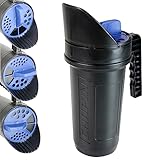 CHAPIN 8740A 64 oz All-Season Hand Shaker Spreader, Seed, Fertilizer & Salt
- 64-OUNCE BOTTLE: high-capacity poly bottle with a wide opening and easy screw top, quickly remove the lid to add your preferred seed, salt, fertilizer, etc. and simply screw back into place
- TURF AND SALT: year-round use; for steps, sidewalks and small paths in the winter; grass patches, shaded areas, gardens, and small sections the rest of the year
- 3 OPENINGS IN LID: twist lid to choose small, large and wide openings; each designed to fit different particulates like ice melt, salt, fertilizer, grass seed, sand and most pelletized products
- LARGE HANDLE: easy to grip, scoop and fill; accommodates small and large-sized hands, with or without gloves for use any time of the year
- PORTABLE: keep it on a shelf, in a closet or in the car and pull it out when it’s needed; you can even store it with product inside when not in use
Which kind of lime should you use?
For ordinary lawn use, look for agricultural limestone and follow the soil-test recommendation and product label. The type and form affect what the material supplies and how it spreads.
| Material | Composition or form | When it may suit | Application considerations |
|---|---|---|---|
| Calcitic agricultural limestone | Primarily calcium carbonate | When lime is recommended and additional magnesium is not called for | Raises pH and supplies calcium; follow the test and label for rate. |
| Dolomitic limestone | Contains calcium and magnesium | When the soil test supports adding magnesium as well as correcting pH | Do not choose it just because it contains magnesium; use the test recommendation. |
| Pelletized limestone | Limestone formed into pellets for easier handling and spreading | When ease of even application is useful | Choose a suitable agricultural-lime product and apply according to its label and the soil-test rate. |
| Finer agricultural limestone | More finely ground particles | When the recommended material is available in this form | Finer material may react faster, but can be harder to spread evenly. |
| Hydrated lime or quick (burned) lime | Caustic forms of lime | Not recommended for ordinary homeowner lawn treatment | Can burn turf and pose handling hazards. |
How to apply lime
-
Test the lawn soil
Use a laboratory soil test and request a recommendation for the turf. Check the test instructions for how to collect a representative sample. Maryland Extension recommends checking lawn soil pH every 3 to 4 years with a laboratory test; local testing guidance may differ.
-
Use the recommended material and rate
Follow the report and product label. Do not borrow an application rate from a different state or estimate the amount from pH alone. As a regional example—not a universal limit—University of Missouri Extension says not to exceed 50 pounds per 1,000 square feet per application on established lawns. Other extension guidance sets different limits.
The Tool Desk
Outbyte PC Repair FREEClear out junk files and repair common Windows errorsFree Scan →Outbyte Driver Updater FREEFix the driver behind crashes, sound loss and screen glitchesFind Drivers →Special offer. See more information about Outbyte and uninstall instructions. Please review EULA and Privacy policy.Best Value
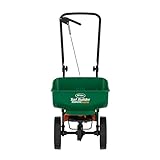 Scotts Turf Builder EdgeGuard Mini Broadcast Spreader
- NO ASSEMBLY REQUIRED: Scotts spreader comes pre-calibrated and ready-to-use with a fold-down handle for easy storage; use it year-round including as an ice melt spreader or salt spreader for snow
- CAPACITY: Broadcast spreader holds up to 5,000 sq. ft. of Scotts lawn products, and can be used as a lawn food, salt, ice melt or grass seed spreader - ideal for treating smaller areas
- OPERATION: These fertilizer spreaders for lawns feature a hopper and agitator designed for smooth product funneling and consistent coverage
- SIDE SHIELD: Scotts exclusive EdgeGuard Technology on these broadcast spreaders for lawns keeps lawn product off landscaping, driveways, and sidewalks
- BROADCAST SPREADER: Use the Scotts Turf Builder EdgeGuard Mini Broadcast Lawn Spreader to apply Scotts lawn care products, like grass fertilizer for lawns
-
Spread evenly under suitable conditions
Maryland Extension recommends using a spreader and making two crossing passes for even coverage. It says not to spread lime on snow- or frost-covered turf. Its guidance identifies autumn as an ideal time in Maryland, although it says lime can be applied any time of year there; timing advice may vary by region.
-
Allow time for the pH to respond
Lime is slow acting. Maryland Extension says a measurable pH change may take up to 6 months; UF/IFAS says calcic and dolomitic lime generally need about 6 months for maximum effect on acidity. Aeration can help incorporate lime into the root zone, according to Maryland Extension.
Quick Recap
SaleBestseller No. 2SaleBestseller No. 3Bestseller No. 5
What lime will not do
- It is not a moss killer. The extension guidance cited here does not support lime as moss control. Treat moss as a separate lawn problem rather than assuming it means the soil needs lime.
- It is not a routine treatment for every lawn. Iowa State reports that few Iowa lawns have pH below 6.0, and Purdue says most Indiana turf soils do not need lime. Those are regional observations, but they underline why testing matters.
- It is not fertilizer. Some lime supplies calcium or magnesium, depending on type, but Purdue Extension says lime does not replace a sound fertilization program.
- More is not better. Overliming can push pH too high and reduce nutrient availability. Apply only the amount recommended for your lawn.
Sources and regional guidance
- Iowa State University Extension and Outreach, “Should I apply lime to my lawn?”
- University of Florida IFAS Extension, “Soil Testing and Interpretation for Florida Turfgrasses”
- University of Arkansas Extension, “Liming Your Yard”
- University of Maryland Extension, “Maintaining an Established Lawn”
- Purdue University Extension, “Soil Testing for Lawns”
- Penn State Extension, “Liming Turfgrass Areas”
- University of Missouri Extension, “Soil Testing for Lawns”
Product prices and availability are accurate as of the date/time indicated and are subject to change. Any price and availability information displayed on Amazon at the time of purchase will apply.