Plant gladiolus corms in spring after the danger of frost has passed and the soil is about 55 degrees F or warmer. For most home landscapes, set large corms 4 to 6 inches deep, smaller corms 2 to 3 inches deep, and space them 6 to 8 inches apart in full sun with well-drained soil. Expect blooms about 70 to 100 days after planting.
That is the short answer. The better answer is that gladiolus success is less about memorizing a date and more about building the right planting conditions. On our job sites, we look at drainage, soil structure, irrigation overspray, wind exposure, bed access, and nearby utilities before we start digging. Gladiolus can be simple, but soggy clay, downspout runoff, shallow planting, or an exposed fence line can turn a promising bed into snapped stems and rotted corms.
One quick terminology note: what most homeowners call gladiolus bulbs are technically corms. You can still shop for them as bulbs, but when you are planting, curing, and storing them, it helps to understand that you are working with a solid storage stem, not a layered true bulb like a tulip or daffodil.
Best Time to Plant Gladiolus by Region
The best planting time is after your last expected spring frost and once the soil has warmed to roughly 55 degrees F. Air temperature alone can fool you. A warm week in March does not mean cold, wet soil is ready.
Use a soil thermometer if you want reliable timing. Check 4 inches deep in the morning for a few days. If the reading is consistently near 55 degrees F and the 10-day forecast is not calling for hard frost, you are usually in the right window.
Regional Timing Guide
These are practical timing bands for the United States. Your exact microclimate, elevation, and spring weather still matter.
#1 Best Overall

- 🌈 Vibrant Mixed Colors: Includes a stunning blend of bold reds, soft pinks, sunny yellows, purples, and crisp whites for a dramatic summer display.
- 🌸 Tall Elegant Flower Spikes: Produces towering blooms on strong stems, perfect for garden backdrops, borders, and eye-catching landscaping.
- ✂️ Exceptional Cut Flowers: Long-lasting blooms make gladiolus a favorite for bouquets and floral arrangements.
- 🌱 Premium Planting-Size Corms: Large, healthy bulbs selected for strong growth, reliable sprouting, and abundant flowering.
- ☀️ Easy to Grow: Thrives in full sun with well-drained soil. Plant in spring for mid-to-late summer blooms.
| Region | Typical Planting Window | Job-Site Notes |
|---|---|---|
| South and Gulf Coast | February to March, sometimes earlier in protected areas | Prioritize drainage and disease prevention. Warm soil plus wet beds can rot corms quickly. |
| Transition Zone | Late March to April | Watch late cold snaps. raised beds help where spring rain lingers. |
| Midwest and Northeast | Late April through May, sometimes early June | Wait for soil warmth, not just calendar spring. Heavy clay often needs bed prep. |
| Mountain West | May to early June in colder elevations | Wind protection and deeper planting within the 4 to 6 inch range are useful. |
| Pacific Northwest | April to May in many lowland areas | Drainage is the main issue. Avoid placing corms where winter and spring water collects. |
If you want blooms over a longer season, do not plant every corm on the same day. Plant a batch every 10 to 14 days from your first safe spring planting date into early summer. Since gladiolus commonly bloom 70 to 100 days after planting, succession planting gives you waves of flower spikes instead of one short flush.
Pick the Right Location Before You Dig
Gladiolus need full sun, which means about 6 to 8 hours of direct sun per day. They will grow in less light, but stems are usually weaker, blooms are smaller, and the plants lean harder toward the sun.
Do these 3 things before closing this tab:
1Fix the driver behind crashes, sound loss and screen glitches2Clear out junk files and repair common Windows errors3Scan for outdated or missing drivers - takes under a minuteFrom a construction and landscape standpoint, the bed location matters as much as the plant tag. Before we install any ornamental bed, we check four things: water movement, access, exposure, and conflicts with utilities or hardscape.
Drainage Comes First
Gladiolus do not want wet feet. Well-drained, moderately fertile soil is ideal. If water stands in the bed for hours after rain, that is a construction problem before it is a gardening problem.
For clay soil, improve the whole planting zone, not just the individual hole. Digging a small amended pocket in clay can create a bathtub effect where water drains into the loose mix and sits there. A better fix is to loosen and amend the entire bed 8 to 10 inches deep with compost, then grade the surface so water moves away from the planting area.
If the site stays wet because of roof runoff, a low spot, or irrigation overspray, consider a raised bed. Even a 6 to 10 inch raised planting area can make a major difference. Keep downspouts from dumping into the bed, and check that sprinkler heads are not soaking the flowers every evening.
Recommended Free Tools
Wind and Support
Large-flowered gladiolus can reach 3 to 5 feet tall. In a sheltered garden, that is manageable. Along a driveway, open corner, or fence line that funnels wind, the stems may need help.
Planting large corms closer to 6 inches deep can improve anchoring. For a small display bed, install bamboo stakes, low-profile plant rings, or a support grid before the stems get tall. For cut-flower rows, netting is usually cleaner and faster than staking every plant.
Call 811 When Digging Could Reach Utilities
Simple flower planting often feels harmless, but you still need to think before you dig. If you are creating a new bed, changing grade, trenching irrigation, driving stakes, edging near utility routes, or digging deeper than a few inches in an unfamiliar area, contact 811 before work starts. Utility marking is a basic safety step, especially near service lines, meters, sidewalks, driveways, and easements.
Soil Preparation for Strong Gladiolus Spikes
Good gladiolus soil is loose enough for roots, firm enough to hold tall stems, and drained enough to prevent rot. A pH near 6.6 to 7.0 is often a good target in disease-management guidance, but most homeowners do not need to chase exact chemistry unless the bed has struggled before. If the site has a history of poor growth, moss, compaction, or drainage problems, get a soil test before adding a pile of products.
What’s actually slowing this PC down?
Pick the symptom - the matching free tool is one click away.
Rank #2

- 🌸 PRODUCES TALL, SHOWY SUMMER BLOOMS Grow elegant gladiolus with towering flower spikes that deliver weeks of spectacular color. Perfect for creating eye-catching flower beds, borders, and landscape displays.
- 💐 EXCELLENT CUT FLOWERS Gladiolus are prized for long-lasting blooms and sturdy stems, making them one of the most popular flowers for fresh bouquets, floral arrangements, and home décor.
- ☀️ EASY TO GROW FOR ALL SKILL LEVELS Plant in spring in full sun and enjoy beautiful blooms throughout summer. Gladiolus thrive in well-drained soil and reward gardeners with abundant flowers.
- 🦋 ATTRACTS POLLINATORS TO YOUR GARDEN Colorful blossoms help attract butterflies, bees, and hummingbirds while adding height, texture, and seasonal beauty to flower gardens.
- 📦 PREMIUM QUALITY BULBS FROM CZ GRAIN Our healthy, carefully selected bulbs are inspected before shipping and packaged for safe arrival, giving your garden the best possible start.
For a new bed, remove turf cleanly, loosen the top 8 to 10 inches, and blend compost through the full planting zone. Do not bury thick layers of mulch or fresh organic material at the corm level. The goal is improved structure, not a spongy pit.
Bagged garden soil and compost prices vary by market. In 2026, common bagged garden soil examples run around $5.99 per cubic foot when converted from 0.75 cubic foot bags, while local compost bags may land around $10.98 to $15.99 per cubic foot. Bulk material is usually cheaper if access allows delivery. Some municipal compost programs sell material by the cubic yard; one municipal example listed compost/topsoil around $25 per cubic yard, while regional bulk garden soil examples were around $38 per cubic yard.
For a small 25 to 50 corm bed, plan on $10 to $40 in compost or soil amendments if the existing bed is basically usable. If the bed needs grading, excavation, drainage correction, or a raised structure, the cost becomes a landscape project rather than a bulb-planting chore.
How Deep and How Far Apart to Plant Gladiolus
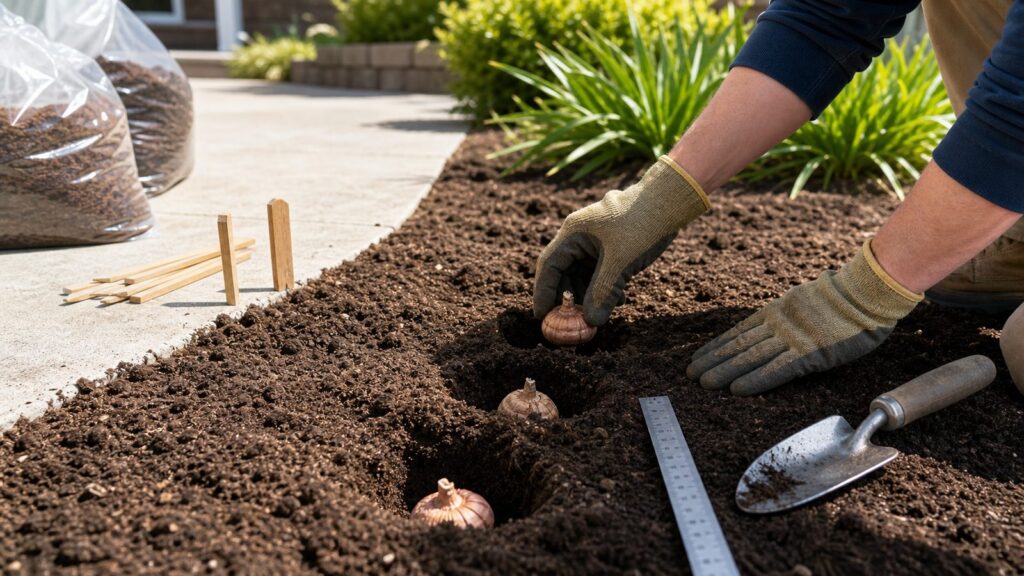
Plant large gladiolus corms 4 to 6 inches deep. Plant smaller corms 2 to 3 inches deep. Space most homeowner plantings 6 to 8 inches apart. That spacing gives the plants enough room to grow while still creating a full display.
Set each corm with the growing tip facing up and the root side down. The top is usually slightly pointed or has a visible shoot. The bottom is flatter and may show old root marks. If you truly cannot tell, plant the corm sideways. It is better than confidently planting it upside down.
Step-by-Step Planting
- Mark the bed layout before digging. For display beds, group at least 10 corms together so the flowers read as a designed planting instead of scattered stems.
- Loosen the bed 8 to 10 inches deep and remove stones, compacted clods, and construction debris.
- Mix compost into the planting zone if the soil is lean, sandy, or heavy clay. Keep the texture even across the bed.
- Dig a trench or individual holes to the right depth: 4 to 6 inches for large corms, 2 to 3 inches for small corms.
- Place corms 6 to 8 inches apart for landscape display. For cut-flower rows, spacing can be tighter if you are using support netting and managing the crop intensively.
- Backfill with native amended soil, firm lightly, and water thoroughly.
- Add 1 to 2 inches of mulch after shoots emerge or after planting if the bed is clearly marked. Keep mulch from piling directly against stems.
In sandy soil, planting 1 to 2 inches deeper can help with anchoring and moisture consistency. In heavy clay, stay toward the shallower end and fix the drainage instead of burying corms deeper into wet soil.
Landscape Display vs Cut-Flower Planting
Gladiolus can be planted two different ways: as part of a finished landscape or as a production row for cutting. The layout should match the goal.
For a landscape display, plant in clusters or blocks. Ten to twenty corms of the same color or a controlled color mix will look intentional. A single row along a foundation often looks stiff unless it is backed by shrubs, grasses, or perennials that hide the lower foliage.
For cut flowers, rows are easier to manage. You can plant more densely, install netting, water consistently, and harvest without stepping through ornamental beds. A supplier estimate in the research pack notes that about 300 gladiolus divisions can cover roughly 100 square feet at 5 per square foot, which is more of a production layout than a typical front-yard display.
Rank #3

- INTENSE DARK BLOOMS FOR DRAMATIC IMPACT Espresso Gladiolus bulbs produce striking deep crimson flower spikes with contrasting white centers, delivering bold vertical interest and premium visual appeal in any garden or landscape design
- RICH COLOR CONTRAST & SUMMER BLOOM BEAUTY These dark red gladiolus flowers stand out beautifully against pink, lavender, and green backgrounds, creating elegant summer displays perfect for ornamental gardens and floral arrangements
- EASY PLANTING & RELIABLE GROWTH PERFORMANCE Plant gladiolus corms in spring after frost in well drained soil for mid summer blooms; thrives in full sun with moderate watering and produces strong upright stems reaching impressive heights
- PERFECT FOR CUT FLOWERS & GARDEN DESIGN USE Ideal for flower beds, borders, and containers, these tall gladiolus blooms are excellent for cut flower bouquets, adding long lasting elegance and structure to indoor floral displays
- LOW MAINTENANCE, POLLINATOR FRIENDLY & RESILIENT Easy to grow gladiolus bulbs attract hummingbirds while resisting deer damage, making them a reliable, low-effort choice for gardeners seeking beauty with minimal upkeep
When cutting, harvest flower spikes when the lowest 1 to 3 florets begin opening. Use a clean knife or pruners and leave several leaves on the plant. Those leaves feed the corm for the rest of the season. Cutting every leaf for a longer stem weakens the plant and reduces the value of saving the corm.
Watering, Fertilizing, and Maintenance
Gladiolus need about 1 inch of water per week from rain or irrigation. Deep, consistent watering is better than frequent shallow watering. The bed should be moist, not soggy.
Sprinkler overspray is a common problem. If an irrigation zone is set for turf, it may water too often for a flower bed. Wet foliage every evening also increases disease pressure. Drip irrigation or a carefully adjusted spray pattern is usually better for a dedicated planting bed.
Free tools Windows power users keep installed
One-click scans. No signup required.
A balanced flower fertilizer or slow-release plant food can help in average soil. Homeowner-size bags or containers commonly run $8 to $25 in 2026. Avoid overdoing nitrogen. Too much nitrogen can push leafy growth at the expense of strong flower spikes.
Mulch helps moderate soil temperature, conserve moisture, and reduce weeds. Budget roughly $3 to $8 per 2 cubic foot bag for common bagged mulch, depending on region and seasonal sales. A 1 to 2 inch layer is usually enough around annual and tender bulb beds. Too much mulch can hold moisture against stems and slow drying after rain.
Common Problems: Rot, Leaning, Pests, and Poor Bloom
Most gladiolus failures come back to four causes: cold planting, wet soil, weak light, or poor support. If the corms never emerge, they may have rotted in cold wet soil or been planted too early. If the plants grow but do not bloom well, check sun exposure and fertility. If tall spikes fall over, look at depth, wind, and staking.
Corm Rot and Disease
Rot is more likely in heavy, wet soil. Start with firm, healthy corms. Do not plant soft, moldy, badly scarred, or shriveled corms. Space plantings so air can move through the foliage, and avoid overhead watering late in the day.
The Tool Desk
Outbyte Driver Updater FREEFix the driver behind crashes, sound loss and screen glitchesFind Drivers →Outbyte PC Repair FREEClear out junk files and repair common Windows errorsFree Scan →If a bed has repeated disease issues, rotate gladiolus to a different location for a few years and improve drainage before replanting. Reusing diseased corms is usually false economy.
Leaning or Snapping Stems
Planting too shallow is a common reason gladiolus lean. Large corms should usually be 4 to 6 inches deep, not barely covered. Wind exposure also matters. Install supports early, while the foliage is still manageable.
No Blooms or Small Blooms
Small corms produce smaller plants and may bloom later or less strongly. Shade also reduces bloom quality. For best results, buy healthy corms in a suitable size grade, plant in full sun, and keep the bed evenly watered during active growth.
Do Gladiolus Come Back Every Year?
In mild climates and protected microclimates, gladiolus may survive in the ground. In colder climates, many large-flowered gladiolus are treated as tender summer bulbs. That means you either dig and store them after the season or buy new corms next year.
Windows Errors? Fix Them Before They Spread
Repair common Windows errors and clear accumulated junk for a smoother, more stable PC - no reinstall needed.Free scan · no reinstallOutdated Drivers Are Slowing You Down
One free scan finds every outdated or missing driver and matches the right update for your exact hardware.Free scan · exact hardware matchAfter frost or once foliage yellows, dig several inches away from each plant with a garden fork. Do not stab tight against the stem; skinning or slicing the corm invites rot. Shake off loose soil, cut back the tops after curing, and cure the corms in a dry, ventilated place for 2 to 3 weeks.
For winter storage, keep cured corms cool, dry, and ventilated. Around 40 degrees F is a good target. Mesh bags, paper bags, or shallow boxes work better than sealed plastic. Inspect periodically and remove any rotting corms so the problem does not spread.
Cost to Plant Gladiolus in 2026
Gladiolus are affordable for a small bed, but the cost changes quickly when you add soil correction, supports, irrigation work, or professional labor.
Rank #4
- 🌈 Vibrant Mixed Colors: Includes a stunning blend of bold reds, soft pinks, sunny yellows, purples, and crisp whites for a dramatic summer display.
- 🌸 Tall Elegant Flower Spikes: Produces towering blooms on strong stems, perfect for garden backdrops, borders, and eye-catching landscaping.
- ✂️ Exceptional Cut Flowers: Long-lasting blooms make gladiolus a favorite for bouquets and floral arrangements.
- 🌱 Premium Planting-Size Corms: Large, healthy bulbs selected for strong growth, reliable sprouting, and abundant flowering.
- ☀️ Easy to Grow: Thrives in full sun with well-drained soil. Plant in spring for mid-to-late summer blooms.
| Project Type | Typical 2026 Cost | What It Includes |
|---|---|---|
| Small DIY display bed, 25 to 50 corms | $30 to $120 | $20 to $80 for corms, plus $10 to $40 for compost or soil amendments if the existing bed is usable. |
| Larger cut-flower row, 100 to 300 corms | $100 to $600+ | $75 to $300+ for corms, plus soil, mulch, fertilizer, stakes, netting, and irrigation adjustments. |
| Support materials | $5 to $30 for a small bed | Bamboo stakes, twine, plant rings, or cut-flower netting. |
| Fertilizer or flower food | $8 to $25 | Homeowner-size organic or synthetic products. |
| Professional garden labor | About $33 to $100 per hour | National 2026 estimates range from gardener averages around $33 to $47 per hour, Thumbtack around $50 per hour, and landscapers commonly $50 to $100 per hour. |
| Permit-triggering landscape work | Potentially $500 to $2,760 in permit costs | Usually not needed for simple planting, but possible with retaining walls, substantial grading, electrical, drainage, irrigation tie-ins, patios, or structural work. |
Buying new corms each year may be cheaper for a small 25-corm accent bed, especially if common mixes cost around $0.50 to $1.30 per corm in bulk packs. Digging and storing starts to make more sense when you have premium named varieties at $1.00 to $2.00 or more per corm, or when you are managing a 100 to 300 corm cutting row.
When to DIY vs When to Hire a Pro
Planting gladiolus is a good DIY project when the bed already exists, drains well, gets full sun, and only needs light compost, mulch, and hand planting. A homeowner with basic tools can usually plant 25 to 50 corms in an afternoon.
Hire a pro when the planting area needs real site work. That includes removing turf, correcting clay drainage, building a raised bed, tying into irrigation, changing downspout discharge, installing edging against pavement, or grading soil near a foundation. Those are not difficult because gladiolus are delicate; they are difficult because water and grade affect the rest of the property.
A pro is also worth considering for large cut-flower layouts. Rows, netting, irrigation, access paths, and harvest spacing should be planned before the first trench is opened. Fixing a cramped or muddy layout later costs more time than laying it out correctly at the start.
Safety, Permits, and Site Details Homeowners Miss
Simple flower planting normally does not require a building permit. The exceptions start when the garden becomes construction: retaining walls, new irrigation tie-ins, drainage systems, electrical lighting, patio or deck work, and substantial grading may trigger local requirements. Check your municipality before work begins, not after materials arrive.
Quick wins for a faster PC:
Fix the driver behind crashes, sound loss and screen glitchesFind Drivers →Repair Windows errors before they cause bigger problemsFix Now →Keep planting beds away from wood siding and foundation vents. Maintain enough space for inspection, painting, pest control, and drainage. Do not pile soil or mulch against the house. Where beds meet sidewalks or driveways, use edging that will hold mulch and soil in place without creating a trip hazard.
For maintenance access, leave room to cut stems, weed, and dig corms in fall. A 24 inch reach from one side is comfortable for most narrow beds. Wider beds need stepping stones or access paths so you are not compacting the planting zone every time you cut flowers.
Container Planting for Patios and Small Spaces
Gladiolus can grow in containers, but the pot must be large and stable enough for tall flower spikes. Use a container at least 12 inches deep with drainage holes. For a stronger display, choose a wider pot and plant several corms together rather than one lonely stem.
Use a quality potting mix, not heavy garden soil. Plant large corms about 4 to 6 inches deep if the container allows it. Keep the pot in full sun and water when the top inch or two of mix starts to dry. Containers dry faster than ground beds, but they can also rot corms if saucers hold standing water.
Wind is the container issue most people underestimate. A tall gladiolus in a lightweight pot can tip over. Use a heavier container, group pots where they are sheltered, or add supports early.
Best Value

- 🌈 Vibrant Green Color: A rare and stunning green for a dramatic summer display.
- 🌸 Tall Elegant Flower Spikes: Produces towering blooms on strong stems, perfect for garden backdrops, borders, and eye-catching landscaping.
- ✂️ Exceptional Cut Flowers: Long-lasting blooms make gladiolus a favorite for bouquets and floral arrangements.
- 🌱 Premium Planting-Size Corms: Large, healthy bulbs selected for strong growth, reliable sprouting, and abundant flowering.
- ☀️ Easy to Grow: Thrives in full sun with well-drained soil. Plant in spring for mid-to-late summer blooms.
A Contractor’s Planting Checklist
Before planting, confirm the last frost risk has passed, soil temperature is near 55 degrees F, and the bed receives 6 to 8 hours of sun. Check drainage after rain, review sprinkler coverage, and call 811 if the digging scope could conflict with utilities. For clay sites, amend the whole planting zone or raise the bed. For windy sites, plan support before stems are tall.
Plant large corms 4 to 6 inches deep and 6 to 8 inches apart. Water thoroughly after planting, then aim for about 1 inch of water per week. Plant new batches every 10 to 14 days into early summer if you want a longer bloom season. After the season, decide whether the corms are worth storing based on your climate, variety cost, and bed size.
Gladiolus reward straightforward workmanship. Give them warm soil, full sun, drainage, proper depth, and a little support, and they will produce the tall summer spikes homeowners expect.
Frequently Asked Questions
When is the best month to plant gladiolus bulbs?
Plant after your last spring frost when soil is about 55 degrees F or warmer. In warm southern areas that may be February or March. In much of the Midwest and Northeast, it is often late April through May.
How deep should gladiolus bulbs be planted?
Plant large gladiolus corms 4 to 6 inches deep and smaller corms 2 to 3 inches deep. In sandy soil you can go 1 to 2 inches deeper; in heavy clay, stay shallower and improve drainage.
How far apart should gladiolus be spaced?
For most home garden beds, space gladiolus corms 6 to 8 inches apart. Cut-flower rows can be planted tighter when support netting and consistent watering are used.
How long do gladiolus take to bloom after planting?
Gladiolus usually bloom about 70 to 100 days after planting. For a longer season, plant small batches every 10 to 14 days from spring into early summer.
Do gladiolus come back every year?
They may return in mild climates or protected spots, but many large-flowered gladiolus are treated as tender summer bulbs in colder regions. Dig them after frost or yellowing foliage, cure for 2 to 3 weeks, and store cool and ventilated.
Can gladiolus be planted in pots?
Yes. Use a container at least 12 inches deep with drainage holes, plant several corms together for impact, place the pot in full sun, and support the stems if the site is windy.
Quick Recap
Product prices and availability are accurate as of the date/time indicated and are subject to change. Any price and availability information displayed on Amazon at the time of purchase will apply.