Recommended Free Tools
The best pool type depends on how you will use it and what your property can support. Inground and above-ground describe construction method; indoor describes the enclosure; infinity describes the edge; and plunge and lap describe intended use. Because those categories can overlap, the right decision is usually a combination—for example, an inground lap pool or an indoor plunge pool.
Before breaking ground, compare the six directions below alongside access, drainage, permits, safety barriers, water treatment, equipment, and long-term operating responsibilities.
As an Amazon Associate I earn from qualifying purchases.
First, separate the six pool decisions
These six categories do not describe six completely separate construction systems. They describe different design directions:
Quick wins for a faster PC:
Scan for outdated or missing drivers - takes under a minuteDriver Scan →Clear out junk files and repair common Windows errorsFree Scan →- Inground and above-ground describe how the pool is built in relation to the property.
- Indoor describes the enclosure and building systems around the pool.
- Infinity describes the water’s edge treatment.
- Plunge and lap describe the pool’s primary use and geometry.
That means one pool may fit several descriptions at once. For example, a lap pool can be inground, an infinity pool can be indoors or outdoors, and a plunge pool can use either inground or above-ground construction. Decide first what you want the pool to do, then determine which construction method and site details can support it.
#1 Best Overall

- AFFORDABLE 150 STRIPS: This water chemical testing kit contains 150 test strips. Enough balanced for your swimming pool, hot tub, spa and other water testing. At least testing twice a week is recommended to keep your pool sparkling clean and safe.
- ACCURATE AND FAST TESTING: Just soak in water for 1 seconds; Then take it out,no need to shake excess water off and hold the test strip horizontally for 15 seconds; Compare with the color chart on the bottle to obtain clear and accurate water quality results.
- 7 IN 1 POOL TEST KIT: Test all necessary parameters for your swimming pool at 1 time, such as Bromine, Total Alkalinity, pH, Free Chlorine, Total Hardness, Cyanuric Acid, and Total Chlorine. Check water quality at any time you want.
- HIGH ACCURACY POOL TESTING STRIPS: High-quality fiber paper and no-bleeding pads selected after repeated trials by R&D personnel. No need to shake off excess water and follow the instructions easily, you will to get the accurate results.
- TIPS FOR ACCURATE RESULTS: Keep wet fingers away from the strips. Read under natural daylight for best results.Store in a cool dry place.The expiration is 3 years from manufacture. Once opened, use up in 90 days.
1. Inground pools
An inground pool is excavated into the property and permanently integrated into the landscape. It is usually the strongest choice for homeowners who want a long-term backyard feature with custom geometry, substantial landscaping, multiple depths, or built-in elements such as steps, benches, tanning ledges, lighting, and water features.
Inground pools are commonly built using concrete or gunite, fiberglass, or a vinyl liner. Each approach changes the design process, equipment requirements, maintenance responsibilities, and replacement decisions.
Common inground construction options
| Construction | What it offers | Important trade-off |
|---|---|---|
| Concrete or gunite | The broadest freedom to customize shape, depth, contours, and integrated features. | Usually the longest and most complex construction process, with more site work and finishing decisions. |
| Fiberglass shell | A manufactured shell with a smooth, nonporous interior and potentially shorter installation once the site is prepared. | Preset shell dimensions limit the design, and delivery requires suitable transportation and crane or access planning. |
| Vinyl liner | Flexible shapes and a lower initial construction pathway in many projects. | The liner is a replaceable component that must be protected from punctures, abrasion, and premature wear. |
The interior surface is not merely an appearance choice. Pool equipment and fittings are selected differently for gunite or concrete, fiberglass, and vinyl-liner construction. Ask the builder to identify which components are compatible with the proposed surface and what will eventually need replacement.
What’s actually slowing this PC down?
Pick the symptom - the matching free tool is one click away.
What to investigate before choosing inground construction
- Excavation access for machinery, spoil removal, and concrete or shell delivery.
- Soil conditions, groundwater, drainage, and the possibility of retaining walls or additional engineering.
- Utility locations, easements, property setbacks, and required clearances.
- How construction will affect driveways, landscaping, irrigation, fencing, and the home’s foundation.
- Finish, liner, equipment, and warranty responsibilities after the initial installation.
Inground construction is often the best fit for a homeowner who values permanence and customization, but it also brings the greatest ordinary residential construction disruption and planning burden. There is no reliable universal national price or timeline: region, access, labor, soil, engineering, finishes, heating, water features, and other options can change the project substantially.
2. Above-ground pools
An above-ground pool sits on or close to the surface rather than requiring the full excavation and structural work of a typical inground pool. Soft-sided and hard-sided versions are available, and many can be installed faster or disassembled more readily than a permanent inground pool.
This makes an above-ground pool worth considering when the budget is constrained, construction access is difficult, future plans are uncertain, or the household wants to test whether pool ownership fits its routine. A deck, stairs, privacy screening, and thoughtful landscaping can make the pool easier to use and more visually integrated.
Those improvements do not turn an above-ground pool into a maintenance-free feature. The pool still needs a stable, properly prepared installation surface, circulation and filtration equipment, water treatment, safe entry and exit, barriers, and compliance with local rules. A raised pool wall is not a substitute for a complete drowning-prevention plan.
Questions to ask about an above-ground pool
- Can the ground be made sufficiently stable and level without creating drainage problems?
- Will the pool be removed seasonally, and who will handle draining, storage, winterization, and reassembly?
- Can the filter, pump, electrical supply, and plumbing be safely accessed for service?
- How will a deck or ladder affect access control and the required barrier?
- What happens if the liner, wall, frame, or support components need replacement?
Above-ground is a lower-commitment construction direction, not a lower-responsibility version of pool ownership. It can be an excellent practical choice, particularly when permanence is not the priority, but it still deserves professional planning and careful safety controls.
3. Indoor pools
An indoor pool is primarily an enclosure and building-systems decision. The pool itself may be inground or above-ground, but moving it inside a structure adds moisture management, ventilation, humidity control, insulation, drainage, structural loading, electrical work, and protection of the building envelope to the project.
Rank #2

- LARGEST POOL TESTING STRIPS: Extra long strips with the largest pads and color chart for the clearest chemical readings. Every batch is lab tested to guarantee accuracy and quality
- TEST FOR 7 IMPORTANT PARAMETERS: Total Alkalinity, pH, Free Chlorine, Total Hardness, Cyanuric Acid / Stabilizer, Bromine and Total Chlorine
- DOWNLOAD BLISS POOL APP: Enter your test results and the app will tell you exactly what to add to your pool for perfect balance. Personalized product and dosage recommendations according to your pool
- 150 STRIPS MEANS 150 TESTS: Use after every pool use or 2x a week for best results. All in one testing solution for comprehensive water quality monitoring
- POOL LIFE MADE BLISS: Every product you need for a perfect pool. Simplify pool maintenance and effortlessly maintain crystal clear water with the Bliss Pool easycare system
The main benefit is dependable year-round access. Indoor pools can be especially attractive to serious swimmers and homeowners in cold climates, and they may receive less windblown debris. However, they are not automatically cheaper to operate. The water still needs heating, and the pool room must be conditioned to control evaporation and humidity.
Indoor-pool systems that need a plan
- Evaporation and humidity: Water vapor must be controlled before it condenses on windows, walls, ceilings, insulation, or other building materials.
- Fresh-air exchange: Ventilation must be designed for the pool room rather than treated like ordinary residential heating and cooling.
- Corrosion protection: Moist, chemically treated air can damage metal components, fasteners, electronics, and mechanical equipment if the room is not properly designed.
- Drainage and emergencies: The floor, drains, sump systems, and surrounding construction should account for splashing, leaks, maintenance, and unexpected water release.
- Structure: The building must support the pool’s water weight and the loads created by the pool, equipment, enclosure, and any roof or framing changes.
An indoor pool should involve an architect, structural professional, pool contractor, and indoor pool HVAC and humidity-control specialist early in the design. Ask each proposal to explain how evaporation, condensation, corrosion, fresh-air exchange, heating, and emergency drainage will be handled—not just which pool shell will be installed.
Do these 3 things before closing this tab:
1Scan for outdated or missing drivers - takes under a minute2Repair Windows errors before they cause bigger problems3Fix the driver behind crashes, sound loss and screen glitches4. Infinity pools
An infinity pool, also called a vanishing-edge or negative-edge pool, has one or more lowered edges. Water flows over the visible edge into a catch basin or trough, where it is collected and recirculated. The result is most compelling when the pool appears to merge with a distant landscape, body of water, or open horizon.
This is a site-dependent architectural feature rather than a simple coping or finish selection. Infinity pools make the strongest visual case on sloped lots or properties with an uninterrupted view. On a flat site without a meaningful sightline, the additional complexity may produce less benefit.
The infrastructure behind the effect
- A catch basin or trough sized for the water flowing over the edge and the expected surge.
- Dedicated pumps and hydraulic calculations for collection and recirculation.
- Structural engineering for the lowered edge, retaining conditions, and surrounding site.
- Reliable waterproofing and access for inspection and service.
- Protection against wind exposure, which can increase water loss and disturb the edge effect.
- A plan for what the pool looks like from the house, patio, and main approach—not only from a distant photograph.
The negative edge adds hydraulic, structural, waterproofing, and maintenance demands. Before choosing it, confirm where the catch basin will go, how technicians will reach the pumps, how overflow and heavy rain will be managed, and whether the view remains valuable from the places where the household actually spends time.
5. Plunge pools
A plunge pool is a compact pool intended mainly for cooling off, soaking, relaxation, or recovery rather than sustained swimming. It can stand alone or be paired with a larger pool, spa, sauna, or exercise area.
The Tool Desk
Outbyte Driver Updater FREEScan for outdated or missing drivers - takes under a minuteDriver Scan →Outbyte PC Repair FREERepair Windows errors before they cause bigger problemsFix Now →Its smaller footprint can suit a constrained yard, courtyard, roof terrace, or compact outdoor room. But smaller does not mean maintenance-free or automatically inexpensive. Site preparation, excavation, structural work, finishes, heating, jets, covers, access, and water features can dominate the project even when the water volume is modest.
Define the experience before specifying the equipment
Ask what the plunge pool is actually meant to provide:
- Cold immersion: Prioritize temperature control, safe entry and exit, and a design that supports short-duration use.
- Warm soaking: Consider heating, insulation, seating depth, circulation, and the distinction between a pool and a spa system.
- Relaxation: Plan for comfortable steps, benches, lighting, privacy, and water movement that does not make conversation difficult.
- Family recreation: Consider usable shallow areas, supervision, access control, and whether the compact shape leaves enough room for the activities the family expects.
A plunge pool is a good fit when the goal is a compact retreat and the household is willing to trade swimming length for a smaller footprint. It is a poor substitute for a lap pool if repeated swimming is the main purpose.
Rank #3

- Fresh, Accurate Pool Test Strips - AquaChek Yellow Chlorine 4-in-1 includes 50 precision test strips—perfect for a full season of reliable water testing for pools and spas that use chlorine. No expired extras, no bulky packs—just fresh, accurate results from AquaChek, the most trusted brand in pool and spa water testing.
6. Lap pools
A lap pool is long and relatively narrow, with a geometry intended for repeated swimming lengths and exercise. Its value comes from uninterrupted swimming space and predictable dimensions rather than elaborate recreational features.
Free tools Windows power users keep installed
One-click scans. No signup required.
Lap pools can work on narrow lots, but every foot of the straight run matters. Before construction, measure the available length and decide whether the pool needs to accommodate one swimmer, more than one swimmer, or an alternative such as a swim-current system. A long rectangle may be efficient for training but less useful for children’s play, entertaining, lounging, or varied family recreation.
Lap-pool planning details
- Turning and depth: Decide how the swimmer will turn, whether the depth supports the intended stroke and training style, and how people will enter and exit.
- Orientation: Consider sun, glare, prevailing wind, privacy, and the direction of the straight swim.
- Lighting: Plan underwater and surrounding lighting so it supports visibility without creating distracting reflections.
- Access: Include safe steps, ladders, handholds, and a practical way to leave the pool after exercise.
- Shared use: Decide honestly whether the household needs a dedicated training lane or a multipurpose pool.
Lap describes intended use more than structural material. A lap pool may be inground and custom-built or, in some circumstances, above-ground. The important question is whether the design provides the uninterrupted length and access arrangements that the swimmer will actually use.
How the six options compare
| Pool direction | Primary reason to choose it | Main trade-off | Strongest fit |
|---|---|---|---|
| Inground | Permanent integration and design flexibility | Excavation, disruption, and planning complexity | Long-term owners who want a customized backyard pool |
| Above-ground | Lower-commitment ownership | Less integrated appearance and continued maintenance and safety obligations | Budget-conscious or temporary-use households |
| Indoor | Year-round access | Building, HVAC, humidity, structural, and energy complexity | Serious swimmers and cold-climate homeowners |
| Infinity | View-oriented architectural effect | Specialized structural and hydraulic systems | Sloped or view-rich properties |
| Plunge | Compact relaxation or cold-water use | Not suited to sustained swimming | Small yards and recovery-focused use |
| Lap | Efficient exercise swimming | Limited versatility for play and entertaining | Fitness-oriented swimmers |
Planning issues that apply to every pool
Safety barriers are part of the design, not an afterthought
Pool selection does not remove drowning risk. CDC guidance for home pools calls for a four-sided fence at least four feet high that fully encloses the pool and separates it from the house, with a self-closing and self-latching gate. Local requirements may be stricter, so confirm the rules with the authority having jurisdiction.
A property-line fence, pool cover, raised pool wall, or supervision alone should not be treated as a complete safety system. Continuous close supervision, swimming skills, CPR knowledge, and appropriate life jackets for relevant activities remain important. If the property needs a new barrier, discuss a four-sided pool fence with a qualified installer before finalizing the pool footprint; the fence, gates, equipment access, and house doors all need to work together.
Windows Errors? Fix Them Before They Spread
Repair common Windows errors and clear accumulated junk for a smoother, more stable PC - no reinstall needed.Free scan · no reinstallOutdated Drivers Are Slowing You Down
One free scan finds every outdated or missing driver and matches the right update for your exact hardware.Free scan · exact hardware matchWater treatment still requires routine attention
Residential owners are responsible for routinely checking and adjusting chlorine and pH. Disinfection and pH are the first defenses against germs that can cause swimming-related illness, and balanced alkalinity and related chemistry also help protect swimmers, equipment, and pool surfaces.
Pool water test strips can be useful for routine screening across all six pool directions. Follow the product instructions, test at the recommended intervals, and obtain professional help when chemistry problems persist or become complicated. Test strips do not replace a complete diagnosis when water remains cloudy, irritating, corrosive, or difficult to balance.
Do not assume a saltwater system is chemical-free. Saltwater pools still use a chlorine-generation process to sanitize the water. Natural pools are also not maintenance-free or universally less expensive: they require a designed regeneration and filtration zone, circulation, testing, and ongoing biological and mechanical management.
Circulation affects both water quality and operating cost
Every pool needs circulation and filtration equipment. ENERGY STAR guidance says certified variable-speed pumps can match pump speed to the task, such as filtration or cleaning, instead of operating continuously at a higher speed. In the cited program comparisons, certified inground pumps use 20% less energy than standard pumps and certified above-ground pumps use 11% less; those figures are program-level comparisons, not a guarantee for every installation.
A ENERGY STAR certified variable-speed pool pump may be worth evaluating when comparing long-term operating costs, but it should never be selected by horsepower alone. Pump sizing depends on hydraulic calculations, plumbing, voltage, equipment compatibility, turnover needs, and the rest of the circulation system. Have the installer verify the requirements and explain the expected operating schedule.
Timers, efficient heating, covers, and cleaning equipment also affect energy use. ENERGY STAR identifies a robotic pool cleaner as a lower-energy cleaning option than cleaners powered by a filter or booster pump in appropriate applications. Confirm that any cleaner works with the pool’s surfaces, steps, drains, waterline, and circulation design.
Permits, site conditions, and the contractor scope
Before breaking ground, verify the following with the local authority and project team:
Rank #4
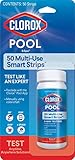
- Test Like an Expert: Maintain perfectly balanced pool water with 6-Way Multi-Use Test Strips and the complimentary Clorox Pool app. The app gives do-it-yourself pool owners the tools to proudly and confidently maintain a swim-ready pool all season long.
- Instant and Accurate Result: Using our Water Test Strips and the free, easy-to-use app helps troubleshoot common pool problems and receive personalized product recommendations. It utilizes scan-to-test technology to provide expert water test analysis.
- Comprehensive Water Test Strips: Our Water Test Strips are used for testing Total Hardness, Total Chlorine, Free Chlorine, pH, Total Alkalinity, and Stabilizer.
- Directions for Use: To scan strips using the Clorox Pool & Spa App, dip one 6-Way Test Strip into the pool water at elbow's depth. Next, download the free Clorox Pool App, scan your test strip, and receive expert water analysis results.
- Clorox Pool App: Test like an expert anytime, anywhere with the Clorox Pool App. Solve common swimming pool problems and get personalized product and dosage recommendations
- Zoning setbacks, permits, easements, property lines, and required barriers.
- Utility locations, electrical requirements, bonding, equipment placement, and service access.
- Soil, groundwater, drainage, stormwater, retaining-wall, and foundation conditions.
- Excavation access, fiberglass-shell delivery routes, crane requirements, and protection for existing property.
- Pool-shell or structural specifications, finish or liner replacement responsibilities, warranties, and exclusions.
- Equipment sizing, heating strategy, automation, circulation, winterization, and seasonal startup.
- Who performs startup, initial water balancing, inspections, and follow-up service.
When you are ready to evaluate a site, a pool design consultation or written pool installation estimate should describe the scope rather than provide only a headline price. Request the proposed footprint, elevations, drainage approach, equipment schedule, finish or liner specification, construction sequence, allowances, permit responsibilities, payment schedule, warranty terms, and expected completion window.
Indoor-pool projects need an additional review of the building envelope, ventilation, humidity control, corrosion protection, fresh-air exchange, and emergency drainage. A pool installer alone may not be qualified to design those systems.
A practical decision framework
- Identify the primary use. Choose exercise, relaxation, cooling off, family recreation, entertaining, or year-round swimming. If exercise dominates, examine lap geometry before adding recreational features.
- Decide how permanent the project should be. An inground pool suits long-term landscape integration; an above-ground pool may make more sense when relocation or a lower commitment matters.
- Test the site against the concept. Check access, setbacks, soil, groundwater, drainage, utilities, slope, and the view from the house.
- Separate appearance from engineering. An infinity edge, indoor enclosure, heating system, or compact plunge design can change the structural, hydraulic, HVAC, or waterproofing requirements.
- Budget for ownership, not only construction. Include electricity, heating, water treatment, cleaning, replacement liners or finishes, winterization, repairs, and safety improvements.
- Design safety into the footprint. Place fencing, gates, doors, ladders, steps, covers, lighting, and equipment access before finalizing the layout.
- Get comparable written proposals. Ask each contractor to state assumptions, exclusions, allowances, permits, equipment sizing, startup duties, warranty coverage, and the conditions that could change the price.
The right choice is the one that matches the household’s main use and the property’s real constraints. A beautiful pool concept that ignores access, drainage, humidity, safety, or service requirements is not a finished design.
Frequently Asked Questions
Are these six pool types mutually exclusive?
No. Inground and above-ground describe construction location, while indoor describes the enclosure, infinity describes the edge, and plunge and lap describe intended use. A pool can fit multiple categories—for example, an indoor lap pool or an inground infinity pool.
Can an above-ground pool be used as a lap pool?
Not necessarily. A lap pool is defined primarily by its long, relatively narrow geometry and exercise purpose, not by whether it is inground. Some above-ground designs may support lap swimming, although available length, access, depth, and stability must be evaluated carefully.
Is a saltwater or natural pool maintenance-free?
No. Saltwater systems still generate chlorine to sanitize the water. Natural pools also require designed regeneration and filtration zones, circulation, testing, and ongoing biological and mechanical management.
Can an above-ground pool be installed indoors?
An indoor pool can be either inground or above-ground. Indoor construction adds requirements for humidity control, ventilation, insulation, drainage, structural loading, electrical work, and protection against condensation and corrosion.
The Bottom Line
Choose the pool’s purpose first, then its construction method. Inground pools offer permanence and customization; above-ground pools reduce commitment; indoor pools provide year-round access but add building-system complexity; infinity pools reward exceptional views; plunge pools maximize compact relaxation; and lap pools prioritize exercise. Before construction begins, confirm site conditions, permits, barriers, water treatment, circulation, equipment sizing, and the full maintenance plan in writing.
Quick Recap
Product prices and availability are accurate as of the date/time indicated and are subject to change. Any price and availability information displayed on Amazon at the time of purchase will apply.

