Concrete can become far more than a slab: with a suitable mix and a mold or form, you can cast planters, stepping stones, trays, garden accents and other useful home projects. Choose an idea by its scale, the shape you need to form, the finish you want and whether the finished piece is decorative or expected to carry weight. The ideas below are concepts, not tested build plans; use a project-specific design and the concrete product’s instructions wherever dimensions, loads or outdoor exposure matter.
Choose a project that fits your skills and space
Concrete is made from cement and aggregate. Cement and water form a paste that binds sand, gravel or crushed stone as the mixture hardens. Water content matters: the American Cement Association explains that the water-to-cement ratio affects paste strength, while the mix still needs enough workability to place, consolidate and cure correctly. Select a mix made for the job and follow its package directions rather than relying on a universal water ratio.
As an Amazon Associate I earn from qualifying purchases.
Small decorative casts—such as planters and stepping stones—are natural starting points. Countertops and other larger flatwork need more careful preparation and a purpose-designed mix. A form or mold determines the object’s shape; liners and form surfaces can also create texture or patterns. The ideas here are categorized by practical form and intended use, not by a promise that every concept has a verified tutorial.
Do these 3 things before closing this tab:
1Clear out junk files and repair common Windows errors2Fix the driver behind crashes, sound loss and screen glitches3Repair Windows errors before they cause bigger problems- First concrete project: Start with a small cast that uses a simple mold, such as a coaster, garden marker or small planter.
- Some DIY experience: Try nested molds, repeated pieces or simple forms for a birdbath basin, tabletop or garden edging.
- Advanced planning: Treat countertops, benches and other large or load-bearing projects as design and construction work, not merely a bigger craft cast. The right dimensions, reinforcement, support and performance depend on the specific design and are not established here.
- Workspace: Consider where you can mix, fill the mold, let the piece cure and handle the finished weight. Concrete materials and finished objects can be heavy.
45 concrete project ideas
For each idea, consider the function, scale, mold or form, and finish before choosing materials. Concrete mix formulations vary, so use a product intended for the project and follow its directions. The list offers starting concepts rather than complete, validated construction plans.
#1 Best Overall
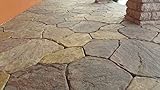
- Sold Set 6 pieces ( FOTO 2 ) multiple molds for making Pavement Stone
- The area is 0.37 square meters. Molds thickness 38 mm (1.5 in). They have different textures
- Molds are made of ABS plastic thickness 1,9-2 mm Depending on the geometry of the product wall thickness can form less than the above dimensions.
- Using these molds you can make wonderful Pavement Stone for your yard. The Pavement Stone you can paint in the color you like. This Pavement Stone will be the perfect element to your yard.
- Mold is reusable
Planters and plant accessories
- Small molded planter: Cast a compact vessel in a simple outer mold with a smaller insert to create the planting cavity.
- Geometric planter: Use an angular form for a faceted look; check that the mold can release the finished shape.
- Nested-bowl planter: Use two bowls as outer and inner forms to create a rounded planter.
- Window-sill planter: Make a narrow rectangular vessel suited to a sill or ledge; verify the surface can support its filled weight.
- Herb planter: Cast a compact container sized for herbs, with a drainage approach planned before pouring.
- Succulent planter: Make a small decorative vessel with a shallow planting cavity.
- Hanging planter: Form a planter with openings for a hanger, but do not assume the cast or attachment is safe for overhead loads without a suitable design.
- Planter with textured exterior: Press a texture into the mold liner to create a patterned surface.
- Planter with a colored finish: Explore a color effect using a method compatible with the selected mix and follow its manufacturer’s directions.
- Matching planter set: Cast several vessels from the same mold or a set of similar forms for a coordinated group.
Stepping stones and garden details
- Round stepping stone: Cast a simple circular stone in a shallow form.
- Square stepping stone: Use a square mold for a clean, regular garden path.
- Leaf-imprint stepping stone: Place a leaf or other suitable impression-making object against the form to create a relief pattern.
- Mosaic stepping stone: Arrange decorative pieces in the mold before filling it; make sure the selected mix and surface arrangement suit the intended use.
- Handprint or footprint stone: Add a personal impression to a cast stone while the material is workable, following the product directions.
- House-number garden marker: Cast a small plaque and add numbers as part of the form or surface design.
- Plant labels: Make small markers with names or symbols pressed into the surface.
- Garden edging blocks: Cast a sequence of small forms for a border; treat them as edging, not retaining or structural elements.
- Decorative garden orb: Use a spherical form for a small accent object.
- Pathway pavers: Cast a set of pavers in repeatable molds; project-specific thickness, base preparation and performance are not established by this idea alone.
Indoor and tabletop accessories
- Coasters: Cast small squares or circles using a shallow mold.
- Trinket dish: Form a shallow dish for keys or small objects.
- Small serving-style tray: Cast a decorative tray; do not assume a concrete surface is suitable for direct food contact.
- Candle holder: Create a holder with a cavity or insert sized for a candle, keeping heat and product suitability in mind.
- Tea-light holder: Form one or several recesses in a compact cast object.
- Bookends: Cast a pair of compact blocks in matching forms; plan for their finished weight.
- Desk organizer: Use a mold with compartments for pens or small accessories.
- Pencil cup: Cast a cylindrical or box-shaped container with a cavity formed by an insert.
- Napkin weight: Make a small, smooth decorative weight for outdoor dining.
- Drawer pulls: Cast small knobs with suitable fittings planned into the mold; confirm the attachment method for the furniture and use.
Outdoor decor and functional accents
- Birdbath basin: Cast a shallow basin in a bowl-shaped form; support and site requirements depend on the chosen design.
- Birdbath pedestal: Form a separate pedestal concept to pair with a basin, but do not treat an unverified design as load-rated.
- Garden sculpture: Use a simple mold or a shaped form to make a small decorative object.
- Concrete lantern shell: Cast a hollow shell using an inner form, leaving room for an appropriate light source.
- Outdoor table accent: Make a compact decorative piece such as a small vase-like form.
- Umbrella stand concept: Cast a weighted base only with a design suited to the umbrella, its support and the conditions where it will be used.
- Doorstop: Form a compact wedge or block; add any grip or protective surface after considering the floor and intended use.
- Firewood or tool stand: Make a small formed support for a specific use, with dimensions and stability determined by the load.
- Garden name plaque: Cast a small sign with lettering formed by a liner, stamp or other mold detail.
- Decorative fountain element: Cast a non-structural accent for a water feature; water exposure and system compatibility require project-specific planning.
Furniture, surfaces and larger builds
- Side-table top: Cast a small tabletop in a form; plan the base and support for the finished piece’s weight and use.
- Concrete countertop: Use a countertop-purpose mix and careful preparation. This is a more involved project than a small decorative cast.
- Bench seat concept: A concrete seat needs a design that accounts for support and the people using it; do not build from the idea alone.
- Outdoor stool: Consider a formed stool only with project-specific dimensions, stability and load planning.
- Large decorative panel: Cast a wall or garden panel with a textured form, planning how it will be lifted and mounted.
Materials, molds and mixing basics
For small casts, a concrete mix intended for small projects is a sensible starting category; stepping-stone and planter how-to guidance also uses ready-made mix options. Countertop work calls for a purpose-designed mix and more careful preparation. The label is the authority for the product’s water amount, mixing, placement and curing instructions.
- Mix: Choose by application, not by the word “concrete” alone. Formulations differ, so follow the specific product label.
- Mold or form: Select a shape that suits the project and can be released without damaging the cast. Materials and liners differ by project; there is no universal mold.
- Mixing setup: A bucket and hand-mixing equipment may suit a small batch. The batch size and product determine the appropriate tools.
- Finish: Mold surfaces and liners can impart texture and pattern. Decide on the finish before filling the mold.
- Work area: Prepare a stable place to mix and leave the form undisturbed as directed by the product instructions.
Do not add water alone just to make a stiff mix easier to work. The Concrete Society’s hand-mixing guidance cautions against that approach; use the concrete manufacturer’s instructions for the chosen product.
Rank #2
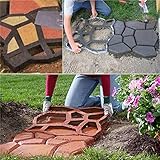
- [DIY BOARD] This concrete board is design for DIY lovers, who want to decorate their garden road as they like, to give their pavement and yards some artistic sense.
- [EASY TO USE] This concrete board is easy to use, no special skills required, even an inexperienced person can build a beautiful pathway.
- [STUARDY and RESUABLE] This pavement board is made of high quality plastic, just clean it with water after used and then you can use the board for a long time.
- [UNIQUE SHAPE] Laying out the effect posted up like blocks of stones, so the path is more exotic, to create a style of their own road path.
- [SIZE]16.9 x 16.9 x 1.5 inch
Protect yourself while working with wet concrete
Fresh concrete can cause severe skin and eye injuries. The American Cement Association warns: “Prolonged contact between fresh concrete and skin surfaces, eyes, and clothing can result in severe and even third-degree burns.” Its concrete safety guidance recommends waterproof gloves, protective clothing and eye protection, and prompt rinsing of concrete from skin and clothing.
Recommended Free Tools
Quick Recap
Rank #4

- One piece (Foto 2) is sold multiple mold for making a Frog
- size 14.50 "x 13.15" x 1.7 "(37 x 33 x 4.3 cm).
- Molds are made of ABS plastic thickness 1,9-2 mm Depending on the geometry of the product wall thickness can form less than the above dimensions.
- Mold is reusable. It can be used for casting plaster and concrete.
- Frog Stepping Stone - Well-designed and carefully detailed, this little amphibian is a welcome addition to your home's outdoor landscape!
Rank #3

- 【Unique Turtle Shape Garden Design】: Create eye-catching turtle stepping stones with this detailed tortoise shaped concrete mold. Perfect for adding personality to your garden walkway, patio, lawn, yard or outdoor path, turning plain spaces into decorative landscape features.
- 【Durable Reusable Plastic Concrete Mold】: Made from high-quality thickened reusable plastic, this cement stepping stone mold is sturdy, flexible, and easy to demold. Designed for multiple uses without cracking, ideal for DIY garden paving projects.
- 【Easy DIY Garden Stepping Stone Maker】: Simply mix concrete or cement, pour into the turtle paver mold, smooth the surface, and let it set. No special skills required. Great for DIY lovers creating garden stepping stones, decorative paths, or personalized outdoor decor.
- 【Perfect for Outdoor Walkways & Landscaping】: This concrete paving mold works great for garden paths, walkways, patios, backyard landscaping, and lawn decoration. Create custom paving stones that blend naturally into outdoor environments.
- 【Personalize Your Concrete Stones】: Add pigments, pebbles, glass, or mosaic pieces to create unique custom stepping stones. Ideal for family DIY projects, memorial stones, or creative garden decor gifts.
- Wear waterproof gloves and safety glasses or goggles before mixing or handling wet concrete.
- Keep exposed skin and clothing from prolonged contact with fresh concrete; promptly rinse off splashes.
- Plan how you will lift and move bags, buckets and finished casts. Concrete materials are heavy, so avoid straining.
- Follow the product’s handling and cleanup instructions, including any precautions specific to that mix.
Questions to answer before choosing a build
- Is this purely decorative? If people will stand, sit, lean on or otherwise load it, the concept needs a suitable design; this list does not establish load capacity.
- Will it be outdoors? This guidance does not establish freeze-thaw performance or other exposure suitability for a particular mix or design. Check the product and design requirements.
- Does it contact food? A decorative tray or countertop idea does not establish that the surface or finish is suitable for direct food contact.
- Can you handle the finished piece? Account for its weight, workspace, lifting and installation before making a large cast.
- Can the mold release the shape? Complex or undercut forms may be harder to release than simple open shapes; choose a mold suited to the object.
Product prices and availability are accurate as of the date/time indicated and are subject to change. Any price and availability information displayed on Amazon at the time of purchase will apply.

